Svíčková na Smetaně: The Czech Beef Dish and How to Order It
Svíčková na smetaně is braised beef in a creamy root-vegetable sauce served with bread dumplings, cranberries and lemon. Here is what to expect on a Czech menu.
On this page
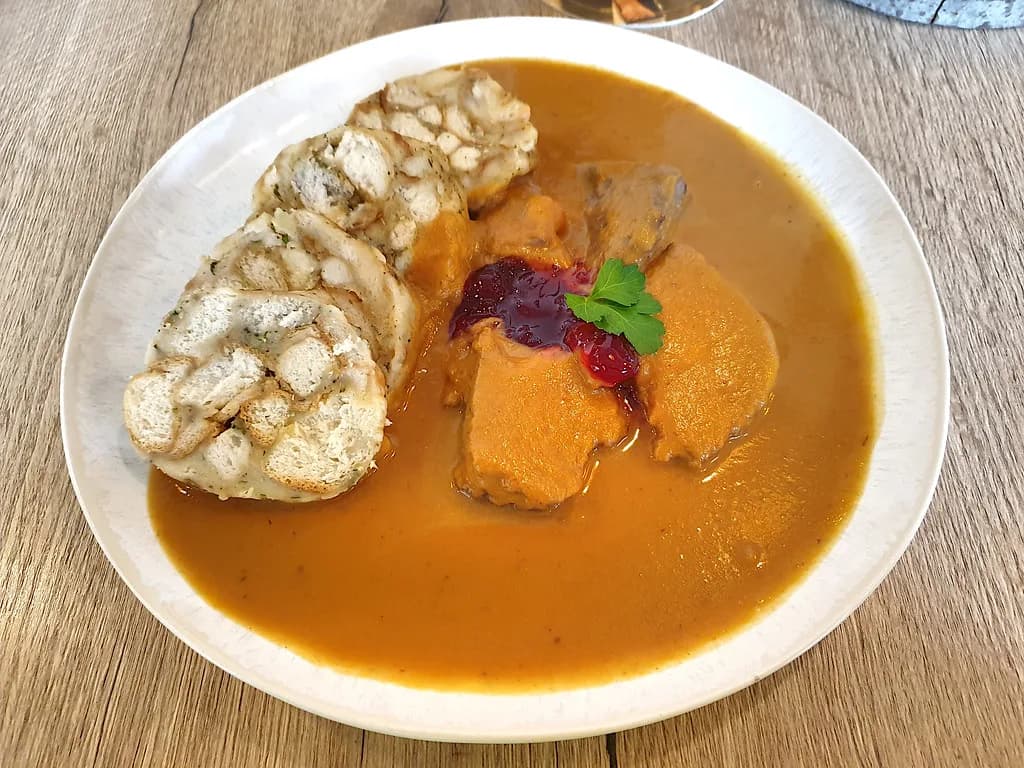
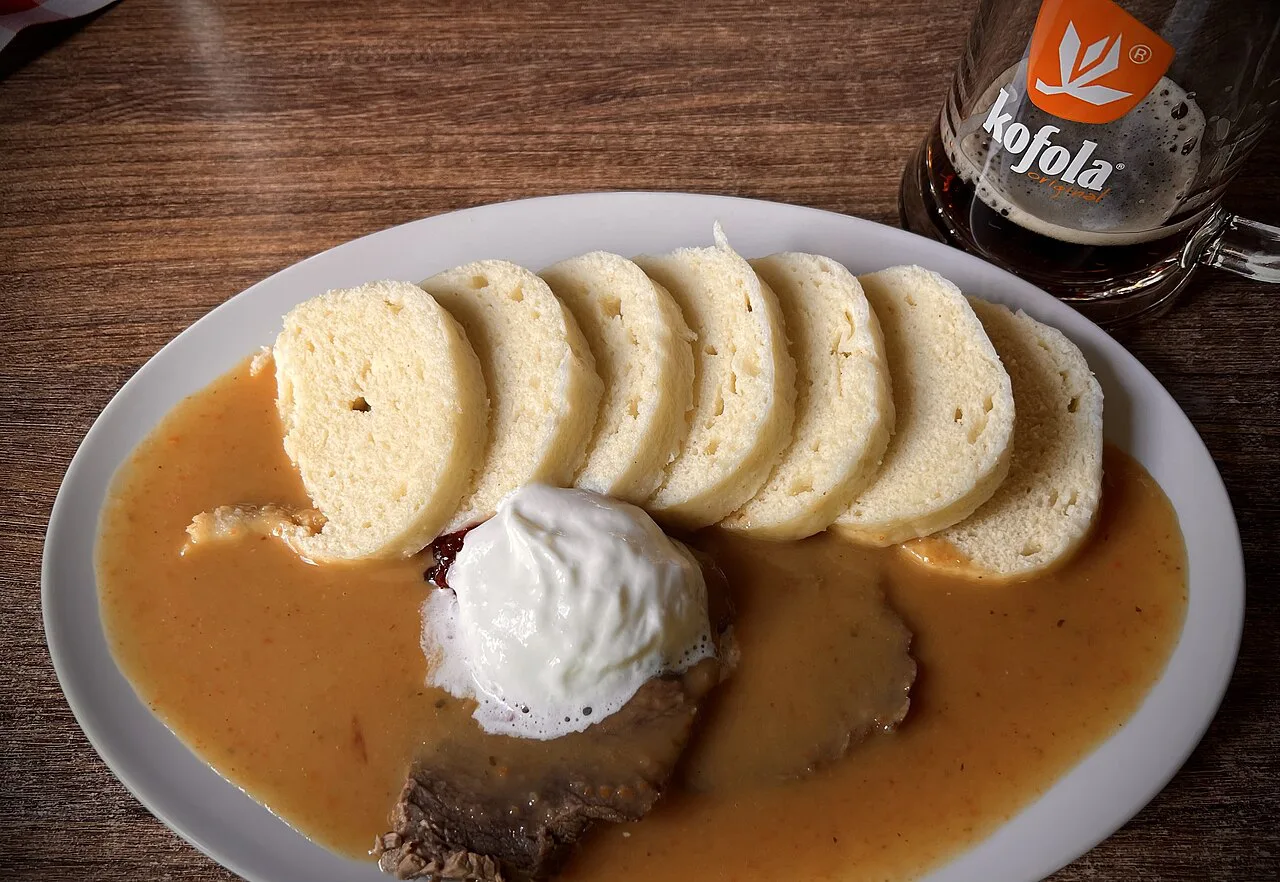
Svíčková na smetaně is the Czech Republic's signature beef dish: a piece of braised beef, usually sirloin, under a thick cream sauce built from root vegetables, served with bread dumplings and a small spoonful of cranberries. If you order one dish in a non-Prague town to understand Czech cooking, this is the one. This guide covers what the sauce is made of, what arrives on the plate, the menu spellings you will see, and how to order it as a visitor.
What svíčková na smetaně is
The dish pairs braised beef with a velvety vegetable cream sauce, and Czech kitchens treat it as a standard, not a specialty. The meat is typically beef sirloin or a similar cut, cooked slowly until it slices soft, then dressed with the sauce at serving. It sits in the same everyday repertoire as Czech goulash, but the flavor profile is sweeter and creamier rather than paprika-heavy.
The name describes the sauce: svíčková refers to the cut and na smetaně means "in cream." The dish is defined by that cream sauce, which is why Czech menus list it under beef dishes rather than under stews. It is a knife-and-fork plate, not a soup or a sandwich, and it is usually the heaviest single item a visitor will order in a Czech restaurant.
What goes into the sauce
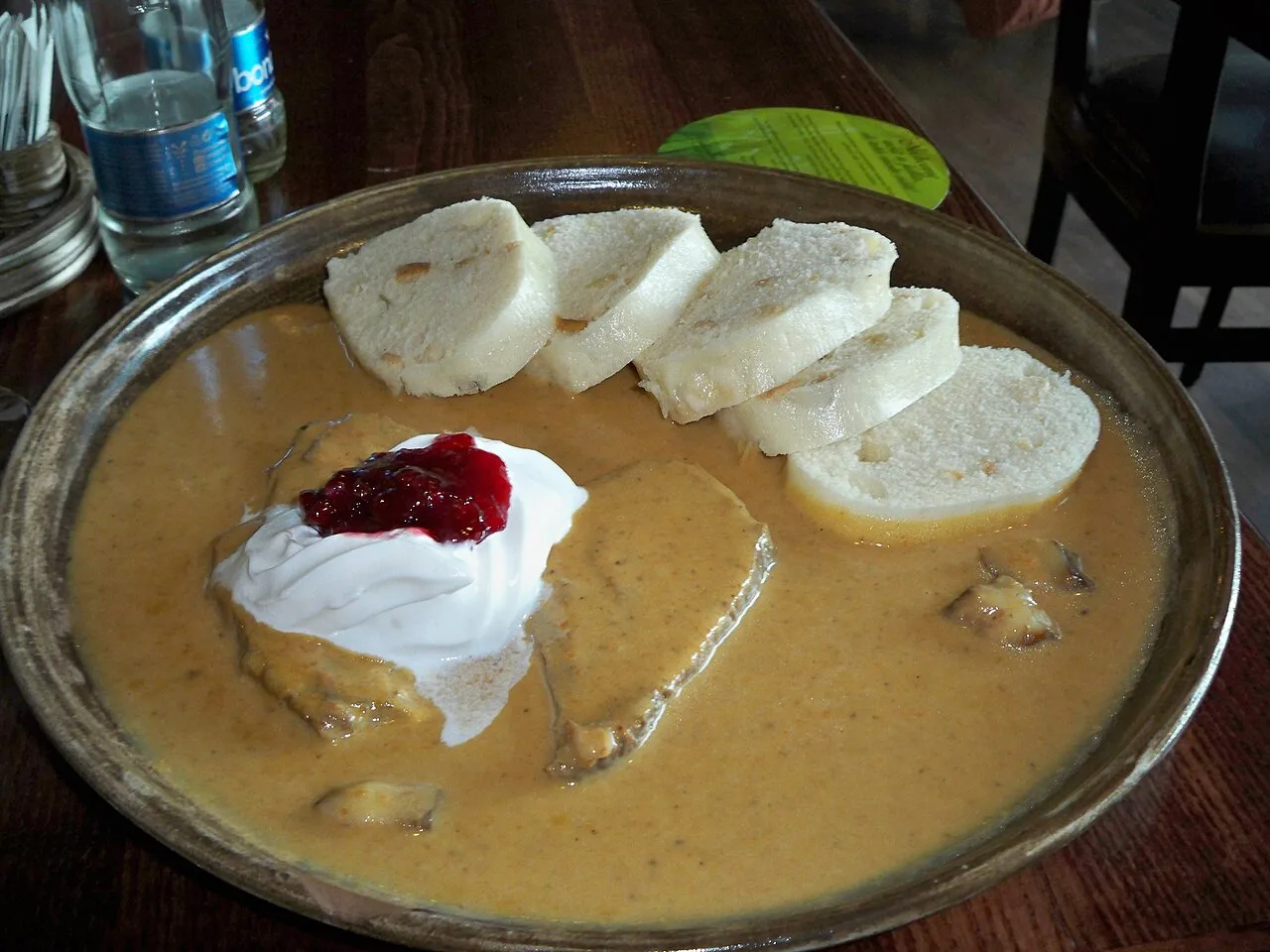
The sauce base is root vegetables — carrots, parsley root and celeriac — cooked down with onion, then blended smooth and enriched with heavy cream. Spices go in whole and come out before serving: bay leaves, allspice and black peppercorns are typical. A little sugar and vinegar are cooked into the vegetables to give the sauce its sweet-sour balance rather than a flat cream taste.
Is svíčková served hot or cold? It is served hot, with the sauce ladled over sliced beef at the table and the dumplings alongside. The cranberry and lemon garnishes are cold and go on top just before serving.
Do I need to book a table for svíčková? At lunch in smaller Czech towns, no booking is usually needed, since it is a daily-menu dish. In Český Krumlov or central Prague at peak lunch hours, arriving early or reserving is the safer choice.
Can I eat svíčková if I do not eat pork? Sometimes not: the beef may be larded with fat bacon before braising, so ask whether the meat has been larded. The sauce itself is built on vegetables and cream but may contain beef stock.
The sauce is thickened with a roux of butter and flour rather than by reduction, which is what gives it the dense, coating texture Czech diners expect. Some home versions add apple to the vegetable base, and the finished sauce is finished with lemon juice and salt. The result is closer to a smooth vegetable velouté than to a mushroom or pepper sauce, so first-timers should not expect anything savory-dark.
What comes on the plate: dumplings, cranberries, lemon
The default side is houskové knedlíky — sliced bread dumplings, not potato dumplings and not pasta — which soak up the sauce and make the dish filling. Czech dumplings come in several styles, and knowing which one is on the plate changes how heavy the meal feels; the bread version is the standard match for svíčková. If you want to read the wider dumpling menu before you sit down, our guide to Czech dumplings explains the main types.
Two garnishes sit on top and surprise people who expected a plain plate: a spoon of cranberry compote and a slice of lemon. They are there to cut the cream, and Czech diners use both, so squeeze the lemon and take a little cranberry with each bite of beef. Some kitchens also add a dollop of whipped cream, which pushes the dish further toward rich.
Occasionally the beef is larded — threaded with strips of fat bacon before cooking — which keeps a lean cut moist through a long braise. You will not see this on the menu, but it explains why some versions taste noticeably richer than others. Sliced boiled potatoes appear as an alternative side in some kitchens, and they make the plate lighter than the dumpling version.
Where svíčková sits in Czech food culture
Svíčková is a fixture on Czech lunch menus, the kind of plate that appears under the daily polední menu at midday rather than as a special-occasion dish. It also turns up at weddings and family celebrations, which tells you how central it is to the cuisine. For a visitor eating across castles and old town squares in Bohemia and Moravia, it is the single best benchmark for how a kitchen cooks.
Because it is a beef dish with a cream sauce, it tends to be one of the more expensive items on an everyday Czech menu, though still modest by US or UK standards. It is a lunch dish far more often than an evening one. Ordering it at midday, when kitchens are turning out the daily menu, usually means a fresher plate and a shorter wait.
How to say it and how menu names vary
A workable approximation for English speakers is "SVEECH-koh-vah nah SMEH-tah-nyeh," with the emphasis early in the first word and a soft "nyeh" at the end. The letter ě softens the n, so the final word is not "smetane" as spelled in English. You can order by saying just "svíčková" and most servers will understand.
Menus use several spellings: svíčková na smetaně, svíčková na smetaně s houskovým knedlíkem, or simply svíčková. A listing that ends in "s knedlíkem" tells you the dumplings are included rather than charged separately. English-language menus sometimes translate it as "beef in cream sauce" or "sirloin in cream sauce," which is accurate but hides the root-vegetable base; the Czech name is the better guide to what arrives.
Svíčková is a main course, so it sits apart from the sweets and street snacks that fill the rest of a Czech menu, including the spiral Trdelník sold at stands on many old town squares. Knowing that division keeps you from treating a heavy beef plate as a warm-up. Our guide to Trdelník covers the pastry side of the equation.
What to order with it
A small beer or a glass of water is the usual local match; the sauce is rich enough that most people do not need a starter. If you want a lighter first course, a simple soup or a plate of chlebíčky — open-faced sandwiches — works better than a second heavy dish. Czech pastries and sweets come after, and ovocné knedlíky, fruit dumplings, make a lighter finish than a cream dessert.
If you are eating svíčková as a main, skip a creamy dessert afterwards or split one; the sauce and dumplings already deliver the richness. A fruit-based dessert or a coffee is the more comfortable sequence. Our guide to Czech desserts covers the sweet side of the menu if you want to plan ahead.
What it costs on a Czech menu
Svíčková is priced as a main course in the mid range of a Czech lunch menu, above soups and fried cheese but below steak or game dishes. Prices vary by town and by whether the plate is on the daily menu or the permanent one, with Prague and Český Krumlov charging more than smaller towns. Restaurants list the current price on the menu and outside the door, so read it there before you order rather than relying on any guide, including this one.
Eating it as a visitor: portion size, pacing and ordering
The portion is large: a slice or two of beef, several dumpling slices and a generous ladle of sauce. One plate is enough for most adults at lunch, and a starter is usually unnecessary. If you are eating before an afternoon of sightseeing, keep the meal early so you are not walking a castle circuit on a full stomach.
Order at the table rather than at a counter, and expect the server to bring the plate already sauced. If you want less sauce, ask for it on the side; kitchens are used to the request. Tipping is customary but discreet, added in cash to the total rather than left on the table.
Vegetarian versions and the name question
A vegetarian version exists in Czech kitchens and is usually labeled as a vegetable sauce with dumplings rather than as svíčková, since the name refers to the beef cut. Ask whether the sauce is made with meat stock before ordering, because a cream vegetable sauce can still be built on beef broth. The vegetarian plate is lighter and loses the sliced sirloin entirely.
If a menu advertises "vegetarian svíčková," treat it as a sauce-and-dumplings dish and check the stock. Czech cheese dishes and fried cheese are reliable meat-free alternatives on the same menus. Our Czech cheese guide covers the options if you want a backup order.
Ordering svíčková on your next Czech stop
Order svíčková at lunch in a smaller town, ask for the dumplings on the side only if you want a lighter plate, and take the cranberry and lemon as part of the dish rather than decoration. Read the price on the menu board before you sit down, since it changes with the town and the day. That is the whole decision: one plate, one sauce, and a good read on how a Czech kitchen cooks.
Explore more Czech Republic guides
Frequently Asked Questions
Is svíčková served hot or cold?
It is served hot, with the sauce ladled over sliced beef at the table and the dumplings alongside. The cranberry and lemon garnishes are cold and go on top just before serving.
Do I need to book a table for svíčková?
At lunch in smaller Czech towns, no booking is usually needed, since it is a daily-menu dish. In Český Krumlov or central Prague at peak lunch hours, arriving early or reserving is the safer choice.
Can I eat svíčková if I do not eat pork?
Sometimes not: the beef may be larded with fat bacon before braising, so ask whether the meat has been larded. The sauce itself is built on vegetables and cream but may contain beef stock.
Why is the sauce sweet?
Sugar is cooked into the root vegetables along with a little vinegar, giving the sauce a sweet-sour balance that offsets the heavy cream. The cranberry compote adds a second sweet-tart note on top.
Sources
Notes for your Czech trip
Optional updates to our Czech town guides.
You might also like


Continue reading
More guides you'll find useful