Česnečka (Czech Garlic Soup): What It Is and How to Order It
Česnečka is a clear Czech garlic soup with potatoes, marjoram, and caraway, finished with rye bread croutons. Learn how it is served and how to order it.
On this page
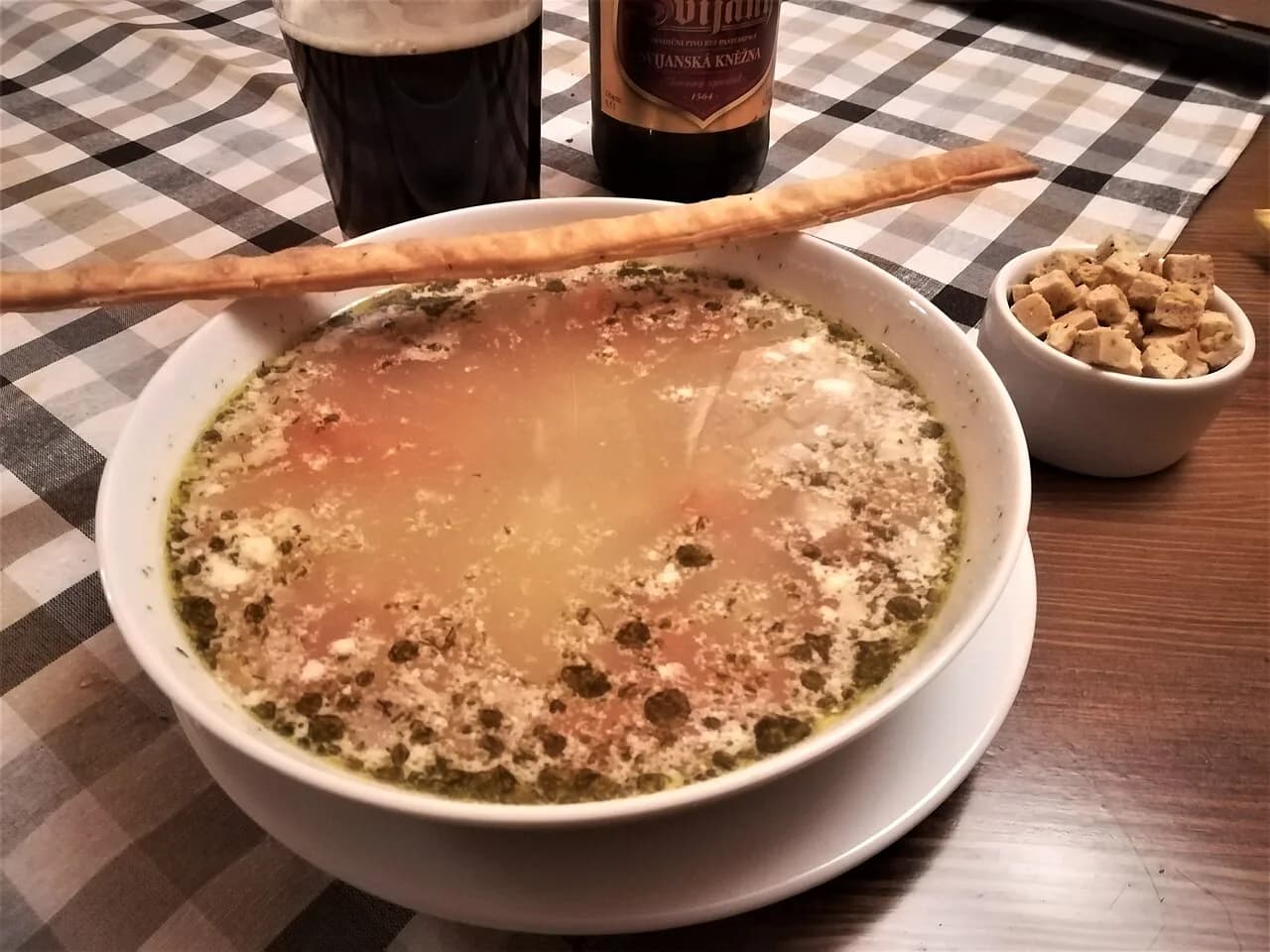
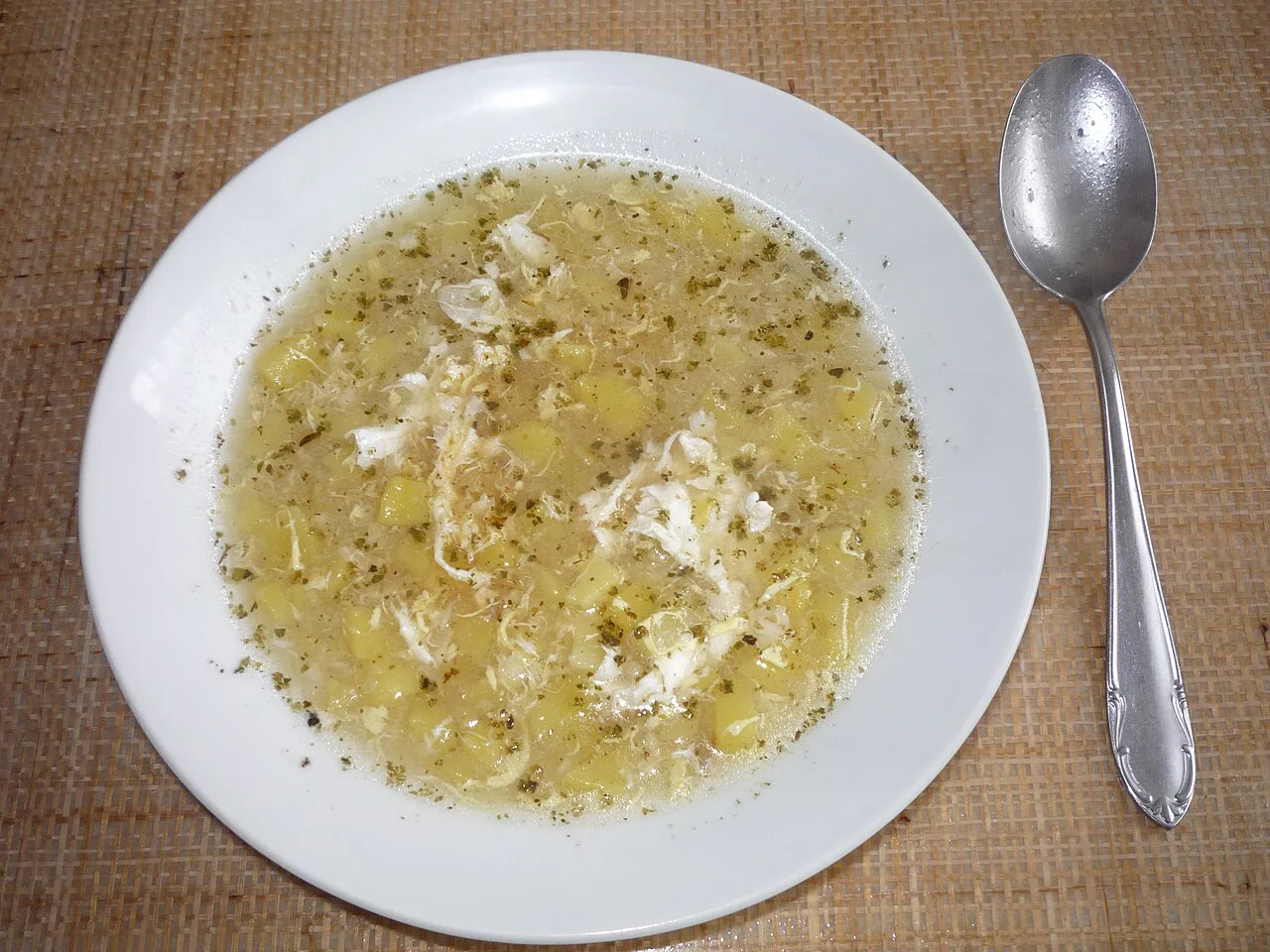
Česnečka is a clear, cream-free Czech garlic soup: a thin broth loaded with fresh garlic and sliced or diced potatoes, seasoned with marjoram, caraway, and often bay leaves, and topped with rye bread croutons. It is a light bowl rather than a heavy starter, which is why Czechs treat it as a fortifying dish when they feel run down and why it carries the nickname hangover soup. This guide covers what goes into it, how it reaches the table, the variations you may meet, and the words to use when you order.
What česnečka is and how to say it
The Czech name is česnečka, also written česneková polévka; if the diacritics look daunting, cesnecka is close enough to be understood on a menu. It belongs to both Czech and Slovak cooking, and the base is a thin broth with garlic, sliced potatoes, and spices such as caraway and marjoram.
Do not expect a cream soup. There is no dairy in the base, so the body comes from potatoes cooked until tender and from the garlic itself, which is added in quantity rather than as a background note. Once you have the shape of it, the rest of the menu makes more sense, and it sits easily alongside the wider range of Czech food you will meet on a trip beyond Prague.
Why Czechs call it hangover soup
The nickname is cultural, not medical. Czechs regard a bowl of garlic soup as a remedy for the common cold and, more famously, for a heavy night, and the association is strong enough that the dish is often described that way first and eaten for pleasure second. Treat the reputation as context for how the soup is served — hot, sharp with raw garlic, and easy to get down — rather than as a health claim.
Is česnečka vegetarian? The base of broth, potatoes, garlic, and spices can easily be vegetarian if made with vegetable stock or water. The complication is the optional cheese, which may be made with animal rennet, and diced ham, so ask before either is added to your bowl.
Is česnečka spicy? It is sharp rather than hot. The heat comes from a large quantity of fresh garlic, sometimes reinforced with crushed raw garlic stirred in at the end, so the effect is pungent and warming rather than chili-hot.
What bread goes with česnečka? Rye bread, cut into cubes and toasted, is the standard topping. It stays crisp longer in the broth than white bread, which is why it is preferred, though white bread or rolls work if rye is not on hand.
That framing shapes the bowl you get. Some cooks finish the soup with a little crushed raw garlic at the very end so the heat stays bright, a step that matters if the soup is meant to clear your head rather than simply feed you.
How it arrives at the table
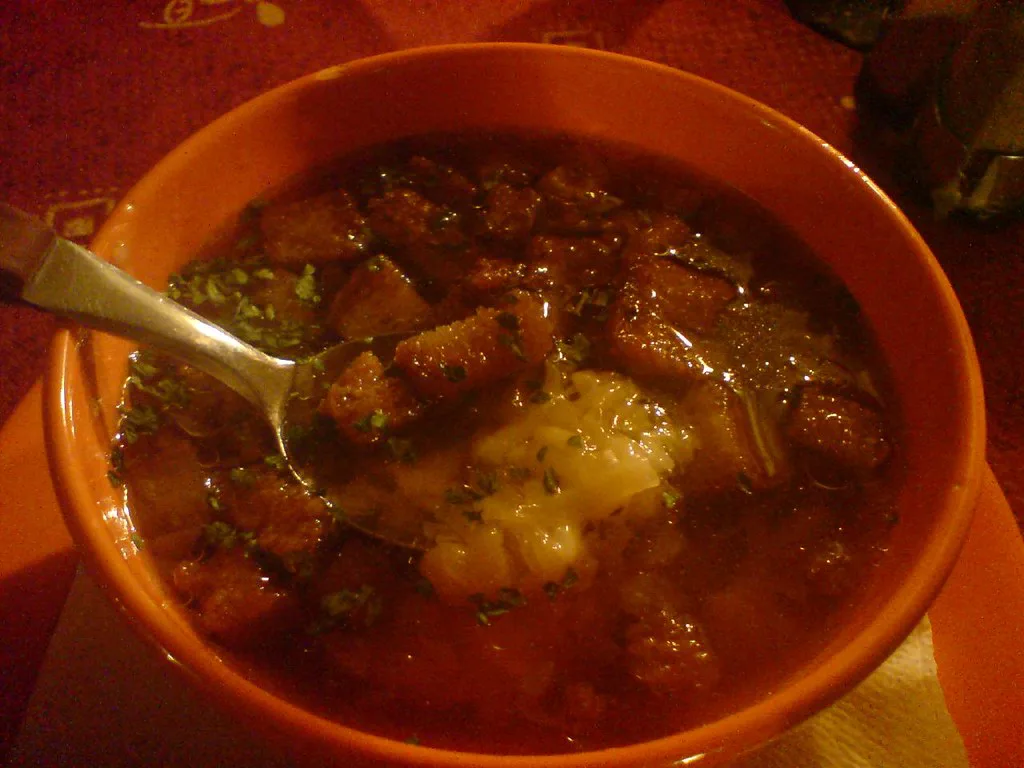
Česnečka comes hot with the croutons added at the last moment. The reason is practical: bread cubes soak up broth quickly and stop being crisp, so cooks toast cubes of stale rye bread and drop them in just before eating. Rye holds its crunch longer than white bread, which is why it is the standard choice, though white bread works if that is what you have.
In restaurants the extras often arrive separately. Grated or cubed hard cheese and diced ham are commonly served in a small bowl on the side rather than stirred in, which puts you in control of how rich the soup becomes. A whisked egg may be drizzled straight into the bowl, giving ribbons similar to egg drop soup, and a scattering of chopped parsley is a common finish.
What it tastes like
The dominant flavor is fresh garlic, and it is not subtle. Behind it sit marjoram and caraway, the two spices that give the soup its Czech accent, with bay leaves adding depth to the broth. The potatoes make it substantial enough to feel like a small meal, so a bowl plus bread can stand in for a light lunch on a travel day.
Caraway is the note that surprises visitors most, since it shows up across the cuisine, and dried marjoram is the other signature. The garlic soup is sharp with fresh garlic, and many cooks use waxy potatoes that hold their shape rather than dissolving into the broth.
Variations you may meet
The plain version is broth, potatoes, garlic, and spices, with croutons on top. From there the additions multiply: cubed or grated cheese such as Emmental, Gruyère, or Camembert with the rind removed, diced ham, a beaten egg stirred in, or a spoon of crushed raw garlic at the end.
None of these extras are required, and whether you want them depends on how hungry you are. Cheese and egg add richness and body; ham pushes the bowl toward a full meal. If you are eating vegetarian, ask before the bowl is assembled, since the cheese used may be made with animal rennet.
How it fits a Czech menu
Soup is a standard first course in Czech cooking, and česnečka takes its place beside sauerkraut soup with sausage and potato soup with mushrooms. It is a lighter option in that group, which makes it a sensible opener before a heavier main such as svíčková na smetaně, the beef in cream sauce served with dumplings and cranberries.
Order it when you want something sharp and restorative rather than filling, especially on a cold day or after a long train ride. The same logic of a small, focused dish runs through the rest of the Czech cuisine on these pages, from dumplings to fruit-filled parcels.
How to order it in Czech
Ask for česnečka or česneková polévka and you will get the soup. If you want to know what is coming, the useful question is whether cheese, ham, or egg are included or served separately, since that changes both the price and the size of the bowl. Pointing at the menu line works as well as pronunciation.
For the home kitchen, the method is straightforward: sauté diced potatoes and sliced garlic briefly, add stock, season with marjoram, caraway, pepper, and bay leaves, then simmer until the potatoes are soft. Keep the garlic from browning, or the soup turns bitter.
Making it at home
A home version needs only garlic, potatoes, broth, rye bread, and a few pantry spices. Mission Food Adventure's recipe serves four and calls for six to eight cloves of garlic, a pound of waxy potatoes, a teaspoon each of dried marjoram and caraway seeds, and three slices of rye bread for croutons.
Vegetable broth and water both work if you want a meat-free bowl, and skipping the optional cheese keeps it that way. The croutons are the one step worth doing properly: cube the bread, toss with a little oil or butter, and bake until crisp so they survive the trip to the table.
Order the bowl, then decide on the extras
Česnečka is one of the easiest Czech dishes to order with confidence: a clear garlic soup with potatoes and croutons that arrives hot and sharp. Ask whether the cheese, ham, or egg come on the side, add them to taste, and you have a light, restorative bowl.
If you cook it at home, toast the rye bread just before serving and keep the garlic pale rather than browned. Either way, the bowl is a good introduction to the savory, unglamorous side of Czech cooking before you move on to dumplings and cream sauces.
Explore more Czech Republic guides
- Bramboráky
- Chlebíčky
- Czech Breakfast
- Czech Cheese
- Czech Christmas Cookies
- Czech Desserts
- Czech Dumplings
- Czech Pastries
- Kulajda: Czech Dill and Mushroom Soup, Explained
- Medovník
- Tatarak: Czech Beef Tartare, Served With Fried Bread and Garlic
- Utopenci
- Vepřo knedlo zelo
- Řízek (Czech schnitzel)
- Czech Christmas Food
Frequently Asked Questions
Is česnečka vegetarian?
The base of broth, potatoes, garlic, and spices can easily be vegetarian if made with vegetable stock or water. The complication is the optional cheese, which may be made with animal rennet, and diced ham, so ask before either is added to your bowl.
Is česnečka spicy?
It is sharp rather than hot. The heat comes from a large quantity of fresh garlic, sometimes reinforced with crushed raw garlic stirred in at the end, so the effect is pungent and warming rather than chili-hot.
What bread goes with česnečka?
Rye bread, cut into cubes and toasted, is the standard topping. It stays crisp longer in the broth than white bread, which is why it is preferred, though white bread or rolls work if rye is not on hand.
Sources
Notes for your Czech trip
Optional updates to our Czech town guides.
You might also like



Continue reading
More guides you'll find useful