Things to Do in Plzeň: Squares, Synagogue, Underground and Beer
Plan a day in Plzeň around Republic Square, the cathedral tower, the Great Synagogue, the historic underground and the Pilsner Urquell brewery.
On this page
Plzeň packs its best sights into a compact old center, so one well-planned day covers the square, the cathedral tower, the Great Synagogue, the historic underground and a brewery visit. The city sits in West Bohemia about an hour from Prague by car or Flixbus, which makes it a realistic stop on the way toward the Bohemian Forest and Bavaria rather than a rushed add-on to a Prague itinerary.
This guide walks the sights in the order you actually meet them around Republic Square, then adds the beer half of the city and the corners most English-language roundups skip, including the puppet tradition tied to Spejbl and Hurvínek. For the layout and how the streets connect, keep the Plzeň map open on your phone while you plan.
What to See in Plzeň in One Day
Start at Republic Square, work outward to the cathedral, the synagogue and the underground, then finish at the brewery or the parks depending on your energy. Everything in that core sits within walking distance, so you never need a car or tram between the main stops. The one real trade-off is time: a full brewery tour and a full underground tour together eat most of an afternoon, so pick one if you are arriving after midday.
Plzeň is the fourth-largest city in the Czech Republic, with roughly 170,000 residents, and it functions as both a city and a regional capital in West Bohemia near the German border. That size means a genuine city center with restaurants and museums rather than a single-street tourist village. The Plzeň Attractions: 8 Visitor Guides hub collects the individual sight guides if you want to go deeper on one stop.
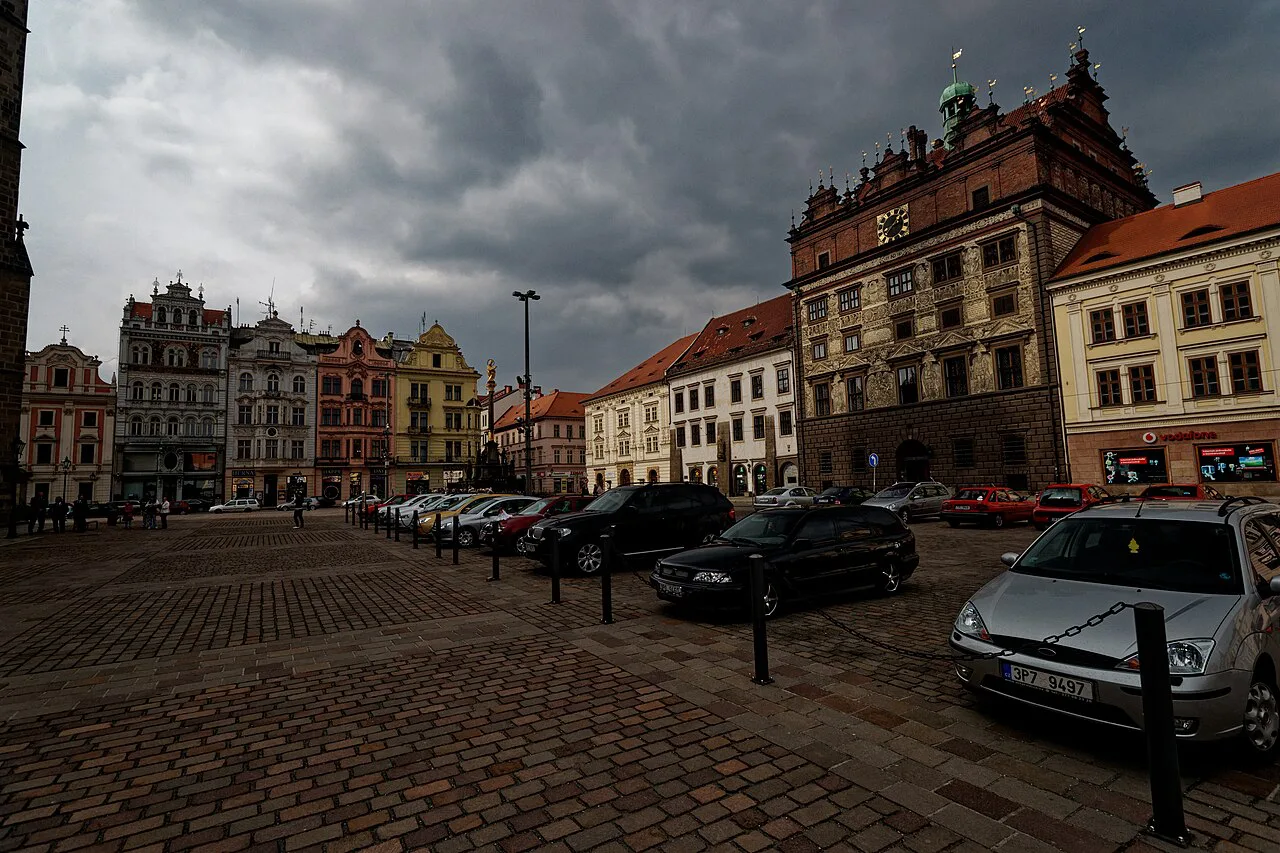
Start at Náměstí Republiky: Town Hall, Fountains and the Plague Column
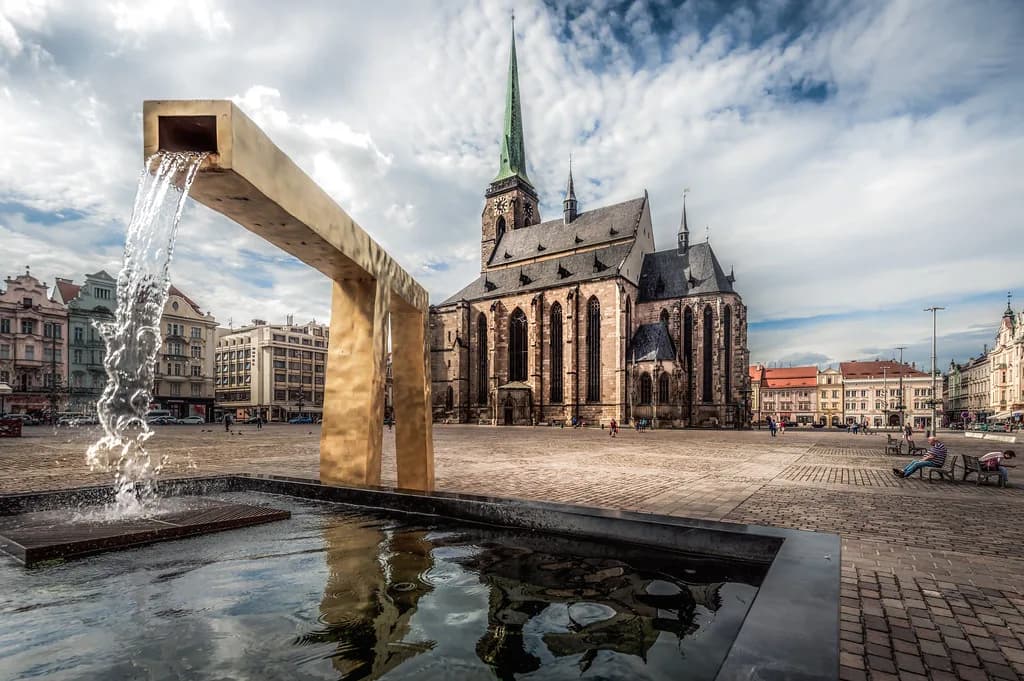
Republic Square is the natural first stop, a broad plaza framed on all four sides by pastel Baroque and Renaissance facades. The dark, richly painted building is the town hall, and you can step inside to see a model of the city. Three corners hold golden fountains designed by architect Ondřej Císler, and the fourth carries the plague column commemorating victims of the plague.
Look closely at the fountains and you will find an angel, a greyhound and a camel, all drawn from the city coat of arms. The greyhound stands for loyalty to the king, while local lore says the camel was taken by Plzeň's inhabitants during the Hussite wars. It is an odd trio, and that is exactly why it rewards a slower lap of the square rather than a quick photo.
The square is also where sightseeing groups gather, so an early start keeps the facades and fountains clearer for photographs. If you want a structured introduction before walking the rest of the center, Plzeň sightseeing options based around Náměstí Republiky are the simplest way to orient yourself.
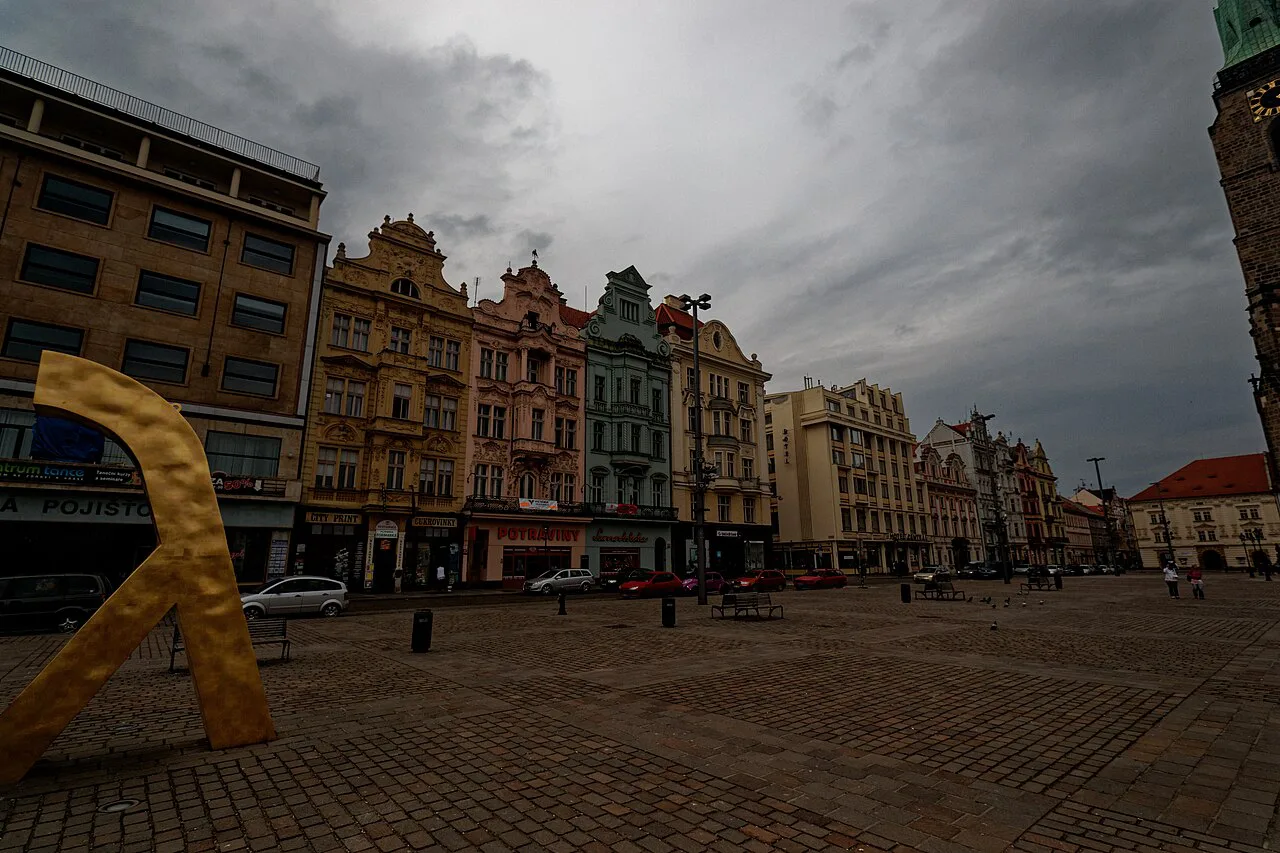
Climb St. Bartholomew's Tower, the Tallest Church Tower in the Czech Republic
The Cathedral of St. Bartholomew rises straight off the square, and its tower reaches 102.6 meters, making it the highest church tower in the country. Construction began in the 14th century and stretched across roughly a hundred years, while a fire in 1835 forced the tower to be rebuilt. The tower is the landmark that explains how the square, the synagogue and the river arm fit together, and the St. Bartholomew's Cathedral in Plzeň guide covers what to see inside.
Before or after your visit, walk to the gate behind the church, where golden angel heads line the fence and visitors touch them for luck. A local legend tells of a medieval executioner barred from entering the cathedral who touched an angel while praying outside and was granted good fortune. One head reportedly gets touched far more than the rest.
For the interior, the tower access and what the church itself holds, the dedicated guide to St. Bartholomew's Cathedral in Plzeň covers the details worth knowing before you go.
See the Great Synagogue, the Largest in the Czech Republic
A short walk from the square, the Great Synagogue (Velká Synagoga) is one of Europe's largest, with colorful onion domes and brickwork by a Viennese architect that look unlike anything else in the city. It was built in the 1890s for a Jewish community of about 2,000 people, a community later decimated in the Second World War. Services continue in one part of the building, and the synagogue survived the war because it was used as a storage space.
Plan the visit as a quiet counterweight to the beer stops rather than a quick look. Sources agree on its scale as one of the city's most prominent buildings, and that scale is the point.
The synagogue appears high on tour-platform shortlists of the city's must-see attractions alongside the brewery and the historic underground, so it belongs in the core loop rather than on a spare-time list.
Go Under the City: The Historic Underground Beneath Republic Square
The historic underground passageways beneath Republic Square once connected the houses around the square and offered an escape route or hiding place during attacks. The tour is a specific format: you are issued a hard hat and a hairnet, led through restored corridors, and given a small beer at the end. Inside, displays include cannonballs from seventeenth-century attacks and recovered traditional glassware.
Be honest about what this is: the restoration looks modern rather than ancient, so the appeal lies in the idea of the passages and the mill machinery at the end rather than in romantic gloom. Reviewers have called it slightly hokey and still worth doing, which is a fair expectation to carry in.
Group sizes and tour times can be limited, so if your time in Plzeň is short, check the operator's current tour times and ticket prices when you plan rather than assuming a walk-up slot will fit your afternoon.
Drink the Original: Pilsner Urquell Brewery and the Brewery Museum
Plzeň is where pilsner lager was born, and both the Pilsner Urquell Brewery and the Brewery Museum are among the city's most-visited attractions, with the underground and the Great Synagogue close behind on the same shortlists. The brewery tour covers the production story for anyone interested in how the lager came about, while the museum covers the longer history for travelers who would rather read than walk production halls. Decide which one fits your hours before you commit.
The trade-off is real: a brewery tour and the historic underground both take a meaningful chunk of an afternoon and both end with beer, so pairing them back to back suits enthusiasts and exhausts everyone else. If you only have one beer slot, choose the brewery for the production story and the underground for the city's engineering history. The dedicated Plzeň beer guide covers the brewing background in more depth.
The Old Water Tower and the Mill Wheel at the End of the Underground Tour
The underground tour finishes beneath the old Water Tower (Vodárenská věž), where a still-turning water wheel that once powered a flour mill is on view. The wheel is the most memorable single object on the route, and it ties the passageways back to the everyday working city above.
Step outside afterward to see the tower itself against the red roofs around it. The juxtaposition of old stone and newer construction is part of the pleasure of this corner of Plzeň, and it costs nothing to walk past.
The Puppet Museum and Divadlo ALFA for Spejbl and Hurvínek
The Puppet Museum (Muzeum Loutek) is the stop most beer-focused itineraries miss, and it carries real weight in Czech culture. Pilsen's puppet history is tied to Spejbl and Hurvínek, the characters created by puppeteer Josef Skupa in the 1920s, whose recordings still run for Czech children on the evening program Večerníček.
The displays cover puppets from the history of theater in Plzeň and Prague, including intricate doubles showing a figure alive and dead. Skupa also used his puppets to criticize the Nazi occupiers, a risk that gives the collection a sharper edge than the family-friendly surface suggests.
For a live performance rather than a museum case, Divadlo ALFA stages puppet theater in the city. Check the theater's own program for what is playing during your dates, since the schedule changes by season.
The Thank You America Monument and Plzeň's May 1945 Liberation
The Thank You America monument records that on May 6, 1945, the city of Plzeň was liberated by the U.S. Army, with the inscription in both English and Czech. It is a small stop, but it explains a divide in Czech memory: American forces reached Plzeň while the Red Army took most of the rest of the country, including the Terezín area, and stayed for decades after.
Treat Terezín as a separate, sober memorial visit north of Prague rather than a Plzeň sight. The monument here is about local liberation, and it reads best as a pause between the square and the parks rather than a destination in itself.
Walk Mlýnská Strouha, Plzeň's Little Venice, and the City Parks
Mlýnská strouha, sometimes called Plzeň's little Venice, is a green space with benches, sculptures and play equipment along the water. It is the kind of place you stumble onto between sights rather than plan around, and it gives the day a slower middle.
The city parks around the center work the same way: a place to sit between the cathedral climb and the evening meal. If you are traveling onward by car, this is also where you can stretch before the drive toward the Bohemian Forest.
Where to Eat in Plzeň: U Mansfelda, Na Spilce and Pappa Coffee
U Mansfelda serves classic Czech plates such as pork neck with škvarkový dumplings, and the walls are covered with newspaper clippings about Plzeň and its beer. Na Spilce is among the largest restaurants in the country by seating, with an atmosphere built on its scale as much as the food. Both are traditional, filling choices close to the center.
For coffee, Pappa Coffee is the pick when you need a break between the synagogue and the underground. Bear in mind that the beer halls fill up with brewery-tour groups around midday, so an early or later lunch seats you more easily.
Getting to Plzeň from Prague by Car or Flixbus
Plzeň lies about an hour from Prague by car or Flixbus, which makes it one of the easiest Czech cities to reach from the capital. The bus drops you near the center, so you can walk to Republic Square without a transfer.
A day trip from Prague is feasible if you start early and commit to the core loop; the return trip is short enough that an evening in Prague is still possible. What you cannot do comfortably in a single day is the full brewery tour, the underground, the synagogue and the cathedral tower in one go, so choose two or three and walk the rest of the center at leisure.
How Plzeň Fits a Route Toward the Bohemian Forest and Bavaria
Plzeň works best as the western gateway of a Czech loop: arrive from Prague, spend a day in the city, then continue toward the Bohemian Forest (Šumava) or south toward Bavaria. The Šumava towns are wooded and slower paced, a deliberate contrast to the square.
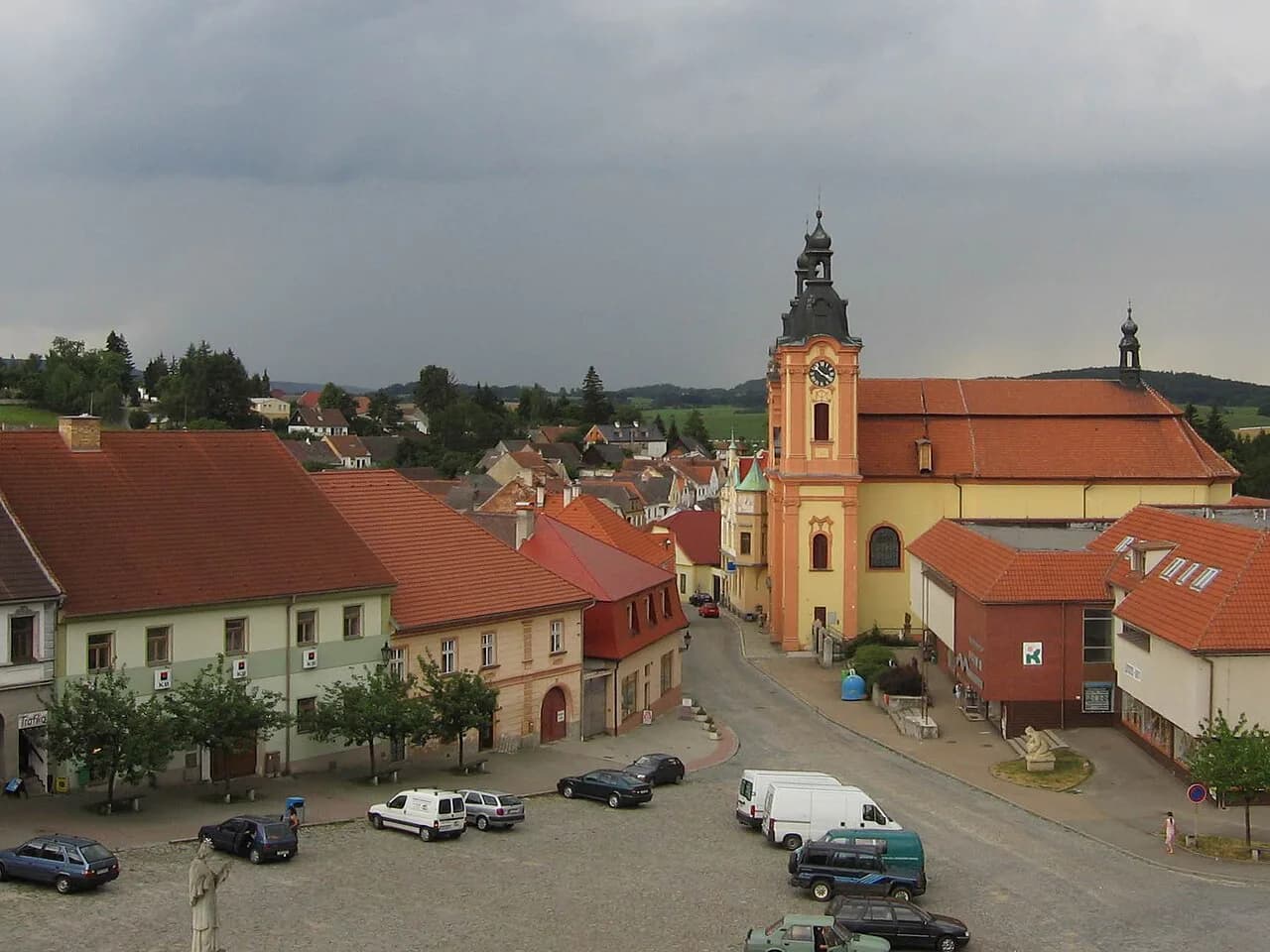
Heading south, Klatovy offers the Black Tower, Baroque catacombs and a Jesuit church, while Sušice: A Gate to Šumava on the Otava River sits at the edge of the forest. Domažlice, near the German border, keeps a distinctive Chod folk identity.
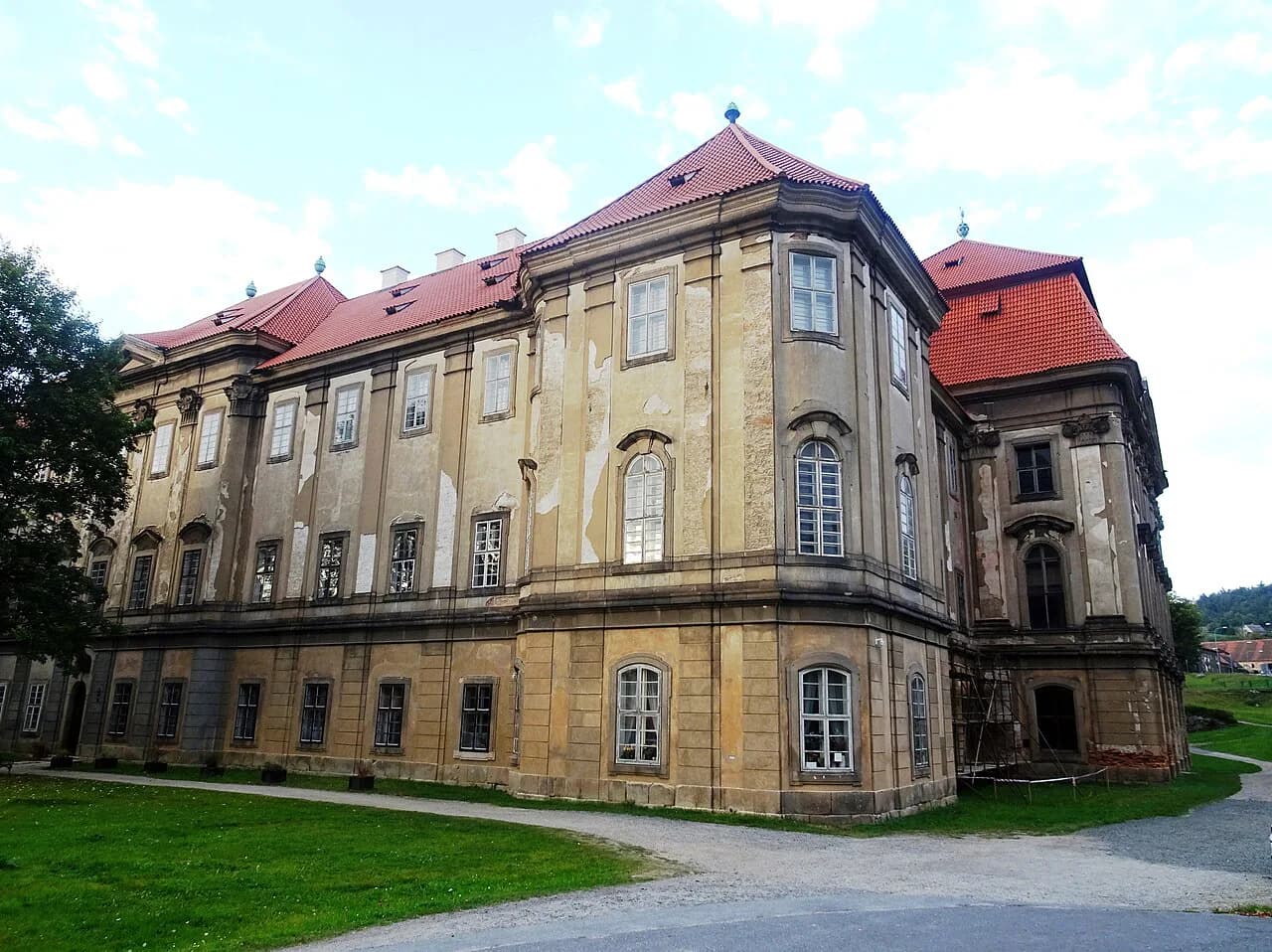
North and west of Plzeň, Plasy monastery preserves a substantial Cistercian monastic complex, while Nepomuk marks the birthplace of St John of Nepomuk beneath Zelená Hora. Horšovský Týn adds a state castle and chateau on the road toward Bavaria.
If you are weighing other Czech cities on the same trip, see how things to do in Brno and things to do in Karlovy Vary structure a day, since both use a compact center the way Plzeň does.
Which Two Sights Do You Book First?
For a first visit, book the cathedral tower and one of the two below-ground or brewing tours, then let the square, synagogue and puppet museum fill the rest of the walk. That combination gives you the city's religion, engineering and beer history without forcing three timed entries into one afternoon.
Travelers coming from Prague should confirm the day's bus times before leaving, and anyone continuing toward Šumava or Bavaria should leave Plzeň by late afternoon rather than pushing the drive after dark.
Explore more Plzeň guides
Frequently Asked Questions
Can I take a day trip from Prague to Pilsen?
Yes. Plzeň is about an hour from Prague by car or Flixbus, and the bus arrives close enough to the center to walk to Republic Square. To make a day trip work, pick the cathedral tower plus either the brewery or the historic underground, then see the synagogue and the puppet museum on foot between them.
What can I do in Plzeň that is not about beer?
The Great Synagogue, the Cathedral of St. Bartholomew tower, the Puppet Museum with its Spejbl and Hurvínek displays, the Thank You America monument and the Mlýnská strouha waterway all stand on their own. The historic underground is also a city-engineering tour rather than a brewery visit, even though it ends with a small beer.
How much does the Pilsner Urquell Brewery or the underground cost?
Ticket prices are set by each operator and change, so check the Pilsner Urquell Brewery website and the Historic Underground ticket desk for current CZK rates before booking. Both sell timed entries, and buying ahead matters most on weekends and in summer.
Sources
Notes for your Czech trip
Optional updates to our Czech town guides.
You might also like
Continue reading
More guides you'll find useful