Plasy Monastery: Santini's Convent Built on Water Near Plzeň
Plasy Monastery is a former Cistercian abbey north of Plzeň, rebuilt in Baroque style and famous for oak foundations kept under water. Here is what to see.
On this page
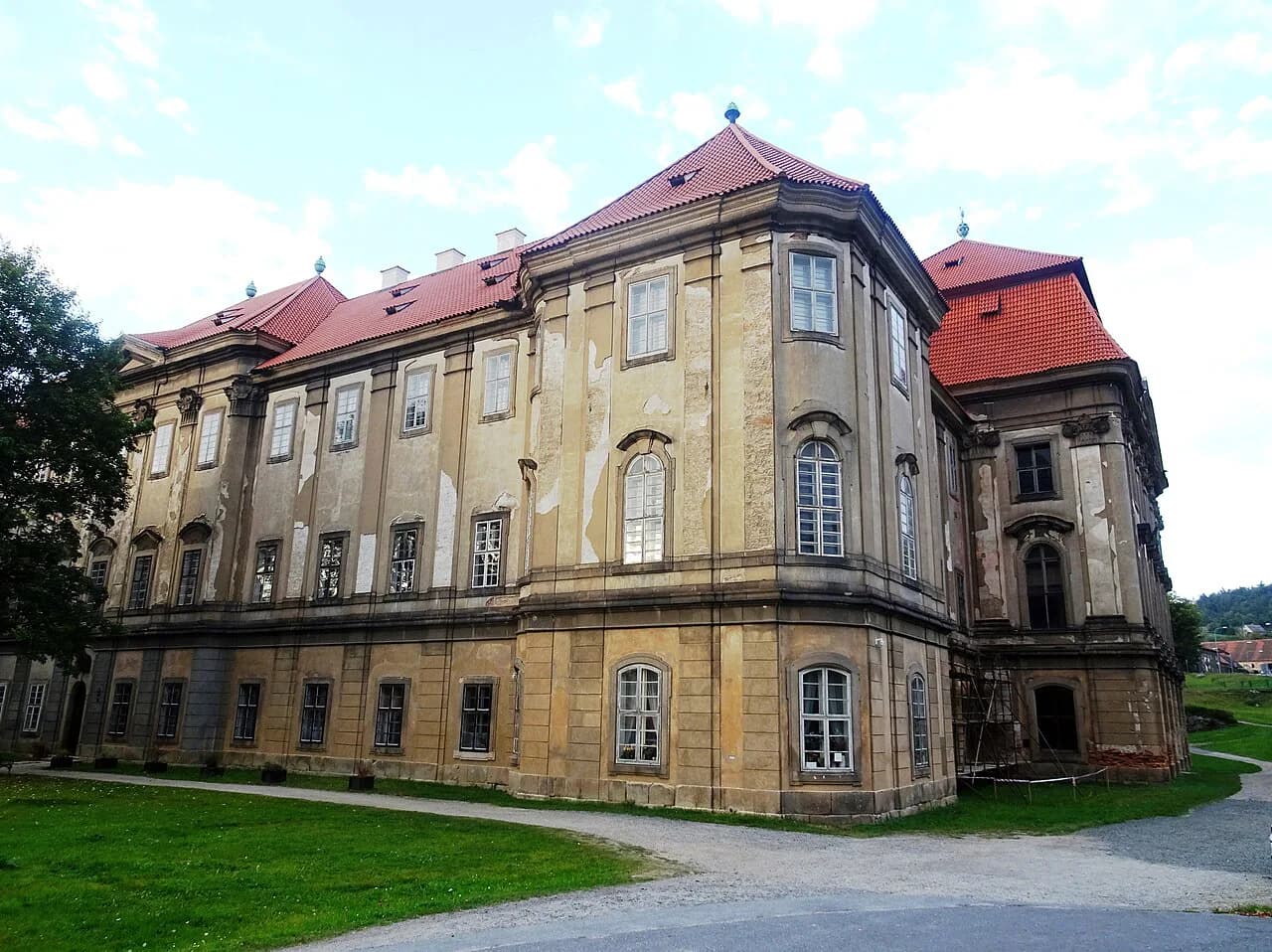
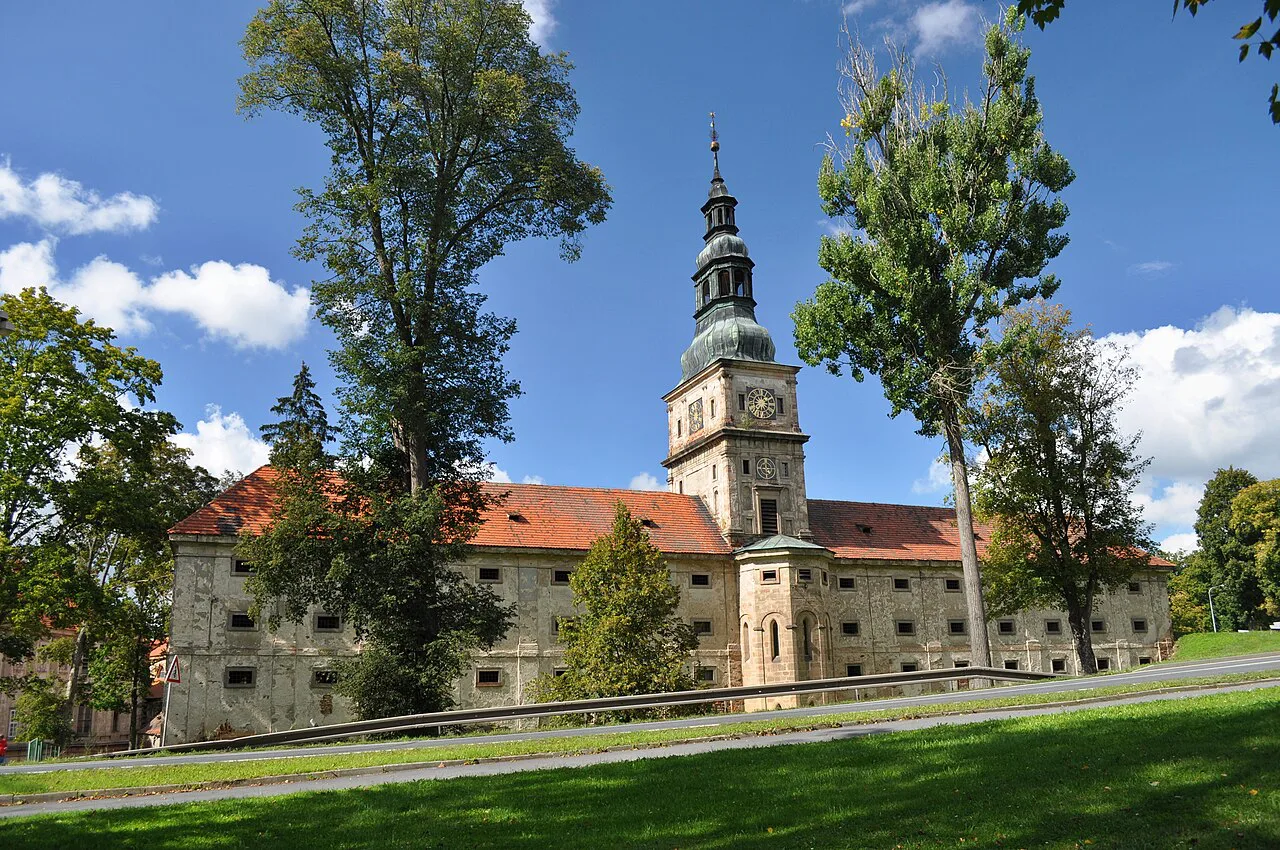
Plasy Monastery is a former Cistercian abbey north of Plzeň, and its buildings are arranged around a rectangular courtyard with pale weathered masonry walls and red-tiled roofs. The complex includes the Church of the Assumption of the Virgin Mary, the convent, the abbots' residence and farm buildings with a granary. What sets it apart from other Czech monasteries is why it is still standing at all: the convent's oak foundations sit below the water table, waterlogged rather than drained.
The official site describes the abbey as the first ruling-family Cistercian monastery in Bohemia, founded more than 880 years ago by Přemyslid duke Vladislav II; a secondary source dates the founding to 1144. Between 1661 and 1785 the abbey was rebuilt in grand Baroque style to plans by Jean Baptiste Mathey, Jan Blažej Santini Aichel and Kilián Ignác Dientzenhofer. The official site frames the whole complex as Santini's art of building on water.
This guide covers the layout of the complex, the waterlogged foundations, the Baroque rebuild and the buildings you see on the tour, and how Plasy fits a half day from Plzeň rather than a long trip from Prague. Hitting the brewery on the way back falls into the wider list of things to do in Plzeň.
Where Plasy Monastery Sits and How It Fits a Plzeň Trip
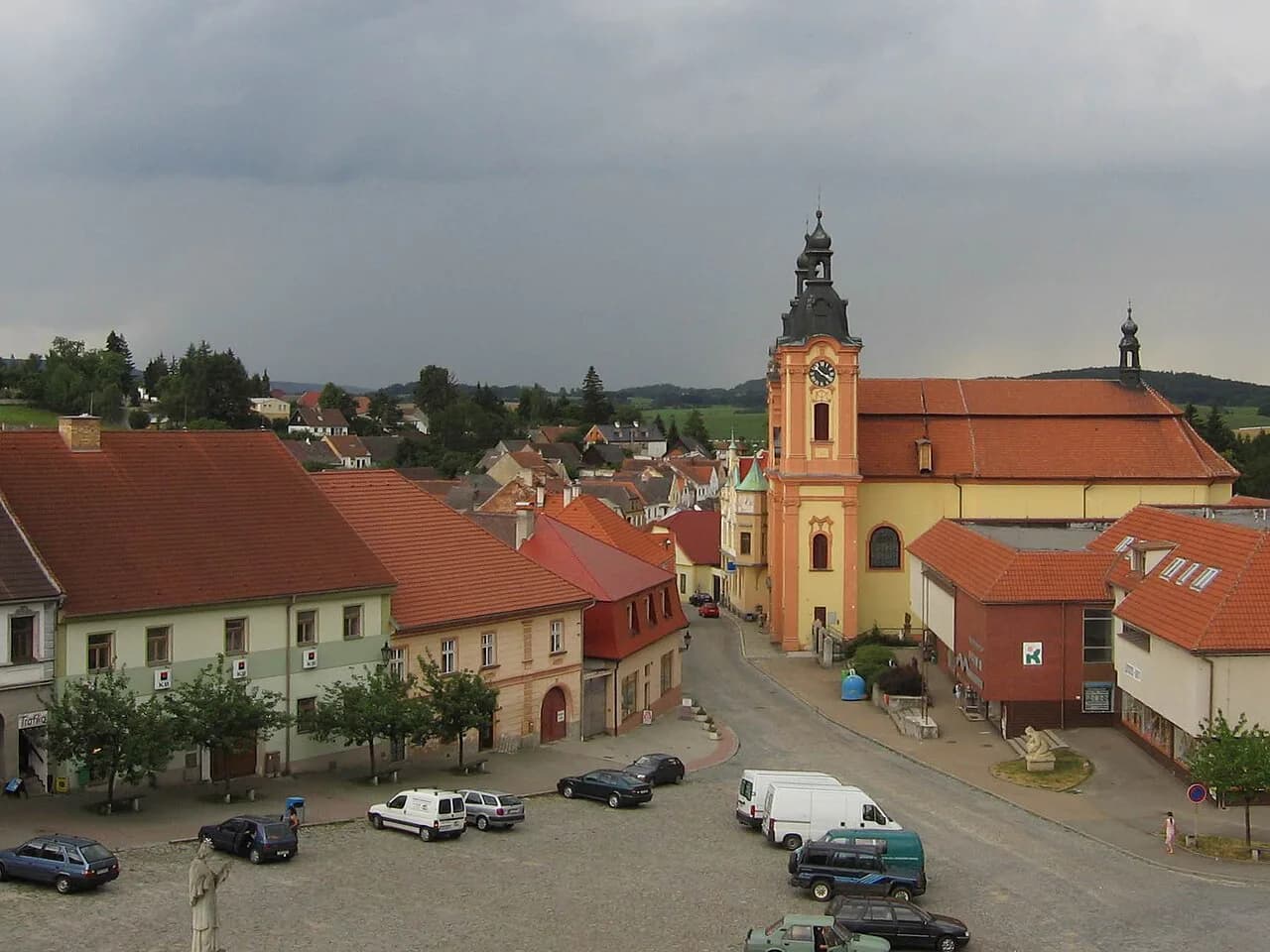
Plasy sits in the Střela river valley north of Plzeň, at Pivovarská 1 in the town of Plasy. The town grew around the abbey, so the monastery is the reason to come rather than a monument on the edge of somewhere larger.
For anyone based in Plzeň, Plasy is a half-day outing: a short drive or train ride north, a guided tour, and a look at the town. Prague works as the starting point of a longer west Bohemian route, but Plasy deserves to be paired with Plzeň itself and the monastery at Kladruby rather than treated as a day trip from the capital.
If you plan to spend the day in Plzeň before or after, the Plzeň map for visitors helps you sort the center around náměstí Republiky from the outer sights.
Why the Monastery Stands on Water
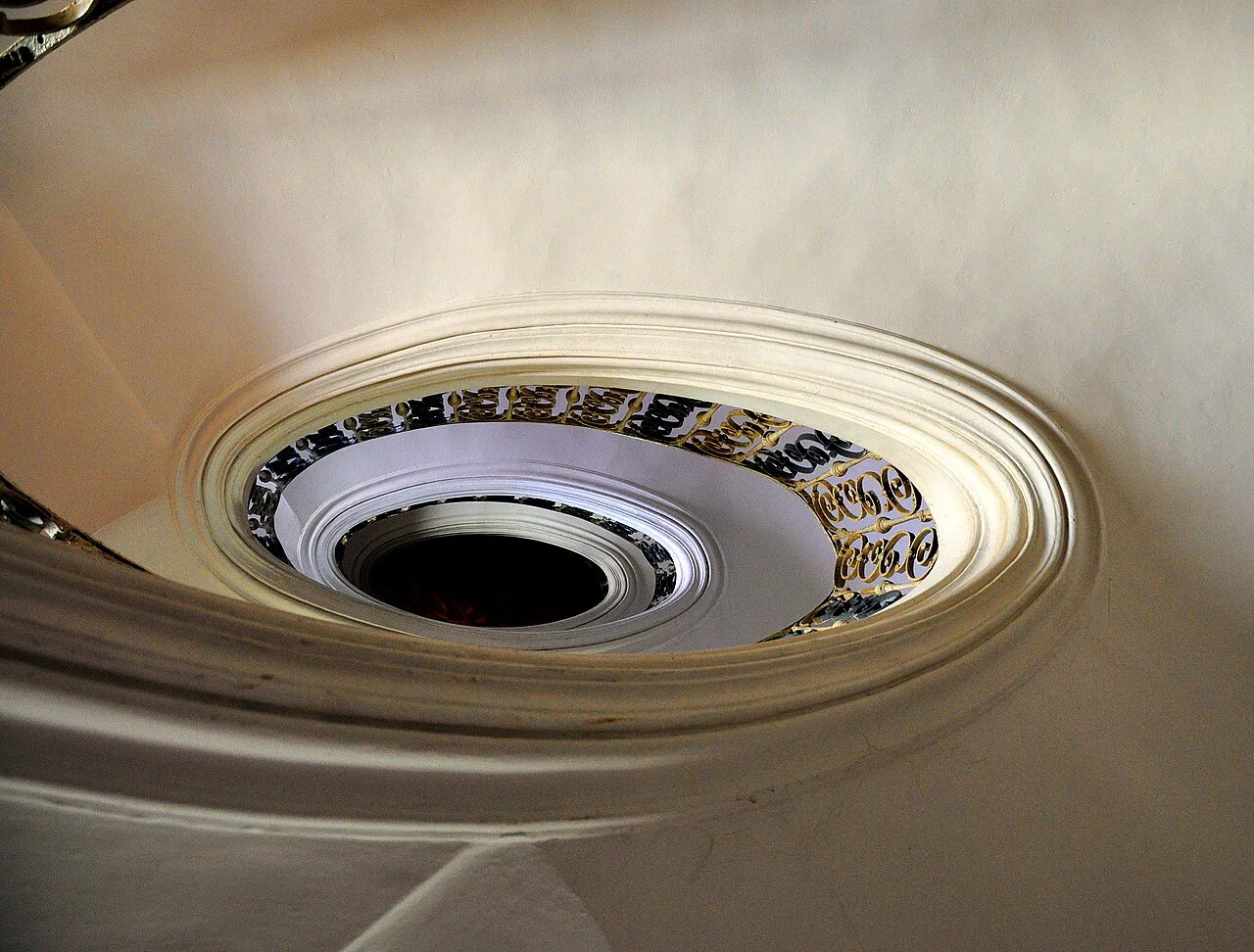
The monastery was founded on a marsh, and the Cistercians built their convent on oak piles kept permanently submerged. Because the timbers lie below the water table of the Střela valley meadow, they stay waterlogged and do not rot, which is the engineering logic behind the survival of the convent's oak foundations.
The official site makes the water the theme of the whole complex, describing the monastery as Santini's art of building on water with the warning that without water the building would collapse. Keep that in mind when you look at the plain convent walls: the drama is underground.
The visible fabric is sober Baroque masonry, while the remarkable part is a construction decision made when the convent was founded and still working today.
What to See: Church, Convent, Abbots' Residence and Granary
Start with the Church of the Assumption of the Virgin Mary, which anchors the complex and is the building most visitors photograph first. The convent, the monks' living quarters, is the part built over the waterlogged oaks. The abbots' residence and the farm buildings with their granary show the estate that kept the abbey running.
Inside the convent, the Chapter Hall was the heart of monastic life, where the community gathered for spiritual discussions and decisions. A tour through the selected rooms and exhibition spaces traces how the building shaped the monks' daily routine.
The granary has its own place in the story: the official site notes a granary with a clock tower that reopened to the public after restoration. The abbey is a working ensemble of church, cloister and farm buildings, not a single showpiece hall.
The Baroque Rebuild Under Mathey, Santini and Dientzenhofer
The abbey you walk through today is largely a Baroque creation. Between 1661 and 1785 the abbey was rebuilt according to the ideas and plans of its own abbots and of the architects Jean Baptiste Mathey, Jan Blažej Santini Aichel and Kilián Ignác Dientzenhofer. Three generations of Bohemian Baroque masters worked on one site.
Santini is the name most travelers recognize from pilgrimage churches and noble palaces, and at Plasy his contribution is bound up with the water problem: foundations, levels and drainage as much as ornament. Look for the structural moves as you pass from the church into the convent rather than only at the stucco.
That long building campaign explains the mix of styles inside: a medieval Cistercian plan wrapped in seventeenth- and eighteenth-century architecture, with the church and convent handling the monastic side and the residence showing how the abbots lived.
How a Visit Works: Guided Tours Through Selected Rooms
The monastery is visited on guided tours that lead through selected rooms and exhibition spaces rather than by wandering freely through the complex.
The official site publishes its tour circuits, visitor hours, admission prices, discounts and free-entry rules, plus a booking page. Check those pages on the day you plan to go; the circuit names and seasonal schedule change through the year, and the site is the place that carries them accurately.
Book ahead if your trip depends on Plasy. The complex hosts weddings and cultural events, and the abbey is a national cultural monument managed by the National Heritage Institute, so private functions can affect which rooms are open on a given afternoon.
What to Expect on Foot Inside
Wear comfortable walking shoes: the floors can be uneven and the stairs between levels are steep. Much of the route is indoors through historic rooms, and the tour covers several floors of the convent and residence.
Allow for standing during the guided portion, and treat the stairs as the main physical test rather than distance. Older travelers and families with small children should plan the tour around those staircases.
The official site also covers parking, accessibility, animals, cyclists, children and refreshments on its visitor pages, so you can check the practical fit before you commit to a time slot.
From Cistercian Abbey to Metternich Residence
In 1785 the monastery, the largest and most important Cistercian abbey in Bohemia, was dissolved. Forty years later it became the residence of Chancellor Metternich and his family, who established their family tomb here. That second life explains the interiors: part monastery, part aristocratic seat.
The abbey is today a national cultural monument and a co-holder of the European Heritage Label. Read the tour description for which chapters of that history each circuit covers, because the monastic rooms and the Metternich-era rooms are not the same experience.
Nearby: Center for Building Heritage and Kladruby Monastery
The Center for Building Heritage sits in Plasy itself, an easy walk in the same visit. It suits anyone who wants the construction side of Plasy explained in more depth.
West of Plasy, Kladruby Monastery is the natural second stop: another former monastery in the same part of west Bohemia, listed by the Plasy official site among the monuments in the surrounding area. Pairing the two fills a day out from Plzeň without a lot of driving.
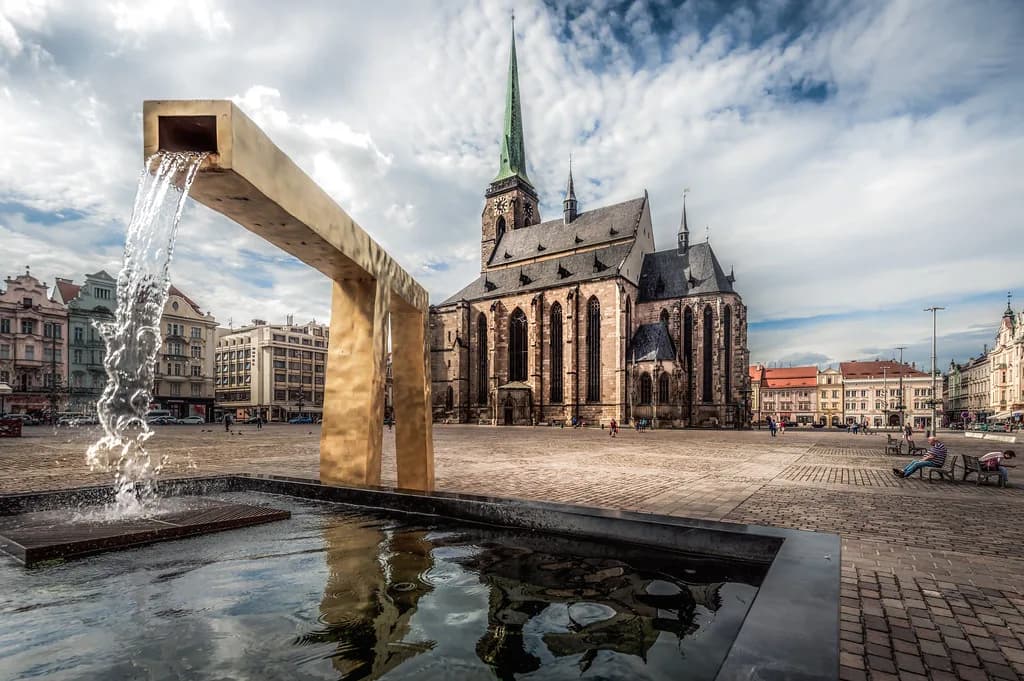
Back in Plzeň, St. Bartholomew's Cathedral in Plzeň is the city's own Gothic counterweight to Plasy's Baroque.
Who Plasy Suits on a Plzeň Trip
Plasy is for travelers who care how buildings work: the waterlogged foundations, the Baroque rebuilding campaign and the Cistercian plan are the reasons to come.
Anyone short on time in west Bohemia might put Plzeň's center and its brewery first, then add Plasy if a half day remains.
If you are building a wider loop around Plzeň, Plzeň sightseeing and the surrounding towns give you more to weigh against an afternoon at the abbey.
Book the Plasy Tour or Save It for Kladruby Day?
Build your Plasy visit around one guided tour, check the official site for current hours and booking, and give the abbey half a day including the Center for Building Heritage next door. The waterlogged oak foundations and the three-architect Baroque rebuild are what you are coming for, so let the guide explain them rather than hurrying through the church.
If you have only one free day in west Bohemia, spend it in Plzeň and keep Plasy for a trip that also takes in Kladruby. Either way, confirm the current circuit, hours and admission on the monastery's own pages before you set out.
Explore more Plzeň guides
Frequently Asked Questions
Why is Plasy Monastery built on water?
The monastery was founded on a marsh, and the Cistercians built the convent on oak piles kept permanently submerged. Because the timbers sit below the water table of the Střela valley meadow, they stay waterlogged and do not rot, which is why the convent's oak foundations have survived.
When was Plasy Monastery founded?
The official site describes it as the first ruling-family Cistercian monastery in Bohemia, founded more than 880 years ago by Přemyslid duke Vladislav II; a secondary source gives 1144. Between 1661 and 1785 the abbey was rebuilt in grand Baroque style to plans by Mathey, Santini Aichel and Dientzenhofer.
Can you visit Plasy Monastery only on a guided tour?
The monastery is visited on guided tours that lead through selected rooms and exhibition spaces rather than by wandering freely. The official site publishes tour circuits, visitor hours, admission prices, discounts, free-entry rules and a booking page.
What happened to Plasy Monastery after the monks left?
In 1785 the largest and most important Cistercian abbey in Bohemia was dissolved. Forty years later it became the residence of Chancellor Metternich and his family, who established their family tomb here, which explains the mix of monastic and aristocratic interiors.
What is near Plasy Monastery?
Kladruby Monastery, another former monastery in the same part of west Bohemia, is listed by the Plasy official site among the monuments in the surrounding area, and the Center for Building Heritage in Plasy explains the construction side in more depth.
Sources
Notes for your Czech trip
Optional updates to our Czech town guides.
You might also like
Continue reading
More guides you'll find useful