Things to Do in Český Krumlov: Castle, Old Town and River
Plan Český Krumlov by area: castle courtyards and tour routes, the Cloak Bridge, St. Vitus Church, the river, and when the lanes empty out.
On this page
The core of Český Krumlov is free and compact: the castle courtyards, the Cloak Bridge, the old town lanes and St. Vitus Church fill a solid half day on foot, and the paid castle interiors add roughly two hours on top. What stretches a visit is not distance but decisions, mainly which of the castle's tour circuits you book and whether you stay past the afternoon exodus. This guide lays the town out piece by piece, from the river bend to the tower, with the 2026 ticket prices and the timing that keeps the lanes pleasant.
The whole historic center sits inside a car-free zone, and most sights lie within about a ten-minute walk of the main square, so you park once and move on foot. That compactness is why an hour covers the lanes and the castle is what actually sets the length of your day. Use the Český Krumlov Attractions: 9 Visitor Guides hub to jump to any single sight in depth.
How the town is laid out
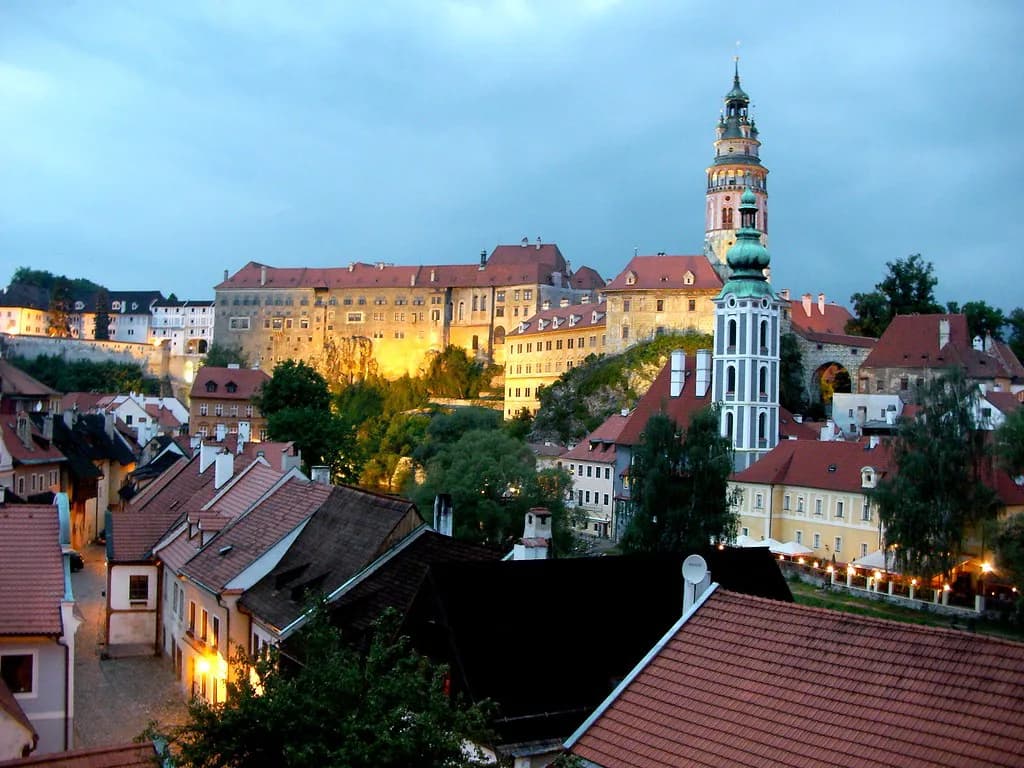
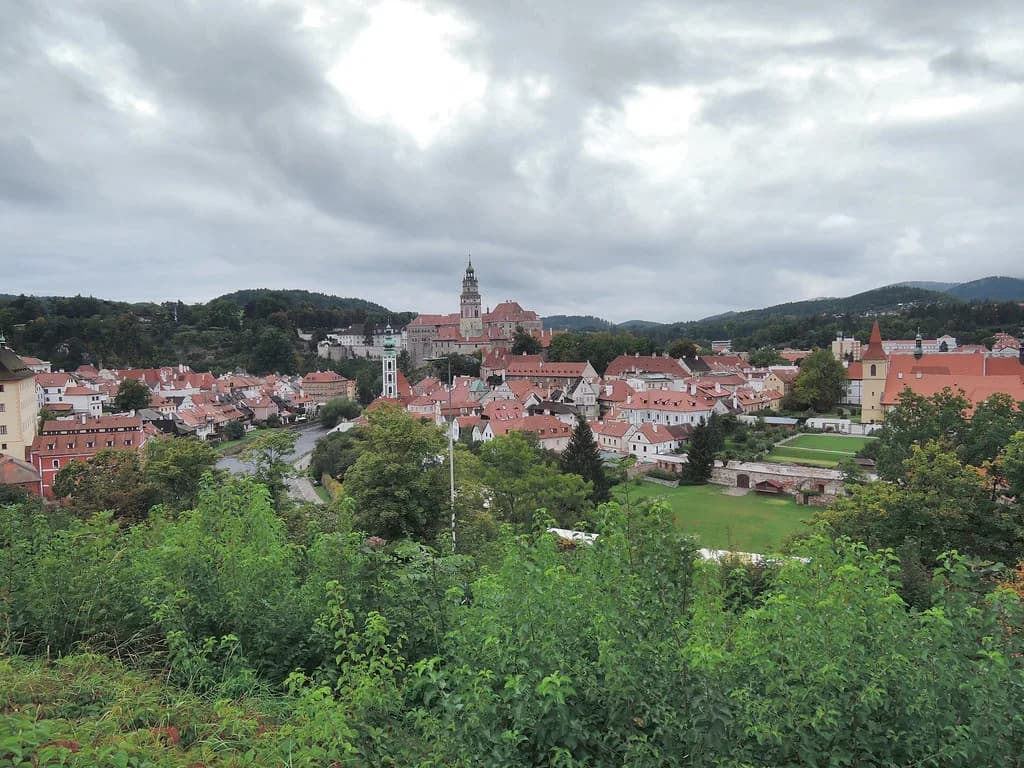
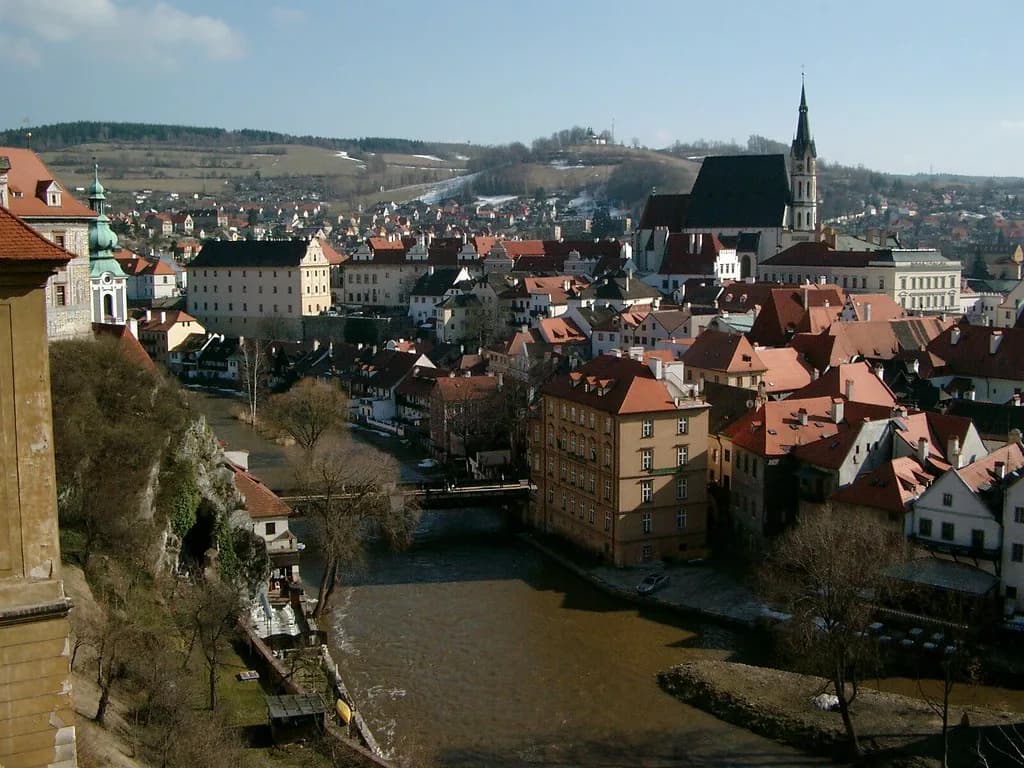
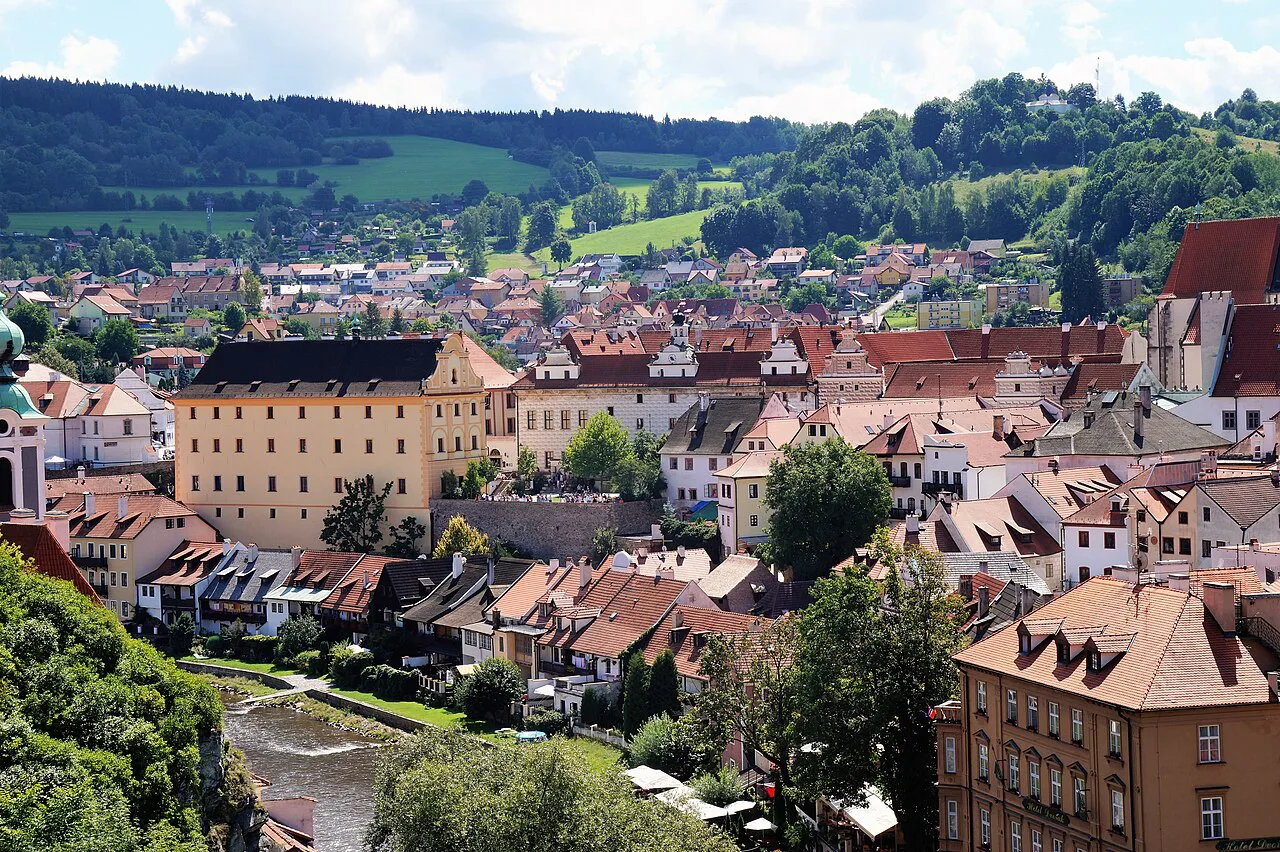
The town wraps around an S curve of the Vltava River, and the castle sits on the high bank above the bend, which is why so many views look down onto red roofs rather than across a square. The old town lanes run below the castle on the inner side of the river; crossing a bridge puts you on the outer bank, where the walk in from the main parking areas begins. Getting this shape clear in your head saves backtracking.
The historic center is pedestrian-only, and the practical walking radius from the main square covers most of what you came for. Walking the streets is itself the point here, and if you want the route taken care of, A Self-Guided Walking Tour of Český Krumlov lays out the jumble of Gothic, Renaissance and Baroque facades to look for as you go.
Small as it is, the town rewards a slower pace than a checklist allows. Travelers who rush between the castle and the square tend to remember cobblestones and crowds; those who leave time for the alleys and a café table remember the place itself.
Český Krumlov Castle: courtyards and the best views
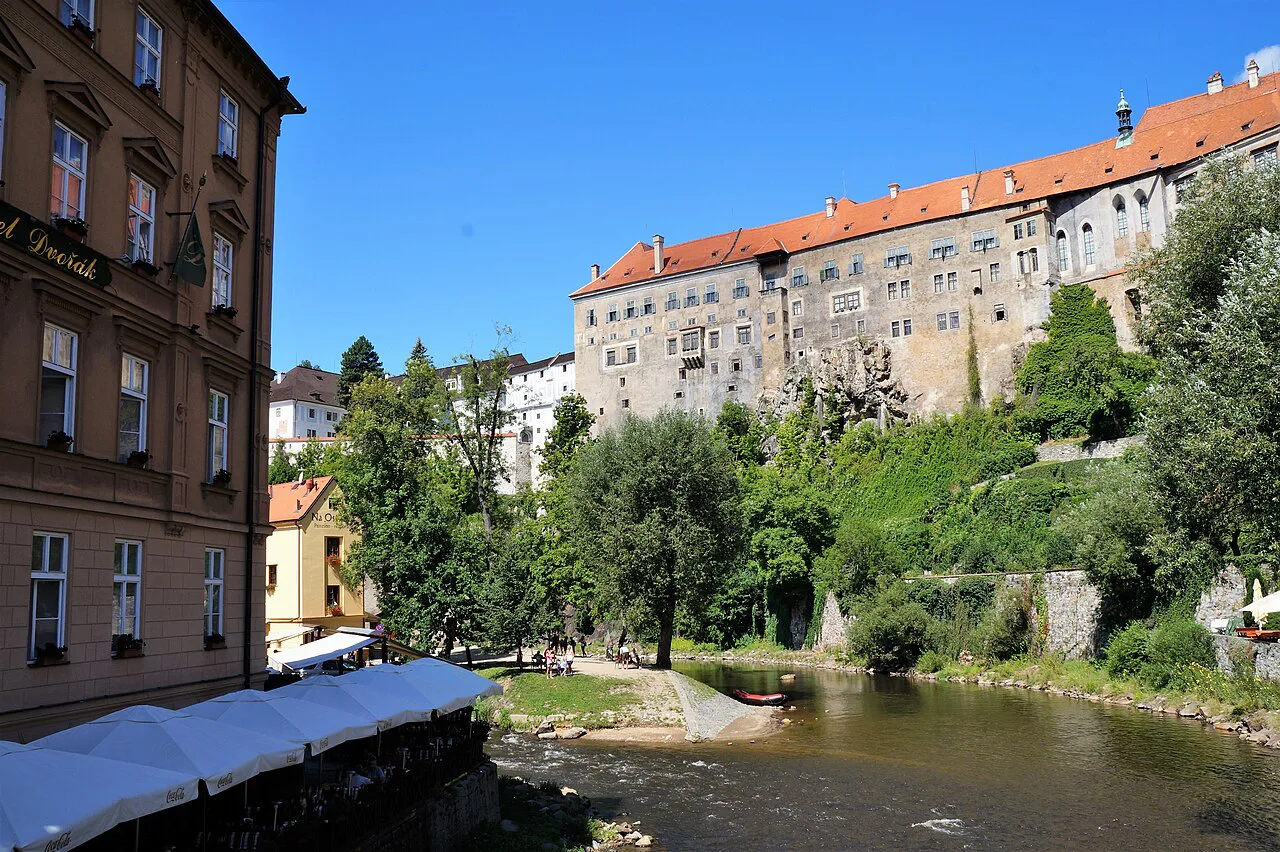
The castle grounds and courtyards are free to enter, and that is where the classic panoramas over the rooftops open up. The complex is the second largest castle in the country after Prague Castle, which is a useful scale cue: you are not crossing a courtyard and leaving, you are moving up through a fortified site with several levels.
Budget your photography here rather than inside. The free viewpoints do most of the work, and the state rooms are about interiors, not vistas, so a traveler watching the clock can see the courtyards, take the views and still have most of the day left for the lanes below.
Castle interiors by tour route
Paid entry works by separate tour circuits, and the 2026 prices listed for the castle are 300 CZK per adult for Route 1, 260 CZK for Route 2, 280 CZK for a combined Castle Museum and Tower ticket, and 400 CZK for the Baroque Theatre tour. Route 1 covers the Renaissance and Baroque interiors, including the Masquerade Hall, and is the circuit to pick on a first visit; Route 2 turns to Schwarzenberg family history and a portrait gallery and suits repeat visitors or anyone drawn to the dynasty rather than the rooms.
The Baroque Theatre tour is the standout for anyone interested in stage craft: it shows what is described as the best-preserved Baroque theatre in Europe, and the source reports that this tour sells out, so treat booking early as the safe move rather than showing up hopeful. The Český Krumlov baroque theatre is a separate draw from the state rooms, and its higher ticket reflects a smaller, more fragile space.
If you would rather climb than sit through interiors, the tower in the combined ticket gives the highest view in town and pairs naturally with the museum below. The trade-off is simple: the free courtyards give you the postcard view for nothing, and the tower gives you height and a museum for one price.
The Cloak Bridge and the walk in
The Cloak Bridge is the arching structure that carries the castle's upper levels across a gap, and you cannot really miss it on the approach from the main parking area by the P1 lot. It is part of the castle complex, so you can walk across it while visiting the courtyards, which makes it both a sight and a piece of the route rather than a detour.
Coming in this way sets up the day well: bridge, courtyards, views, then the lanes down into the old town, covered in depth in Český Krumlov Old Town. Keep the castle for the morning and the streets for the afternoon, and the geography does the planning for you.
St. Vitus Church and the Minorites alley
St. Vitus Church rises above the old town, its spire visible from much of the center, and it is named among the sights to see alongside the walk up the alley to the Monastery of the Minorites. Both sit on the same side of town as the castle, so pair them with the courtyards rather than treating them as separate stops.
Travelers often call the church a cathedral, and it is worth knowing what you are walking into: this is a parish church of real age and height rather than a bishop's seat. For the town's other religious buildings and how to visit them, Churches in Český Krumlov sets them side by side.
Museum Fotoatelier Seidel and rainy half days
Museum Fotoatelier Seidel preserves the studio of the town's best-known photographers, and it is the natural pick when weather pushes you indoors. A museum like this fills two hours without eating the whole day, which makes it a good swap for a rained-out river trip rather than a replacement for the castle.
The town's museum scene is small but specific, and choosing by interest beats trying to see everything. Museums in Český Krumlov lays out what each one covers so you can spend the wet hours where they count.
Wooden raft cruise on the Vltava
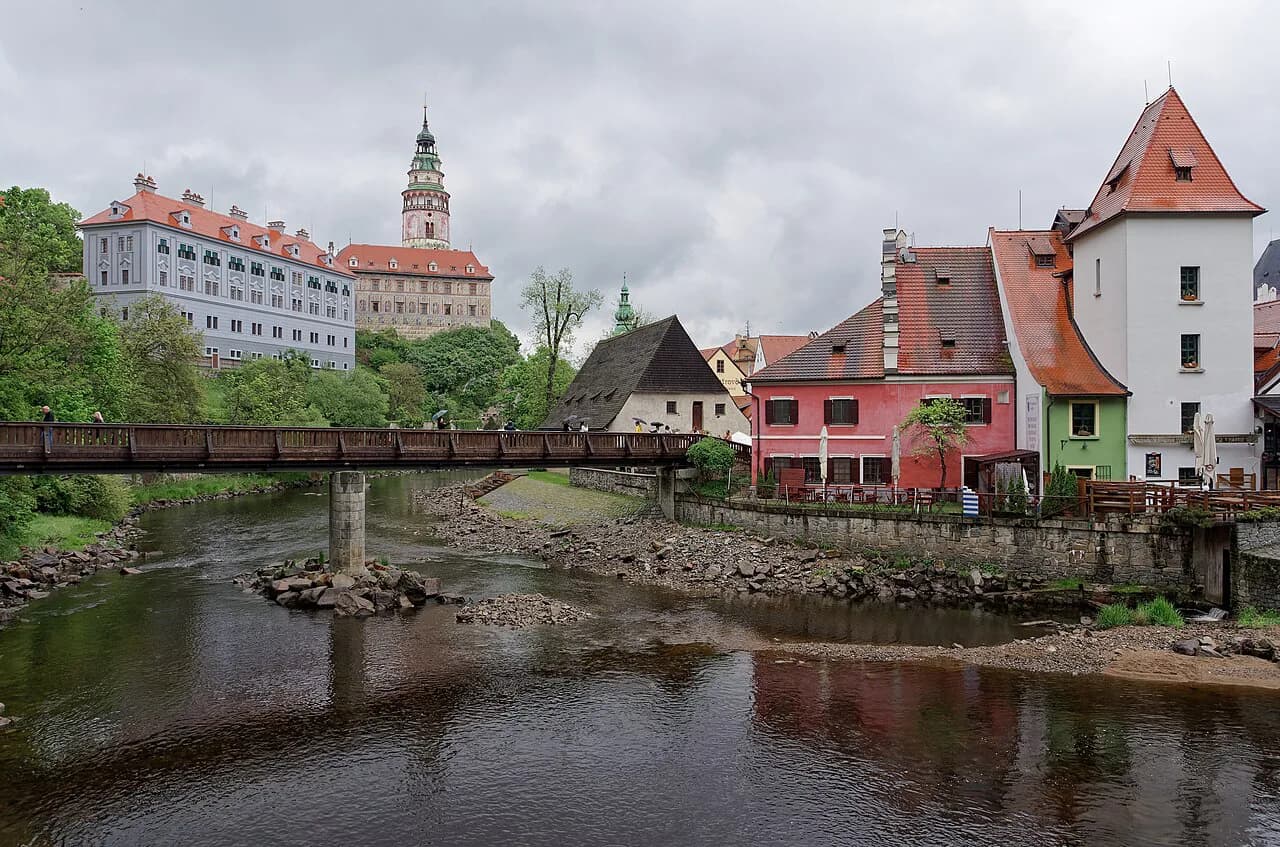
A wooden raft trip on the Vltava is among the town's best-rated activities, and its appeal is the angle: you see the castle and the Cloak Bridge from the water instead of from above. It suits travelers who have already covered the courtyards and want a different perspective on the same skyline.
Skip it if your time is short or the weather is against you, because hours on the water compete directly with the castle interiors. The Vltava River is the reason the town looks the way it does, so time on it is well spent when the schedule allows; Český Krumlov rafting covers the options on the water.
Old Town lanes and the main square
The lanes and the main square are the connective tissue of a day here, not a checklist item to tick and leave. The whole historic center can be walked in about an hour, which means the streets work best between sights, over coffee, or on the way back from the castle.
That compactness changes how you plan. Instead of filling a day with sights, you fill it with one or two commitments and let the streets do the rest, which is also why staying past the day-trip crowds pays off here more than in a larger city.
Eating and the café habit
Czech food and a well-developed café culture carry the slow middle of the day, and the town is small enough that a long lunch costs you little sightseeing time. Among the places the sources name are Papa's Living and Kafemlejnek, plus Bar Apotheka and Food and Wine Bar Klika for later in the day.
Beer belongs on the same list, since the Czech pub habit is part of what a South Bohemian town does well. Beer in Český Krumlov picks out the places worth your evening, and the best restaurants in Český Krumlov covers the sit-down side if you want a proper meal rather than a plate of something fried.
Timing the crowds
Day trippers from Prague dominate the middle of the day, and the practical fix is to walk the lanes before 9am or after 5pm, when the groups have gone. The town is small enough that the difference is dramatic: the same street is a scrum at noon and empty at breakfast.
Summer is peak season, while January and February are the quietest months, and the town's population of just over 14,000 is outnumbered by summer visitors. Plan the castle for opening time and the streets for the edges of the day, and midday becomes a good slot for lunch or a museum instead of a queue.
Getting there from Prague
Buses run direct from Prague several times a day and take around three hours, which makes them the flexible option; there is one direct train connection daily, at about two and a half hours, so the train suits a traveler whose day can bend to a single departure. By car the distance is roughly 180 km, about three hours.
The station sits about a 20-minute walk downhill from the historic center, which is easy with a day bag and genuinely unpleasant with rolling luggage on cobblestones, especially on the uphill return. If you are staying overnight, a taxi or a hotel pickup for the last stretch is money well spent.
Driving in and parking
Cars stay outside the pedestrian center, and several lots ring the historic core; the P1 lot sits next to the Cloak Bridge, so you cross into town at the castle rather than at the far end. Some accommodations offer a parking discount, though you may need to check in first to collect a card and then re-enter the lot.
Confirm the current charge with your accommodation or at the lot before you budget for parking. What matters for planning is position: the lots are close enough that you park once and walk for the rest of your stay, with the P1 lot just across the Cloak Bridge from the historic center.
Fitting Český Krumlov into a South Bohemia route
Most bus and train journeys from Prague pass through České Budějovice, and breaking the trip there turns a transfer into a stop rather than dead time. From Budějovice the southbound leg continues toward Český Krumlov and the Bohemian south.
The town's own past runs through its ruling families and the castle that anchored them, and knowing a little of it changes what you notice in the courtyards. Český Krumlov history fills in the background before you arrive.
Which castle ticket to buy first
Buy Route 1 first: at 300 CZK in 2026 it gives the Renaissance and Baroque rooms and the Masquerade Hall, the circuit that makes sense on a first visit. Add the Baroque Theatre only if the idea of a preserved stage house appeals, and treat the free courtyards as the fixed point your day is built around. If you are weighing a second South Bohemian town, things to do in Brno takes the same first-visit-first logic to Moravia's largest city.
Then shape the rest around the clock: castle in the morning, lanes before 9am or after 5pm, and a museum or a long lunch when the middle of the day brings the buses. If you want the whole day mapped street by street, A Český Krumlov Itinerary sequences it for you.
Explore more Český Krumlov guides
- Beer in Český Krumlov
- Best Restaurants in Český Krumlov
- Museums in Český Krumlov
- The Baroque Theatre at Český Krumlov Castle
- Český Krumlov Castle Tours
- Český Krumlov Old Town
- A Self-Guided Walking Tour of Český Krumlov
- A Český Krumlov Itinerary
- One Day in Český Krumlov
- Shopping in Český Krumlov
- Viewpoints in Český Krumlov
- Český Krumlov History
- Český Krumlov Map
- Český Krumlov Tours
Frequently Asked Questions
Are there free things to do in Český Krumlov?
Yes. The castle courtyards and the viewpoints they open onto cost nothing, and so does walking the old town lanes and crossing the Cloak Bridge while visiting the castle. The paid elements are the castle interiors, the tower and museum, and the Baroque Theatre tour.
What is special about Český Krumlov?
It is a UNESCO World Heritage town whose medieval core survived largely intact, built around an S curve of the Vltava and dominated by the country's second largest castle. The combination of a car-free historic center and a castle on the high bank gives it a skyline that reads as one piece.
How long does the castle take?
The free courtyards and views take under an hour. Add roughly an hour to ninety minutes for a guided interior circuit, and count on more if you combine the tower and museum or book the Baroque Theatre tour. Check the castle's published tour times for the day you visit before fixing your schedule.
Sources
Notes for your Czech trip
Optional updates to our Czech town guides.
You might also like
Continue reading
More guides you'll find useful