One Day in Český Krumlov: A Walkable Itinerary
One day in Český Krumlov fits the castle, tower, St. Vitus Church, Old Town and gardens on foot. Here is a realistic order for the day, hour by hour.
On this page
One day in Český Krumlov covers the castle complex, the tower, St. Vitus Church, the Old Town and the castle gardens, and every stop sits within walking distance of the next. The town is compact enough that you never need transport once you arrive, so the real planning question is the order of the day; our Things to Do in Český Krumlov guide sorts the sights for a longer stay, while this plan runs from a morning climb through Latrán to an evening in the emptied streets.
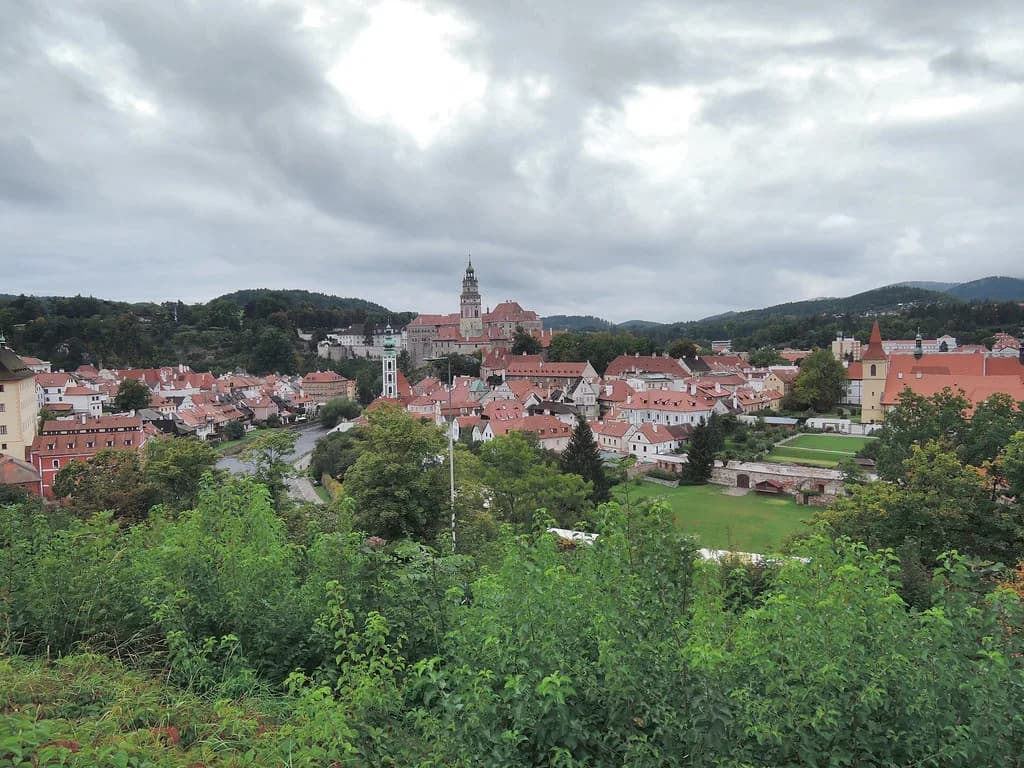
The day works because the town splits into two halves on either side of the river, with the castle on the bank between them. Latrán, the lane below the castle, leads up to the castle courts, while the inner town holds the main square and St. Vitus Church. Walking the castle side first and crossing to the square at midday puts you indoors or in church when the tour buses are thickest.
How the town is laid out
The historic center is a UNESCO World Heritage Site of cobbled lanes and Renaissance facades, and it survived World War II without bombing, which is why the old fabric is intact rather than rebuilt. Everything a one-day visitor wants lies inside that small ring.
A small bridge links the two halves near the main square, so the layout rewards a loop rather than a back-and-forth. Go up through Latrán, along the castle, across the river, then back through the square; that single decision saves you an hour of retracing.
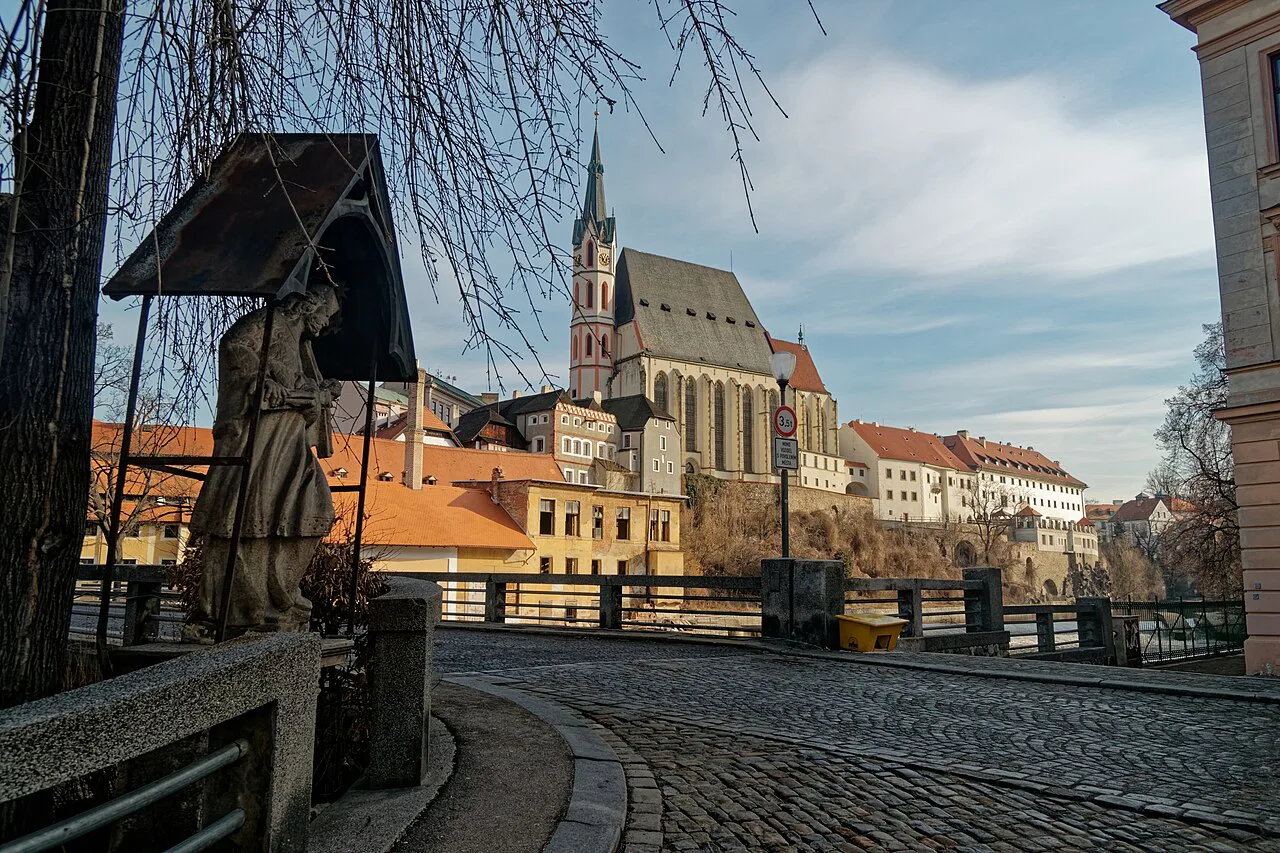
Morning: Latrán, the castle courts and the Cloak Bridge
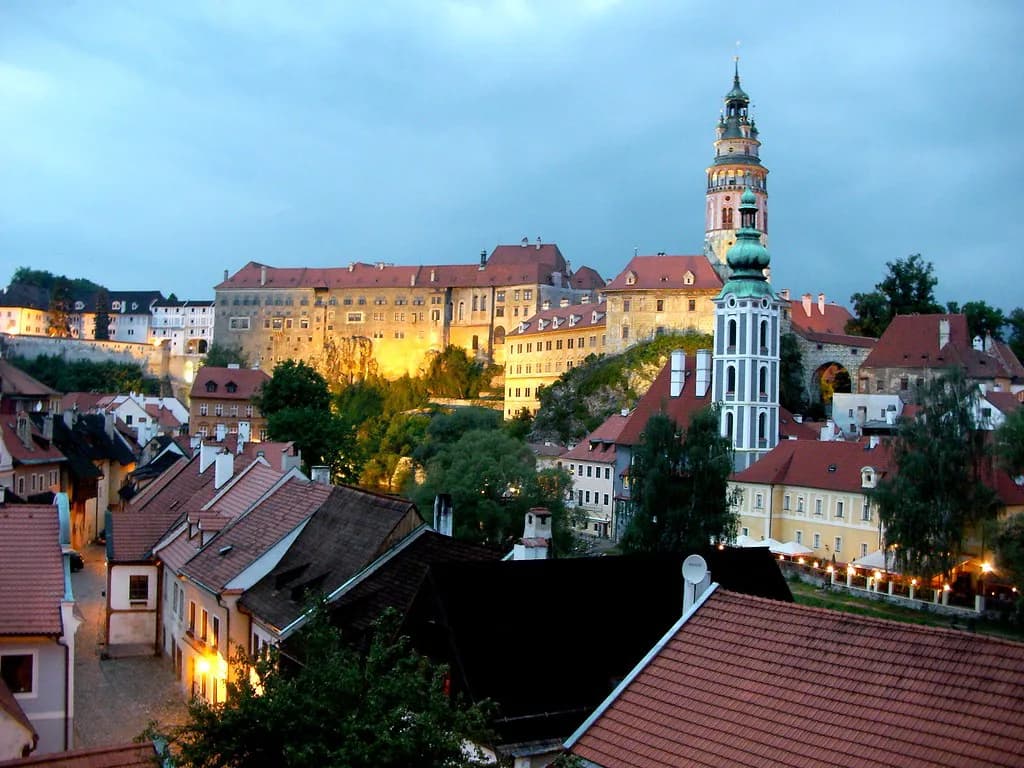
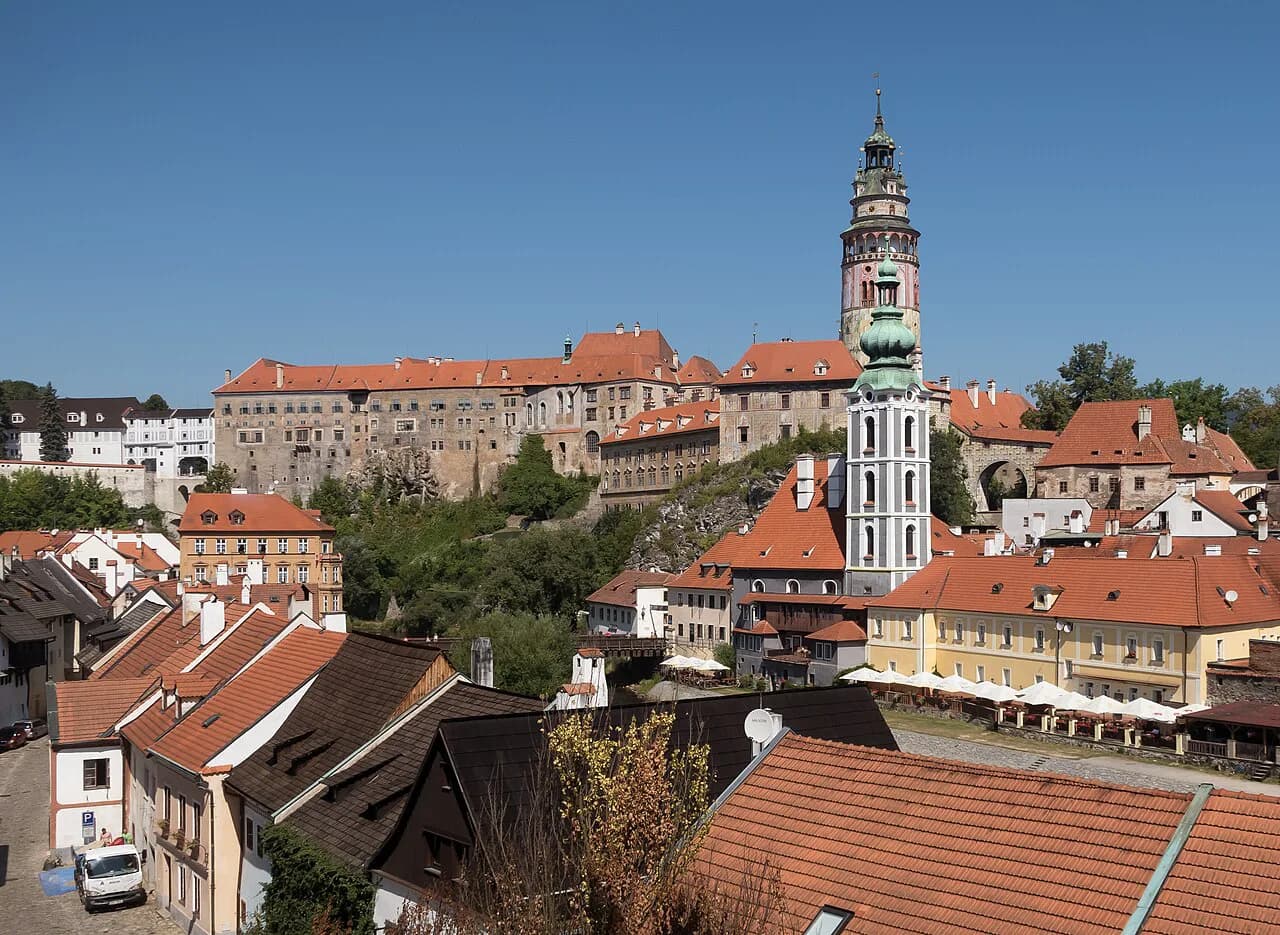
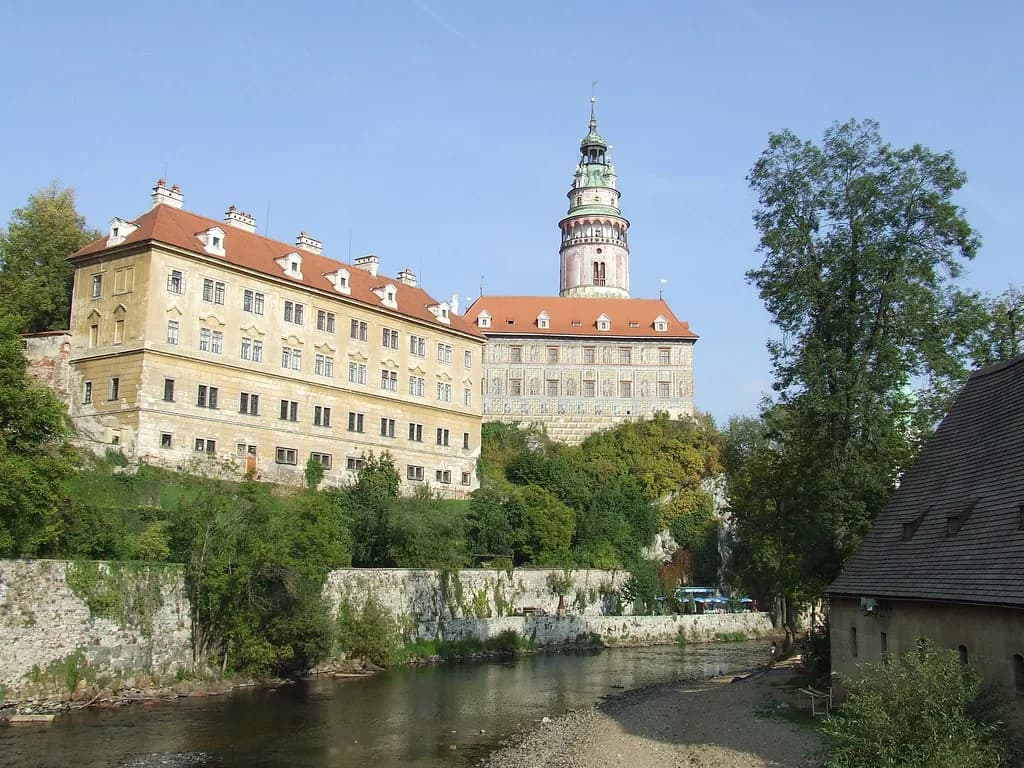
Start early and walk up through Latrán to reach the castle courts before the day-trippers arrive. The complex is one of the largest in Central Europe, with forty buildings and five courts, and the first fortress on the site dates to around 1240. The courtyards and the Cloak Bridge are the early-morning highlight, giving you the classic view over the rooftops before the crowds climb.
The Cloak Bridge carries you over a gorge between castle sections and gives the classic view back down over the ochre rooftops. From the courts, the river bend and the church tower line up below you, and the light is cleanest before the crowds climb.
The castle belonged over the centuries to the Rosenbergs, the Eggenbergs and the Schwarzenbergs before passing to the Czechoslovak state after World War II. That lineage explains why the interiors span Renaissance and Baroque periods and why one tour is devoted to the Schwarzenberg family.
The castle tower and its 162 steps
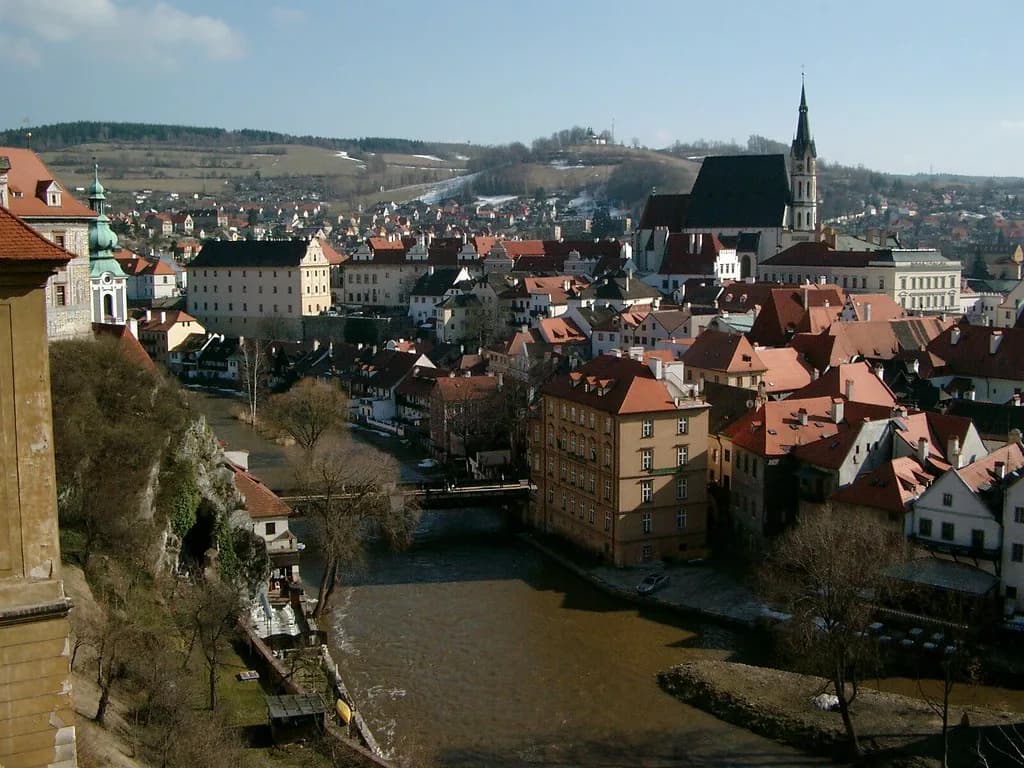
The tower needs its own ticket, separate from the interiors, and the climb is 162 steps to the top. The reward is the widest panorama in town, taking in the river loop, the red roofs and the castle gardens beyond. If your schedule allows only one paid climb, make it this one, because the view explains the whole layout in a single look.
Castle interiors on a guided tour
Inside the castle you visit on a guided tour, and there are two routes to choose between. The first covers the original Renaissance and Baroque interiors of the sixteenth to eighteenth centuries, while the second follows the history of the Schwarzenberg family and covers areas the first route skips. Each tour runs about an hour, and with time for only one, the interiors route is the broader introduction.
Castle tour prices are listed at 240 CZK for an adult, 190 CZK for seniors 65 and over and for youth aged 18 to 24, and 100 CZK for children aged 6 to 17. Budget the ticket separately from the tower, which is priced on its own.
What the castle season means for a one-day plan
The castle interiors generally open from April to October, with hours around 9am to 5pm and a later close of about 6pm in June through August. In summer you slot a tour into a crowded morning; outside those months the interiors may be shut and the plan shifts to the courtyards and the Cloak Bridge, which stay walkable along the garden walls even when the castle is closed. An off-season day is quieter but loses the furnished rooms, so decide which you value more before you set the date.
The Baroque Theater: does it earn a slot?
The castle's Baroque Theater is one of only two surviving in Europe, the other being in Stockholm, which is why it draws special interest. It follows the same seasonal opening pattern as the interiors, so it fits a one-day visit only if you are already touring inside; on a tight schedule it is the first thing to drop in favor of the tower and the gardens.
Midday: St. Vitus Church and the main square
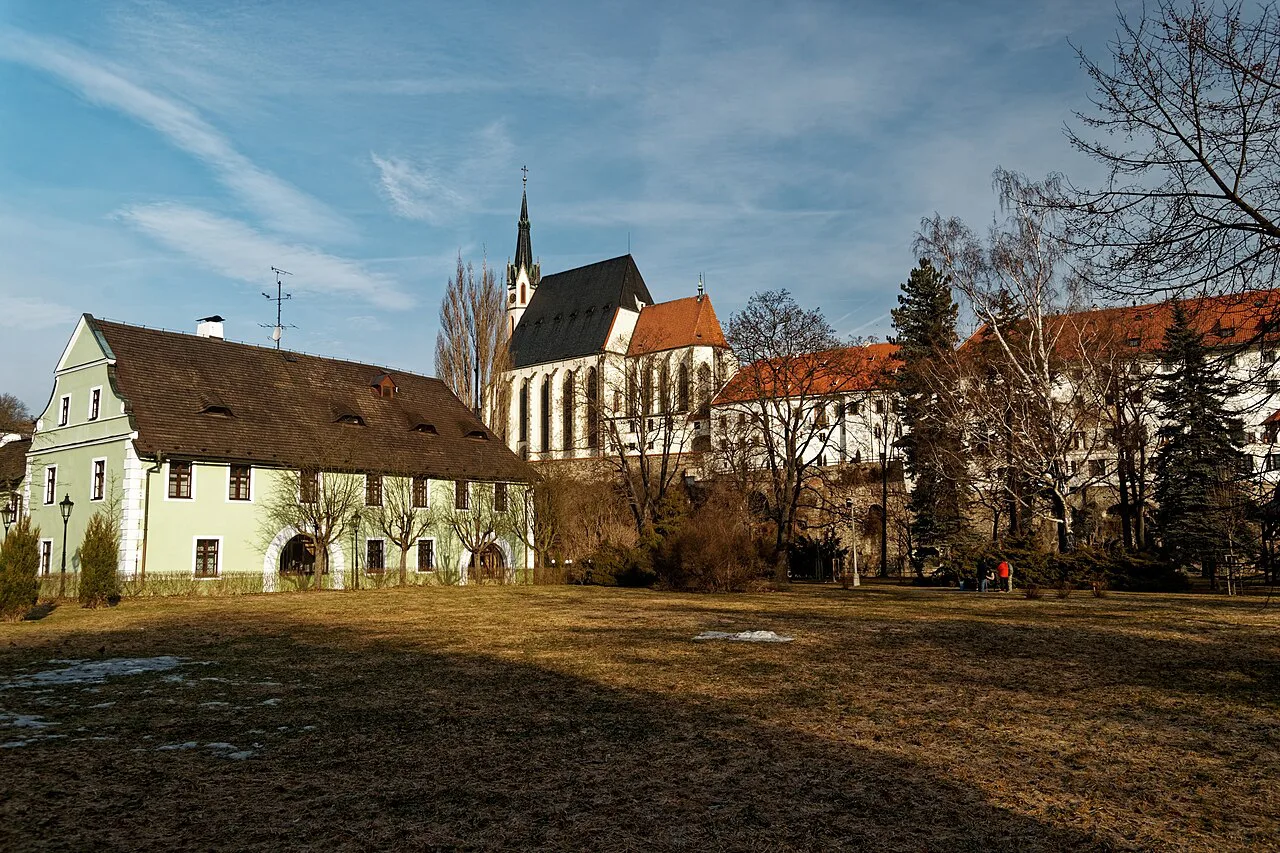
Cross the river into the inner town around midday, when the tour buses are at their thickest, and use the church and the square as your shelter from the crush. St. Vitus Church rises above the old center and its tower is a landmark from every lane. The main square, náměstí Svornosti, is the natural pause point, ringed by facades and arcades that give you shade and a place to sit.
If you want a structured walk rather than an improvised one, a fixed route through these lanes keeps you moving and out of the busiest knots. Aim to be inside the church or at a table during the peak, then step back out as the groups thin.
Lunch: a sit-down Czech meal or a quick stop
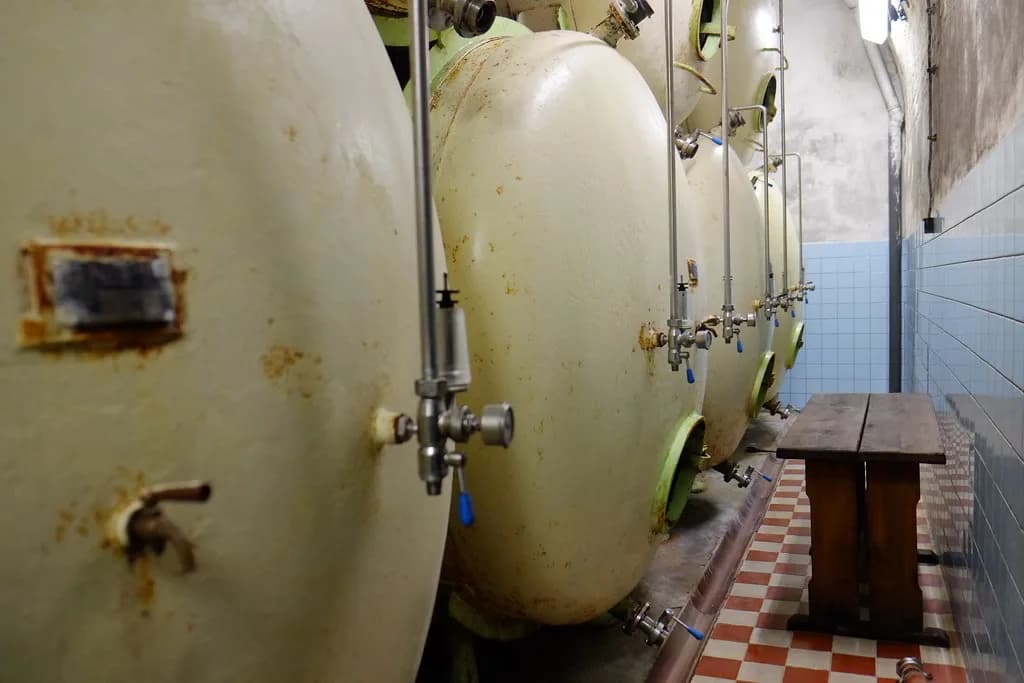
For lunch you choose between a proper sit-down Czech meal and a fast bite, and the midday peak decides the timing more than the food does. A sit-down lunch of hearty Bohemian cooking is the more satisfying option if you can eat slightly before or after the rush, while a quick stop frees an hour for the gardens. Local beer is part of that decision, and southern Bohemia has a strong brewing tradition worth a glass with your meal.
If you would rather keep the day moving, save the longer meal for the evening when the day-trippers have gone. A single well-chosen stop beats grazing through the afternoon.
Afternoon: castle gardens and the garden wall walk
In the afternoon, head for the castle gardens beyond the main complex, where formal beds and parkland spread across a large area above the town. The walk along the garden walls gives you the view back over the rooftops that most day-trippers miss because they never leave the square. It is the calmest hour of a busy day, and the roads along the garden walls stay walkable even outside the castle season.
This is also the stretch where a short paddle on the river tempts people in warm weather, since the river loop runs right through town. Rafting and canoeing show the castle from the water, but they eat half a day and are better left to a longer stay. On a one-day plan, keep your feet on the cobbles.
Late afternoon: museums when the streets are busiest
When the streets peak again in late afternoon, duck into the Egon Schiele Art Centrum or one of the town's other museums and let the crowds pass outside. The art center is the standout indoor stop, and the monastery complex and smaller museums fill the same role on a wet or crowded day. Choose one, not three, so you still reach the evening streets in good time.
Browsing the small shops and antique stores along the lanes is another way to spend the busiest hour, and it keeps you close to the square without standing in the open. Pick a couple of lanes off the main drag and the crowds thin quickly.
Evening: the Old Town after the day-trippers leave
The best argument for sleeping in Český Krumlov rather than returning to Prague is the evening, when the day-trippers leave and the lanes empty out. The town in the afternoon is quieter than at midday, and by evening the cobbles are largely yours. If you can stay one night, the day pays you back twice.
A slow evening loop back through Latrán and along the river, with the castle lit above you, closes the day better than any single sight. Use it to revisit whatever you rushed past in the morning, then decide whether to walk back to a room in town or toward the station.
Getting there and back from Prague
Direct buses run throughout the day from Prague, with stops in Písek and České Budějovice, and the trip takes around three hours. The bus station sits closer to the Old Town than the train station, so arriving by bus saves you a walk at the start of a tight day.
By train you travel via České Budějovice, since the local line runs from there to Český Krumlov, and the train station is a bit farther from the center than the bus stop. That last walk costs you time on a one-day trip, so weigh it against the comfort of the rail journey. Either way, plan the return leg first, because the day ends when the last connection leaves.
Driving gives you the most flexibility for an early start and a late finish, but parking in the historic center is limited, so arrive before the morning rush or expect to park outside and walk in. A car earns its place if you are continuing to another town in southern Bohemia rather than returning to Prague the same night.
Should you sleep here or ride back to Prague?
Sleep in Český Krumlov if you can, because the evening and the early morning are the hours that make the town worth the trip, and the midday peak is the part you want to schedule around. If you must return the same day, lock in your bus or train times first, do the castle early and the square at midday, and treat the gardens as the flexible block.
Explore more Český Krumlov guides
Frequently Asked Questions
Can you see Český Krumlov in one day?
Yes. The castle courtyards, the Cloak Bridge, the tower, St. Vitus Church, the main square and the castle gardens all sit within walking distance, and a single day covers them comfortably. The constraint is the castle season and the tour slots rather than the distances: outside the April–October interior season the castle may be closed to visitors, so book the interior tour early and build the rest of the walk around it.
How far is Český Krumlov from Prague?
It lies about 170 km south of Prague, close to the Austrian border and roughly 80 km from Linz. Direct buses run through the day with stops in Písek and České Budějovice and take around three hours, while the train goes via České Budějovice and leaves you farther from the center.
Sources
Notes for your Czech trip
Optional updates to our Czech town guides.
You might also like
Continue reading
More guides you'll find useful