Český Krumlov History: What You Can Still See in Town
Český Krumlov's history runs from a medieval castle and Latran settlement to a Renaissance boom and a 1990s restoration you can still read in its streets.
On this page
Český Krumlov's history is best read as a walk, because the town's shape explains everything else: a castle and the Latran settlement cling to one ridge above a bend in the Vltava, while the main square sits on the opposite bank. That split dates to the town's two-stage founding, and it still decides how you move through the streets today. For background on the castle above the bend, see Things to Do in Český Krumlov, and for the square and lanes on the far bank, see Český Krumlov Old Town.
Expect a short timeline rather than a dense chronicle, with the Rosenberg centuries, the Renaissance and Baroque rebuilding, the 20th-century rupture, and the postwar repair work connected to what stands now. Castle tour circuits and their daily schedules vary by season, so this page sticks to what the buildings themselves show.
Why the layout comes first
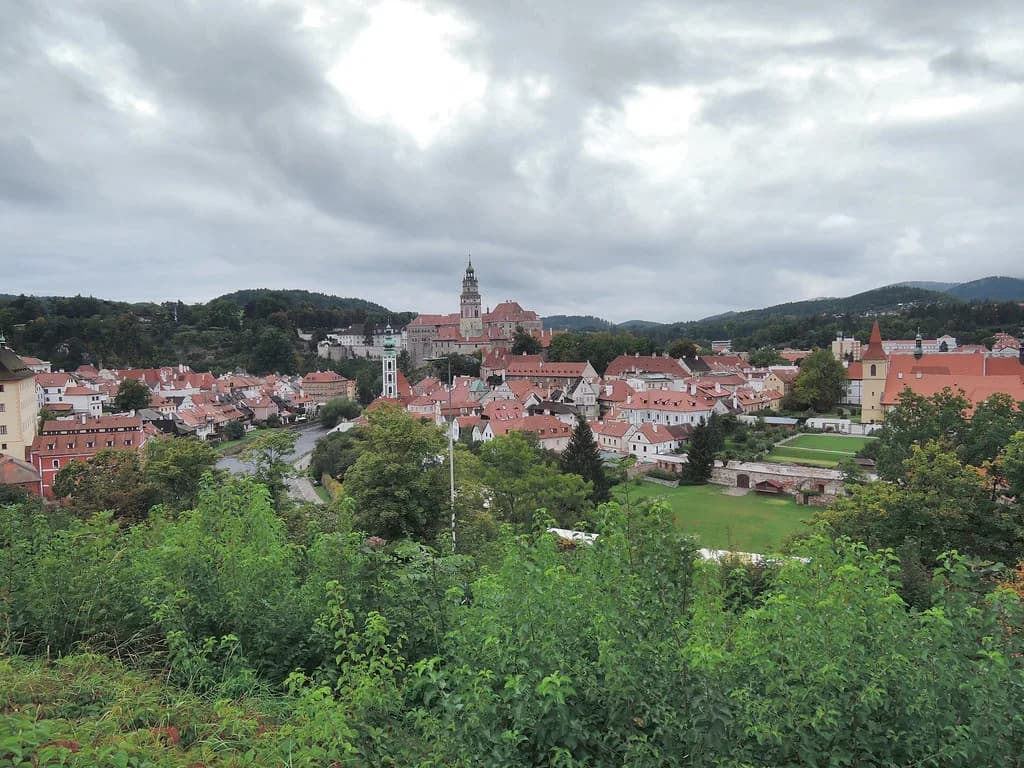
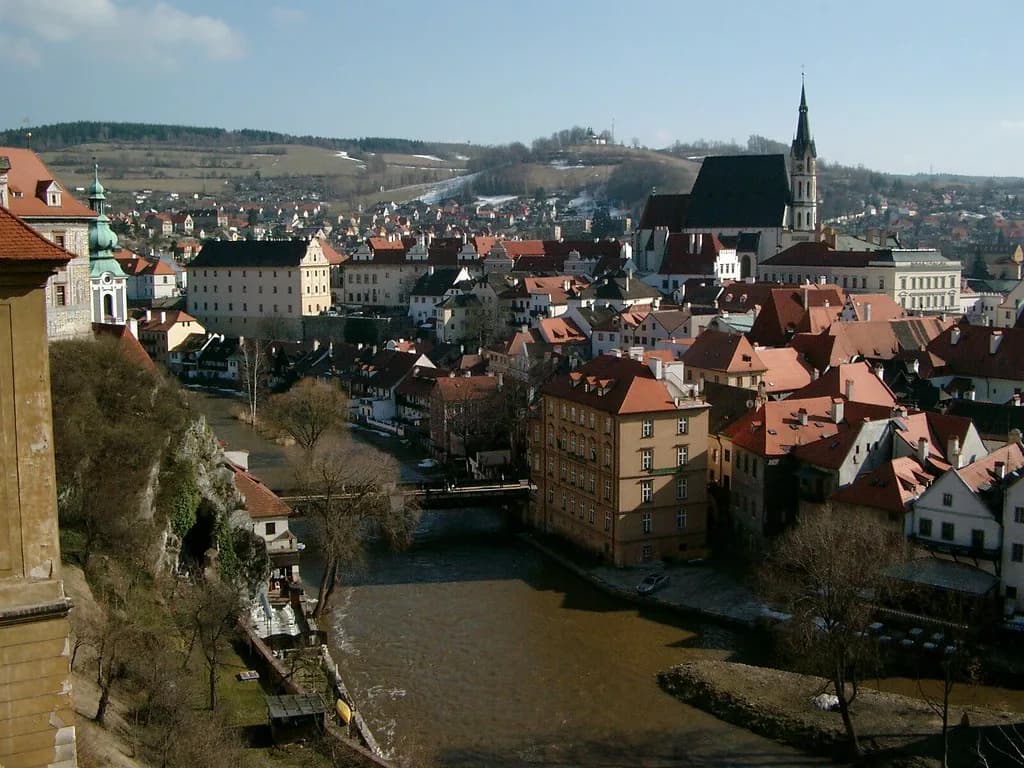
The town grew in two stages: the castle with the Latran settlement below it came first, and because space between castle and river ran short, a second settlement with a large rectangular square was laid out on the opposite bank, with both parts walled in the 14th century. Walking from the castle ridge down to the square therefore means crossing the same seam that divided medieval Krumlov.
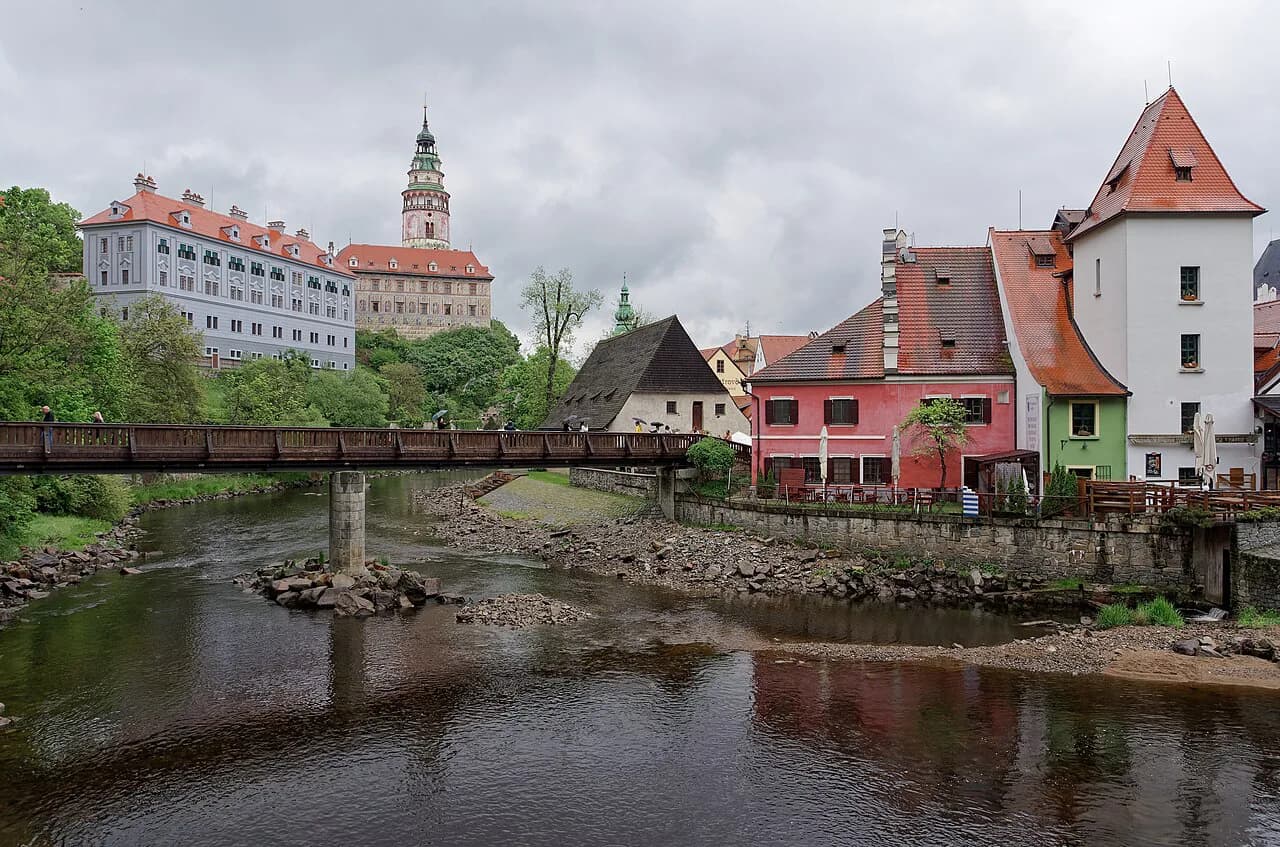
The Vltava does the rest of the work. Its meander carved out the rocks and set the curve the streets follow, so the narrow lanes bend with the river and the rows of gabled houses fill the cramped peninsula between water and hill, as the castle caretaker's account of the town's growth describes. Keep that in mind and the town stops looking like a random maze.
The name: from 'Krumme Aue' to the first mention in 1253
Krumlov most likely comes from the German Krumme Aue, meaning crooked floodplain, which describes the landscape around the Vltava bend rather well. The town first appears in documents in 1253, and archaeological work traces settlement in the area back much further, into the Stone Age.
The Czech adjective Český distinguishes this Krumlov from others of the same name, and it is the form you will see on train timetables and bus tickets. Use the full name when buying tickets, since shortened versions can point elsewhere.
The Rosenberg centuries, 1306 to 1601
The Rosenbergs held the town from 1306 to 1601, and those three centuries count as its period of greatest prosperity. Houses went up, monasteries and churches were founded, a large fair was held twice a year, and gold and silver mined nearby fed the town's wealth.
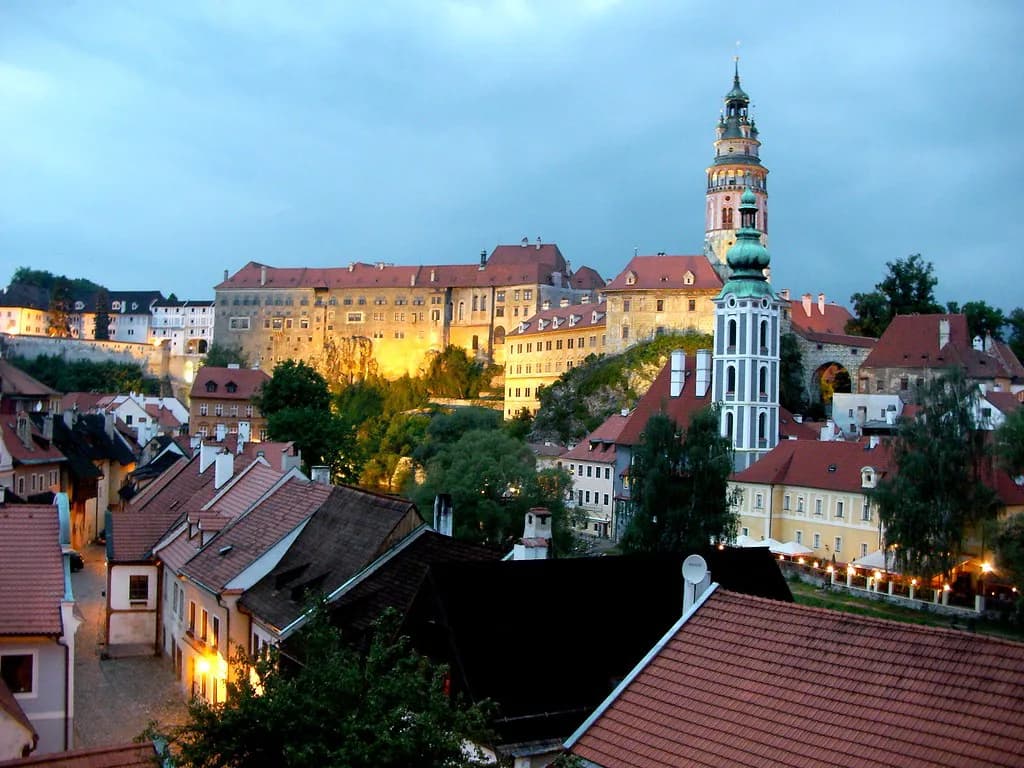
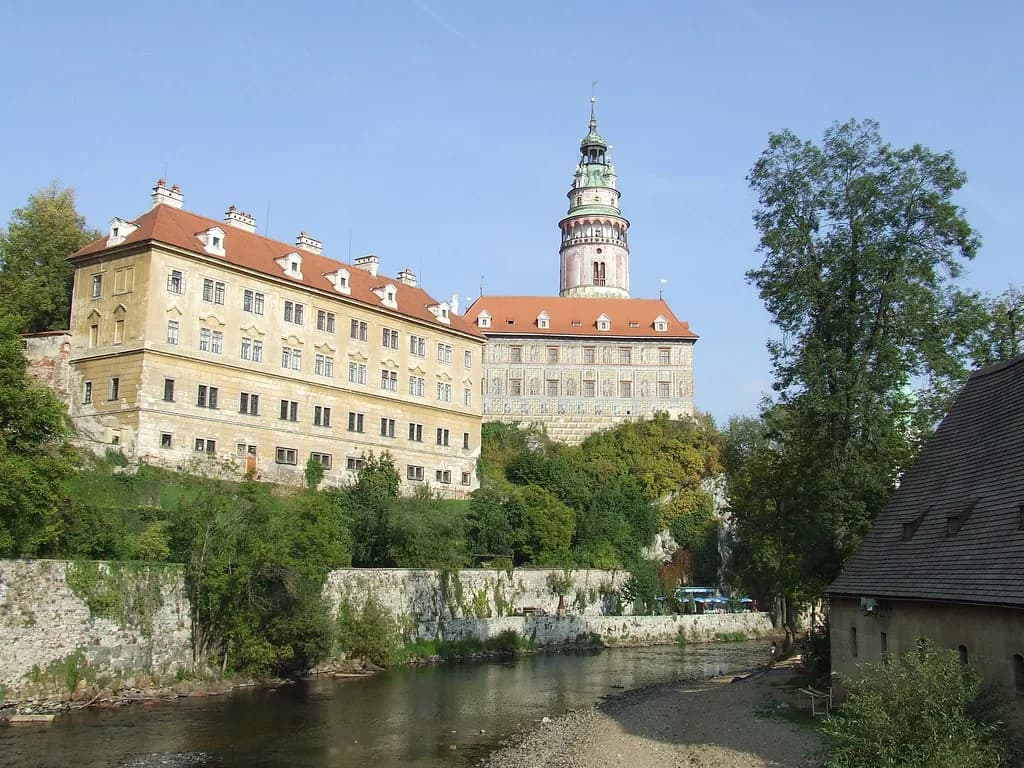
That money is why the ridge above the river still carries a castle and a Gothic church as two separate crowns on the skyline. St. Vitus Church sits on its own hill opposite the castle, and the streets between the two hold the oldest surviving fabric in town.
The 16th and 18th centuries that gave the town its face
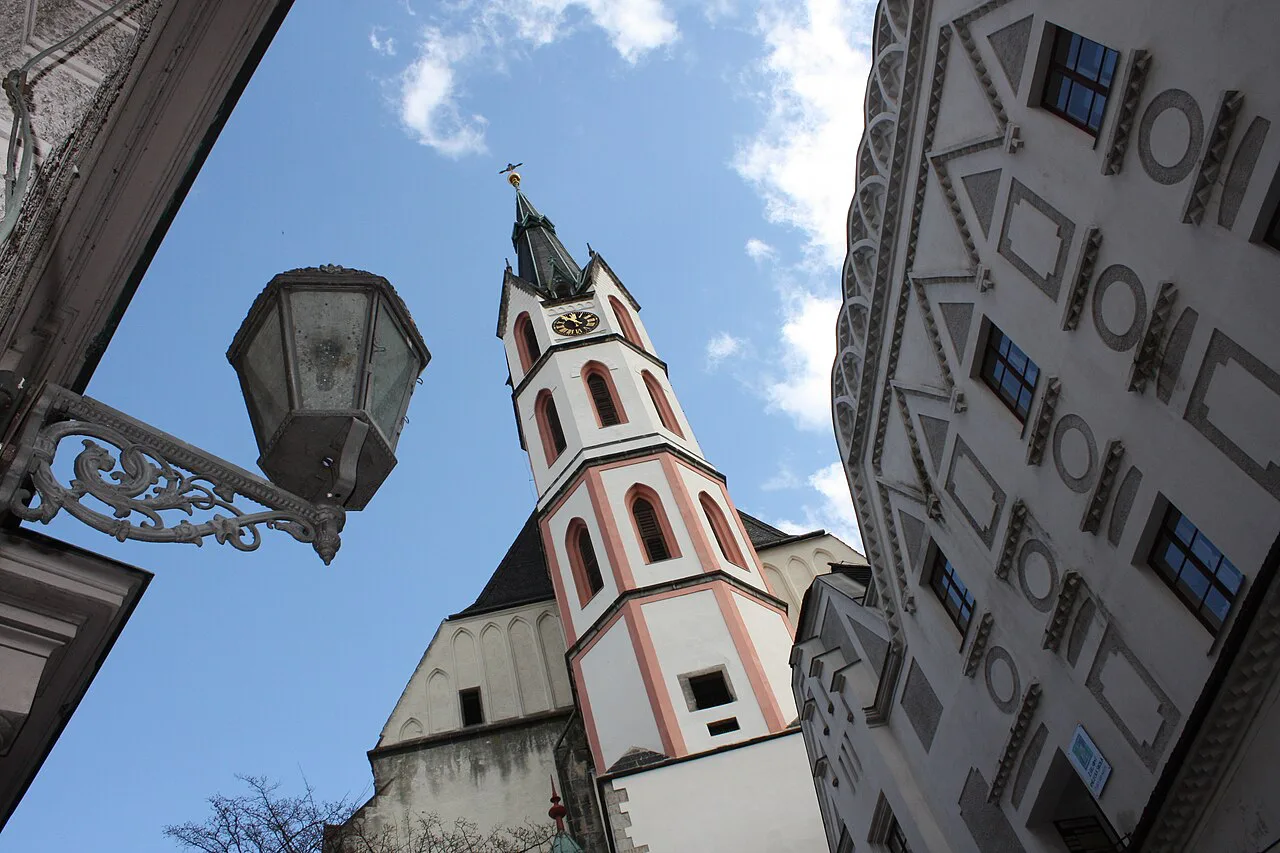
The Renaissance of the 16th century and the Baroque of the 18th did most to create the appearance Český Krumlov is known for now. The layered rows of small gabled houses, with painted or sgraffito limestone facades and red-tiled roofs, belong to that long building campaign.
Later centuries added trim rather than structure: in the late 19th century the Renaissance and Baroque core gained Belle Époque elements, along with cared-for green spaces, skilled craftwork, and small street furniture such as lighting, benches, awnings, and restaurant terraces. Look for those layers on the facades rather than expecting one uniform style.
Reading the Renaissance on foot: Latran and Horní Street
Start in Latran, the quarter that grew under the castle, where the houses crowd the approach to the castle gate and the river stays close on one side. Continue across the bend into the old town — the lanes covered in Český Krumlov Old Town — and up Horní Street, the climb that leads toward St. Vitus Church and carries some of the densest facade detail in town.
Look up rather than straight ahead. Sgraffito decoration and painted plaster sit on upper walls, while the ground floors have been reworked for shops and cafés, so the historical layer is often one story above your head.
St. Vitus Church and the castle above the bend
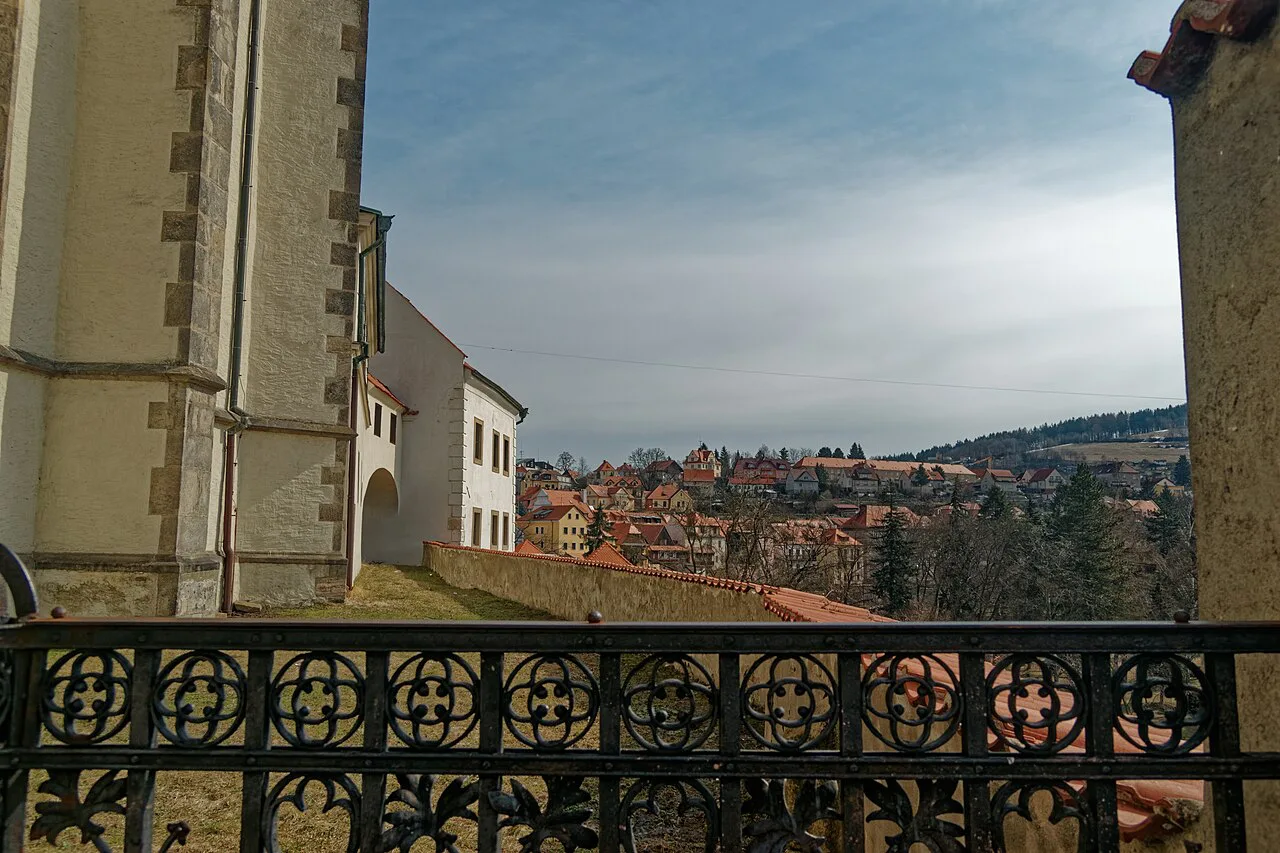
The skyline has two anchors: the castle and chateau on its long curving ridge across the river, and the church with its residential buildings on the opposite hilltop. Both are medieval in origin and both were reshaped in later centuries, so what you see is a palimpsest rather than a single date.
The castle is the part that needs planning. Its interiors follow a seasonal pattern, opening for the main visitor season and closing over the winter months, which makes the grounds and exteriors the reliable part of a cold-season visit.
The castle also holds an unusual open-air theater with a rotating auditorium of roughly 600 seats, where the audience turns between scenes instead of the scenery changing. Performances are seasonal, so treat the space as a historical curiosity unless a show is running during your dates.
The castle in the 20th century: from residence to ruin
By late 1980 the castle and chateau was in very poor repair, a dilapidated and unsuitably used old residential seat that had stopped functioning as anything coherent. Maintenance through the middle of the century had been thin in both volume and quality, and construction details such as windows, doors, gates, chimneys, fences, plaster, painted facades, cornices, and roofs had worn out or been lost.
The damage was not only architectural. The town's greenery, floral decoration, and much of its public street furniture disappeared in the same decades, which is why the squares and alleys can read as barer than old photographs suggest.
War, the German-speaking majority, and the postwar expulsion
Before the Second World War, Český Krumlov was overwhelmingly German-speaking: in 1910 about 85 percent of residents were Germans and roughly 15 percent Czechs, and they were families born and raised in the town. The town museum's exhibits on the wartime and communist years make that demographic history part of the story it tells.
After the war, a Czech government decree expelled Germans from the country, and more than 2.4 million people left across the Czech lands, abandoning homes and property for a new life in Germany. The town's population and its relationship to its own buildings were remade in a few years, a rupture the town museum's wartime and communist exhibits place in context.
After 1990: the restoration that brought the town back
The changes after 1990 triggered an intense repair campaign, driven by large groups of local residents over years rather than months and gradually matched by growing professional expertise. The neglect of earlier generations was reversed street by street, including the castle itself.
The renovation of the castle and chateau earned Europa Nostra awards in 2002 and 2008, which is the clearest outside marker of how thorough that work was. When you look at a freshly painted facade or a restored roof, you are seeing the result of that post-1990 push.
UNESCO listing and heavy tourism: what changed for visitors
The historic center of Český Krumlov, with the castle and chateau as its centerpiece, is UNESCO-listed and recognized for its remarkable preservation, and the same qualities now draw the crowds. The practical consequence is timing: the lanes between Latran and the square are narrow, and midday in high season packs them, so early mornings and evenings give you the town at its calmest.
The main visitor season runs from April to October, with far fewer tourists between November and March, when the castle interiors close. Churches and museums keep their own schedules through the year, so plan interior visits around the season rather than the other way round.
A half-day walking order that follows the timeline
Begin at the castle gate in Latran, walk the castle grounds and the Cloak bridge for the view back over the roofs, then drop through Latran and cross the Vltava River into the old town. That sequence follows the town's growth from the castle settlement to the square, and it puts the skyline behind you before the streets get busy.
Finish at the square and St. Vitus Church, then take Horní Street slowly for the facades. If you have a full day, add a museum for the 20th-century story and leave the evening for the lanes once the day-trippers have gone.
Which layer of Krumlov do you want to see first?
If you have one morning, follow the castle-to-square route and read the Renaissance facades on the way down; if you have a day, add the museum for the wartime and communist chapters that explain why so much was rebuilt. Either way, go early, since the narrow lanes between Latran and the square fill fast in the main season.
The castle interiors are the one element worth checking before you commit, because their season decides whether your visit is a walk through restored rooms or a walk around the outside. The town itself, and the history in its streets, is there year-round.
Explore more Český Krumlov guides
Frequently Asked Questions
What does 'Český' mean in the town's name?
Český is the Czech adjective meaning Bohemian or Czech, and it distinguishes this Krumlov from other towns of the same name. The base name most likely comes from the German Krumme Aue, or crooked floodplain, a reference to the Vltava bend the town occupies.
What is so special about Český Krumlov?
The town keeps a medieval street layout with a castle and chateau on one ridge and a Gothic church on the other, plus rows of gabled houses with painted and sgraffito facades from the Renaissance and Baroque periods. That preserved ensemble is why it holds a UNESCO listing and why the streets are so crowded in season.
Was Český Krumlov ever called by another name?
The town appears in documents from 1253, and its name derives from the German Krumme Aue, meaning crooked floodplain. German forms of the name were standard for centuries, given that the town's population was overwhelmingly German-speaking before the Second World War.
Sources
Notes for your Czech trip
Optional updates to our Czech town guides.
You might also like
Continue reading
More guides you'll find useful