Český Krumlov Old Town: The Square, Streets and Corners Worth Your Time
Český Krumlov's old town is a compact UNESCO historic center built around the Vltava's S curve. Here is what to see and how long it takes on foot.
On this page
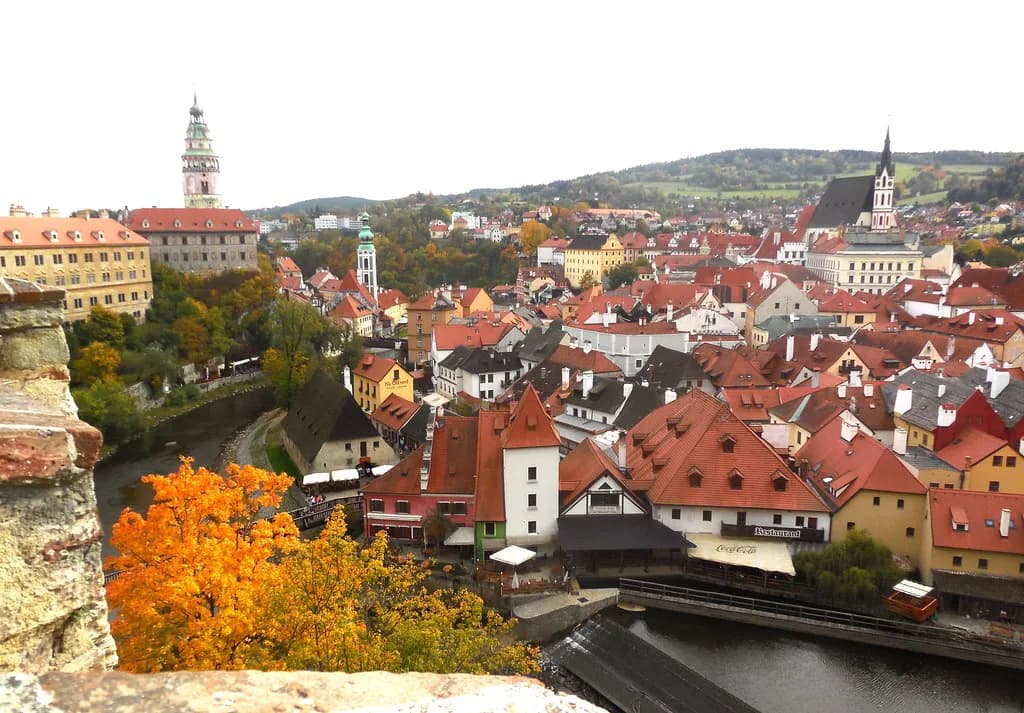
Český Krumlov's old town is worth three to four hours on foot, and it rewards an overnight stay more than a quick midday stop. The historic center is a UNESCO World Heritage Site, and its layout follows the tight S curve of the Vltava rather than a grid, so the pleasure is in the loop, not in ticking off buildings. This guide explains what the center is, how to orient yourself in it, which lanes and squares to walk in what order, and how long to allow.
Individual sights — the castle interiors, the museums, the churches, the breweries — each have their own pages, so this page sticks to the townscape: the square, the burgher houses, the river bends and the viewpoints. If you want the full inventory of stops, start with the broader list of things to do in Český Krumlov and come back here for the walking logic.
What the old town actually is
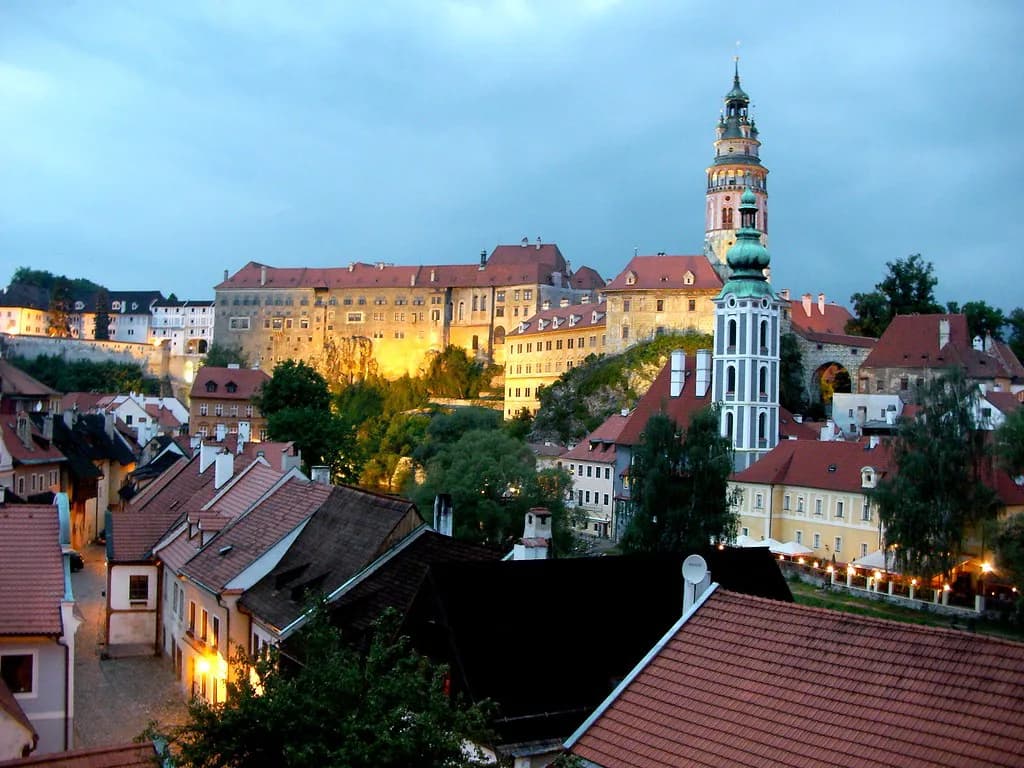
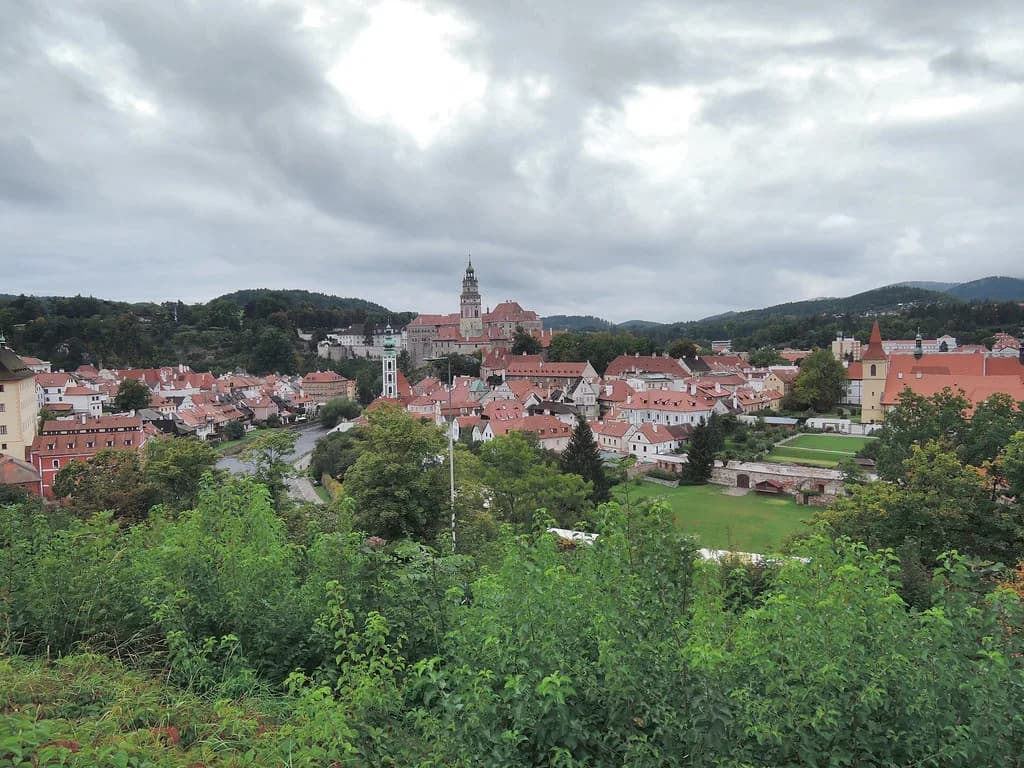
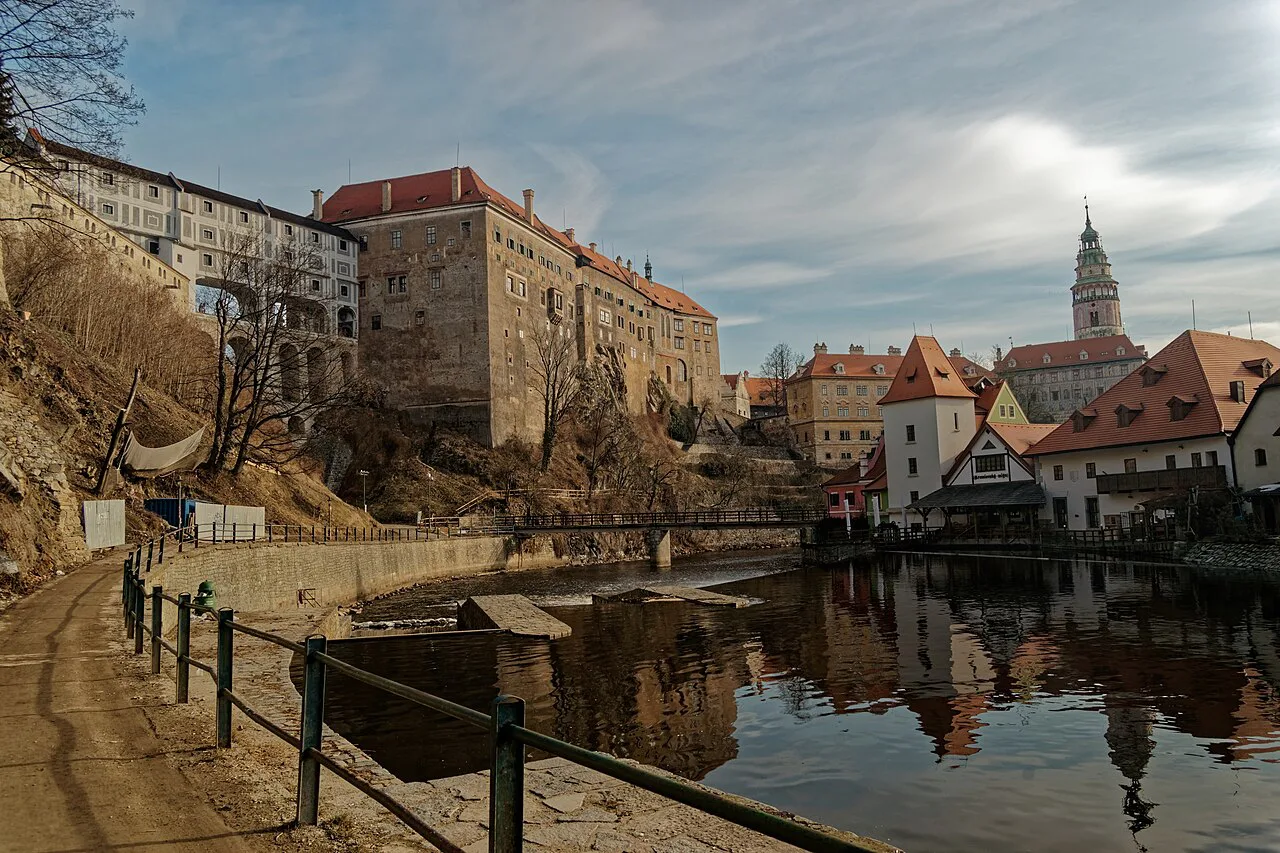
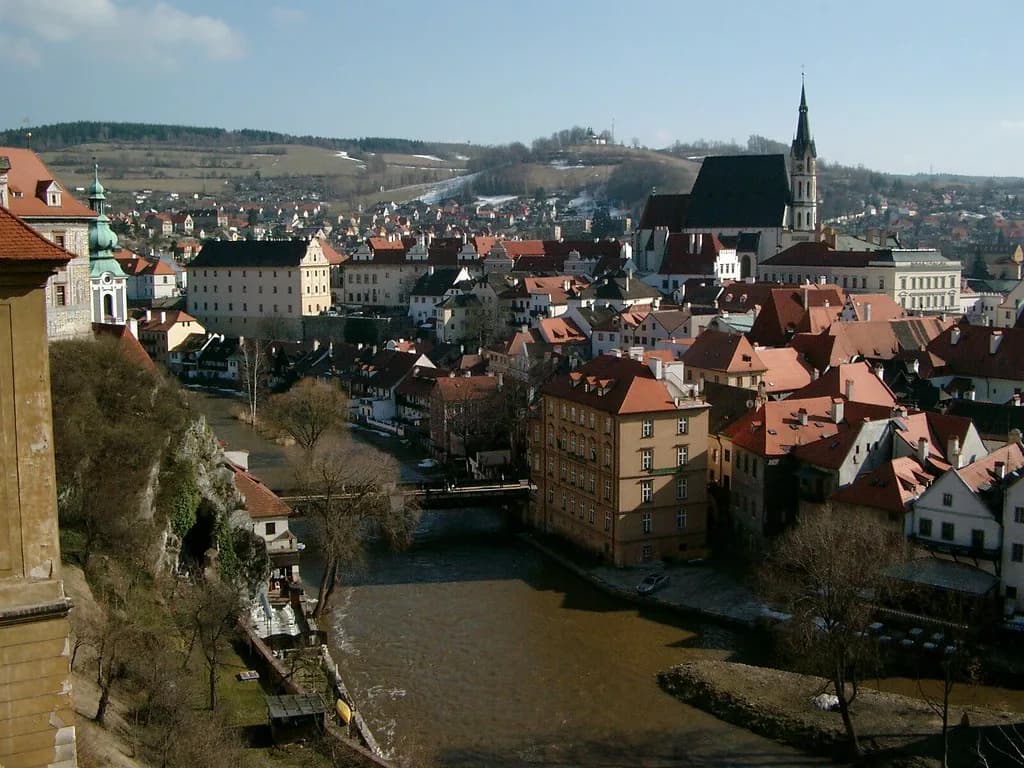
The protected area is the medieval core: a dense knot of houses, lanes and churches packed into a bend of the Vltava, with the castle complex on the ridge above. UNESCO lists the historic center for its preserved medieval town plan and its architectural ensemble, which is why the streets feel intact rather than reconstructed around a few showpieces. The Vltava does most of the work here; it wraps the old town on three sides and gives every lane a reason to curve.
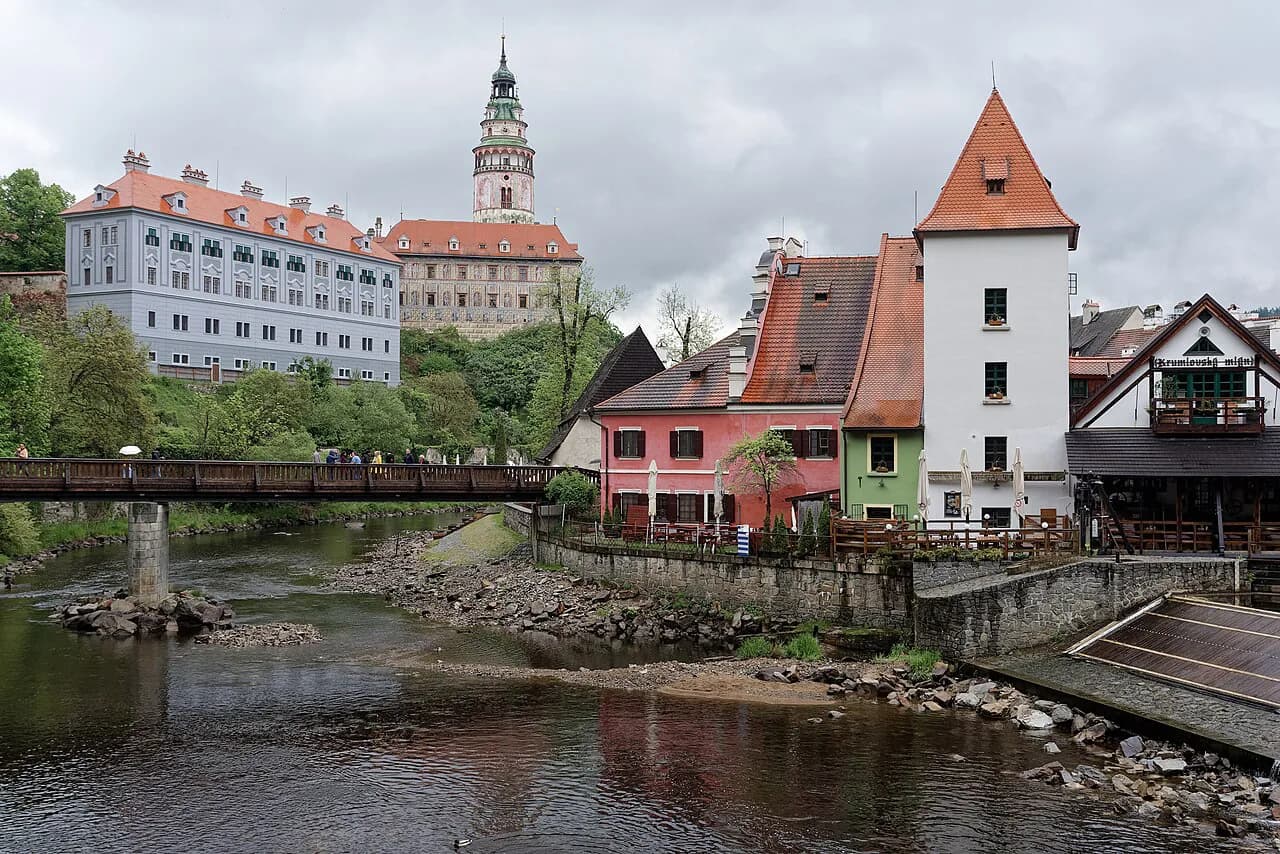
Travelers consistently describe the center as one of the best-preserved medieval towns in Europe, with pastel facades, cobblestones and a castle on the skyline. That reputation is the reason it gets crowded, not a reason to skip it: the same compactness that packs in tour groups at noon empties out fast once they leave. Plan your walking around that rhythm rather than against it.
How to orient yourself on foot
Think of the old town as two halves joined by a bridge and a slope. The historic core sits inside the river bend, centered on náměstí Svornosti, the main square; Latrán is the street and quarter on the far side of the bend, leading toward the castle gate. Almost everything you want to see is within a ten-minute walk of the square, and the historic center is a car-free zone, so you spend your time walking, not parking.
Arrive with a mental map of three anchors: the square, the river bridge below the castle, and the castle courtyards above Latrán. If you can find those, you can wander freely and always recover your bearings. A Český Krumlov self guided walking tour helps here because the lanes are short and easy to double back on.
Náměstí Svornosti and the burgher houses around it
Náměstí Svornosti is the heart of the old town: an irregular square ringed by tall burgher houses with decorated facades, arcaded ground floors and steep roofs. The square is where you should start and finish, partly because it is the easiest landmark to navigate by and partly because it shows the town's wealth plainly — these were merchant and craftsman houses, not a palace. Sit on a bench for ten minutes and the town's scale becomes obvious: everything is close.
The surrounding blocks are where the center's texture lives. Look up at the facades for sgraffito and painted detailing, and look down at the paving and the arcades rather than only at shop windows. The square is also the natural place to break the walk for coffee or lunch before heading toward the river and the castle approach.
Latrán and the approach to the castle
Latrán runs from the bridge area along the outer edge of the bend and climbs toward the castle gate, and it is the street that best explains the town's geography. Walk it uphill rather than down: the castle reveals itself gradually, first as a wall above rooftops, then as a gate, then as courtyards. Save the castle for the middle or end of your loop so it arrives as a payoff.
The climb is short but steady, and the lanes off Latrán are worth a detour for their arched doorways and small front gardens. Because the historic center is car-free, this stretch is quiet even when the square is busy. Allow twenty to thirty minutes for Latrán alone if you like stopping.
Churches and monuments inside the historic center
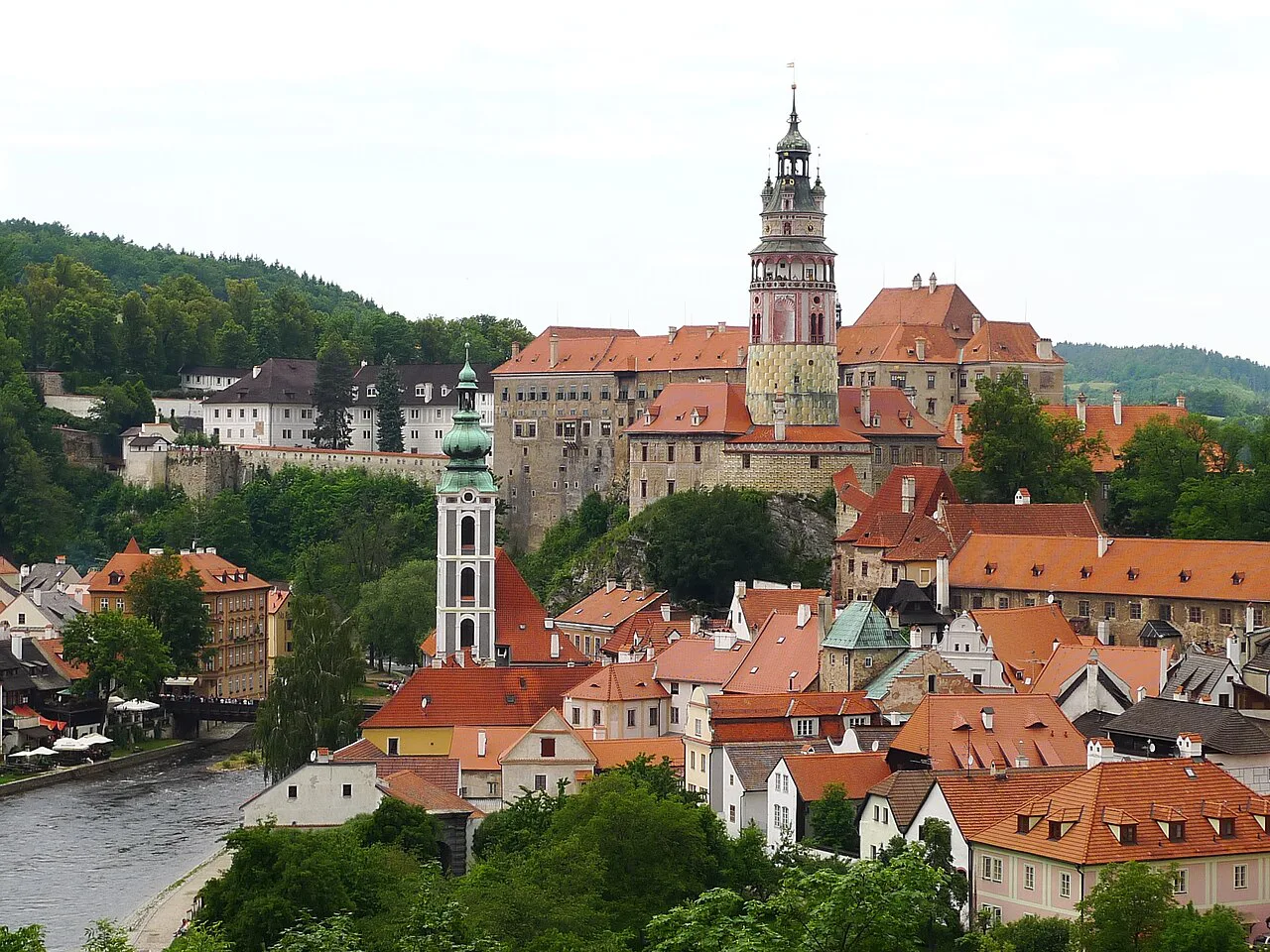
The old town holds several religious buildings rather than a single cathedral, and they are best treated as punctuation on the walk rather than destinations in themselves. The most prominent is the Church of St. Vitus, whose tall spire is visible from much of the center and which sits on the slope between the square and the river. Step in if it is open, then continue; the interior is modest in scale compared with the great Bohemian cathedrals.
Beyond the churches, the center's monuments are mostly architectural: facades, fountains, gateways and the surviving fragments of the town's fortifications. The town's Český Krumlov history is worth reading before you walk, because the layers — noble family, monastery, merchant town — explain why the buildings look the way they do.
The castle and chateau as the backdrop
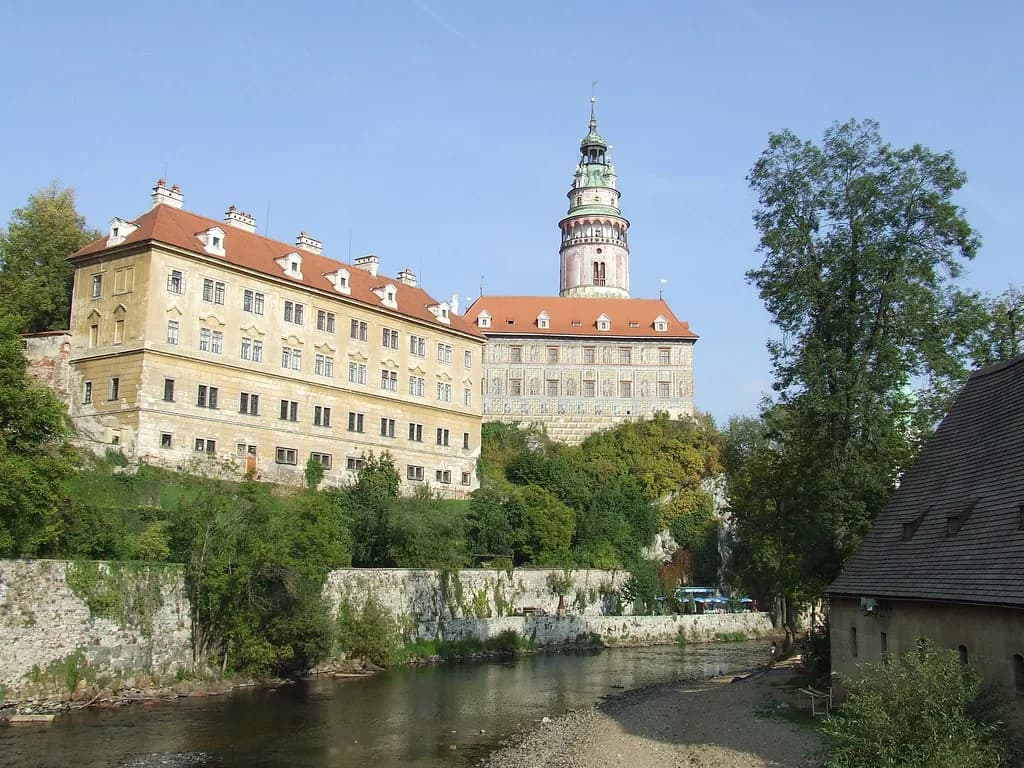
Český Krumlov Castle sits on the rock above the old town and dominates every view across the river bend, which is why it functions as the town's backdrop even when you do not go inside. The complex includes courtyards, a tower and gardens, and the walk up through them is part of the climb; interiors and specific circuits are a separate matter covered on the dedicated page. Plan the castle as scenery first and as a sight second.
If you do want to go inside, the details change by season and circuit, so use the dedicated Český Krumlov Castle Tours page rather than guessing. The castle is also where the town's famous baroque theatre sits, which is a separate visit and worth booking ahead if it is a priority.
How long the old town needs, and the best time to walk it
Give the old town a half day if you are staying overnight and a tight three hours if you are passing through. The center is small enough that you will see the square, Latrán, the riverbank and the castle courtyards without rushing; the extra time goes on churches, a museum, or simply sitting. A structured Český Krumlov itinerary helps if you are combining the old town with the castle and a meal.
Timing matters more than pace. Day-trippers arrive from Prague around mid-morning and leave in the late afternoon, so early morning and evening are when the lanes are quietest and the light on the facades is best. Staying overnight is the single change that most alters the experience of the old town, because you get the streets without the crowd.
Getting there from Prague and what the old town costs
Buses and trains connect Prague with Český Krumlov, and the town is also reachable from Linz and Vienna by road. Direct bus services such as RegioJet run from Prague's main bus station to a stop just outside the walls, which puts you within a short walk of the square; journey times and fares vary by service and season, so check the operator's timetable for your date.
Walking the heart of the old town itself requires no ticket: the cobbled lanes and squares of the historic center are a car-free zone, and the town is small enough that you will not need transport once inside. What you pay for is the optional layer — castle interiors, museums, a baroque theatre tour, a rafting trip on the Vltava, or beer and food. Prices are in Czech koruna, and a few places accept euros and cards, though cash is useful for small purchases.
For the paid stops, the practical move is to decide in advance which one or two you actually want, since trying to do all of them in a half day leaves no time for the streets that make the town worth visiting. The Museums in Český Krumlov page covers the indoor options, and Beer in Český Krumlov covers the brewery side if you want to end the walk with a glass.
Walk the Loop, Then Decide What to Pay For
Start at náměstí Svornosti, walk Latrán uphill to the castle courtyards, come back down to the river bridge, and finish in the square — that loop covers the old town's geography and puts the castle in view at the right moment. Give it half a day, and book your bed for the night if you can, because the early morning belongs to the people who stayed.
Once the loop is done, choose your one paid extra from the castle, the baroque theatre, a museum or a rafting trip, and leave the rest for another visit. That way the old town stays the point of the trip rather than the corridor between tickets.
Explore more Český Krumlov guides
Frequently Asked Questions
What is Český Krumlov famous for?
It is known for its preserved medieval historic center, a UNESCO World Heritage Site, and for the castle and chateau on the ridge above the Vltava. Pastel burgher houses, cobbled lanes and the river bend are what most visitors come to see, and the castle is the landmark on every skyline view.
How far is Český Krumlov from Prague?
It sits in the South Bohemian Region, south of Prague, and is served by direct buses from Prague's main bus station plus rail routes that usually involve a change. Journey times depend on the service and the time of day, so check the operator's timetable for your date rather than relying on a single figure.
How many hours should I spend in the old town?
Plan on about three hours if you are passing through, covering the square, Latrán, the riverbank and the castle courtyards. With an overnight stay, a half day lets you add a church, a museum or a slow meal without cutting the walk short.
Sources
Notes for your Czech trip
Optional updates to our Czech town guides.
You might also like
Continue reading
More guides you'll find useful