Bramboráky: Czech Potato Pancakes, Garlic and Marjoram
Bramboráky are savory Czech potato pancakes of grated raw potatoes, garlic and marjoram. Here is what goes into them and how to order them in Czech.
On this page
Bramboráky are savory Czech potato pancakes, and they count among the country's best-known dishes. They are fried flat and thin from grated raw potatoes, and what sets them apart from a latke or a hash brown is the seasoning: garlic rather than onion, plus a generous amount of marjoram. This guide explains what goes into them, why the grated potato has to be squeezed dry, and how to order them from a Czech menu.
What bramboráky are
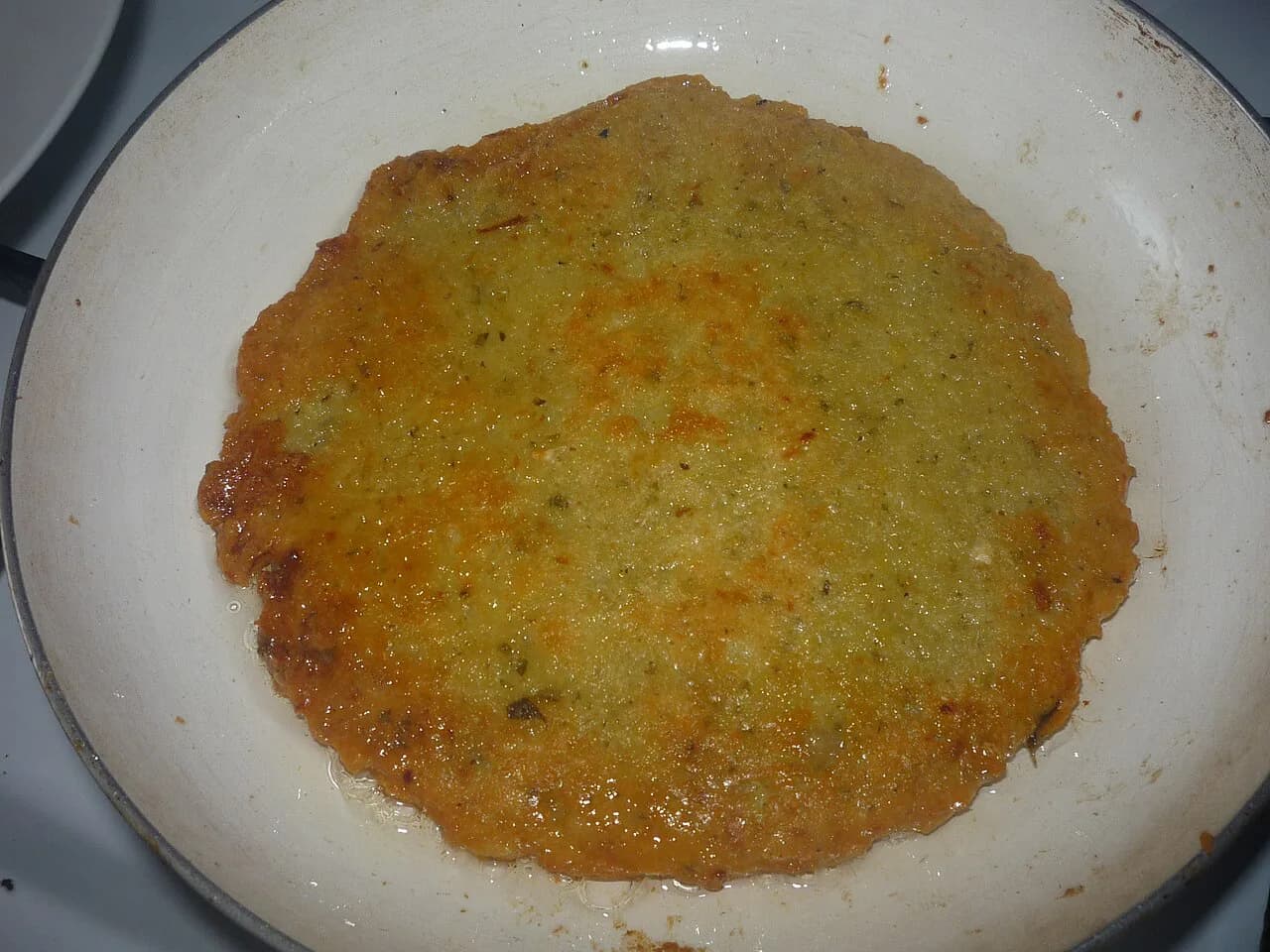
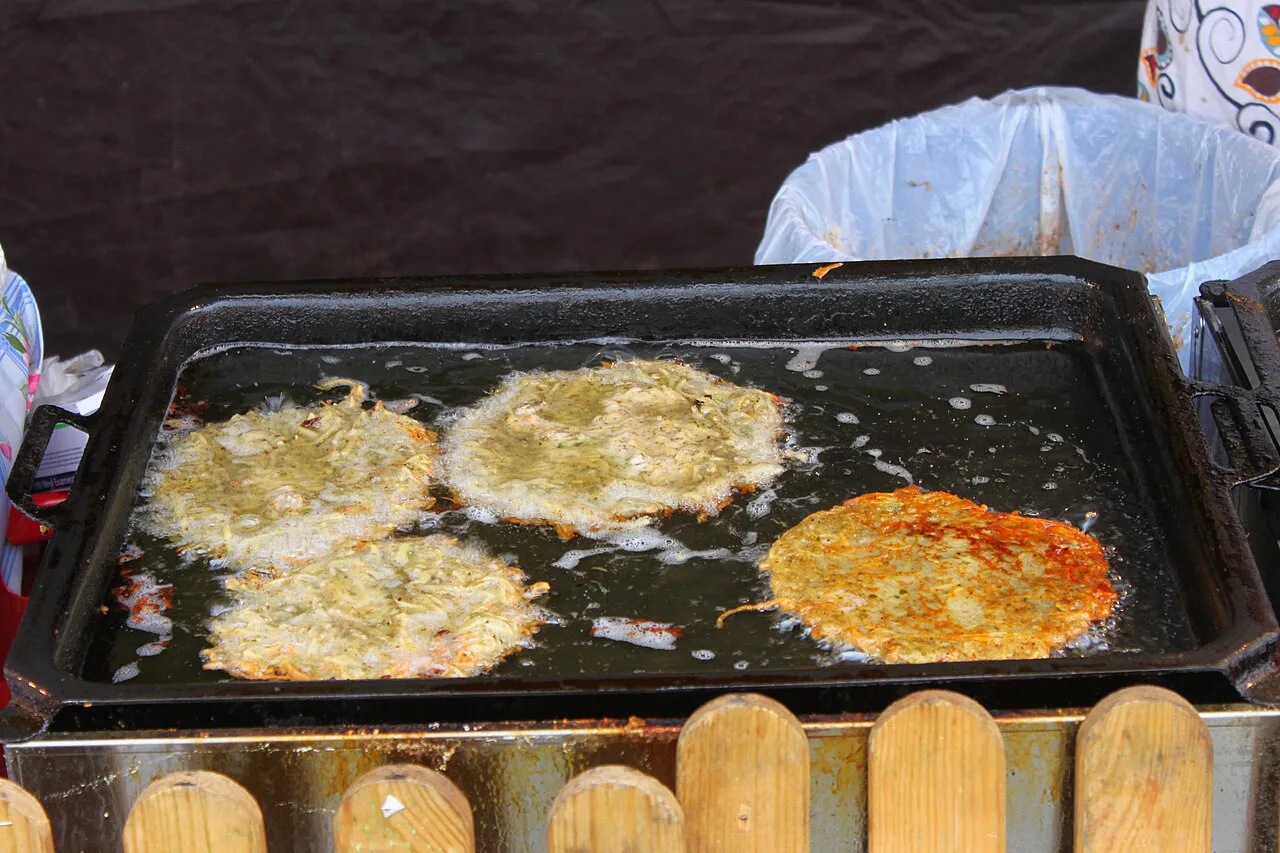
A bramborák is a flat fried pancake, not a dumpling and not a croquette. The base is raw potato, grated, mixed with a binder and seasoning, then spooned into hot oil and fried on both sides. The result should be crisp at the edges and golden on the surface, with a soft, dense middle. They belong to the everyday home-cooking side of the Czech repertoire rather than the restaurant showpiece side.
That makes them useful for a traveler who wants to understand the food without committing to a heavy sit-down meal. A single pancake is substantial, so one order often works as a snack or a light lunch alongside a salad. The version worth seeking out is freshly fried, not stacked and held warm.
What goes in: raw potato, binder, garlic and marjoram
The core ingredients are few: grated raw potatoes, a binder, garlic, marjoram, salt and pepper. Czech recipes also season them with a little nutmeg, and they are made without flour, with potato starch doing the binding. The potatoes should be waxy or mostly waxy, which hold their shape better than floury ones when grated and pressed.
What do bramboráky taste like? The dominant notes are garlic and marjoram over a savory fried potato base, with a crisp outside and a soft, dense middle. If you know latkes, it is a similar texture but a sharper, more herbal flavor.
Are bramboráky a meal or a side? It depends on the venue. In pubs and market stalls they often come as a snack or a shared plate, while at home they can be the whole meal with a salad.
The garlic is the detail people remember. Instead of the onion used in many other potato pancake traditions, Czech versions lean on crushed or finely grated garlic, which turns sharp and sweet once it hits the hot oil. Marjoram does the rest, giving that slightly resinous, peppery aroma that is the real signature of the dish. Get the seasoning balance right and everything else is technique.
Why garlic and marjoram define the Czech version
Latkes, rösti and hash browns all start from the same raw material, so the differences come down to seasoning, texture and what is served alongside. The Czech version pushes garlic and marjoram forward and stays relatively thin, so the edges can crisp through while the center stays moist. Onion-based versions produce a sweeter, more mellow flavor; garlic gives a sharper edge that stands up to fat and sour cream.
For a visitor building a picture of the cuisine, this is a good entry point. The same flavors turn up across the broader repertoire of Czech food, from herbed dumplings to the savory sides that accompany roasts. Once you recognize marjoram as a recurring note, you start noticing it in soups, stuffings and sausage.
How they are cooked and what a good one looks like
Oil goes into a heavy pan over medium-high heat, and the mixture is dropped in spoonfuls and pressed flat. Each pancake needs room, because crowding drops the temperature and produces greasy, pale results instead of crisp ones. Fry until the underside is deep golden, then turn and finish the second side, draining briefly before serving.
A good bramborák has ragged, dark-gold edges and a surface with a few darker patches where the potato caught. It should feel firm enough to pick up but yield in the middle. A pale, limp pancake means the oil was too cool or the batter too wet, so look for a fresh order coming off the pan rather than a pre-made stack under a lamp.
The squeeze step: binding without flour
This is where most attempts go wrong. Grated potatoes release a lot of liquid, and if you mix that water straight into the batter, the pancakes will spatter and refuse to hold together. The fix is to tip the grated potato into a clean towel and wring it out hard, then do it again. The drier the shreds, the crisper the finished pancake.
Squeezing also carries away natural potato starch, which is exactly what you need to bind the mixture. So the drained liquid is not waste: let it stand for about half an hour and the starch may settle to the bottom of the bowl. Pour off the water and stir that starch back into the potato, a flour-free approach that is the traditional trick rather than a modern shortcut. It does not always work, since some potatoes yield little or no starch, so a spoonful of potato starch powder is a practical backup.
Egg-free and flour-free versions
Egg-free and flour-free bramboráky do exist, and not just as a substitution for people avoiding those ingredients. With enough starch and a thorough squeeze, grated potato binds itself, and the result is noticeably lighter than an egg-heavy version. The catch is that starch needs time and heat to set, so the first pancake in the pan is often the fragile one, and testing a small one before committing the batch is worth the minute.
Do not assume every bramborák you are served is egg-free or vegan. Egg-free versions exist, but a Czech menu does not tell you either way, so ask before ordering rather than after.
How they are served and what to eat with them
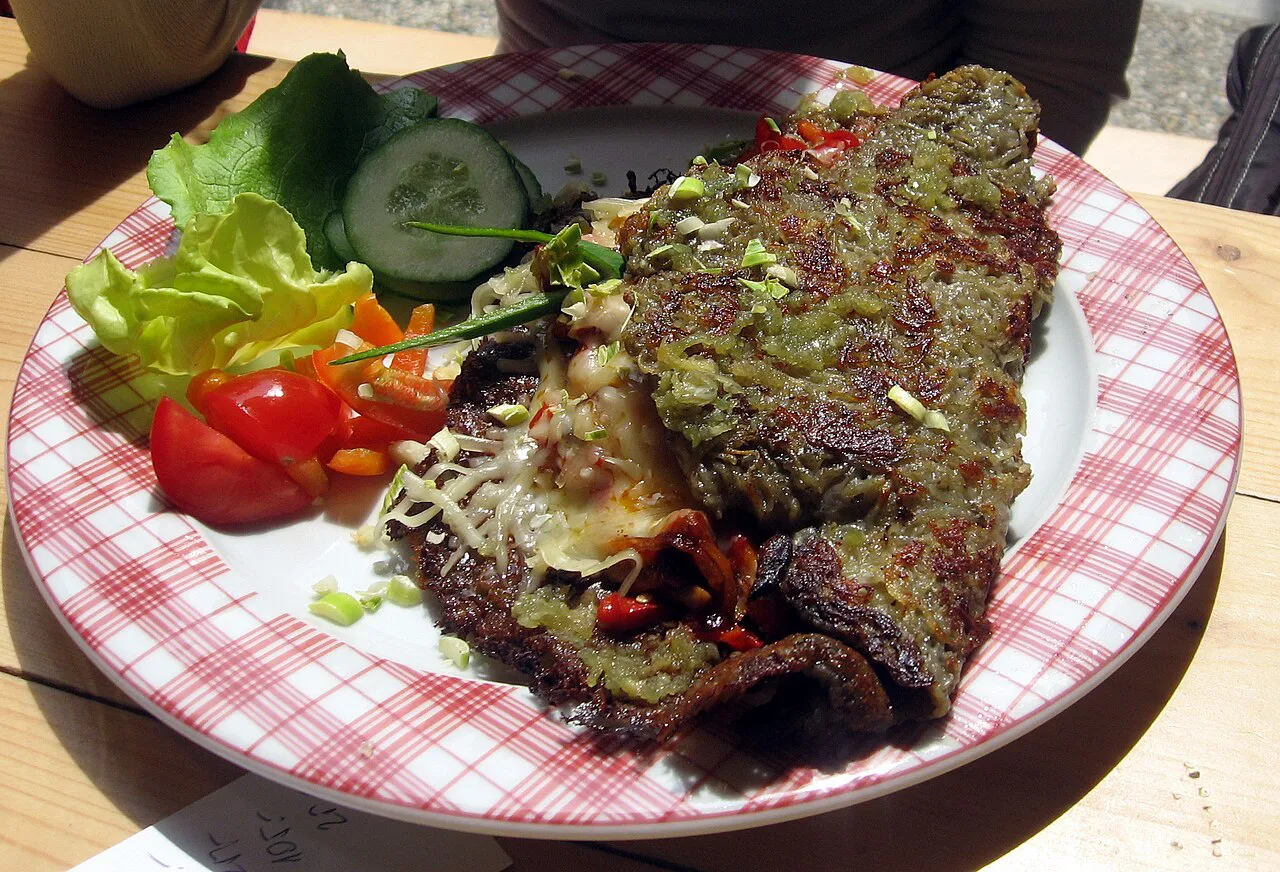
Bramboráky usually arrive plain on a plate, sometimes with a small dish of pickles, or with a simple salad at home. In pubs they turn up as a snack plate, and baked beans are another common pairing.
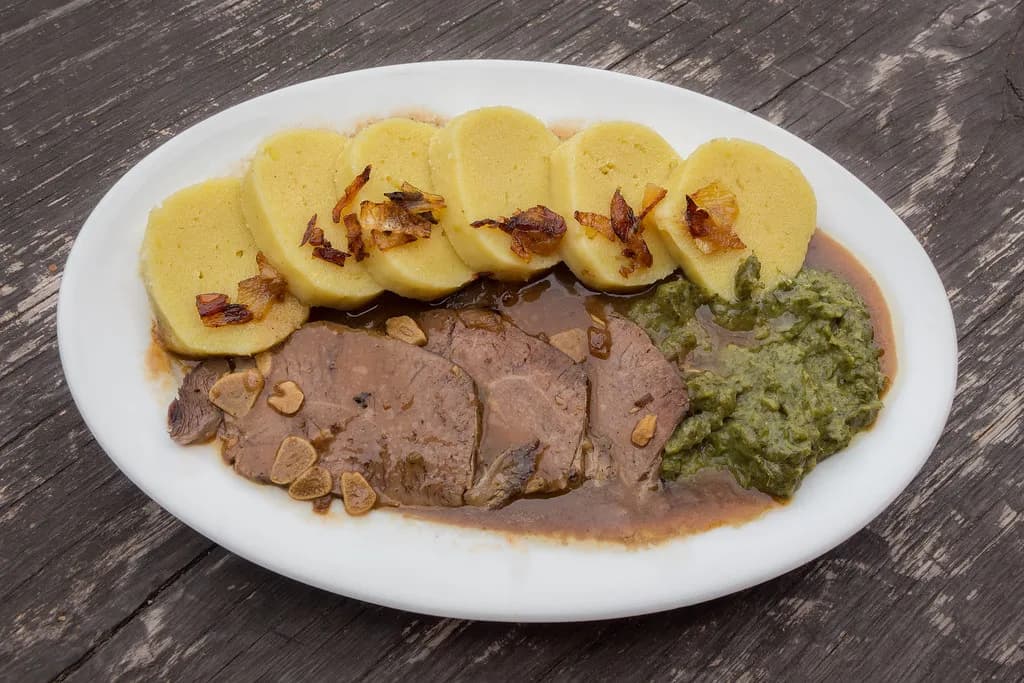
If you are eating your way across the savory side of the menu, bramboráky are a good opener before something richer. The braised beef in cream sauce with dumplings, Svíčková na Smetaně, is the classic next step and asks for a different appetite. Order one pancake between two people and you still have room for a main.
How to order bramboráky in Czech
Ask for bramborák in the singular if you want one, or bramboráky for the plural plate. In most kitchens it is a starter or a side, so look in the předkrmy section or ask whether it comes as a main portion. The word sounds close to its spelling, so pointing at the menu and reading it aloud works fine.
If you are avoiding egg, learn the phrase bez vajec, and for dairy bez mléka. It is fair to ask whether the kitchen can confirm this, and a written note on your phone works better than pronunciation in a busy pub at lunch. Let the posted menu determine what you plan to spend.
Where to Try Your First Bramborák
Treat bramboráky as a snack or light meal rather than a dish to plan a day around. Order them where you can see them being fried, ask for soured cream or a salad alongside, and save the heavier dumpling plates for another sitting. The garlic and marjoram will tell you immediately whether the kitchen is cooking the Czech version.
Explore more Czech Republic guides
Frequently Asked Questions
What do bramboráky taste like?
The dominant notes are garlic and marjoram over a savory fried potato base, with a crisp outside and a soft, dense middle. If you know latkes, it is a similar texture but a sharper, more herbal flavor. Soured cream or a simple salad softens the richness.
Are bramboráky a meal or a side?
It depends on the venue. In pubs and market stalls they often come as a snack or a shared plate, while at home they can be the whole meal with a salad. Check the menu section, or ask whether the portion is meant as a main.
Sources
Notes for your Czech trip
Optional updates to our Czech town guides.
You might also like
Continue reading
More guides you'll find useful