Bohemian Crystal: Czech Glass, Real Crystal, and What to Buy
Bohemian crystal is Czech lead glass sold by the piece, not a single brand. Learn how hand-cut crystal is made, how to spot it, and what listings charge.
On this page
Bohemian crystal is real crystal in the material sense: Czech lead glass with a high lead oxide content, cut and polished by hand. The name points to the region and its glassmaking tradition, not to a single manufacturer, so two pieces sold under the same label can differ sharply in quality. This guide explains what the term covers, how to test a piece before you pay, and how prices are listed so you can judge value in Czech koruna.
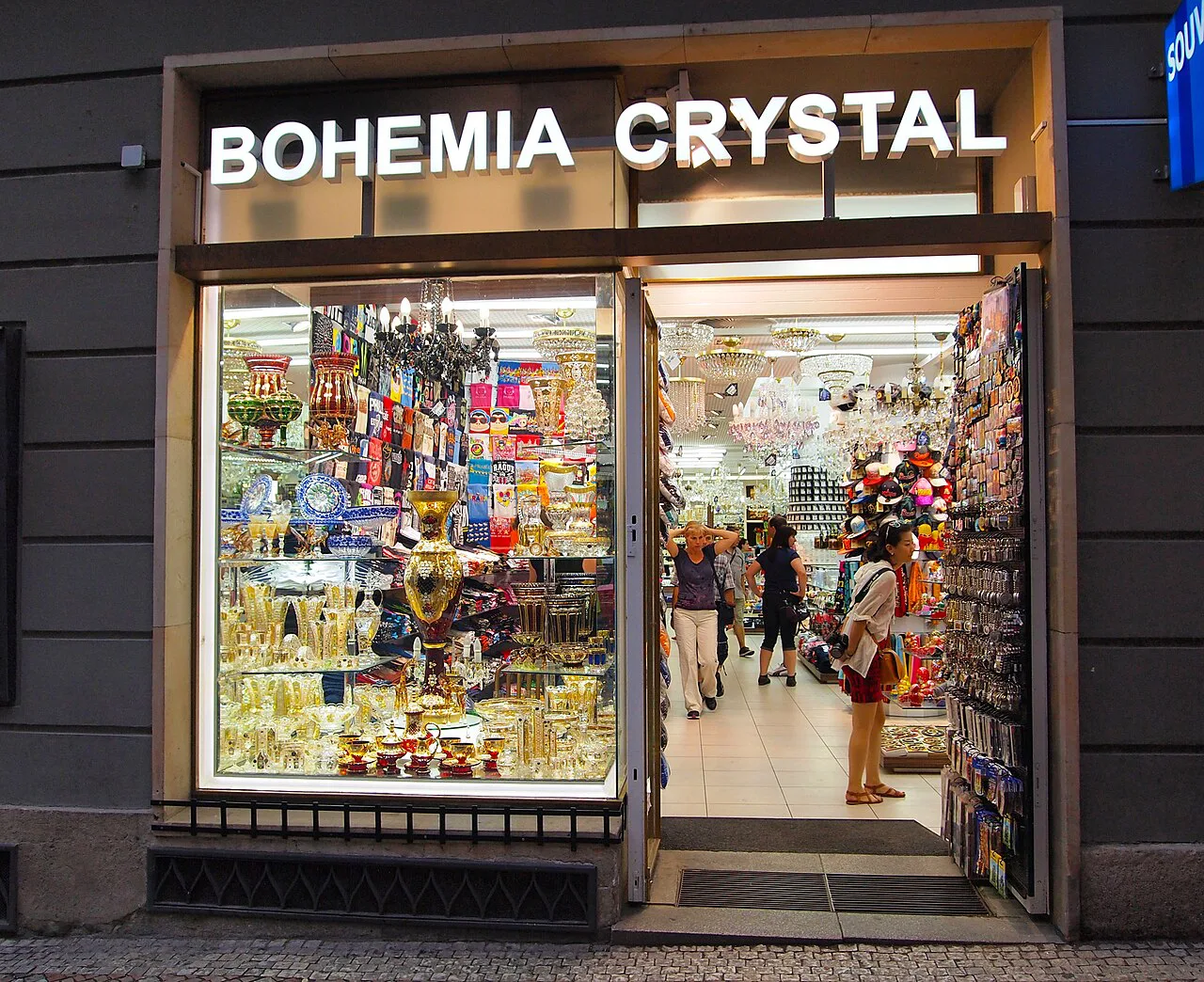
Souvenir shops in Prague and the spa towns stock it heavily, but the same categories of glassware appear in factory stores and online catalogs, sometimes with far more detail about materials and care. Knowing which details matter, such as lead content, cut type, and whether a colored piece is layered or simply tinted, is what separates a sound purchase from an expensive ornament.
What Bohemian crystal actually means
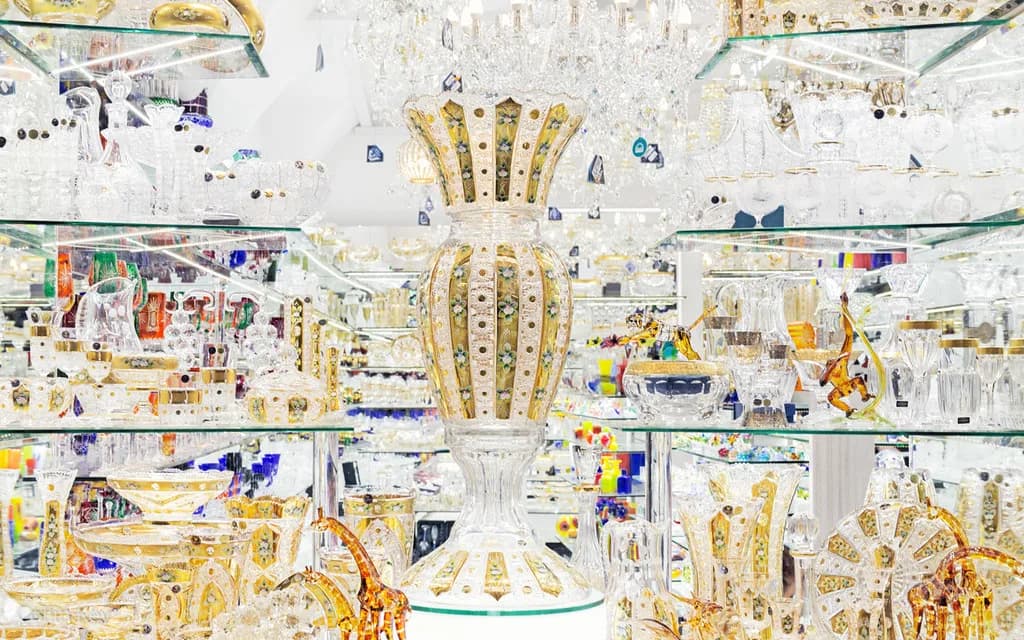
In practice the phrase covers lead crystal glassware made in the Czech Republic, from stemmed wine glasses to vases and decanters. Crystal Bohemia, a Czech producer of lead crystal, presents itself as a major manufacturer in the country and organizes its range into drinkware, giftware, tableware, and hotel and restaurant lines. That structure is a useful map of what you will encounter in shops: the same shapes recur across producers, and the differences sit in the glass recipe and the finishing.
The label is regional, so treat any claim that one brand is the original Bohemian crystal with caution. Judge the piece in front of you by the material stated on its label, the weight in your hand, and the neatness of the cut edges. A seller who can tell you the lead content and whether the decoration is cut or molded is worth more of your time than one who leans on the word Bohemian alone.
How to tell real crystal from ordinary glass
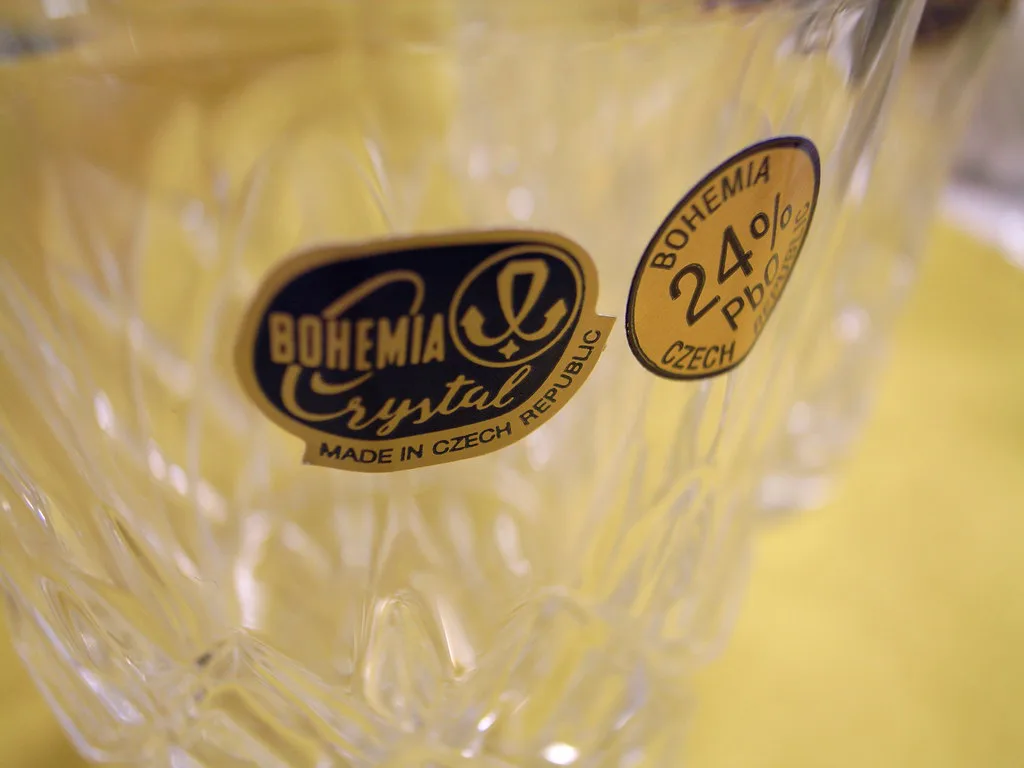
Lead content is the clearest signal. A documented example is a green hand-cut wine glass set from Bohemia Crystal, made of layered lead crystal listed at 24 percent PbO. That figure is not a legal threshold for the word crystal, but it tells you the glass is dense and soft enough to cut and refract light in the way buyers expect from lead crystal. Ask for the stated lead content rather than relying on sparkle under shop lighting.
Is Bohemian crystal a real crystal? It is real lead crystal glass when the piece is labeled as such. Documented examples state their lead oxide content, and one hand-cut wine glass set is listed as layered lead crystal at 24 percent PbO.
What is Bohemian crystal worth? Value tracks material, cutting, color, and packaging rather than the label alone. A heavy hand-cut colored set in a gift box costs many times more than a simple hand-cut clear set from the same retailer, and molded imitations should cost less than either.
Can I put hand-cut Bohemian crystal in the dishwasher? Not unless the product itself says so. Colored layered lead crystal sets are often labeled not dishwasher safe, and the same listing can describe the glass as strong while warning against machine washing.
Weight and ring are practical checks you can do at the counter. Lead crystal feels heavier than a similar-sized soda-lime glass, and a flicked rim gives a longer, clearer tone. Neither test proves anything on its own, so pair them with the label: if the material is described simply as glass, price it as glass.
What makes Czech crystal distinctive
Hand cutting is the signature. The green wine glasses cited above are described as handmade and cut, with a fine hand-cut decoration intended to catch light on a festive table. Cut decoration means facets ground into the surface, which takes skill and shows in crisp edges and even patterns; molded decoration repeats identically and costs far less to produce.
Colored layered crystal is the other hallmark, and it is the category most often misunderstood. Color is built into layers of the glass rather than painted on, so cutting through the outer layer exposes clear crystal beneath and creates the contrast pattern. The same listing describes the green set as layered crystal, which is why the color cannot rub off but also why the piece demands careful handling. If you want the wider craft context beyond tableware, our guide to Czech glass covers the country's broader glassmaking story.
Where Czech glass is made and how to see it
Glassmaking in the Czech Republic is a workshop trade as much as a factory one, and some producers open their doors. Crystal Bohemia's site describes itself as a major Czech producer of lead crystal and lists factory stores among its official selling points along with a separate tours section on how its glass is made. Check those pages directly before planning a detour, since tour and store details can change with production schedules.
For travelers building a route around craft, the glassmaking towns of northern Bohemia are the classic stop, and Novy Bor glass is the anchor for that area. A factory store visit has a practical advantage over a city-center gift shop: you see the range, the seconds, and the packaging options in one place. Pair it with other Czech crafts on the same trip if you collect across categories, including Czech porcelain and Czech glass beads.
Buying in the Czech Republic: sets, singles, and boxing
Sets dominate the market for gifts, and the packaging is part of the product. The green wine glass listing is a set of two packed in a dark blue gift box with satin, which solves the transport problem for a traveler flying home. Single pieces are usually available from the same ranges, so ask whether a set can be split if you only want one glass or want to mix colors.
Before paying, confirm three things in writing on the receipt or product card: the material and lead content, the cut description, and the care instructions. That record matters if a piece chips in transit or if you later want to match it. It also protects you from the common swap where a molded imitation is sold at hand-cut prices.
What it costs and how to read the price
Prices vary enormously by size, cut, and color, so use a live listing as your benchmark rather than a vague memory of airport prices. One green hand-cut set of two is listed at 599.85 US dollars on its product page, a figure that reflects a heavy layered crystal set in gift packaging rather than everyday stemware. Compare that with the same retailer's hand-cut white wine glasses in the Romantic pattern, listed at 174.85 US dollars for a set of two, to see how much pattern and color shift the number.
The retailer's shop displays a currency switcher offering Czech koruna alongside US dollars, pounds, and euros, so you can see the conversion the shop itself applies. Use that to compare against a Czech shop's CZK tag rather than converting in your head at an airport rate. If you buy in person, ask whether the displayed price includes VAT, since tourist-facing shops do not always make it obvious. The same price-conscious approach pays off when you buy Czech beer, where pub and shop prices also vary by how and where you pay.
Buying mistakes to avoid
The most expensive mistake is assuming hand cutting. Many gift-shop pieces are pressed or molded, and the price should reflect that. Look along the rim and the pattern edges: a hand-cut facet shows slight variation, while a molded pattern repeats with machine regularity. If the seller cannot say how the decoration was made, treat it as molded and price it accordingly.
Care claims deserve the same scrutiny. The green layered crystal set is explicitly labeled not dishwasher safe, despite being sold as durable lead crystal, and that warning should shape how you pack and use it. Layered colored glass can also be damaged by sudden temperature change, so rinse in warm rather than hot water. For other Czech gift categories that travel better in a suitcase, from garnet jewelry to marionettes, see our Czech souvenirs guide and our notes on Bohemian garnet and Czech puppets.
Which piece should you actually buy?
Buy the piece you will use, not the biggest box in the window. A hand-cut set in gift packaging makes sense if you are carrying a present home and want the boxing handled; a single glass or a small vase from a factory store is the better call if luggage space is tight and you want to see the full range in one place. Confirm the material, the cut type, and the care instructions before you pay, and you will know exactly what your money bought.
Explore more Czech Republic guides
Frequently Asked Questions
Is Bohemian crystal a real crystal?
It is real lead crystal glass when the piece is labeled as such. Documented examples state their lead oxide content, and one hand-cut wine glass set is listed as layered lead crystal at 24 percent PbO. The word Bohemian describes where the glass comes from, not a guarantee of quality, so check the material stated on the label or product page before you buy.
What is Bohemian crystal worth?
Value tracks material, cutting, color, and packaging rather than the label alone. A heavy hand-cut colored set in a gift box costs many times more than a simple hand-cut clear set from the same retailer, and molded imitations should cost less than either. Compare live listings for the specific shape you want and treat the displayed price as that seller's asking price, not a market benchmark.
Can I put hand-cut Bohemian crystal in the dishwasher?
Not unless the product itself says so. Colored layered lead crystal sets are often labeled not dishwasher safe, and the same listing can describe the glass as strong while warning against machine washing. Wash by hand in warm water, avoid sudden temperature changes, and keep the product card in case you need to match or replace a piece later.
Sources
Notes for your Czech trip
Optional updates to our Czech town guides.
You might also like

Continue reading
More guides you'll find useful