Czech Puppets: Marionettes, Where to See Them and How to Buy One
Czech marionettes are hand-carved wooden puppets worked from strings. Learn the grades, what makes a genuine piece, and how to buy and pack one.
On this page
Czech puppets are marionettes: wooden figures carved and painted by hand and hung from strings, steered with a control crossbar above the head. Marionettes.cz describes its figures as handmade and crafted in the Czech Republic, and sells them online to American buyers in US dollars. The strongest buying signal is construction — how the limbs are jointed, how the strings are attached and whether the seller can explain the control.
Puppets sit alongside glass and garnet as a classic Czech craft souvenir, and the same rules apply: buy what you can inspect and plan the packing. A large figure with a long crossbar is an awkward shape in a suitcase, so decide early whether you want a shelf piece or something your kids will work.
What a Czech marionette actually is
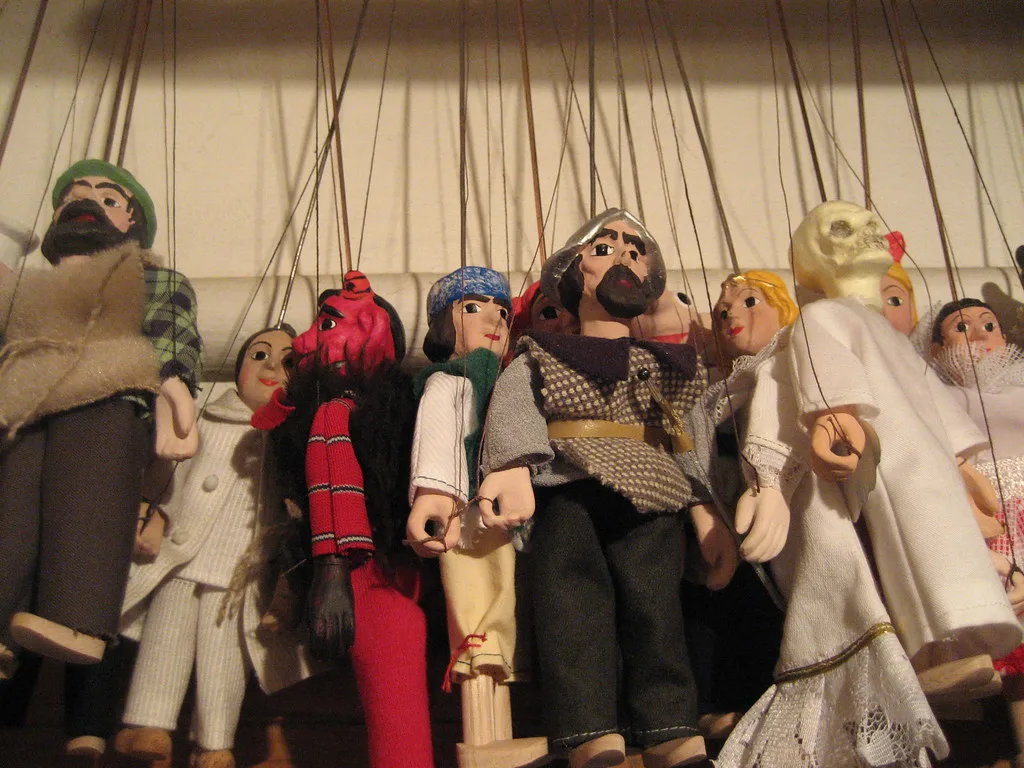
A marionette hangs on strings, not on the hand and not on a rod from below. Czech workshops carve the head and limbs from wood, paint the face, dress the figure and tie each string to a wooden control held above it. That control is what lets the operator tilt the head, swing the arms and make the figure walk.
Puppet making in the Czech Republic today
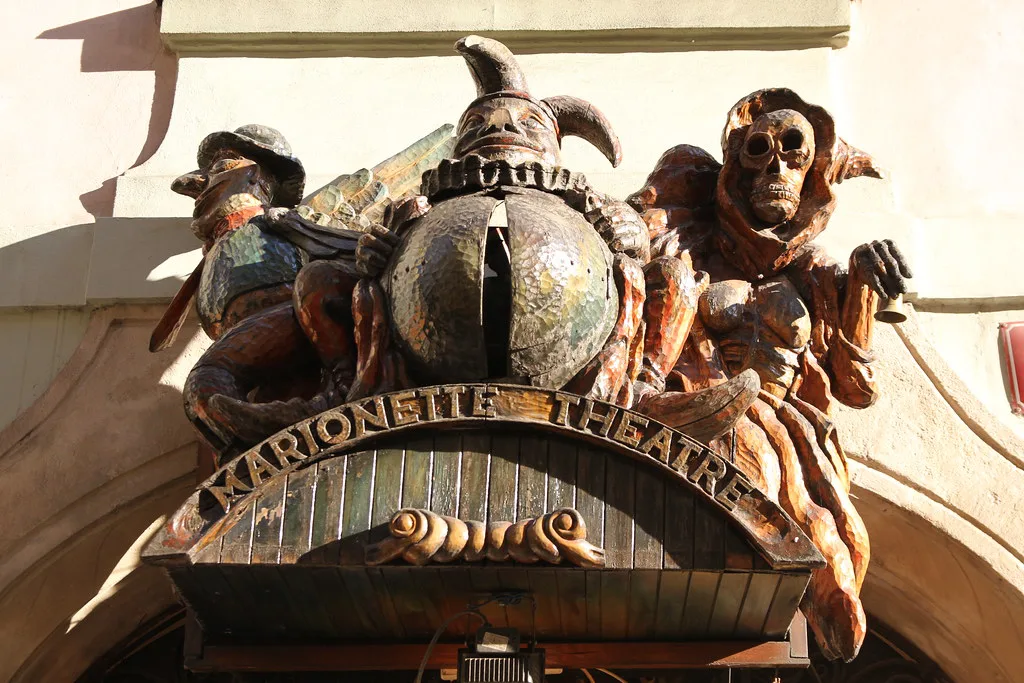
Puppet making is among the crafts travelers associate with the Czech Republic, and workshops still produce marionettes in wood rather than molded plastic. Marionettes.cz describes its range as crafted with care in the Czech Republic, blending tradition and quality, and sells to American buyers in US dollars. Treat that origin claim as the seller's own statement and look for the same wording on the piece you consider.
Are Czech marionettes handmade? The marionettes sold by Marionettes.cz are described as handmade and crafted in the Czech Republic, with carved heads and limbs, painted faces, costumes and strings on a control. Because that claim is the seller's own, check it against the specific product page or, in a shop, ask to see the construction and the country-of-origin wording.
What is the difference between a marionette and a hand puppet? A marionette is hung on strings and steered from a control bar above the head; a hand puppet is worn over the hand and moved from inside. If you want the stringed figure from a shop that sells both, say marionette and ask to see the strings and control bar before you pay.
The company also stocks magazines and publications on puppetry, covering its history in the Czech Republic and contemporary practice in print and digital formats. That is a lighter purchase than a figure and travels easily.
Marionette, hand puppet or performance puppet: the types you will see
The catalog is organized by purpose rather than character, which is the most useful thing to know before you shop. Marionettes.cz separates Puppets For Kids and Fans, Art Puppets and Performance Puppets, with DIY kits and loose parts as a fourth line for people who want to assemble a figure themselves.
Puppets For Kids and Fans is the entry tier: a broad selection of handmade marionettes described as suitable for both beginners and seasoned puppeteers, sorted into characters, animals and other categories. Buy these if the puppet will be handled. The carving is simpler than in the art line, but it is still a wooden figure on strings rather than a stuffed toy.
The hand puppet is the other thing travelers picture — a hollow fabric or wooden figure worn over the hand and moved from inside. If you want a marionette, be explicit about strings and a control bar, since the two are different objects and the hand puppet is the cheaper of the pair.
Performance puppets: fully articulated figures
Performance Puppets are built for use, described as fully functional, professionally articulated and balanced. That means joints that move freely under load and stringing adjusted so the figure hangs level, which matters the moment you walk the puppet across a table. If you want to perform rather than display, ask for this tier by name.
You can also order to your own design: pick from the existing range or bring an idea and have a professional puppet made to it. That suits a school, a small theater or a distinctive gift, but it removes the chance to inspect the finished object before you pay. Agree on the details you care about — face, hands, costume — in writing before you commit.
Art puppets: the pieces collectors look at
Art Marionettes are the top of the range, described as unique and special in every way, each creation an original detailed piece of art. The maker frames them as lifetime figurines that age like wine — a decorative object for a collection or a room, not a toy. Expect finer painting and costume work than in the kids' line.
The catalog credits Katerina Novakova on the art category. If you buy a signed or attributed art puppet, get the maker's name on the receipt, because a carved figure without that documentation is just a nice carving once you are home.
How a marionette is built
Construction runs from the inside out: a carved wooden body with heads and limbs sold as separate components, then a costume, then strings, then a controller. The shop sells all of it in pieces — bodies, heads, shoes, premium wood, strings and hardware — which is your best window into how a finished figure goes together. A well-made marionette shows clean joints at shoulder and hip and strings tied off neatly.
The controller is the part buyers underestimate. The shop offers controls ranging from simple crossbar designs to more advanced systems, chosen for balance and control. A simple cross is fine for a first puppet and packs flat; a complex frame gives finer movement but is bulkier in a suitcase.
Art puppets versus puppets for kids: what the categories mean for a buyer
Decide who will handle the puppet before you decide what it looks like. For a child or a beginner, the kids and fans line is the sensible pick, because you will not wince when it gets swung around the room. For a shelf, the art line is the better object, and it is also the one to keep out of reach.
A performance puppet is the middle ground, the right answer if the figure must survive handling and still look good. Check the figure on its product page rather than trusting a price seen in a search result; the English site shows prices in US dollars for American buyers.
Antique and antique-style pieces
The antique section describes antique-style pieces as a chance to enjoy historical characters as decoration, with their hidden story deep inside them. Read that honestly: antique-style means a decorative object made in a historical manner, not a documented period puppet. Buy it because you like the carving and the character, not as an investment.
Genuine antique marionettes carry provenance — who owned and performed with the figure — and that paperwork carries the value. If a seller uses the word antique without provenance, ask which it is before paying an antique price.
What to look for in a genuine Czech-made puppet
Start with the country-of-origin statement. Marionettes.cz applies the Made in Czech Republic line to its wooden toys and parts, so the claim is checkable on the product you are buying. Shopping in person, ask the seller to point to the same wording on the packaging or paperwork rather than taking the shop's nationality as proof.
Then inspect the object. Look for a carved, painted head rather than a cast one, joints that move without splintering, a stitched rather than glued costume, and strings attached at the control with tidy knots. Work the puppet gently before buying: a balanced figure hangs level, while a badly strung one lists to one side however you hold the cross.
Finally, separate the finished puppet from the kit. The shop sells do-it-yourself sets and pre-prepared parts and materials, which suit a hobbyist and make a poor substitute if you want a souvenir to display on arrival. Kits also mean loose small parts in your luggage, so keep them in their packaging.
Custom marionettes from a photo or your own design
A portrait marionette made from a photo of a person is one of the more personal Czech craft purchases available. The shop takes commissions based on a photo or your own idea and makes a professional puppet from it. The trade-off is time: a carved, painted and dressed figure is not something you collect the afternoon before your flight, so commission early or arrange shipping home.
Custom work means you will not see the finished carving until it is done. Set the essentials up front — size, costume, hair and the details that make the face recognizable — and ask for photographs before it ships. A portrait puppet is judged on likeness, the one thing a description cannot confirm.
Buying a puppet: sizes, stands and getting it home
Two accessories turn a loose figure into a display piece, and most buyers forget both. Marionette stands, typically wooden, hold the puppet upright and stop the strings tangling, which is what you need on a shelf at home. Controls are listed as their own category and also supplied with finished puppets, so when buying parts or a kit, confirm what is included.
For packing, think about the crossbar first. A wide controller and long strings will not sit flat in a carry-on, and the strings tangle around everything else in the bag. Ask the seller to bag the strings separately and, for a large figure, to box it for checking or shipping; a carved head is the part that breaks when a suitcase is compressed.
Puppets pair naturally with the country's other hands-on craft traditions. Glass is the better-known souvenir, and the same advice holds: buy what you can inspect and plan the packing before you fall for the biggest piece in the window. The Bohemian Crystal guide covers the lead crystal side of that route in the same practical way.
Where to buy puppets on a route beyond Prague
Buying online is straightforward: Marionettes.cz ships from the Czech Republic and shows prices in US dollars for American customers, with categories for puppets, parts, stands and publications. On a short trip, delivery to a hotel is awkward, so buy a finished piece from a shop you can walk into or order early enough for home delivery after you land.
Do not build a day around a named puppet museum, theater or workshop unless you have checked the venue's own website for current opening before you go. The same caution applies to craft studios you add to a route. For comparison, the Czech Glass itinerary sets out factory visits and glassmaking stops with the same rule: verify before you travel.
If you want to assemble your own figure rather than buy a finished one, the parts and kit lines cover wooden bodies, heads, hardware and strings, sold as pre-prepared sets and components for a hobbyist project.
Which puppet should you actually buy?
Buy a performance puppet if the figure will be handled, an art marionette if it is going on a shelf, and a kids-and-fans puppet if a child will carry it around the house. Add a stand and check what the control includes, because those two items decide whether the puppet looks good or sits in a drawer. For a one-off gift, a custom portrait marionette is the memorable choice — order it early enough that the carving is finished before you fly.
Explore more Czech Republic guides
Frequently Asked Questions
Are Czech marionettes handmade?
The marionettes sold by Marionettes.cz are described as handmade and crafted in the Czech Republic, with carved heads and limbs, painted faces, costumes and strings on a control. Because that claim is the seller's own, check it against the specific product page or, in a shop, ask to see the construction and the country-of-origin wording.
What is the difference between a marionette and a hand puppet?
A marionette is hung on strings and steered from a control bar above the head; a hand puppet is worn over the hand and moved from inside. If you want the stringed figure from a shop that sells both, say marionette and ask to see the strings and control bar before you pay.
Sources
Notes for your Czech trip
Optional updates to our Czech town guides.
You might also like



Continue reading
More guides you'll find useful