Czech Glass Beads: The Jablonec Story and Where to See Them
Czech glass beads come from the Jablonec nad Nisou region. Learn what makes them distinctive and what the Museum of Glass and Jewellery holds.
On this page
Czech glass beads are the specialty of Jablonec nad Nisou, a town in the northern Bohemian hills where the bead and costume-jewelry trade grew up alongside glassmaking. The single museum devoted to both subjects sits in the center of town, and its permanent collections run from ancient glass to present-day ornament production. This guide explains what the beads are, how the main types differ, what the museum actually holds, and how to judge a strand before you spend koruna on it.
The trip is narrow on purpose. Jablonec is about beads and jewelry, not a castle town, and the useful visitor content is concentrated in one museum building plus a separate mountain site. What follows gives you a buyer's framework first, then the museum's permanent exhibition strands, then the logistics of getting there from Prague.
What Czech glass beads are and why Jablonec nad Nisou is the center
Czech glass beads today mean the small glass components made for jewelry, embroidery and ornament work, produced in the Jablonec region rather than in the big Czech crystal works that cut lead crystal. Jablonec built its identity on the costume-jewelry side of glass: beads, buttons, chatons, and the metal findings that hold them together. That is why a bead buyer and a chandelier buyer are looking at two different Czech industries.
The museum's own description claims a position that no other institution matches: it covers glass and costume jewelry together in one place, holds a jewelry collection spanning all materials and techniques, and keeps what it calls the largest public collection of glass Christmas ornaments in the world. It also describes its glass collection as the second largest in the Czech Republic and among the most significant in Europe. Read those as the museum's own framing of its collections, which is exactly how a specialized museum should describe itself.
For a visitor, the practical consequence is that Jablonec is where you go to understand the material and the trade, not where you go to watch a single big factory process from a viewing gallery. Plan the museum as the anchor of the day.
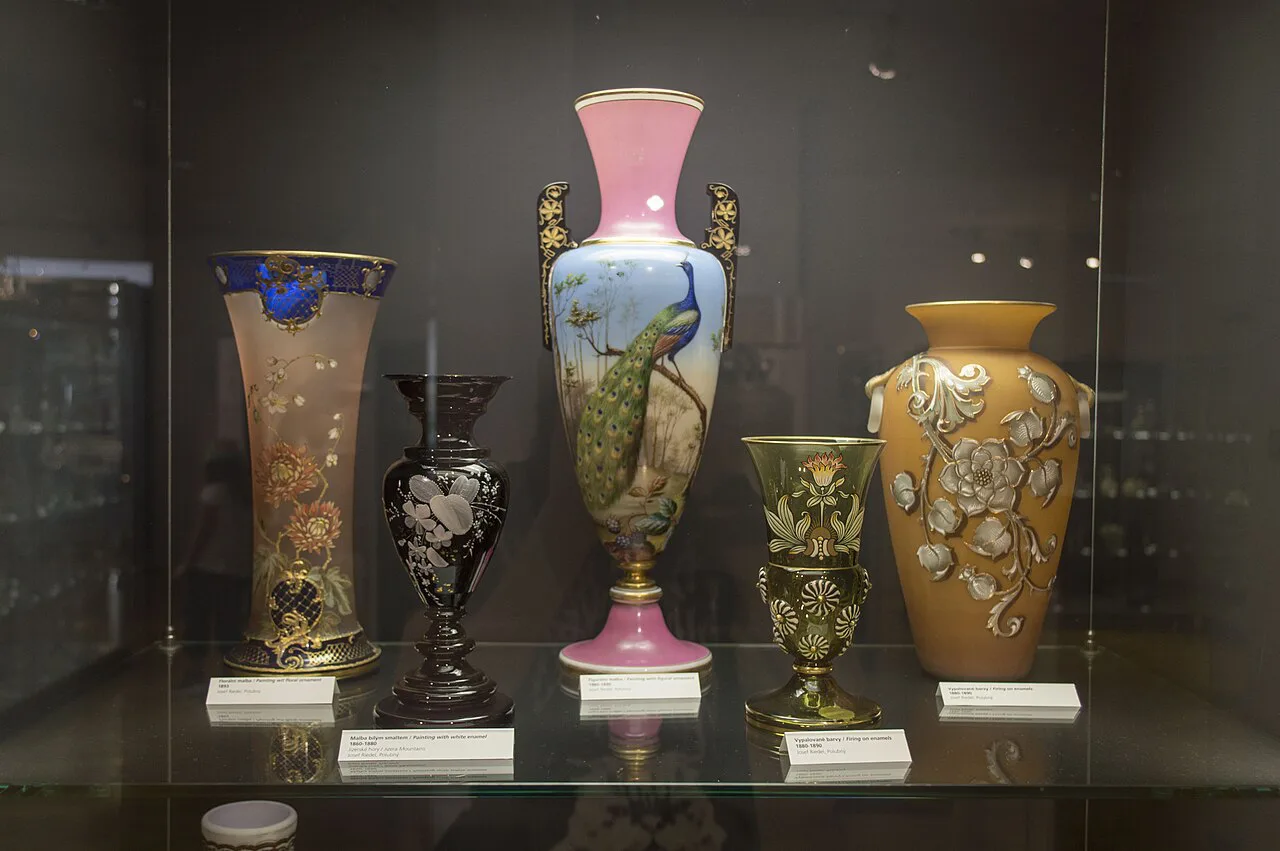
Seed beads, pressed beads and blown beads: how the main types differ
Three production routes account for most of what a bead shop sells. Seed beads are drawn glass: a hollow gather is pulled into a long cane, cut into short cylinders, and usually tumbled or reheated to round the edges. Pressed beads are made by dropping a measured gob of hot glass into a mold that stamps the shape and often a surface pattern. Blown beads are inflated in a mold or by mouth, which is how thin, lightweight ornaments and larger hollow beads get their form.
Are Czech glass beads good quality? They are made to trade standards rather than as a generic craft product, which is why sizes and finishes are specified so precisely. Quality still varies by type: drawn seed beads are judged on uniform diameter and hole size, pressed beads on the crispness of the mold, and blown beads on wall thickness.
What is the difference between Czech glass beads and ordinary glass beads? The difference is the production method and the trade context behind it. Czech beads come out of a region whose economy was built on supplying jewelry makers, so the shapes, sizes and finishes follow a catalog system such as 11/0 and 8/0.
Where can I see how Czech glass beads and ornaments are made? The Museum of Glass and Jewellery in Jablonec nad Nisou covers the finished trade in its permanent exhibitions, including the jewelry and Christmas ornament collections. Live demonstrations happen at scheduled events rather than daily, such as the glassmakers' week in October 2026.
The distinction matters when you shop, because the three types behave differently on a needle and in wear. Seed beads need consistent hole size and uniform diameter or your pattern will drift. Pressed beads can carry molded facets and coatings that catch light but can chip at the edges. Blown beads are light and delicate, which suits ornaments and statement pieces more than anything that gets daily friction.
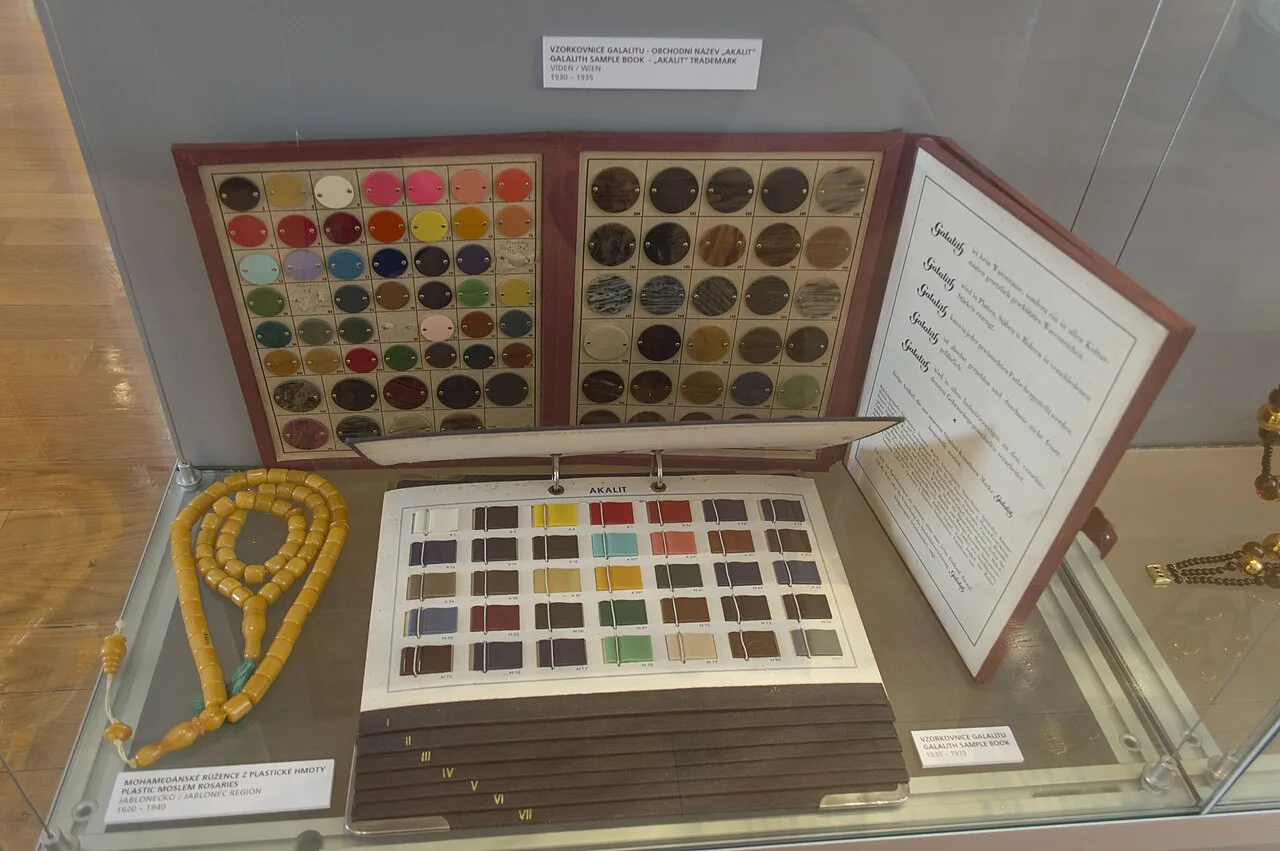
Why Jablonec became the world's bead and costume-jewelry town
The local industry grew from small-scale glassworking in the surrounding hills into a concentrated trade in finished jewelry components, and the museum presents that arc from the birth of Jablonec jewelry to the present in a dedicated exhibition. The collection scale suggests how deep the trade ran: the museum describes holdings of more than twelve million objects, of which only a representative selection can be displayed in roughly 380 square meters of gallery.
That concentration is also why the vocabulary of Czech beads is a trade vocabulary. Sizing numbers, finish names and hole specifications were developed for buyers who ordered by the gross from Jablonec export houses, and the museum chooses to walk visitors through its jewelry exhibition as if passing through such an export house. If you are new to buying beads, expect the labels to be technical rather than descriptive.
What the Museum of Glass and Jewellery in Jablonec nad Nisou holds
The Museum of Glass and Jewellery occupies a main building on U Muzea in Jablonec nad Nisou, with step-free access, and the museum publishes opening hours of Tuesday to Sunday, 10:00 to 17:00. The same page carries a forward notice that the museum will be closed on Tuesday, 10 November 2026 for technical reasons, so a Tuesday visit in that window is the one to plan around. The museum posts its own closures, and the reliable move before a trip is to check that page for updates.
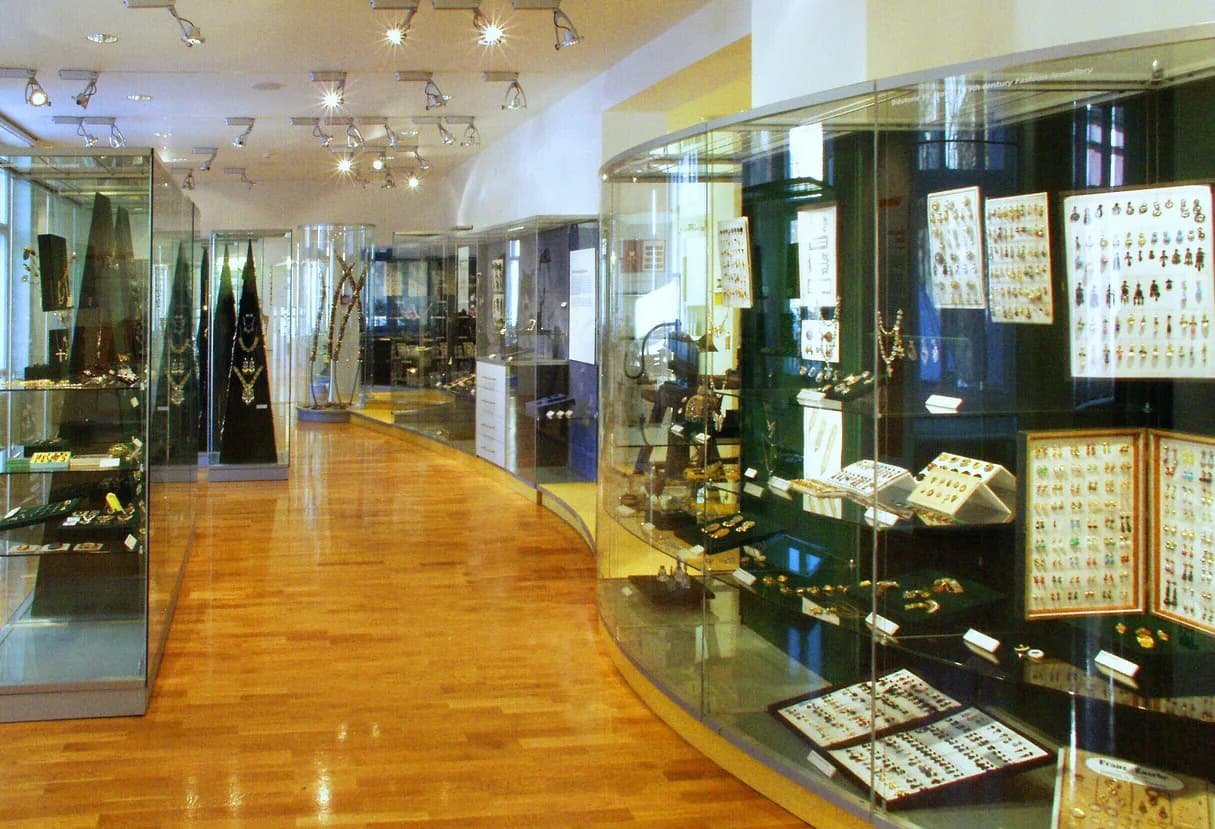
Inside, the collections are organized into permanent exhibitions on glass, on Jablonec jewelry, and on Christmas ornaments, with temporary shows layered on top. The glass collection fills about 380 square meters on the second floor and the jewelry collection about the same amount on the first floor, so allow time to read the labels rather than rushing one gallery. The museum does not present a standing guided-tour offer on its visitor pages, so plan on self-guided viewing.
The permanent exhibitions: Czech glass across seven centuries
Čarovná zahrada, or Magical Garden, covers Czech glass from antiquity to the present in four chronologically linked sections across the museum's second floor. The ambition is broader than a display case of techniques: the gallery is set up to tell the stories attached to particular objects as well as the technical history of the material. If your interest is beads specifically, this is where you see them in the context of the larger glass tradition rather than as loose merchandise.
The permanent exhibition on Jablonec costume jewelry
Nekonečný příběh bižuterie, the endless story of jewelry, fills the first floor with a representative selection from the collection and traces Jablonec jewelry from its origins to current production. The museum frames the route as a walk through an export house, which is a useful way to read it: you are seeing what was made and shipped, grouped by trade logic rather than purely by date. Give this gallery real time if jewelry is your reason for coming, because bead and jewelry technique lives here more than anywhere else in the building.
World of Wonders: the glass Christmas ornament collection
Svět zázraků, or World of Wonders, holds what the museum describes as the largest public collection of blown and decorated glass Christmas ornaments in the world, more than fifteen thousand pieces. Most of it came as a single gift when the firm Jablonex handed over its sample room to the museum in 2008, which explains why the display reads like a working catalog rather than a random accumulation. Contemporary production and historical pieces sit in the same collection, so you can compare current ornament design against older work in one room.
The museum keeps a display of design Christmas ornaments made through an international symposium that pairs designers with manufacturers, with results from the first round presented in the World of Wonders exhibition since 2024 and a further symposium exhibition running to 28 March 2027. The 2026 edition of the triennial brings a new show titled Revize, between tradition and invention, opening 23 October 2026 and running to 12 September 2027. A separate exhibition called Svět fantazie, or World of Fantasy, covers Czech glass ornaments from their beginnings onward and runs to 31 December 2028.
Kristiánov: the mountain glassmaking site in Bedřichov
Kristiánov is a second, separate visitor building in Bedřichov, up in the hills from Jablonec, presented as a glassmaking site. It is not step-free, and the museum currently lists it as closed with the 2026 season ended, so do not build a day around it without confirming that it has reopened. The main Jablonec museum remains the dependable stop in the area.
Borosilicate glass and why it matters for beads and ornaments
Borosilicate glass carries a high share of silica and boron oxide, which makes it more heat-resistant than ordinary soda-lime glass, and the museum has extended an exhibition on the material to 31 January 2027. For bead buyers the point is durability under heat and chemical exposure, which is why borosilicate shows up in applications where regular glass would fail. If you are choosing beads for a piece that will take heat or cleaning, glass composition is worth asking about directly.
What separates genuine Czech beads from generic glass beads
Genuine Czech beads are a matter of origin and process, not a visible stamp. Seed beads made by drawing and cutting have a different hole profile and edge than molded beads, and pressed beads from established molds tend to show crisper, more symmetrical shaping than generic copies. The strongest evidence is the seller's ability to name the maker, the type and the size in standard terms, plus consistency across the strand in diameter and hole position.
Be skeptical of claims that lean on color names and vague adjectives. A Czech bead is not identified by being shiny or by being called Bohemian. Ask what kind of bead it is, drawn or pressed or blown, and compare the actual pieces in the strand in front of you.
Buying Czech glass beads: what a fair price in CZK looks like
Judge value on the material and labor behind the strand rather than a target number. Price in koruna typically tracks size, uniformity and the amount of handwork: fine drawn seed beads in small sizes and hand-decorated ornaments sit at the top, while large molded beads with sprayed finishes are cheapest per piece. Pay in CZK and compare strands of the same size and count rather than comparing whole packets.
Bead pricing moves with supply and the exchange rate, and the museum publishes no bead price guide, so ask the seller for the price per strand or per weight and check the koruna rate before you convert. If you want to buy beyond the museum's own displays, treat a price that sits far below the rest of the market as a question rather than a bargain.
Sizing and color: reading bead labels like 11/0 and 8/0
The aught system on a bead packet counts how many beads fit in a given length, so a larger number means a smaller bead: 11/0 is finer than 8/0, and 8/0 is finer than 6/0. That is why a pattern written for 11/0 will not come out the same with 8/0, and why the same color name can look different at different sizes. When you buy, match the number on the packet to the pattern or to a bead you already use.
Color is the other half of the label and the harder one. Dyed and coated finishes can shift with light and wear, while glass that is colored through its mass holds its tone. For a first purchase, buy one size in a few finishes and test how they sit next to each other before committing to a large quantity.
How to fit the museum into a route from Prague
Jablonec nad Nisou sits in northern Bohemia, reachable from Prague by train or bus in a few hours, and the museum is in the town center on U Muzea with step-free entry. Check current connections and travel times with the Czech national timetables before you commit to a schedule, since services and journey lengths change with the season. A same-day return from Prague is possible but tight; an overnight in the Jablonec area gives you a relaxed museum visit and time to see the town.
If glass is the theme of your trip, the museum presents itself within the Crystal Valley glass context, and Nový Bor to the west anchors the other end of the Czech glass story with its own glassmaking tradition. Pairing Jablonec with a glass-focused stop on a wider crystal itinerary makes more sense than treating the museum as an isolated detour.
Practical notes on tickets, hours and seasons
The museum's published hours are Tuesday to Sunday, 10:00 to 17:00, and admission is ticketed, with prices set by the museum rather than by any reseller. The museum publishes its current admission prices on its visitor information pages, and the same pages carry notices of temporary closures and exhibition changes. Some temporary exhibitions have end dates well into 2027 and 2028, while the ornament symposium show closes on 28 March 2027.
The museum participates in Týden sklářů, the glassmakers' week running from 17 to 25 October 2026, with demonstrations and creative workshops in its program. It also programs workshops with the ornament firms Goja and Rautis at the end of that week, on 24 and 25 October 2026. Those are dated events with fixed runs, so plan around the published calendar rather than assuming an activity on any given day.
Should you build a Jablonec stop into your Czech trip?
Yes, if beads and jewelry are the point. The Museum of Glass and Jewellery is the one place where Czech glass beads, Jablonec costume jewelry and ornament production can be seen as one trade, and the permanent galleries alone justify the trip north from Prague. Skip it if you want castles and old-town squares, because Jablonec does not offer that day.
Go on a weekday when the museum is open, allow a relaxed half-day so you can read the galleries properly, and leave the buying decision for after the visit, when you have seen how the pieces are presented. Confirm prices, hours and exhibition dates on the museum's own page before you set out.
Explore more Czech Republic guides
Frequently Asked Questions
Are Czech glass beads good quality?
They are made to trade standards rather than as a generic craft product, which is why sizes and finishes are specified so precisely. Quality still varies by type: drawn seed beads are judged on uniform diameter and hole size, pressed beads on the crispness of the mold, and blown beads on wall thickness. Look at the strand in front of you instead of relying on a country-of-origin label.
What is the difference between Czech glass beads and ordinary glass beads?
The difference is the production method and the trade context behind it. Czech beads come out of a region whose economy was built on supplying jewelry makers, so the shapes, sizes and finishes follow a catalog system such as 11/0 and 8/0. Generic glass beads are often molded to a rough size without that specification, which shows up as inconsistent holes and diameters.
Where can I see how Czech glass beads and ornaments are made?
The Museum of Glass and Jewellery in Jablonec nad Nisou covers the finished trade in its permanent exhibitions, including the jewelry and Christmas ornament collections. Live demonstrations happen at scheduled events rather than daily, such as the glassmakers' week in October 2026. The museum has also listed its Kristiánov glassmaking site in Bedřichov as closed for the 2026 season, so the main building is the reliable stop.
Is Czech crystal worth anything?
Cut lead crystal and glass beads are separate markets, and value in both depends on the maker, the condition and the work involved rather than on the word crystal. For beads, ask what type they are and who made them. For cut crystal, the Bohemian crystal tradition is the relevant background, and the maker's mark matters more than the country name.
Sources
Notes for your Czech trip
Optional updates to our Czech town guides.
You might also like
Continue reading
More guides you'll find useful