Bohemian Switzerland National Park: Rock Gates, Gorges and Gateway Towns
Bohemian Switzerland National Park centers on Pravčická brána and the Kamenice gorges. Learn its main sights, gateway towns and how a visit fits together.
On this page
Bohemian Switzerland National Park is a sandstone landscape on the Czech-German border whose two headline sights are the Pravčická Brána rock gate and the Kamenice Gorge, including the boat section through the Edmund Gorge. It is not a single mountain to climb but a spread-out region of rock towers, deep valleys and forest, so a visit works best when you pick a starting point and walk from there. This guide covers how the park is arranged, which gateway towns anchor a trip, what sits across the German border, and how to get there and move around.
The park lies in the northwest corner of the Czech Republic, close to the German border and the Elbe valley, within the Elbe Sandstone Mountains. Its Czech name is Národní park České Švýcarsko, and the land is also called Bohemian Switzerland in English. Treat the map as a set of separate clusters rather than a loop you can complete on foot in an afternoon.
Where the Park Sits and How It Is Laid Out
Bohemian Switzerland is one of two neighboring parks in the Elbe Sandstone Mountains, and the German park across the border is Saxon Switzerland. The two reserves are physically connected but administratively separate, which is why you will see two names for what looks like one landscape on a map.
The Czech side is anchored by the village of Hřensko in the Kamenice valley near the Elbe, and by Mezní Louka higher up in the forest. Most of the famous sights fall within walking distance or a short drive of those two points, which is why they carry most of the visitor traffic. Plan around one of them rather than trying to touch every corner of the park in a single day.
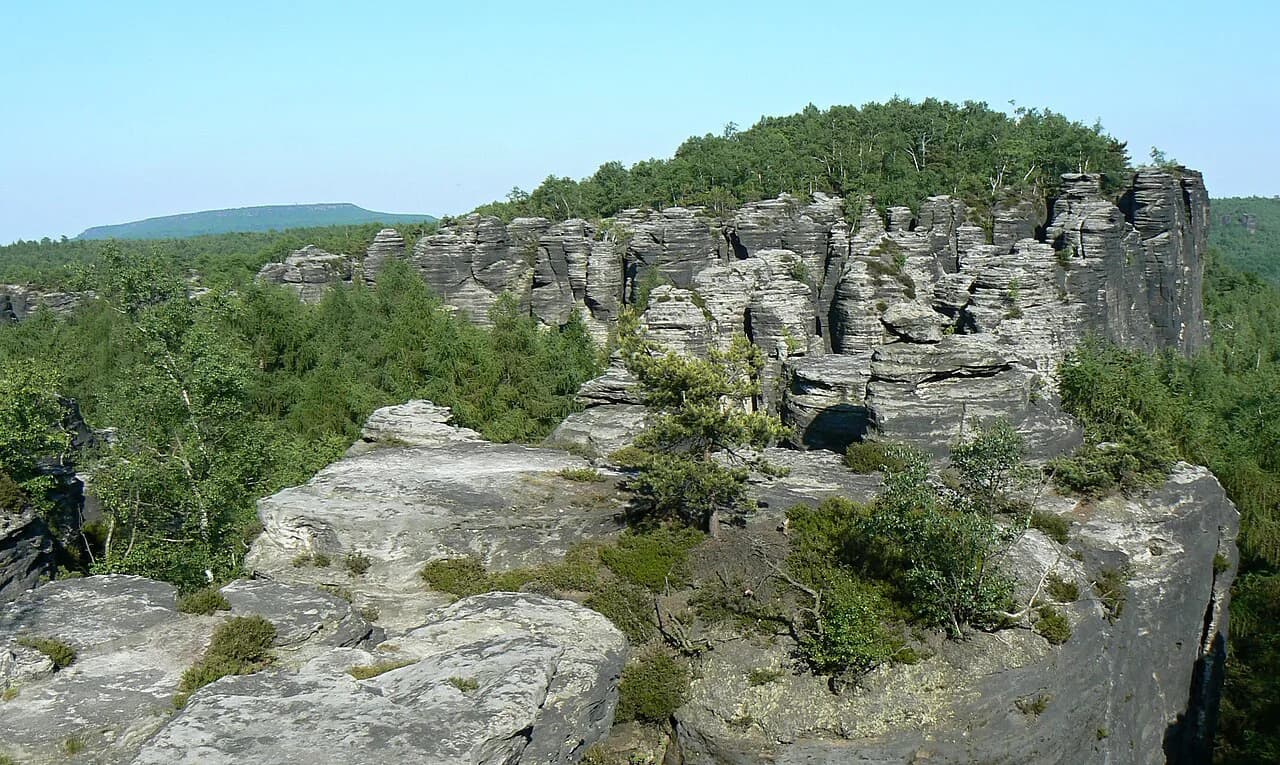
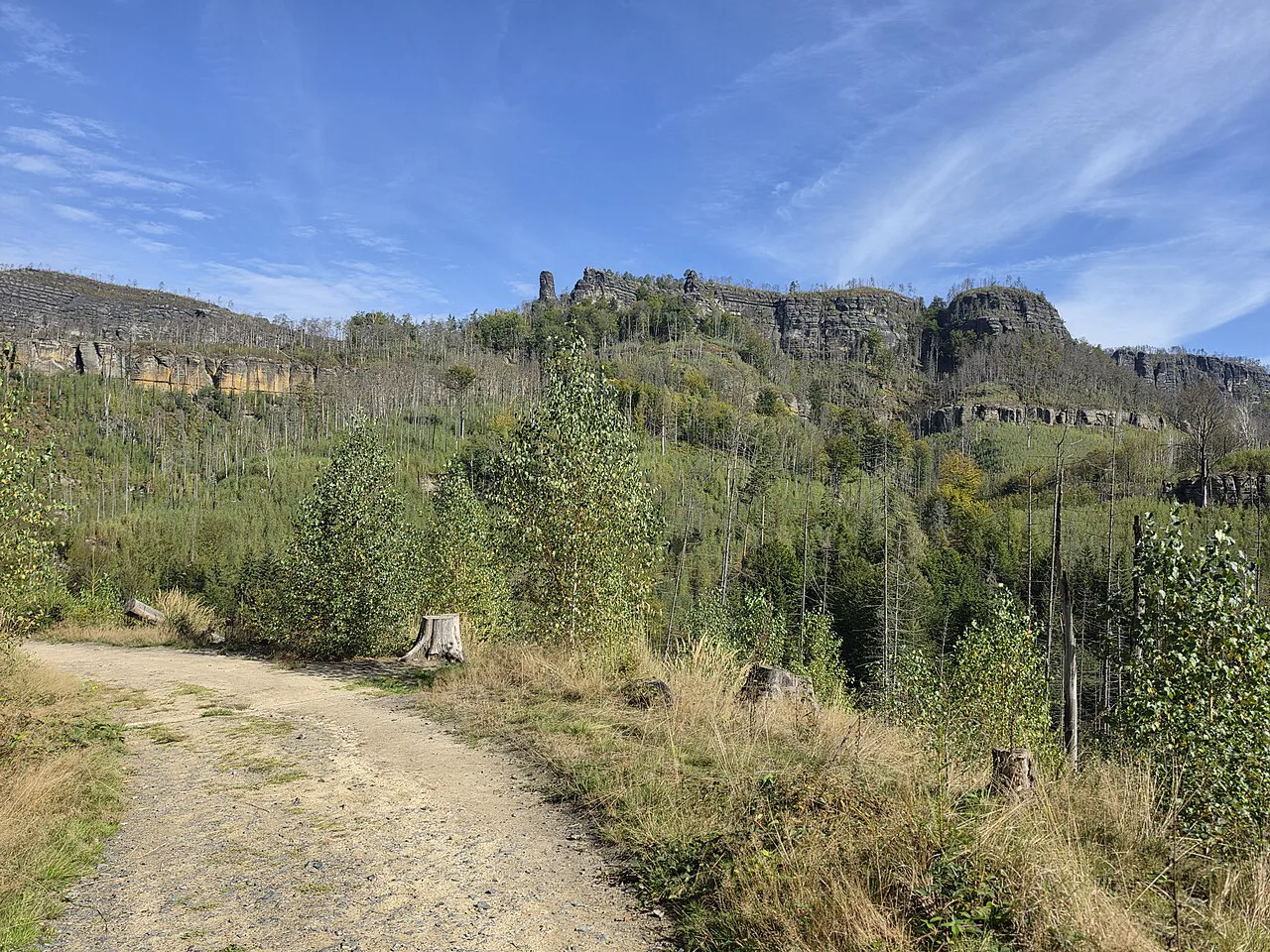
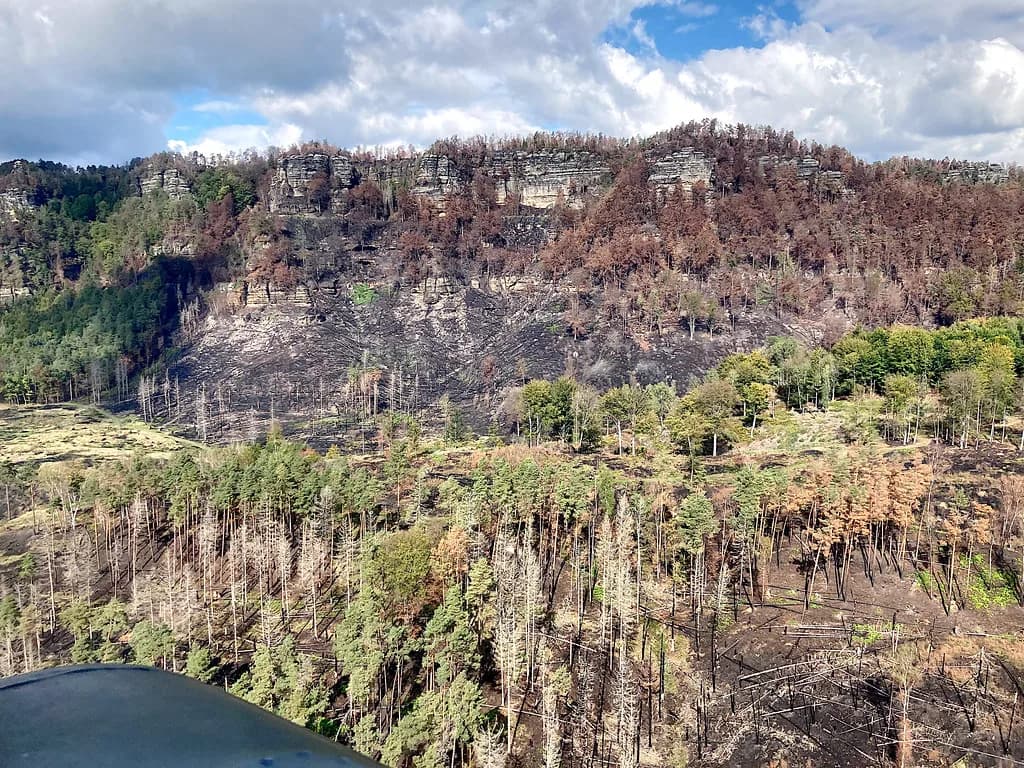
The landscape is sandstone: vertical towers, narrow clefts, rock bridges and wooded plateaus. That geology explains both the scenery and the way you move through it, since paths often follow ledges and stairs rather than open ridgelines.
Pravčická Brána: The Park's Headline Rock Gate
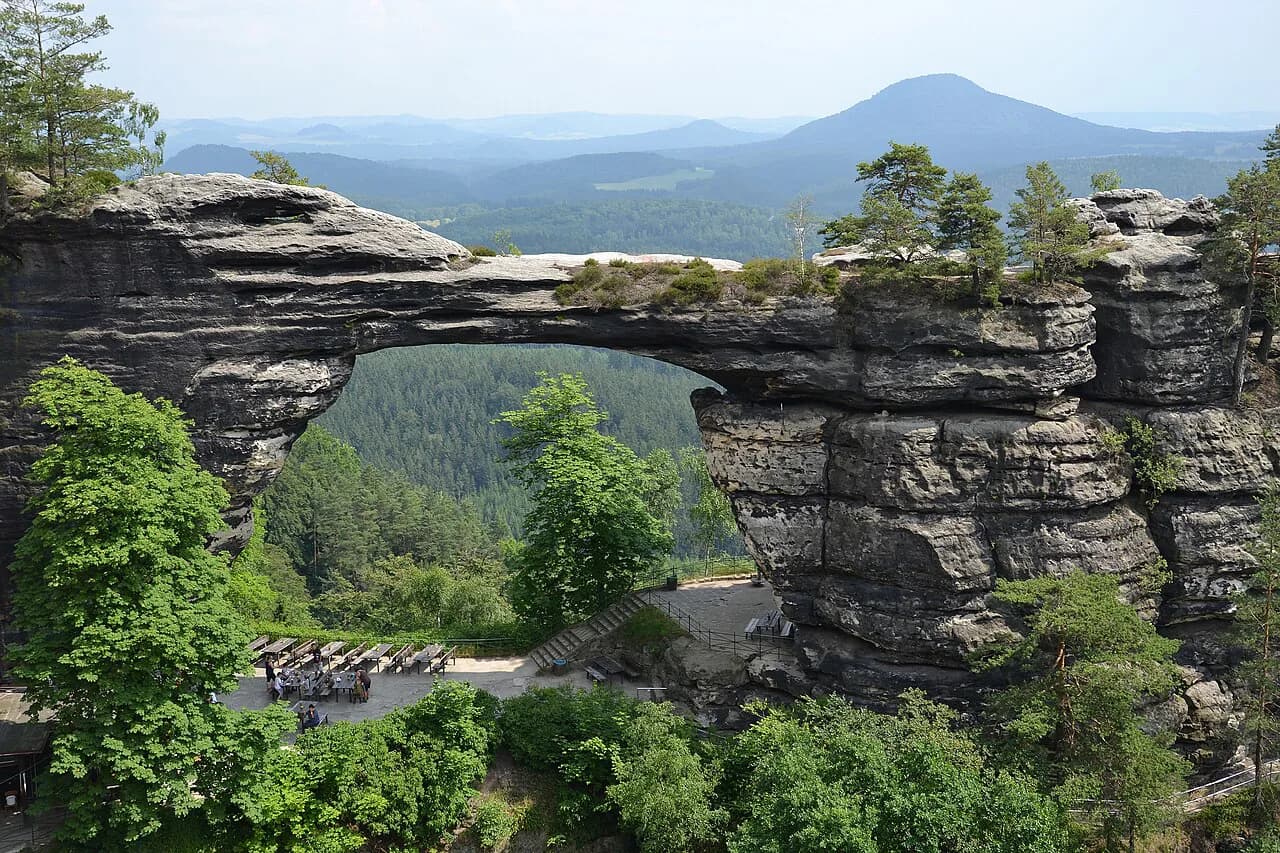
Pravčická brána is the largest rock bridge in Central Europe and the most visited landmark in the park, with a span of about 26 meters and a height of about 16 meters. It is the image most travelers associate with Bohemian Switzerland, and it is the reason many day trips from Prague come this far north.
Beside the gate stands a small castle housing a national park museum and a restaurant, so the site is more than a photo stop. Build in time to look around rather than arriving, photographing the arch and turning back immediately.
The classic walking link runs from Mezní Louka up to Pravčická Brána and then down toward the Kamenice Gorge, connecting the park's two most visited sights on foot. That route is the most popular trail in the park, and information booklets are available at the information point along it.
The Kamenice Gorges and the Boat Section
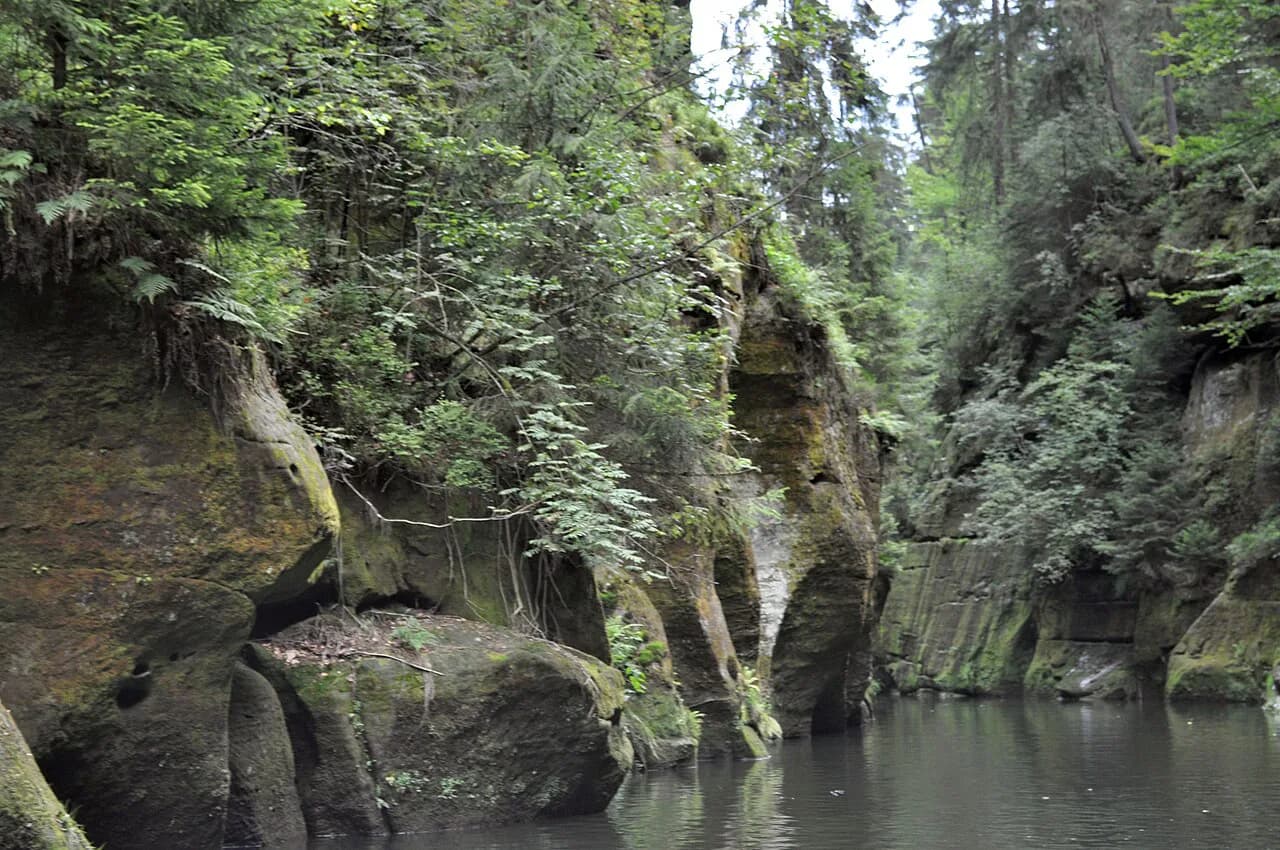
The Kamenice gorge and the Edmund Gorge are the park's second essential experience: a narrow, shadowed valley where the stream runs between steep rock walls. Part of the Edmund Gorge is covered by boat, which is what most visitors mean when they talk about the gorge trip.
Pairing the gorge with Pravčická brána makes a full day rather than a quick stop, because the two sit on opposite sides of the Mezní Louka saddle. Walk the link in one direction rather than doubling back, and you get both sights without repeating the climb.
Access to the gorge is on foot, and the paths can be busy in the middle of the day. Starting early gives you a quieter valley and more room at the boat landing.
Hřensko: The Main Gateway
Hřensko sits at the confluence of the Kamenice stream and the Elbe, at the bottom of the valley where the park meets the river road. That position makes it the natural first stop for anyone arriving from the Děčín or Dresden direction, and it is where the largest cluster of services sits.
Parking is concentrated here and at Mezní Louka, and parking elsewhere in the park is strictly prohibited. The lots at Hřensko near the Klepac restaurant, near the waterfalls and at the gas station, plus the hotel lot at Mezní Louka, are the places to aim for.
Parking runs roughly one euro per hour, or four to five euros for a full-day ticket, with the largest lot holding about 150 spaces and the smallest around 50. Once you leave the car for the day, finding another space can be difficult, so walking between sights is usually the better plan.
Hřensko's role is mainly practical: it is where you park, buy supplies and start the walk toward the gate or the gorges.
Beyond the Headlines: Jetřichovice, Dolský Mlýn, Krásná Lípa and the Elbe Canyon
Travelers who want more than the two famous sights can build a second day around Jetřichovice, Dolský mlýn, Krásná Lípa, the Kyjov valley and the Elbe canyon. These sit in the wider park area and are the stops local guides put on a multi-day program.
The Elbe canyon gives the region its scale, cutting between the sandstone plateaus along the river. Viewing it from above, rather than driving through on the valley road, is what makes the geography click.
If you are based in this part of the park, the small town of Česká Kamenice makes a useful orientation point for the surrounding villages.
Rock Castle Ruins: Šaunštejn and Tolštejn
Two rock castle ruins belong on the shortlist for travelers interested in history as much as scenery. Šaunštejn is a rock castle ruin in the park, and Tolštejn is the medieval castle associated with the wider area's heritage.
Ruins like these reward a slower pace: they are reached on foot, they are small, and their appeal lies in the position and the stonework rather than in furnished interiors. Slot one into a walking day instead of treating it as a standalone destination.
Viewpoints: Rudolfův Kámen and Mariina Skála
Rudolfův kámen and Mariina Skála are the two lookout points most often named alongside the main sights. Both are elevated viewpoints, so they work as the high point of a walk rather than a drive-up stop.
Choose one per outing and combine it with the gorge or the gate rather than trying to collect all three in a single day. The distances between them add up faster than the map suggests.
Across the Border: Bastei Bridge, Königstein Fortress and Schrammsteine
The German side delivers its own set of headline sights, chief among them the Bastei Bridge, a stone bridge threaded through rock towers above the Elbe. Königstein Fortress, the Schrammsteine ridge with its Schrammsteintor, the Schwedenlöcher and the open-air stage at Rathen round out the Saxon list.
Decide deliberately whether you will cross the border at all. Adding the German side turns a Czech park visit into a two-country trip, which is rewarding but eats a day on its own.
Dresden is the base most travelers use for Saxon Switzerland, just as Hřensko and Mezní Louka serve the Czech side. That split is the cleanest way to think about each half of the region.
Bohemian Switzerland and Saxon Switzerland: Two Parks, Two Names
The most common mix-up is assuming the two names describe one national park. They do not: Bohemian Switzerland is the Czech park, and Saxon Switzerland is the German one, founded separately and run by different countries.
The Czech park was established in 2000 and the German park in 1990, so both are relatively recent national parks.
The Czech side also carries several names, including Czech Switzerland National Park and Bohemian Switzerland. Expect all of them on signage, tickets and tour listings without any change in what you are visiting.
Getting There from Prague and Dresden
The region sits just west of Dresden, near the Czech-German-Polish triple border, and the Elbe is its defining river. That geography explains why Dresden and the Děčín area are the two practical approaches.
Prague lies further south, so a visit from the Czech capital is a long day rather than a quick hop. Organized day trips from Prague are offered and handle the transport, which is the simplest option if you do not want to drive. Terezín, about 30 miles north of Prague, lies in the same direction and can fill a separate day.
By car, arrive early and park once at Hřensko or Mezní Louka, then walk. The tourist information center at Hřensko is listed as open from 9:00 to 16:00, and it is a sensible place to confirm trail conditions before setting out.
Guided local tours can pick up from Děčín train station and drive into the park, which suits travelers arriving by rail without a car.
Structuring a Visit: Mezní Louka, Pravčická Brána, Then the Gorges
The most efficient single day starts at Mezní Louka, walks up to Pravčická brána, then descends toward the Kamenice gorge and the boat section. That order uses the classic linking trail in one direction and finishes where transport back to the car or the bus is easy.
Reverse it if you prefer to reach the gorge early, before the crowds build, and climb to the gate later. Either way, do not plan to drive between the two sights mid-day, since the lots fill and you lose the advantage of having parked once.
If you have a second day, spend it on the quieter stops such as Jetřichovice and Dolský mlýn, or cross into Germany for the Bastei. A local guide can assemble a multi-day program that covers both parks, which is useful if you want the border crossing handled for you.
Villages and Heritage Around the Park
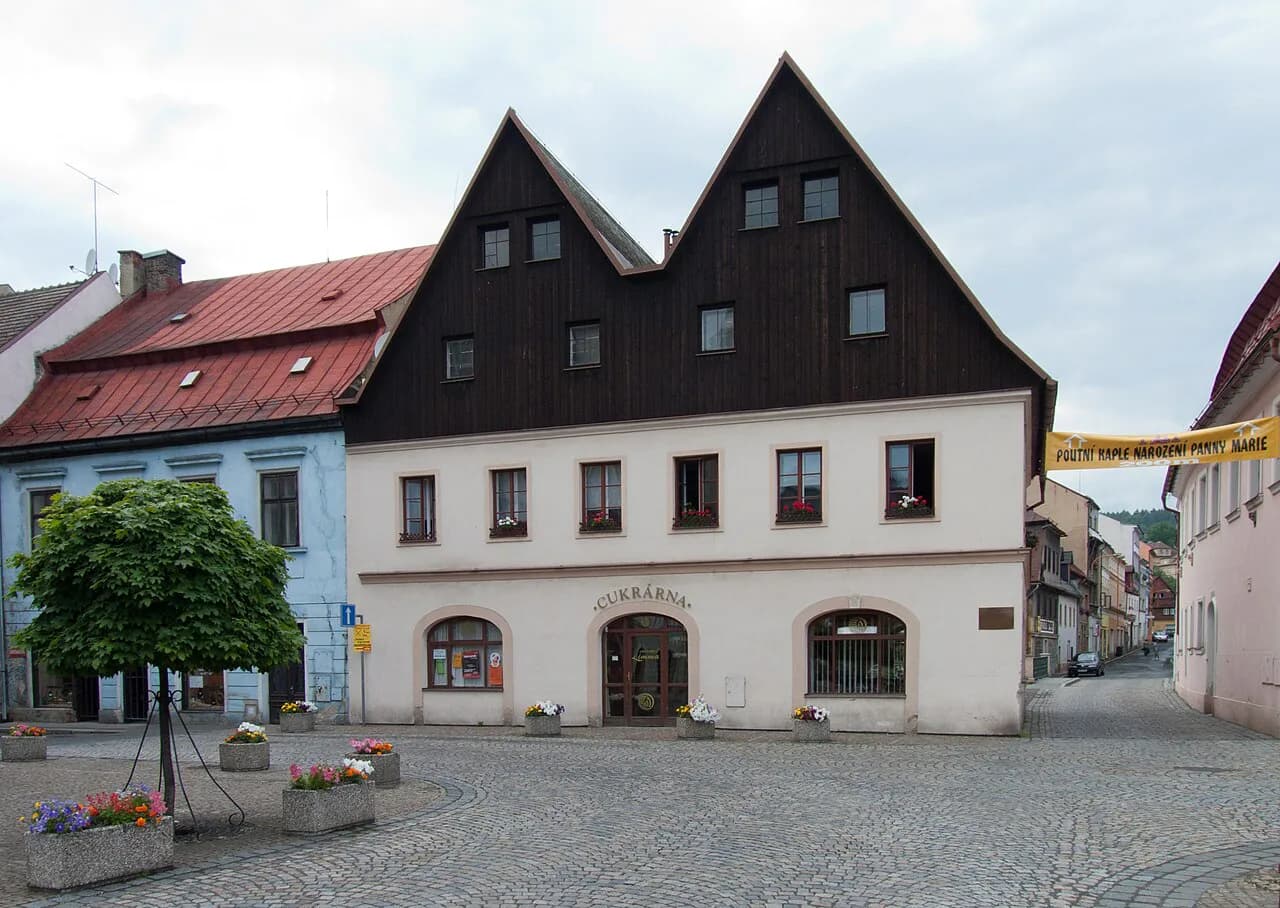
The villages around the park are small, with cobblestone streets and architecture that predates the national park designation. They are worth an hour of wandering rather than a dedicated day.
Krásná Lípa, Jetřichovice and the area around Dolský mlýn are the named stops local guides fold into longer stays. Add them when you have already covered the gate and the gorge.
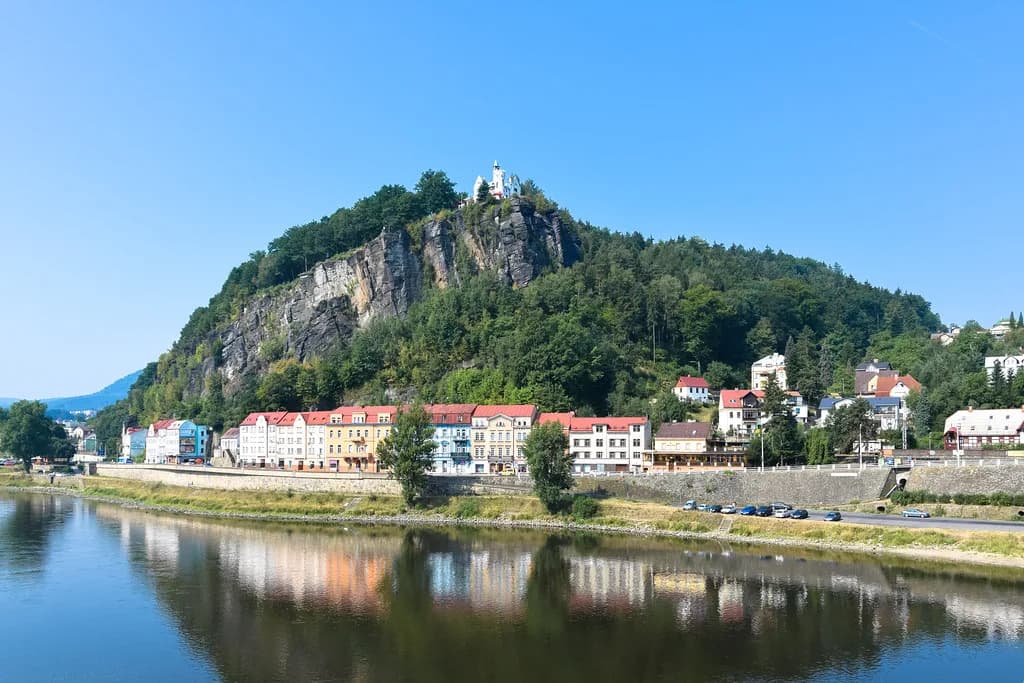
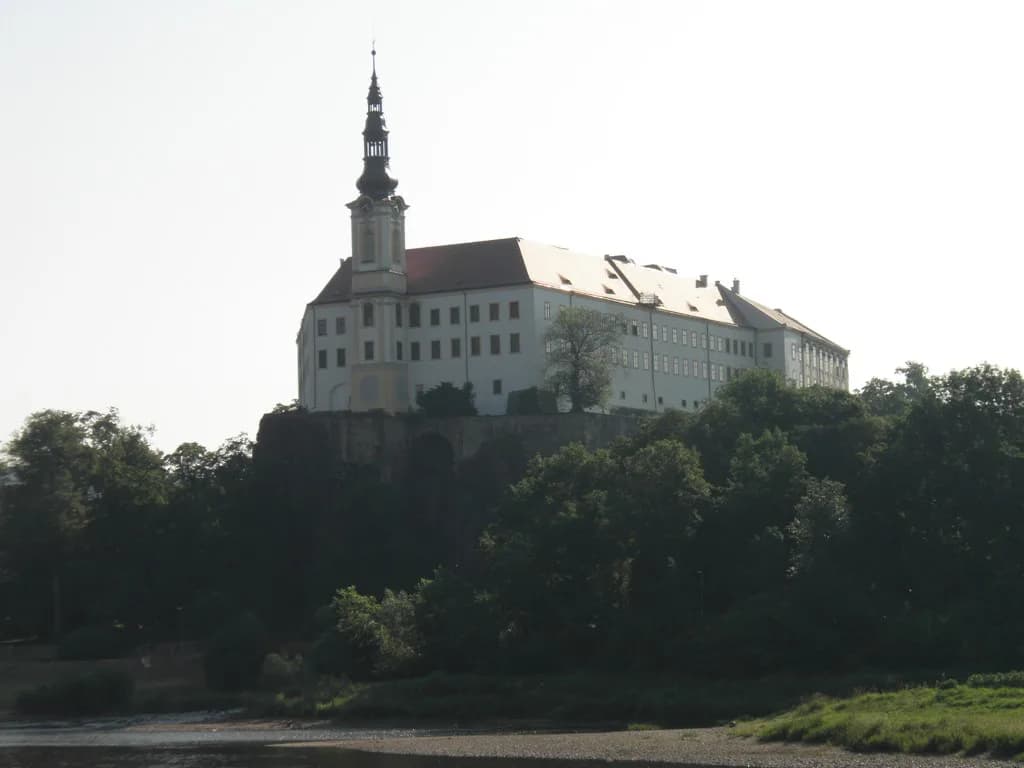
Děčín, downriver on the Elbe, pairs a chateau with the park and gives you a heritage afternoon when the weather closes in on the rocks.
When to Go and What the Sandstone Looks Like Across the Seasons
The park's forests, cliffs and rock towers shift character through the year, from green summer canopy to bare winter outlines. Operators run guided trips from Prague across different seasons, so you can usually match a visit to the conditions you want.
Weather in the sandstone hills changes quickly, and the gorges stay damp and cool even on warm days. Carry a layer and check conditions before committing to a long ridge walk.
If your trip is built around the boat ride through the Edmund Gorge, confirm the season directly with the park before you fix your dates.
Which Half of the Region Do You Visit?
Choose the Czech side if you want Pravčická Brána and the Kamenice gorges, and base yourself at Hřensko or Mezní Louka for a single efficient walking day. Add the German side only if you have a second day, since the Bastei and Königstein sit across the border near Dresden.
Book transport or a guided trip before you go, park once, and walk between the sights. That single decision solves most of the practical problems a visit to Bohemian Switzerland creates.
Explore more Děčín guides
Frequently Asked Questions
Are Bohemians German or Czech?
Bohemia is the historical region that makes up the western and central part of the Czech Republic, so the name Bohemian refers to Czech territory and Czech people, not to Germans. Saxon Switzerland, the park across the border, is the German side of the same sandstone landscape.
Is Bohemian Switzerland the same as Saxon Switzerland?
No. They are two separate national parks in the Elbe Sandstone Mountains, one in the Czech Republic and one in Germany. The reserves connect physically, but each has its own name, administration and gateway towns, with Hřensko on the Czech side and Dresden on the German side.
Can you visit Bohemian Switzerland as a day trip from Prague?
Yes, and organized day trips from Prague are the simplest option because they handle the long drive. If you drive yourself, arrive early, park at Hřensko or Mezní Louka, and plan to walk rather than move the car between sights.
Sources
Notes for your Czech trip
Optional updates to our Czech town guides.
You might also like
Continue reading
More guides you'll find useful