Tisá Rocks (Tiské stěny): Sandstone Labyrinth Guide
Tisá Rocks is a sandstone maze of towers, caves and steps near the German border. Plan the short circuits, viewpoints, parking and footing.
On this page
Tisá Rocks (Tiské stěny) is a compact sandstone labyrinth of towers, rock cavities and sandy passages near the village of Tisá on the Czech-German border, and the big circuit takes about two hours. That makes it a half-day stop on a Bohemian Switzerland trip rather than a destination in its own right. This guide covers how the grounds are laid out, which way to turn at the ticket booth, the footing and safety issues on the upper edge, and where to park.
What Tisá Rocks is
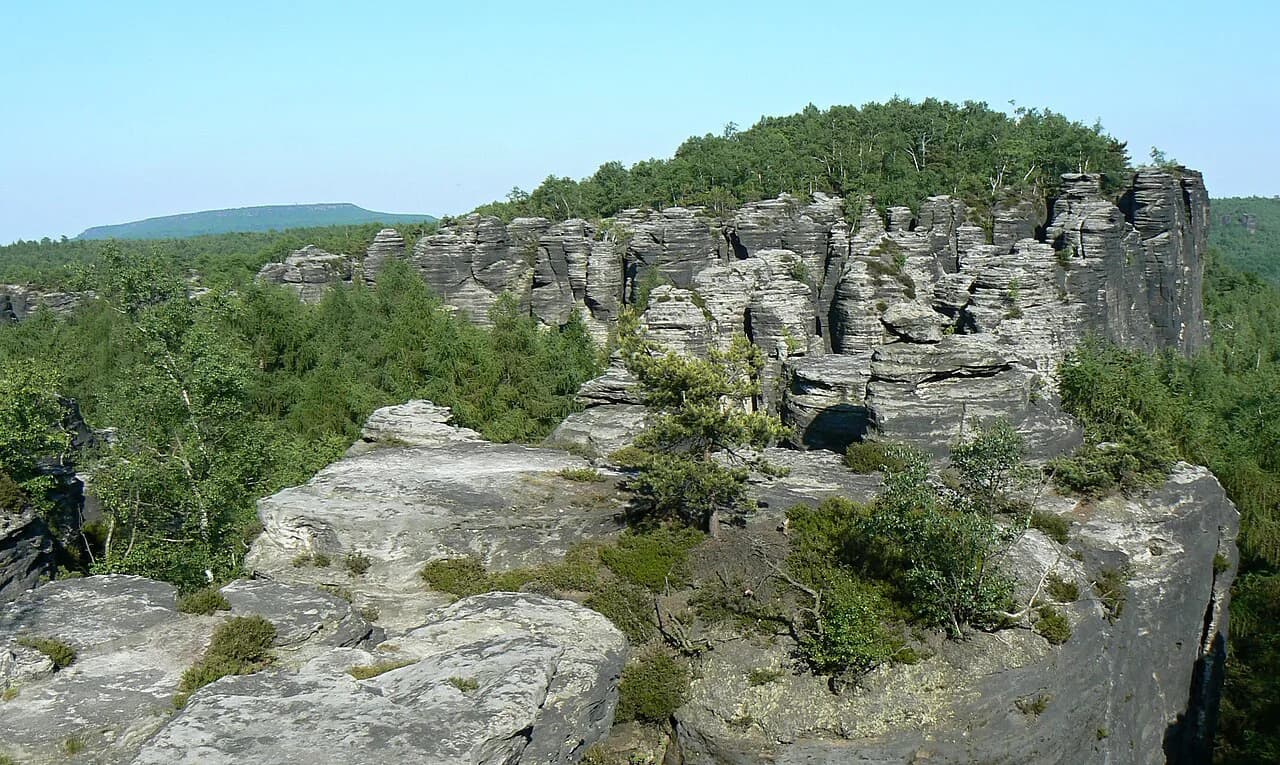
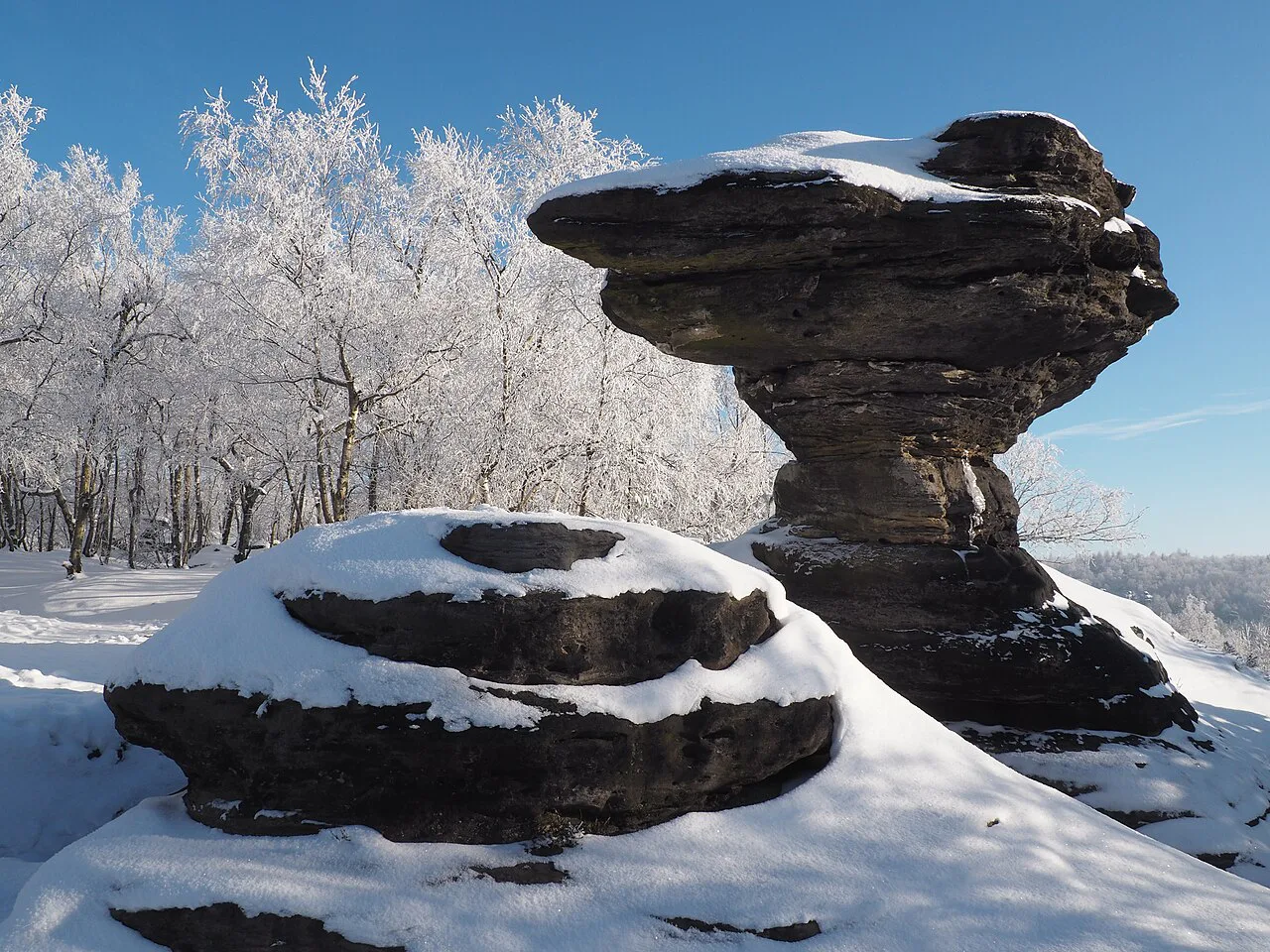
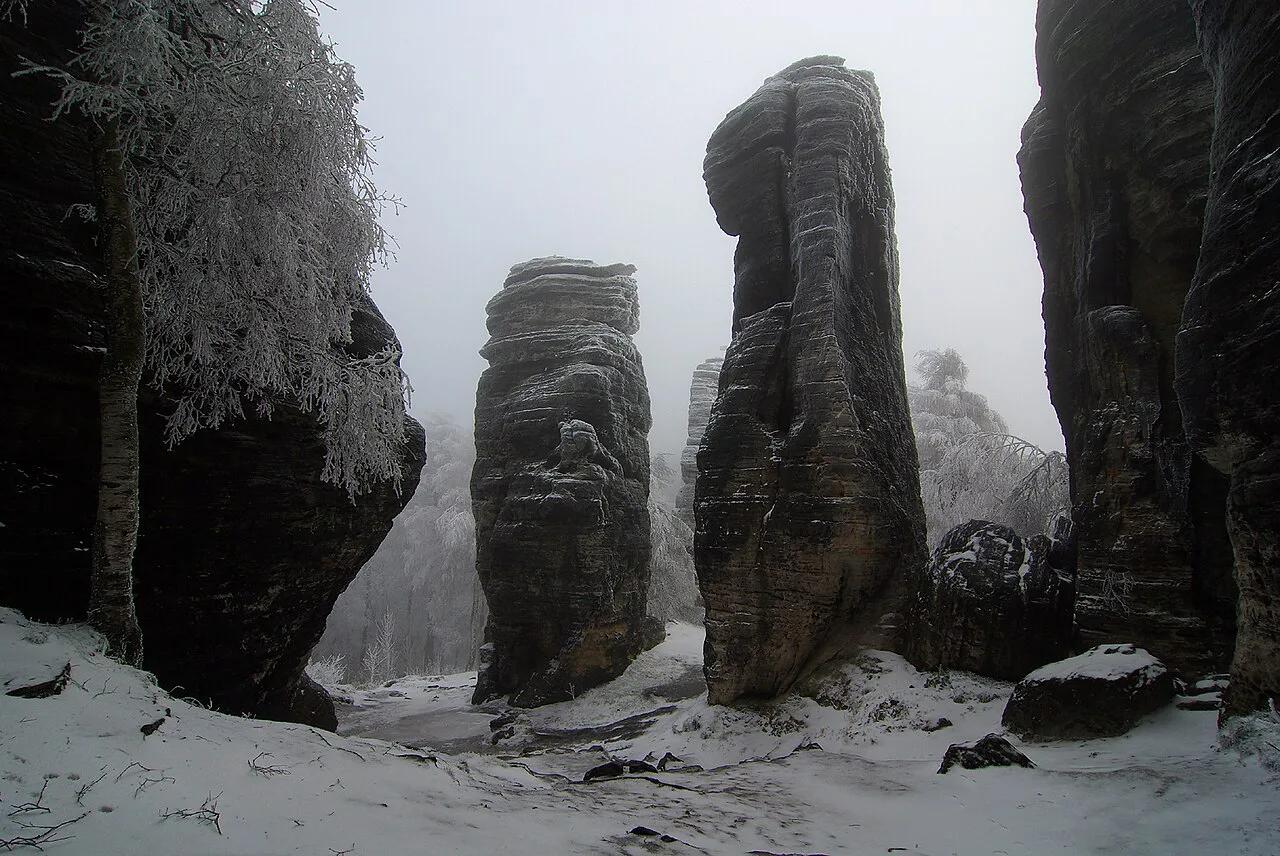
The formation is a maze rather than a single landmark: high rock blocks, narrow gaps, small caves and short passages, linked by a groomed nature trail that runs between and over the rocks. A green hiking trail leads from the ticket booth into the interior, where the path soon climbs stone steps to the upper level. From there it runs close to the cliff edge, turns back into forest and descends metal stairs to the lower sandy paths.
The rocks sit near Tisá, close to the German border and not far from Ústí nad Labem in the Děčín district. That position puts them at the western edge of the Elbe sandstone country, which continues across the border as Saxon Switzerland. The scale is modest and the visit short, which is exactly why it slots in alongside bigger sandstone sights rather than replacing them.
Where Tisá Rocks sits near the national park
The Bohemian Switzerland national park lies east of Tisá, and the sandstone country runs across the German border into Saxon Switzerland. The two halves share the same geology, so a day that starts among the Tisá towers can continue to the park's better-known viewpoints without a long drive between them.
On clear days the upper trail opens views south toward the Bohemian Central Mountains, with Milešovka and Děčínský Sněžník on the skyline. Those are the names to look for on a map when planning the drive to and from the border, since both sit outside the rock formation itself.
How the grounds are laid out: Rock Square and the two circuits
From the village parking lot, the trail passes the church and leads to a wooden booth in the so-called Rock Square, where visitors buy tickets for the rocks. The booth is the natural decision point, because there is a small circuit and a big circuit and the direction you choose shapes the visit. To reach the classic view of the rocks from above early, go left on arrival rather than turning right.
The two circuits differ mainly in how much of the formation you cover and how long they take; the big circuit at a relaxed pace with photo stops ran about two hours. Turning right at the booth means making the big loop first and reaching the viewpoint later in the walk, which works fine when time is not tight.
Walking the big circuit
The big circuit begins with stone steps that climb to the upper level, where the path runs a short distance from the cliff edge and opens views over the countryside. The trail continues along the rim, turns into forest, and descends metal stairs to the lower part of the rocks. From there a sandy path zigzags between the blocks, often passing through cavities and small caves, before returning to the booth.
On the lower level the route becomes a genuine rock maze: narrow passages, repeated short climbs and descents, and stretches where the walls close in on both sides. Between the rocky sections the going is mostly flat, so the walk leaves time to look at the formations instead of watching every step.
The short version
If two hours of walking does not fit the day, head left to the viewpoint and then do just the first group of rocks on the right. That shorter version still gives a good sense of the formation: the towers, the passages and the view from above. It also keeps the walking well under an hour, which suits a stop squeezed between other sights.
Set your expectations accordingly: the short version skips much of the lower labyrinth, where the tight passages and caves are concentrated. Travelers who mainly want the postcard overview will not miss them; those who came for the maze should budget the full loop.
The viewpoint payoff
From the booth, stone steps climb to the West Lookout, which opens a view of the whole rock formation and of Děčínský Sněžník beyond it. This is the view most visitors come for: towers seen from above, with the Tisá roofs and open countryside behind them. Beyond the lookout a steep set of stairs drops to the foot of the rocks, and the trail continues with another climb and more passages between the walls.
Difficulty and footing
The route is rated easy, with roughly 200 meters of climbing over about 3.3 kilometers, and the steep parts are short and made manageable by steel stairs and by steps cut into the sandstone. Between those sections the path is mostly flat. The detail that matters for footwear is that wet rock and wet steps are slick.
This is not stroller country: steps, ladders and narrow gaps rule out wheels entirely. Children, though, treat it as a playground, with rocks to scramble over, hiding places among the blocks and openings to look through, so an adventurous child gets more out of it than most adults.
Safety on the upper edge
The upper path runs close to the edge of the rock walls, and those rims generally have no railings or other barriers. Keep young children well back, and watch the last few steps before any viewpoint. In wet weather the sandstone and the iron steps turn slippery, so a day of steady rain is a reason to stay on the lower paths instead.
Parking and access
The main lot sits in the village of Tisá, right next to the rocks, and parking there was reported at 100 CZK per day. A second lot serves the rocks near Turistická chata Tisá, the restaurant-hut that the big circuit passes, and there are toilets near the parking area. Treat that rate as a reported figure and confirm it on the board at the lot, since the ticket machine may be out of service or the booth unstaffed outside the main season.
Ask about the rocks entry charge at the wooden booth itself, because the ticket price is not something to budget from memory, and at quiet times the booth may simply be unmanned. No train or bus timetable for Tisá appears in the sources used here, so travelers relying on public transport should look up connections from Děčín or Ústí nad Labem before committing. Coming by car is the straightforward option, and the village lot puts you a few minutes' walk from the trailhead.
Food and water
There is a restaurant in the village of Tisá, and the second parking area by Turistická chata Tisá puts a place to eat close to the rocks themselves; the hut is worth knowing about because the big circuit passes it. For the walk, roughly one liter of water per person is enough on the short route. Carry it with you, since the upper trails have no facilities.
How long to allow
Count on two hours for the big circuit at a relaxed pace including photo stops, and under an hour for the shortened version via the viewpoint and one group of rocks. Add time for parking, the booth and the drive, and Tisá fits neatly as a half-day stop rather than a full day out. Families with an adventurous child often find it takes longer, because the rocks themselves become the activity.
Fitting Tisá Rocks into a Bohemian Switzerland itinerary
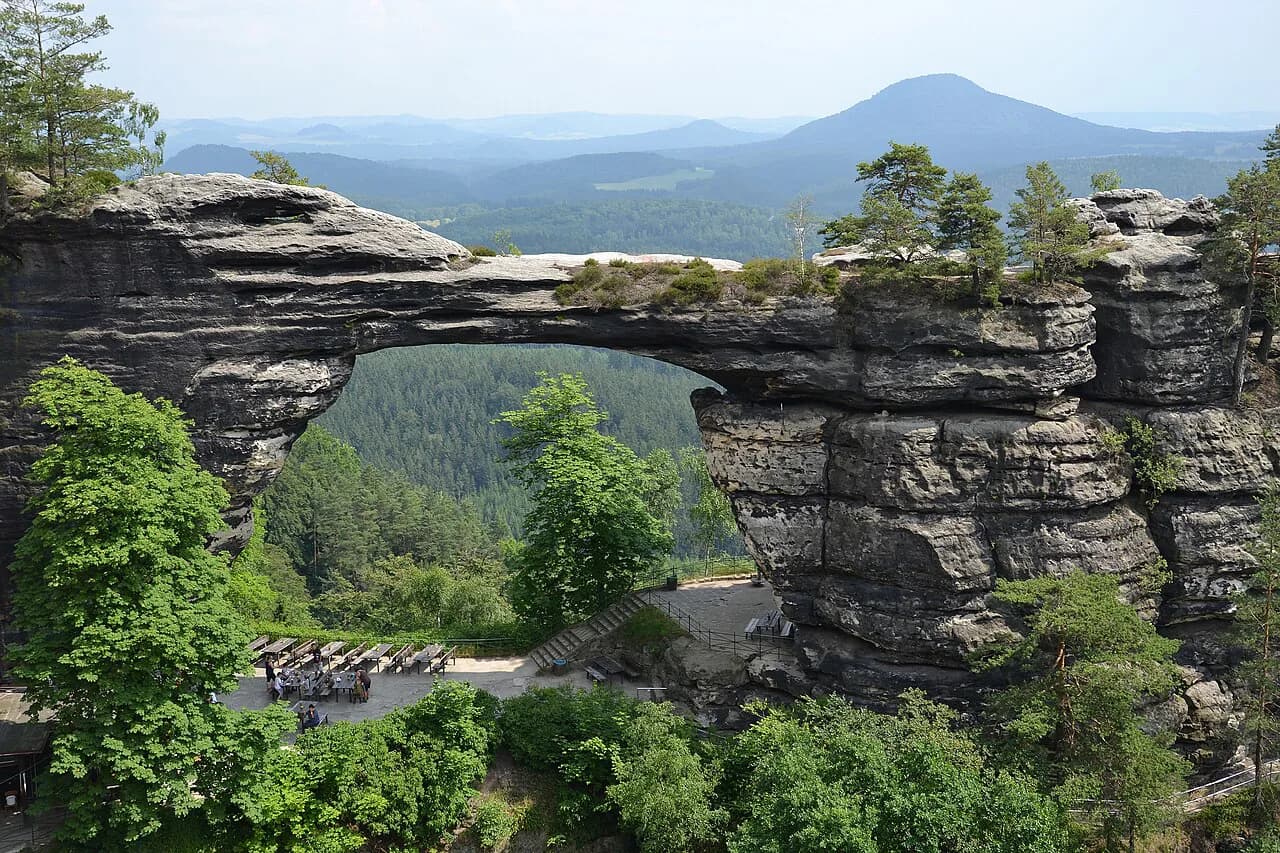
A natural pairing is Tisá Rocks in the morning and Pravčická Brána later in the day. That arch, the largest natural sandstone arch in Europe, anchors the eastern side of the park and is the standard first stop for anyone exploring the region.
Across the border, the Bastei Bridge offers panoramic views over the Elbe River valley and is the German counterpart to the Czech sandstone sights. Combining the Tisá towers with Bastei and the arch in a single day is what the organized tours do, but the driving and walking add up, so a self-drive version should keep the stops realistic.
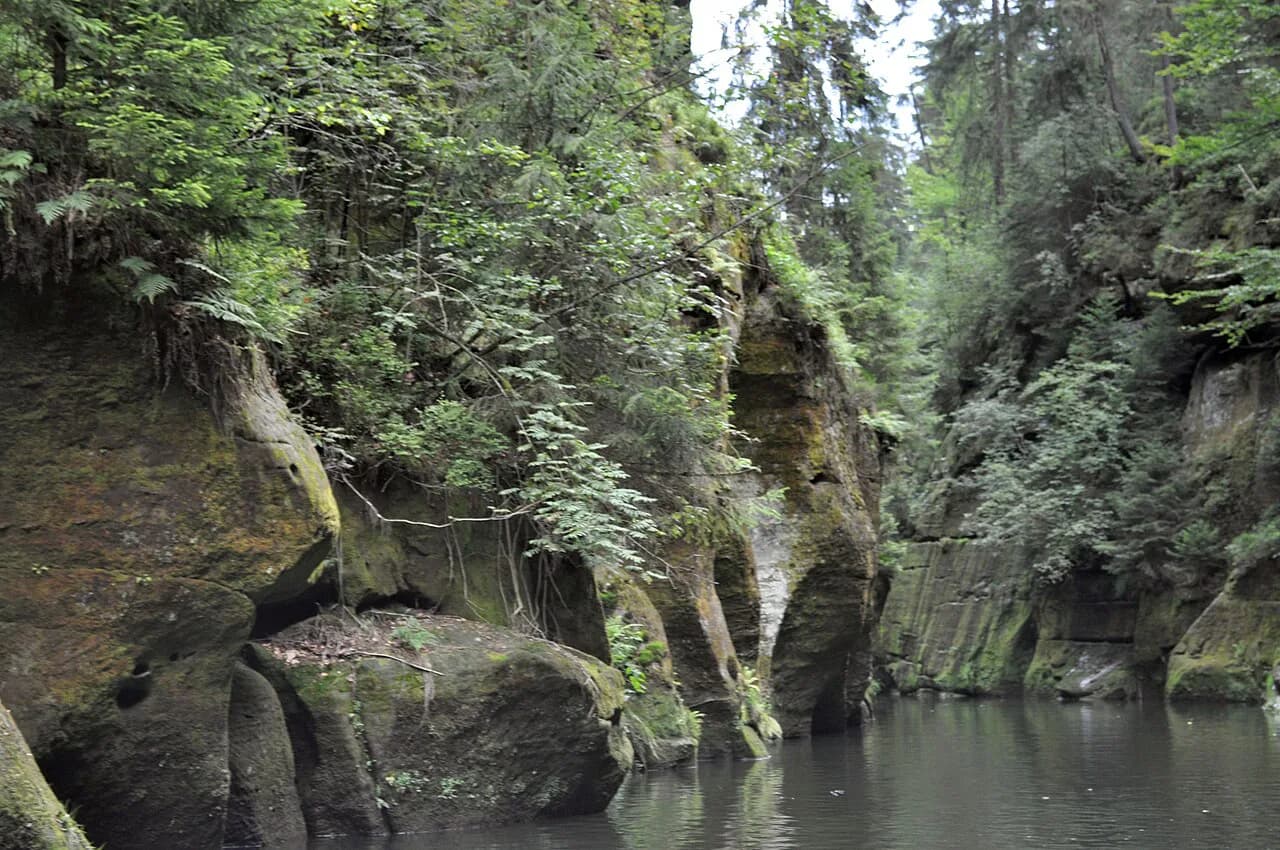
Other stops in the area, including the Kamenice gorge and the village of Hřensko, fill out a multi-day base in the park.
Organized day tours from Prague
Several Prague-based operators run full-day minivan tours that combine Tisá Rocks with the arch and Bastei, with hotel pickup, an English-speaking guide and lunch included in some options. The walking ranges from an easy 7-kilometer version pitched at families and older travelers to a moderate 10-kilometer route with more stairs.
Tour prices are volatile and often quoted in foreign currency on booking platforms, so ask the operator for the current rate in koruna rather than budgeting from an old figure. The tours suit travelers without a car who want the border country in one day; self-drivers can cover the same ground at their own pace.
Should you add Tisá Rocks to your Bohemian Switzerland trip?
Add Tisá Rocks if you want a short, uncrowded sandstone walk with a strong viewpoint and you are already driving through the border country. Skip it if the day is built around the arch and Bastei, since the driving between the three leaves little time for the rocks themselves.
Go left at the booth for the early overview, carry a liter of water each, and keep children back from the unrailed upper edge. Confirm the parking rate and whether the booth is staffed on the day you plan to visit.
Frequently Asked Questions
Are there mountains near Prague for a short trip?
The Bohemian Central Mountains rise south of Tisá and are visible from the upper trails at the rocks. Milešovka and Děčínský Sněžník are the landmarks to look for. Tisá Rocks itself is a sandstone formation rather than a mountain, and reaching it from Prague means driving north toward the German border.
Sources
Notes for your Czech trip
Optional updates to our Czech town guides.
You might also like
Continue reading
More guides you'll find useful