Pravčická Brána: Europe's Largest Sandstone Arch Above Hřensko
Pravčická brána is Europe's largest natural sandstone arch, reached on foot from Hřensko in Bohemian Switzerland, with the Falcon's Nest chateau beside it.
On this page
Pravčická brána is Europe's largest natural sandstone arch, and the walk up from Hřensko is how most travelers see it. The arch stands above the gateway town, with the Labe (Elbe) river in the valley below and the Falcon's Nest chateau right beside the viewpoint. This guide covers what the arch is, how the climb from Hřensko feels, where the Falcon's Nest fits in, and how to build the visit into a day in the park.
Expect a real walk rather than a roadside photo stop. The trail leaves Hřensko and climbs through forest, so sturdy shoes matter more than a camera strap, and the reward is a close view of the arch's span above the trees. The rest of the park — the gorge boat, the villages up on the plateau — fits around that climb.
What Pravčická brána actually is
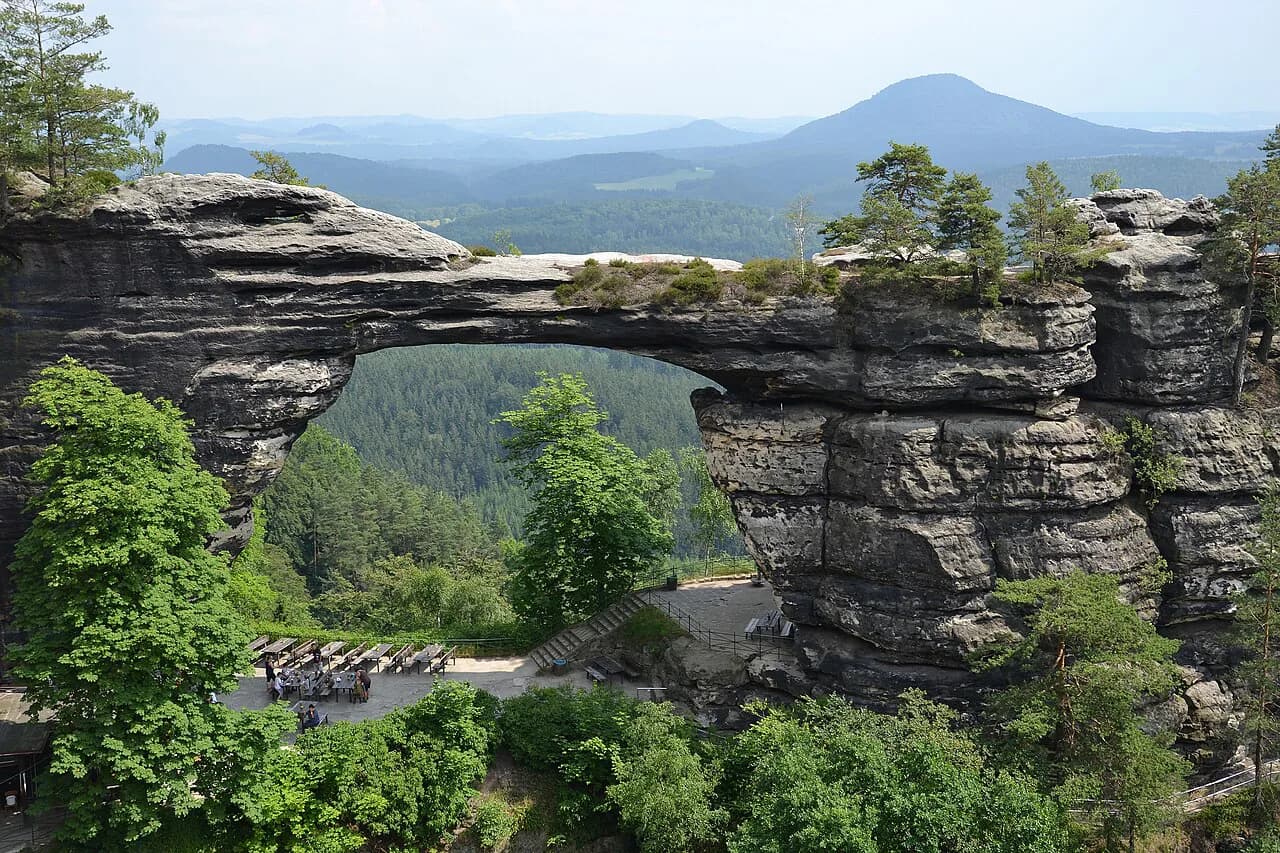
Pravčická brána is a natural sandstone arch, the largest of its kind in Europe, standing in the woods above Hřensko. It is not a castle gate or a manmade monument: wind, water and frost wore the soft sandstone into a span that now frames the forest behind it. That scale is the reason it has become the emblem of the region.
Travelers often encounter the arch in photographs before they see it in person, and the images flatter the forest setting. Up close the appeal is the same but more physical: you stand beneath a mass of stone held up by two legs, with pine and beech slopes falling away below. Treat it as the anchor of a longer walk rather than a five-minute stop.
Where the arch sits above Hřensko
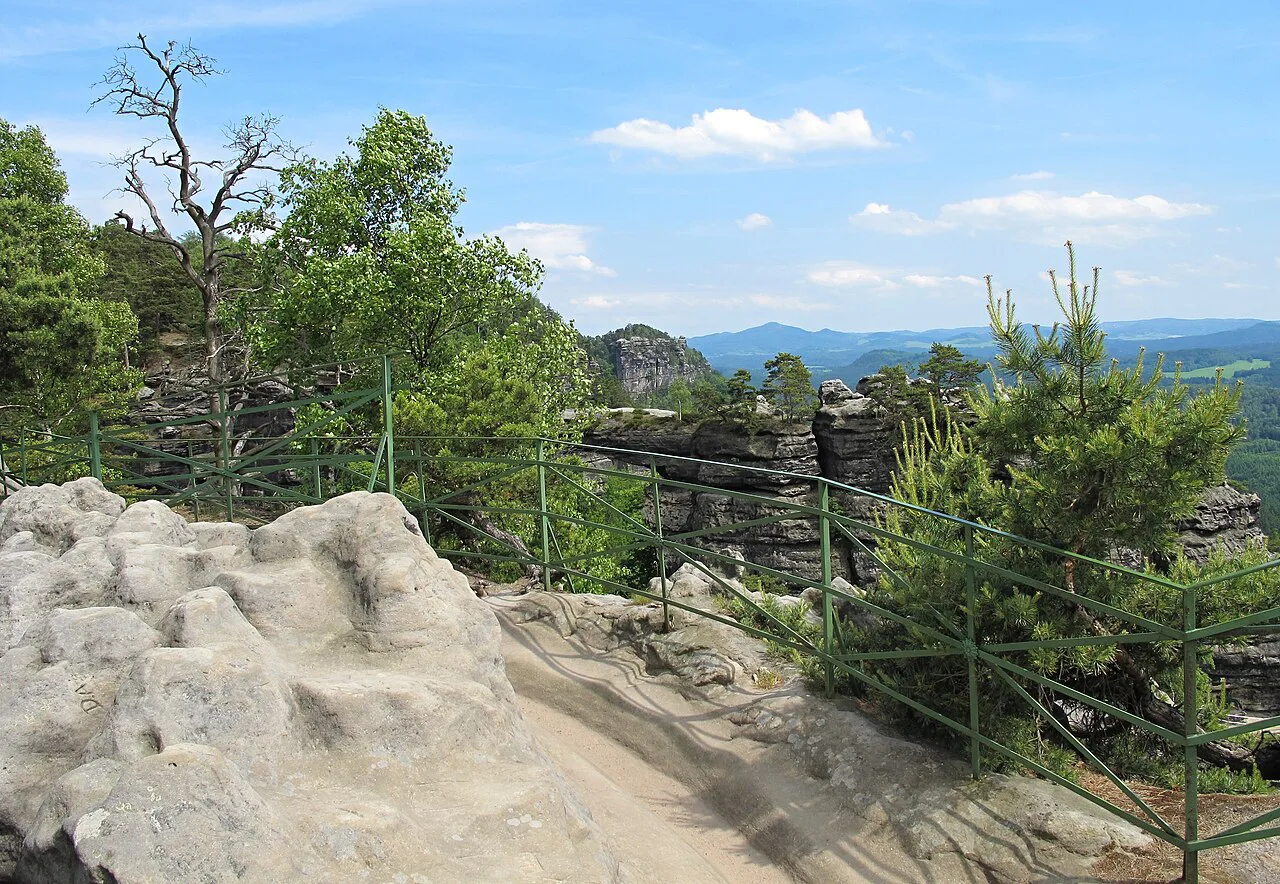
The arch belongs to Bohemian Switzerland National Park, the Czech half of a sandstone landscape that continues across the border as Saxon Switzerland National Park in Germany. Hřensko sits at the meeting of the Kamenice and Labe valleys below the cliffs, which is part of why the village feels tight and busy.
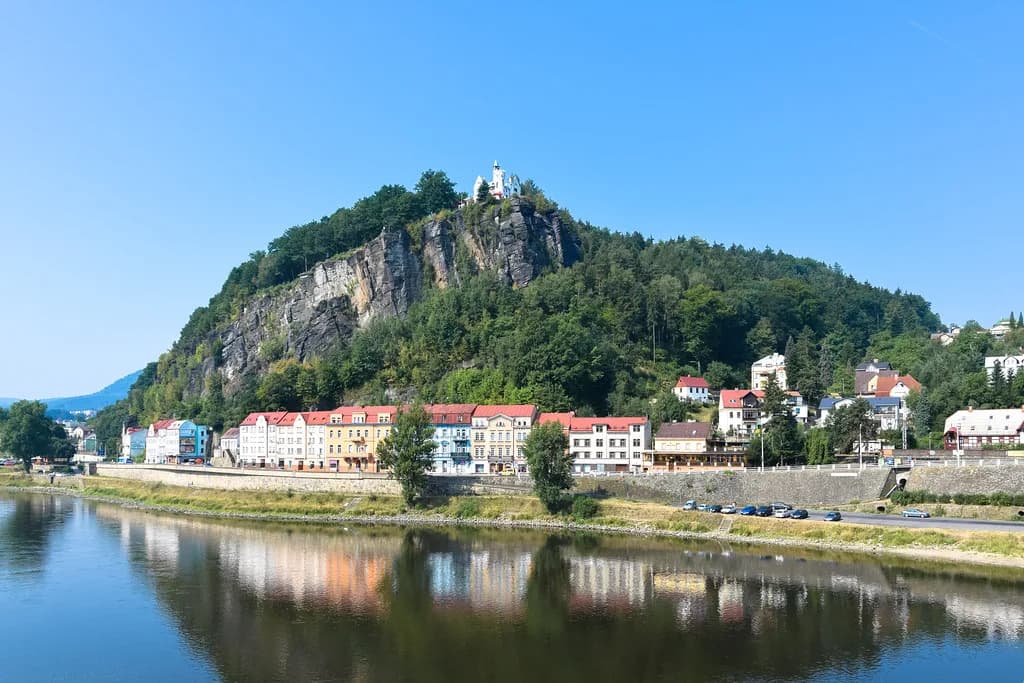
Hřensko is the gateway town for almost everyone heading up, described as barely more than a few half-timbered buildings pressed against the cliff walls. The trailhead is in that cluster, so you climb straight out of the village and into woodland. Děčín, the nearest larger town down the valley, works as a base for the wider area rather than for the arch itself.
The walk up from Hřensko
The trail from Hřensko runs through woodland, climbing steadily rather than steeply, and sturdy shoes make the difference on the rock and root sections. Travelers without hiking boots can still manage it, but they should plan a slower pace and avoid treating it as a stroll in sandals. Families and mountain bikers share parts of the network, so keep an ear open on the bends.
The viewpoint is reached on foot, and the climb is the point. If you are short on time or energy, the gentler alternative is the gorge boat on the Kamenice River, which trades the climb for a flat walk through the valley along the water. Combine the two and you get both the high view and the shaded valley in one day.
The Falcon's Nest chateau beside the arch
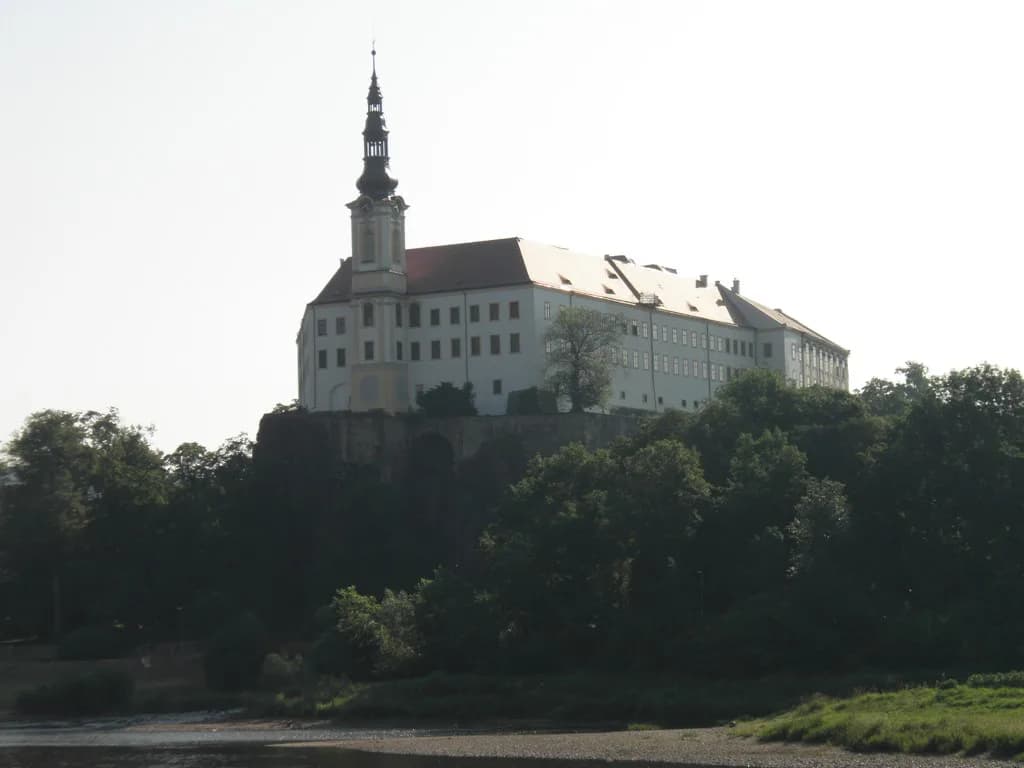
Sokolí hnízdo, the Falcon's Nest, is the chateau building beside the arch, and it is easy to confuse with the arch itself when you read short listings. The arch is the rock span; the Falcon's Nest is the built structure beside the viewpoint area. Plan on arriving at one place where you see both, rather than scheduling them as separate stops.
Because the Falcon's Nest chateau sits right at the top of the climb, it marks the point where you have made it. The arch's viewpoint is beside it, so the natural rhythm is: climb, take in the arch, then decide whether to linger or head back down. Allow time for the descent, which is harder on the knees than the way up.
The arch itself: span, views and why you can't walk across
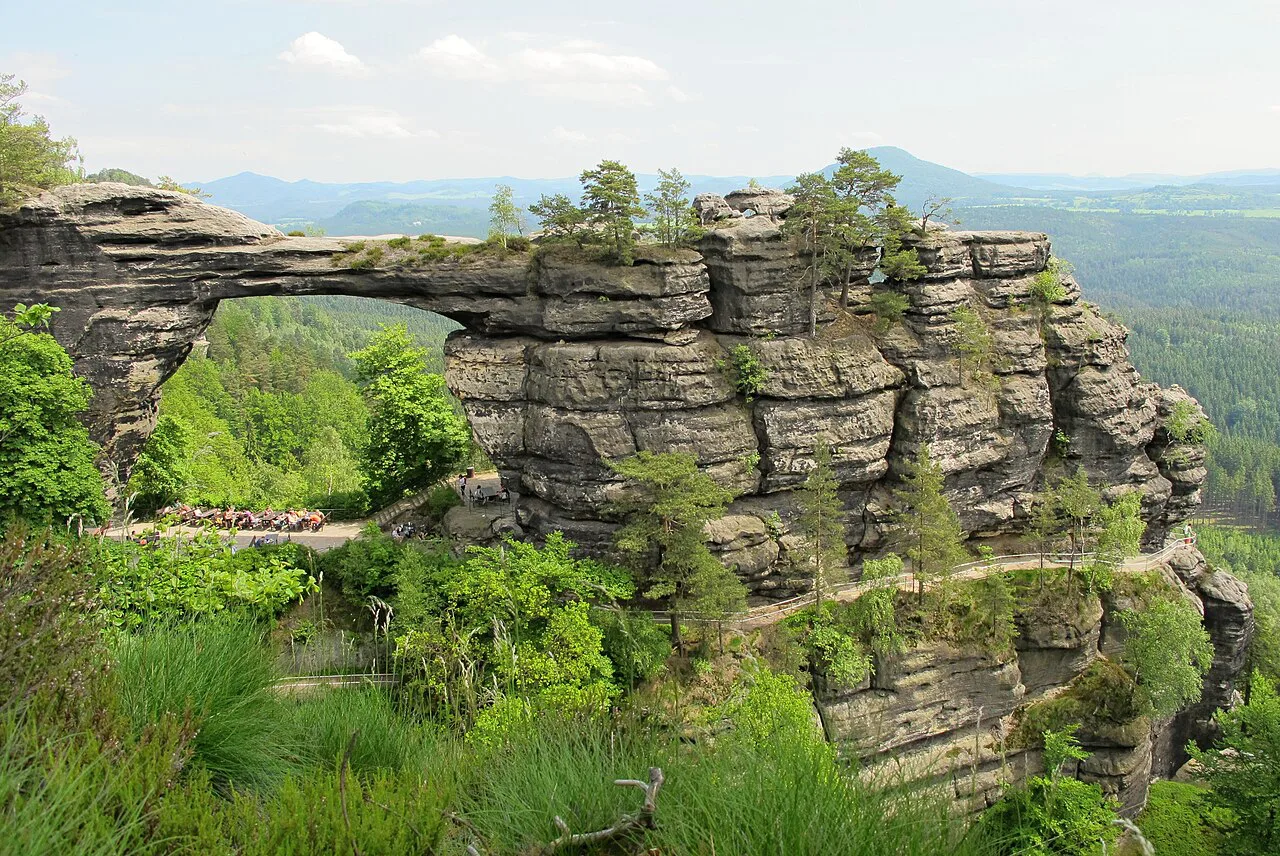
Pravčická brána is the largest natural sandstone arch in continental Europe. Its span is described as around 16 meters high, and the view from below frames the forest and the rock towers of the surrounding park; photographers usually want the arch against the sky rather than flat-on. Stand beneath it rather than beside it to get the scale.
People once walked across the top of the arch, but heavy foot traffic stressed the stone and the crossing was closed. Film crews found another way around it: in the Narnia film The Lion, the Witch and the Wardrobe, the characters who appear to run over the arch were added over the image afterward. The closure is the reason you admire the span from underneath now.
How the sandstone landscape formed
The whole region is a plateau of soft sandstone that rivers and rain have cut into gorges, towers and arches over a very long timescale. The name Bohemian Switzerland came from two Swiss painters living in nearby Dresden, who thought the scenery resembled home and painted it; when the pictures became popular, the label stuck. That story explains why a Czech park carries a Swiss name.
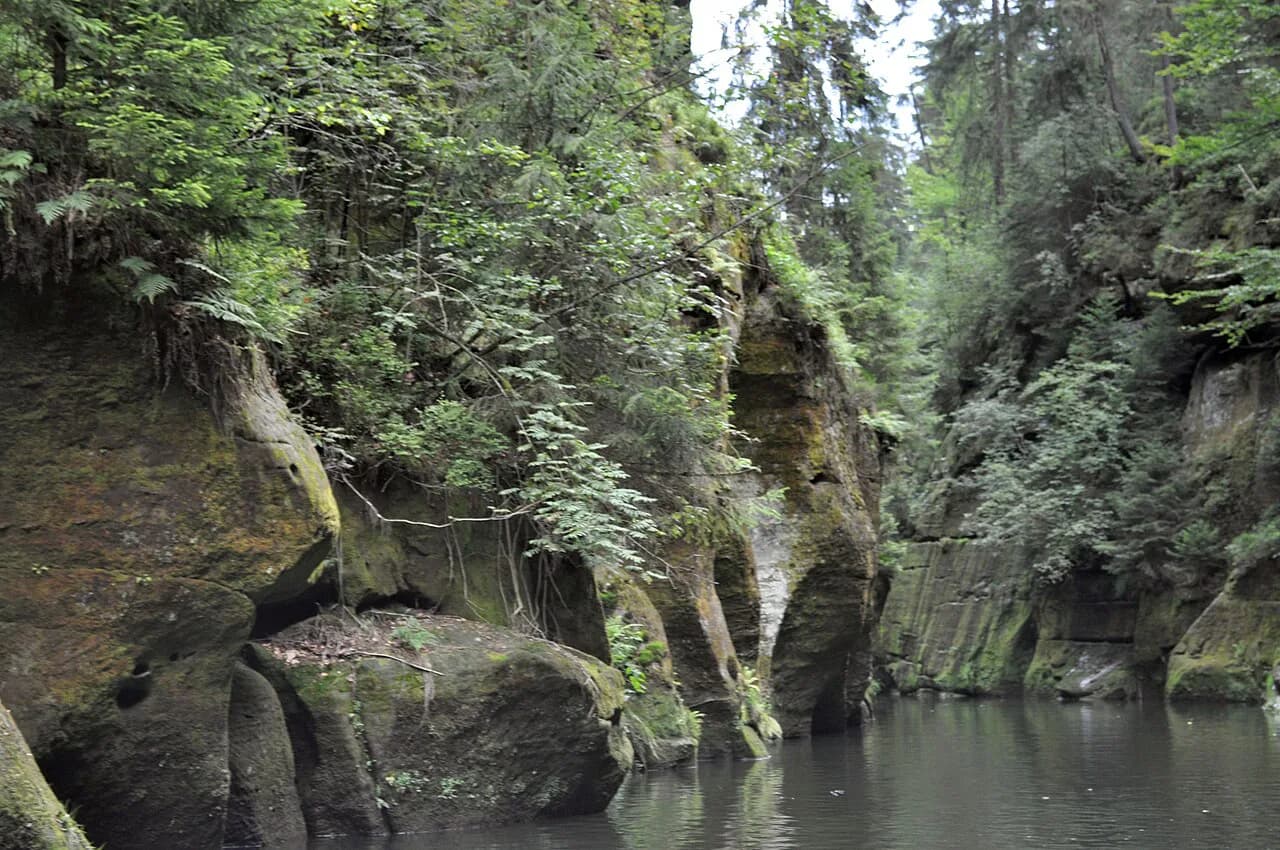
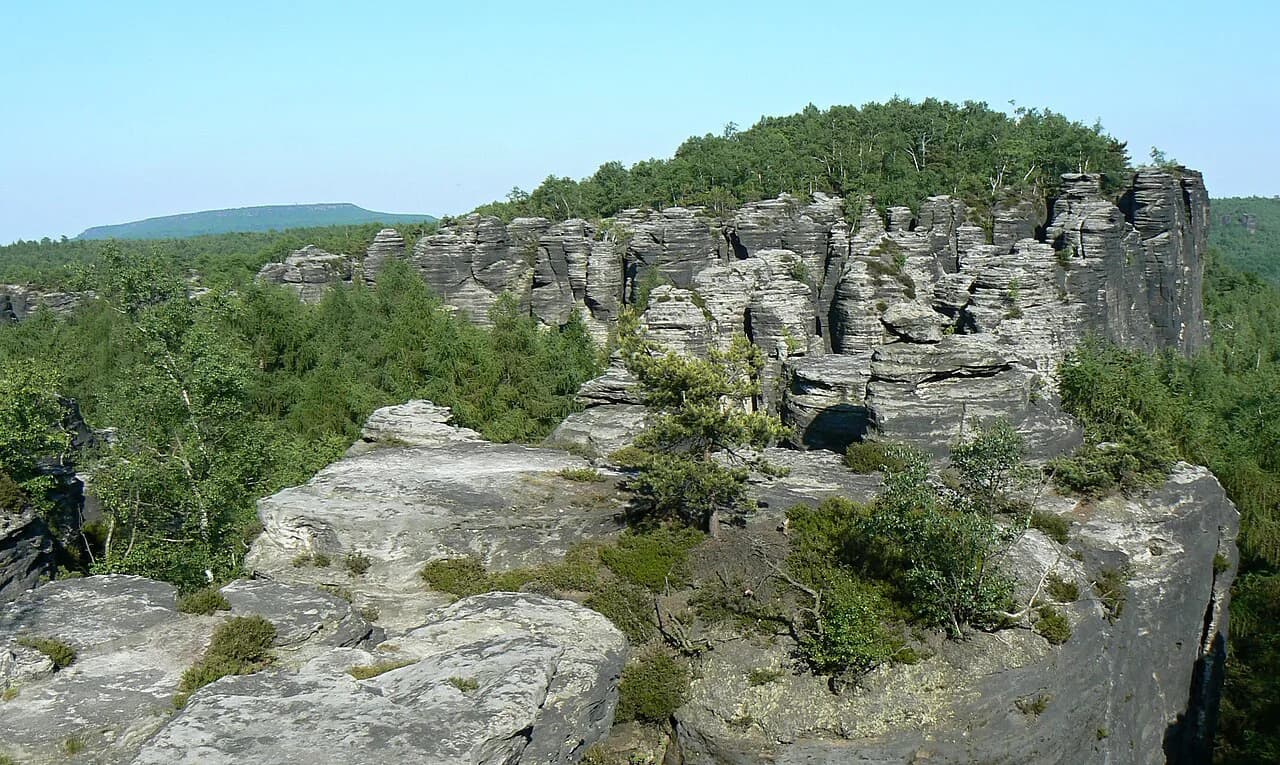
The same geology that built the arch shapes everything else you see nearby: the gorge boat on the Kamenice, the rock towers around Tisá Rocks, and the cliffs above the Labe. Sandstone erodes easily, which is one reason viewpoints and paths in the park are managed.
Getting there from Prague
By car, the route from Prague runs north toward Děčín and then follows the Labe valley to Hřensko; the drive passes through the industrial edge of Děčín before the scenery turns green. Parking in Hřensko is limited because the town is wedged between cliffs and river, so arriving early in the day is the practical choice. Some travelers combine the park with Děčín Castle on the way through.
By public transport, the nearest larger hub is Děčín down the valley, with onward local connections into Hřensko; confirm the current connections before you commit to a specific train. A car gives the most flexibility if you plan more than one stop in the park.
The park sits north of Prague, so it is not a mountain range on the city's doorstep; the sandstone uplands here are the closest thing to a full day outdoors. Prague is the start point, not the destination, and a car gives the most flexibility if you plan more than one stop.
How long the visit takes
Give the arch a half day: the climb, the time at the viewpoint and the descent, plus slack for photographs. Add the gorge boat on the Kamenice River and you have a full day in the park, which is how most travelers use it. Trying to squeeze the arch and the gorge boat into an afternoon leaves both rushed.
A sensible order is to climb to the arch in the morning while the light is good, then take the gorge boat in the afternoon when the valley is hotter and the water cooler. Walking from Mezní Louka to Hřensko via the arch and the gorge is a demanding but rewarding loop for fitter travelers who want the whole valley in one stretch.
Tickets, access and guided options
The arch is a natural feature inside the park, reached on foot from Hřensko, and any admission or trail arrangement is managed at the park level rather than by a single attraction ticket. The nearby village of Česká Kamenice works as a quiet base for the wider Děčín district.
If you prefer a guide, local operators run hiking tours that take the route-finding and the ordering of stops off your hands, and the guide provides the regional context you miss walking alone. Independent travelers can simply follow the marked trails up from Hřensko.
What to bring
Wear shoes with grip, carry water, and keep a layer for the wind at the top; the climb is steady and the viewpoint is exposed. Leave the flip-flops and the heavy daypack that you won't need on a shorter loop. A light jacket and a phone with a charged battery cover most of it.
Don't plan on driving between viewpoints: the park is a walking landscape, and the reward for the climb is the view, not the parking lot. For a longer stay, spread the park across two days and include the rock towers at Tisá Rocks and the smaller sandstone corners that most day-trippers skip.
Is the climb worth it?
For most travelers, yes: the walk up from Hřensko is steady rather than savage, and the arch is the kind of sight that justifies the effort. Pick sturdy shoes, start early to avoid the parking crunch, and pair the climb with the Kamenice gorge boat for a satisfying day. The one group that should reconsider is anyone with limited mobility or a tight schedule, since the clifftop route is not a flat stroll.
Frequently Asked Questions
Do you need a ticket to see Pravčická brána?
The arch is a natural feature inside the national park, and the land is managed at park level rather than as a single attraction ticket. Check the park's current visitor information for any admission or trail arrangements before you go, since these can change by season.
Can you still walk across the arch?
No. Heavy foot traffic stressed the sandstone and the crossing was closed, which is why visitors admire the span from the ground now. In the Narnia film The Lion, the Witch and the Wardrobe, the characters who appear on the arch were added over the image afterward rather than acted on it.
How difficult is the hike from Hřensko?
It is a steady climb through woodland rather than a technical scramble, so most reasonably fit walkers manage it. Shoes with grip make a real difference on the rock and root sections, and the descent asks more of your knees than the way up.
How big is the arch?
It is described as the largest natural sandstone arch in continental Europe, with a span around 16 meters high. The scale is what makes it the emblem of the park and worth the climb from Hřensko.
Sources
Notes for your Czech trip
Optional updates to our Czech town guides.
You might also like
Continue reading
More guides you'll find useful