Battle of Austerlitz: The 1805 Battle and the Sites You Can Visit
How Napoleon won the Battle of Austerlitz on December 2, 1805, and how to drive the Moravian ground where it was fought, from the Pratzen Heights to Slavkov.
On this page
The Battle of Austerlitz was fought on December 2, 1805, and ended in a decisive French victory over a larger Russian and Austrian army. Napoleon Bonaparte drew the Allies off the Pratzen Heights, hit the plateau in the morning mist, and broke their line; the ground where this happened lies in open Moravian farmland around Slavkov u Brna (Austerlitz). This guide to the Battle of Austerlitz covers what happened, why the fight is called the Battle of the Three Emperors, and how to drive the villages and monuments where it took place.
What happened on December 2, 1805
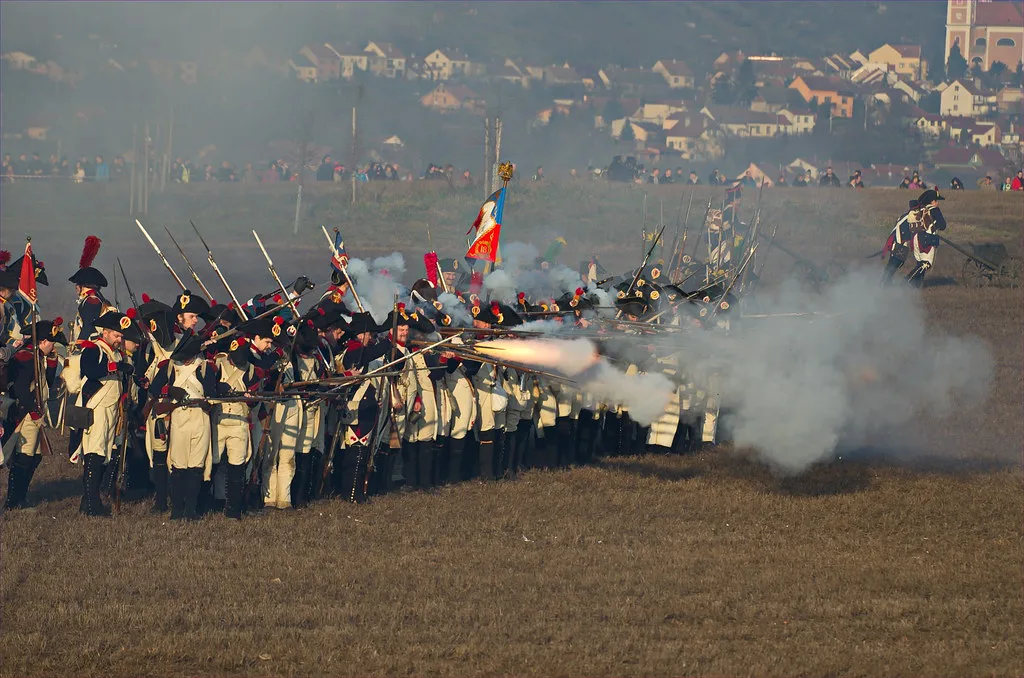
France met a combined Russian and Austrian force near Brno, with the Allies holding the high ground of the Pratzen Heights and the French on lower ground below. Napoleon deliberately weakened his right flank to tempt the Allies down off the plateau, then ordered his troops up onto it once they had committed. French losses came to roughly 8,000, including about 1,300 killed, while Allied losses reached roughly 35,000, and nearly all of the Allied artillery was taken.
The retreat turned brutal: some Allied soldiers tried to escape across frozen ponds, and French cannon fire broke the ice. The victory was sealed within a day and reshaped the map of central Europe, with the Treaty of Pressburg signed on December 26, 1805. Napoleon's battlefield plan is what makes the ground worth driving today, since you can trace the plateau he took and the low fields where he waited.
The armies and the Third Coalition
The Third Coalition formed in July and August 1805 and united Britain, Russia, Austria, Naples and Sweden against post-revolutionary France. Napoleon had massed the Grande Armée at Boulogne for a planned invasion of Britain, then broke camp once the coalition formed, marched east and encircled the Austrian army at Ulm, which surrendered on October 20, 1805. That speed put him deep in Moravia before the Russians and Austrians could combine on their own terms.
By mid-November the French could not stop Mikhail Kutuzov's Russians from joining the forces of Alexander I of Russia and Francis II of the Holy Roman Empire, so Napoleon faced a numerically superior enemy far from home. His answer was deception: he offered the appearance of weakness so the Allies would abandon their strong defensive position. For a visitor, that is the key to reading the landscape, because the decisive move was a climb back onto the high ground the Allies had left.
How the battle unfolded
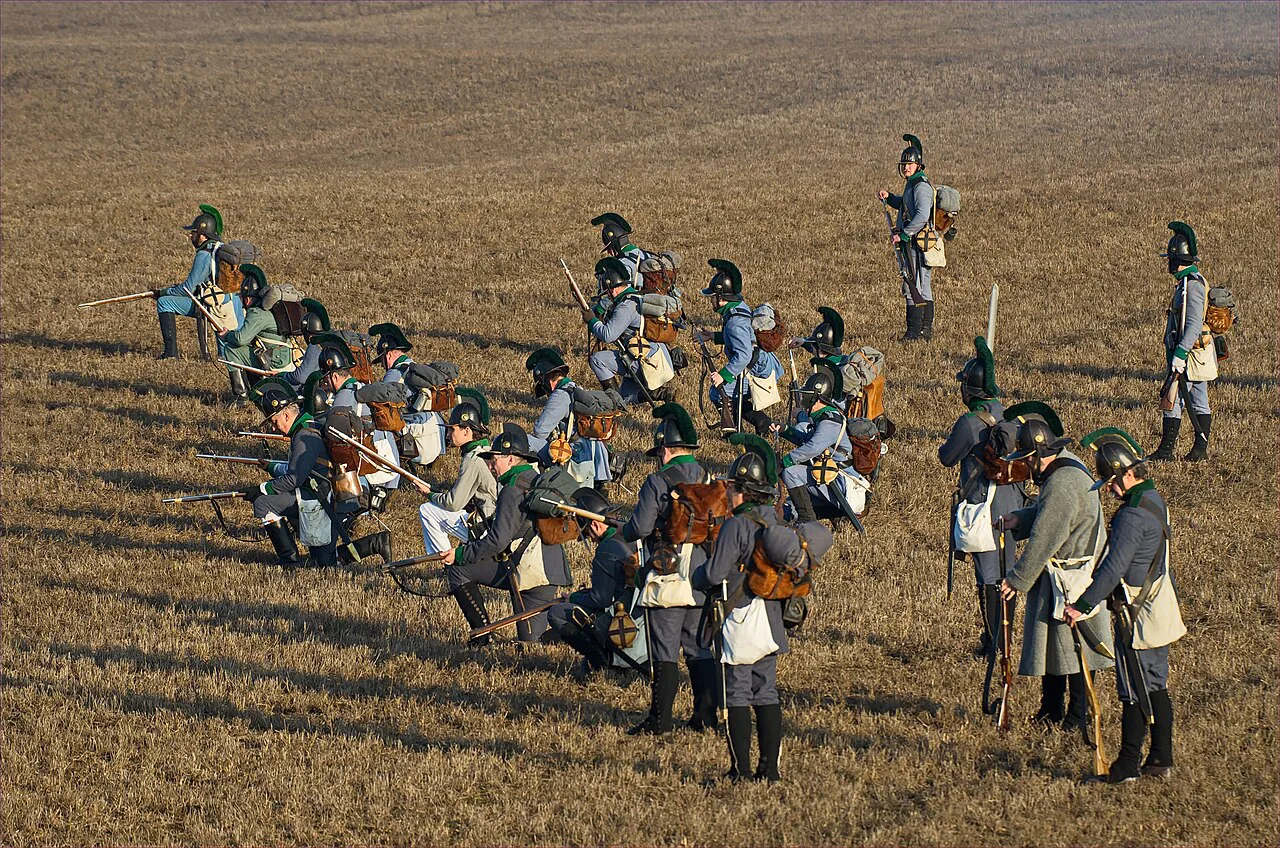
The fight opened at dawn southeast of Brno. The Allies had massed on the Pratzen Heights and the French occupied the lower ground, so Napoleon thinned his right flank to lure them down. Kutuzov warned that the withdrawal was a ruse, but his counsel went unheeded and the Austro-Russian troops abandoned their defensive system in the hope of encircling the supposedly weakened French right.
Napoleon feigned a retreat, drew the attack on, then sent his troops up the slope out of a mist that hid their numbers. They swept aside the few defenders left on top, and the Allies spent hours trying to retake the plateau without success. When you stand on the plateau, the point of the position is obvious: it commands the roads and fields below, which is exactly why losing it decided the day.
Why it is called the Battle of the Three Emperors
Three monarchs were present with their armies: Napoleon, Alexander I of Russia and Francis II of the Holy Roman Empire. Napoleon's coronation had taken place on December 2, 1804, so the victory fell exactly one year later, and contemporaries read the winter sun that broke over the field as a sign of favor. That coincidence of emperors and anniversary gave the fight its grand nickname.
The nickname also stuck because of how the victory was painted. François Gérard's huge canvas, commissioned to commemorate the Grande Armée's most famous exploit and shown at the Salon of 1810, presents the moment of triumph with General Rapp handing captured enemy standards to Napoleon, and the Sun of Austerlitz fills the scene. The painting is now in the collections at Versailles, so the legend traveled further than most of the soldiers who fought.
The battlefield ground today
The battlefield is not a single walled site but a spread of villages, fields, lanes and scattered monuments across the countryside around Slavkov u Brna. The ground is farmed and open, with few places to shelter if the weather turns, so plan on layers, sturdy shoes for uneven tracks and a half day rather than an hour.
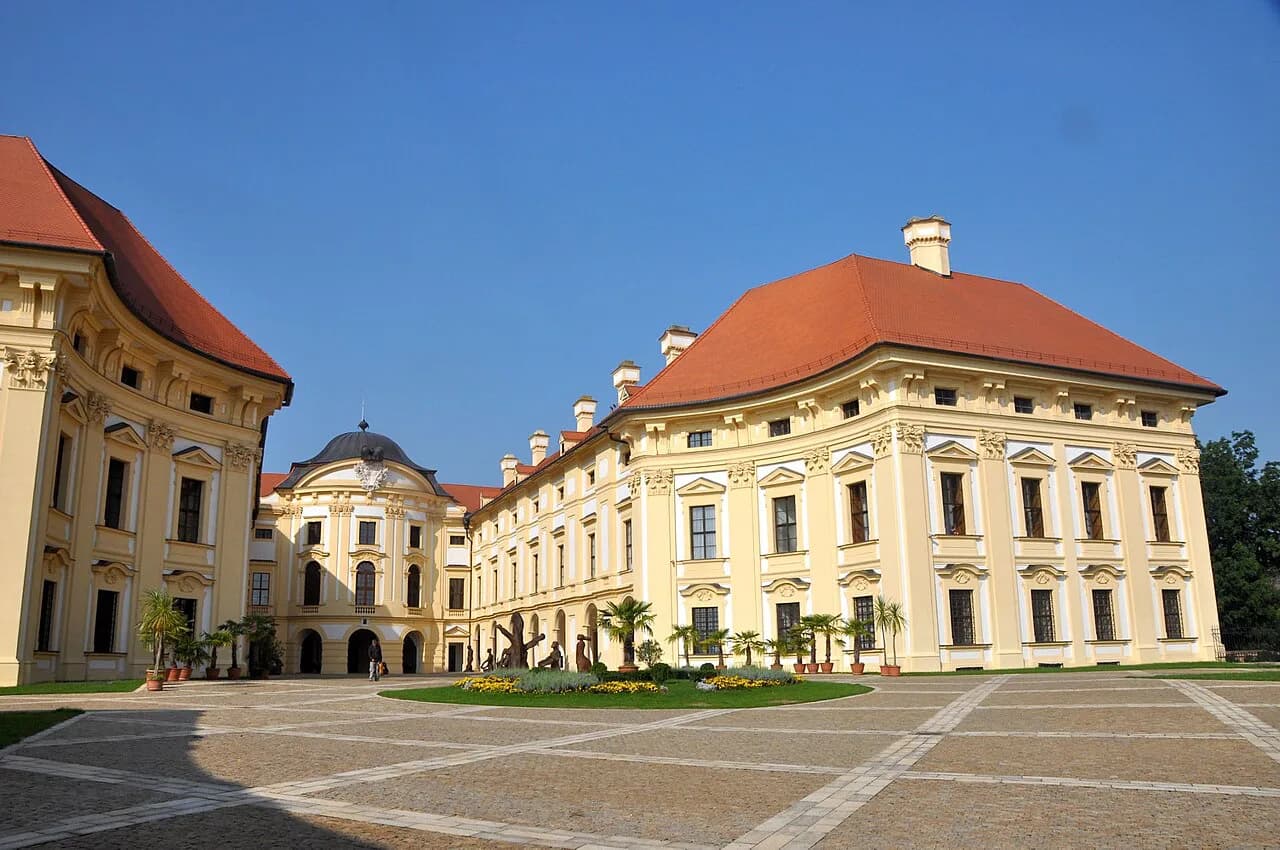
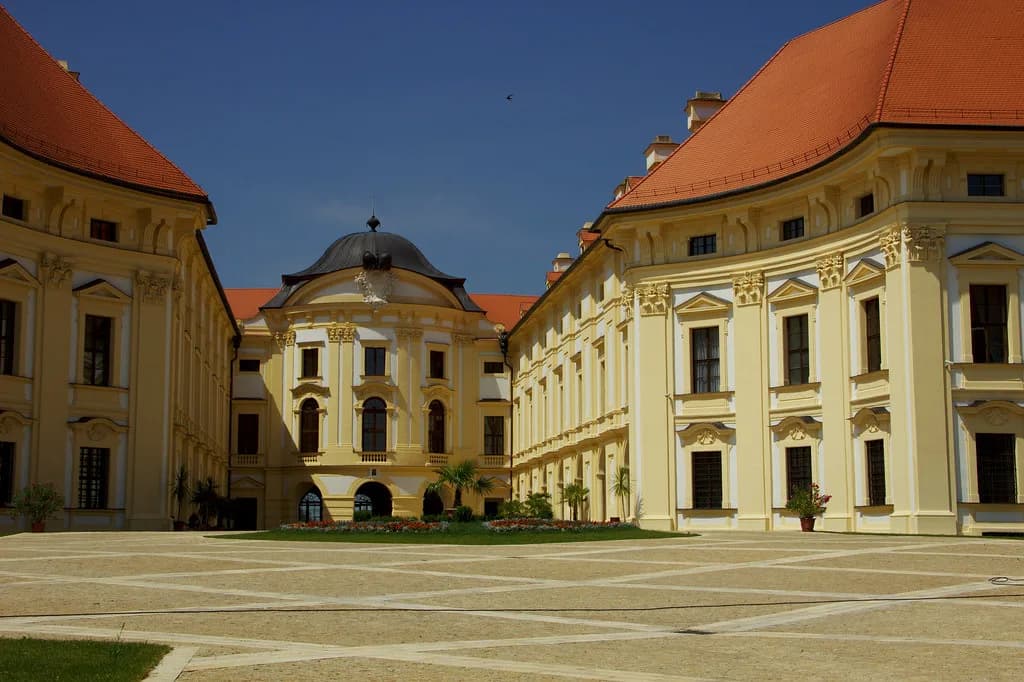
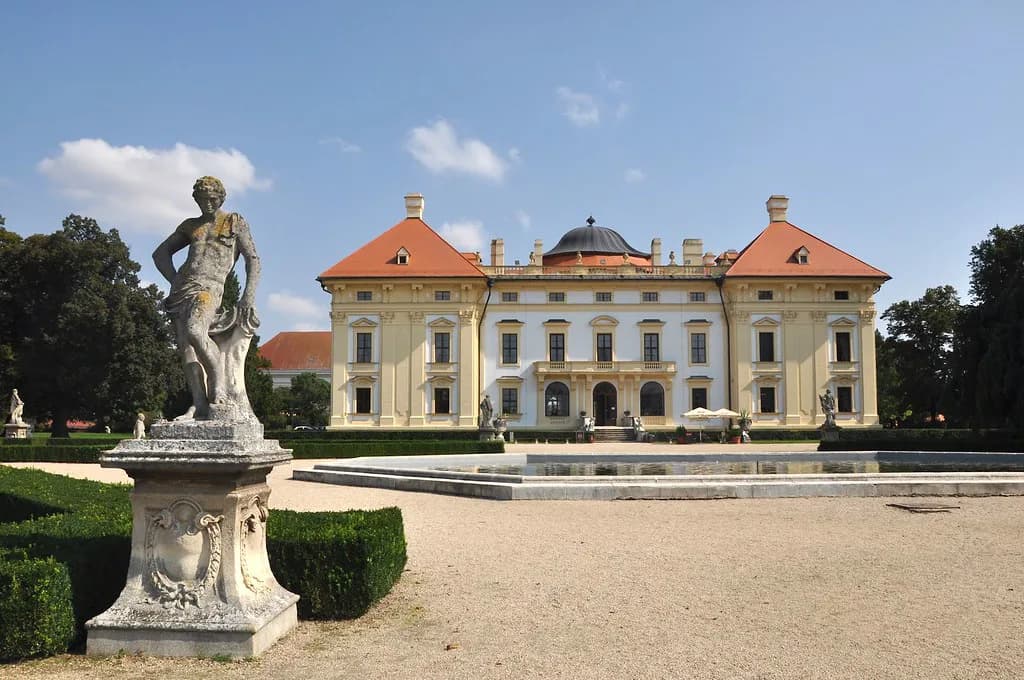
Slavkov u Brna, known in German as Austerlitz, is the natural base for the day and gives the battle its name in most languages. The town's own sight is the chateau, and it is worth pairing with the battlefield monuments around it.
Driving the battlefield from Brno
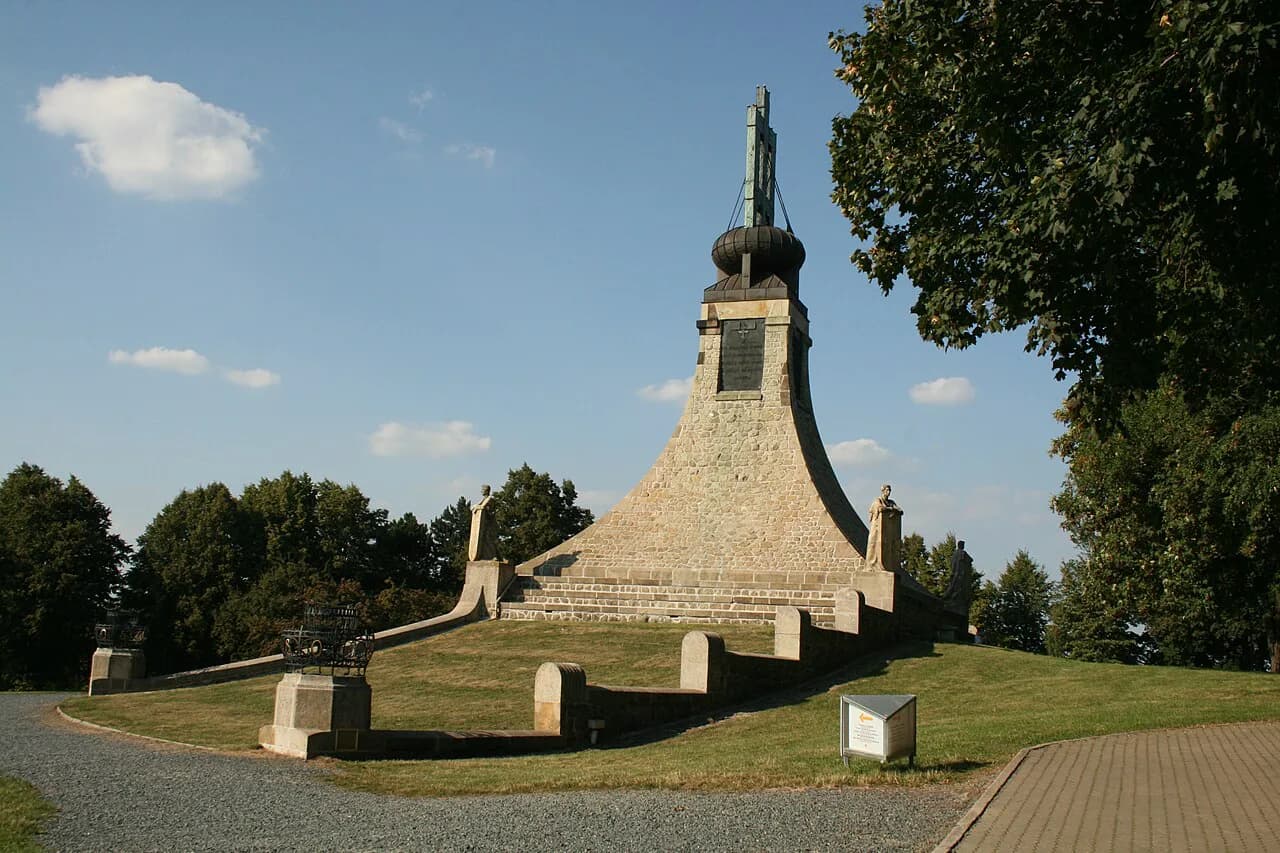
Start from Brno and head east toward the Pratzen Heights, the plateau at the center of the fighting, then work south and west through the villages to Žuráň and the Santon before ending at Slavkov u Brna. Distances are short but the roads are ordinary country lanes, so allow a half day with stops. The Peace Monument at Austerlitz, the domed memorial on the battlefield, is the one place built specifically for remembrance and deserves a proper pause.
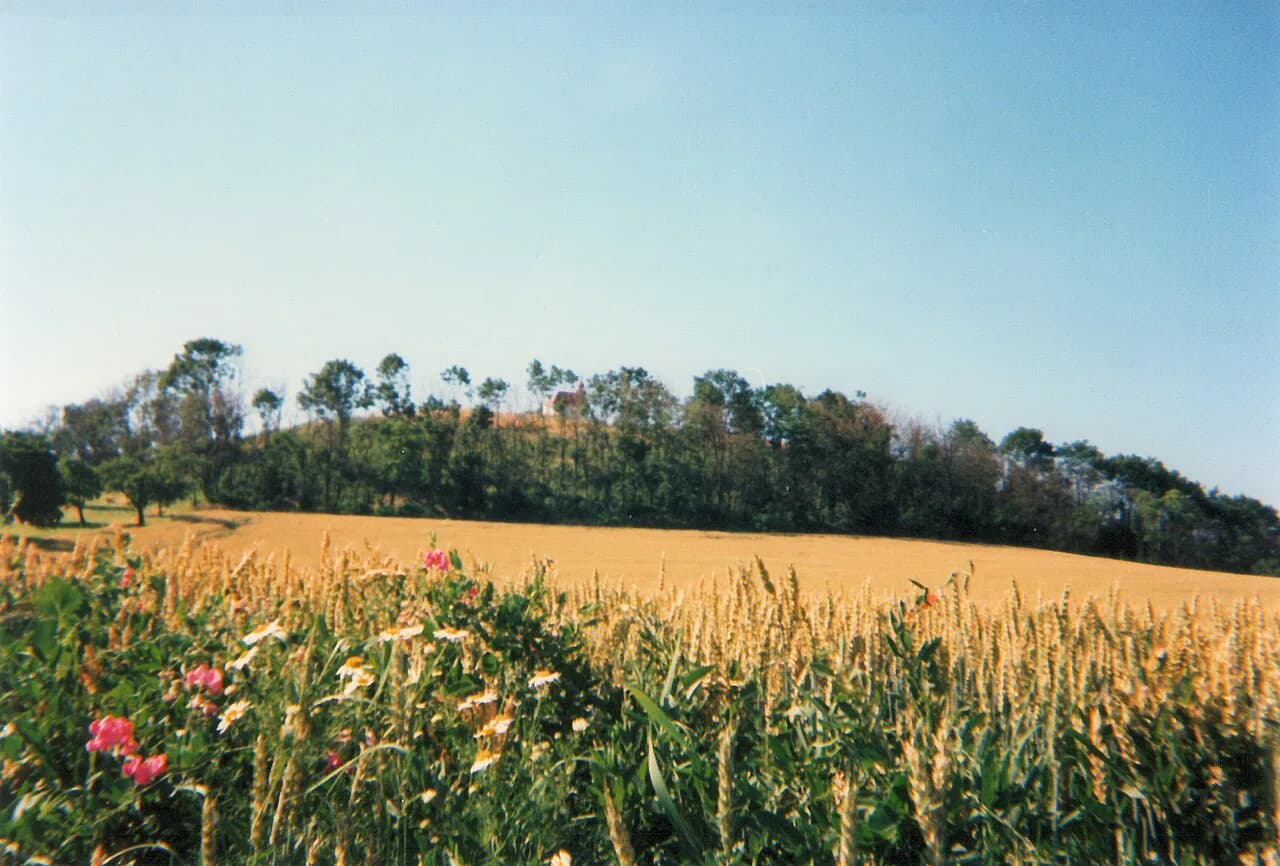
The Santon is a low, conical hill that served as a French artillery position and now carries a small monument; it is a short detour off the main loop and a good place to picture how the ground falls away toward the ponds. The whole route works best in a logical loop so you are not doubling back on narrow lanes, and a paper or offline map is worth having because signage between villages is sparse.
Where to read up before you go
The chateau at Slavkov u Brna is the sensible first stop if you want context before driving out to the battlefield monuments. A short read on the battle beforehand helps when signage is in Czech.
Pair the chateau with the memorial on the battlefield and you get both the town setting and a sense of the human cost in one day. The battlefield monuments are outdoors, while chateau interiors follow the chateau's regular visitor opening.
Trade-offs: open ground, few trains, and a car
This is open countryside, not a museum campus: monuments are spread across several villages, some are reached on foot over field tracks, and there is little cover from rain or wind. Trains and buses reach Slavkov u Brna and the surrounding villages, but connecting the scattered points by public transport eats the day, so a car is the realistic way to see the ground properly.
If you rely on public transport, treat Slavkov u Brna as your fixed base, see the chateau, and accept that the outlying monuments may not fit. Drivers get the full loop, but should expect narrow lanes, farm traffic and limited parking at the smaller sites.
Getting there from Brno and Prague
Brno is the practical gateway, roughly half an hour's drive from Slavkov u Brna and the battlefield villages, which makes a half-day loop easy from the city. From Prague, the drive is a much longer haul on the D1 motorway, so most visitors base themselves in Brno or break the trip there.
Trains run from Brno to Slavkov u Brna, and buses serve the villages, but timetables and connections change by season, so check the current schedule before you commit to a car-free plan.
Should you drive the battlefield or just see the chateau?
If you have a car and half a day, drive the full loop: the Pratzen Heights, Žuráň, the Santon and the Peace Monument, ending at Slavkov u Brna. The plateau and the memorial only make sense when you see how the ground falls toward the ponds, and that is the part of the battle most visitors remember.
Without a car, put Slavkov u Brna and its chateau first and treat the outlying monuments as optional. Either way, you leave with a clearer picture of December 2, 1805 than any single painting can give you.
Explore more Slavkov u Brna guides
Frequently Asked Questions
Can you provide a brief summary of the Battle of Austerlitz?
On December 2, 1805, Napoleon drew the larger Russian and Austrian army off the Pratzen Heights, then took the plateau in the morning mist and broke their line. French losses were roughly 8,000 and Allied losses roughly 35,000.
How did Napoleon treat his men?
Napoleon's address after the battle praised the soldiers' bravery and told them their deeds had brought glory to their eagles. The full text is reproduced in historical accounts of the campaign.
Why didn't the US help Napoleon?
The United States was not part of the Third Coalition and had no role in the 1805 campaign in Moravia. The coalition that fought at Austerlitz was formed by Britain, Russia, Austria, Naples and Sweden.
Sources
Notes for your Czech trip
Optional updates to our Czech town guides.
You might also like
Continue reading
More guides you'll find useful