Peace Monument at Austerlitz (Mohyla míru): What to See on Pracký kopec
The Peace Monument at Austerlitz is a 26-meter memorial on Pracký kopec with a chapel, an ossuary and a small battle museum beside it.
On this page
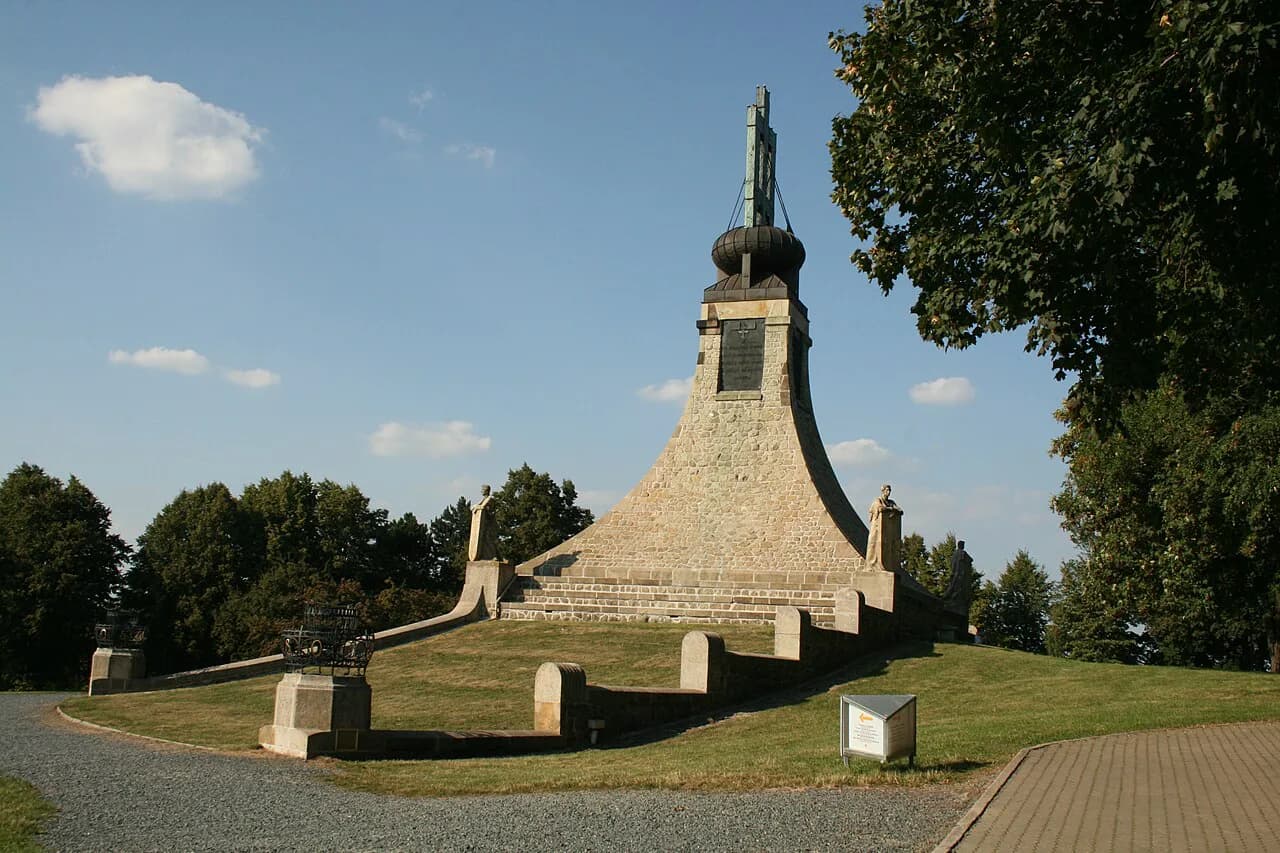
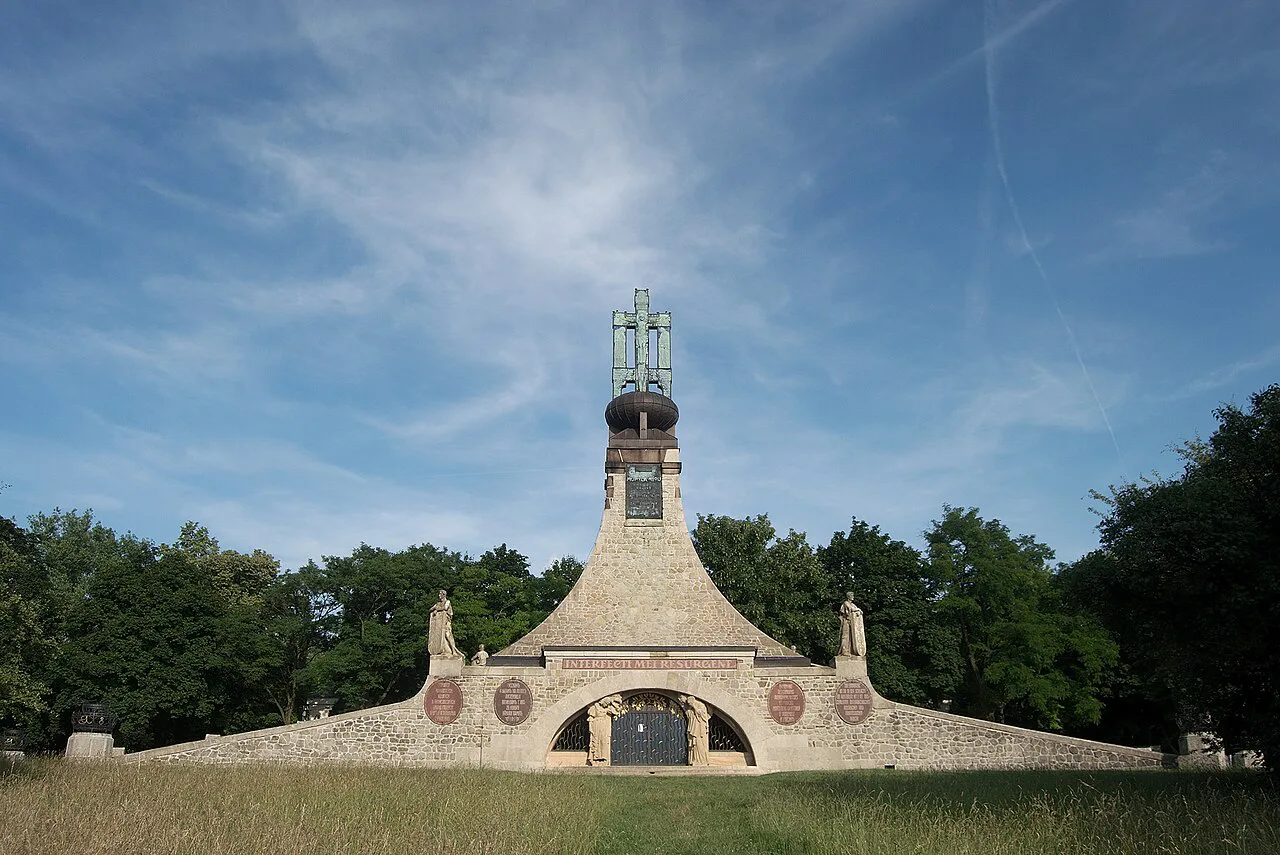
The Peace Monument at Austerlitz, called Mohyla míru or the Cairn of Peace, is a 26-meter stone memorial on Pracký kopec above the village of Prace, and it is the one structure on the battlefield that every visitor should see. It is not an 1805 relic: it was built in 1910–1912 to honor all the dead of the battle, including Moravian civilians, and was handed over to the public only in 1923 after World War I delayed the ceremony. This guide covers what stands on the hill, how the monument reads from the outside, what waits inside, and how the stop fits a South Moravia route.
A peace memorial, not a battlefield relic
The monument's purpose is broader than the armies that fought here. It was pushed through by Alois Slovák, a Moravian priest and teacher, as a memorial to everyone who died in war, and it is often described as the first peace memorial in Europe. That framing matters when you arrive: the monument is a twentieth-century statement against war, not a reconstructed battery or a trench line.
Construction ran from 1910 to 1912 to a design by architect Josef Fanta, with the cross group by F. Anýž and sculptural decoration by Čeněk Vosmík. The handover slipped to 1923 because of the First World War, which is why the memorial reads as both a battle commemoration and a warning issued on the Eve of a much larger conflict.
Why it stands on Pracký kopec
The site is not arbitrary. On the morning of 2 December 1805, around 11 a.m., the French Fourth Corps broke the allied center here and took the Pracké Heights, the decisive move of the Battle of the Three Emperors. Standing on the hill, you look down over the ground where that attack unfolded, which is why the view is part of the visit rather than a bonus.
The wider field stretches across the Pratzen Heights and the villages that changed hands that day. If you want the full sequence of the fighting, the battlefield page sets out the phases; the monument is the anchor point on the heights above Prace.
Reading the monument from outside
From a distance the shape is unmistakable: a tetrahedral, truncated pyramid built of quarried stone, 26 meters tall, with old Slavic ornament worked into the massing. At the top sits an ellipsoid representing the planet Earth, carrying a nearly ten-meter Christian cross.
The cross group is worth a slow look before you go in. It shows Jesus Christ, the Virgin Mary, the Apostle John, God the Father and the head of Adam; a pelican on the reverse side stands for the Redemption, and the four Evangelists' names are set alongside an Old Slavic liturgical text.
Inside: the chapel, the ossuary and the acoustics
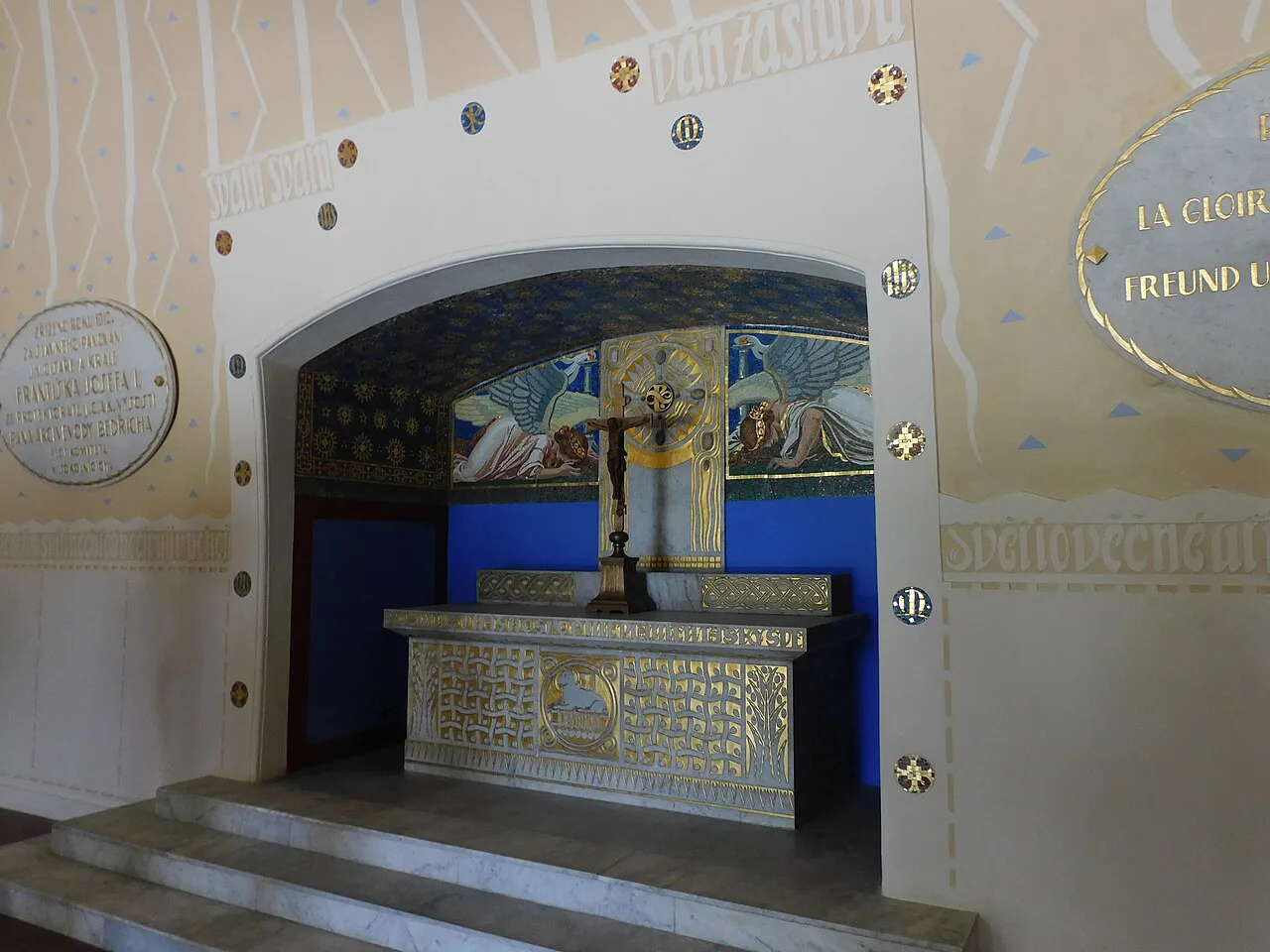
The interior is a parabolic chapel on a ground plan roughly ten meters square, and beneath it lies an ossuary holding remains of battle casualties recovered from the surrounding fields. That combination of chapel and burial space gives the monument a weight that the exterior alone does not prepare you for.
Listen for the acoustics. The chapel is known for carrying a whisper between diagonal corners, an effect that rewards standing still for a moment instead of walking straight through.
The four shieldbearers
At the corners of the monument, four sculptures of shieldbearers carry the memorial's argument. Together they represent the French, Austrian and Russian soldiers who fought here and also the Moravians, the local population who suffered as the battle rolled over their land. That inclusion of the local population is the one most visitors miss, and it is the reason the monument is not simply a victory monument for one side.
The museum beside the monument
A one-story museum building went up in 1925 next to the memorial, and it walks visitors through the course of the battle and the circumstances around it. Treat it as the orientation stop: see the exhibits first if you arrive without background, then climb to the monument with the sequence of the fighting in your head.
From the height you also get the view over the commemorative zone of the battlefield, which is the clearest way to understand how the allied center was split. Allow time to stand at the rail and match what you see to the museum's maps rather than hurrying back to the car.
How long the stop takes
Plan the monument and museum as one visit on the same hill. The memorial itself asks for perhaps twenty minutes of looking, reading the cross group and standing in the chapel, while the museum adds the historical context and takes longer if you read the panels carefully. A comfortable half day covers both without rushing.
The chapel and museum are seasonal: they open to the public for the summer holiday months and close outside that season, so check the current dates before building a route around them. Even when the interior is closed, the monument itself stands on the hilltop and the view from Pracký kopec is the reason many travelers come.
Getting to Pracký kopec
Slavkov u Brna is the practical base, with the monument a short drive out of town toward Prace. Coming by car from Brno is straightforward, and the run from Vienna is a longer but manageable drive north; the hill sits off the main road and is signed for the battlefield.
Without a car, the stop becomes harder. Public transport reaches Slavkov u Brna, and from there the monument requires a taxi, an arranged lift or a longer walk along country roads, so build the visit around the town rather than treating the hill as a standalone target.
Practical trade-offs on an exposed hill
Pracký kopec is open ground, and the memorial stands on the highest point around, so wind and weather hit harder than they do in town. Bring a layer even on a mild day, and expect the museum to be the shelter if a shower rolls in.
Read up before you go if you want more than the basic captions. The battlefield story is well documented and easy to prepare in advance, which makes the on-site visit richer.
Where it fits a South Moravia route
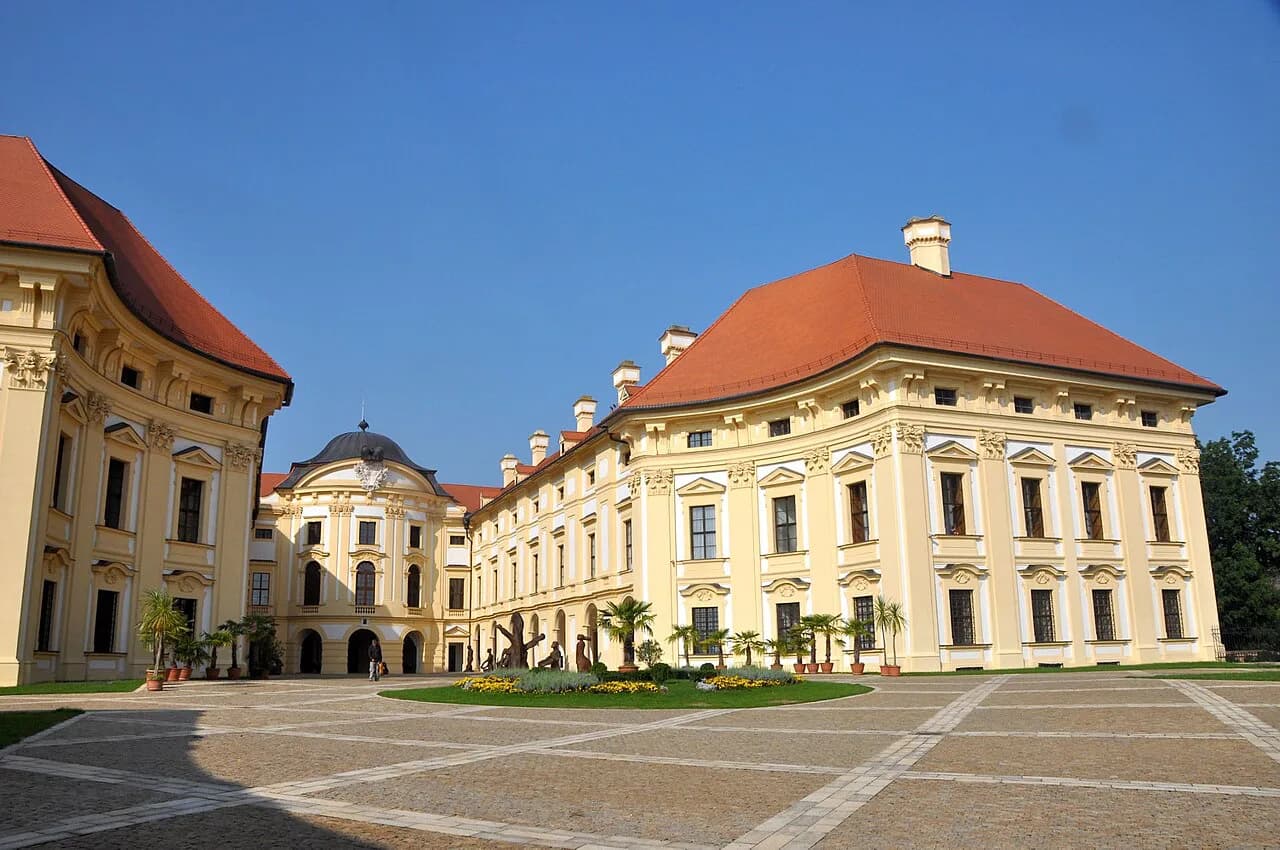
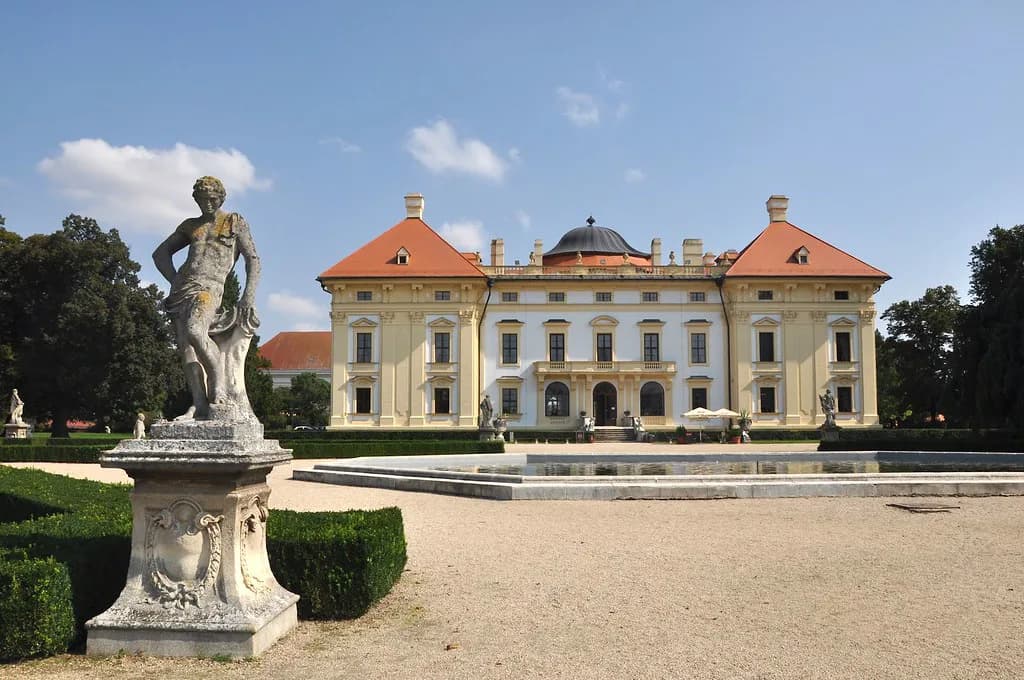
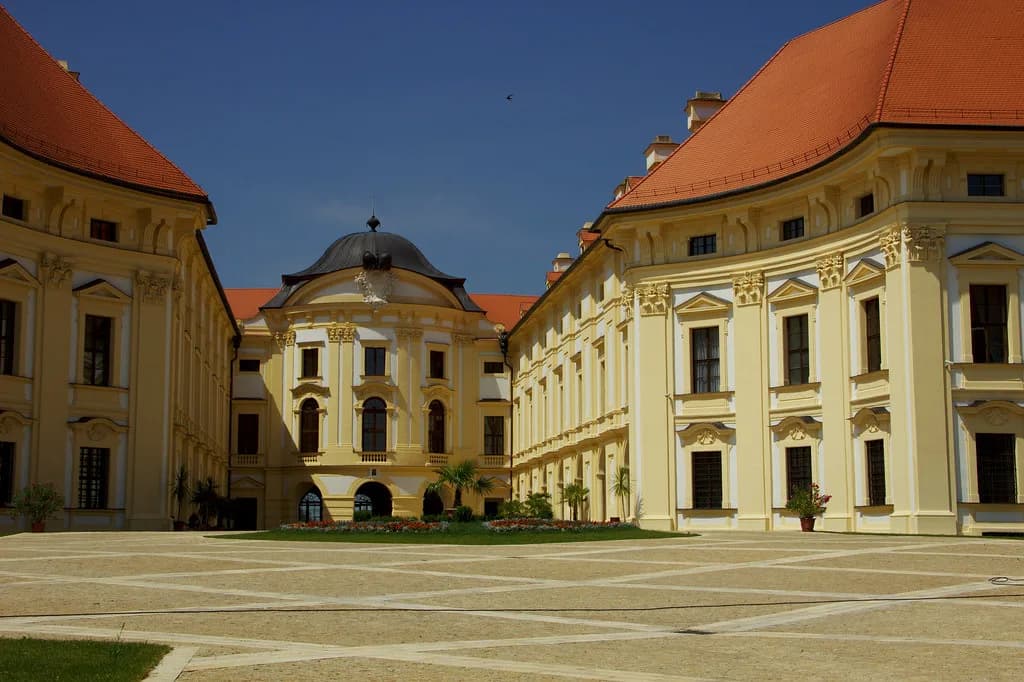
Pair the monument with Slavkov u Brna itself. The town's chateau and its square sit a short drive from the hill, and together they give you the battle's political backdrop alongside its memorial.
From there the obvious continuations are north to Brno or south toward Mikulov, with the monument as a two-hour punctuation rather than a destination in its own right. If you are tracing the battle in detail, add Santon hill on the northern part of the field before you leave the area.
Should the Peace Monument be your first stop?
Make the monument your first stop if you want the battle to make sense. The view from Pracký kopec and the museum's account of 2 December 1805 give you the shape of the fighting before you drive the villages and fields where it happened.
If your time in South Moravia is short, pair it with Slavkov u Brna and skip the wider field. Either way, confirm the season for the chapel and museum before you set out, because the hill is a different visit when the interior is closed.
Frequently Asked Questions
What does the Peace Monument at Austerlitz represent?
It commemorates all the dead of the battle, not one victorious army. The four shieldbearers at its corners stand for the French, Austrian and Russian soldiers and for the Moravian population who suffered in the fighting, and the memorial was conceived as a monument to peace rather than to victory.
Is the Peace Monument the same as the Austerlitz battlefield?
No. The monument is one structure on the battlefield, standing on Pracký kopec above Prace, and it dates from 1910–1912 rather than from the battle. The battlefield itself covers a much wider area of villages and heights, and the monument is the best orientation point on it.
What is Austerlitz called today?
Austerlitz is the German and historical name for Slavkov u Brna, the town southeast of Brno that gives the battle its name. The Czech town name is what you will see on signs and timetables, while the battle is still widely known as Austerlitz.
Sources
Notes for your Czech trip
Optional updates to our Czech town guides.
You might also like
Continue reading
More guides you'll find useful