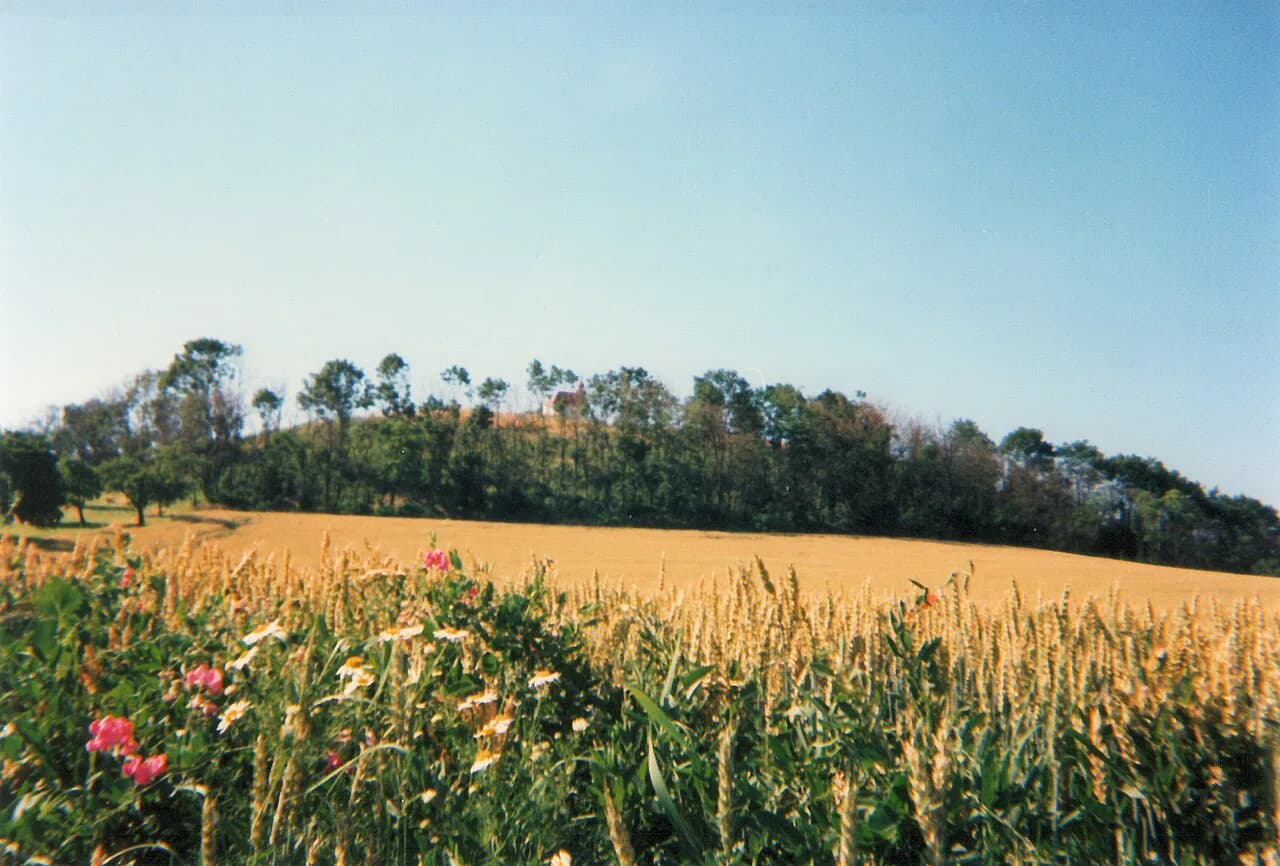
Santon Hill at Austerlitz: The Chapel and French Battery
Santon Hill near Tvarožná is a chapel on the northern edge of the Austerlitz battlefield, with Žuráň and the Pratzen Heights close by.
On this page
Santon Hill is worth a stop if you are already touring the Austerlitz battlefield: it puts you on the northern edge of the field, near the village of Tvarožná. There is no museum on the summit, just a chapel and open country, so treat it as a viewpoint on a driving circuit rather than a destination in itself. This guide explains what stands on the hill, how the position fits Napoleon's plan, and how to link it with Žuráň, the Pratzen Heights and the Cairn of Peace.
The hill sits near the village of Tvarožná, above the road that runs between Brno and Slavkov u Brna. The chapel on top has become the landmark that identifies the hill on Czech maps.
What Santon Hill is
Santon Hill is a low, open rise near Tvarožná crowned by a small chapel. The chapel is the visual landmark; the wider reason to come is the sweep of farmland and valley below it. Nothing here is curated, so bring your own understanding of the fighting and read the terrain.
Expect a look at the chapel exterior and a few minutes taking in the view. Because Santon Hill is a landscape stop rather than a sight with collections, plan to spend most of your time at the sites that do hold exhibits.
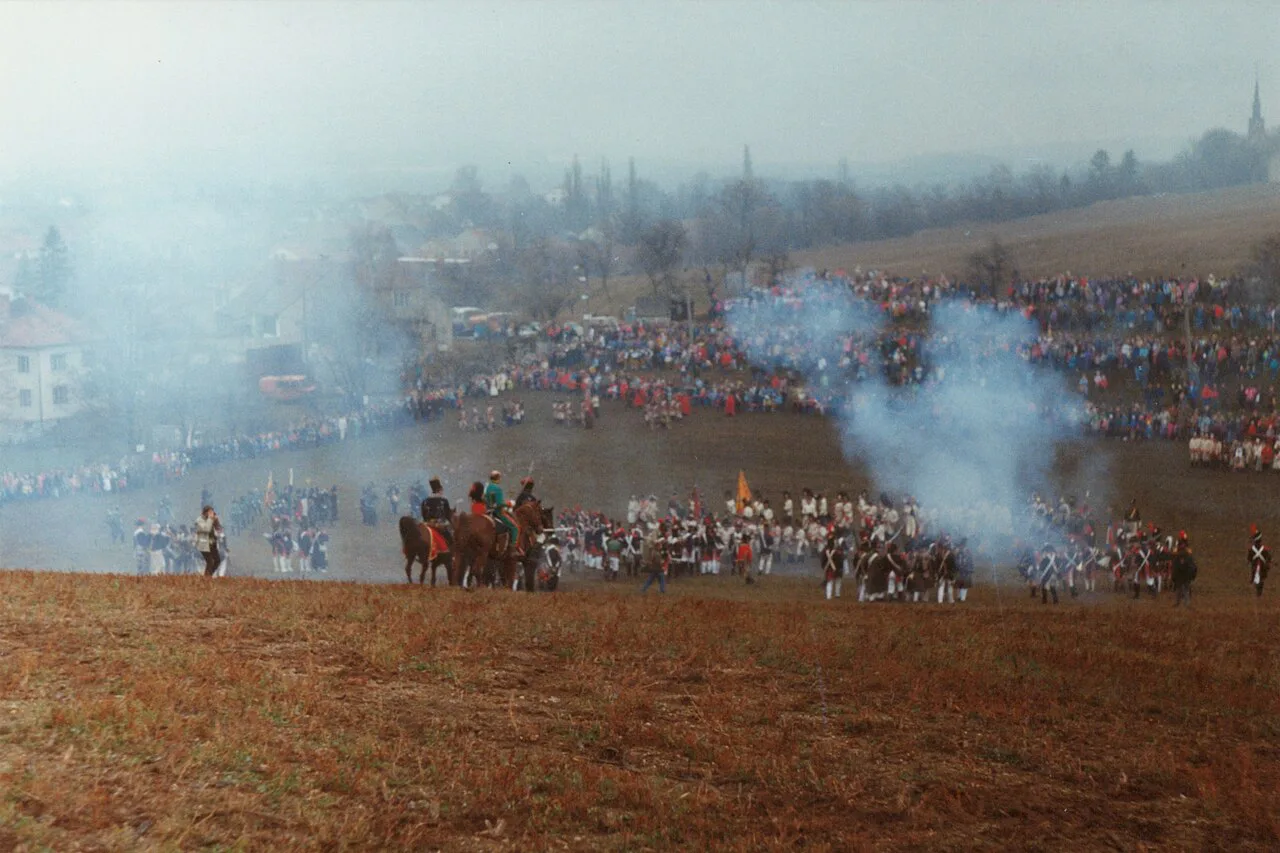
Where Santon Hill sits on the battlefield
The Austerlitz battlefield lies to the southeast of Brno, and Santon Hill anchors its northern edge above the Brno–Austerlitz road. The decisive ground was the Pratzen Heights further south, and the northern positions helped keep the fight from spilling around Napoleon's flank.
The villages on Czech maps are the key to orientation. Tvarožná is the village nearest Santon Hill, Prace sits below the Pratzen Heights to the south, and Žuráň lies between them. The Pratzen ridge runs roughly five kilometers southeast from Staré Vinohrady, at about 290 meters, through a saddle above Prace to Pratzenberg at about 325 meters.
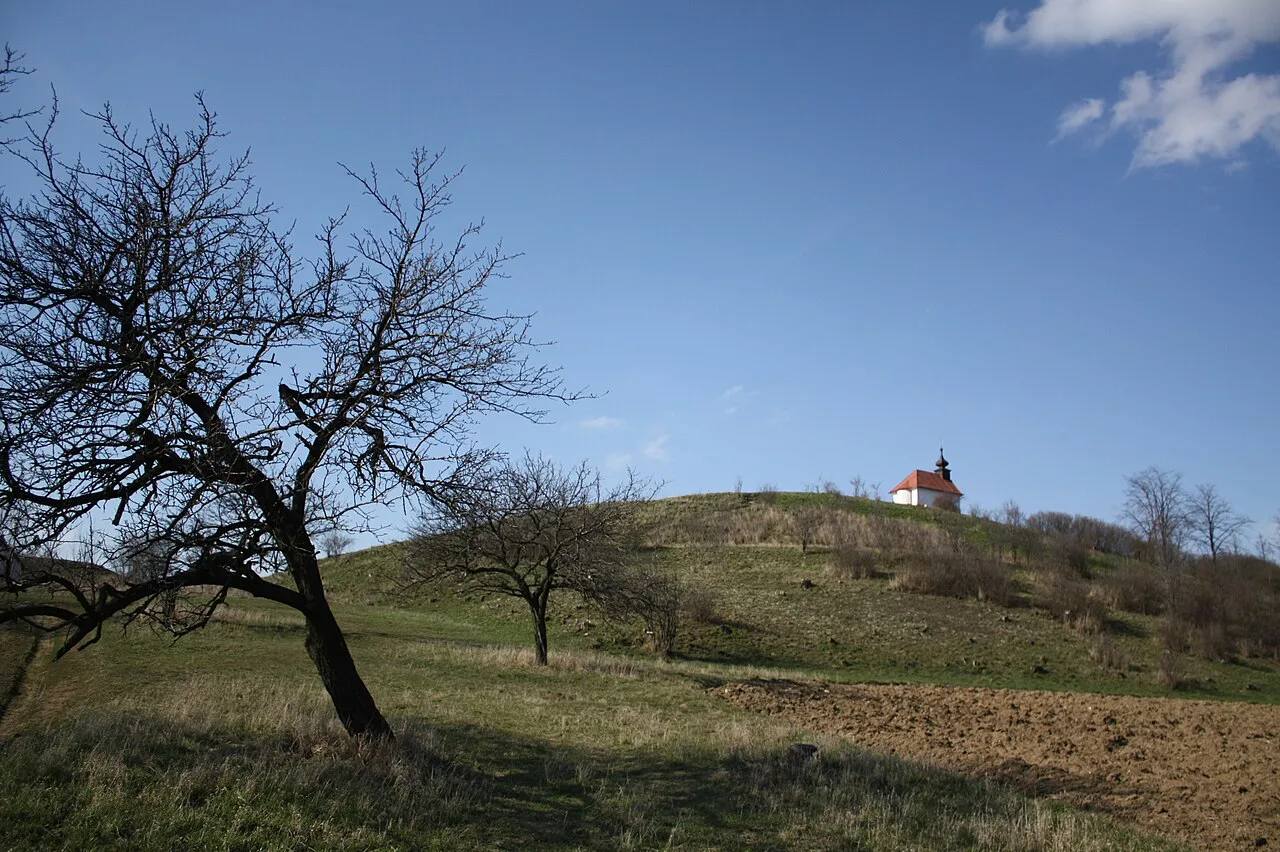
The chapel on the summit
The chapel on Santon Hill is a religious building and a landscape marker, not a visitor attraction with rooms to tour. Come to see its exterior and the way it pins the northern position to a single point you can find on a map.
Because there is no ticket desk or exhibition, the visit is free-form and depends on the weather and the season. Treat the chapel as a landscape marker rather than a building you can count on entering, and plan your time around the outdoor ground.
The French position on the slope
Napoleon's plan let the Allied army attempt to flank him, then struck its right and rear with most of his army while Davout's corps held on the right. The key to the field was the Pratzen Heights above Prace, and the northern positions helped keep the fight from spreading around Napoleon's flank.
At dawn on December 2, Napoleon met his marshals on Žuráň Hill, where Soult reported that the Allied troops had left the Pratzen Heights undefended. Napoleon asked Soult how long his troops needed to reach the top, and Soult is said to have replied no more than twenty minutes; Napoleon told him to wait another quarter of an hour before giving the order.
Žuráň Hill: Napoleon's command post
Žuráň is the small hill where Napoleon kept his headquarters on the morning of the battle and watched the attack on the Pratzen Heights develop. Soult came up to report there, and the other marshals — Bernadotte, Davout, Lannes, Murat, Bessières and Berthier — received their orders in the same place. The mound is modest, but its position between Santon Hill and Prace explains why it was chosen for command.
Combine Žuráň with Santon Hill in a single loop, because the two are close and each explains a different half of the French plan: the northern guns on one side, the command post looking south toward the decisive ridge on the other. There is no museum at Žuráň either.
Pratzen Heights: the decisive ridge
The Pratzen Heights above Prace are where the battle turned. The Allied army, some 86,000 Russian and Austrian troops under Alexander I and Francis II, had camped on and east of the heights on the night of December 1–2 and began moving before dawn. Napoleon thinned his right to tempt them down, and when they left the plateau he sent Saint-Hilaire's and Vandamme's divisions up through the mist to take it.
Saint-Hilaire's division, about 6,800 strong, was drawn up on a three-kilometer front and ordered to clear the heights and act as the army's pivot. The fighting on the ridge lasted hours, and the retreat that followed cost the Allies roughly 35,000 men against about 8,000 French casualties. Read the heights first, the northern positions after, and the sequence of the day makes sense.
The Cairn of Peace and its museum
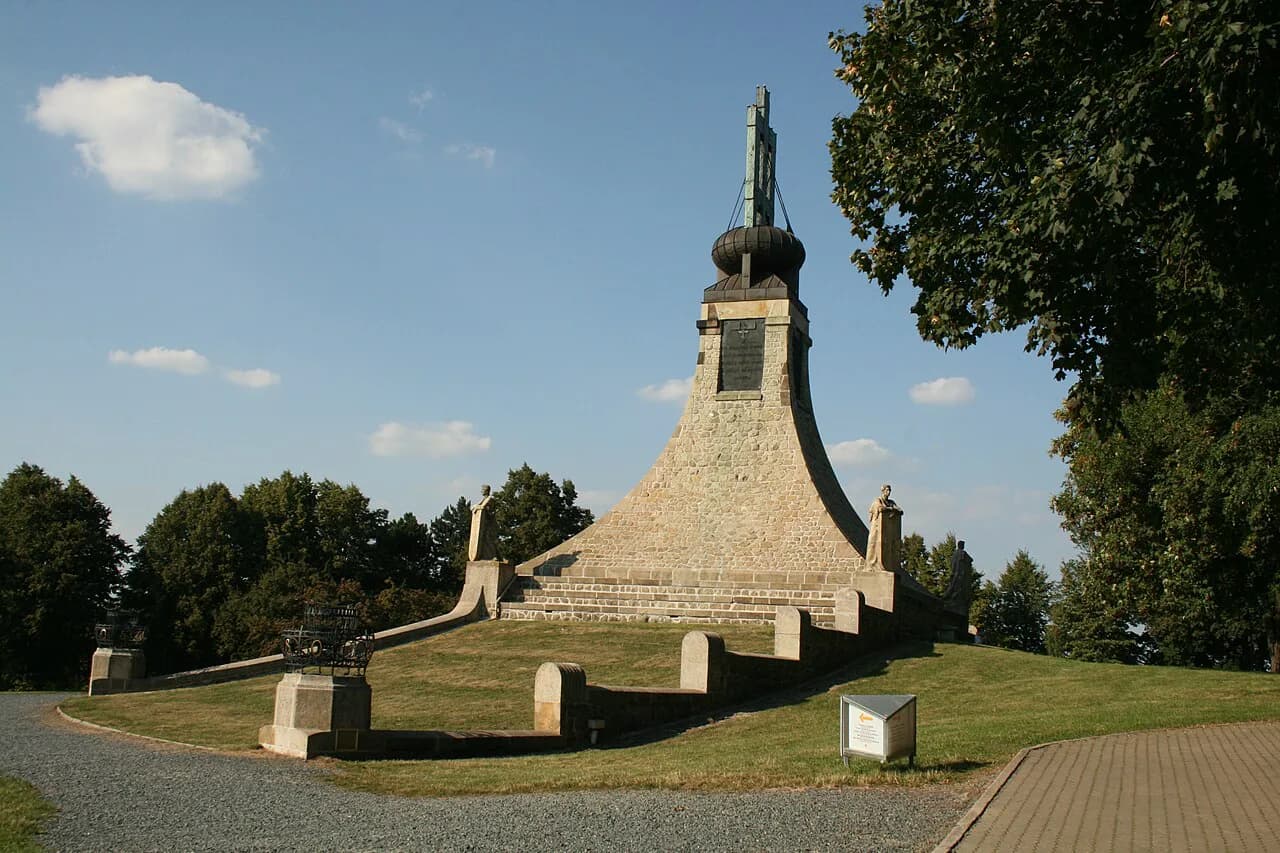
The Cairn of Peace at Prace is the battlefield's main visitor stop and its orientation point. The pyramidal memorial was built in 1910–1911 and is dedicated to everyone who died in the battle, soldiers and civilians alike. It is the one place on the field with a museum and exhibits, so start or finish your circuit here to give the scattered markers context.
Because the Cairn holds the collections, treat Santon Hill and Žuráň as landscape stops around it rather than substitutes for it. Entry arrangements and any charges are set by the operator, and they are worth confirming before you drive out, since the museum is the only part of the circuit that can close.
Connecting the sites by car
A practical circuit starts at the Cairn of Peace in Prace, drops to Žuráň for the command post, and finishes at Santon Hill above Tvarožná, following the battle from the decisive ridge back to the northern batteries. The distances are short and the roads are ordinary country lanes, so a car is the sensible way to link them.
Allow a half day for the circuit, including time inside the museum. Decide whether you want a guided commentary or a self-drive version with a map. Base yourself in Brno for the widest choice of places to stay.
Practical constraints and timing
The sites are outdoor monuments, so weather sets the pace and the season changes what is comfortable. The chapel, the mound at Žuráň and the ridge are open ground; the museum at Prace is the only indoor stop, and it is the one place where opening times and ticket prices affect your plan. Check the Cairn's current arrangements before setting out.
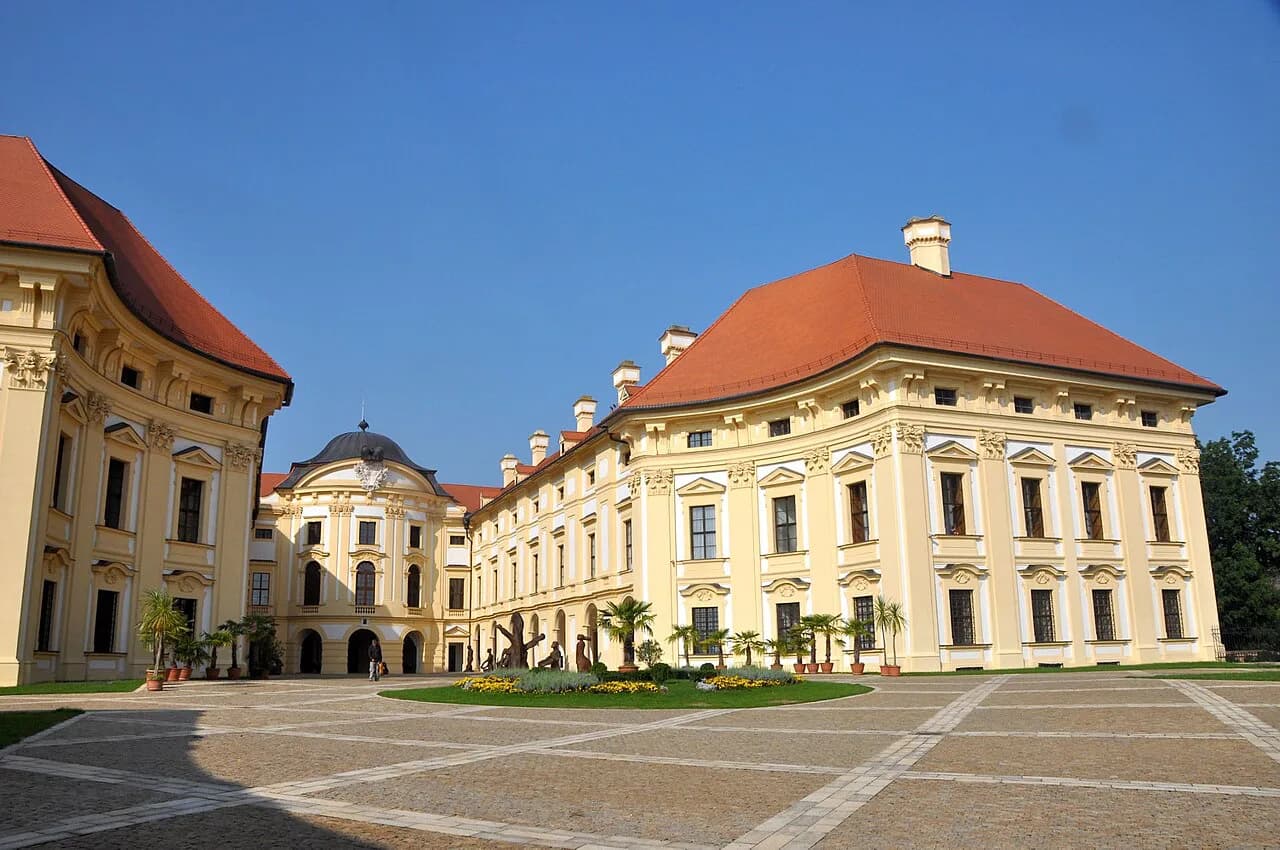
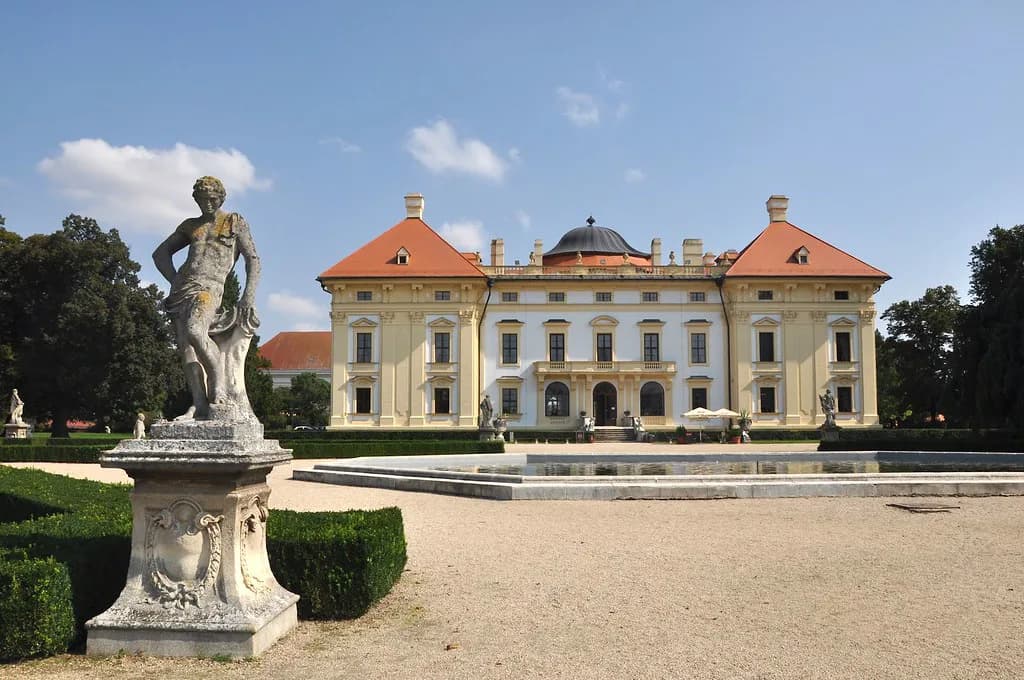
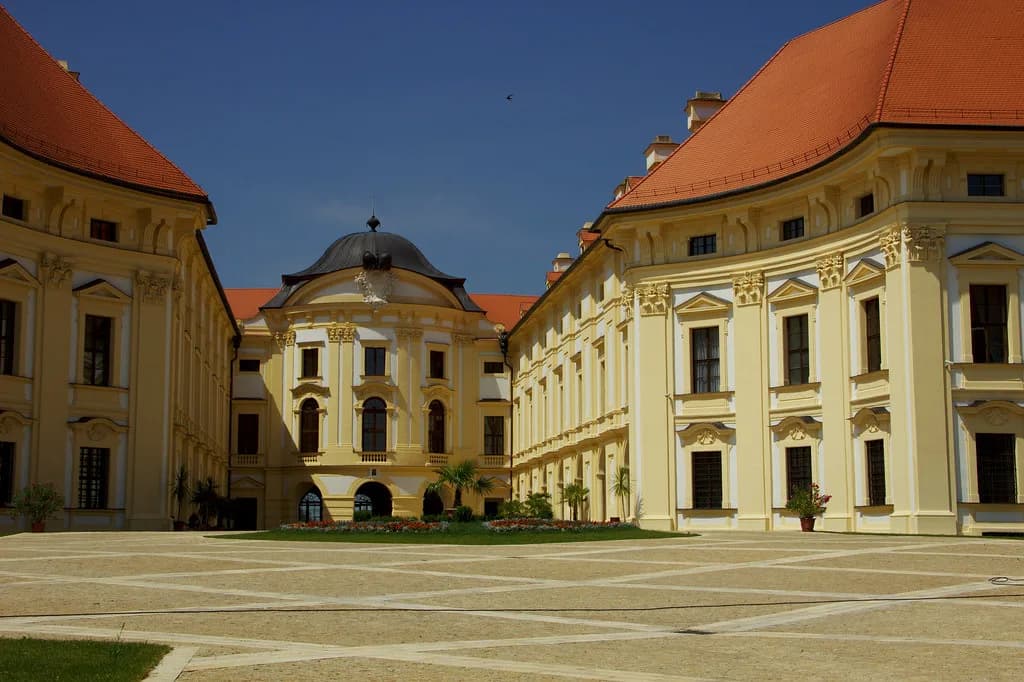
Slavkov u Brna is the other half of the story, and its chateau is where the combatants signed a truce on December 6, 1805. The chateau also holds a gallery from the Kounic family collections and a permanent exhibition on the battle, so it pairs naturally with the battlefield circuit.
Should Santon Hill be on your Austerlitz circuit?
Yes, if you are already driving the battlefield and want a northern viewpoint; no, if you are expecting a museum or a reconstructed battery. Santon Hill delivers a chapel, a hill and a view over the ground, and it takes little time. Pair it with Žuráň and the Pratzen Heights and the day's geography falls into place.
Base the trip in Brno, confirm the Cairn of Peace museum's opening arrangements before you go, and carry a battlefield map. Slavkov u Brna is the natural second stop for the truce and the chateau, and it closes the loop on the December campaign.
Explore more Slavkov u Brna guides
Frequently Asked Questions
Is Santon Hill worth visiting?
It is worth a short stop if you are touring the Austerlitz battlefield by car. The hill has a chapel, and the view explains the northern part of the field. There is no museum on the summit, so combine it with the Cairn of Peace at Prace and the command post at Žuráň.
Can you walk around the Austerlitz battlefield on your own?
Yes, the battlefield markers, including Santon Hill and Žuráň, are outdoor monuments in open country, and a car makes it far easier to link the villages of Tvarožná, Prace and the surrounding area. The Cairn of Peace at Prace holds the museum and exhibits, and its opening arrangements and any charges are set by its operator, so confirm them before you drive out.
What is the Cairn of Peace in Prace?
The Cairn of Peace is the pyramidal memorial on the Pratzen Heights above Prace, built in 1910–1911. It is dedicated to everyone who died in the battle, soldiers and civilians alike, and it is the battlefield's main visitor stop with a museum. Start there for orientation before visiting the landscape markers.
Sources
Notes for your Czech trip
Optional updates to our Czech town guides.
You might also like
Continue reading
More guides you'll find useful