Terezín Guide: The Fortress Town and the Theresienstadt Ghetto
Terezín is a Habsburg fortress town that the Nazis turned into the Theresienstadt ghetto. Here is how the town is laid out and what a visit covers.
On this page
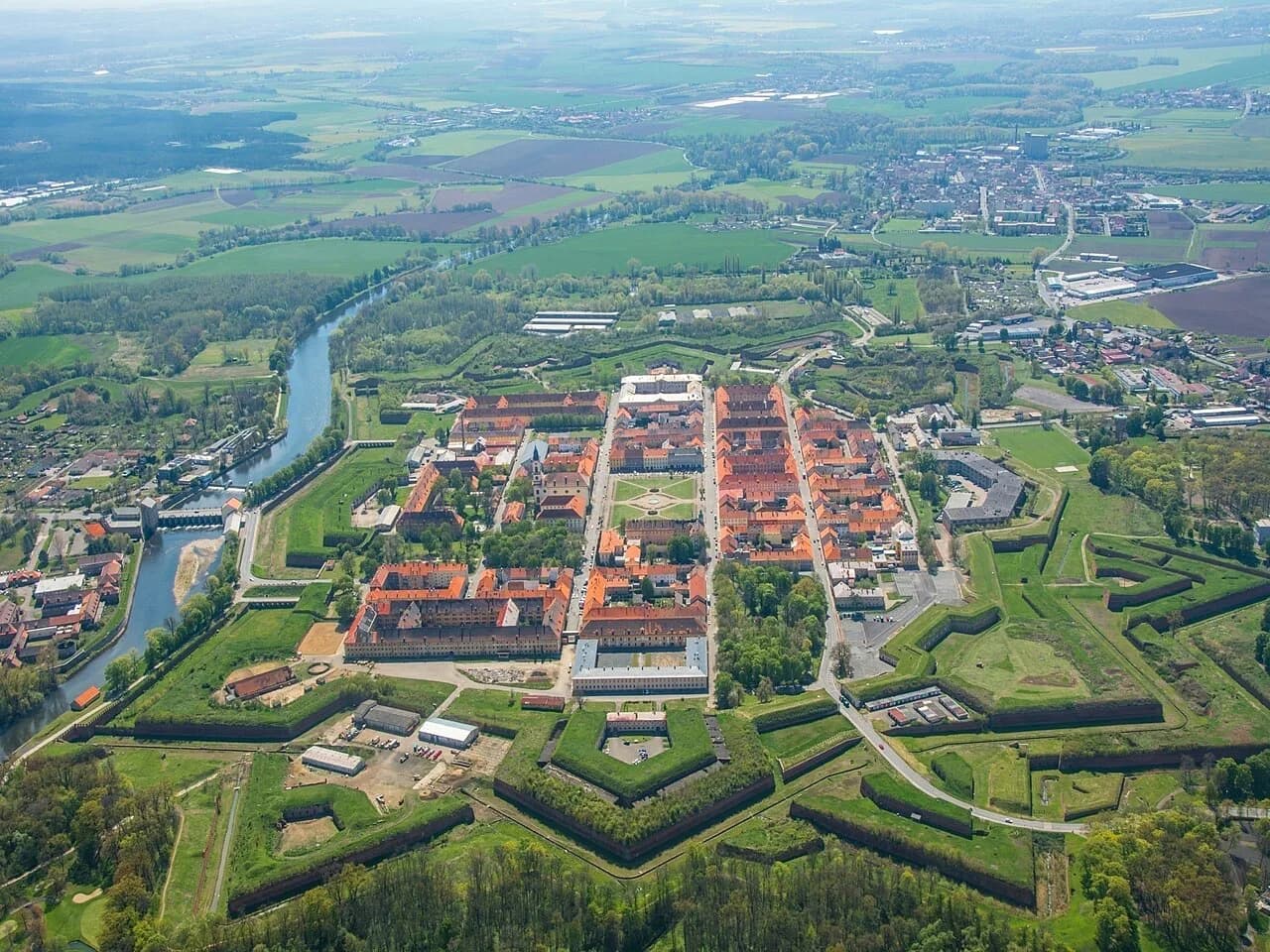
Terezín is a late-18th-century Habsburg fortress town about 30 miles north of Prague that the Nazis turned into the Theresienstadt ghetto, and it is visited today for that history rather than for any old-town charm. The town holds two distinct parts: the walled garrison town where the ghetto was confined, and the Small Fortress citadel, a separate fortified enclosure within the same fortress system. This guide explains how the two relate and what the historical record documents about the ghetto.
A Habsburg fortress town before it was a ghetto
The fortress of Theresienstadt was built in the late 18th century under Emperor Joseph II of Austria and named for his mother, Empress Maria Theresa (founded in 1780 according to Wikipedia). It was a military foundation, conceived as a fortified garrison town with a separate citadel, not as a residential town that grew organically. Understanding that origin matters on arrival: the grid of streets, the ramparts and the barracks blocks are military architecture first, and the wartime history was imposed on them.
Wikipedia describes Terezín as a former military fortress founded in 1780, made up of a citadel and an adjacent walled garrison town. That is the physical layout a visitor encounters: the main town inside its bastions, and the separate citadel known as the Small Fortress. Keeping the two in mind as distinct spaces prevents the most common confusion at the site.
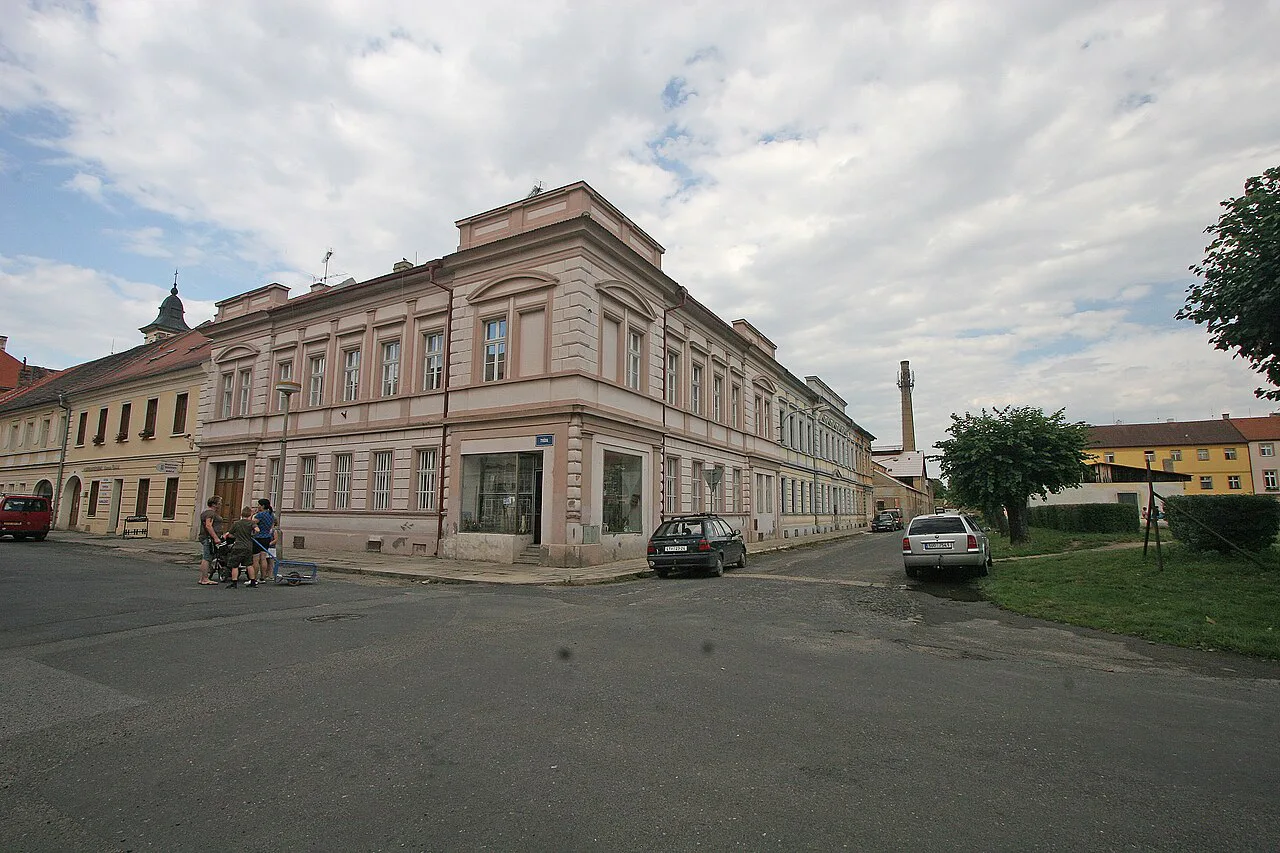
How Terezín is laid out: the fortified town and the Small Fortress
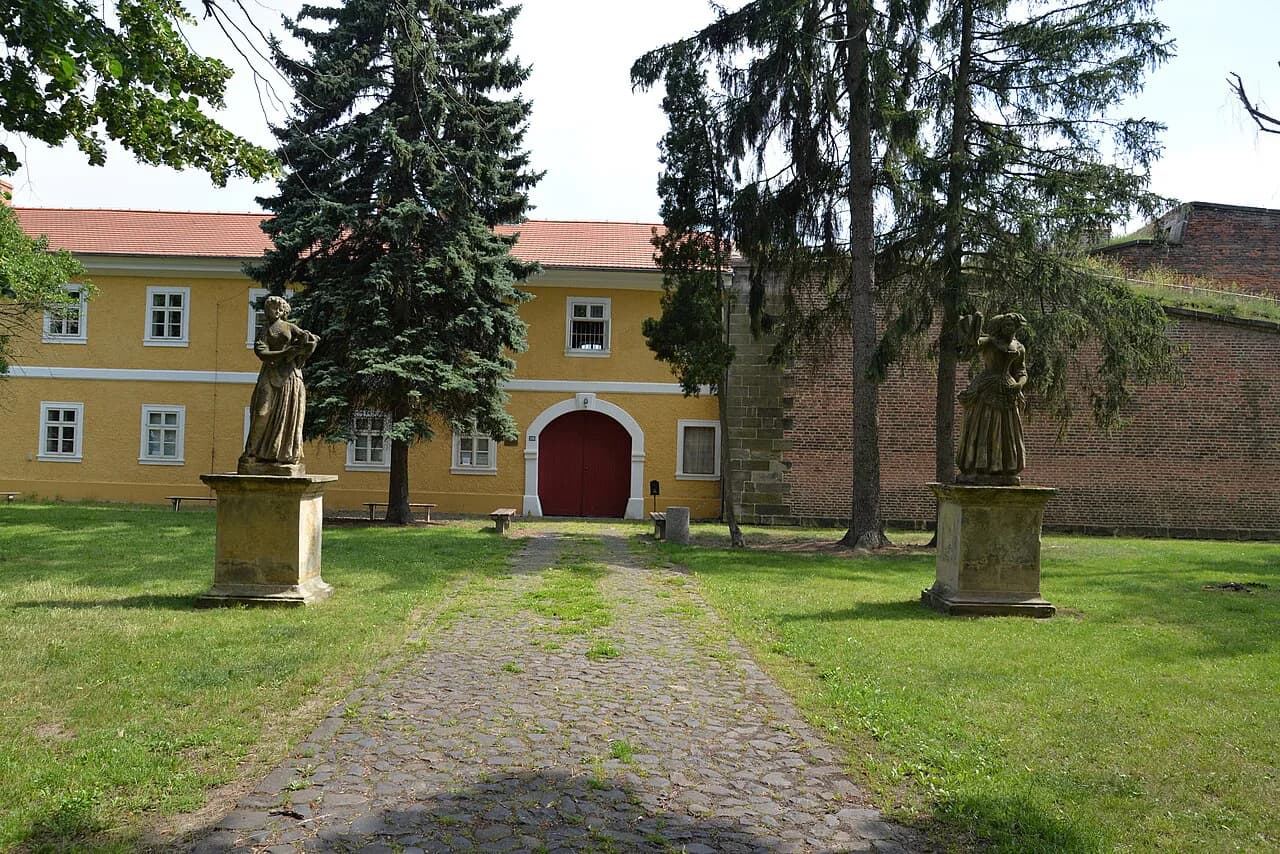
The walled garrison town is the larger of the two parts, laid out on a regular grid of streets and squares inside the fortification walls, and this is where the Theresienstadt ghetto was established. The Small Fortress is a separate citadel within the same fortress system, and Wikipedia's description of Terezín as a citadel plus an adjacent walled garrison town captures exactly this split. A visit therefore covers two physically distinct places, and a route that treats them as one stop will be rushed.
The Small Fortress stands apart from the garrison town, so plan the order of your day around which side you want to take slowly, because the historical material in the town and the bare fortification of the citadel make very different demands on attention. Comfortable shoes matter more than any other preparation, since the distances inside the walls add up.
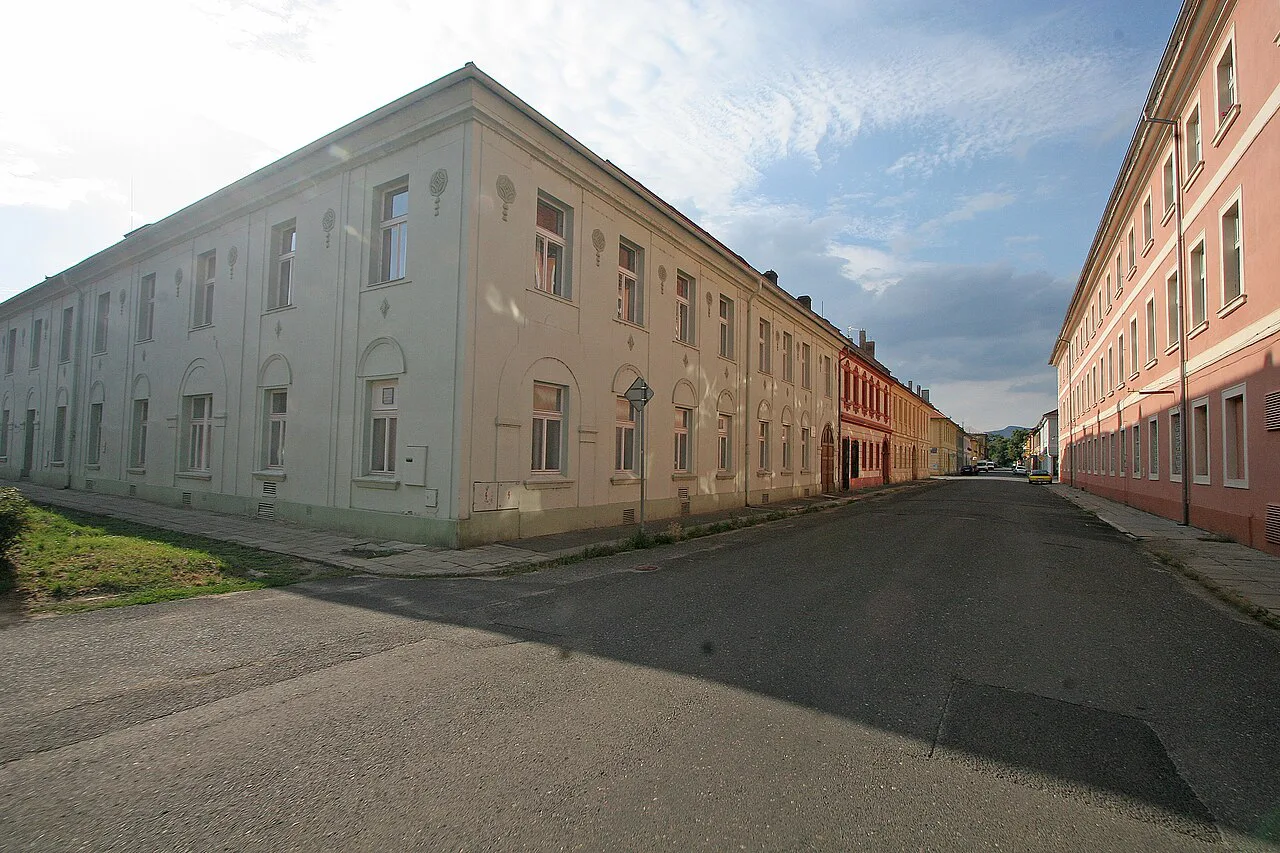
Getting there from Prague
Terezín lies roughly 30 miles north of Prague, in the direction of Litoměřice, and is reached by train, bus or car from the capital. Rail and bus connections run to the area, and the town is close enough to the D8 motorway corridor that a car puts it within a straightforward drive. Timetables and fares change, so confirm departure points and journey times with the national rail operator or the bus provider before setting out. Bohemian Switzerland National Park, near Děčín on the German border, is a separate long day trip from Prague.
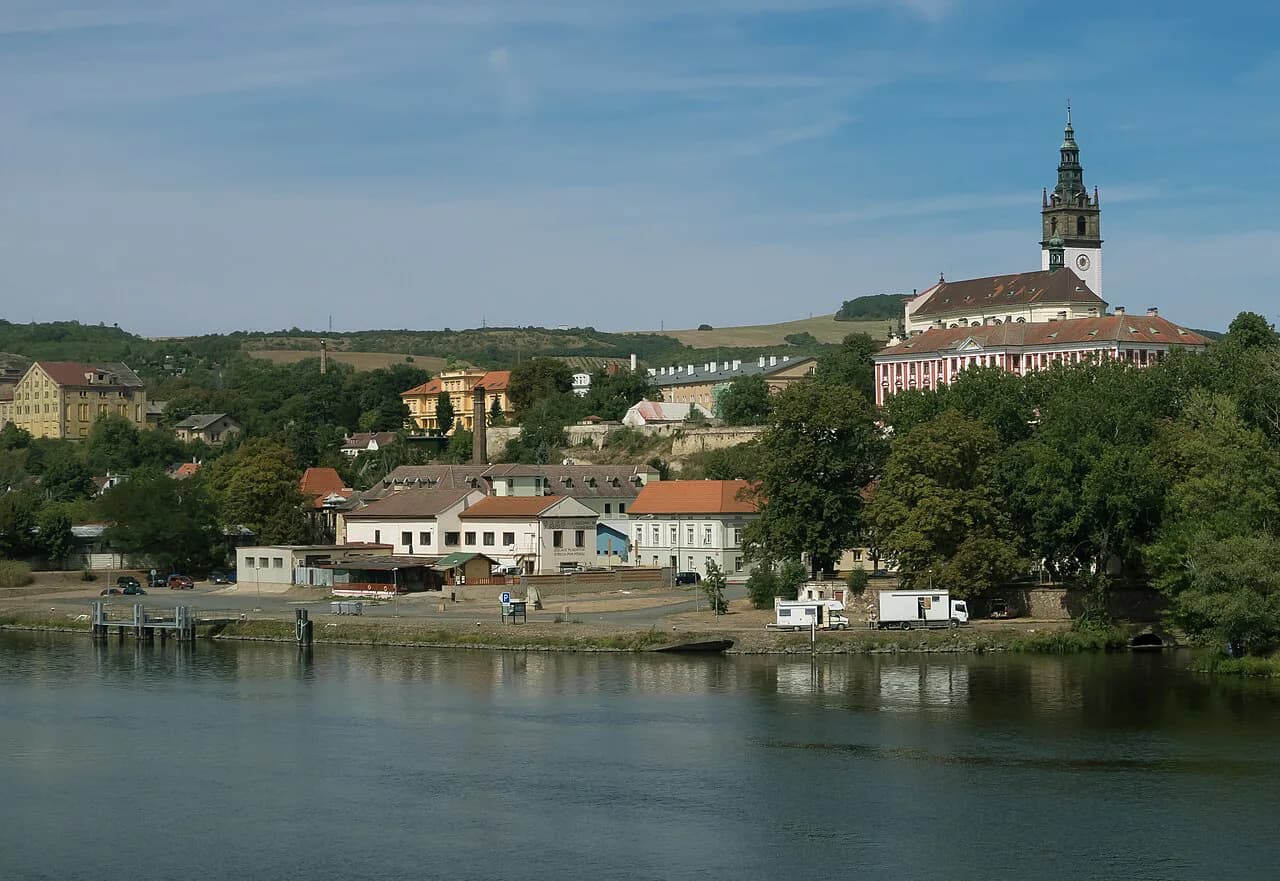
Because Terezín sits in the same northern Bohemian corridor as Litoměřice, the two are naturally combined on a single day out by car or by rail. Litoměřice is a historic town with its own square and sights, so pairing it with Terezín gives the day some breathing room after the memorial. If you go by public transport, check the return connections before you commit to a late afternoon.
The Theresienstadt ghetto: who was imprisoned and how many
By 1940 the Gestapo had been assigned to convert Terezín into a Jewish ghetto and concentration camp, and it held primarily Jews from Czechoslovakia along with tens of thousands deported from Germany and Austria and hundreds from the Netherlands and Denmark. More than 150,000 Jews were sent there, including 15,000 children, and were held for months or years before rail transports took them to Treblinka and Auschwitz in occupied Poland and to smaller camps elsewhere. Fewer than 150 of the children survived.
Terezín was not an extermination camp, but about 33,000 people died in the ghetto, mostly from the extreme overcrowding, malnutrition and disease that the conditions produced. About 88,000 inhabitants were deported onward to Auschwitz and other extermination camps, and at the end of the war there were 17,247 survivors of Terezín, including people who had survived the death camps. Those numbers are the essential distinction to carry through a visit: the ghetto killed through deprivation, and the transports sent people to be murdered elsewhere.
The June 1944 Red Cross visit and the propaganda film
In late 1943 King Christian X of Denmark demanded an inspection to establish the condition of 466 Danish Jews sent to Terezín that October, and the review panel was to include two Swiss delegates of the International Red Cross and two representatives of the Danish government. The Nazis prepared for weeks: the area was cleaned, many prisoners were deported to Auschwitz to reduce visible overcrowding, and fake shops and cafés were built. The inspection took place on June 23, 1944, with Adolf Eichmann hosting the four officials.
The Danish Jews the Red Cross saw lived in freshly painted rooms with no more than three to a room, and the delegation was conducted along a predetermined route where prisoners had been instructed how to answer and were ignored if questioned directly. The account attributes to the United States Holocaust Memorial Museum a description of the resulting Red Cross report as bland, indicating that the representatives were taken in by the elaborate fiction. The episode shows how deliberately the ghetto was staged for outside eyes.
After the visit the Nazis made a propaganda film at Terezín, directed by the Jewish prisoner Kurt Gerron, an experienced director and actor, with shooting beginning on September 1, 1944 and lasting eleven days. When it was finished most of the cast and the director were deported to Auschwitz, and Gerron was murdered in the gas chamber on October 28, 1944. The film is often called The Führer Gives a Village to the Jews, though its actual title is Theresienstadt. Ein Dokumentarfilm aus dem jüdischen Siedlungsgebiet.
Culture forced on prisoners and used as cover
Terezín's prisoners included scholars, philosophers, scientists, visual artists and musicians, some of international renown, and many contributed to the camp's cultural life. The Nazis kept a tight rein on how the outside world perceived activity inside the ghetto and publicized that cultural life to mislead the Western Allies. That double purpose is what makes the music and art of Terezín such a difficult subject: it was real, and it was also staged as evidence of supposedly humane conditions.
The Czech composer Rafael Schächter was among those held at Terezín, and in 1943 he conducted a chorus of 150 Jews in sixteen performances of Verdi's Requiem, learned by rote from a single vocal score and accompanied by a legless upright piano, before audiences of prisoners, SS officers and German army staff. As part of the Red Cross charade Schächter was compelled to perform the Requiem again. He was deported to Auschwitz on October 16, 1944, and died there the following day.
The Small Fortress citadel
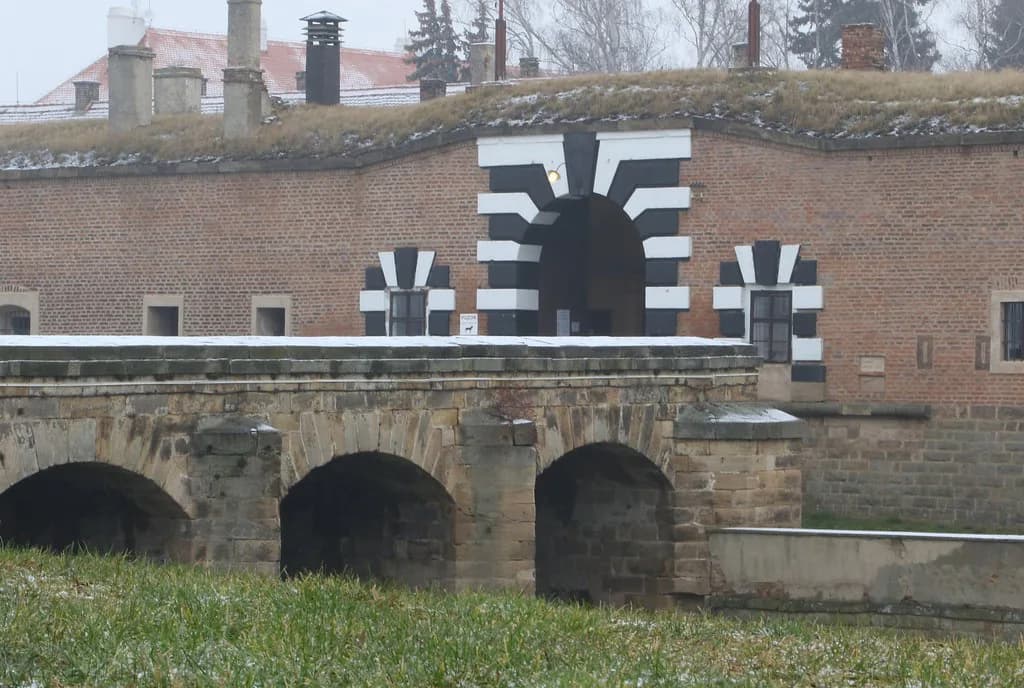
The Small Fortress is the citadel that sits beside the garrison town, a compact, walled military enclosure separate from the town inside the fortification walls. Seeing it after the town makes clear how much of Terezín's story is architecture: ramparts, gates, barracks and courtyards built for a Habsburg army and then used again in wartime. Give it its own time slot rather than folding it into a walk through the town.
Planning a stop at the town's historical sites
The historical sites in the town come under the Terezín Memorial, the institution that preserves and documents the ghetto and its history. Practical details such as which buildings and exhibitions are open, admission prices, opening hours and tour arrangements are published by the memorial itself, so go by its current published information rather than by assumptions.
Plan on half a day at minimum for a serious visit, and a full day if you want to read the exhibitions and still walk the Small Fortress without hurrying. The material is dense and emotionally heavy, and the two parts of the site sit apart from each other, which adds walking time. Guided visits can give structure and interpretation, but their formats and languages are set by whoever runs them, so confirm the details with the memorial or the operator you book with.
Approach the site as a place of documentation rather than a sight, and the shape of the day becomes straightforward: exhibitions and commemorative ground in the town, then the citadel if you have the energy. A short break between the two parts is worth building in, because the subject matter accumulates. Bring water and plan your return transport before the afternoon, since the site sits outside Prague and the day is easier when the return leg is already settled.
Checking opening, tickets and guided visits
Opening days, admission structure, seasonal closures and guided-tour options are set by the site itself and change through the year, so confirm them with the institution that runs the historical sites before traveling. Guided tours are one way to get interpretation, and any language options are stated by the site or by the operator you book with. Do not assume a walk-up English tour at a fixed hour.
If you are building a longer northern Bohemia route, Terezín combines logically with Litoměřice and with the wider region toward the České středohoří. Other Czech sites of memory, including Lidice, can be visited on separate days from Prague. Plan the Terezín day on its own terms rather than squeezing it between two other stops.
Background reading on the ghetto
Two sources are worth reading before a visit: the historical account of how the ghetto was established and run, and the United States Holocaust Memorial Museum's encyclopedia entry on Theresienstadt, which sets the ghetto in the wider context of the Holocaust. The account of the Red Cross inspection and the propaganda film is documented in detail, and knowing it in advance makes the physical site far easier to read.
If your Czech itinerary continues south, the memorial culture of Brno and the regional town of Jihlava are covered in their own guides and make useful context for how Czech towns present difficult history. Read the material before you arrive, then let the site itself set the pace.
Should Terezín be part of your Czech itinerary?
Terezín belongs on an itinerary for anyone who wants to understand the Holocaust in the Czech lands, and it asks for a day rather than an afternoon. The town and the Small Fortress are two stops, the exhibitions are demanding, and the experience rewards preparation over efficiency. Go with the history read in advance and the memorial's own arrangements confirmed.
If you are traveling between Prague and points north, the natural pairing is Litoměřice for the rest of the day, which gives the visit a calm close. What you should not do is treat Terezín as a quick photo stop between other sights; the site does not work that way.
Explore more Terezín guides
Frequently Asked Questions
Is Terezín a concentration camp or a ghetto?
It was both. The Gestapo turned the fortress town into a Jewish ghetto and concentration camp in 1940, and the historical record documents the ghetto and its prisoners. It was not an extermination camp, but around 33,000 people died there from overcrowding, malnutrition and disease, while about 88,000 were deported onward to Auschwitz and other extermination camps.
Was Terezín an extermination camp?
No. Terezín functioned as a ghetto and camp where people were imprisoned, and large numbers died from the conditions there. The mass murder took place after deportation by rail to extermination camps such as Auschwitz and Treblinka in occupied Poland.
Do you need a guided tour to visit Terezín?
A guided visit can give structure and interpretation, but tour formats and languages are set by whoever runs them, so confirm arrangements with the site or operator before you travel rather than assuming a walk-up English tour.
Sources
Notes for your Czech trip
Optional updates to our Czech town guides.
You might also like
Continue reading
More guides you'll find useful