Litoměřice: The Square, Cathedral Hill and the Elbe
Litoměřice rewards a half day: a huge old square, the cathedral on Dómský vrch and a 366-meter underground route. Here is how the town fits a North Bohemia trip.
On this page
Litoměřice makes a satisfying half day out of Prague, and the reason is concentration: a square laid out in the 13th century, a cathedral complex on Dómský vrch and a 366-meter underground route all sit within a short walk of each other. This guide covers the layout of the old center, the specific houses and churches to look for, the castle exhibition and how the town pairs with Terezín on the other side of the Ohře.
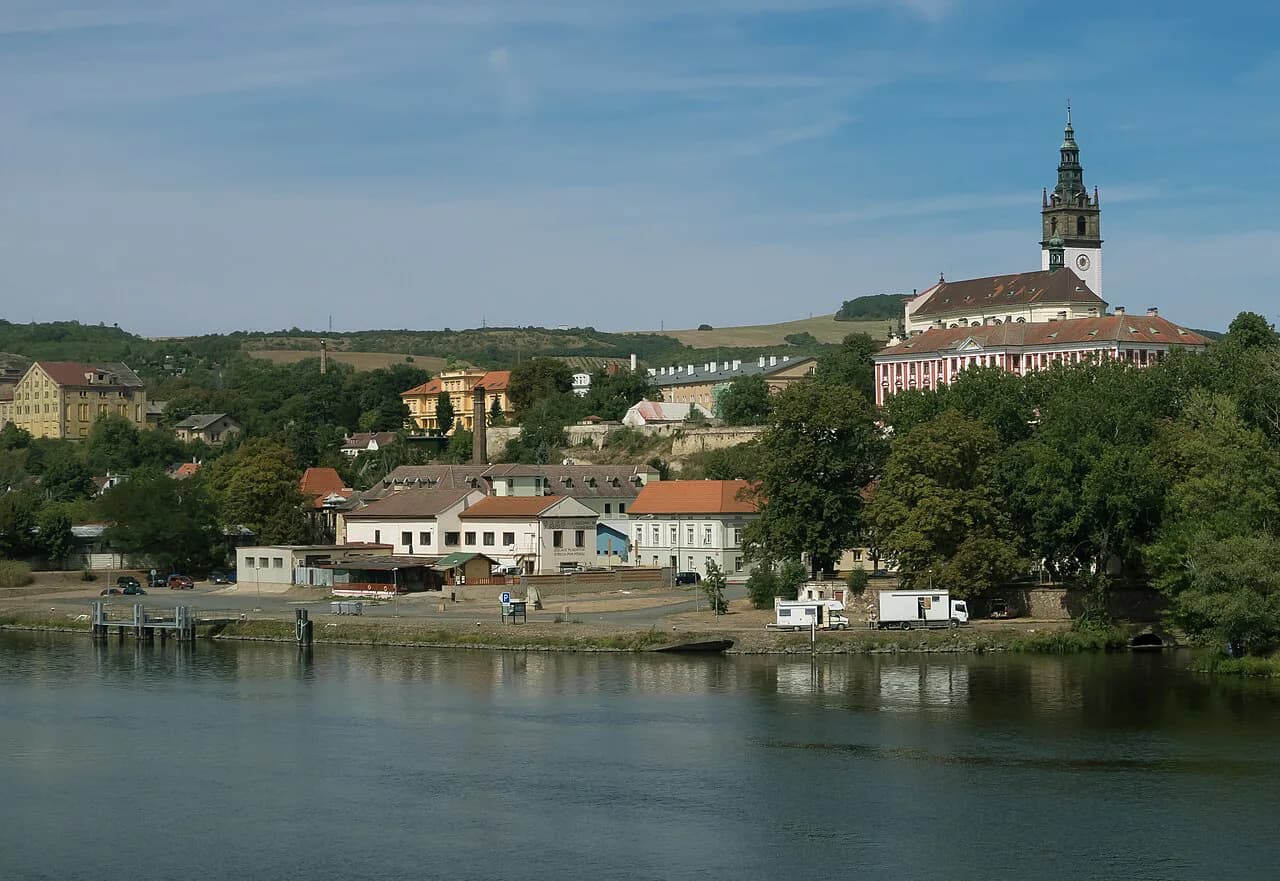
The town sits where the Ohře meets the Elbe, north of Prague in North Bohemia, and its medieval core is wrapped by well-preserved Gothic fortifications according to the national tourism board. Treat that compactness as the planning principle: you will spend your time looking, not moving between sights.
Where Litoměřice sits and why it matters
Litoměřice lies at the confluence of the Elbe and Ohře rivers, north of Prague, and the town's own history pages trace its rise from Slavic settlement to a royal town granted privileges in 1219, when one of the largest squares in Bohemia was laid out. It grew rich on Elbe trade, and its medieval importance is why the historic core is so dense with Gothic, Renaissance and Baroque buildings rather than a single monument.
For a traveler it is a town of ordinary streets with an unusually large civic heart, not a walled exhibit. The VisitCzechia entry calls it one of the most beautiful royal towns in the country and singles out the extent of the historic center, which runs to dozens of streets and squares.
How the town is laid out
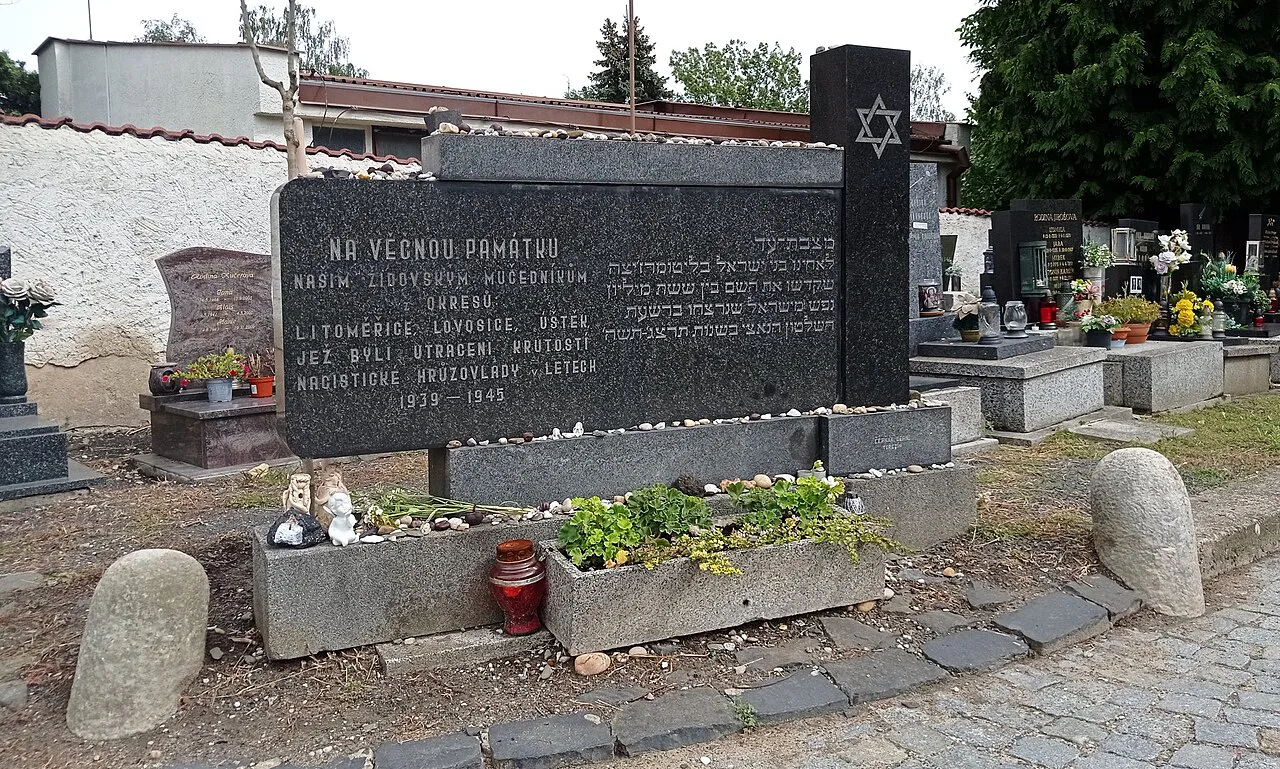
Orient yourself on Mírové náměstí, the main square, and treat everything else as spokes off it. The Town Hall faces you there, the Kalich House and the Černý orel House stand among the burgher houses, and the streets north and west lead into the older lanes.
Dómský vrch is the second anchor, a hill above the center whose summit is Dómské náměstí, a close grouping of the Cathedral of St. Stephen, a bell tower, the chapter consistory and the bishop's residence. The practical consequence is that the town's headline sights stack vertically: square first, then climb.
To make sense of what you are looking at, know the broad chronology: the town was formally founded as a royal town in 1219, was punished for joining the Bohemian Estate Revolt in the 16th century, and was devastated in the Thirty Years' War, after which only 93 of roughly 600 houses were inhabited. The bishopric was founded in 1655, which is why so much of the hilltop complex reads Baroque.
Mírové náměstí and its houses
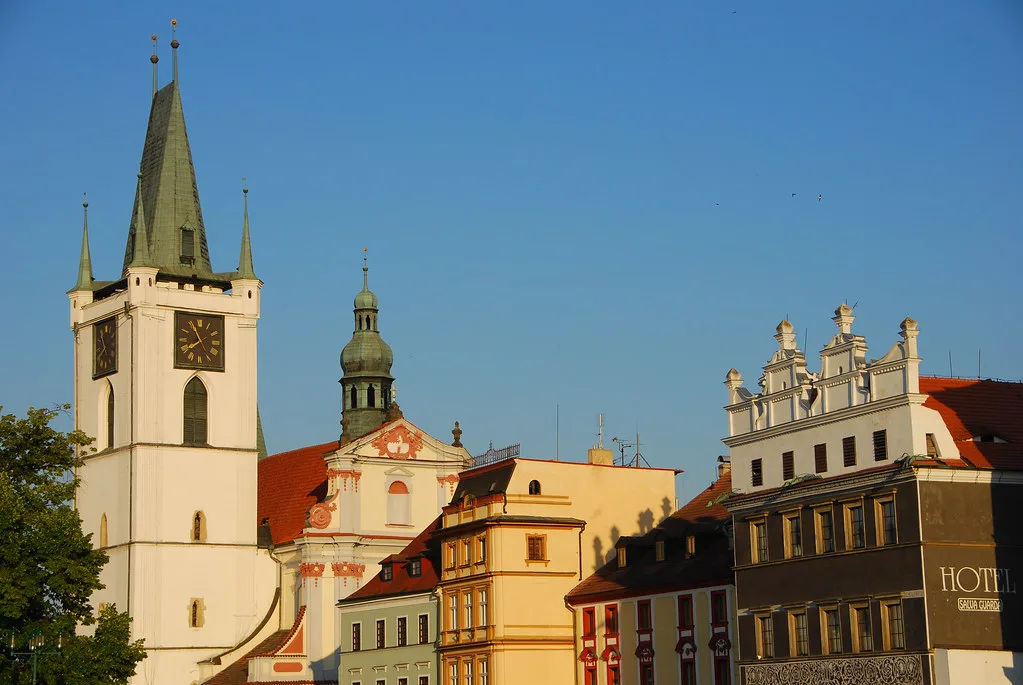
The Town Hall is the square's showpiece, built in the Saxon Renaissance style, and the houses around it carry the names locals use: the Kalich House, also called Pod Bání, with a roof terrace where wealthy townspeople gathered, and the Černý orel House, which keeps its original appearance and sgraffito work. Walk the perimeter rather than cutting across the middle, because the facades are the sight.
Later Italian architects rebuilt parts of the town in Renaissance style, and the sources name the House at the Black Eagle and the Chalice House, whose roof carries a chalice-shaped tower as a reminder that its owner was the mayor of the vineyards. The chalice is a good example of how Litoměřice wears its history in small details rather than in one grand gesture.
Dómský vrch: the cathedral and the bishop's residence
The Cathedral of St. Stephen is the centerpiece of Dómský vrch, built by Domenico Orsi, who was brought in from Prague. It sits with the bell tower, the chapter consistory and the bishop's residence on and around Dómské náměstí, so you can see the whole ecclesiastical quarter in one loop without leaving the hilltop.
The bishop's residence, seat of the bishopric since 1655, has an 18th-century library on the ground floor and a throne hall with ceiling paintings on the first floor. From there it is a short walk to the Church of John the Baptist, which stands in a former cemetery enclosed by a high wall, an easy addition to the same loop.
Karel Hynek Mácha, the Czech romantic poet, is part of this hill's story too. The house where he lived and died stands opposite the chapel near Dómské náměstí, which gives you a small literary marker to look for between the church buildings.
Other churches worth the walk
Beyond the cathedral, two churches justify a detour: the Gothic Church of All Saints, notable for its Renaissance broach roofs, and the Church of the Annunciation of the Lady Mary, described as the peak of work by the Italian architect Antonio Octavio Broggio. Put them on the same circuit as the square rather than treating them as separate outings.
The town's religious landscape also reflects its medieval orders: Franciscans and Dominicans established houses here, along with the Knights of the Cross with the Red Star. That density of institutions explains why a town of this size carries so many churches within a few minutes' walk.
The historical underground
Litoměřice's underground is among the most extensive corridor systems in the Czech Republic, and the visitor route runs 366 meters through it, including the lapidary of the Regional Homeland Museum. That length is the argument for going: it is a real network of passages, not a single cellar.
The cellars began as storage: the town held a staple privilege that forced barges on the Elbe to unload goods and offer them locally before moving on, and the caverns were used to hold that cargo. Knowing this makes the corridors read as infrastructure rather than as a curiosity. The Town Hall Cellar occupies an original Gothic cellar if you want to see the same building tradition over a meal, and the tourist office can confirm the current underground entry arrangements.
The castle and the wine exhibition
The medieval castle houses an exhibition of Czech viniculture with a tasting of traditional Czech varieties. Go for the setting as much as the wine: the castle gives the exhibition a purpose beyond empty rooms, and the town's history pages note that a new castle was built on the same spot during the reign of Wenceslas IV.
Wine is the regional backdrop here without being the reason to come. The vineyards on the slopes of Radobýl were granted by Charles IV on condition that a tenth of the wine went to the king, and the wine of nearby Velké Žernoseky is what the tourism board points visitors toward.
How long Litoměřice needs and the order to walk it
Allow about half a day for the center, the hill and the underground, and build the walk in that order: Mírové náměstí first, then the lanes and churches, then Dómský vrch, then the underground as a finish. Doing the hill before the underground keeps the climb out of the middle of your day and puts the cool corridors at the end.
The honest trade-off is that the headline sights cluster on and below one hill, so the count of stops matters less than the sequence. If your time is short, the square and Dómský vrch carry the town; the castle exhibition and the smaller churches are what you add when you have the afternoon.
Getting there and pairing it with Terezín
Litoměřice sits north of Prague in North Bohemia, and the VisitCzechia listing gives the tourist office address as Mírové náměstí 8a/16 with a local phone contact, useful if you want to confirm the day's arrangements before setting out. Travelers coming by rail or bus should check current connections and journey times with the national timetables, since services change by season.
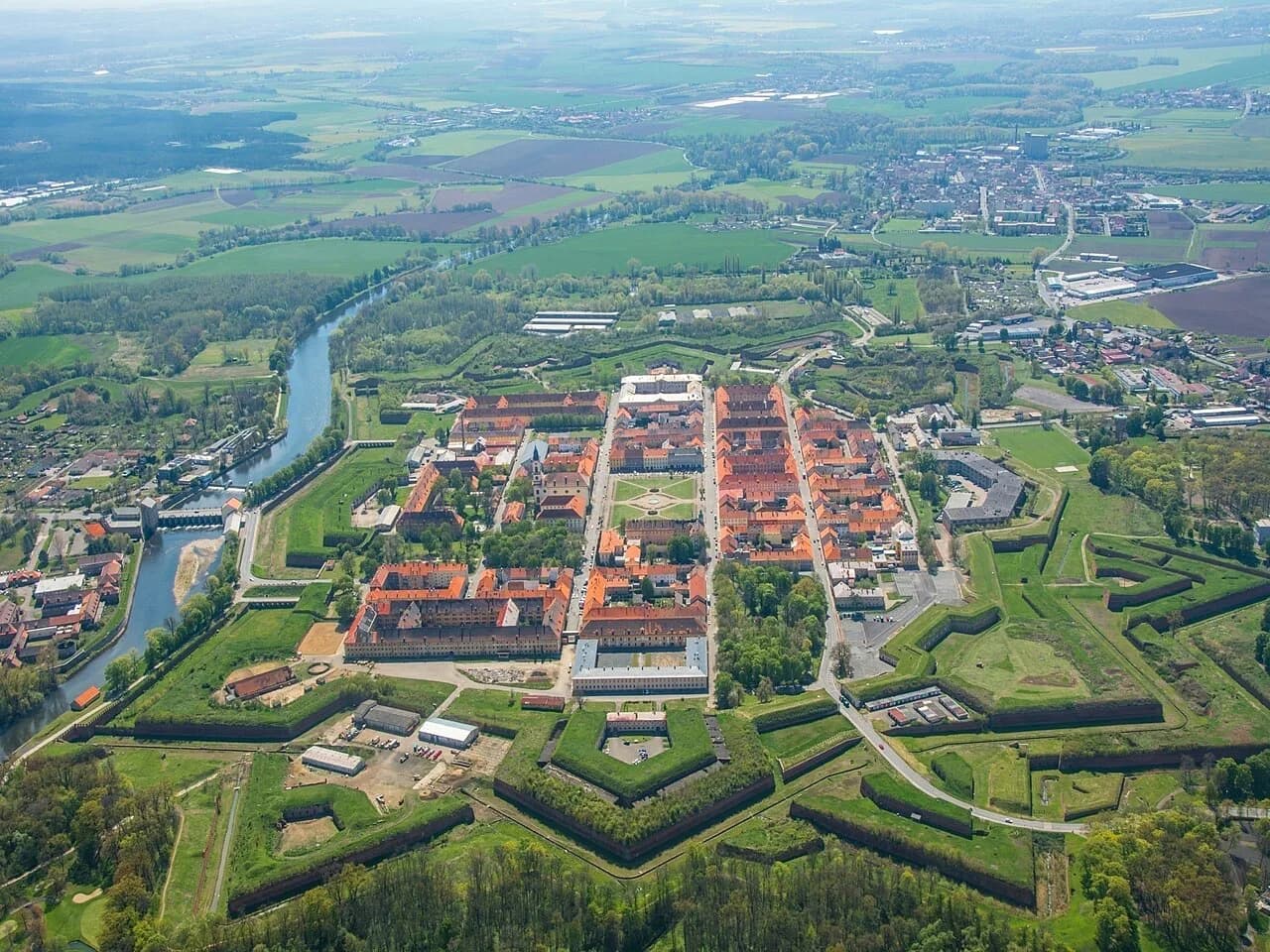
Terezín lies just across the Ohře, which makes the two a natural pair on one day out of Prague: Litoměřice in the morning, then the fortress town in the afternoon, or the reverse. The two are different in mood, and that contrast is the point of combining them. See our guide to Terezín: Visiting the Fortress Town and the Theresienstadt Ghetto for the fortress side of the day.
If the memorial is the reason for the trip, plan the fortress town with the same care as the town square. The Terezín Memorial and its Small Fortress sites are separate from Litoměřice's own sights and carry their own visiting arrangements, which the linked guide sets out.
Where it fits on a North Bohemia route
On a North Bohemia loop, Litoměřice works as the cultured counterweight to Terezín rather than a stop in its own right on the way to somewhere else. Base yourself for a day in the region and give the town its half day, then use the rest of the day for the fortress town across the river, which is covered in Terezín: Visiting the Fortress Town and the Theresienstadt Ghetto.
The town is also a river town: the Elbe shaped its trade and its staple privilege, and the surrounding valley is what made the site attractive long before the royal charter. Read the landscape on the way in and the buildings make more sense when you arrive.
Litoměřice in a morning or an afternoon?
Choose Litoměřice for a morning if you want the square and cathedral hill before the day heats up, or an afternoon if you are pairing it with Terezín and prefer to end among the corridors of the underground. Either way, the walk is short and the sequence is what makes it work.
The tourist office can confirm current arrangements for the underground, the castle exhibition and the bishop's residence before you commit your day. Everything else — the square, the houses, the churches, the hill — is available simply by walking. For the fortress town across the river, start with Terezín: Visiting the Fortress Town and the Theresienstadt Ghetto.
Explore more Terezín guides
Frequently Asked Questions
Where is Litoměřice located?
Litoměřice sits at the confluence of the Elbe and Ohře rivers in North Bohemia, north of Prague. Terezín lies just across the Ohře, which is why the two are often visited on the same day.
How long does the Litoměřice underground route take to walk?
The visitor route through the historical underground runs 366 meters and includes the lapidary of the Regional Homeland Museum. The sources give the route length but no timing, so plan it as a finish to your walk rather than a quick stop, and have the tourist office confirm current entry arrangements before you go.
Is the Litoměřice castle a separate sight from the square?
Yes. The medieval castle stands in the town and houses an exhibition of Czech viniculture with a tasting of traditional Czech varieties, so it is a stop of its own rather than part of the square. Ask the tourist office about the castle's current visiting arrangements.
Sources
Notes for your Czech trip
Optional updates to our Czech town guides.
You might also like
Continue reading
More guides you'll find useful