Terezín Fortress: The Habsburg Star Fortress and Its Two Halves
Terezín fortress is an 18th-century Habsburg military town at the Elbe and Ohře. See how the Main Fortress and Small Fortress differ and what each visit involves.
On this page
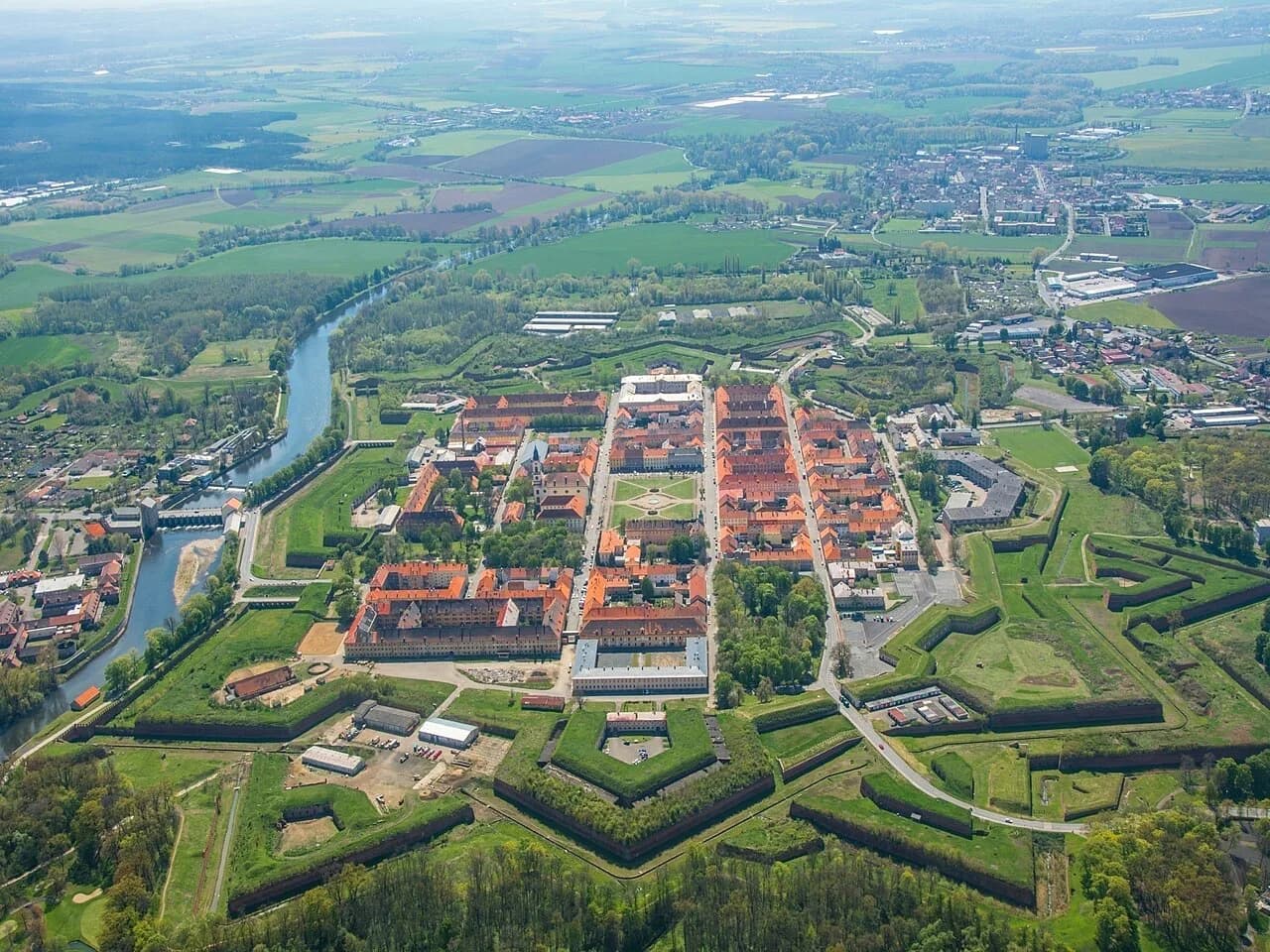
Terezín fortress is an 18th-century Habsburg fortified town at the confluence of the Elbe and Ohře, and you visit it as two separate halves: the walled town core with the Terezín Memorial's town-side sites, and the Small Fortress, a walled compound on the edge of town. The two are distinct sites with separate routes, and the trip makes sense once you know which one you are heading for. This guide covers the military design behind the star-shaped walls, the stops on the Small Fortress route, the memorial sites in the town, and how the pieces fit into a visit.
Plan on two stops rather than one. The Small Fortress tour alone runs about 90 minutes, and the Main Fortress adds the Ghetto Museum and Magdeburg Barracks on top of that. Arriving without that split in mind is the most common way to run out of time.
Why the fortress exists: walls, bastions and a planned town
Terezín belongs to the family of Habsburg fortress towns built as a single military design, with ramparts, bastions and a street grid laid out together. The fortifications form a circuit of roughly 20 kilometers around the complex, which is why the place reads as a landscape rather than a building.
For a visitor, the practical consequence is scale. You are not walking into one gate and out again after an hour; the town and its walls spread across flat ground between two rivers. Comfortable shoes and a look at a map before you set off matter more here than at a castle on a hill.
The Main Fortress: the walled town itself
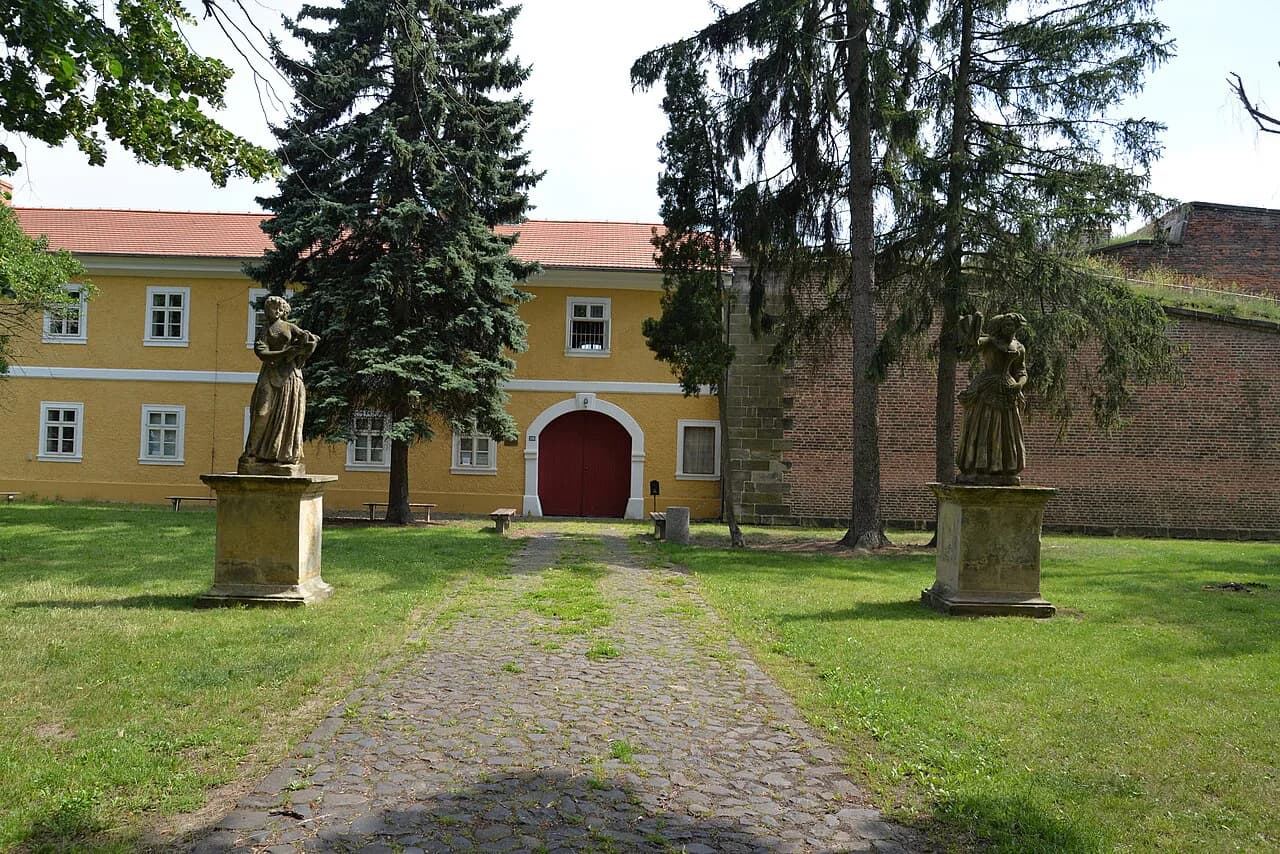
The Main Fortress is the planned town inside the walls, with its regular squares and grid of streets, and it is where the Terezín Memorial's town-side sites sit. The Ghetto Museum and the Magdeburg Barracks are the two principal stops, and they document the Theresienstadt Ghetto that the Nazis imposed on this military town.
Treat the town as a place to walk slowly between exhibitions rather than a set of photo stops. The grid is compact and the barracks and museum are close enough to combine, but the material inside is dense and rewards unhurried reading. If you are working out how the ghetto period fits the fortress's longer story, the background on Terezín history is the place to start before you arrive.
The memorial also maintains research databases that record individuals rather than buildings, including Czech Jews deported to camps other than the ghetto. For visitors with family connections, these records are often the reason for the trip, and they are searchable online before you travel.
The Small Fortress: a Gestapo police prison
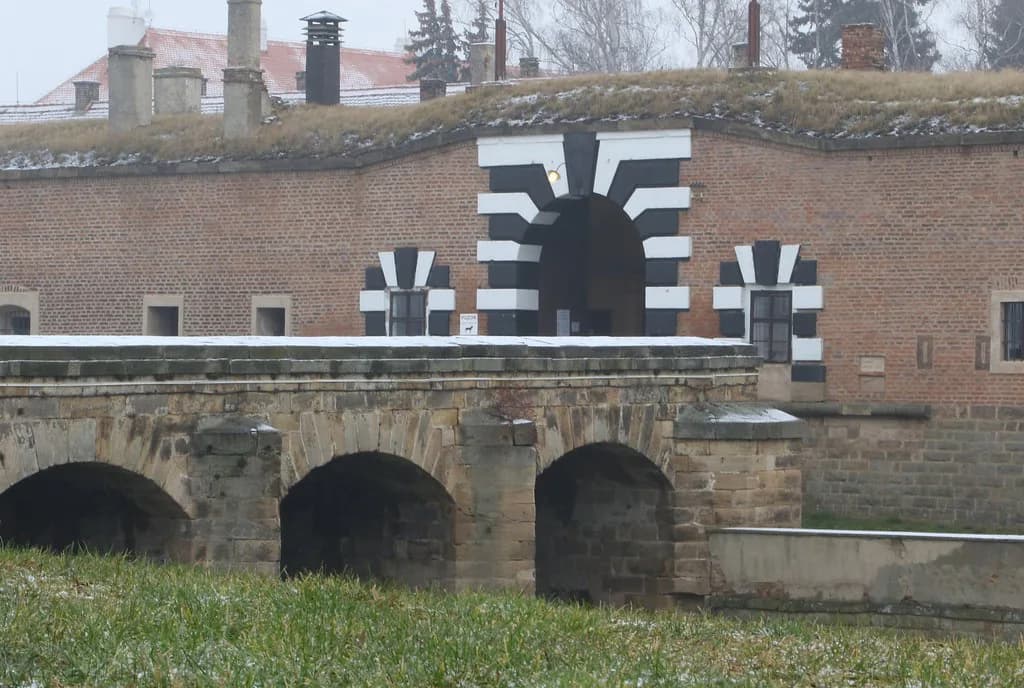
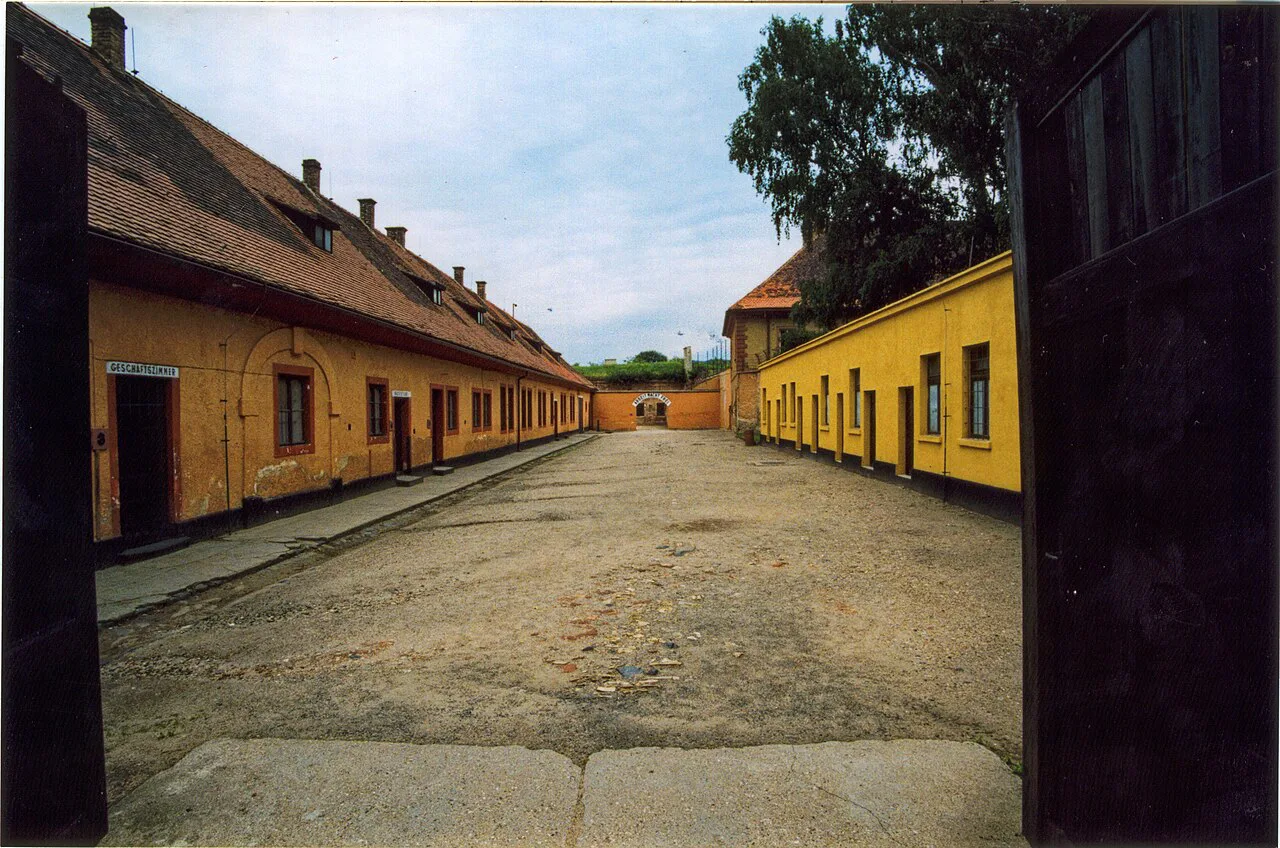
The Small Fortress served as a prison of the Prague Gestapo for opponents of the Nazi regime between 1940 and 1945. It is not the ghetto and it is not a concentration camp; the memorial describes it as a police prison, and the distinction shapes what you see there.
The sightseeing route passes the guards' offices and prison cells with part of their original fittings, then the showers, the sick room, the hospital and the execution place. Each stop is a room in a working prison rather than a reconstructed display, which is what makes the route unsettling. The whole circuit takes roughly 90 minutes.
The Small Fortress is where most first-time visitors should begin, because its route gives the fortification a human scale before you walk the town's tidy squares. Book Terezín tours in advance if you want a guided walk through the prison rather than following the marked route on your own.
The 500-meter corridor and the Small Fortress exhibitions
Part of the route is a 500-meter corridor in the former fortification, presented as an exposition of the fort's military architecture. The corridor was not used during the Second World War, so it reads as a piece of Habsburg engineering rather than a site of suffering, and that contrast is deliberate.
The permanent exhibition The Small Fortress 1940–1945 occupies the ground floor of the museum and traces the political prison and the fates of Czech prisoners transferred onward to other camps in the Nazi Reich. A separate gallery on the first floor holds the memorial's art exhibition, Art against fascism and war.
A short documentary on the fortress's history screens in the on-site cinema, starting at 9:00 and then every 30 minutes, in Czech with English subtitles. It is a useful way to fix the chronology before walking the route, though the exhibition labels carry the detail.
The National Cemetery and what the graves record
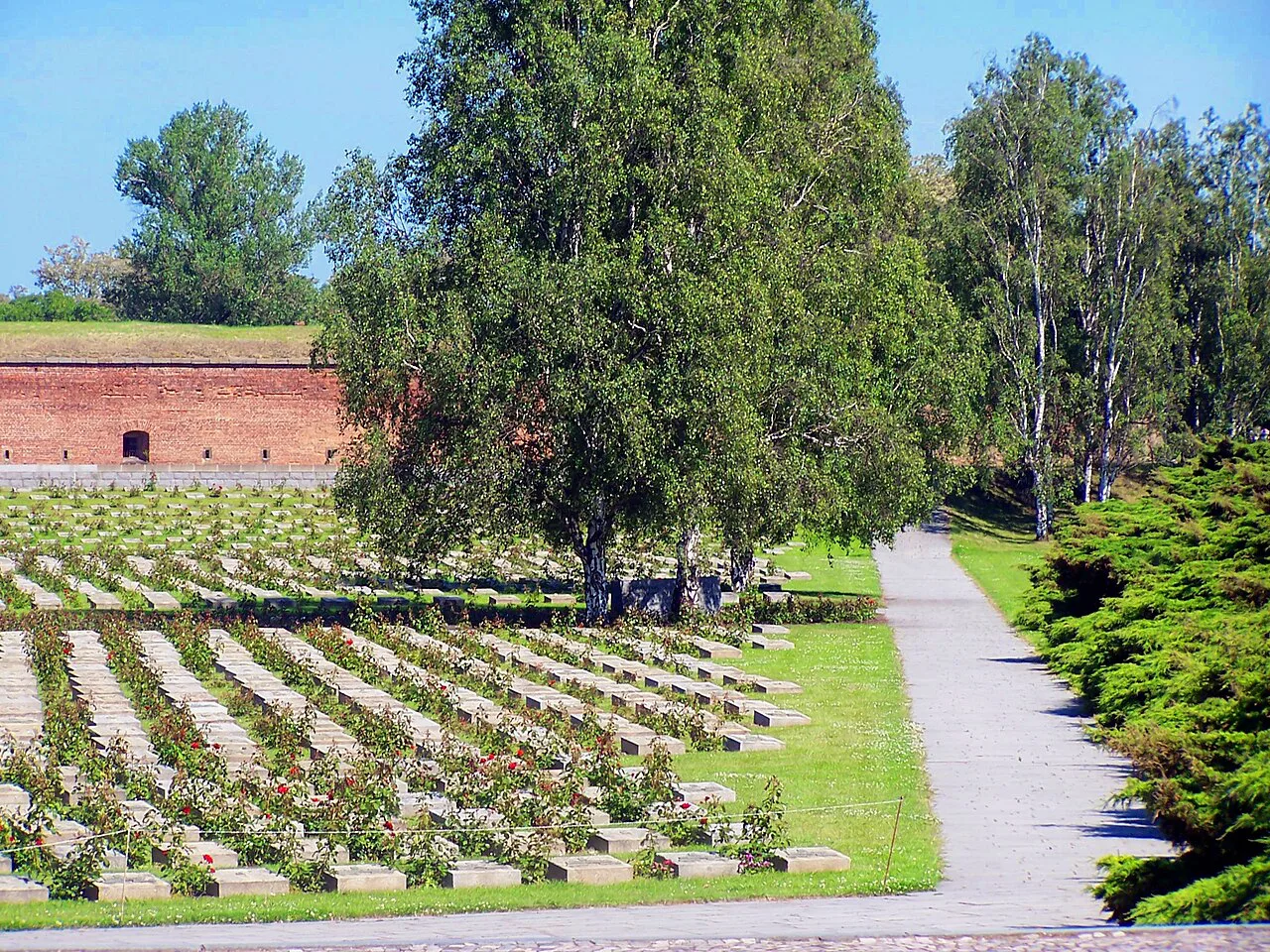
The National Cemetery holds 2,386 graves, but only about half are marked with names, because many remains recovered from mass graves after the war could not be identified. Some stones carry names only symbolically at the request of bereaved families.
The sections are not interchangeable. Section 1 began with victims exhumed from mass graves on the Small Fortress ramparts, Section 7 holds 789 graves of inmates from the Litoměřice concentration camp, and Section 8 contains 886 urn graves of ghetto inmates who died in early 1945 and during the typhus outbreak at the end of the war.
If you plan to visit the Litoměřice camp's memorial ground as well, the town of Litoměřice itself is a short onward stop with its own historic center and cathedral hill.
How long each part takes
The Small Fortress route is the one part of Terezín with a published duration: about 90 minutes, including the prison buildings and the fortification corridor. That figure covers the route, not the film or a slow read of the museum exhibitions.
The Main Fortress has no single circuit, so build your own time from the sites you want: the Ghetto Museum, the Magdeburg Barracks and the town streets between them. A half day for the Small Fortress and a half day for the town is a realistic split, and doing both in one afternoon shortchanges the second stop.
Getting there from Prague and what to expect on site
Terezín sits northwest of Prague at the Elbe and Ohře confluence, and the usual approach is by road or by train and bus to the nearby towns. Check current connections in the Czech rail and bus timetables for the day you travel, since services and transfer points change with the season.
On site, the Small Fortress opens daily, from 9:00 to 17:00 in summer time and 9:00 to 16:00 in winter time, according to the memorial. Parking for cars and buses is about 200 meters from the main gate, and the museum, cinema and toilets are step-free, while the sightseeing route itself has some barriers.
The site is large, exposed and mostly outdoors between buildings, and the subject matter is heavy. Build in a quiet pause between the Small Fortress and the town rather than going straight from the execution place to the Ghetto Museum.
What the fortress is not
Terezín is not a castle or a single monument you tour in an hour. It is a 20-kilometer circuit of walls containing a planned town, plus the separate Small Fortress compound within the fortification system, and the two halves are visited on separate routes.
It is also not primarily a military-history attraction, even though the bastions and corridor are genuine Habsburg engineering. The reason to come is the layered history of the twentieth century imposed on that military shell, and the four visitor guides in Terezín Attractions help you choose which part to see first.
Which half of Terezín should you book first?
Start with the Small Fortress if this is your first visit. Its 90-minute route through the guards' offices, cells, hospital and execution place gives the fortification a human scale, and the town's squares make more sense afterward.
Then cross to the Main Fortress for the Ghetto Museum and Magdeburg Barracks, allowing a separate block of time rather than squeezing them into the same afternoon. For the full picture of the town, the ghetto and the memorial sites, work through the Terezín Guide before you set the order.
Explore more Terezín guides
Frequently Asked Questions
How far is it from Prague to Terezín?
Terezín lies northwest of Prague at the confluence of the Elbe and Ohře, reached by road or by train and bus via the surrounding towns. Timetables for the day of travel are the reliable source for connections and journey length, so check them before setting out.
Do you need a guided tour at the Small Fortress?
No. The Small Fortress has a marked sightseeing route through the prison buildings and the fortification corridor that you can follow independently, and it takes about 90 minutes. Guided tours are available if you want commentary, and a short documentary with English subtitles screens in the on-site cinema.
Sources
Notes for your Czech trip
Optional updates to our Czech town guides.
You might also like
Continue reading
More guides you'll find useful