Becherovka: The Karlovy Vary Herbal Liqueur Explained
Becherovka is a bitter herbal liqueur from Karlovy Vary, made since 1807 from a secret recipe of about 20 herbs. Learn its history, flavor, and how to drink it.
On this page
Becherovka is a bitter herbal liqueur produced in Karlovy Vary (Carlsbad) from a secret recipe of approximately 20 herbs and spices, and it has been made continuously since 1807. That makes it the oldest alcohol brand in the Czech Republic, and it is the bottle most closely tied to the spa town. This guide covers what it tastes like, how the recipe and bottle took shape, where it is made today, and how Czechs actually drink it.
You will meet it in two forms: as a chilled shot, and as the BeTon, a simple mix of Becherovka and tonic water. Both are easy to order anywhere in the country, and neither demands any expertise. The details below come from the producer's own account of the brand and from published tasting notes.
What Becherovka Is
Becherovka is a spirit-based herbal liqueur, not a beer, wine or fruit brandy, and its defining characteristic is bitterness balanced against aromatic herbs. Tasting notes describe it as bitter without the aggressive punch of a fernet, with licorice present but milder than in Jägermeister. If you dislike anise-forward spirits, try a small measure before committing to a bottle.
The producer keeps the formula itself confidential, stating that the recipe is known to only two people in the company. What is public is the shape of it: a balanced mix of roughly 20 herbs and spices brought to Karlovy Vary from around the world. That secrecy is part of the brand's identity rather than a marketing accident.
If you are mapping the Czech drinks landscape, place Becherovka on the spirits side and keep it distinct from the country's beer culture, which runs on lagers such as Pilsner Urquell and the wider world of Czech beer. The two rarely share a glass, but they share a table: a Becherovka often closes a long Czech lunch that started with a pilsner.
The Flavor: Bitter, Herbal, Ice Cold
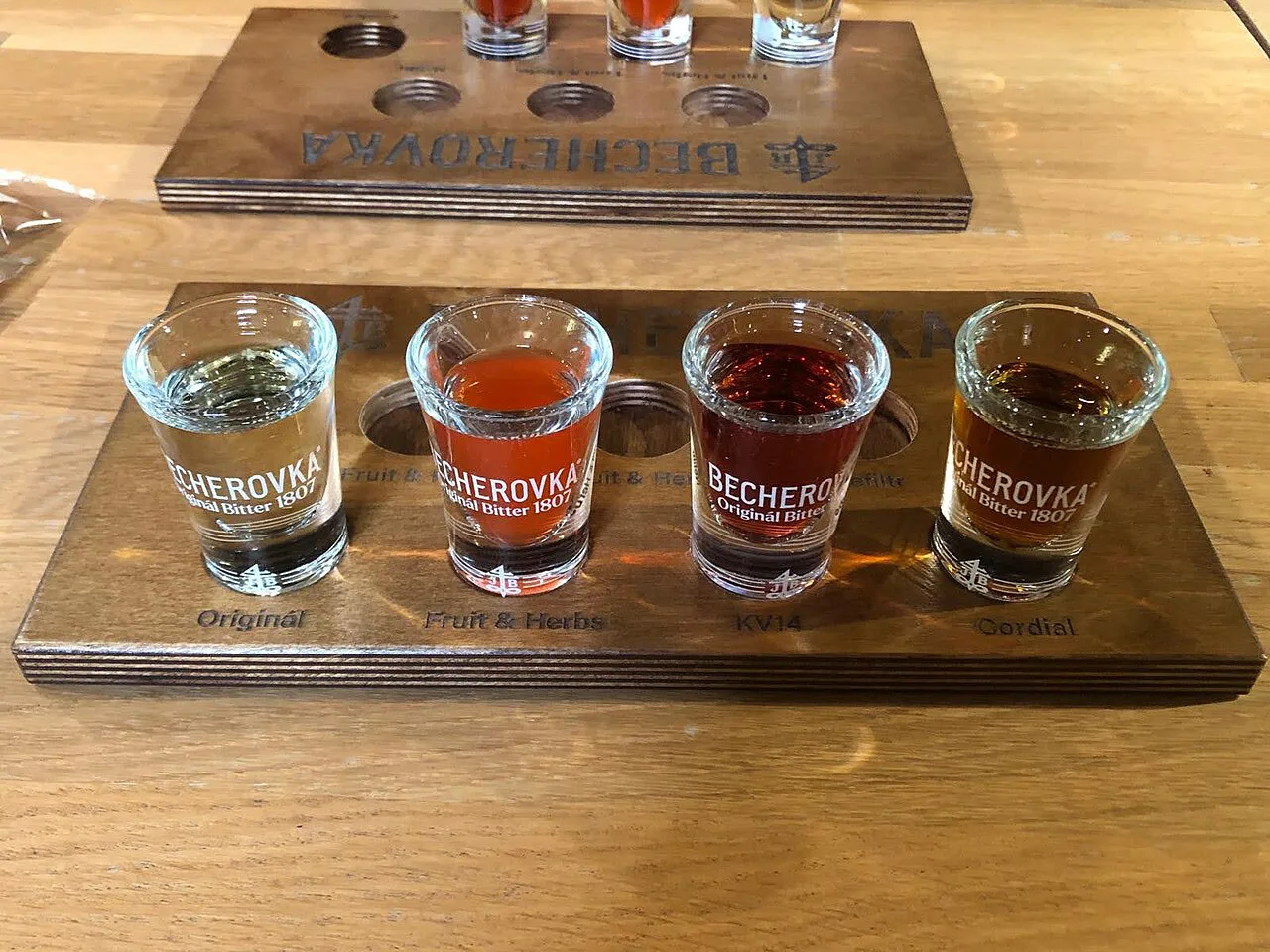
Serve Becherovka ice cold. The producer states plainly that Becherovka Original is best enjoyed chilled, and that is how you will receive it in most Czech pubs and restaurants. Warm, the herbal bitterness sharpens and the sweetness turns syrupy, so a room-temperature pour is a poor first impression.
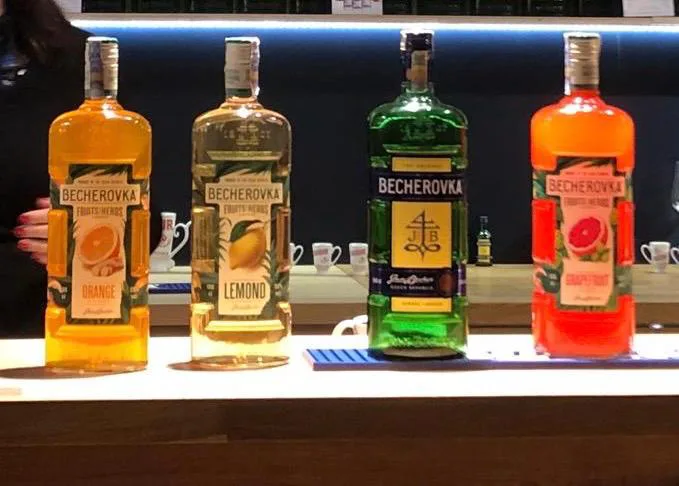
Expect a bitter herbal core with a licorice edge and a lingering warm finish; it sits closer to a digestif than to a sweet liqueur. The producer now also sells variants such as Lemond, which it recommends serving chilled, and an Unfiltered version it suggests serving on the rocks. Order the classic Original first and treat the others as variations on it.
The Recipe and Its Timeline: 1805 Versus 1807
The dates that matter are two years apart, and conflating them is the most common mistake. In 1805 the founder Josef Vitus Becher received a recipe written by Dr. Frobrig, and he then spent nearly two years adjusting and perfecting it before production began. So 1805 belongs to the recipe and 1807 to the start of continuous production.
The business passed to Johann Nepomuk Becher, known in Czech as Jan, who took over his father's colonial store and liqueur production and is treated as the true founder of the company after four decades of development. His signature appears on every bottle sold today. The name itself shifted over time, appearing as English Bitter, Karlsbader Bitter and Karlsbader Becherbitter among others before settling.
Imitation became common enough that in 1922 Becherovka and its German equivalent Becher Bitter were both registered as trademarks. Export had begun far earlier: first to Szczecin in 1834, then Vienna and Munich in 1835 and Paris in 1838. Those dates explain how a small Karlovy Vary liqueur ended up in bars well beyond Bohemia.
The Flat Green Bottle
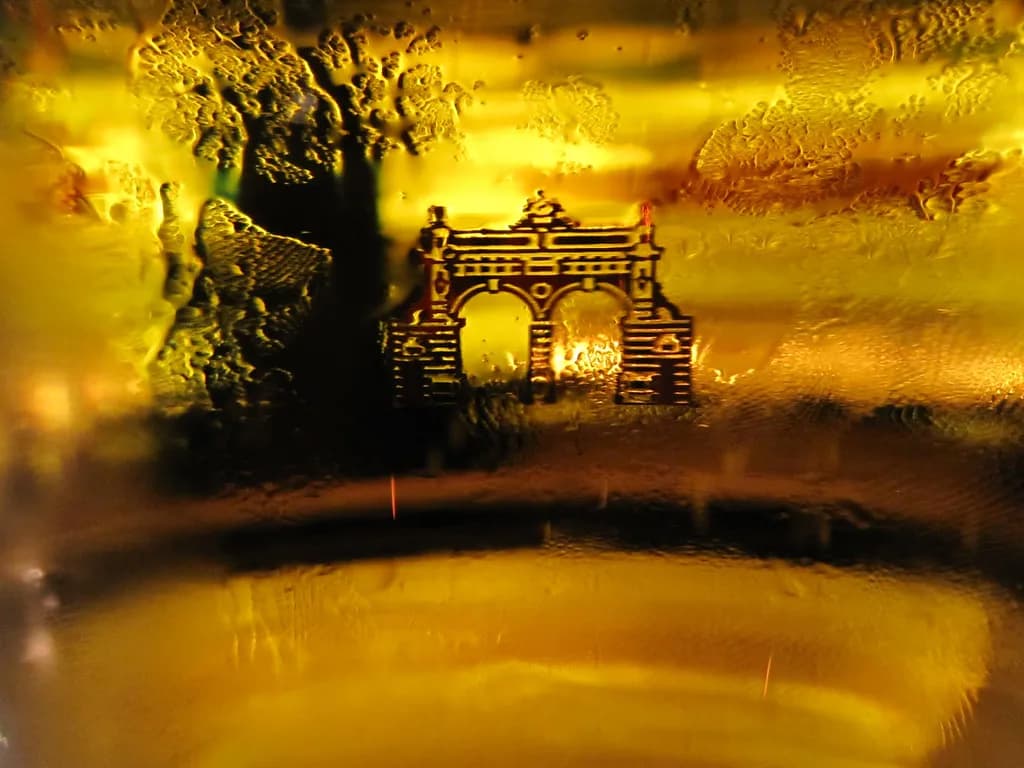
The distinctive flat bottle was the idea of Jan's brother-in-law Karel Laube in 1866, and the brand has kept the shape ever since. In 1907 the glass changed from flint to dark green, which is the color you still see on the shelf. A 2018 redesign added a cryptogram based on Becher's crest, a family symbol, without altering the silhouette.
International recognition arrived early: medals from world exhibitions included a Paris Grand Prix in 1900, and in 1907 Emperor Franz Josef granted the brand the title of chamber supplier. These are historical distinctions rather than tasting notes, but they explain the confidence of the labeling. None of it makes the liqueur sweeter; the bitterness is the point.
Where It Is Made Today: Bohatice and the Home of Becherovka
Production has moved twice in the brand's history. Jan Becher relocated the growing operation to the Steinberky factory in 1867, a site with a direct railway connection to other countries, and that historic building now houses the Home of Becherovka visitor center. The modern factory, by contrast, was built in the Bohatice district of Karlovy Vary in just under a year and dates from 2010.
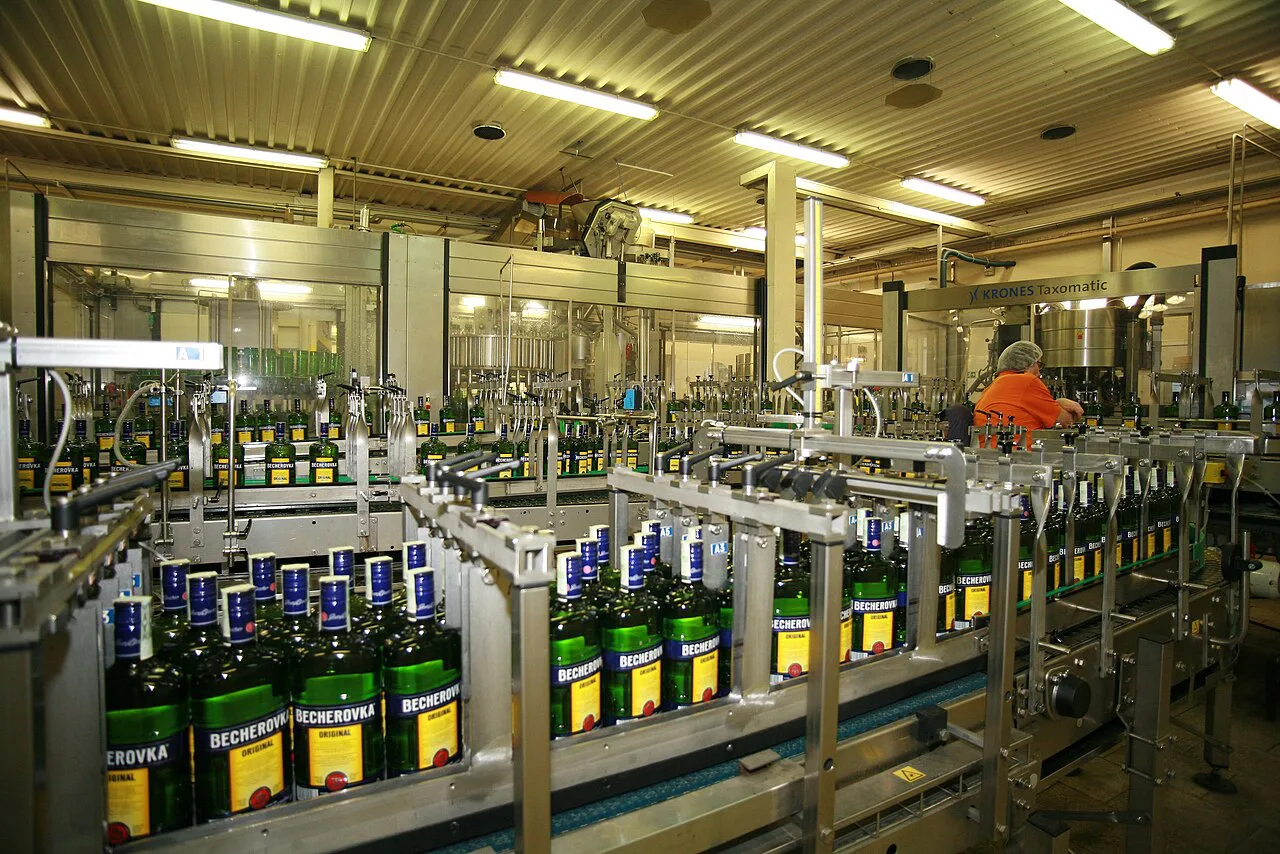
The Bohatice plant raised capacity by 40 percent, and the producer states it makes almost 8 million liters of Becherovka a year with more than half exported. That scale is worth knowing before you visit: this is an industrial working facility, not a village distillery. Visitors are received through the organized tour rather than by wandering the site.
The visitor offer is stated as a guided tour covering the brand's history, an introduction to production, a tasting and a factory visit. Ask at booking whether the tour runs in English, since Czech operators commonly default to Czech unless an English slot is requested. Ticket prices, tour times and seasonal opening days are not fixed here: check the official visitor page or the Home of Becherovka directly before you build a Karlovy Vary afternoon around it.
Karlovy Vary in a Czech Drinks Route
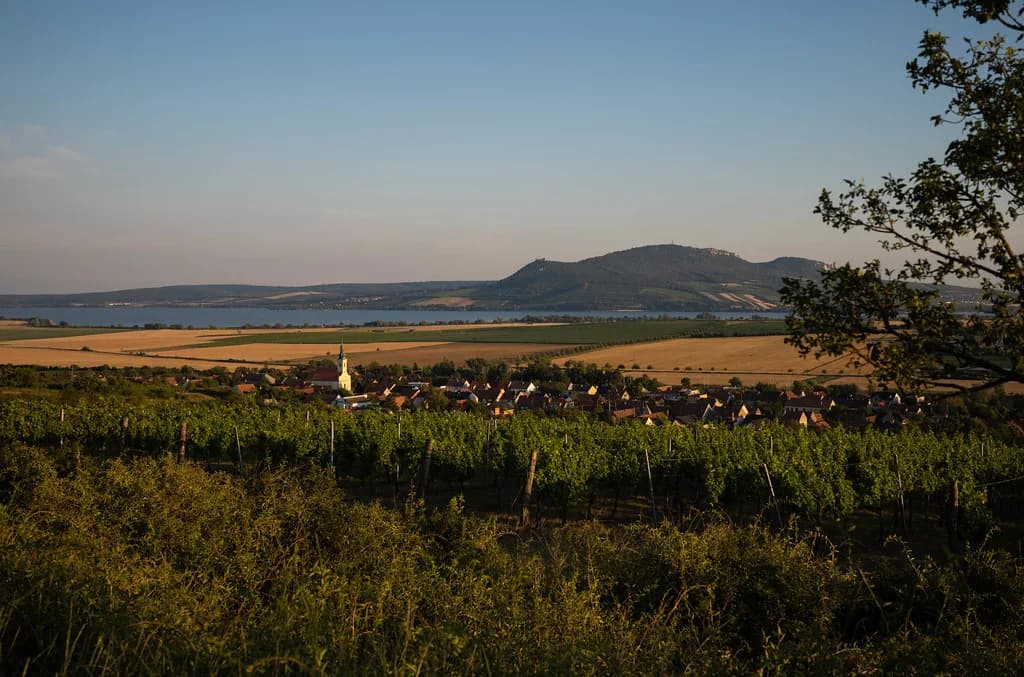
Karlovy Vary sits west of Prague in the spa triangle, alongside Mariánské Lázně and Františkovy Lázně. Most travelers pair the colonnades with a Becherovka visit and treat the town as a full day rather than a quick stop. The liqueur has been tied to the town since 1807, so the drink and the destination reinforce each other.
If your Czech itinerary is built around brewing rather than distilling, the beer trail runs through Plzeň (Pilsen) for Pilsner Urquell and the hop country around Žatec for Saaz hops. Those are the reference points for the country's most exported beer style, Czech pilsner, and they make a logical counterweight to a liqueur stop in the west.
How to Drink It: Neat and the BeTon
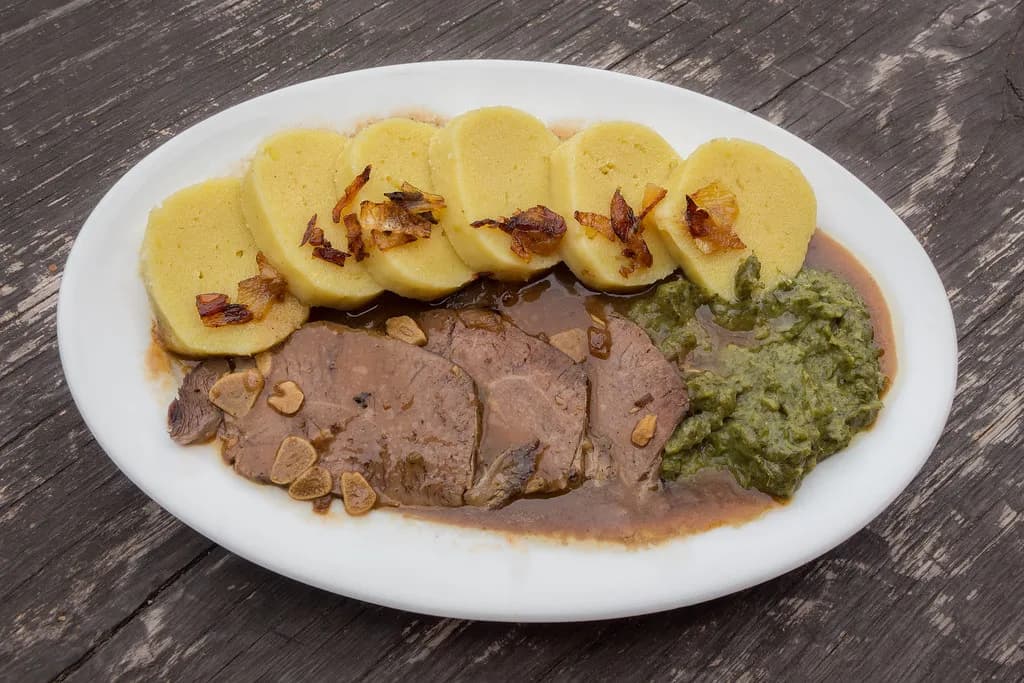
The simplest serve is a chilled shot, taken as a digestif after a heavy Czech meal of svíčková or roast pork with dumplings. Ask for Becherovka and you will get the classic Original unless you specify one of the newer variants. Sip it rather than knocking it back; the herbal finish is the reason to drink it at all.
The BeTon is the other essential serve: Becherovka with tonic water, first presented at the Montreal EXPO in 1967 as a symbol of Czech and Canadian friendship, with the liqueur standing for Czechoslovakia and tonic for Canada. In 2019 it was named the Czech national cocktail. The producer describes it as a simple, refreshing mix, and the proportions are forgiving, so build it to taste over plenty of ice.
Beyond the BeTon, the producer publishes a cocktail selection for citrus, bitter and sweet preferences, which is a practical starting point if you are mixing at home. Keep the bottle in the freezer or fridge and the tonic chilled too. A warm tonic flattens the drink faster than any error in the ratio.
The Porcelain Cup Tradition
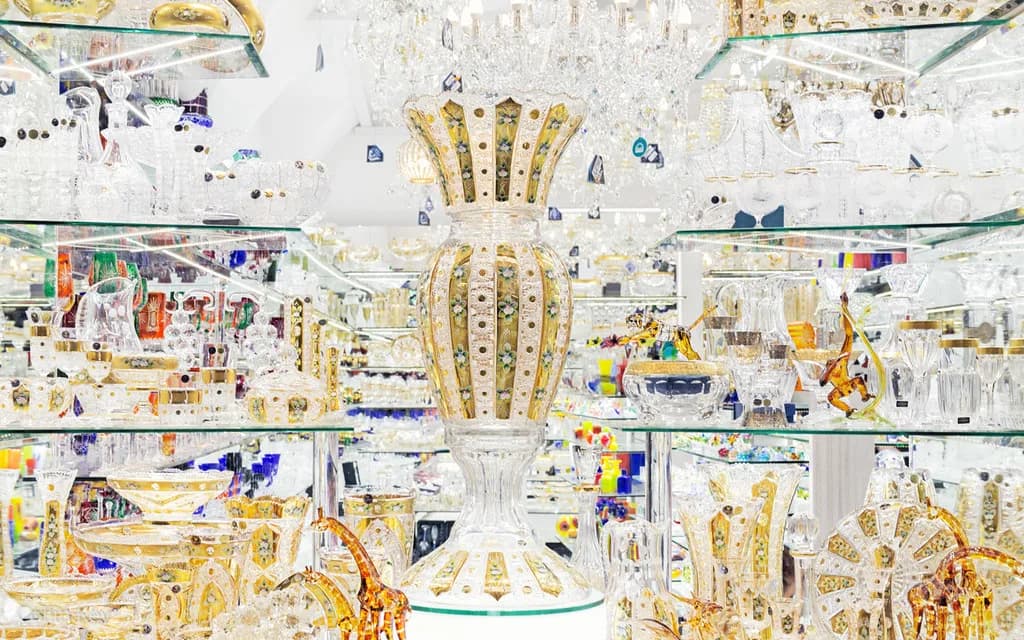
Gustav Becher, who took over the family business in 1871 and ran it for almost three decades, was born and raised in Karlovy Vary and linked the liqueur to the town's porcelain craft. He was behind the iconic Becherovka porcelain cup, which remains the brand's most recognizable piece of tableware. Look for it in shops and in the visitor center's displays rather than in everyday pub service.
Hedda Becher, the last family member to know the secret recipe, took over after her father Alfred's death but was forced out of the company during World War II and to give up the recipe to the communist regime. The family story ends there, and the liqueur has been continuously produced since 1807. It is a sobering chapter to hold in mind while tasting.
Buying It and Taking It Home
Buy Becherovka in any Czech supermarket, in the visitor center shop, or at the airport, where the flat bottle packs efficiently into a suitcase. The producer operates an online shop and lists tickets and gifts alongside bottles, so the official site is the place to confirm what is currently sold. Prices vary by retailer and size; check the shelf label or the official shop rather than relying on a remembered figure.
For a Czech drinks haul that goes beyond one bottle, the wider field of Czech beer brands covers the lagers worth carrying home, including Budweiser Budvar from České Budějovice (Budweis). Allow space and weight in your luggage for glass, and remember that liquids in cabin bags fall under standard security limits. A checked bag is the easier route for a bottle this shape.
Drinking Responsibly and the Age Limit
The producer states that its site and its product are intended for people over 18, and Czech law sets the same threshold for buying alcohol. Carry identification if you look young, particularly in supermarkets where staff enforce the rule. Becherovka is a spirit, so a shot is roughly equivalent to a shot of any other strong liqueur.
Pace yourself across a spa-town afternoon that may include several tastings, and eat something with the drinks. If you are driving afterward, skip the tasting entirely; Czech roads are not the place for a measured pour. The brand's own guidance is to drink wisely.
What to Do With Becherovka in Karlovy Vary
Treat Becherovka as a Karlovy Vary errand, not just a supermarket purchase: book the guided tour at the Home of Becherovka, taste the Original chilled, then try a BeTon before you leave town. Order the shot first so the herbal bitterness registers, then let the tonic version show why it became the national cocktail.
Before you go, confirm tour language, times and ticket prices directly with the visitor center, since these change by season. Everything else about the drink, from the 1805 recipe to the 1867 Steinberky building and the flat green bottle, holds true regardless of when you arrive.
Explore more Czech Republic guides
Sources
Notes for your Czech trip
Optional updates to our Czech town guides.
You might also like
Continue reading
More guides you'll find useful