Czech Beer Brands: The Main Breweries and What They Brew
Czech beer brands explained: Pilsner Urquell, Budvar, Kozel, Krušovice, Staropramen and small breweries, with what each one brews and how to order.
On this page
Czech beer brands divide into two useful groups for a visitor: the big names you already know from home, and the small breweries whose beer rarely leaves the country. Pilsner Urquell, Budweiser Budvar, Kozel, Krušovice and Staropramen are the labels to recognize first, and the beer behind nearly all of them is bottom-fermented lager of the Pilsen type. CzechTourism counts more than 400 breweries in the country, from large exporters to small family operations, so the tap list in any town runs well past the famous five.
This guide covers what the major brands are known for, where the pils style comes from, which small breweries show up on Czech taps, and how tank beer changes the taste of a familiar label. It also explains the gravity numbers on the tap label so you can order by strength, and points to the towns where brewery visits fit a route from Prague.
What Czech beer brands have in common: pils and bottom-fermented lager
The default Czech beer is a pale bottom-fermented lager, and the style takes its name from Plzeň, where the pils type emerged. CzechTourism describes pils as the country's most popular beer type and notes that bottom fermentation is what defines it, which is why a tap list reads as one long family of golden lagers with a few dark exceptions. Order a světlý ležák and you get pale lager; order a tmavý or černý and you get the dark version.
The shared ingredient backbone matters as much as the yeast. Saaz hops from the Žatec area give Czech lagers their floral aroma and clean bitterness, and the brewing water is treated as a defining element rather than an afterthought.
That common ground explains why brand loyalty in the Czech Republic runs deep while the beers themselves stay close in style. The differences you taste between labels come from gravity, hopping rates, lagering time and, above all, how fresh the beer is when it reaches your glass.
The big national brands: Pilsner Urquell, Budweiser Budvar, Kozel, Krušovice, Staropramen
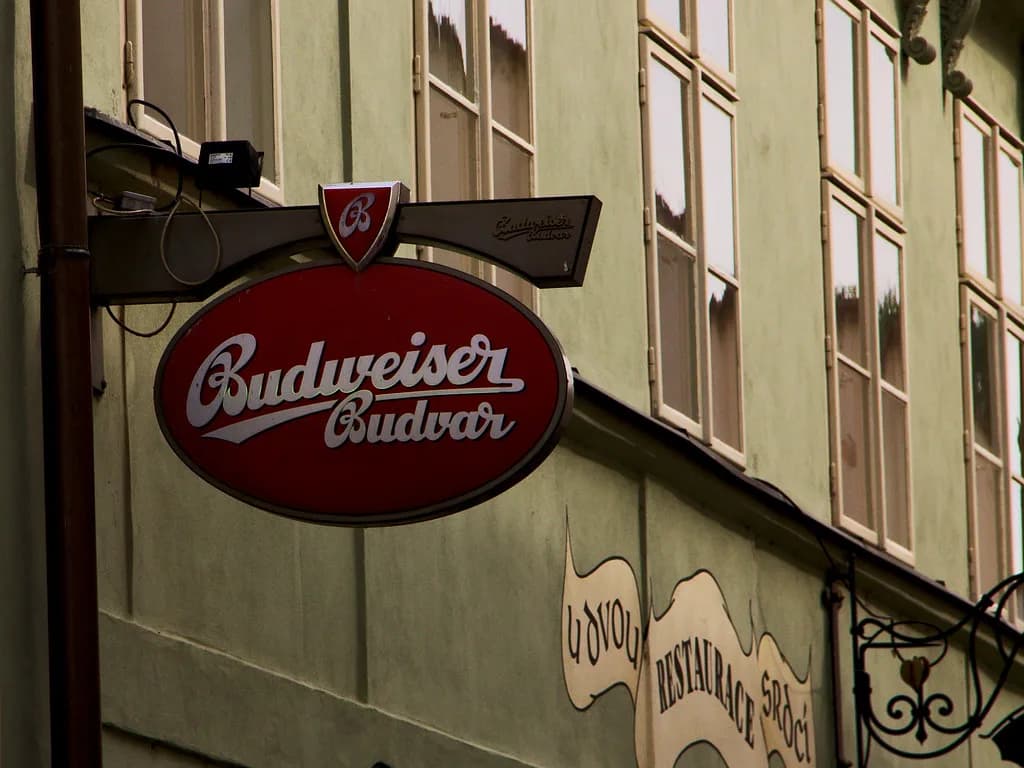
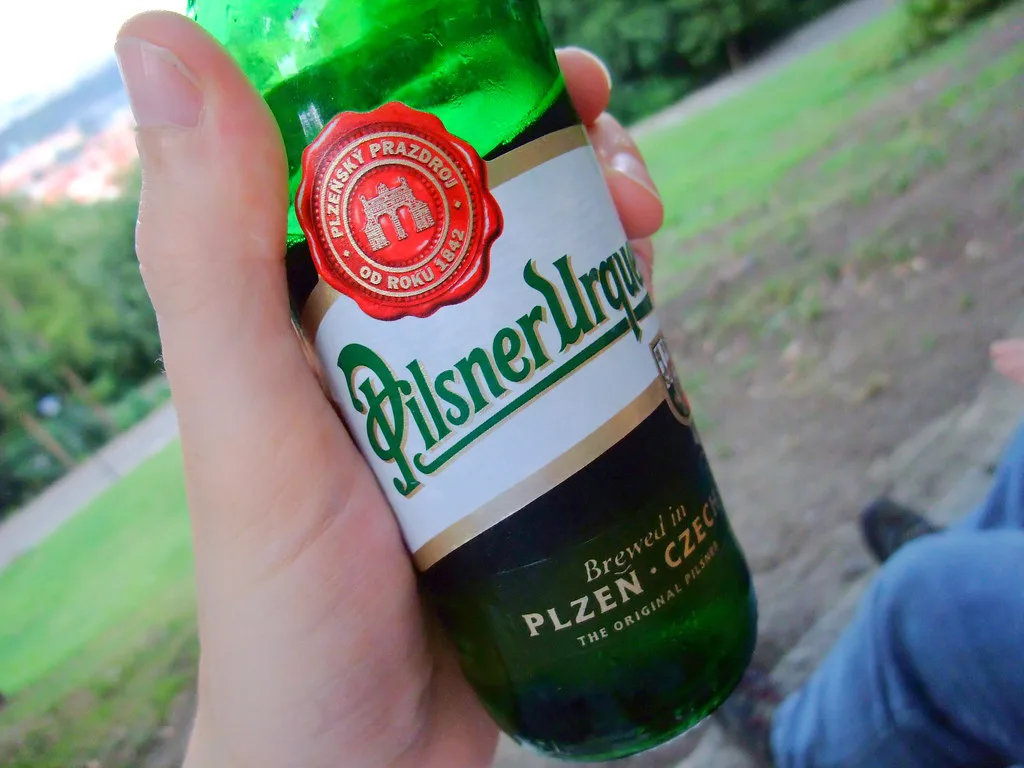
Start with the names that travel. Pilsner Urquell comes from Plzeň and is the reference point for the style; Budweiser Budvar is brewed in České Budějovice (Budweis); Kozel is produced near Prague; Krušovice comes from Central Bohemia; and Staropramen is the Prague label you will see everywhere in the capital. CzechTourism lists all five as the brands most beer drinkers abroad already recognize.
Is Budvar the same as Budweiser? No. Budweiser Budvar is a Czech lager brewed in České Budějovice, while Anheuser-Busch's Budweiser is a separate American beer from a different company.
What is the alcohol content of Czech beer? Czech taps label beer by gravity rather than alcohol percentage, so a 10° is lighter and a 12° is the standard full-strength pale lager, with 13° and above usually darker or stronger specials. The exact alcohol content varies by brewery and beer, and it is often printed on the bottle or listed on the brewery's own site.
What are the most popular Czech beer brands? The names CzechTourism highlights as best known abroad are Pilsner Urquell, Budweiser Budvar, Kozel, Krušovice and Staropramen. In Czech pubs you will also see many small and regional breweries that rarely export.
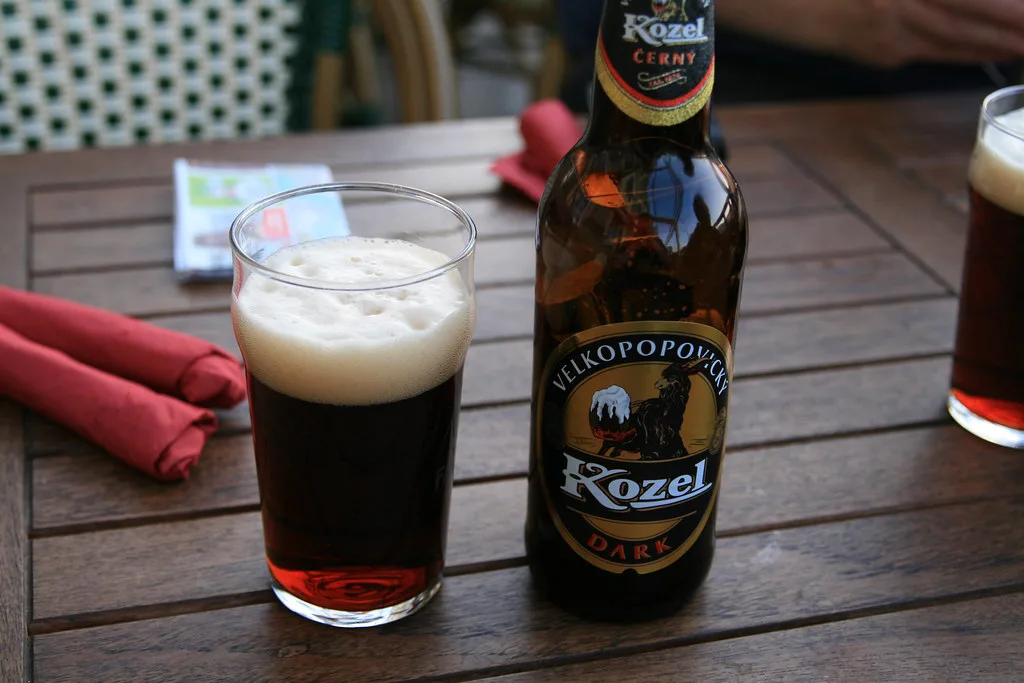
Kozel has its own following among travelers heading south or east from Prague, and the brand is associated with its dark lager as well as the pale one. Seeing Velkopopovický Kozel on a tap is a good sign that the pub takes its beer list seriously.
These brands are exporters first and local heroes second, which shapes what you get. A bottle of Pilsner Urquell in a US or UK shop has traveled far and often pasteurized; the same beer served fresh from a tank in a Czech pub is a different experience entirely.
Pilsner Urquell and Plzeň: where the pils style comes from
Plzeň is the reason the word pils exists, and the city is the natural anchor for any beer-focused route out of Prague. The style's identity rests on soft local water, Saaz hops and pale malt, brewed cool and lagered long enough to come out clean and crisp. If you only visit one brewing town in the Czech Republic, this is the one with the strongest claim to the style's name.
Treat a Plzeň stop as a half-day at minimum: the train from Prague is straightforward, and the city pairs a brewery visit with a compact old town and the underground passages beneath it. Build the beer stop into a wider loop through western Bohemia rather than a rushed out-and-back.
Budweiser Budvar in České Budějovice and the Budweiser name question
Budweiser Budvar is brewed in České Budějovice, known in German as Budweis, and the town's name is the root of the brand's name. That is also where the confusion starts for American visitors: Anheuser-Busch's Budweiser and the Czech Budvar are separate beers from separate companies. They are not the same product, and the shared name is a long-running trademark matter rather than a recipe link.
In the Czech Republic, order Budvar or Budvar from the tap and you get the Czech lager; nobody will hand you the American rice beer. The town itself sits in South Bohemia, which makes it a sensible stop between Prague and the Český Krumlov area on a southern route.
Budvar is one of the country's flagship exporters, so you have probably met it in bottles already. The reason to drink it here is freshness and the tank versions, not novelty.
Small breweries and brewpub brands you will see on tap
Beyond the national names, Czech pubs pour from a deep bench of small breweries, and this is where the country's beer culture gets interesting. Some are monastery operations, some are brewpubs attached to a restaurant, and some are regional microbreweries with a following only in their own town. The beers range from textbook pale lagers to dark specials and, increasingly, hop-forward ales brewed with American varieties.
In Prague, the Břevnov Monastic Brewery of St. Adalbert is the small-brewery name to know, tied to the monastery complex in the Břevnov district. Its beers show up in the monastery setting rather than in a chain pub, which makes it a different kind of stop from a city-center taproom.
Brewpubs in Prague are worth reading as beer lists rather than brand showcases. A house lager brewed on site, served within days of fermentation, is often the most distinctive glass in the city, and it will not appear in any export catalog.
Tank beer and unpasteurized lager: why the same brand tastes different
Tank beer is the single best reason a familiar Czech brand tastes different at home and in a Czech pub. Restaurants that serve tank beer hold unpasteurized lager in pressurized tanks and dispense it fresh, without the pasteurization that stabilizes bottled exports. The result is a rounder, livelier beer with the hop aroma still intact.
The practical rule: if a pub advertises tankové pivo or a tank on the bar, order the lager from it. The same applies to unpasteurized and unfiltered versions, which keep more yeast character and a softer mouthfeel than filtered bottled beer.
This is also why brand comparisons by bottle miss the point. Pilsner Urquell from a tank and Pilsner Urquell from a bottle are the same recipe treated two different ways, and the fresh version is the one Czechs will tell you to try.
What to order: light lager, dark lager, and the gravity numbers on the tap label
Czech taps label beer by gravity, not by alcohol percentage, and reading that number is the fastest way to order what you actually want. A 10° is a lighter, session-strength lager; a 12° is the standard full-strength pale lager most people mean by pivo; and a 13° or higher tends to be a darker or stronger special. The degree sign refers to the original extract of the wort, so it tracks body and strength loosely rather than exactly.
For the styles: světlý or světlé means pale, tmavý means dark, and ležák means lager. A tmavý speciál is the richer dark beer, while a řezaný is a blend of pale and dark poured together, which is a good way to taste both in one glass.
If you want to try the range without committing, ask for a small glass of two different gravities side by side. The difference between a 10° and a 12° from the same brewery is the clearest lesson in how Czech brewing works.
Brands and breweries you can visit outside Prague
The good news for route planners is that several of the big brands map onto towns worth visiting anyway. Pilsner Urquell puts Plzeň on the itinerary, Budvar puts České Budějovice on it, and the Kozel brewery sits at Velké Popovice within reach of Prague. A southern loop of Prague, Plzeň, České Budějovice and Český Krumlov covers the core of Czech beer geography in a few days.
Brewery tours are the standard way to see how these beers are made, and CzechTourism lists brewery visits as one of the country's draw cards. Tour schedules, languages and ticket prices vary by brewery and season, so check the individual brewery's own site for the day you plan to go.
Outside the famous names, regional microbreweries are worth a detour when you are already in a town for other reasons. Many are attached to a restaurant, which makes them easy to slot into a day between other sights.
How to read a Czech beer menu without the brand names
A Czech beer menu often leads with the brewery and the beer style rather than a brand, so focus on the brewery name, the gravity number and the style word. If you see a brewery you don't know, that is usually a good sign of a pub that sources locally rather than pouring the same national lager as everyone else.
Prices are quoted in Czech koruna and are typically lower than in Western Europe, but the spread between a national lager and a small-brewery special can be significant. Look at the per-glass price on the menu rather than assuming all beers cost the same.
Two practical habits help: ask what is on tap from a local brewery, and ask for the tank beer if there is one. That combination gets you the freshest and the most distinctive beer in the room, which is the whole point of drinking in the Czech Republic.
Which Czech beer brands should you seek out?
If you want the classic experience, start with Pilsner Urquell in Plzeň and Budvar in České Budějovice, then add Kozel and Krušovice at any well-stocked pub. If you want the most memorable glass, look for tank beer and any small brewery on the tap list, including the Břevnov Monastic Brewery in Prague.
Route-wise, the southern loop of Prague, Plzeň, České Budějovice and Český Krumlov covers the big brands efficiently, while a Prague pub with a good guest tap covers the small ones. Check brewery tour days and booking rules on each brewery's own website before you build a day around one.
Explore more Czech Republic guides
Frequently Asked Questions
Is Budvar the same as Budweiser?
No. Budweiser Budvar is a Czech lager brewed in České Budějovice, while Anheuser-Busch's Budweiser is a separate American beer from a different company. The shared name is a trademark matter, not an indication that the two are the same beer.
What is the alcohol content of Czech beer?
Czech taps label beer by gravity rather than alcohol percentage, so a 10° is lighter and a 12° is the standard full-strength pale lager, with 13° and above usually darker or stronger specials. The exact alcohol content varies by brewery and beer, and it is often printed on the bottle or listed on the brewery's own site.
What are the most popular Czech beer brands?
The names CzechTourism highlights as best known abroad are Pilsner Urquell, Budweiser Budvar, Kozel, Krušovice and Staropramen. In Czech pubs you will also see many small and regional breweries that rarely export.
Can I visit Czech breweries?
Yes. Several of the major breweries and many smaller ones run visits, and CzechTourism lists brewery tours as part of the country's beer culture. Schedules, languages and ticket prices differ by brewery, so confirm the details on the brewery's own site before you go.
Sources
Notes for your Czech trip
Optional updates to our Czech town guides.
You might also like
Continue reading
More guides you'll find useful