Czech Breweries: Where the Country's Beer Is Made
Czech breweries range from big lager names to small craft operations. Here is how the beer culture works and which brewery names to look for on a Czech trip.
On this page
Czech breweries are best understood in two layers: the big lager houses whose names travel worldwide, and a craft scene that beer drinkers rate brewery by brewery. Plzeň (Pilsen) and České Budějovice (Budweis) anchor the first layer, while small operations like JBM Brew Lab and The Barn Beer Co. carry the second. This guide explains what Czech beer is, how it is served, which names are worth seeking out, and how to slot a brewery visit into a route beyond Prague.
What Czech breweries are known for: lager tradition and the craft scene
The country's reputation rests on pale lager, the style that Czech brewers refined in the 19th century and that the rest of the world copied. That tradition still shapes what most breweries make: clean, golden, softly bitter beer built on local barley and hops. Alongside it, a craft layer has grown up with IPAs, stouts, and rotating specials, often from breweries small enough that you will only meet them on tap.
Beer drinkers who rate what they taste have pushed a handful of craft names into the spotlight. A data-driven list hosted by the Prague craft-beer bar Drinkøtéka, drawing on Untappd user ratings, gives JBM Brew Lab 3.93, NOZIB Special Brews and The Barn Beer Co. 3.91, and TamTam Brewing Co. 3.89. Those scores are a snapshot from Untappd users, not a fixed order, and the bar says positions shift as ratings are refreshed.
Below those leaders sit černý potoka at 3.84, Zichovec at 3.83, Clock at 3.82, Matuška at 3.80, Permon at 3.78, and Falkon at 3.77 in the same Untappd-based list hosted by Drinkøtéka, which says the order is data-driven with no editorial picks or manual adjustments. Treat the numbers as a shopping list rather than a league table: a brewery's score reflects the beers its fans log, not a full tour of the country. If a tap list names one of these, it is usually worth ordering.
The craft side runs across the whole country, and the brands show up mainly as guest taps in city bars. If your trip is built around trains, plan on drinking craft in the towns you pass through and saving the brewery-town visits for the classic lagers, where the destination itself is worth the ride.
How Czech beer culture works: pubs, tapsters, and why lager dominates
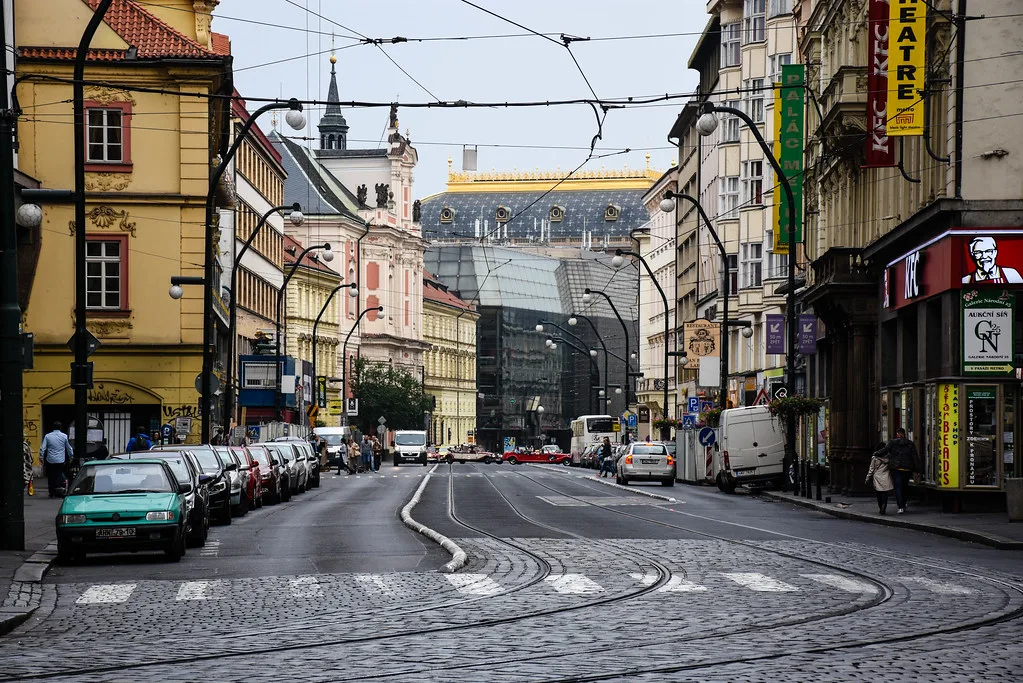
Beer in the Czech Republic is a daily habit rather than a special-occasion drink, and the pub is where the culture lives. A tapster pours by the glass, keeps a clean line, and often has one or two permanent beers plus a rotating tap. Ordering is simple: say the beer and the size, and expect foam to be part of the craft rather than an accident.
Is Czechvar the same as Budweiser Budvar? Yes. Czechvar is the label used for Budvar's beer in some export markets, including the US and Canada, where the American Budweiser name is already taken.
What do the beer ratings on Czech craft breweries mean? They are aggregated Untappd user scores, not editorial awards. A data-driven list hosted by the Prague bar Drinkøtéka puts JBM Brew Lab at 3.93, with NOZIB Special Brews and The Barn Beer Co.
Do I need to book a brewery tour in advance? Often, yes. Tours can be seasonal, limited in language, and sold out on weekends.
Lager dominates because it is cheap to brew well, suits the food, and is what most drinkers grew up on. That makes the big brands the default and the craft taps the exception, which is exactly why a short craft list in a pub is worth reading closely. If you want the vocabulary before you order, the degree system and style names are worth five minutes of study.
The glass matters more than visitors expect. A heavy half-liter mug with a handle, the sklenice s uchem, keeps lager cold and is the standard in pubs; smaller tumblers show up for stronger or specialty beers. Knowing the difference helps you order the size you actually want rather than defaulting to the largest pour on the tray.
The national brands you already know: Pilsner Urquell, Budvar, and what Czechvar means
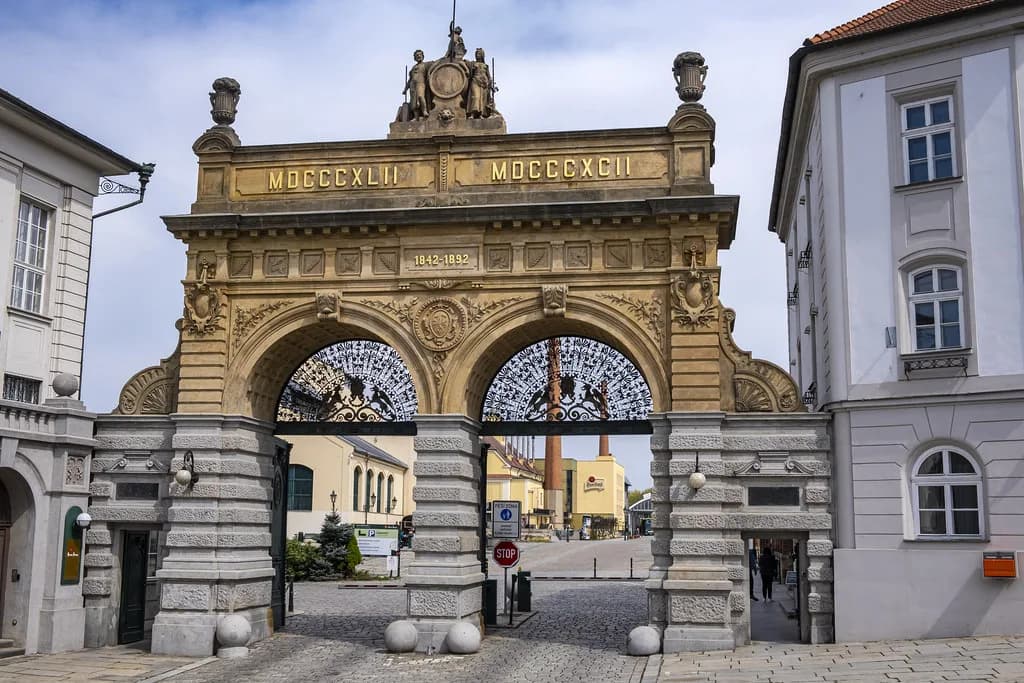
Two names carry most of the country's beer reputation abroad: Pilsner Urquell from Plzeň and Budweiser Budvar from České Budějovice (Budweis). Pilsner Urquell is the original pale lager, brewed in Plzeň since the 1840s, and the reason the word pilsner exists at all. Budvar is the Czech brewery that has spent decades in trademark disputes over the Budweiser name, and it is sold as Czechvar in some export markets.
Czechvar is simply Budvar sold under a different label in markets where the American Budweiser name is already claimed. If you see Czechvar on a menu in the US or Canada, you are looking at the same České Budějovice brewery. That matters for ordering: asking for Budweiser in Prague gets you the Czech beer, not the American one.
Plzeň and České Budějovice sit roughly on the same southbound corridor from Prague toward Austria, which makes them a natural pair for a route decision rather than a brand comparison. Plzeň is the western stop and České Budějovice the southern one, so a Prague-to-Vienna drive can take in one or both depending on how much time you give the detour. Both cities reward an overnight more than a rushed afternoon.
Where Czech beer is made and served outside Prague
Brewery towns give you the fullest version of Czech beer: the building, the local pub, and the beer at its freshest. Plzeň and České Budějovice are the obvious anchors, and both are large enough to fill a day with more than beer. Smaller operations such as Velkopopovický Kozel in Velké Popovice sit close enough to Prague for a half-day, though visitor arrangements differ by brewery.
Hop country is its own stop. Žatec, the hop town in northwest Bohemia, is where the Saaz hops that give Czech lager its bitterness come from, and the town's hop heritage is the draw rather than a single brewery. It fits a route toward Karlovy Vary better than a southbound one, so treat it as an alternative rather than an add-on.
The wider UNESCO roster fills out the same trips: Kutná Hora with its Sedlec Ossuary, Telč with its arcaded square, and Třebíč with its Jewish quarter all sit on routes where beer is part of the evening rather than the purpose of the day. If you are building a beer-focused route, pick two brewery towns and let the heritage stops fill the gaps between them.
Visiting a brewery: what a tour involves and how to plan around it
Czech breweries range from large sites that run organized tours to small operations that open for scheduled visits only. A typical visit is guided, walks you through the brewhouse and cellars, and ends with a tasting, but the format, language, and season vary by brewery. Check the brewery's own site before you build a day around it, since some run tours only in summer.
Drinkøtéka on Náplavka in Prague is the simplest way to taste widely rated Czech craft beer without chasing breweries across the country. The bar says several breweries from its Untappd-based list are poured depending on the current tap list and stock, and the list rotates, so what is pouring on your dates is a matter for the bar's current menu rather than a fixed lineup.
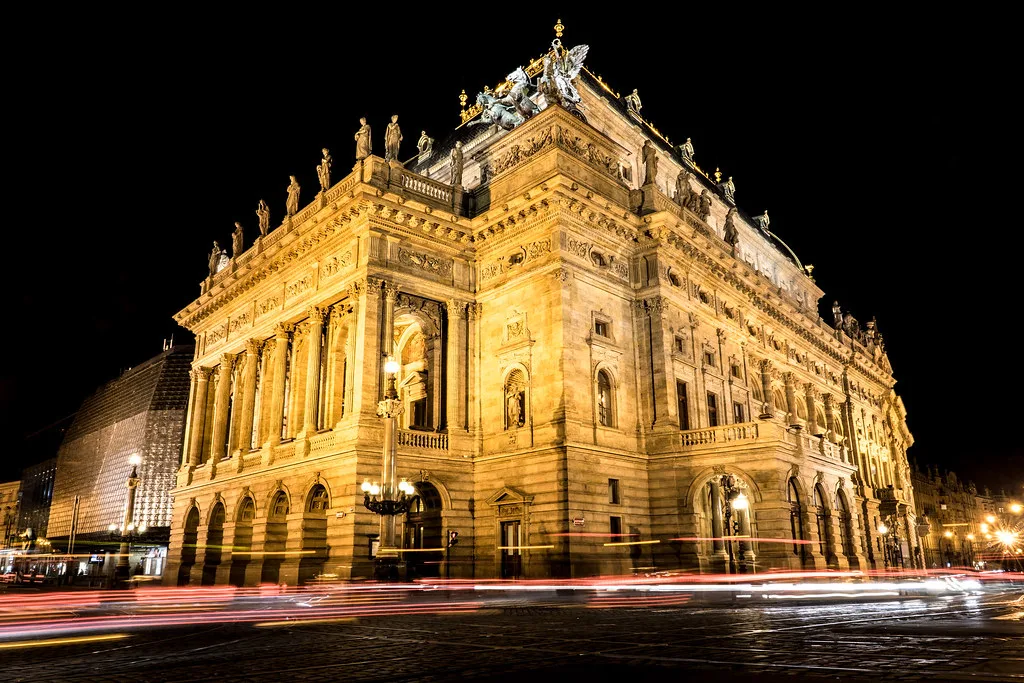
Prague also has small brewpubs in the center, such as Pivovar Národní on Národní Street, which suit a short visit rather than a full brewery tour. They are a good first stop if you land in the evening and want to understand Czech beer before heading to Plzeň or České Budějovice. Keep them as a warm-up, since the point of the trip is what lies outside the capital.
A travel-reviewer list of brewery attractions ranks Strahov Monastery Brewery, Pilsner Urquell Brewery, and the Budweiser Brewery in České Budějovice among the country's top brewery sites. Use such lists to shortlist, then confirm tour times and language directly with each brewery, because published schedules change with the season.
What a beer costs in Czech koruna
Beer is one of the few things in the Czech Republic that still feels inexpensive, but the price depends on where you drink it. A pub in a small town and a bar in central Prague can charge very different amounts for the same half-liter, and brewery taprooms often sit between the two. Budget in Czech koruna rather than converting from euros, since the local currency is what appears on the menu.
Menus quote the price per glass, and the size matters: a 0.3-liter pour costs less than a 0.5-liter one of the same beer, so compare like with like. Craft beers in smaller batches generally run higher than standard lagers, which is the main reason a specialty tap list reads differently from the house lager. The bill will show the total in CZK, and card payment is common in towns and cities.
Reading a Czech beer menu: degrees, styles, and what to order
Czech menus label beer by degree, a measure of the malt extract in the wort rather than alcohol content. A 10-degree beer is a lighter, session-strength lager, a 12-degree is the standard pub pour, and a 13 or higher is a fuller, stronger beer. The degree tells you body and roughly how strong the beer will feel, which is more useful at the table than the alcohol percentage.
Style names do the rest of the work. Světlé pivo means pale beer and is the default lager; Tmavé pivo means dark beer, usually maltier and sweeter; and a řezané is a mix of the two, poured as one glass. If a tap says IPA, stout, or sour, you are in craft territory and the beer will taste nothing like the house lager.
Ordering is straightforward once you know the words: say the beer name and the size, and the tapster pours. If you want to try several, ask for small pours rather than full ones, which is normal in a pub with a rotating list. Tipping is by rounding up or leaving a small amount, and saying děkuji as you pay is enough.
Practical trade-offs: seasonal tours, Czech-language tours, and busy weekends
The biggest planning constraint is the calendar. Brewery tours often run on a seasonal schedule, with more departures in summer and fewer in winter, and some sites close to visitors outside the main months. Confirm dates before you commit a travel day, and have a backup town in mind in case the tour you wanted is not running.
Language is the second constraint. Many tours are given in Czech, with English available only on certain departures or by arrangement, so a tour booked on the day may leave you reading rather than listening. If the brewery's site lists an English tour, book it; if it does not, ask before you travel rather than after you arrive.
Weekends bring Czech day-trippers to the same brewery towns, and Saturday afternoons are the busiest stretch. A weekday morning tour is calmer and often easier to join, and it leaves the afternoon free for the town itself. If you are driving, arrive early, since parking near brewery sites fills quickly on sunny weekends.
For anyone continuing to the spa towns, beer is not the only drink on the route. The Czech beer spa tradition turns bathing in beer ingredients into an attraction of its own, and it pairs naturally with a stop in Karlovy Vary, where the Becherovka herbal liqueur story adds a second thread to the same trip.
Which brewery town should you build your route around?
Choose Plzeň if you want the origin story of pale lager in a city that also has a strong food and architecture scene, or České Budějovice if your route already heads south toward Austria and you want Budvar's home town. Budweis sits south of Prague on the road toward Austria, so work it into a southbound leg rather than a side trip from the capital. Both are comfortable overnight stops, and neither needs more than a day unless you are touring the breweries in depth.
If craft beer matters more than history, start with the Untappd names and taste them in Prague before deciding whether a specific brewery is worth a detour. And if you are traveling in summer with a car, Žatec and the hop country make a worthwhile alternative loop for anyone heading west toward the spa towns.
Explore more Czech Republic guides
Frequently Asked Questions
Is Czechvar the same as Budweiser Budvar?
Yes. Czechvar is the label used for Budvar's beer in some export markets, including the US and Canada, where the American Budweiser name is already taken. The brewery is the same one in České Budějovice (Budweis); only the export brand differs.
What do the beer ratings on Czech craft breweries mean?
They are aggregated Untappd user scores, not editorial awards. A data-driven list hosted by the Prague bar Drinkøtéka puts JBM Brew Lab at 3.93, with NOZIB Special Brews and The Barn Beer Co. at 3.91 and TamTam Brewing Co. at 3.89, and the bar says positions shift as the ratings data is refreshed.
Do I need to book a brewery tour in advance?
Often, yes. Tours can be seasonal, limited in language, and sold out on weekends. Check the brewery's own site for its tour schedule and language options, then book ahead if an English tour is what you want.
Can I try the top-rated Czech craft beers in one place?
Not necessarily all at once. Drinkøtéka on Náplavka in Prague says it regularly rotates beers from highly rated Czech breweries depending on availability and current releases, so check the bar's current tap list rather than expecting a fixed lineup.
Sources
Notes for your Czech trip
Optional updates to our Czech town guides.
You might also like
Continue reading
More guides you'll find useful