Czech Beer Glasses: Tübinger Mugs, Sizes, and Pours Explained
A Czech beer glass is usually a handled Tübinger mug in 0.3 or 0.5 liters, shaped for foam from a side-pull faucet. Here is what to look for and why.
On this page
A Czech beer glass is most often a handled, thick-walled mug called a Tübinger, filled in 0.3-liter or 0.5-liter measures and poured from a side-pull faucet so that wet, dense foam sits on top. The shape is not decorative: the handle, the thick glass and the wider foam zone all serve the way lager is served here. This guide covers the vocabulary you will meet on a menu, the two standard sizes, the pour styles the glass is built for, and the breweries with their own branded mugs.
It also explains why a mug that looks like a British dimple mug is a different object, and why some of the country's newer breweries reach for tumblers and other shapes instead. Read it before you order your first pivo if you want to know what the tapster is doing and what you are being charged for.
The handled mug is the default Czech beer glass
In the Czech Republic the standard vessel is a heavy glass mug with a handle, known generally as a krýgl or, more literally, a sklenice s uchem, a glass with an ear. The Tübinger is the specific dimpled version, with origins in late-1800s Germany, yet it is far more common in Czech pubs today than in Germany. Czech beer culture runs on lager, and the mug suits it: thick walls slow warming and the handle keeps your hand off the glass.
That German lineage matters when you shop for one. A British dimple mug flares at the top and carries no molded measure, while the Czech mug keeps a defined band where the foam belongs, so the drinker and the tapster can both see the level. Treat them as separate traditions rather than near-identical souvenirs.
Tübinger, krýgl, sklenice s uchem: the words on the menu and shelf
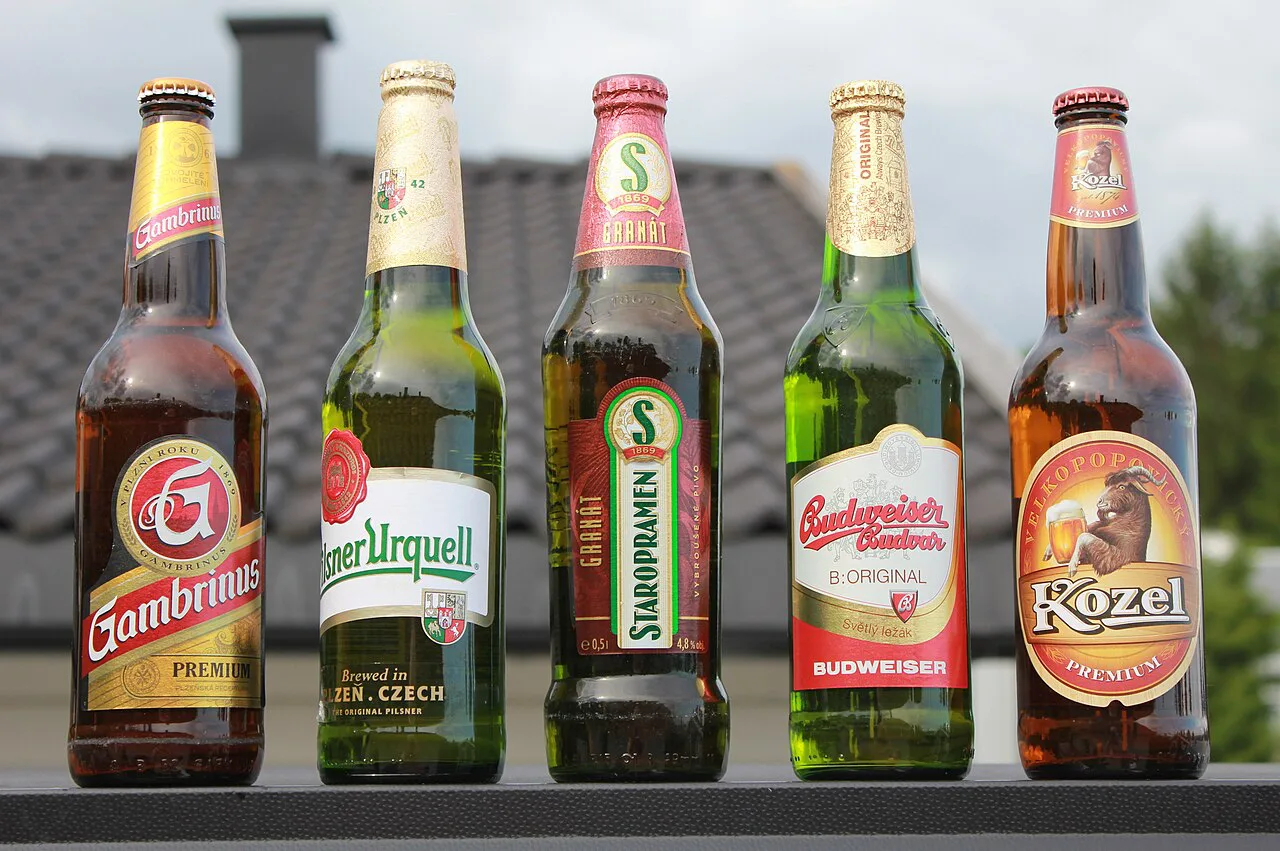
You will hear the same glass called several things. Krýgl is the everyday word for a handled beer mug, sklenice s uchem spells out the handle, and Tübinger names the dimpled style most associated with Czech pours. None of these is a brand, so a pub using the word is describing a shape, not a maker.
What is a Czech beer mug called? The everyday word is krýgl, and sklenice s uchem literally means glass with an ear, a reference to the handle. The dimpled version most people picture is the Tübinger, a form that originated in Germany in the late 1800s and became far more common in the Czech Republic.
Is a Czech beer glass the same as a British dimple mug? No. The two look similar but come from different traditions.
How big is a standard Czech beer? Most Czech beer glasses hold either 0.3 liters, called a třetinka, or 0.5 liters, called a půllitr. The půllitr is the usual order in pubs, and the smaller glass keeps the beer colder and fresher if you plan to have several.
Breweries put their own names on the same forms. Pilsner Urquell sells a range of glasses but its mug is the most widely recognized Czech beer glass, and Budějovický Budvar, Únětický pivovar and Vinohradský pivovar have all issued branded Tübingers. For the beer inside the glass, the founding story of the Czech pilsner style is a separate subject, covered in the guide to Czech pilsner and the brewer Josef Groll.
Two sizes: třetinka and půllitr
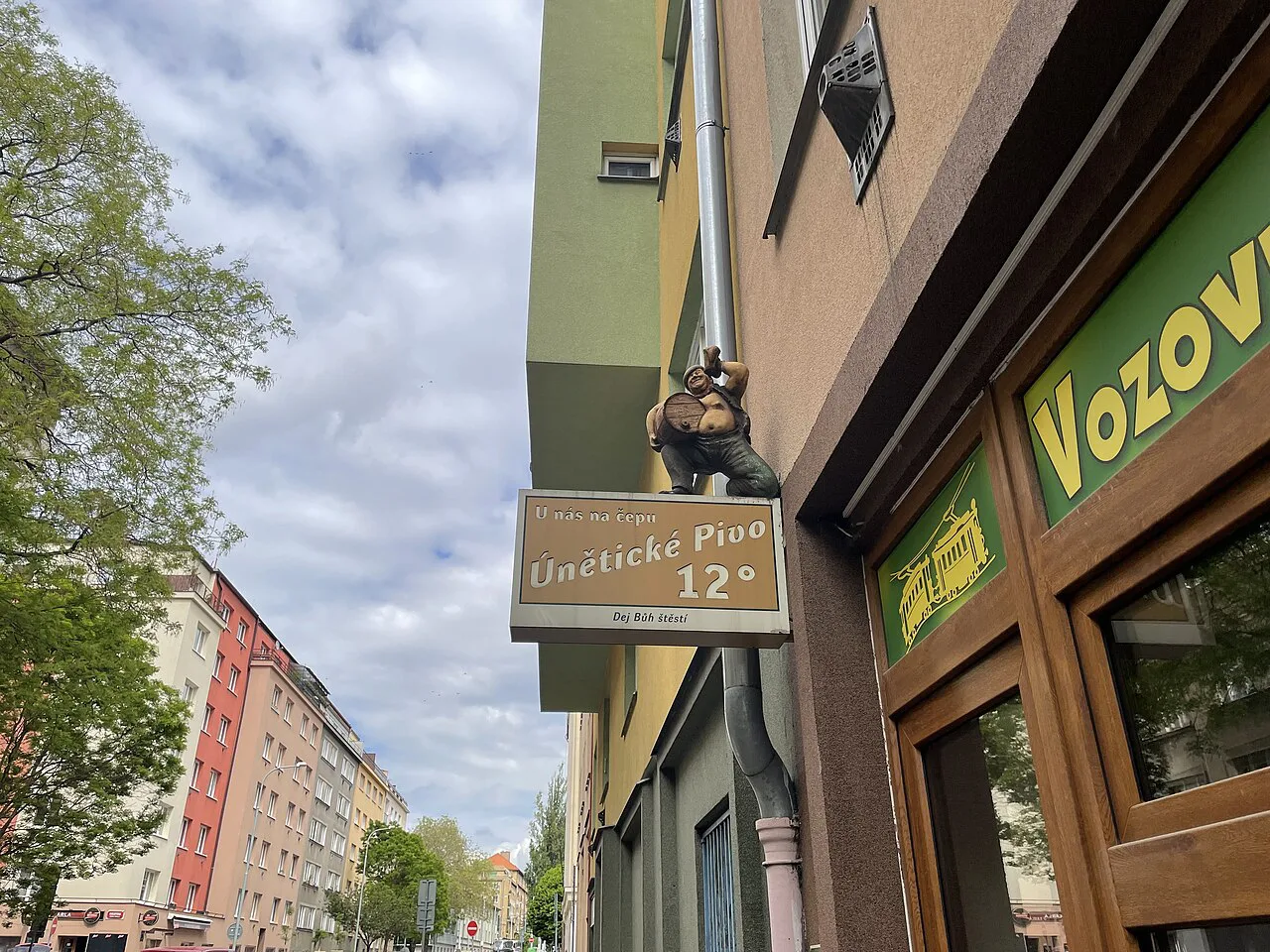
Menus and tap labels work in liters, not pints. The půllitr is the half-liter mug, the default order in most pubs, and the třetinka is the 0.3-liter glass, useful when you want a fresh, cold beer rather than a long one or when you are working through several beers. A typical Czech glass falls somewhere in that 0.3 to 0.5 liter range, and asking for a malé (small) or velké (large) pivo gets you one or the other.
The smaller glass is not a stingy pour. It empties faster, so the beer in front of you stays cold and carbonated and the foam is at its best when it reaches you, which matters in a country where the head is part of the drink rather than waste.
How the shape holds the foam
Czech pouring aims for a specific foam layer, and the mug is engineered around it. The glass narrows above the widest point and leaves a non-dimpled zone at the top where the foam collects, so the beer settles to a visible line and the rest is head. That is what makes a hladinka, the standard pour with a thick, wet cap, look the way it does.
Ordering a šnyt or a mlíko changes the ratio rather than the glass: you get more foam and less beer. Ask for the pour by name if you want to try the range, and expect the tapster to build it slowly.
Dimples, thick walls, and the molded half-liter line
The dimples are grip and structure, but the thick glass does the real work by slowing how fast the beer warms in your hand. Pilsner Urquell's head tapster makes that point directly, saying the thick walls save the temperature of the beer. The handle keeps your palm away from the body of the glass for the same reason.
The molded line is the practical feature to look for. It marks where the beer should settle once the foam has formed, so you can see that you received the measure you paid for and that the rest of the glass is head. A glass without that band, such as the British dimple mug, gives neither you nor the server that check.
The Lukr side-pull faucet and why it suits mugs
Lukr side-pull faucets have only been around since the 1990s, but they changed how Czech beer is served. The design uses a ball valve, a flow-control compensator and a tap screen to build dense, wet foam, and the tapster inserts the spout into the glass while pouring, a practice discouraged elsewhere.
The faucet's length and angle fit stout-shaped glassware, which is why the mug has held its place against slimmer alternatives. Pilsner Urquell master bartenders describe the mug and side-pull tap combination as producing the dense foam Czech drinkers expect.
Proprietary mugs: Urquell, Budvar, and Kozel's horns
Big breweries treat the glass as branding. Budějovický Budvar, known as Czechvar in the United States, released a new mug in 2020 made by the glassmaker Sahm, and its brand manager called the glass one of the most impactful items the brewery possesses because it is in direct contact with the customer. Pilsner Urquell, by contrast, has the scale to produce its own distinctive mug rather than a standard Tübinger.
Kozel takes a different route with a rohatá, or horned, mug that is easier to spot across a crowded room than any dimpled glass. If you plan to drink at the source, the guide to Kozel beer covers the brewery's home in Velké Popovice and its dark lager.
The 1990s tumbler detour and the swing back to mugs
Tumblers, called štucs, became popular in the Czech Republic in the 1990s, a plainer shape with no handle and no molded foam zone. The recent return to mugs tracks the spread of Lukr faucets, which work best with the taller, stouter form the mug provides.
In a pub, that history shows up as variety rather than a single standard. You may be handed a mug, a tumbler or something in between depending on the brewery and the tap setup, and none of it signals a lesser beer.
Breweries that pour into other shapes
Newer breweries making more than lager need more than one glass. Pivovar Matuška, founded in 2009, brews traditional Czech lager alongside IPA, stout, wheat beer and ESB, and stocks several glass types to match. Its managing director says customers can choose the glass they prefer and that the brewery offers guidance rather than rules.
Dva Kohouti, founded by Matuška's co-owner and head brewer with the Ambiente restaurant group behind the Lokal tank pubs and the Pult craft beer bar, follows the same logic with a broad style range and matching glassware. If you order a stout in one of these places, expect a shape chosen for aroma rather than a dimpled half-liter.
Buying one: brewery mugs versus plain pub glassware
Branded brewery mugs are the souvenir with a story: they carry the logo, often a proprietary shape, and the Sahm-made pieces turn up in pubs as well as in brewery ranges. Plain Tübingers and tumblers are the working glasses of the trade, sold in mixed sets and easier to replace when one chips.
Check the molded line before you buy, since that band is what separates a Czech mug from a lookalike, and confirm the volume marking on the base if the seller lists one. Prices for glasses and for beer are set by individual shops, breweries and pubs, so compare before you commit. Outside the glass itself, the country's other drinking landmarks, such as Becherovka, follow their own rules.
What the glass does not tell you
The molded line shows where the beer should settle, but the measure you get shifts with the pour style you order, since a mlíko is mostly foam and a hladinka is mostly beer.
Use the line as a sanity check rather than a contract. If the beer settles far below the mark on a standard pour, ask; if you ordered a foamy style on purpose, the gap is the point.
What to order on your first round
Start with a půllitr of the local lager in a mug and watch where the foam settles against the molded line; that single order teaches you more about Czech pouring than any description. Try a třetinka or a mlíko next if you want to taste the foam itself.
If the glass is what you want to take home, buy from the brewery whose beer you liked, and check the volume marking before you pay. For the wider map of where to drink it, from Plzeň to Kutná Hora, the Czech beer guide picks up where the glass leaves off.
Explore more Czech Republic guides
Frequently Asked Questions
What is a Czech beer mug called?
The everyday word is krýgl, and sklenice s uchem literally means glass with an ear, a reference to the handle. The dimpled version most people picture is the Tübinger, a form that originated in Germany in the late 1800s and became far more common in the Czech Republic.
Is a Czech beer glass the same as a British dimple mug?
No. The two look similar but come from different traditions. The Czech mug has a molded band marking where the beer should settle and the foam should sit, while the British dimple mug flares at the top and carries no such measure.
How big is a standard Czech beer?
Most Czech beer glasses hold either 0.3 liters, called a třetinka, or 0.5 liters, called a půllitr. The půllitr is the usual order in pubs, and the smaller glass keeps the beer colder and fresher if you plan to have several.
Sources
Notes for your Czech trip
Optional updates to our Czech town guides.
You might also like

Continue reading
More guides you'll find useful