Czech Beer Styles: Světlé, Tmavé, and the Degree System Explained
Czech beer styles go beyond pale lager: learn světlé, tmavé, řezané, and polotmavé, what the degree number means, and how to order a desítka or dvanáctka.
On this page
Czech beer styles come down to two labels you will see everywhere: color and strength. Světlé is the pale lager behind most of the country's drinking, tmavé is the dark version, and the degree number beside them measures sugar in the wort rather than alcohol. This guide walks through the four everyday color and blend categories, then the tap-sign vocabulary, the 1842 Plzeň (Pilsen) story, and the phrases that let you order like you know what you are doing.
Ordering is simpler than the menu makes it look. Czech pub culture runs on a house lager served by the half-liter, and a few words carry you a long way once you know what světlé and tmavé mean and roughly how strong each degree is. We cover the glassware and foam too, because a Czech pour is supposed to look the way it does.
What Czech beer styles actually mean: color first, strength second
Czech beer is categorized by color and then by strength, not by the ale-and-lager or IPA-and-stout categories most visitors expect. Světlé means light in color, not light in calories, and it covers the classic golden lager that the great majority of Czech drinkers order. Tmavé covers dark lager, polotmavé sits amber in between, and řezané blends light and dark from two taps into one glass.
Keep those four color words separate from the strength number on the tap sign. A pub can pour a ten-degree tmavé as easily as a twelve-degree světlé, so the two labels answer different questions and you will want both when you order. Once you have that split in your head, the rest of a Czech menu reads cleanly.
Světlé pivo: the pale lager most Czechs drink and why it tastes bitter
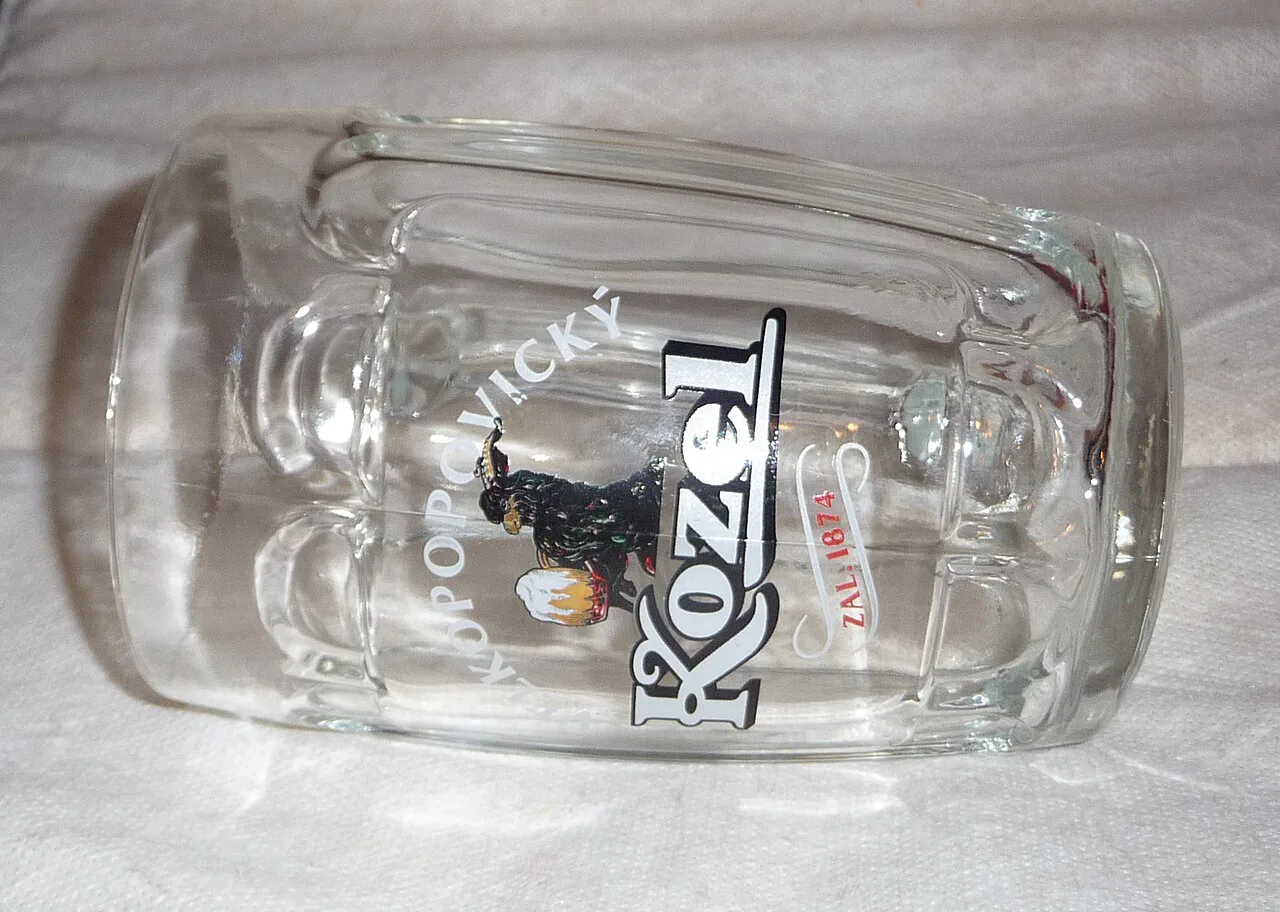
Světlé pivo is the golden, clear pale lager with a creamy white head that accounts for the bulk of Czech beer consumption. It is what you should start with if you have never ordered in a Czech pub, and it is what "pivo, prosím" gets you by default. The bitterness is deliberate and balanced rather than aggressive, built on the country's own hop growing.
What is the difference between Czech and American Budweiser? They are separate products from separate companies. Budějovický Budvar in the Czech Republic sells its beer as Czechvar in the United States, while American Budweiser is brewed by a different company.
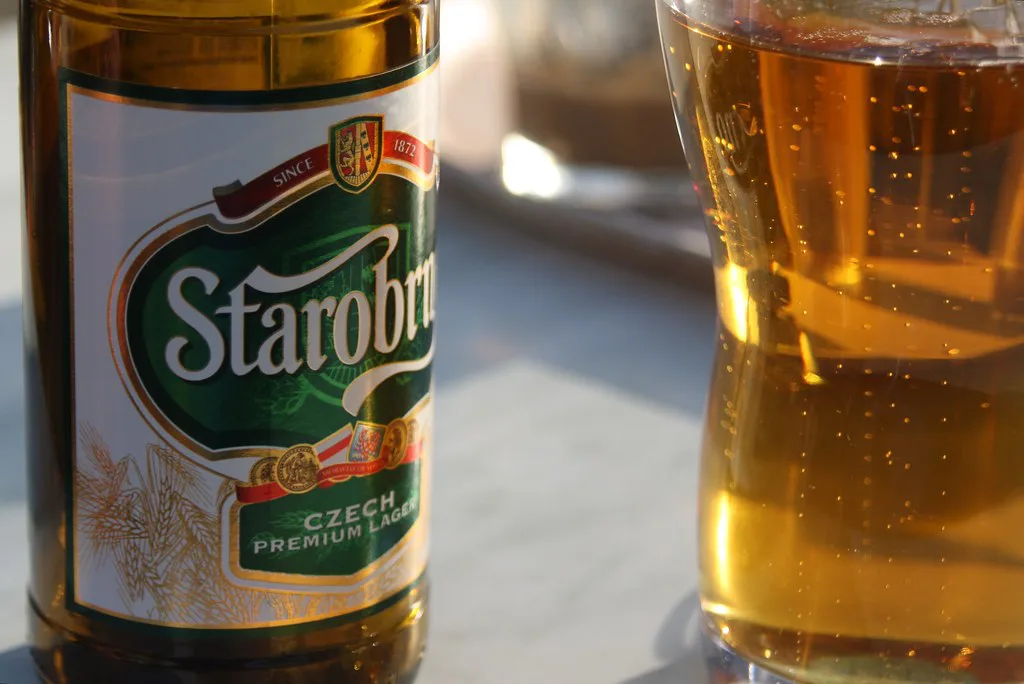
What are the most popular Czech beers to look for? Pilsner Urquell, Staropramen, and Kozel Světlý are the pale lagers you will see most often, with Kozel Černý and Staropramen Dark as the common dark options. Smaller breweries like Pivovar Matuška and Dva Kohouti brew a wider range of styles, including IPA, stout, and wheat beer, alongside traditional Czech lager, though you will find them in fewer pubs.
Is a 12-degree Czech beer stronger in alcohol than a 10-degree? Usually yes, but not dramatically. The degree figure measures sugar in the wort before fermentation, not alcohol, so a 10-degree lager lands roughly around 4.0–4.5% ABV and a 12-degree around 4.8–5.5% ABV.
The signature hop is Saaz, grown in the Žatec region north of Prague under geographical protection, and it gives Czech pale lager a delicate, spicy, floral bitterness that tastes quite unlike American or British hops. The same soft water and pale malt that made the style famous still show up in the glass. If you want the full story of how that combination became the world's default beer, the hop town itself is worth a stop: Žatec: Czech Republic's UNESCO Hop Town Beyond Prague covers it.
Brands worth knowing in this category include Pilsner Urquell, Staropramen, and Kozel Světlý, all widely available. Ordering by brand is fine, but the locals' shortcut is to name the strength instead, which we get to below.
Tmavé pivo: dark lager, caramel malt, and how it differs from stout
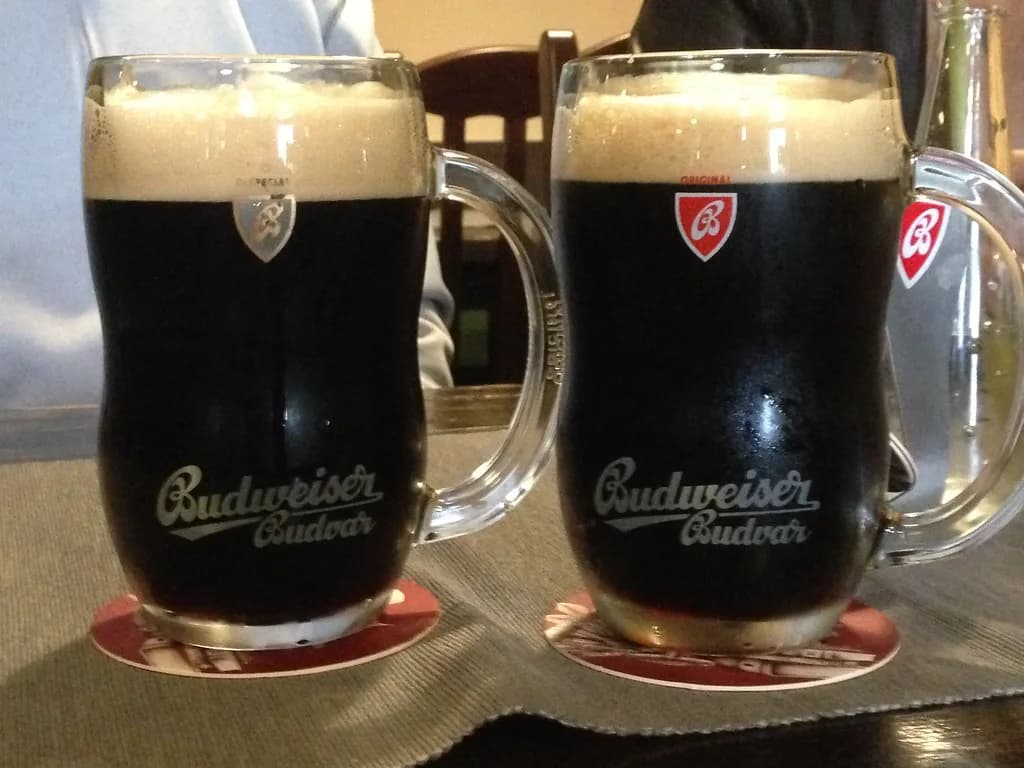
Tmavé pivo is a dark lager with caramel and roasted malt flavors, and it is nothing like a British stout or porter. It is lighter-bodied, slightly sweet, smooth, and very drinkable, which makes it a good early order if you like malty beer. Kozel Černý and Staropramen Dark are the common examples you will find across the country.
Do not expect stout weight or a heavy roast bite here. The pleasure of a Czech tmavé is how easily it goes down, so treat it as a session beer rather than a dessert.
Polotmavé pivo: the amber middle ground and how often you'll see it
Polotmavé pivo is the semi-dark amber lager that sits between světlé and tmavé, keeping some caramel character while staying as drinkable as a pale. It is less common than the two main colors, so treat finding one as a bonus rather than a plan. When a pub does offer it, it is an easy way to taste the malt side without committing to a full dark.
Řezané pivo: the light-and-dark blend and why not every pub pours it
Řezané pivo is a cut beer: the bartender draws light and dark from two taps into the same glass and layers them, so you get the crispness of světlé over the malt depth of tmavé. Not every pub offers it, and you should not assume it is a standard pour. Ask before you count on it, and order it at least once when you find a pub that does.
Nefiltrované pivo: unfiltered lager and what the haze means
Nefiltrované pivo is unfiltered lager, hazier and slightly yeasty, with more body and flavor than the filtered version of the same beer. Many Czech breweries produce an unfiltered variant alongside their standard bottle or tank. Staropramen Nefiltrované and Kozel Nefiltrovaný are common enough that you can try the difference without hunting.
The degree system: what 10, 11, and 12 measure and rough ABV ranges
The number with the degree symbol on a Czech tap sign is not alcohol percentage. It is the Plato scale, a measure of the sugar content of the wort before fermentation, so a 10-degree beer (desítka) is lighter and more sessionable while a 12-degree (dvanáctka) is fuller-bodied. Most everyday Czech beer sits at 10 or 11 degrees.
As a rough conversion, a 10-degree lager lands around 4.0–4.5% ABV and a 12-degree around 4.8–5.5% ABV. Those ranges are the useful guide rather than an exact figure for any single brand. Order by degree when you want to control the pace of an evening without reading every label.
Výčepní, ležák, and other words on the tap sign
Beyond the degree, Czech tap signs carry strength-and-body words alongside the color words. Výčepní and ležák are the terms you will see marking lighter and fuller lagers, so read them as a second strength cue rather than as a color. For names beyond the big brands, the Czech lagers gathered in this rated list are a decent starting point when you want to branch out.
Pilsner Urquell, Budvar, and the 1842 Plzeň story that made pale lager global
The pale lager story starts in 1842 in Plzeň (Pilsen), about 90 kilometers west of Prague, where a Bavarian brewer named Josef Groll combined Bohemian Saaz hops, pale Moravian malt, soft local water, and bottom-fermenting yeast. The result was the first golden lager, clear and bitter and refreshing in a way the cloudy ales of the era were not, and it was called Pilsner Urquell. Within decades brewers everywhere were copying it.
Budějovický Budvar, sold as Czechvar in the United States, is the other big name travelers ask about, and its beer is a separate product from American Budweiser. The two share a name history rather than a recipe. If brand lineage interests you, Budweiser Budvar is the place to read more.
For the brewing side of that heritage, Pilsner Urquell Brewery in Plzeň is the anchor stop, and the fuller Czech beer guide on this site ties the brands together with where they are made.
How to order: pivo prosím, velké versus malé, and saying dvanáctku
"Pivo, prosím" gets you the house lager, typically a světlé in a half-liter glass, and it is a perfectly acceptable default. Velké means large, 0.5 liters, and malé means small, 0.3 liters; most Czechs drink velké. The half-liter is the normal unit, so order malé only when you want to pace yourself.
The local shortcut is to specify strength instead of brand: saying "dvanáctku, prosím" tells the bartender you want a twelve, and "desítka" gets you a ten. In a pub pouring several beers, that phrase tells the bartender exactly what you are after without needing to know any names on the taps.
The glass: why Czech pubs serve in handled mugs and what a hladinka pour is
Czech beer glasses typically run from 0.3 liters (třetinka) to 0.5 liters (půllitr), and they are handled mugs with thick glass. The common mug is the krýgl, sometimes called sklenice s uchem, which means glass with an ear. The dimpled Tübinger is the one most visitors recognize, and a proper hladinka pour leaves the foam ending right around where the dimple portion begins, so the foam looks intentional rather than like a mistake.
The Lukr side-pull faucet, around since the 1990s, uses a ball valve, a flow-control compensator, and a tap screen to build that decadent foam, and the faucet is inserted into the glass while pouring, a practice other beer cultures discourage. That is why the mug shape and the foam go together.
Where to drink it: brewery-linked pubs and beer halls on a Czech Byways route
Drinking Czech beer well is mostly about choosing the right kind of pub rather than chasing a list. A pub that takes its beer seriously will pour a proper hladinka and may offer a řezané or an unfiltered variant, while a basic village hospoda sticks to one house lager and does it cheaply.
Brewery-linked pubs and beer halls along the main byways routes are the low-effort version of this, since the beer travels a short distance and the selection tends to be broader. Tank pubs, where beer is served from a tank rather than a keg, are another marker of a place that cares about freshness. Outside Prague, the beer towns of Plzeň (Pilsen) and České Budějovice (Budweis) put you close to the source.
How to order your first Czech beer
Start with the house světlé in a half-liter, ask for a desítka if you want something lighter and a dvanáctka if you want more body, and try a tmavé or a řezané when the pub offers one. That sequence gives you the whole everyday range in a single sitting without memorizing brands.
Prices vary by town and by pub type, and the tap sign tells you strength long before it tells you cost, so check the menu board before you order if budget matters. Beyond that, the only real rule is to drink responsibly and keep the evening short enough to enjoy the next day's sightseeing.
Explore more Czech Republic guides
Frequently Asked Questions
What is the difference between Czech and American Budweiser?
They are separate products from separate companies. Budějovický Budvar in the Czech Republic sells its beer as Czechvar in the United States, while American Budweiser is brewed by a different company. The shared name comes from the town of České Budějovice, known in German as Budweis, and the two beers have no recipe connection.
What are the most popular Czech beers to look for?
Pilsner Urquell, Staropramen, and Kozel Světlý are the pale lagers you will see most often, with Kozel Černý and Staropramen Dark as the common dark options. Smaller breweries like Pivovar Matuška and Dva Kohouti brew a wider range of styles, including IPA, stout, and wheat beer, alongside traditional Czech lager, though you will find them in fewer pubs.
Is a 12-degree Czech beer stronger in alcohol than a 10-degree?
Usually yes, but not dramatically. The degree figure measures sugar in the wort before fermentation, not alcohol, so a 10-degree lager lands roughly around 4.0–4.5% ABV and a 12-degree around 4.8–5.5% ABV. Treat those as rough ranges rather than exact figures for any single beer.
Sources
Notes for your Czech trip
Optional updates to our Czech town guides.
You might also like
Continue reading
More guides you'll find useful