Czech Desserts: What to Order, How They're Served, and Where
Czech desserts range from choux pastries like věneček and laskonka to fruit dumplings and honey cake. Learn what each one is and how to order it.
On this page
Czech desserts are not a plated restaurant course but a shop ritual: you walk into a cukrárna, a pastry shop with a glass case and a coffee machine, point at what looks good, and eat it standing or at a small table. This guide sorts the sweets by pastry family so you can read a case at a glance, gives the Czech spelling to point at, and explains how each one is served and where it turns up on menus around the country.
The vocabulary matters more than any single recommendation. A věneček and a větrník come from the same choux dough, a laskonka is a meringue sandwich, and a koláč is yeast dough with a fruit or cheese center; knowing these three families covers most of what a Czech pastry counter sells.
The cukrárna: where Czech desserts actually live
A cukrárna is a pastry shop, not a café in the American sense, though most have a few tables and serve coffee. The case is the menu: trays of small cakes and pastries sold by the piece, often priced per hundred grams or per item, so you can assemble a plate of three or four different things instead of committing to one slice.
Cukrárny sit on ordinary town squares and shopping streets across the country, and in smaller towns they double as the local meeting spot for a mid-afternoon coffee. Treat the stop as a small event: order two pastries rather than one, because portions are built for coffee rather than for dessert after a full dinner.
For the savory side of the same food culture, from dumplings to roasted meats, the Czech food overview is the place to start before you plan a pastry stop into a day of sightseeing.
The choux family: věneček, větrník, kremrole and their cousins
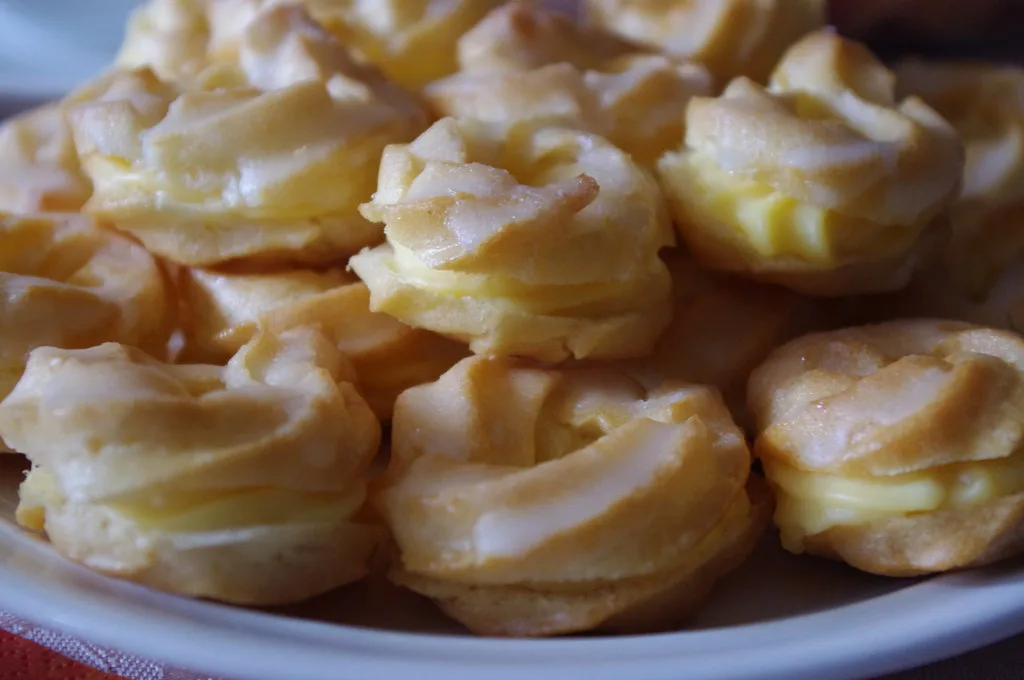
Choux pastry dominates Czech counters. A věneček is a ring of choux filled with vanilla pastry cream and topped with sugar glaze, while a větrník uses the same dough with vanilla cream, caramel whipped cream and a caramel fondant top, so the difference is mostly the caramel.
What is the most popular dessert in the Czech Republic? There is no single national dessert, but the choux pastries věneček and větrník are the ones you will see in nearly every cukrárna, and koláče are the everyday bakery staple. Order both families once and you will have covered the most common Czech sweets.
Is trdelník actually Czech? Trdelník has Hungarian and Transylvanian roots and is best understood as street food, not a classic Czech dessert. Czechs eat it, especially in busy tourist areas, but it is not the pastry you would find at a family table or a traditional cukrárna.
What is the difference between koláče and trdelník? Koláče are soft yeast-dough pastries with a filled center of fruit, sweet cheese or poppy seed, sold in bakeries as an everyday sweet. Trdelník is rolled dough grilled on a stick and coated in sugar and cinnamon, a handheld street snack rather than a bakery pastry.
Two more choux shapes are worth recognizing. A kremrole is a puff-pastry roll with soft meringue inside, and a koňaková špička stacks chocolate cream and eggnog on a biscotti base under a chocolate cap; a rakvička, literally a little coffin, is a plain biscotti shell filled with whipped cream or chocolate cream. The coffin name is a Czech bakery pun, not a warning.
These are the sweets most likely to appear at a town-square cukrárna outside Prague, often made in-house from a house recipe rather than shipped in. Because choux pastries are filled on the day, they are the safest thing to order if you are unsure how fresh a case is.

Laskonka: the meringue sandwich
A laskonka is two or three meringue shells joined by ganache or cream, and the classic fillings run to nuts including coconut, caramel and chocolate. It is crunchy, light and almost insubstantial in the hand, which is why Czechs eat it with coffee rather than as a finish to a meal.
In a case full of cream-filled pastries, the laskonka is the one that travels well: it survives a train ride or a walk back to an apartment far better than anything with fresh cream. If you want a pastry to carry to a viewpoint or a picnic, choose this family over the choux.
Koláče and buchty: the yeast-dough sweets
Koláče are soft yeast-dough pastries with a depressed center filled with fruit, sweet cheese or poppy seed, and they are a staple of Czech bakeries rather than a special-occasion item. Buchty are the plainer sibling: pillowy buns filled with jam, poppy-seed paste, sweet cheese or plum preserves, the kind of thing sold in bags of four.
Order a koláč with a coffee at breakfast time and you will be eating the way a Czech town does before work; the poppy-seed and fruit versions are the ones to try first. These are also the cheapest way to sample several fillings, since bakeries sell them individually rather than by the slice.
Medovník: the layered honey cake
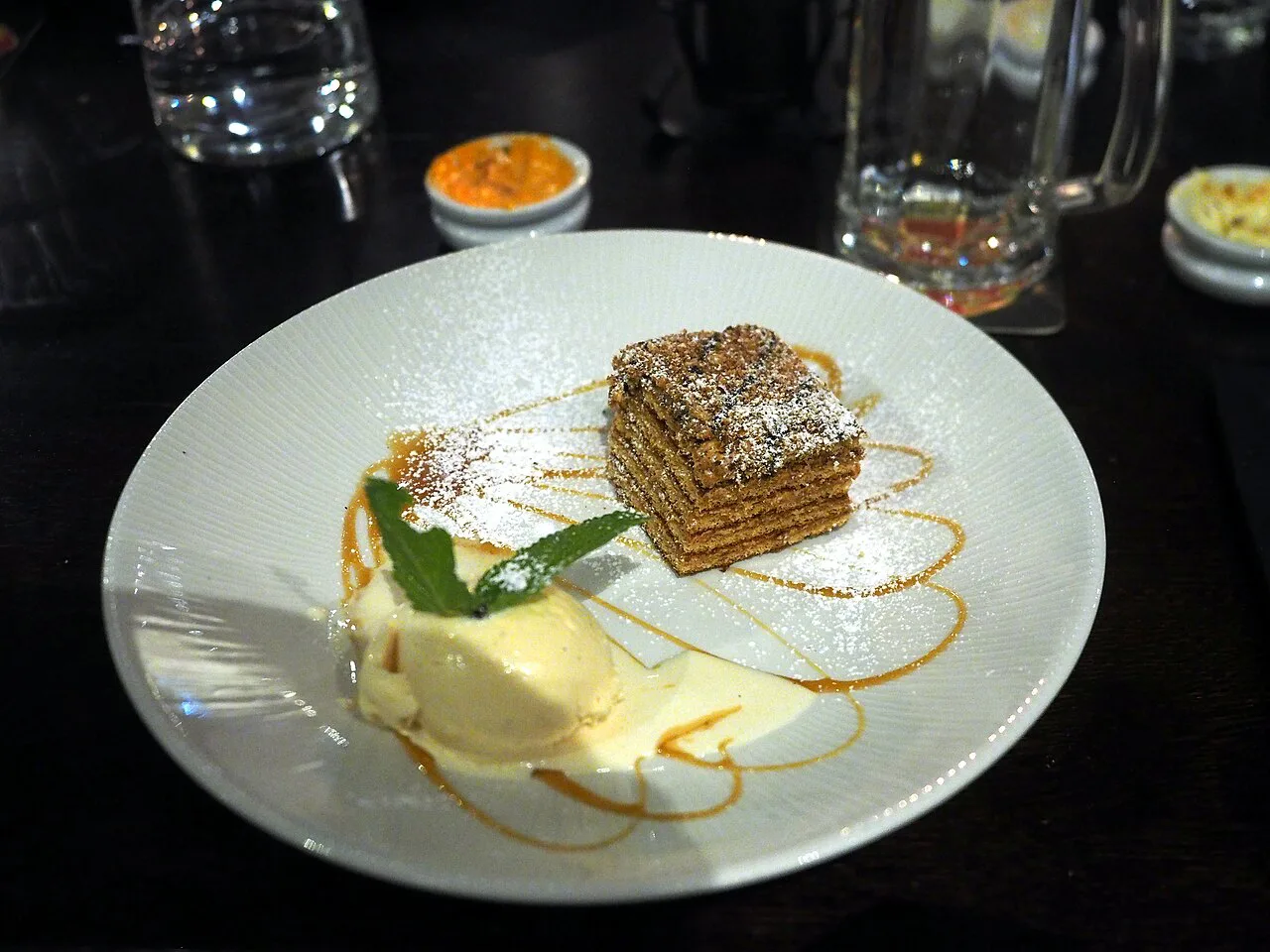
Medovník is a layered honey cake with a creamy filling and a mild spice note, often served at cafés and on special occasions; it is richer and heavier than the choux pastries and comes as a slice rather than a small piece. Because it keeps well, it is a good choice in a café that may not bake daily.
If you have room for one sit-down dessert on a trip, make it this one: a slice and a coffee is a proper Czech afternoon, and the honey flavor is unlike anything in the choux case.
Fruit dumplings: the dessert that shows up as a main
Ovocné knedlíky are sweet dumplings filled with fresh fruit such as plums, apricots or strawberries and topped with melted butter, sugar and farmer's cheese or poppy seed. They are a true comfort food and, crucially, they often appear on the main-dish side of a Czech menu rather than with the desserts.
Read the menu by section rather than by assumption: if fruit dumplings are listed among the main courses, that is how the kitchen serves them, and a portion is a full plate rather than a small sweet. They are the single best argument for ordering dessert as lunch in the Czech Republic.
Palačinky, lívance and štrůdl: the everyday sweets
Palačinky are thin crepes filled with jam, chocolate or sweet cheese and dusted with powdered sugar, served in cafés across the country; lívance are thicker, fluffier pancakes with jam, whipped cream or berries. Both blur the line between breakfast and dessert, which is exactly how they are eaten.
Štrůdl, the Czech apple strudel, is usually baked with apples, raisins, cinnamon and sugar and served warm with whipped cream or ice cream. It is the least sweet of the group and the safest order for anyone who finds Czech desserts too sugary.
Trdelník is street food, not a classic Czech dessert
Trdelník, the chimney cake of rolled dough grilled on a stick and coated in sugar and cinnamon, is the most visible sweet in tourist centers, often filled with ice cream or chocolate spread. Czechs generally treat it as street food rather than as a dessert their grandmothers made, and it is not the pastry you would look for at a traditional cukrárna.
That distinction matters when you are choosing where to spend a pastry stop. If you want to understand Czech sweets, spend it at a cukrárna; if you want a hot, handheld snack while walking, trdelník does the job, and the chimney cake guide covers it separately.
How to order at a cukrárna
Point at the case, say the Czech name if you can, and order coffee to go with it: the local default is a small, strong espresso or a cappuccino rather than a large milky drink. If you want the full experience, ask for alžírská káva, coffee with whipped cream and eggnog, the traditional pastry-shop drink that delivers caffeine and sugar in one glass.
Prices at a cukrárna are usually posted per piece or per hundred grams, so you can total a plate before you commit; pay at the counter or at the table depending on the shop. Carry some koruna cash alongside your card for small-town pastry shops.
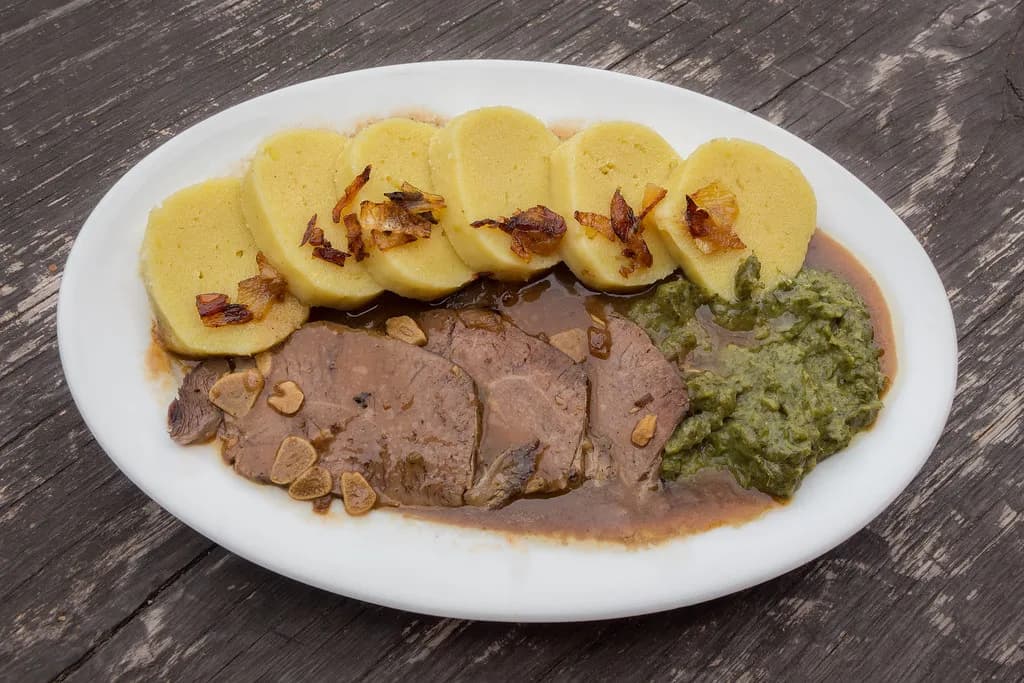
If you are eating a full Czech lunch first, a main of Svíčková na Smetaně with dumplings will leave no room for the case, so plan the pastry stop for mid-afternoon instead.
What a pastry stop looks like outside Prague
Away from Prague, the cukrárna is usually one room with a few tables, a refrigerator case and a coffee machine, and the clientele is local and unhurried. That is the setting to try the pastries you cannot easily carry: anything with fresh cream, fruit dumplings in season, and a slice of medovník with a proper coffee.
The timing is the same everywhere: mid-afternoon, roughly between the end of lunch and the start of dinner, is when Czechs sit down for coffee and cake, and the case is freshest earlier in the day. A pastry stop is also a cheap way to break up a day of sightseeing in an ordinary town.
Some sweets cross over into savory territory in a way that surprises visitors. Bramboráky, potato pancakes, are not dessert, but they appear on the same café menus and are worth knowing when you read a board that mixes sweet and savory.
How sweet are Czech desserts, really?
Less sweet than American cakes and more cream-heavy than French pastry: the sugar is in the glaze or the meringue rather than in the dough itself. If you normally find desserts too sweet, start with štrůdl or a koláč, and work up to the caramel-topped větrník and the honey cake.
Coffee is not a side note but a structural part of the experience, which is why a plate of three small pastries with an espresso usually feels balanced where one large slice does not.
Which pastry should you order first?
Start with a věneček or a laskonka and an espresso at the first cukrárna you pass in a smaller town, because those two show you the choux and meringue families in one sitting. Then branch out: a koláč at breakfast, fruit dumplings if they are on the main menu, and a slice of medovník when you want to sit down.
Ask at the counter which pastries are made in-house that day, and look for the price per piece before you build a plate.
Explore more Czech Republic guides
Frequently Asked Questions
What is the most popular dessert in the Czech Republic?
There is no single national dessert, but the choux pastries věneček and větrník are the ones you will see in nearly every cukrárna, and koláče are the everyday bakery staple. Order both families once and you will have covered the most common Czech sweets.
Is trdelník actually Czech?
Trdelník has Hungarian and Transylvanian roots and is best understood as street food, not a classic Czech dessert. Czechs eat it, especially in busy tourist areas, but it is not the pastry you would find at a family table or a traditional cukrárna.
What is the difference between koláče and trdelník?
Koláče are soft yeast-dough pastries with a filled center of fruit, sweet cheese or poppy seed, sold in bakeries as an everyday sweet. Trdelník is rolled dough grilled on a stick and coated in sugar and cinnamon, a handheld street snack rather than a bakery pastry.
What is medovník?
Medovník is a layered honey cake with a creamy filling and a mild spice note, usually served as a slice in a café. It is richer and heavier than the choux pastries and keeps well, which makes it a reliable order where the case may not be baked daily.
Sources
Notes for your Czech trip
Optional updates to our Czech town guides.
You might also like

Continue reading
More guides you'll find useful