Czech Christmas Cookies: A Guide to Cukroví
Czech Christmas cookies, or cukroví, come in dozens of kinds. Here are the main types, what each one is, and how they fit the Christmas Eve table.
On this page
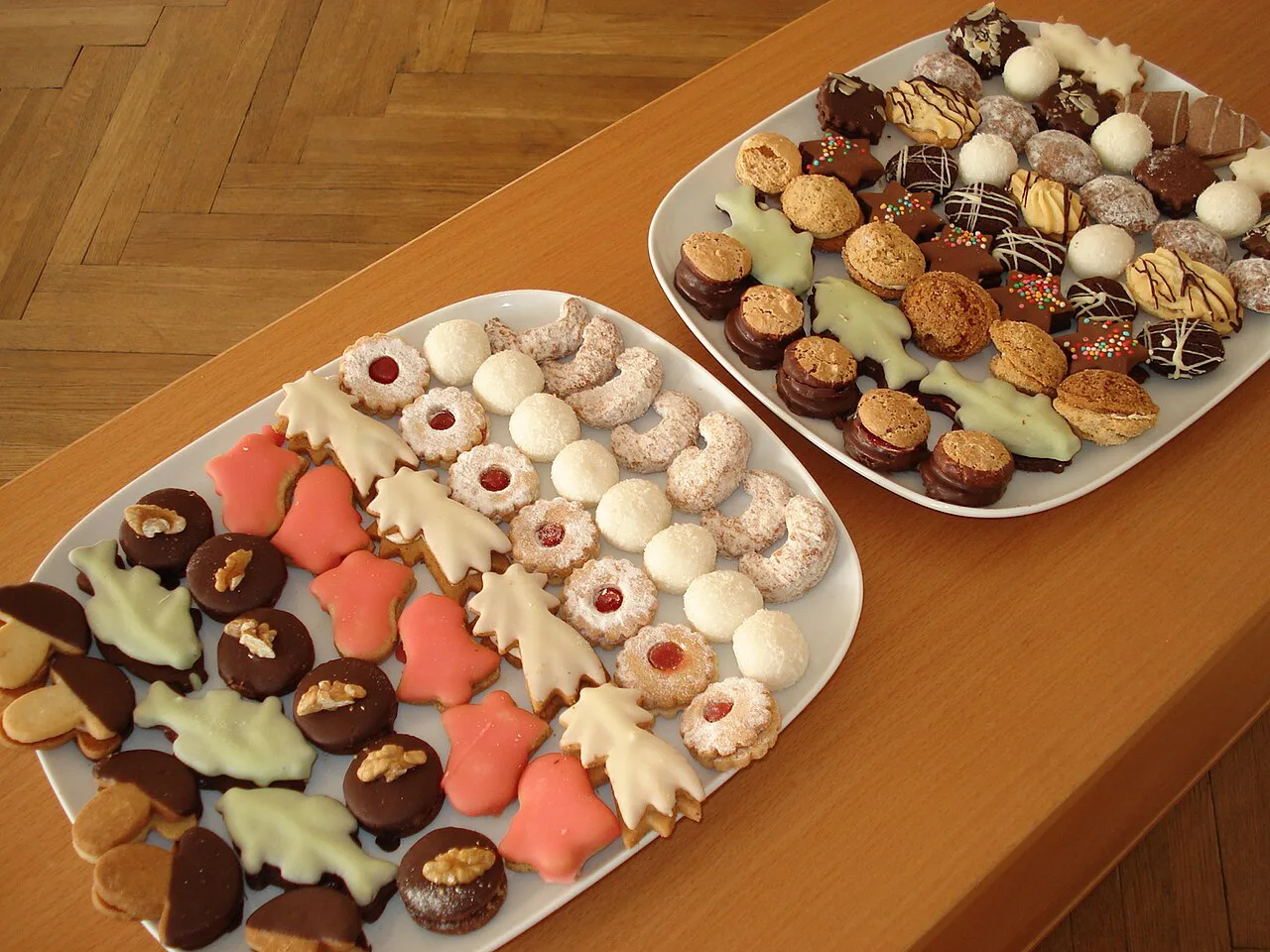
Czech Christmas cookies are called cukroví, and the name covers a whole assortment of small treats rather than a single recipe. Households bake several types and serve them together on one plate, so the point of cukroví is variety: something nutty, something jam-filled, something spiced, something no-bake. This guide explains the kinds a visitor is most likely to meet, what each one actually is, and how they sit on the Czech Christmas table.
None of it is restaurant food in the usual sense. Cukroví belongs to Advent baking at home, and it appears in shops and at Christmas markets only as a seasonal extra alongside the main Czech food traditions of the holiday.
What cukroví means on a Czech table
Cukroví refers to the small, carefully made cookies that Czech families bake in the weeks before Christmas, eaten through Advent and offered to visitors with coffee. The category matters because a Czech host will usually present a plate holding several different kinds rather than a single batch. A recipe for one cookie therefore tells you only part of the story of a Czech Christmas table.
The cookies are small by design, often a few bites each, so guests can work around the plate and try every type. They are also made to keep: many kinds are baked early and stored so the flavors settle and the texture softens before the holiday. That storage logic explains why some types taste better a week after baking than on the day they come out of the oven.
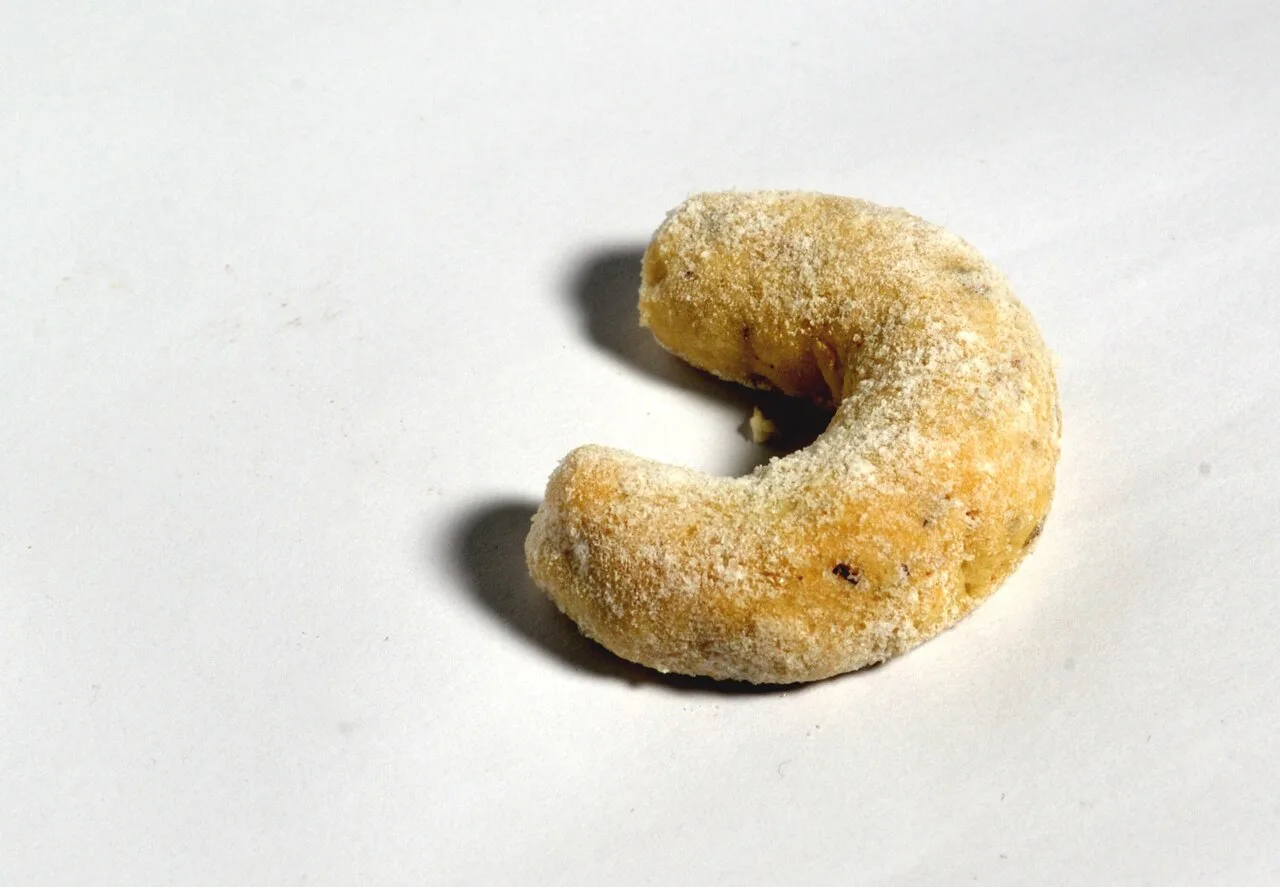
Vanilkové rohlíčky (vanilla crescents)
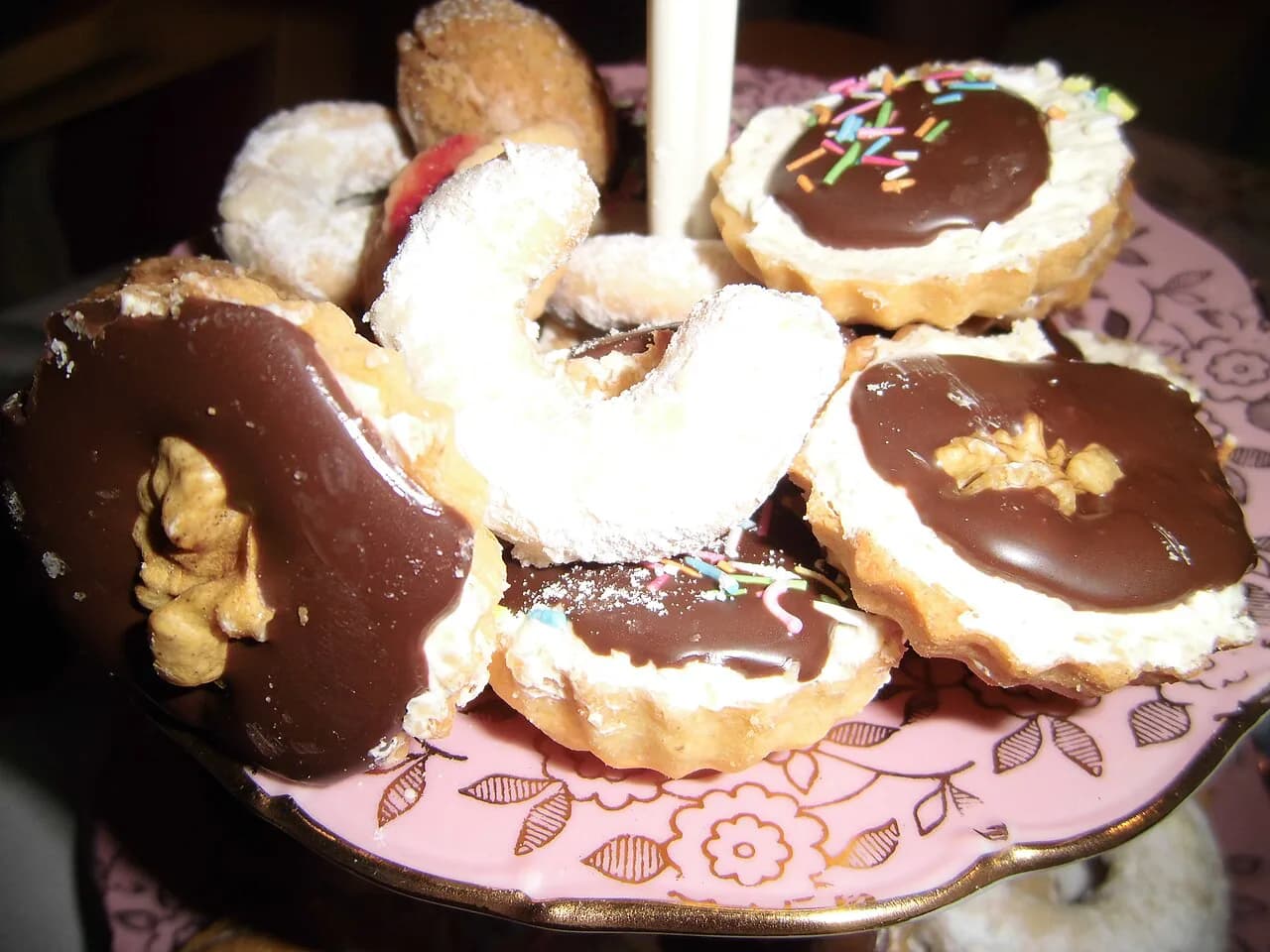
Vanilkové rohlíčky are crescent-shaped cookies built on flour, butter, ground walnuts and powdered sugar, then rolled while still warm in a mix of powdered and vanilla sugar. The ground nuts give them a short, crumbly bite, and the vanilla coating is what most people remember. A Czech baking guide describes the crescents as a symbol of good luck and happiness for the year ahead.
What is the difference between cukroví and perníčky? Cukroví is the general name for the whole assortment of small Christmas cookies, while perníčky are one specific type: spiced honey gingerbread cookies shaped and iced. A Czech cookie plate usually holds several kinds of cukroví, and perníčky may be just one of them.
Are Czech Christmas cookies served as dessert after dinner? They are mainly eaten through Advent with coffee or offered to visitors, and they appear on the Christmas Eve table after the fried carp and potato salad. They are small and sweet rather than a plated dessert, so people nibble several kinds rather than finishing one large portion.
Expect a dry, delicate cookie rather than a chewy one. Because they rely on nuts and butter, they pair naturally with coffee or tea and are usually eaten without any accompaniment.
Linecké cukroví (Linzer cookies)
Linecké cukroví are sandwich cookies: a shortbread base spread with jam, topped with a second piece that has a hole cut in the middle so the jam shows through, then dusted with powdered sugar. Czech bakers shape them as hearts, flowers or stars and often use red currant or raspberry jam. The name comes from the Austrian city of Linz, and the cookie found its way into Czech cuisine from the Austro-Hungarian Empire, of which the Czech lands were part until 1918, as a Czech baking site explains.
Bakers make them a few days ahead so the shortbread softens against the jam, which is why a fresh Linzer cookie can seem crisp while one left to rest tastes softer. The cut-out top is the easy way to tell them apart from a plain jam cookie.
Perníčky (Czech gingerbread)
Perníčky are the spiced cookies of the Czech Christmas plate, made with honey and a gingerbread spice mix of cinnamon, cloves, anise and ginger. They are cut into hearts, stars and angels and finished with simple icing made from powdered sugar and water. Unlike the butter cookies, gingerbread is often left to mature so the spices mellow and the cookie softens.
You will also see large decorated gingerbread hearts at markets, but the small iced perníčky on a family plate are the version that belongs to cukroví. They are the spiciest thing on the plate and the one most likely to be noticed by anyone expecting a plain butter cookie.
Vosí hnízda (wasp nests)
Vosí hnízda, or wasp nests, are the no-bake oddity of the Czech Christmas assortment. Crushed ladyfingers, powdered sugar, cocoa, butter, rum and egg yolk are mixed into a dough, pressed into a mold to make a hollow shape, filled with buttercream or custard and sealed with a small cookie or piece of ladyfinger. The result looks like a little nest or beehive.
They are richer and boozier than the baked cookies, with a cocoa flavor and a hit of rum that makes them stand out on a mixed plate. Because they are assembled rather than baked, they are usually made closer to the holiday than the long-keeping butter cookies.
How the cookies fit the Christmas Eve table
Cukroví is the sweet finish to Štědrý den, Christmas Eve, the most important day of the Czech Christmas. The savory centerpiece is fried carp, served with a creamy potato salad and often preceded by a fish soup made with carp parts. The cookies come out after that meal, alongside coffee or a glass of something sweet.
Fresh carp is traditionally sold from street-side vendors in the days before Christmas Eve, which is why the fish feels like part of the run-up rather than a supermarket purchase. For anyone who does not want carp, breaded cod, salmon or a vegetarian option such as breaded cauliflower can stand in. The cookie plate does not change either way.
Buying rather than baking
Visitors who are not baking can still meet cukroví at Christmas markets and in bakeries during Advent, where small boxes and mixed bags appear next to gingerbread hearts and other seasonal sweets. The selection is usually narrower than a home plate, so a market is a good place to try two or three kinds rather than the full range. Look for a stall selling several shapes together, which usually signals a proper assortment.
If you want a sit-down taste of Czech baking outside the holiday, the wider world of Czech desserts and pastries is a better bet, from fruit dumplings to cream-filled pastries. Those are year-round food, while cukroví is tied to Advent and the Christmas table.
Czech cookie vocabulary to recognize what you're buying
A few words do most of the work. Cukroví is the general term for the small Christmas cookies; vanilkové rohlíčky are the vanilla crescents; linecké cukroví are the jam sandwich cookies; perníčky are the iced gingerbread; and vosí hnízda are the no-bake cocoa nests. If a label says vánoční cukroví, it means a Christmas assortment.
Two useful words for the rest of the meal: bramborový salát is the potato salad served with carp, and smažený kapr is fried carp. Knowing those lets you read a Christmas Eve menu even if the cookie names still look like a puzzle.
Which cookie to try first
Start with vanilkové rohlíčky if you want the classic butter-and-walnut cookie, linecké if you like jam, perníčky if you want spice, and vosí hnízda if you want the one with rum and cocoa. Trying one of each on a mixed plate is the closest a visitor gets to the Czech Christmas table without baking.
Outside Advent, set the cookies aside and look at the savory side of the cuisine, from Svíčková na Smetaně to bramboráky. Cukroví is a seasonal treat, and the rest of the Czech kitchen is there all year.
Explore more Czech Republic guides
Frequently Asked Questions
What is the difference between cukroví and perníčky?
Cukroví is the general name for the whole assortment of small Christmas cookies, while perníčky are one specific type: spiced honey gingerbread cookies shaped and iced. A Czech cookie plate usually holds several kinds of cukroví, and perníčky may be just one of them.
Are Czech Christmas cookies served as dessert after dinner?
They are mainly eaten through Advent with coffee or offered to visitors, and they appear on the Christmas Eve table after the fried carp and potato salad. They are small and sweet rather than a plated dessert, so people nibble several kinds rather than finishing one large portion.
Sources
Notes for your Czech trip
Optional updates to our Czech town guides.
You might also like
Continue reading
More guides you'll find useful