Czech Pastries: A Traveler's Guide to Koláče and Buchty
Czech pastries are everyday bakery foods, not restaurant desserts. Learn what to try, how they are filled and where to look beyond Prague.
On this page
Czech pastries are everyday bakery food, not restaurant desserts, so you find them at a counter in the morning rather than on a dessert menu at night. Look for a pekárna (bakery) for the sweet yeast items and a cukrárna (café-confectioner) when you want a sit-down slice. This guide covers the pastries worth knowing, how they are filled and shaped, and how ordering and paying work in Czech koruna.
The vocabulary matters less abroad than at home: if you learn four names, koláče, buchty, závin and vánočka, you can read most bakery windows in the country. Koláče are small open tarts with a raised rim and a fruit or cheese filling, and buchty are filled buns rolled from the same dough. Together they cover most of what a Czech bakery counter offers before noon.
Koláče: the round yeast pastry
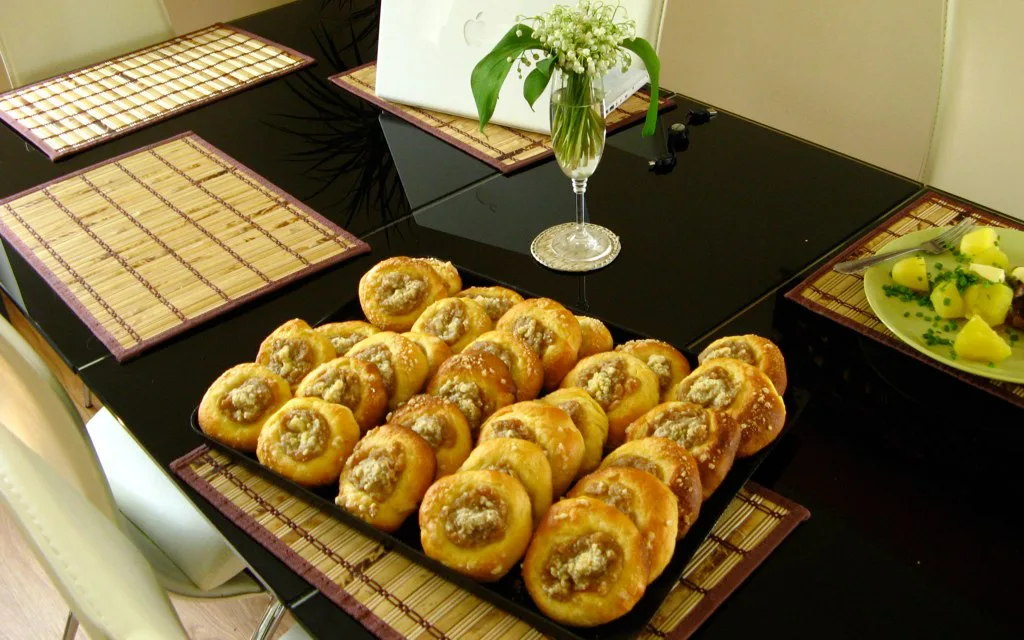
A koláč is a round, slightly sweet yeast pastry with a raised rim around a filled center, closer to a small tart than to a croissant. The common fillings are fruit such as plum or apricot, ground poppy seed, and tvaroh, the fresh curd cheese that turns up in sweet and savory Czech dishes alike. At bakeries they are usually sold singly or by weight, and a smaller palm-sized version often appears at celebrations and family gatherings.
When you buy one, look at the rim: a well-made koláč holds its filling without soaking the dough, which is why the center is set slightly lower than the edge. Eat it the same day for the best texture, and pair it with coffee rather than treating it as a full meal.
Buchty: the filled yeast bun
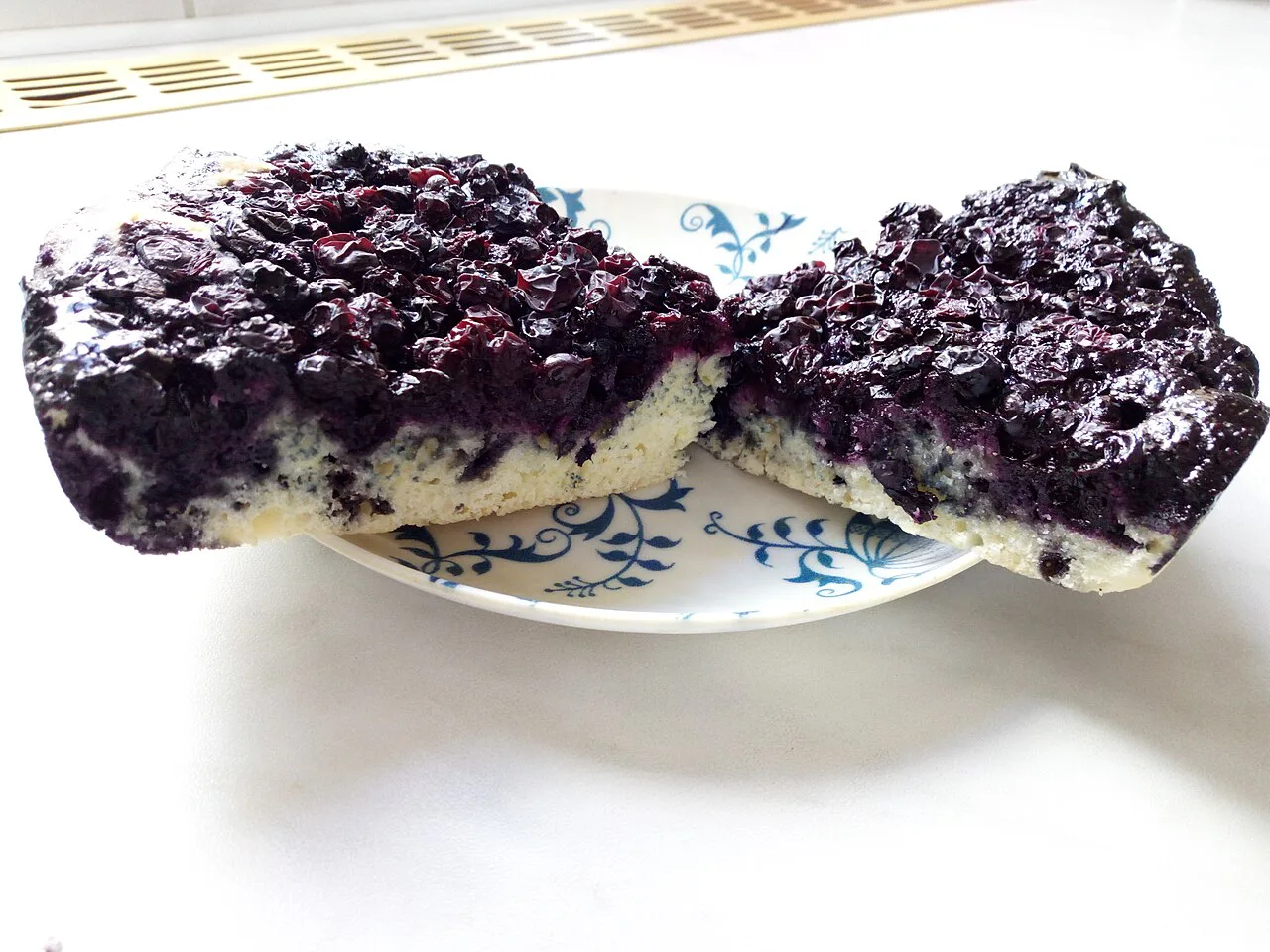
Buchty are yeast buns with a filling folded inside, so the fruit, jam, poppy seed or tvaroh stays hidden until you break one open. That is the practical difference from koláče, where the filling sits openly on top: buchty travel better in a bag and are the pastry most likely to appear on a breakfast table. They are also the base for a baked dish served with custard, but at a bakery you will simply see them stacked by the tray.
Are Czech pastries sweet or savory? Both, and they usually share the same counter. Koláče, buchty, závin and vánočka are sweet, while rohlíky and housky are salt-topped savory rolls sold by the piece alongside them.
Do I pay differently at a bakery and a café? At a bakery you pay at the counter when you order and carry most items away in a bag. At a cukrárna you sit down and pay either when ordering or at the end, depending on the house, and prices are in koruna.
Is trdelník a traditional bakery pastry? It is a street snack sold on tourist routes rather than a bakery staple, so you will find it on sightseeing streets more readily than at a neighborhood pekárna. Buy one if it appeals, but it is not the pastry Czechs queue for at breakfast.
If you want to try one of the country's sweet main courses at a restaurant, the fruit version of these dumplings is a good entry point, and it shares the same fruit-and-dough logic as the bun. The Czech food guide covers the broader menu, including the savory dumplings that anchor most lunches.
Vánočka: the braided Christmas bread
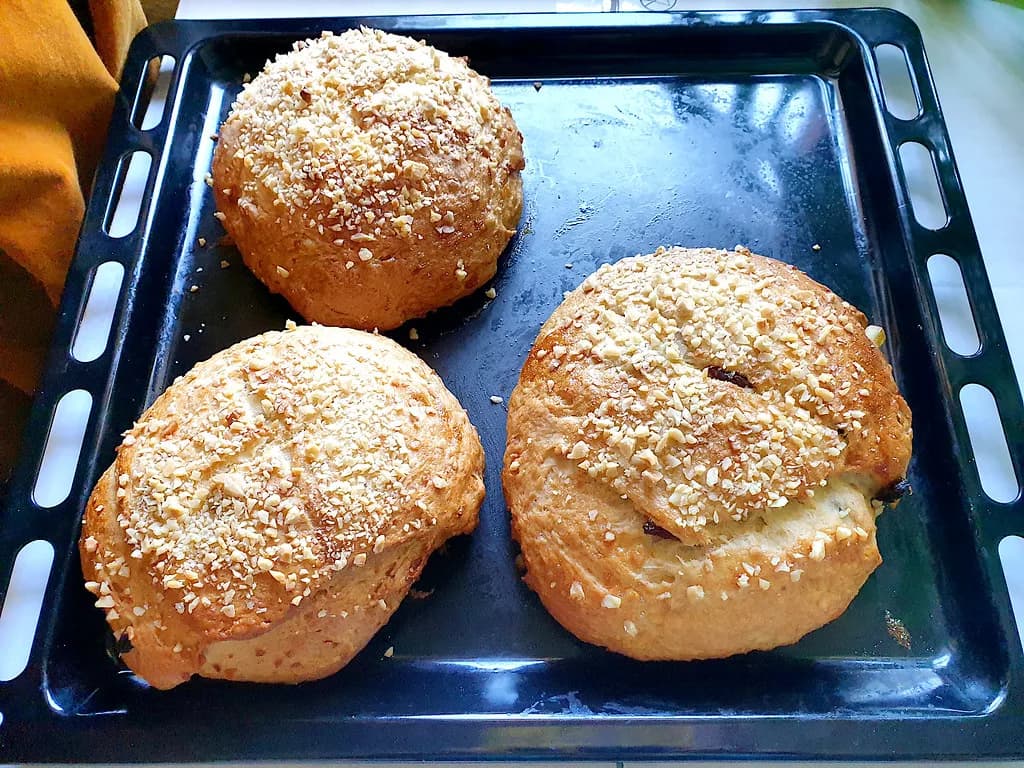
Vánočka is a braided sweet bread leavened with yeast, richer than an everyday loaf and traditionally baked for Christmas. It is sold as a whole loaf rather than by the slice, and Czech households eat it sliced, often toasted with butter or jam, for several days after baking. Outside December you may not see it at all, so treat it as a seasonal bake rather than a year-round bakery staple.
Because it is a bread, it keeps better than a cream-filled pastry and survives a train ride in a paper bag. Slice it thick, warm it briefly, and it works as a breakfast rather than a dessert.
Štrúdl and závin: the apple roll
The Czech apple roll is called jablkový závin, and štrúdl is the everyday word borrowed from Austrian German for the same thing. It is a rolled pastry filled with grated apple, cinnamon and often raisins or walnuts, sold by the slice at bakeries and cafés. Order by pointing at the slice you want, or ask for one kus (one piece), and expect it warm rather than chilled.
Poppy seed versions are just as common as apple ones and are the better test of a bakery, since a dry poppy filling shows immediately. You will also find savory rolls on the same tray, so check before you point.
Rohlíky and housky: the everyday rolls
Rohlík is the crescent-shaped white roll and Houska is the oval roll, both topped with salt or seeds and both the backbone of a Czech breakfast. They are savory, cheap and sold in bags by the piece, which makes them the fastest introduction to a Czech bakery counter. Split one, add ham and cheese, and you have the standard packed lunch.
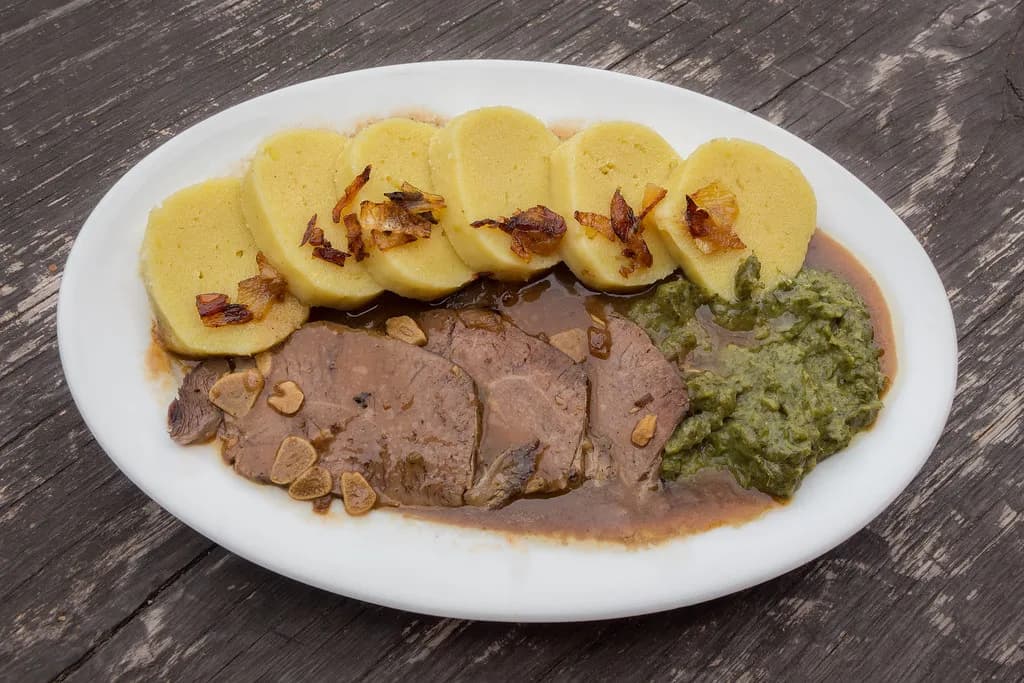
These rolls sit alongside the sweet side of the cuisine, and the bread dumplings served with roast meats come from the same instinct for plain, yeasted staples. Svíčková na Smetaně, the marinated beef in cream sauce, is the classic dish to order when you want to see what those dumplings are for.
Sweet dumplings as a main course
Fruit dumplings belong on a restaurant plate rather than at a bakery counter: they are a sweet main course of dough wrapped around plum or apricot, topped with melted butter, sugar and curd cheese. Portions are substantial, which is why Czech menus list them among the main dishes and not among the desserts. Order one between two people if you plan to eat anything else that evening.
For a fuller picture of how the sweet side of the menu fits with the savory one, the broader guide to Czech desserts is the place to look. It also explains where ovocné knedlíky sit among the other sweet plates.
Pekárna versus cukrárna
A pekárna is a bakery: you queue at a counter, choose from trays of bread, rolls, koláče and závin, and take most of it away in a paper bag. A cukrárna is a café-confectioner where you sit down, order coffee and a plated slice, and pay at the end or when you order, depending on the house. Knowing which you have walked into saves confusion, especially when a bakery has two small tables by the window.
At either place, prices are in koruna and card payment is common but not universal, so carry some coins for a small bakery purchase. If you are eating a sit-down slice, a small tip rounded up to the next ten or twenty koruna is the normal gesture.
Trdelník and the tourist street
Trdelník, wound around a spit and rolled in sugar, is the dominant sweet snack on Prague's sightseeing streets, and food writers treat it as a separate category from the Czech pastries you find at a bakery counter. That does not make it bad: it is warm, sweet and photogenic, which is exactly why it costs more in the center of Prague or Český Krumlov than anything on a bakery tray. Treat it as a snack you buy knowingly, not as the national pastry.
If you want a real pastry, walk a few streets away from the main square: the bakeries that supply breakfast to residents sit on ordinary streets, not on the sightseeing circuit.
Where to buy pastries outside Prague
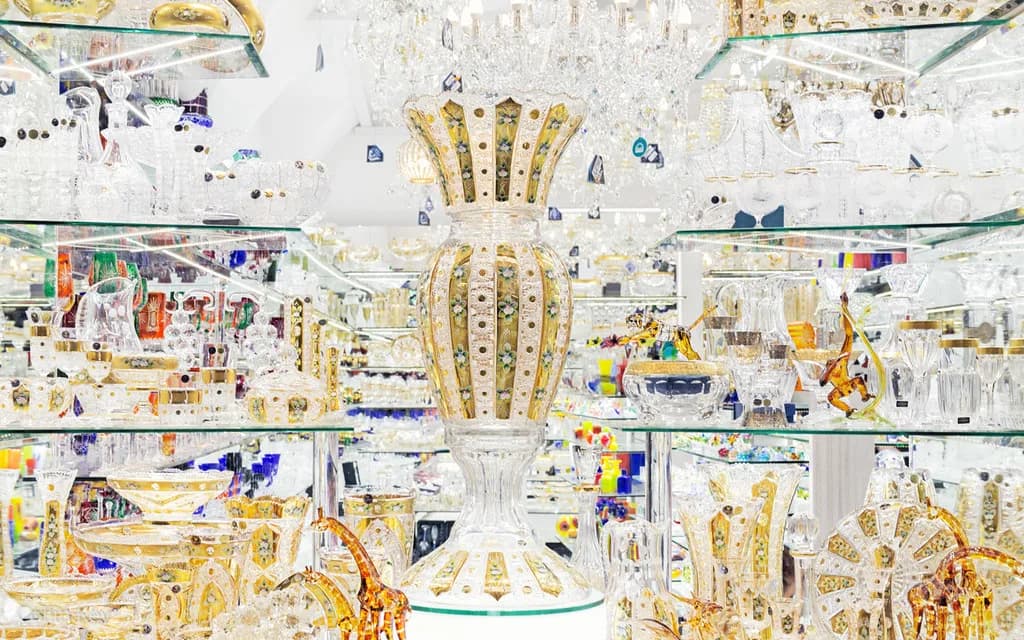
In regional towns the bakery counter is where the everyday pastries live, and the same names appear across Bohemia and Moravia, so you can order koláče or buchty in Plzeň, České Budějovice or Brno with the same words. Karlovy Vary has a long tradition of porcelain made for the spa table, which is a reminder that sweet things here have always been served with coffee rather than as a final restaurant course.
A spa town morning is the easiest setting to try this: buy a roll and a koláč from a bakery near your hotel, eat them outside, and you have the local breakfast without a menu.
What travels home
Poppy seed and nut fillings keep better than anything with cream, so a whole vánočka or a nut roll is the safer souvenir; fresh koláče are best eaten within a day or two. Anything with whipped cream or custard should stay in the country. If you want to bring back something non-food, the porcelain made near Karlovy Vary is the more durable reminder of the region.
Which pastry to order first
Start with a koláč and a buchta from the same bakery counter, then compare them: the open tart and the filled bun taste different even when the filling is identical. Add a rohlík for the train, and leave the sit-down slice for an afternoon when you have time for coffee.
Explore more Czech Republic guides
Frequently Asked Questions
Are Czech pastries sweet or savory?
Both, and they usually share the same counter. Koláče, buchty, závin and vánočka are sweet, while rohlíky and housky are salt-topped savory rolls sold by the piece alongside them.
Do I pay differently at a bakery and a café?
At a bakery you pay at the counter when you order and carry most items away in a bag. At a cukrárna you sit down and pay either when ordering or at the end, depending on the house, and prices are in koruna.
Is trdelník a traditional bakery pastry?
It is a street snack sold on tourist routes rather than a bakery staple, so you will find it on sightseeing streets more readily than at a neighborhood pekárna. Buy one if it appeals, but it is not the pastry Czechs queue for at breakfast.
Sources
Notes for your Czech trip
Optional updates to our Czech town guides.
You might also like

Continue reading
More guides you'll find useful