Chlebíčky: What Czech Open Sandwiches Are and How to Order Them
Chlebíčky are Czech open-face sandwiches on veka bread, built on a spread and topped with ham, egg and cheese. Learn the layers and how to order them.
On this page
A chlebíček is a small Czech open-face sandwich built on a slice of veka, a white bread similar to a baguette, and eaten in a few bites. It is a snack rather than a meal, and it is one of the most reliable things to buy in a Czech delicatessen when you want something quick between sights. This guide breaks down the layers so you can read any display case, then covers how to order, what variations exist, and how chlebíčky work as party food.
Think of the dish as a piece of Czech food with a clear logic: a bread base, a spread that holds everything, then toppings piled in a deliberate order. Once you know that sequence, a case full of unfamiliar sandwiches stops being guesswork and becomes a menu you can scan in seconds.
What chlebíčky are: a small open-face sandwich on veka
The name comes from chleb, the Czech word for bread, and a chlebíček translates roughly as a small piece of bread. In practice it means a slice of soft white veka topped rather than filled, so the toppings are fully visible and the whole thing can be picked up and eaten standing at a deli counter or walking to the next square.
A typical chlebíček weighs around 100 grams, which is why Czechs treat it as a snack and not a lunch replacement. Buy two or three if you are hungry, or pair one with a soup such as kulajda for a light sit-down meal.
The anatomy of a chlebíček: base, spread, toppings
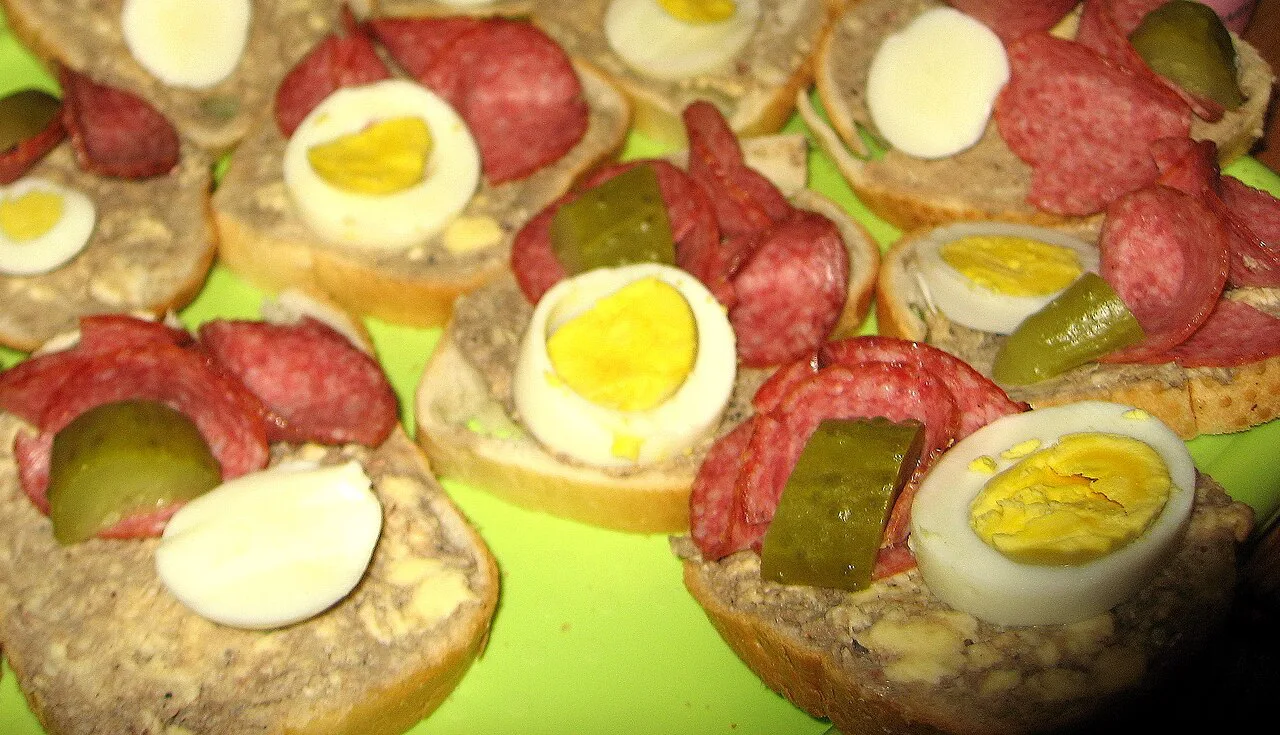
The proper base is veka, a white bread that looks like a slim French baguette sliced crosswise. Before any topping goes on, the slice gets a spread that acts as a moisture barrier and a flavor anchor: butter, mayonnaise or horseradish cream are typical, as are the two Czech deli salads, vlašský salát and pochoutkový salát. The topping usually dictates which spread the maker chooses.
What are Czech open-face sandwiches called in Czech? They are called chlebíčky, singular chlebíček, from the Czech word chleb for bread. A chlebíček is a slice of veka topped with a spread and then ham, egg, cheese or vegetables, eaten as a snack rather than a full meal.
Do Czech delicatessens sell chlebíčky to take away? Yes. Lahůdky delicatessens and bakeries across the country sell them from display cases, by the piece or by weight, and many will pack them to go.
Above the spread comes the recognizable layer: slices of cheese, hard-boiled egg and meat, then fresh vegetables such as lettuce, tomato, cucumber and sweet peppers. A slice of pickle and a sprig of parsley typically finish the top. Read a case in that order and you can tell a plain cheese version from a fully loaded one without speaking Czech.
The original 1916 recipe from Jan Paukert
The chlebíček traces its origin to 1916 and to Prague deli chef Jan Paukert, whose shop served the notable figures of the day, including first Czechoslovak president Tomáš Masaryk and opera soprano Ema Destinnová. His original version spread potato salad made with homemade mayonnaise on the bread, then stacked Prague ham, hard-boiled egg, Emmental cheese, Hungarian salami and a slice of tomato.
That combination works as a benchmark. When you see potato salad under Prague ham and egg in a modern lahůdka, you are looking at the classic rather than a novelty, even if the maker has shortened the list. The dish was designed from the start as a quick bite for busy people, which is exactly how it still functions for a traveler between trains.
The everyday version you will actually see
Most chlebíčky sold today follow the same grammar with a shorter list of toppings: cheese, egg, meat, lettuce, tomato, cucumber, sweet pepper, a pickle slice and parsley. Delicatessens and bakeries across the country keep cases stocked with them, and the range is often wider than a first-time visitor expects.
This is where a chlebíček differs from the sit-down plates of Czech cuisine, the svíčková na smetaně and roasted meats that anchor a lunch menu. It is assembled cold, sold by the piece and meant to be eaten soon after purchase, which makes it the practical option on a day when castle tours and train times leave no room for a restaurant lunch.
What it weighs and how it functions
At roughly 100 grams, one chlebíček is a between-meals snack, not a full meal. The practical move is to buy two or three at a counter, or take a platter back to your room if you are staying outside the center of a town.
Because it needs no cutlery, it also travels well: wrap it flat and it survives a short train ride or a bench stop on a town square. Avoid leaving it in a warm bag for long, since the mayonnaise-based spreads and egg do not improve with time.
Where to buy them: lahůdky delicatessens and bakeries
Chlebíčky are sold from the display cases of lahůdky, the Czech delicatessens, and from many bakeries, countrywide rather than only in Prague. On the road between towns, this is often the fastest and cheapest way to eat well without committing to a restaurant seating.
Brno has its own delicatessen examples, such as the Ema delicatessen that turns out topped slices worth looking for if you are spending time in Moravia. Elsewhere, look for a shop window full of small topped slices of white bread; that display is the signal, not a sign with the word chlebíček on it.
Ordering in a lahůdky: point, choose, take it away
Ordering is simpler than the language gap suggests. Point at the tray or the individual slice you want, and expect to be asked how many; most shops sell by the piece, and some will weigh the selection. Take it to go in a paper bag or on a small tray if there is a standing table.
Many lahůdky also run an e-shop and let you collect an order on site, which is useful if you want a larger spread for a group. Pick a collection slot in advance, since popular times fill up.
Chlebíčky as party food
Beyond the single snack, chlebíčky are standard Czech party food. Delicatessens assemble trays and platters of them for birthdays, name days, office gatherings and celebrations, and the format scales easily from a dozen to a hundred.
If you are meeting Czech friends or staying somewhere with a kitchen, a platter of mixed chlebíčky is a reliable contribution and a way to try several types at once. Order a spread with a mix of bases, including the vlašský salát versions and the ham-and-egg classics, so the table has contrast.
Variations you will see: sizes, gluten-free bread and novelties
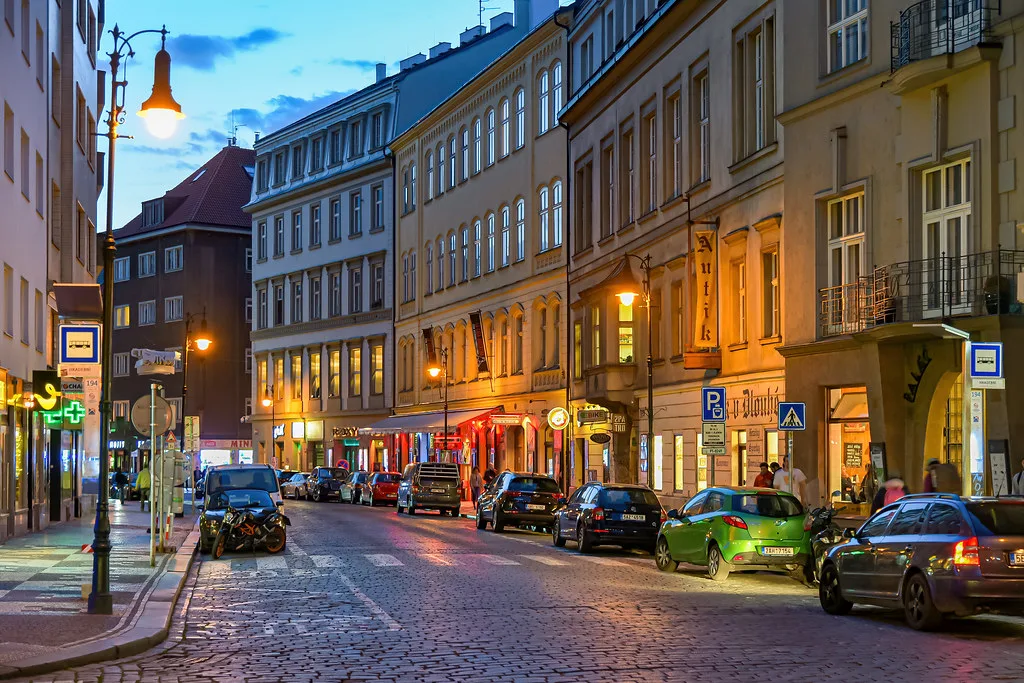
One Prague delicatessen, Zlatý kříž on Jungmannova Street, sells its sandwiches in three sizes, so you can scale from a single bite to a proper portion. The same shop also turns out savory aspik cakes and sausage flowers, which are worth trying once as a Czech deli curiosity.
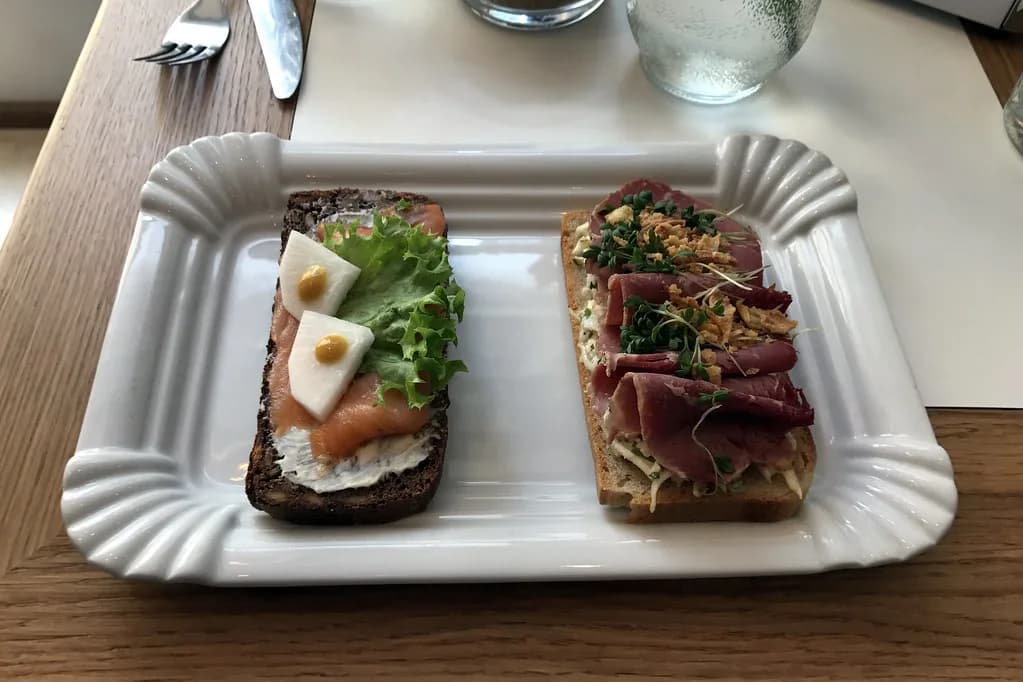
Sisters, the bread shop on Dlouhá Street (literally "Long Street"), uses open sandwiches with less usual fillings and offers its bread in a gluten-free version, which matters if you avoid wheat. The legendary Ovocný Světozor in the Vodičkova Street arcade has sold chlebíčky and pastries since the 1970s, and Café Savoy makes three types, including a Prague ham sandwich with potato salad, an egg sandwich and one with ricotta, goat cheese and beetroot.
What to expect to pay and how to eat one on the move
Chlebíčky are an inexpensive snack, and prices vary with the toppings and the shop rather than following a national rule. Check the price labels on the case before ordering, since a plain ham-and-egg version and a more elaborate house novelty will not cost the same.
To eat one cleanly, hold the bread base rather than the toppings and take bites from the narrow end. If you are on a train or a bench, ask the shop to pack it flat so the spread does not slide off before you get to it.
Build a Lahůdka Stop Into Your Route
The easiest way to work chlebíčky into a Czech trip is to make a lahůdka stop part of the travel day: buy two or three after a morning castle tour and eat them before an afternoon train. Pair them with a soup or a plate of houskové knedlíky if you want a fuller meal, and pick up a mixed tray when you are feeding a group.
Learn the base-spread-topping order and you can shop confidently in any Czech town, from Brno to Český Krumlov. Then follow the same logic into the rest of the Czech Food on the table, from Svíčková na Smetaně to the pastries in a Czech bakery.
Explore more Czech Republic guides
Frequently Asked Questions
What are Czech open-face sandwiches called in Czech?
They are called chlebíčky, singular chlebíček, from the Czech word chleb for bread. A chlebíček is a slice of veka topped with a spread and then ham, egg, cheese or vegetables, eaten as a snack rather than a full meal.
Do Czech delicatessens sell chlebíčky to take away?
Yes. Lahůdky delicatessens and bakeries across the country sell them from display cases, by the piece or by weight, and many will pack them to go. Some also offer an e-shop for collection, so you can order a larger spread ahead of time.
Sources
Notes for your Czech trip
Optional updates to our Czech town guides.
You might also like


Continue reading
More guides you'll find useful