Medovník: The Czech Honey Layer Cake, Layer by Layer
Medovník is a layered honey cake: thin baked honey sheets with caramel cream and walnuts, rested overnight until the layers soften. Here is what goes into it.
On this page
Medovník is a Czech layered honey cake built from many thin baked honey sheets, stacked with a caramel cream and finished with ground walnuts and crushed crumbs. Expect a soft, caramel-sweet wedge rather than a light sponge. This guide covers how the cake is put together, how it tastes, and which allergens to check before you commit.
The dish is short and simple: it is a dessert, it is eaten cold or at room temperature, and it hinges on a handful of familiar ingredients. Everything below is about understanding and eating medovník, not about baking it at home. For the wider picture of savory Czech food, from houskové knedlíky to roasted meats, see the Czech food guide.
What medovník is: thin honey sheets, not a sponge
Medovník belongs to the family of layered honey cakes, and its structure is the point. The dough is a honey-and-butter mixture with sugar, egg, baking soda and flour, rolled very thin and baked as separate circles before anything is stacked. A published medovník recipe divides the dough into eight portions, rolls each one into a thin round of about 24 cm and bakes it at 180°C for five to seven minutes.
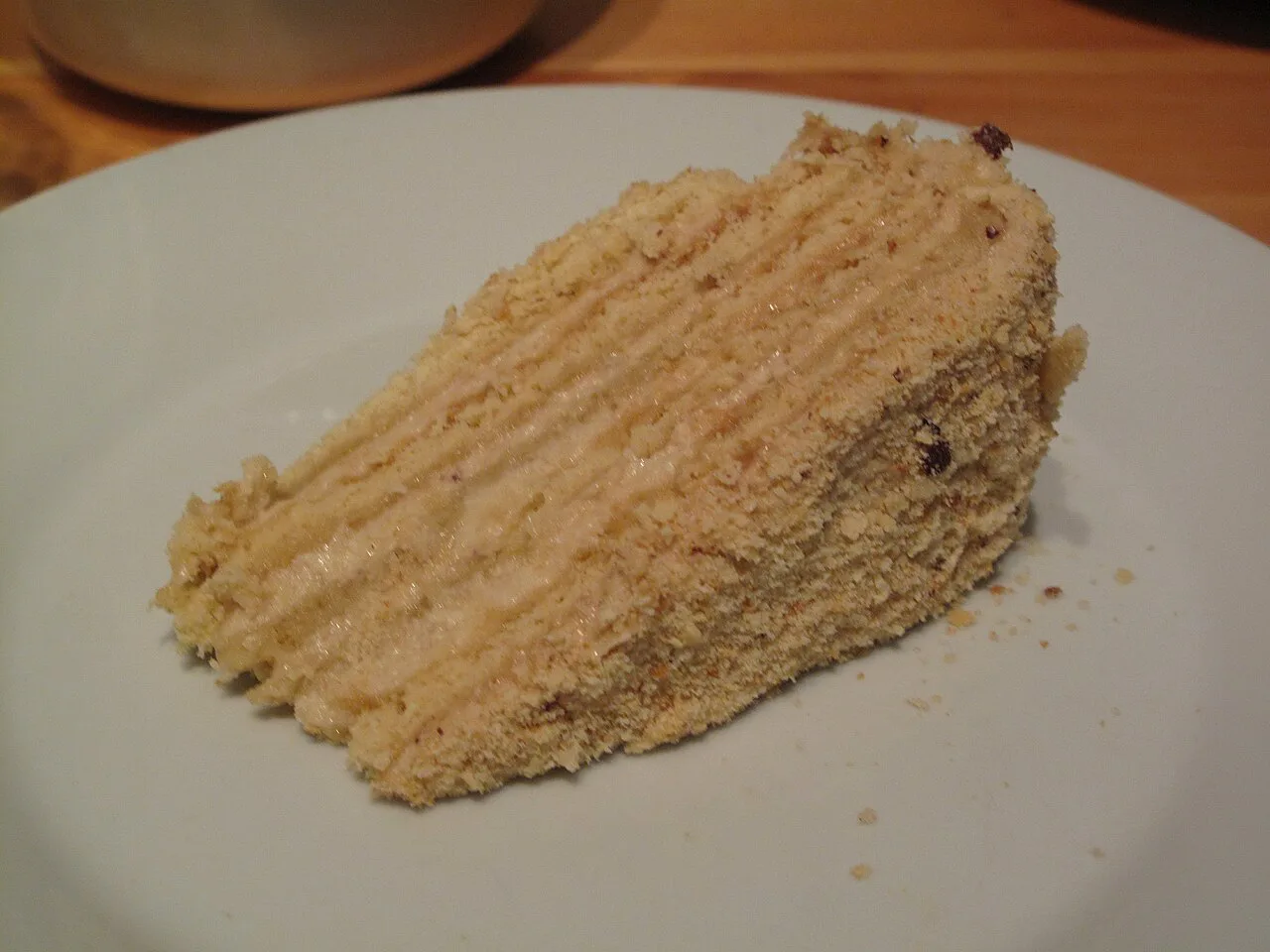
The result is a stack of crisp honey biscuits rather than a sponge cut into layers. The trimmings from the baked rounds are saved, crushed and used later as the coating, so nothing is wasted. That is why a slice looks dense and even, with visible thin lines running through the cream.
How medovník tastes and feels
A rested medovník is soft and caramel-sweet, with a honey flavor running through every layer and a cream that tastes of cooked, caramelized condensed milk. The topping adds a nutty, slightly bitter edge from ground walnuts mixed with the crushed crumbs, which keeps the cake from being one-dimensionally sweet. Serve it cold or at room temperature, and the texture changes noticeably between the two.
What is medovník? Medovník is a Czech layered honey cake made from thin honey-and-butter sheets baked separately, then stacked with a caramel cream (softened butter whisked with caramelized condensed milk) and coated with ground walnuts and crushed crumbs. It is dense and caramel-sweet rather than a light sponge.
Does medovník taste like regular honey cake? It shares the thin baked layers, cream filling and crumb coating of other Eastern European honey cakes, including Russian medovik. Expect a soft, caramel-sweet profile dominated by honey and the caramelized condensed-milk cream, with a nutty edge from the walnut coating.
Why does medovník need to rest in the fridge? The cake is assembled from crisp baked sheets and refrigerated for at least twelve hours before serving; the recipe says it is best at twenty-four to forty-eight hours after assembly. During that rest the honey layers draw moisture from the cream and soften.
The closest reference for a US reader is a graham-cracker or honey-cake dessert rather than a sponge cake: the layers are thin, the cream is generous and the whole thing is eaten with a fork. If you like the idea of a dense, creamy dessert after a savory Czech main, this is one worth trying. The same restaurant tradition produced Svíčková na Smetaně, a cream-sauced beef dish served with dumplings and cranberry, if you want to build a full Czech meal.
How the layers and cream are made
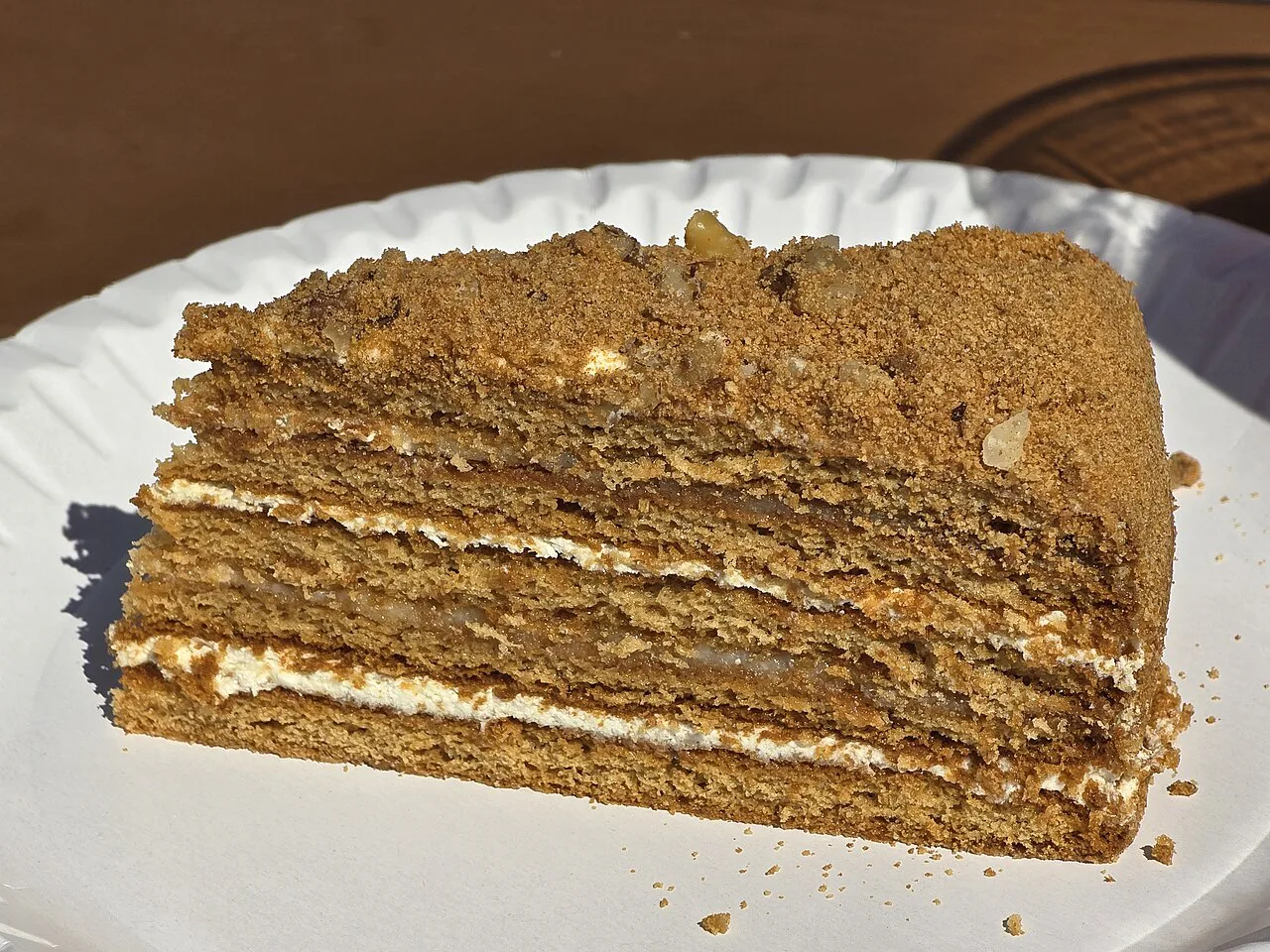
The dough comes together over a bain-marie: butter, sugar and honey are melted together, baking soda is stirred in until the mixture darkens and foams, then eggs and flour are worked in to make a soft dough. Each portion is rolled thin, pricked with a fork and baked until golden, then trimmed to a neat circle while still warm. The cream is separate and simple: softened butter whisked with caramelized condensed milk, also sold as dulce de leche or boiled condensed milk.
Assembly is a matter of alternating thin cream and baked sheet, then covering the top and sides with the remaining cream. The crushed trimmings are mixed with ground walnuts and pressed onto the outside as the final coating. No leavening beyond baking soda is involved, so the layers stay flat and even, which is what gives a slice its striped look.
Why medovník must be made ahead
A freshly assembled medovník is not ready to eat. The cake is refrigerated for at least twelve hours before serving, and the same recipe says the result is best after twenty-four hours, with the ideal window between twenty-four and forty-eight hours after assembly. During that rest the honey layers draw moisture from the cream and soften into something closer to cake than to biscuit.
That resting time is also why medovník works well as a make-ahead cake: it is designed to be assembled in advance and stored cold in an airtight container. The same recipe describes it as best at twenty-four to forty-eight hours after assembly.
Medovník in the Czech honey-cake tradition
Medovník is a Czech dessert in the repertoire of layered honey cakes common across the region. It is a honey cake rather than a specialty tied to one town, and you will find it among the country's broader dessert tradition.
If you are exploring the sweet side of the cuisine, medovník sits comfortably alongside the wider range of Czech desserts, from fruit dumplings to cream-filled pastries. Use it as one stop on a dessert crawl rather than the whole trip, and pair it with a coffee rather than a heavy meal.
How to ask for it at the counter
At the counter, say medovník (med-OV-neek) and point if the name does not land. A slice is served cold or at room temperature, and some cafés will warm nothing, so do not expect it hot. The recipe tradition behind it is a chilled, rested cake.
If you are building a fuller meal, order medovník after a savory main such as Czech goulash, and the cream and honey will cut through the richness.
Medovník and other honey cakes
Readers who have met honey cakes elsewhere will recognize the family resemblance: thin baked layers, a cream filling and a crumb coating are common across Eastern European honey cake traditions. Olga's Flavor Factory describes its medovik as a classic Russian recipe loved for generations, and The Kitchn presents a layered honey cake with whipped dulce de leche frosting. Medovník is the Czech name for a cake of this type, so if you have eaten a Russian medovik or a similar layered honey cake, you already know the texture and the caramel-sweet profile.
The easiest way to keep the names straight is to treat medovník as the Czech-language version of the same dessert family. Do not expect a light, airy sponge; the appeal is the dense stack of softened honey sheets and the caramel cream between them. That is also why it travels well as a whole cake.
Allergens to check before you order
The published recipe lists wheat, gluten, milk, eggs and tree nuts among its allergens, so a medovník made to that method contains flour, butter and condensed milk in the dough and cream, eggs in the dough, and walnuts in the topping. If you have a nut allergy in particular, ask before eating, because a walnut-and-crumb coating sits on the outside of the cake.
For a lighter, non-cake option, look at chlebicky, the Czech open-faced sandwiches that are a lunchtime staple and easy to check for ingredients. They make a practical alternative if the cake is off the table for allergy reasons.
Making your own medovník
The recipe is built to be made ahead and stored cold in an airtight container, which is the practical plan if you want to bake a medovník yourself: assemble it a day or two before serving. For a longer trip with a finished cake, a chilled bag or a cool box is the realistic way to carry it.
For a sense of the other sweet options in Czech shops, from pastries to cream-filled cakes, the Czech pastries guide covers the wider range of what to look for at the counter.
Is medovník the Czech dessert for you?
If you want to understand the style in one bite, take a slice of medovník: it is the most clearly layered cake in the repertoire, and one piece tells you whether you like the caramel-sweet, cream-heavy style. If you prefer lighter or fruit-based desserts, order fruit dumplings or a pastry instead, and save the honey cake for an afternoon coffee.
If you bake a whole cake, plan around the fridge and the resting time. A whole medovník needs cold storage for a day or two, so it works best at home or where you have a kitchen. Everything else is a matter of pointing at the slice you want and saying the name.
Explore more Czech Republic guides
Frequently Asked Questions
What is medovník?
Medovník is a Czech layered honey cake made from thin honey-and-butter sheets baked separately, then stacked with a caramel cream (softened butter whisked with caramelized condensed milk) and coated with ground walnuts and crushed crumbs. It is dense and caramel-sweet rather than a light sponge.
Does medovník taste like regular honey cake?
It shares the thin baked layers, cream filling and crumb coating of other Eastern European honey cakes, including Russian medovik. Expect a soft, caramel-sweet profile dominated by honey and the caramelized condensed-milk cream, with a nutty edge from the walnut coating.
Why does medovník need to rest in the fridge?
The cake is assembled from crisp baked sheets and refrigerated for at least twelve hours before serving; the recipe says it is best at twenty-four to forty-eight hours after assembly. During that rest the honey layers draw moisture from the cream and soften.
What allergens does medovník contain?
A medovník made to the published recipe contains wheat and gluten (flour), milk (butter and condensed milk), eggs, and tree nuts (walnuts in the topping). If you have a nut allergy, ask before eating because the walnut-and-crumb coating is on the outside.
How much medovník should I order?
Medovník is eaten in thin slices because the cake is dense and rich. A single slice with a coffee is a sensible portion, especially after a savory Czech main.
Sources
Notes for your Czech trip
Optional updates to our Czech town guides.
You might also like



Continue reading
More guides you'll find useful