Řízek: The Czech Schnitzel Explained (and How to Order It)
Řízek is a Czech breaded cutlet, usually pork or chicken, served with potato salad. Here is what to expect, how it is served, and how to order it.
On this page
Řízek is a Czech breaded cutlet, usually pork or chicken, and it is the closest thing on a Czech menu to a Wiener schnitzel. Order one and you get a full plate, not a snack: a large cutlet with potato salad or boiled potatoes on the side. This guide explains the name, the two meats, how it is served, and the words you need to order it.
Czech menus write it as řízek; without diacritics it appears as rizek, which is the form you will see in English-language listings and older signs. The word is related to the German Schnitzel, and the dish belongs to the same Central European breaded-cutlet family. Czechs pair it with a wider set of sides than the Austrian version does, and they eat it cold as well as hot.
What Řízek Is
A řízek is a thin slice of meat, pounded flat, dipped in flour, egg and breadcrumbs, then pan-fried until the coating turns golden. The Czech version is a home and pub staple rather than a restaurant showpiece, so it appears on ordinary lunch menus as readily as on festive tables. It is a main course by itself, sized for one hungry person.
The dish sits comfortably alongside the rest of the Czech repertoire of hearty plates, which you can browse in this guide to Czech food. If you are mapping the cuisine, think of řízek as the fried counterweight to the sauced meat dishes.
Pork or Chicken: Reading Vepřový and Kuřecí
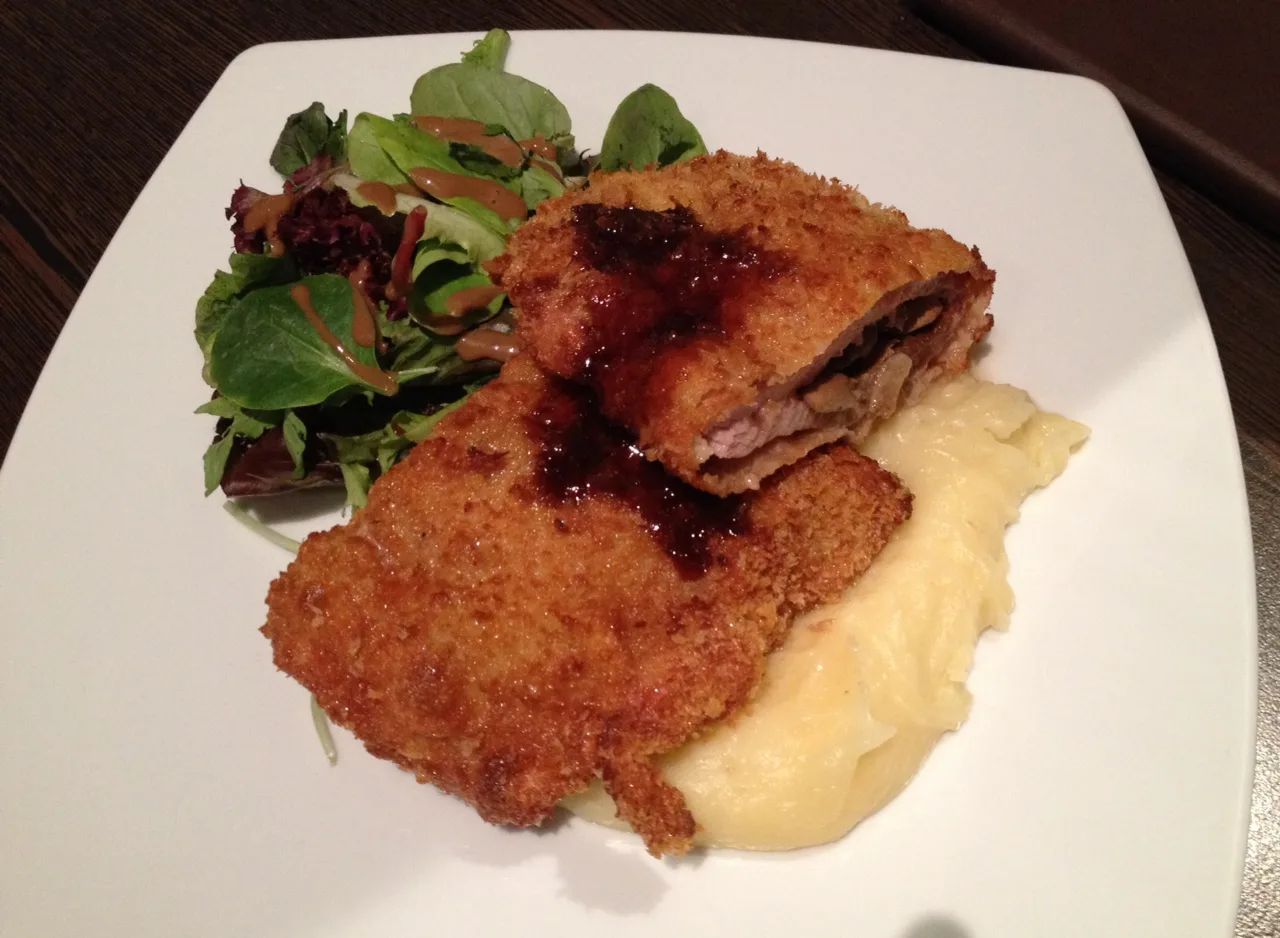
Most menus give you two choices. Vepřový řízek is pork, the default and the most common version; kuřecí řízek is chicken, lighter and usually the fallback for anyone who does not eat pork. Some places also list a turkey or a veal version, but pork and chicken are the pair to expect.
Pork or chicken: Most menus give you two choices. Vepřový řízek is pork, the default and the most common version; kuřecí řízek is chicken, lighter and usually the fallback for anyone who does not eat pork.
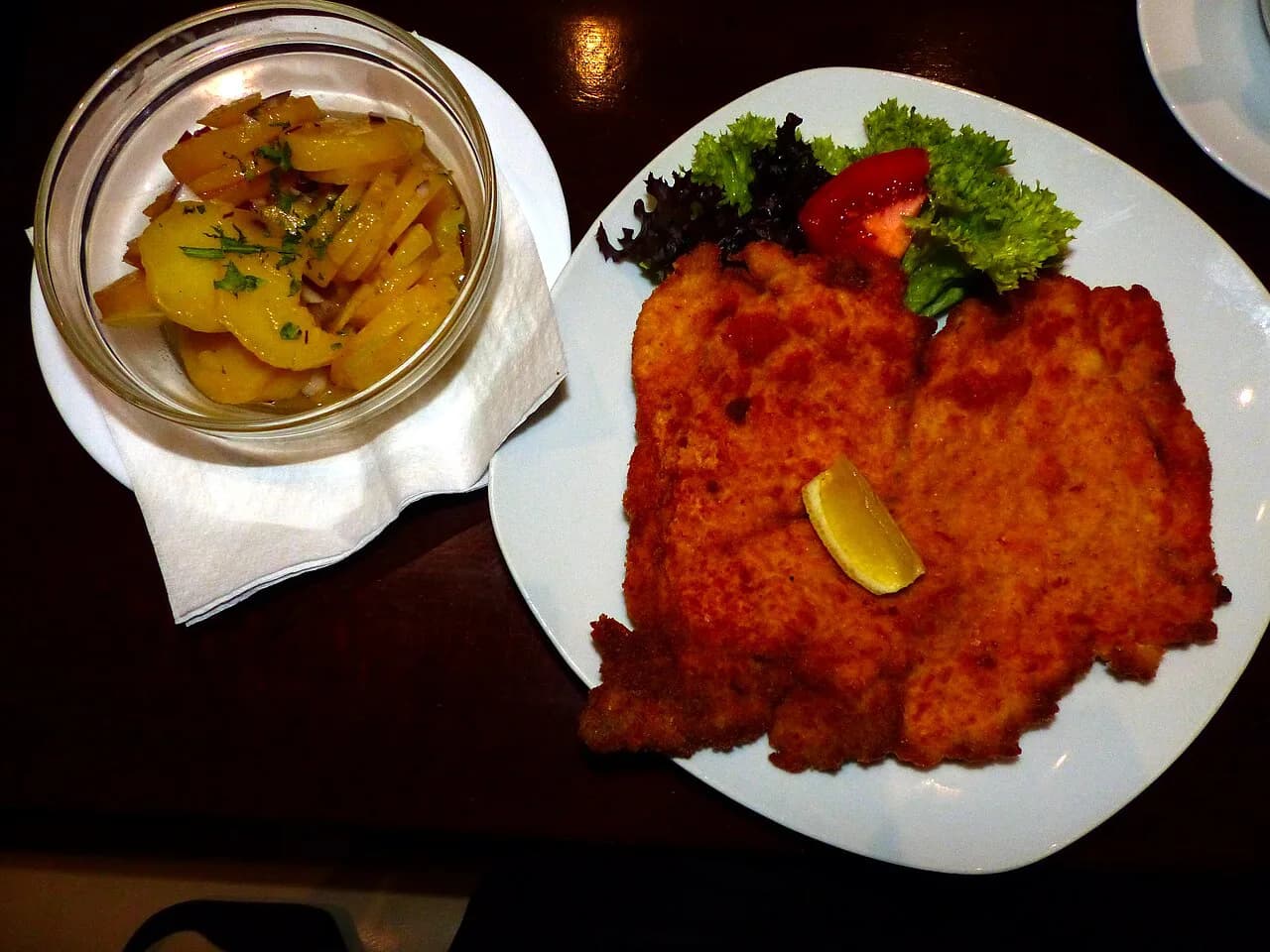
Sides: The classic plate comes with potato salad, a creamy mayonnaise-based salad with boiled potato, carrot, peas and pickle. The other common side is boiled potatoes, sometimes with butter and parsley.
When: Many Czech households serve řízek for Sunday lunch, and it holds a firm place on the Christmas table alongside potato salad.
The meat name comes first on Czech menus, so scan the adjective before the noun. If the listing reads simply řízek with no qualifier, ask which meat it is before ordering, since the kitchen decides. That one question prevents most ordering surprises.
How Řízek Is Served
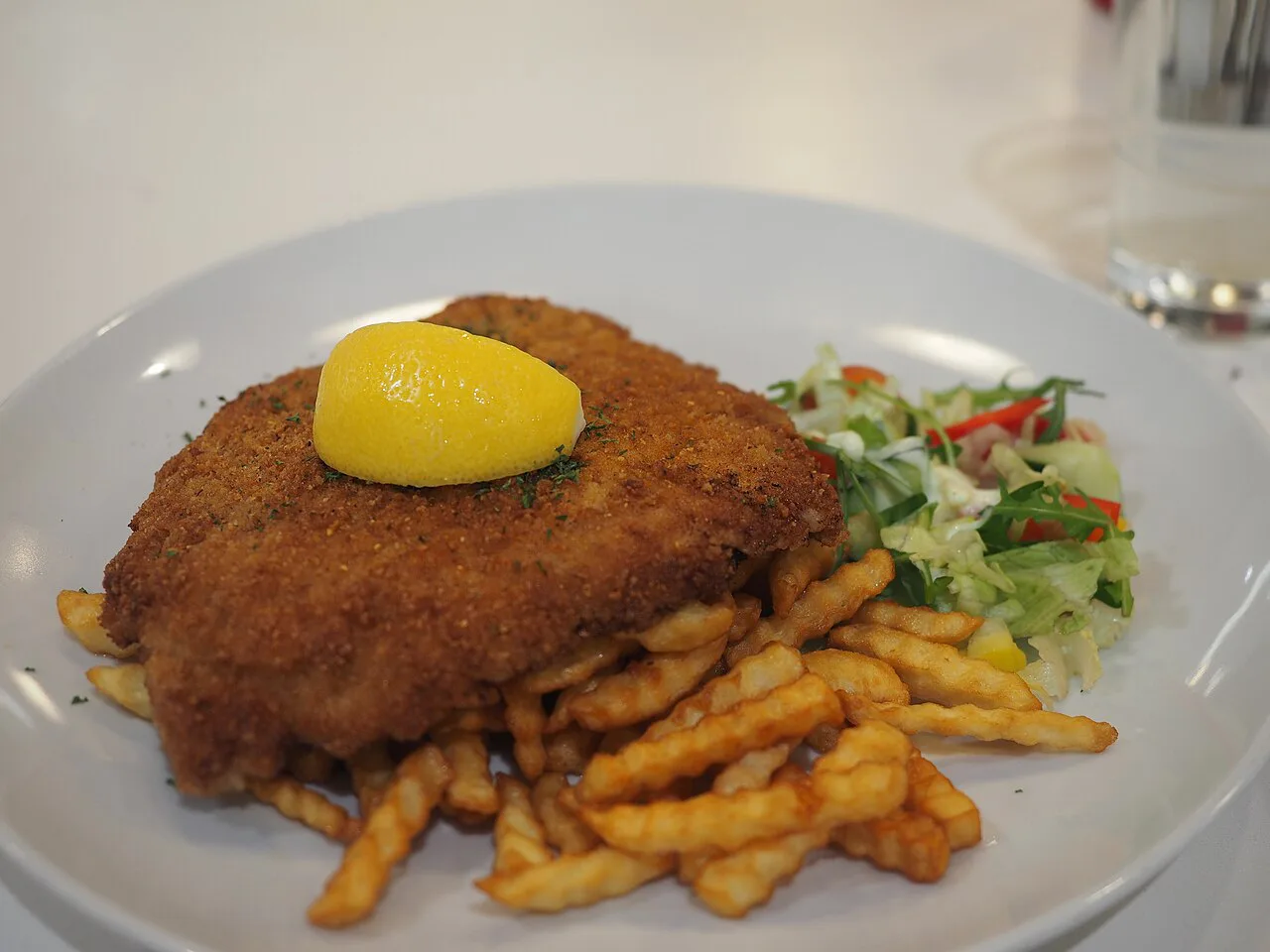
The classic plate comes with potato salad, a creamy mayonnaise-based salad with boiled potato, carrot, peas and pickle. The other common side is boiled potatoes, sometimes with butter and parsley. Either way the portion is substantial, and the side is part of the meal rather than an extra.
Řízek also travels well as cold food. A slice tucked into a bread roll, řízek v housce, is a standard cold lunch and picnic item sold at butcher shops and delis. This is the version to look for when you want something portable rather than a sit-down plate.
Why the Coating Puffs Away from the Meat
A well-made řízek has a crust that lifts slightly from the meat, leaving an airy gap under the breadcrumbs. That happens when the coated cutlet is fried in hot fat and the egg-flour layer expands, so the coating balloons rather than hugging the surface. It is a sign of a hot pan, not a fault.
For the eater, the practical result is a crisp shell that stays separate from the meat and a first bite that is more crunch than chew. If the coating lies flat and greasy against the cutlet, the oil was probably not hot enough. You do not need to send it back, but you can judge the kitchen by it.
When Czechs Eat Řízek
Many Czech households serve řízek for Sunday lunch, and it holds a firm place on the Christmas table alongside potato salad. That is family tradition rather than restaurant routine, so do not expect a special menu on a Tuesday. Order it whenever you find it, and you will be eating the same dish Czechs cook at home.
Because it is festive food as well as everyday food, řízek bridges the two sides of Czech eating. The same logic runs through Svíčková na Smetaně, a creamy sauced beef dish that also appears on both Sunday tables and restaurant menus.
Where to Order It
Look for řízek in pubs, working lunch restaurants and ordinary Czech kitchens across the country, not just in Prague. It is one of the dishes most likely to be on a daily menu, listed under hlavní jídla, the main courses. Any town with a lunchtime crowd will have a kitchen serving it.
Czech pubs pour beer with these plates, and the country's brewing tradition runs deep, with hundreds of breweries from large lager producers to small family operations, as CzechTourism describes. A cold lager next to a řízek is the standard pairing rather than a specialty choice.
How to Order
Say vepřový řízek for pork or kuřecí řízek for chicken, and add the side you want: bramborový salát for potato salad or vařené brambory for boiled potatoes. The waiter will usually ask which side you prefer, so having the phrase ready speeds things up. Beer is ordered separately and arrives without ceremony.
Portions run large, so one plate is normally enough for one person. If you are sharing, ask for an extra plate rather than a second řízek. The kitchen will plate it as a single main course, and splitting it is a common request.
What It Costs and How the Side Changes the Total
The menu price in Czech koruna (CZK) is for the cutlet plus whichever side is listed with it. Restaurants often price a smaller and a larger portion separately, so check the gram weight next to the dish before choosing. A side ordered on its own, such as an extra potato salad, is usually a separate line and adds to the bill.
Weight and meat type move the price more than anything else: chicken tends to cost a little less than pork, and a larger gram portion costs more than the standard one. Read the numbers on the menu on the day rather than trusting a remembered figure.
Common Mistakes
The first mistake is expecting veal. Czech řízek is overwhelmingly pork, with chicken as the alternative, and a veal version is the exception rather than the rule. Ordering by the name alone will usually get you pork.
The second mistake is treating řízek as a starter or a side. It is a full main course, and two portions for one person is more food than most people finish. The third is assuming the bread roll version is the standard plate: řízek v housce is cold lunch food, not the hot restaurant dish.
Does Řízek Fit Your Trip?
Yes, if you want a reliable, filling Czech meal that appears on almost any lunch menu and does not depend on a special occasion. Order vepřový or kuřecí řízek with potato salad, expect a full plate, and judge the kitchen by whether the coating puffs away from the meat.
For the wider picture of what to eat alongside it, from dumplings to desserts, the Czech food overview covers the rest of the menu. That is the efficient way to plan a few meals before you sit down.
Explore more Czech Republic guides
Sources
Notes for your Czech trip
Optional updates to our Czech town guides.
You might also like



Continue reading
More guides you'll find useful