Tatarak: Czech Beef Tartare and How to Order It
Tatarak is Czech beef tartare, served cold with fried bread and raw garlic. Learn what arrives on the plate and how to order it in a Czech restaurant.
On this page
Tatarak is Czech beef tartare: raw minced beef, seasoned and served cold, eaten by spreading it on fried bread with raw garlic. It is a starter rather than a main course, and it arrives plated rather than as a puck of meat you mix yourself. This guide covers what the dish contains, how it differs from the steak tartare you may know from home, how to eat it, and what to ask before ordering raw beef.
The word tatarak also names a 2009 Polish drama directed by Andrzej Wajda, and search results mix the film with the food. According to Filmweb, the film had its Polish cinema premiere in April 2009. It is a quiet small-town drama with nothing to do with minced beef. If you came looking for the movie, this page is about the dish on Czech menus.
What tatarak actually is
The dish is built on raw beef, finely minced or scraped, then seasoned. That gives the core idea: lean beef, a fine texture, a cold plate, and a sharp, savory flavor rather than a heavy cooked one. Beyond that, recipes and restaurant versions vary, so the exact cuts and seasonings are worth asking about when you order.
Treat it as a cold appetizer built for bread, not a steak. The meat is compact and spreadable, seasoning is typically worked in, and the plate usually adds something crisp and something pungent to balance the raw beef. That balance is why a plate of tatarak tends to read as sharp and fresh rather than bland.
Tatarak vs. the steak tartare you may know
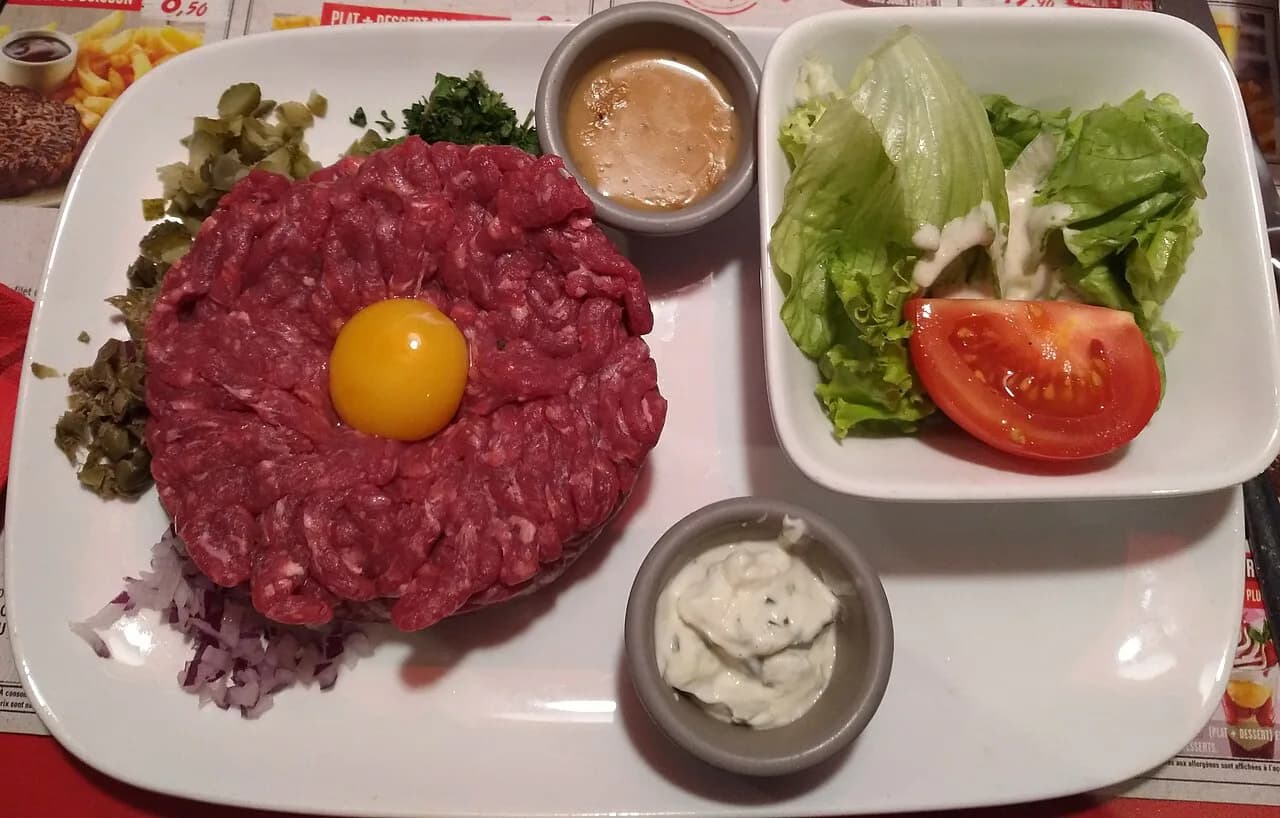
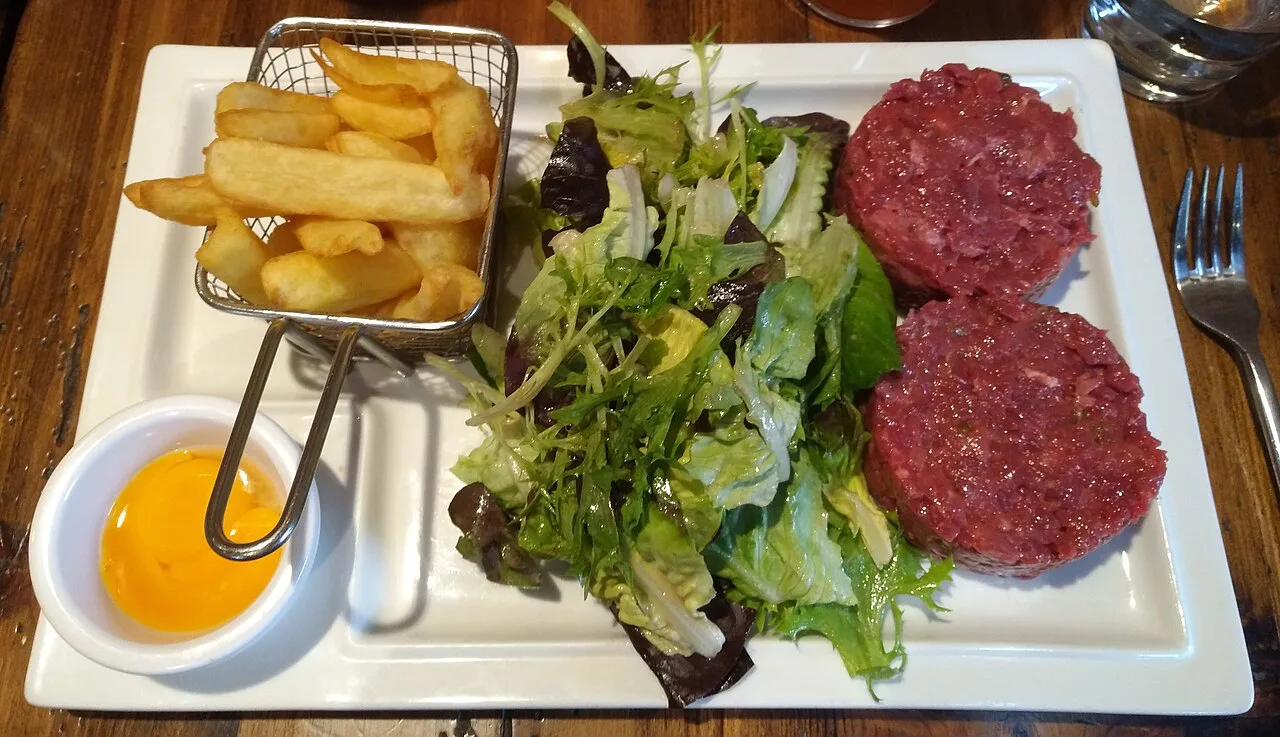
Steak tartare in the US or UK usually arrives as a molded round of chopped raw beef with a raw egg yolk, capers, cornichons, and toast points. Czech tatarak works on the same principle, and many Czech restaurants serve it with fried bread and raw garlic on the side, so the bread and garlic set the eating rhythm. Ask what comes with the plate, since presentations vary.
Not plain tartare: Steak tartare in the US or UK usually arrives as a molded round of chopped raw beef with a raw egg yolk, capers, cornichons, and toast points. Czech tatarak works on the same principle, and many Czech restaurants serve it with fried bread and raw garlic on the side, so the bread and garlic set the eating rhythm.
How to eat it: Do not eat the beef plain off the fork. Take a slice of fried bread if it comes with the plate, rub it lightly with a cut garlic clove if you want the full effect, spread a thin layer of tatarak across it, and eat it in a couple of bites.
Food safety: Tatarak is raw beef, so whether to order it is your call. The useful step is to ask the server two questions: whether the beef is served completely raw, and how the kitchen sources and handles it.
The beef is often minced more finely than the hand-cut texture some American versions prize, which makes it easier to spread thinly on a slice of bread. If you like your tartare coarse and lightly dressed, ask how the kitchen prepares it before you commit. If you like bold, salty, garlicky flavors, the Czech style often delivers exactly that.
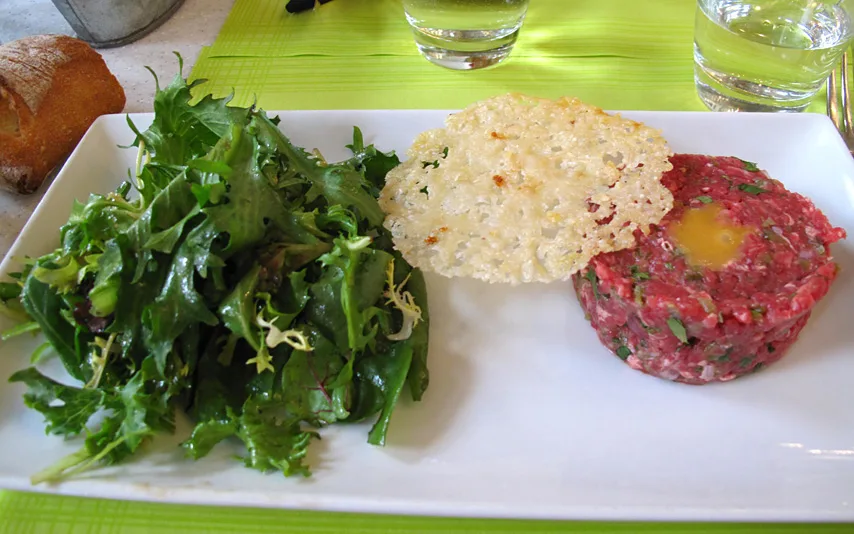
What comes on the plate: fried bread, garlic, and the rest
A common presentation is topinky, slices of bread fried until crisp, which carry the meat, with raw garlic alongside to rub on the bread or eat with the beef. Seasoning and other condiments depend on the kitchen, so ask what comes with the plate before you order.
Fried bread shows up all over the Czech table, so ordering several bread-based starters can feel repetitive. Czech dumplings are the other default starch, and they carry stews and cream sauces rather than raw meat. Pairing one bread starter with one dumpling-based main keeps the meal varied.
How to eat it (and how not to)
Do not eat the beef plain off the fork. Take a slice of fried bread if it comes with the plate, rub it lightly with a cut garlic clove if you want the full effect, spread a thin layer of tatarak across it, and eat it in a couple of bites. The bread gives crunch and structure, the garlic cuts the richness of the raw meat, and the seasoning stays balanced. A thick mound on one slice turns heavy and overwhelms everything else.
Salt and pepper often come on the side, so taste before adding anything the kitchen has already accounted for. A cold Czech lager is a usual partner, though water works if a long afternoon of sightseeing is ahead. Eat the garlic last if a castle tour follows, because the guided circuit is a small, enclosed space.
Food safety: the questions worth asking
Tatarak is raw beef, so whether to order it is your call. The useful step is to ask the server two questions: whether the beef is served completely raw, and how the kitchen sources and handles it. A restaurant that serves tatarak routinely will answer in a sentence, and the confidence of that answer tells you how the dish is treated in that kitchen.
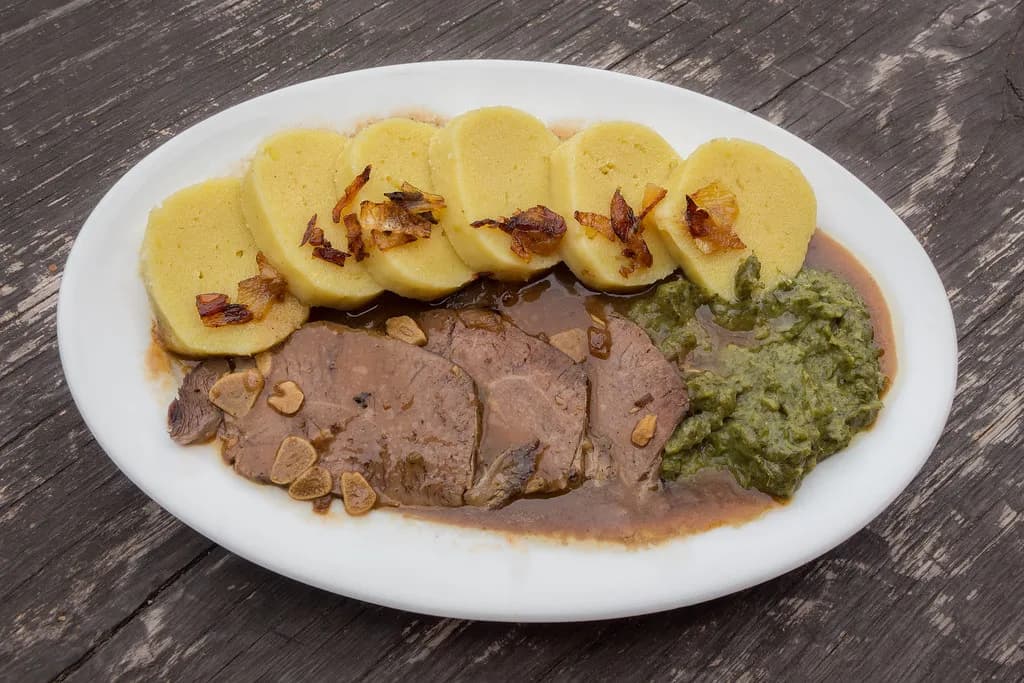
If you are pregnant, immunocompromised, or traveling with someone in either group, treat this as a dish to skip rather than to negotiate over. Czech menus offer plenty of cooked beef, and Svíčková na Smetaně gives you beef in a cream sauce with dumplings and no raw-meat question at all. There is no shame in ordering the cooked plate.
Portion size is typically a starter-sized plate, so ask whether it is enough to share before you build a dinner around it. Ask too whether the seasoning leans mild or heavy on onion, and whether the garlic arrives as cloves you handle yourself or already chopped in. Those three answers cover most of what you need to order confidently.
Where it fits in a Czech meal
Tatarak belongs at the start of the meal, alongside soups and small plates. It can suit a shared plate for two or three, because a little goes a long way and the bread makes it easy to divide. Order it with a soup and one main between two people and you have a sensible lunch rather than a meat-heavy marathon.
It is often served in beer halls and everyday restaurants as well as more formal places, so you may see it where people are drinking rather than only at white-tablecloth dinners. That signals everyday food with a straightforward presentation, not fine dining. Against a starter of chlebíčky, the tartare is the meatier, sharper option and the open-faced sandwiches are the lighter one.
Save room for something sweet afterward, since Czech menus treat dessert as a proper course. Honey cake is a common ending and far lighter than the beef course suggests.
Ordering language and what to ask
On the menu, look for tatarák, sometimes written tatarský biftek or tatarák z hovězího masa, with the side often listed as topinky. Pointing at the line works well if you are unsure of the pronunciation. For no garlic ask bez česneku; for extra bread ask for více topinek.
Ask whether the dish is a starter or a main, because a few kitchens offer a larger portion with more bread. If the description is unclear, ask whether the beef is raw or lightly seared, and ask what goes into the seasoning if you have an allergy or a dislike. A server who cooks this dish regularly will answer in a sentence or two.
What it costs and when to skip the price question
Tatarak is often priced as a starter rather than a main, which can make it one of the cheaper ways to eat beef in a Czech restaurant. Prices in Czech koruna vary by town and by how central the restaurant sits, and menus change, so read the printed price on the day rather than relying on a guidebook figure. If the larger portion and extra bread are listed as add-ons, ask for those prices separately.
A menu price that looks like a main course is the one to question, so check what else comes with the plate before agreeing. Otherwise the starter slot keeps tatarak a low-risk order when you want to try something local without committing to a large portion.
Ordering tatarak without surprises
Order tatarak as a cold starter, expect it often to come with fried bread and raw garlic, spread the beef thin rather than eating it plain, and ask the kitchen directly about raw preparation and seasoning. It is everyday Czech food rather than a challenge dish, and a shared plate with a soup is the sensible first order; see the Czech Food guide for the wider menu.
If raw beef is not for you, Svíčková na Smetaně is the cooked alternative to order instead. Either way, read the menu price in koruna on the day and ask about portion size before the plate arrives.
Explore more Czech Republic guides
Sources
Notes for your Czech trip
Optional updates to our Czech town guides.
You might also like



Continue reading
More guides you'll find useful