Kulajda: The Czech Dill and Mushroom Soup Explained
Kulajda is a creamy Czech soup of mushrooms, potatoes and dill, soured with vinegar and topped with a poached egg. Here is what it is and how to order it.
On this page
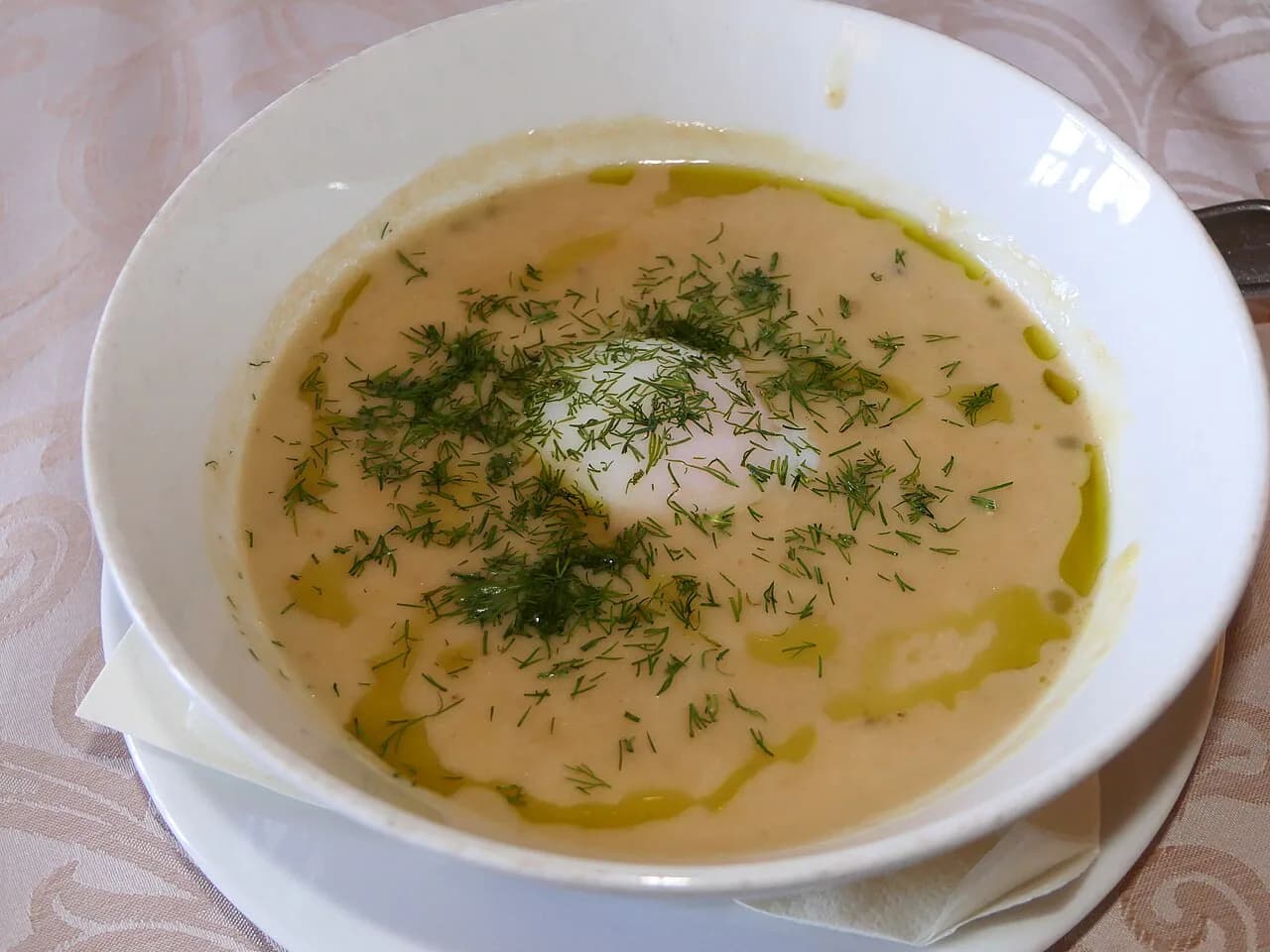
Kulajda is a creamy Czech soup built on mushrooms, potatoes and dill, soured with vinegar and slightly sweetened, usually finished with a poached egg. If you order one soup in the Czech Republic beyond garlic soup, this is the one that shows you how far the local kitchen ranges from the heavy meat-and-dumpling template. This guide covers what the dish is, how the flavors work together, how it is served, and how to place it on a menu alongside česnečka and bramboračka.
What kulajda is: a creamy, sour-sweet soup from South Bohemia
Kulajda is associated with South Bohemia and belongs to the small group of Czech soups that regulars name first, alongside garlic soup and the regional kyselo. Its base is a light roux, which thickens the broth before potatoes and mushrooms go in. Descriptions of the dish consistently place it in the creamy dill-soup family rather than among clear broths.
The soup is often described as rich, creamy and sour-sweet, the kind of bowl that suits cold weather and that every family makes a little differently. That variation matters for the eater: no two bowls taste identical, and a version that leans sweet in one kitchen may lean tart in the next. Treat kulajda as a template rather than a fixed recipe, and expect the same freedom across Czech food more broadly.
The flavors in the bowl: mushrooms, potatoes, dill, cream and vinegar
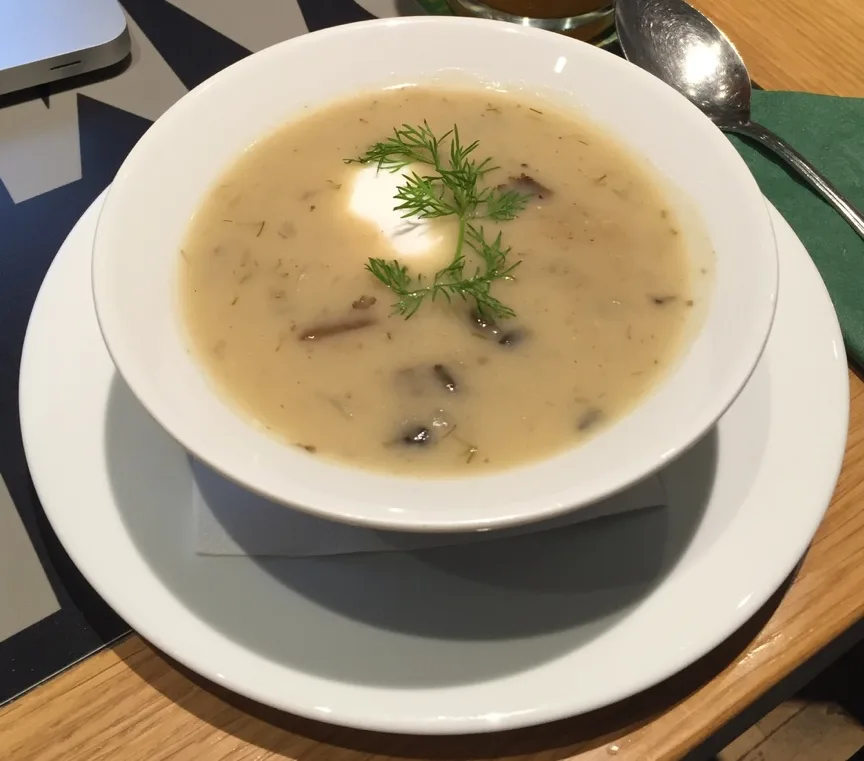
A home version assembles potatoes, mushrooms, butter and flour for the roux, cream, a little sugar, vinegar and a generous handful of chopped dill, with a poached egg added at the table. The mushrooms are typically fried separately in butter before joining the pot, which is why the mushroom note reads as roasted rather than boiled. The cream is tempered with hot soup before it goes in so it does not split.
What is Czech kulajda soup? Kulajda is a creamy South Bohemian soup made with mushrooms, potatoes and plenty of dill, thickened with a light roux and soured with vinegar. Most versions carry a little sugar for balance and are served with a poached egg in the bowl.
What is the name of the Czech soup with dill? Kulajda is the Czech dill soup you are most likely to see on menus. Dill is a primary flavor rather than a garnish, so the herb dominates the aroma as soon as the bowl reaches the table.
Is kulajda served hot or cold? It is served hot, as a starter or a light meal with bread. The cream and roux give it body, and the poached egg is added at serving rather than cooked in the pot.
The sweet-sour tension is the point of the dish: sugar and vinegar are balanced against the cream, and dill sits over the top of all of it. First-time eaters often expect a plain cream of mushroom soup and are caught out by the vinegar. Taste before you season, because the bowl usually arrives already balanced.
The poached egg is the visual anchor
A poached egg dropped into the bowl is a common way to serve kulajda, and it is the detail that separates it from other Czech cream soups. The egg is poached in water with a splash of vinegar, then slid into the soup at serving rather than cooked in the pot. A fried egg is a workable substitute at home, though it changes the look.
For the eater, the egg means the soup arrives with a soft yolk to break into the cream, which makes the bowl heavier and more filling than its vegetable list suggests. If you are ordering a main course after the soup, keep that in mind. Some versions skip the egg, so ask when you order if it matters to you.
How it is served and eaten
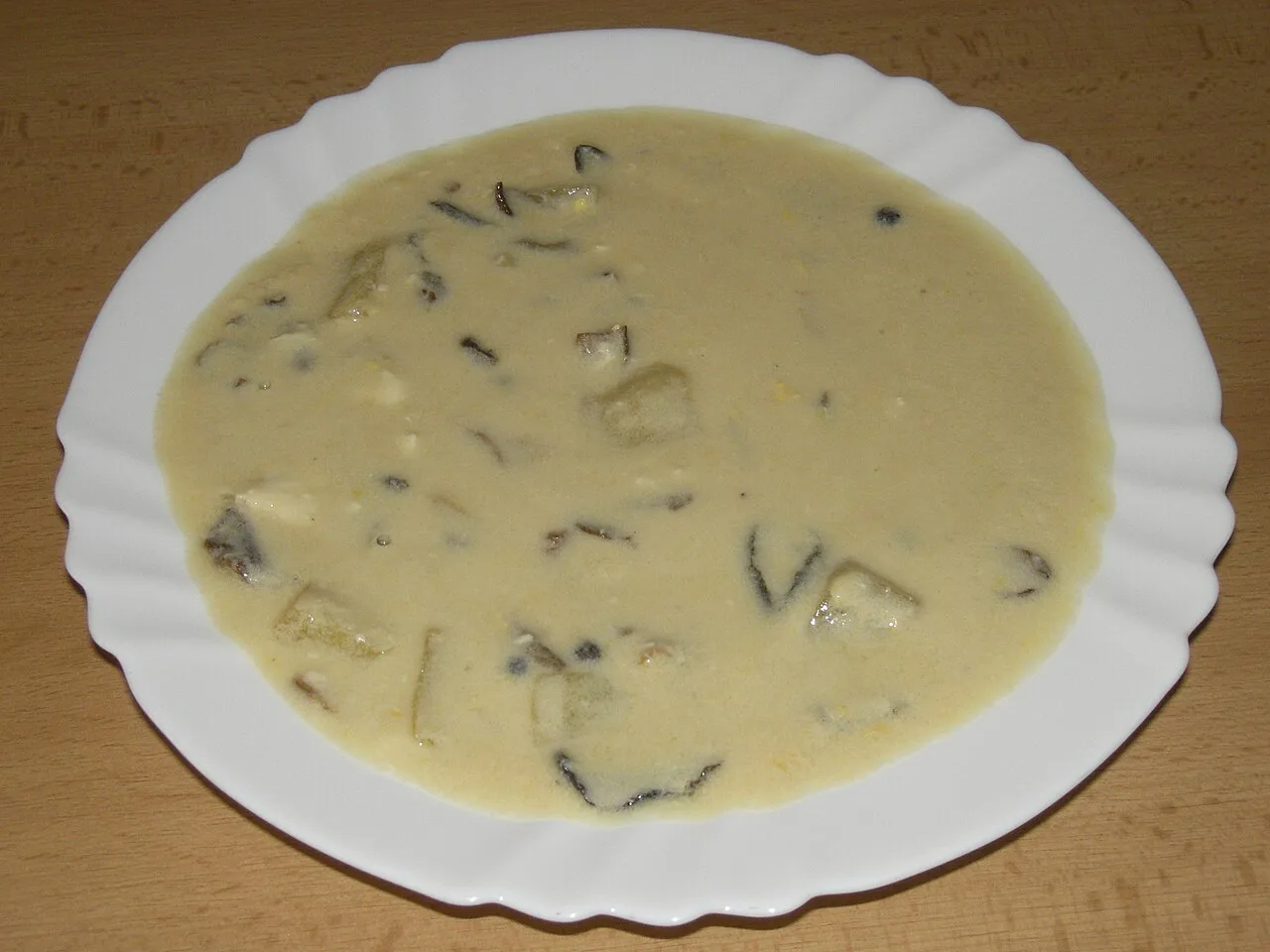
Kulajda is served hot in a deep bowl, and it works well as a starter, though with bread it can stand in for a light lunch. The dill goes in at the end, so the aroma arrives with the bowl rather than from the kitchen. Bread on the side is the usual companion for mopping up the last of the cream.
Expect a thick consistency: the roux and cream give it body, and it does not eat like a thin broth. Because the soup is filling, a bowl plus bread is often enough after a morning of walking. Pair it with a light main rather than another cream-heavy dish.
How kulajda fits a Czech menu alongside česnečka and bramboračka
Czech menus lean on soup as a standard first course, and the lineup usually includes česnečka (garlic soup), bramboračka (potato soup) and whatever regional soup the kitchen favors. Kulajda sits at the richer end of that list, with the cream and egg putting it closer to a meal than to a palate-cleanser. If you only have room for one, choose based on whether you want clear and savory or creamy and tart.
Ordering is straightforward even without Czech: look for kulajda by name under the polévky (soups) heading, and expect it to be listed with the other starters. Menus in tourist areas often translate it as creamy dill soup with mushrooms and egg. If a kitchen offers it as a daily special, that is usually the freshest version on the board.
What to expect when you order it
The first spoonful usually reads as cream and dill, then the vinegar arrives at the back of the mouth, and the sweetness sits underneath both. People who dislike dill will find it hard to avoid here, since the herb is not a garnish but a main flavor. Anyone expecting the sharp garlic hit of česnečka should reset expectations before the bowl lands.
Texture-wise, the potato should be soft but intact, the mushrooms present in recognizable slices, and the broth loose enough to spoon rather than solid. If a bowl arrives gluey or short on dill, that is a kitchen issue rather than the dish itself. It is a modest, homestyle plate, not a restaurant showpiece.
Why mushroom choice and season shape the taste
Mushroom choice drives the flavor more than any other ingredient: boletus gives an earthy, foresty depth, while chanterelles and other varieties push the soup in a lighter direction. Dried mushrooms work but need soaking first, and frozen ones are a practical fallback outside the picking season. Fresh mushrooms give the cleanest result, which is why the soup is associated with autumn.
That link to mushroom season is a home-cooking story rather than a reliable restaurant signal, so do not plan a trip around finding kulajda only in autumn. It appears on menus year-round in many kitchens. Ask what mushrooms are in the pot if the distinction matters to you.
Kulajda next to the rest of the Czech table
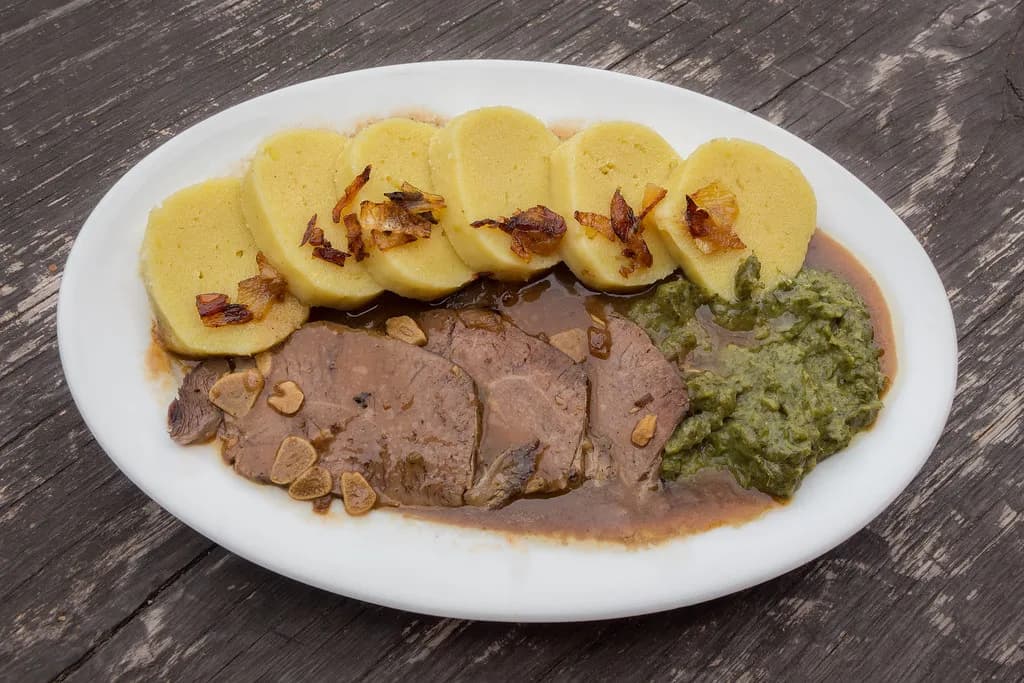
Kulajda is a good entry point to a broader menu that runs from Svíčková na Smetaně with dumplings to fruit dumplings and fried cheese. If the soup works for you, the same kitchen will likely handle the heavier classics well, and the soup is a low-risk way to test a restaurant before committing to a main. Read the soup list first; it tells you how much care the kitchen puts into the basics.
Soups are also an economical way to eat well across a day of sightseeing, and a bowl of kulajda with bread is a lighter, cheaper option than a full main in most Czech towns. That makes it a sensible lunch when you are moving between castles, squares and colonnades. Menus list prices in koruna, so check the board before you order.
Order it as your first Czech soup
Kulajda is the soup to order if you want to understand what Czech cooking does beyond dumplings and pork: cream, dill, vinegar and a poached egg in one bowl, with mushrooms and potatoes doing the quiet work underneath. Order it as a starter, take the bread, and let the sour-sweet balance surprise you. If dill is not your herb, fall back on česnečka and save kulajda for another day.
Explore more Czech Republic guides
Frequently Asked Questions
What is Czech kulajda soup?
Kulajda is a creamy South Bohemian soup made with mushrooms, potatoes and plenty of dill, thickened with a light roux and soured with vinegar. Most versions carry a little sugar for balance and are served with a poached egg in the bowl.
What is the name of the Czech soup with dill?
Kulajda is the Czech dill soup you are most likely to see on menus. Dill is a primary flavor rather than a garnish, so the herb dominates the aroma as soon as the bowl reaches the table.
Is kulajda served hot or cold?
It is served hot, as a starter or a light meal with bread. The cream and roux give it body, and the poached egg is added at serving rather than cooked in the pot.
Does kulajda always contain a poached egg?
Most versions do, and the egg is the dish's signature garnish, but recipes vary by household and kitchen. If the egg matters to you, ask when you order rather than assuming.
How does kulajda differ from Czech garlic soup?
Česnečka is a clear, sharp garlic soup, while kulajda is creamy, dill-forward and sour-sweet, with mushrooms, potatoes and usually an egg. They sit at opposite ends of the Czech soup list.
Sources
Notes for your Czech trip
Optional updates to our Czech town guides.
You might also like



Continue reading
More guides you'll find useful