Czech Cheese: Smažený Sýr, Hermelín and Olomoucké Tvarůžky
Czech cheese covers fried cheese, hermelín and the pungent Olomoucké tvarůžky. Learn what each one is, how it is served and how to order it on a Czech menu.
On this page
Czech cheese on a menu comes down to three names you will meet again and again: smažený sýr, the fried cheese that anchors pub and cafeteria lunches, hermelín, a soft white-rind cheese in the Camembert mold, and Olomoucké tvarůžky, the pungent ripened cheese tied to Olomouc. This guide explains what each one is, how it reaches the table and the menu vocabulary you need to order it, with the wider picture of Czech food as the frame.
Two smaller names round out the list: Jihočeská Zlatá Niva, a South Bohemian blue, and Abertam, a firm cheese that appears on cheese boards and specials lists. Neither turns up as often as hermelín, but both are worth recognizing when they appear.
What Czech cheese means on a menu: the cheeses you will actually meet
The cheeses you actually meet fall into two groups. The first is everyday eating cheese: hermelín in its plain form, smažený sýr as a hot main, and the marinated hermelín that sits on pub tables beside a beer. The second is the ripened and regional cheeses, led by Olomoucké tvarůžky and joined by Jihočeská Zlatá Niva and Abertam.
Czech labels also list Balkánský sýr, a crumbly white cheese in the feta style, and Gran Moravia, a hard grating cheese from Moravia. You will see both in shops and on salads more than on restaurant menus, but they belong to the same family of names.
Nothing in the cheese case is a regional delicacy in the way a castle town is. This is everyday food, eaten at lunch and with beer, and that is exactly how to approach it: as a cheap, filling stop rather than a tasting event.
Smažený sýr: the fried cheese that anchors Czech pub and cafeteria menus
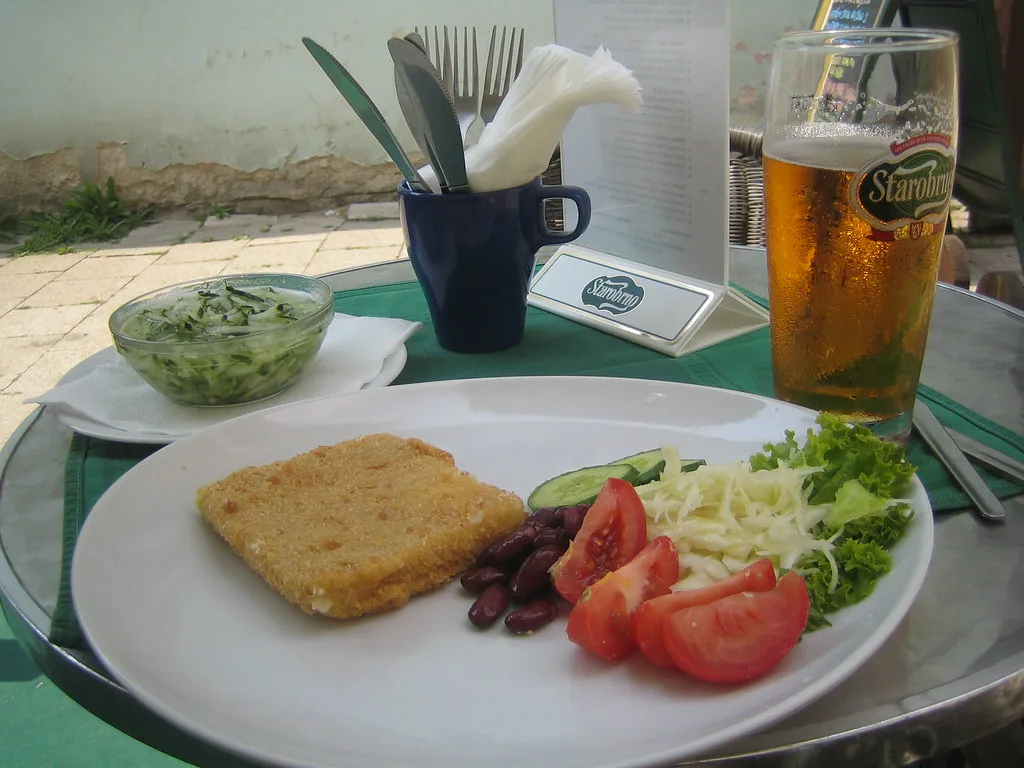
Smažený sýr is a thick slab of firm cheese, usually Edam-style, breaded and fried until the coating is crisp and the inside soft. It arrives as a main course, not a side, and it is the dish that makes Czech pub and cafeteria menus affordable for a traveler eating out twice a day.
What is cheese called in Czech? Cheese is sýr. On a menu you will see it in compound names such as smažený sýr for fried cheese and nakládaný hermelín for marinated soft cheese, and the word sýr alone usually means a cold cheese plate.
Is hermelín the same as Camembert? Hermelín is a Czech soft cheese with a white mold rind, made in the Camembert style, so the two are close relatives rather than the same product. Expect a creamy interior under a bloomy crust when you order it plain.
Does marinated hermelín taste very strong? Yes, compared with the plain cheese. Nakládaný hermelín is chilled in oil with onion, garlic, peppercorns, allspice, bay leaf and often chili or paprika, so the marinade rather than the cheese dominates the flavor.
Expect it with tartar sauce and a side of potatoes or fries, and expect it to be heavy. Order it at lunch rather than before an afternoon of walking, and share a starter if you are not very hungry.
The cheese itself is mild, so the appeal is texture: crunchy outside, molten within. If you have eaten Serbian or Hungarian fried cheese, this is the same idea in a Czech key, and it is the safest first order for anyone unsure about the stronger cheeses.
Hermelín: a soft white-rind cheese in the Camembert mold
Hermelín is a Czech soft cheese with a white mold rind, made in the same style as Camembert. That family resemblance is the useful reference point: if you like Camembert, you know what to expect from the plain version, a creamy interior under a bloomy crust.
It appears on menus in several forms: plain with bread, grilled, breaded and fried like smažený sýr, or marinated and chilled. The plain version is the mildest introduction and the one to order if you want to taste the cheese itself before trying the marinated treatment.
Hermelín is the name to look for in a shop as well as on a menu, and it is the cheese most visitors end up taking home. Buy it near the end of a trip rather than the start, since a soft cheese does not enjoy a week in a warm bag.
Nakládaný hermelín: marinated cheese, the beer-side snack explained
Nakládaný hermelín is hermelín marinated in oil with onion, garlic, peppercorns, allspice, bay leaf and often chili or paprika, then chilled until the oil turns thick and cloudy. It is served cold with bread, and its job is to sit next to a beer rather than to be a meal on its own.
The distinction matters when you order. Plain hermelín is soft and mild; the marinated version is cold, oily, sharp with raw onion and garlic, and much more assertive. If you want the cheese rather than the marinade, order it plain or grilled.
Home versions vary widely, and some recipes adapt the traditional method by sauteing the onion and garlic first and refrigerating the jar for up to two weeks instead of fermenting it at room temperature. Treat any single recipe as one household's approach rather than the definitive Czech method.
Olomoucké tvarůžky: the pungent, ripened cheese tied to Olomouc
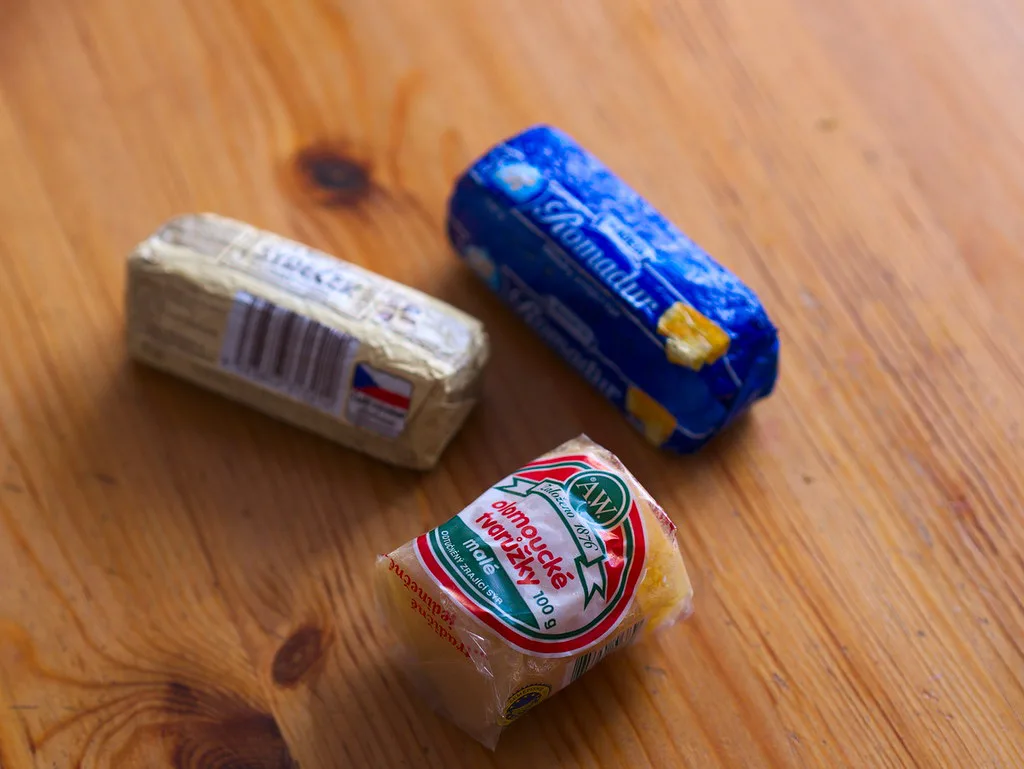
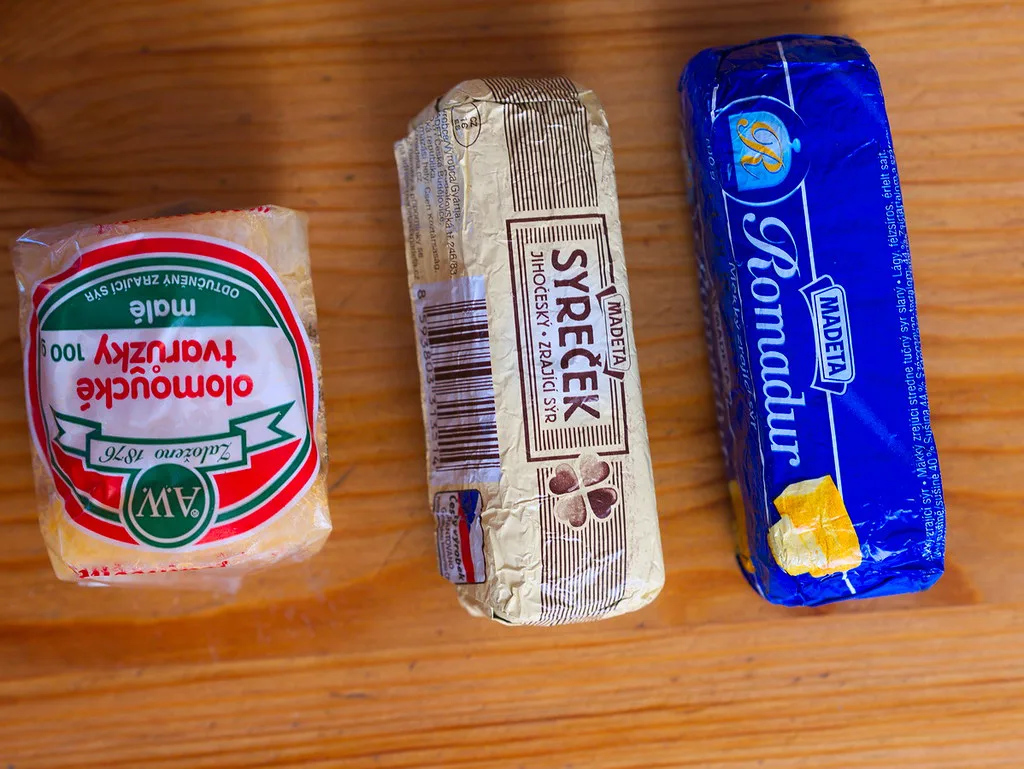
Olomoucké tvarůžky are a small, flat, ripened cheese with a strong aroma and a tangy, salty flavor, and they carry the name of Olomouc in central Moravia. They are the one Czech cheese with a genuine regional identity, and they are also the one most likely to divide a table.
Order them if you enjoy washed-rind and strongly ripened cheeses; skip them if a strong smell puts you off before the first bite. They are usually served cold with bread, onion and sometimes mustard, and they are a natural snack during a stop in Olomouc rather than something to seek out elsewhere.
The aroma is the point, not a defect, but it does travel. If you buy a pack to take away, double-bag it before it goes into a shared suitcase.
Other Czech cheeses worth knowing: Jihočeská Zlatá Niva and Abertam
Jihočeská Zlatá Niva is a blue cheese from South Bohemia, with the veining and sharpness you expect from a blue. It is the choice when you want something to spread on bread with a glass of something cold after a day at Český Krumlov or Hluboká.
Abertam is a firm cheese that shows up less often on restaurant menus, so treat it as a market and shop discovery rather than a dish to order.
Both are worth recognizing on a cheese board, but neither should shape your route. If you are building an eating itinerary around Czech food, the fried and marinated dishes will fill more meals than the regional names will.
How cheese is served: with bread, pickles, or as a main with tartar sauce
Cheese reaches the table in three formats. Cold and marinated with bread and pickles, as a snack beside a beer. Fried and breaded as a main with tartar sauce and potatoes. Or plain on a board with bread, onion and mustard, which is how tvarůžky and hermelín most often appear as a shared starter.
Portions follow the Czech habit of a substantial lunch, so a fried cheese main plus a side is usually enough for one hungry person. If you are ordering several cold cheese plates for a group, ask for bread separately, since it is not always included.
The pickles and raw onion on the plate are there to cut the fat, and they work. Eat a little of everything in each bite rather than finishing the cheese first.
How to order Czech cheese: menu words and pronunciations that help
The words to recognize are smažený sýr (SMAG-ze-nee SEER, fried cheese), hermelín (HER-me-leen), nakládaný hermelín (na-KLAD-a-nee, marinated) and tvarůžky (tva-ROOSH-kee). Sýr on its own simply means cheese, so a menu line reading sýr is a cold plate, not a hot dish.
Useful modifiers: grilovaný means grilled, smažený means fried, and studený means cold. If you want the marinated version rather than the plain one, say nakládaný; otherwise you will most likely be served the plain cheese.
When the menu is only in Czech, point at the name and ask whether it comes cold or hot; that single question prevents most ordering mistakes. Nothing on a Czech menu is priced in a way that requires haggling, so pay what the bill says and leave the arithmetic alone.
Where it fits on a trip beyond Prague: cheese as a pub stop, not a sight
Cheese is a pub stop, not a sight. The natural places to eat it are the towns where you already stop for lunch: Plzeň (Pilsen) with its beer, Brno and Olomouc in Moravia, and České Budějovice (Budweis) in South Bohemia. Olomouc is the one town with a cheese named after it, which makes tvarůžky the obvious order there.
In spa towns such as Karlovy Vary (Carlsbad) and Mariánské Lázně (Marienbad), a cold cheese plate fits the lighter rhythm of a colonnade afternoon better than a fried main. In Kutná Hora or Telč, fried cheese is the practical lunch between sights when time is short.
Think of cheese as the cheap meal that funds the rest of the day, and plan one fried-cheese lunch and one marinated-cheese snack into a trip rather than chasing cheese as a destination. For the wider menu around it, the Czech food pages and Svíčková na Smetaně cover the dishes that share the table.
Which Czech cheese should you order first?
Order smažený sýr first if you want a filling, mild, safe lunch, and order nakládaný hermelín if you are sitting with a beer and want something sharp and cold. Try Olomoucké tvarůžky in Olomouc, where the name belongs, and only if you like strong ripened cheese.
If you want one cheese to take home, hermelín is the practical choice, bought near the end of the trip. Everything else is a menu decision you can make at the table with the words above.
Explore more Czech Republic guides
Frequently Asked Questions
What is cheese called in Czech?
Cheese is sýr. On a menu you will see it in compound names such as smažený sýr for fried cheese and nakládaný hermelín for marinated soft cheese, and the word sýr alone usually means a cold cheese plate.
Is hermelín the same as Camembert?
Hermelín is a Czech soft cheese with a white mold rind, made in the Camembert style, so the two are close relatives rather than the same product. Expect a creamy interior under a bloomy crust when you order it plain.
Does marinated hermelín taste very strong?
Yes, compared with the plain cheese. Nakládaný hermelín is chilled in oil with onion, garlic, peppercorns, allspice, bay leaf and often chili or paprika, so the marinade rather than the cheese dominates the flavor.
Where should I try Olomoucké tvarůžky?
Olomouc, the Moravian town the cheese is named after, is the obvious place. They are served cold with bread, onion and sometimes mustard, and the strong aroma is characteristic of the cheese rather than a sign it has gone off.
Sources
Notes for your Czech trip
Optional updates to our Czech town guides.
You might also like

Continue reading
More guides you'll find useful