Vepřo knedlo zelo: Czech Roast Pork, Dumplings and Sauerkraut
Vepřo knedlo zelo is Czech roast pork with bread dumplings and sauerkraut. Learn what sits on the plate, how it is cooked, and how to order it.
On this page
Vepřo knedlo zelo is one plate of three parts: sliced roast pork, bread dumplings and sauerkraut. Czechs treat it as their national dish and put it on the tables of traditional restaurants across the country, usually with a beer alongside. This guide walks through what lands in front of you, why the gravy matters, and how to order it in a pub.
The name is often scrambled. You will see knedlo vepřo zelo and vepřo knedlo zelo on the same kind of menu, and both point to the same trio. The order of words shifts, nothing else does, so do not read anything into which version a chalkboard uses.
What Is on the Plate
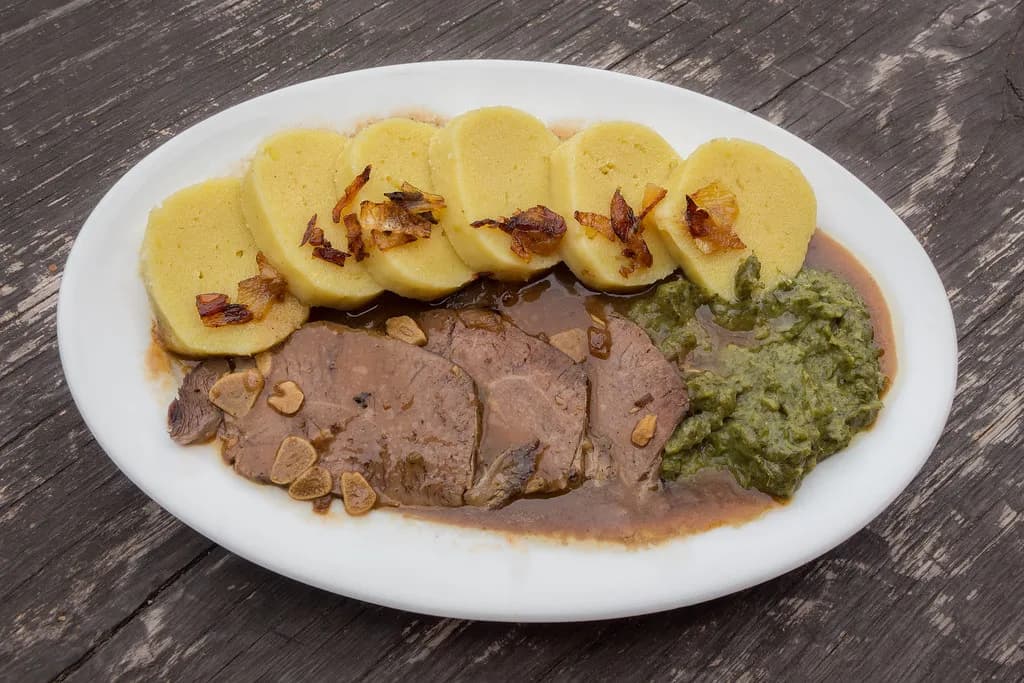
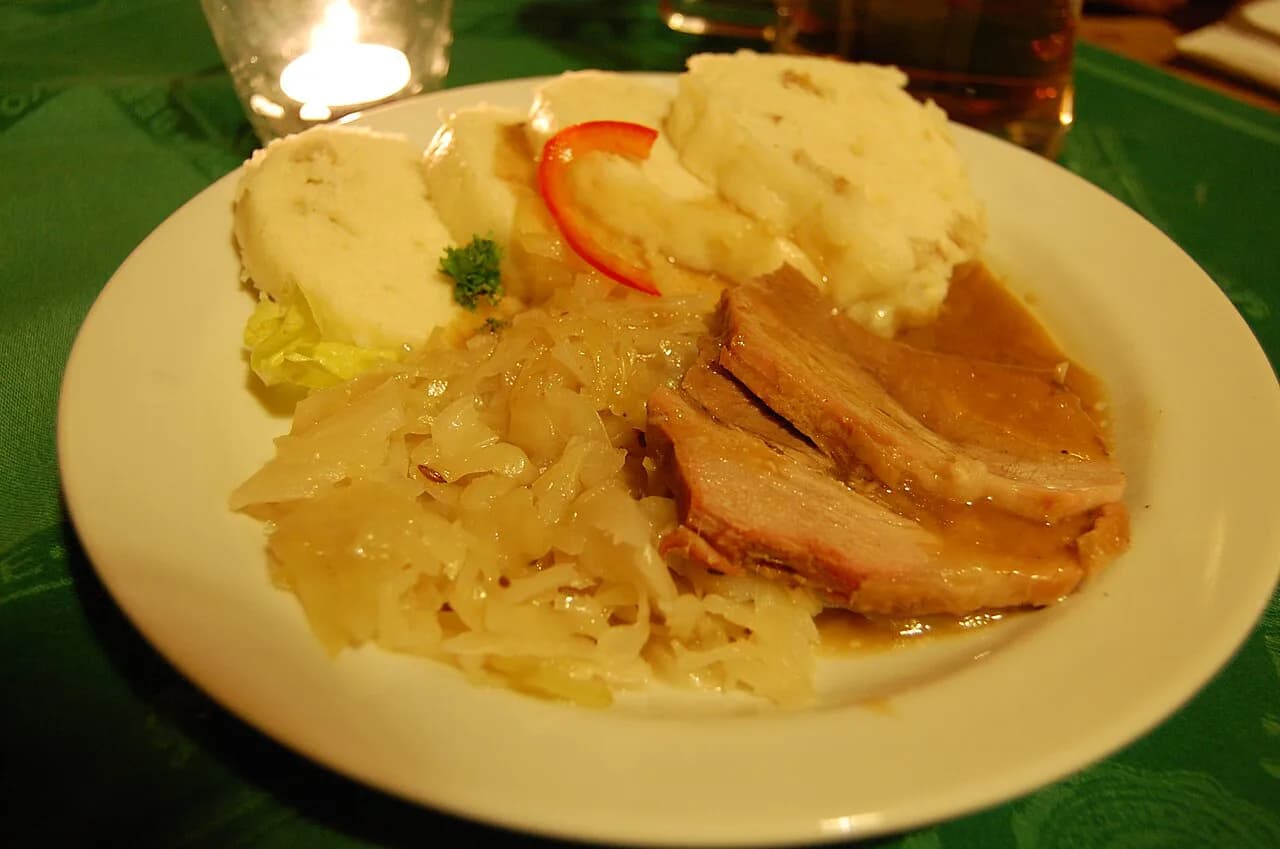
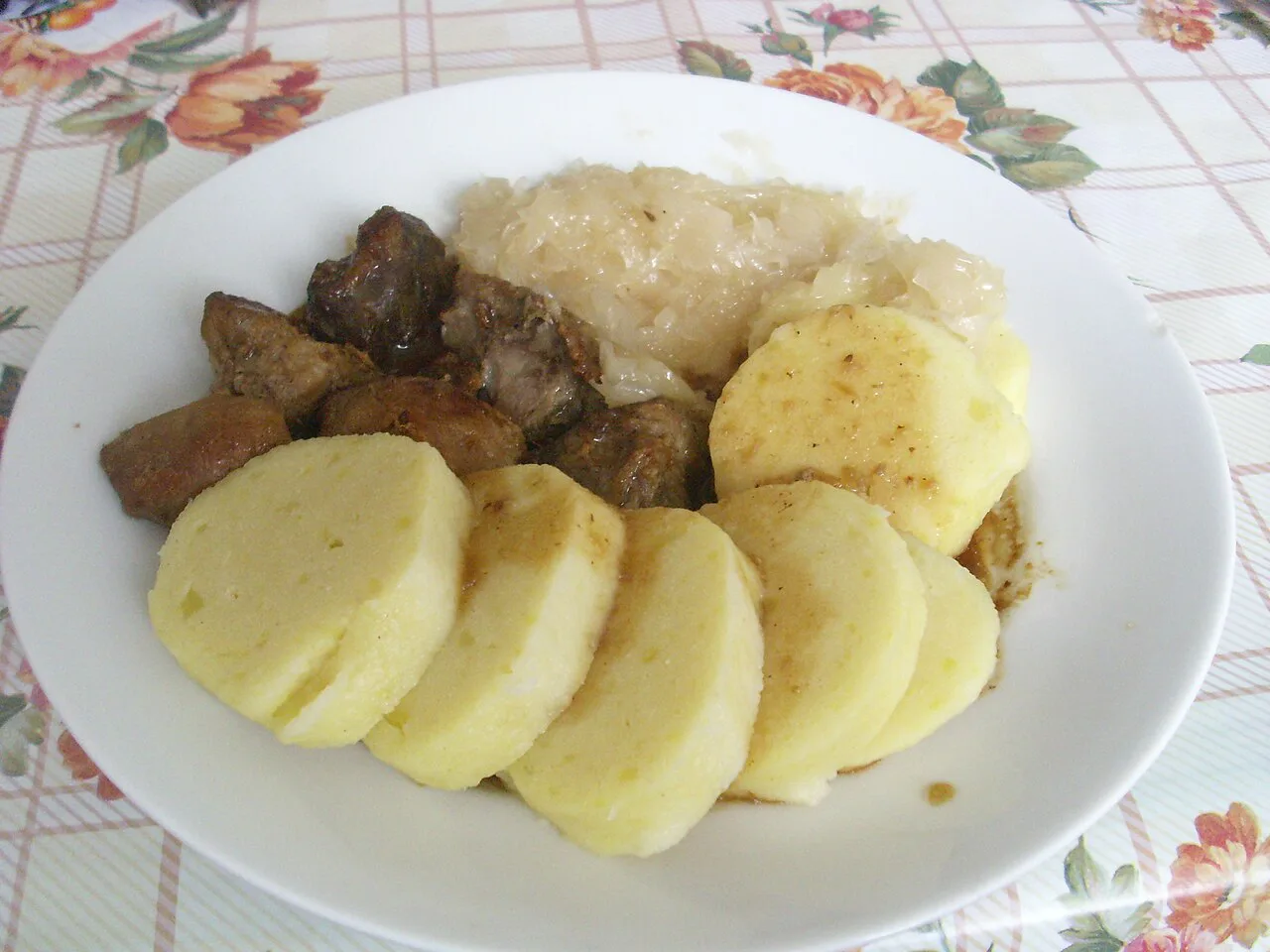
Three components arrive side by side. The vepřo is roast pork, most often shoulder or neck, roasted on a bed of onions with caraway seeds and garlic or shallot pressed onto the meat. The knedlo is a bread dumpling, sliced into rounds. The zelo is sauerkraut, cooked down with onion, bacon, a little sugar and vinegar.
The gravy is the fourth element, and it is not an afterthought. Juices from the pork drip onto the onions underneath, and that liquid is strained, thickened with flour and poured over the dumpling slices. A dry plate with no pour is a warning sign; the dumplings are there to soak it up.
Why the Pork Tastes of Caraway and Garlic
The flavor signature sits on the crust. Caraway seeds and crushed garlic or shallot are rubbed onto the pork before it goes into the oven, and the meat roasts slowly over chopped onions with a splash of water in the pan. That low, long heat is what keeps shoulder and neck tender enough to slice.
Is vepřo knedlo zelo the same as knedlo vepřo zelo? Yes. The words are simply reordered, and both names describe the same plate of roast pork, bread dumplings and sauerkraut.
What does vepřo knedlo zelo mean in English? It translates as pork, dumplings, cabbage. Vepřo refers to the roast pork, knedlo to the bread dumpling and zelo to the sauerkraut served alongside.
What meat is used in vepřo knedlo zelo? Pork shoulder or pork neck, roasted slowly on a bed of onions with caraway seeds and garlic or shallot pressed onto the surface. The cut is chosen for slow roasting and slicing.
Home cooks work at modest oven temperatures. One Czech recipe roasts neck of pork at 170 degrees Celsius for about an hour and a half, while another suggests 160 degrees for roughly 60 to 75 minutes. The onion layer does double duty: it keeps the meat off the direct heat and becomes the base of the gravy once the roast is lifted out.
The Sauerkraut Is Supposed to Bite
Czech sauerkraut for this dish is not a raw heap from the jar. It is cooked with fried bacon and onion, caraway, a spoonful of sugar and enough vinegar to keep a sour edge. The result is soft and sweet-sour at once, which is exactly what cuts through the fat of the pork and the density of the dumplings.
When you order it, taste the cabbage first. If it is flat and sweet with no acidity, the plate will feel heavy by the third bite. If it has a clear tang behind the bacon, the kitchen has balanced it properly.
Bread Dumplings, Sliced Not Soaked
The dumpling is a steamed or boiled cylinder of yeast dough, sliced into rounds at service. Czechs call it knedlík, plural knedlíky, and the word comes from the German Knödel. Dumplings like these are the backbone of Czech food, in the same family as houskové knedlíky served under other sauces and the fruit-filled ovocné knedlíky that end a meal.
Good slices hold their shape under the gravy for a minute or two rather than collapsing into paste. If the rounds disintegrate as soon as the sauce hits them, the dough was likely undercooked or sliced too early. Eat from the top down and let the gravy reach the lower slices gradually.
When Czechs Eat It
This is Sunday-lunch food and holiday food. It appears on Christmas tables and at New Year, where the pork and dumplings are eaten for luck in the coming year, and it is the kind of plate a family sits down to after a morning out. None of that makes it a special-occasion-only dish: it is standard pub lunch fare across the country.
For a visitor, that means you can order it at midday without ceremony. It is a substantial plate, so it works best as the main meal of the day rather than a late dinner before more eating.
Neighboring Plates That Look Familiar
Slovakia, Austria and Bavaria all have comparable roasts with dumplings and cabbage, and the German-speaking world offers dishes such as Schweinshaxe and Kassler that share the same logic of pork, starch and something sour. Trying to pin a single country of origin is a dead end. The plate belongs to the wider region as much as to Czechia.
That shared history shows in the vocabulary too, since knedlík traces back to Knödel. What makes the Czech version distinct at the table is the caraway and garlic crust and the specific balance of sweet-sour cabbage with a flour-thickened roast gravy.
How to Order It in a Czech Pub
Ask for vepřo knedlo zelo, or knedlo vepřo zelo; both are understood. It comes plated, already sliced, with the gravy poured over the dumplings and the cabbage alongside. There is nothing to assemble, and no side order is needed unless you want extra dumplings.
Beer is the traditional partner, and a Czech lager suits the plate. Order it when you order the food so it arrives together with the gravy. Portions are generous, and a starter is rarely necessary.
Menus change with the kitchen and the season, so read the board rather than assuming a fixed version. If you are comparing it with other Czech cuisine classics, it sits in the same comfort-food family as Svíčková na Smetaně, the beef in cream sauce, which is a lighter, sweeter plate.
What a Good Plate Looks Like
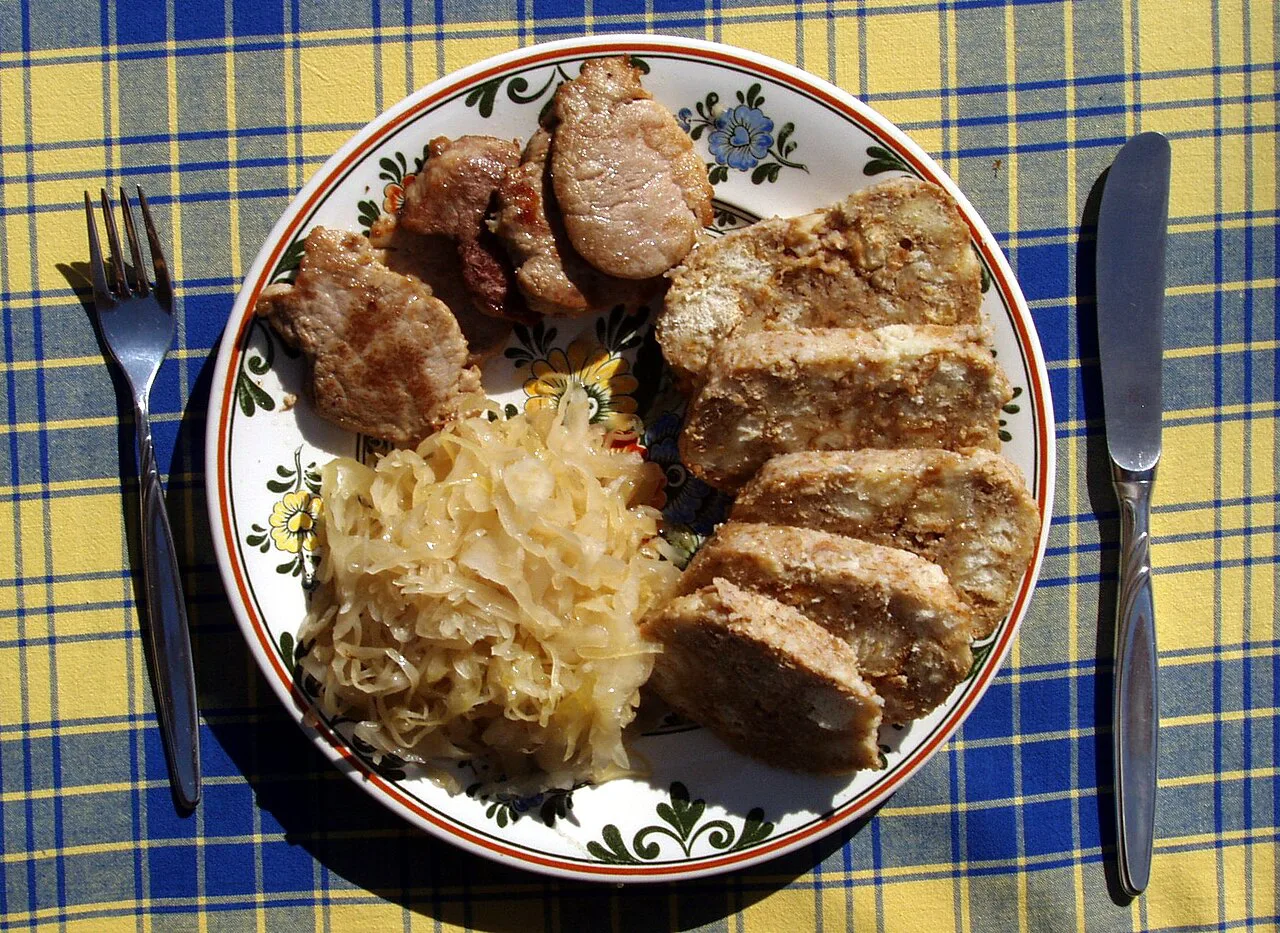
Judge it on three points. First, a glossy gravy made from the roast itself, not a thin brown pour from a packet. Second, cabbage with real acidity behind the bacon. Third, dumpling rounds that are firm enough to slice and soft enough to absorb sauce without turning to mush.
If you are cooking it at home, the sequence matters more than any single ingredient. Season and crust the pork, roast it slowly on onions, cook the cabbage separately with bacon, sugar and vinegar, and make the gravy by straining the pan juices and thickening them with flour. Steam the dumpling dough rather than baking it, and slice only when you are ready to serve.
The Three-Part Plate to Order First
If you order one Czech classic on your first pub lunch outside Prague, make it this one. It shows you the whole grammar of the cuisine in a single plate: slow-roasted meat, a starchy dumpling, and a sour vegetable cut with bacon and sugar.
Order it at midday, take the beer with it, and taste the cabbage before you decide how you feel about the plate. If the gravy is dark with roast juices and the dumplings still hold their shape, you have found a kitchen that cooks it properly.
Explore more Czech Republic guides
Frequently Asked Questions
Is vepřo knedlo zelo the same as knedlo vepřo zelo?
Yes. The words are simply reordered, and both names describe the same plate of roast pork, bread dumplings and sauerkraut. Czechs use both forms, and menus mix them freely.
What does vepřo knedlo zelo mean in English?
It translates as pork, dumplings, cabbage. Vepřo refers to the roast pork, knedlo to the bread dumpling and zelo to the sauerkraut served alongside.
What meat is used in vepřo knedlo zelo?
Pork shoulder or pork neck, roasted slowly on a bed of onions with caraway seeds and garlic or shallot pressed onto the surface. The cut is chosen for slow roasting and slicing.
Is vepřo knedlo zelo served with gravy?
Yes. The juices that drip from the pork onto the onions are strained, thickened with flour and poured over the sliced dumplings. The dumplings are there to absorb it.
Do Czechs eat vepřo knedlo zelo at Christmas?
It is a traditional Christmas and New Year dish, and it is also eaten for luck in the new year. It is everyday pub lunch food as well, served across Czechia throughout the year.
Sources
Notes for your Czech trip
Optional updates to our Czech town guides.
You might also like



Continue reading
More guides you'll find useful