Czech Dumplings (Knedlíky): Bread, Potato, and How to Order Them
Czech dumplings are mostly houskové knedlíky, soft yeast bread dumplings, and denser bramborové knedlíky. Here is what they are and how they reach your plate.
On this page
Czech dumplings come in two main forms, and knowing which is which decides what lands on your plate. Houskové knedlíky are soft, airy yeast dumplings made from flour, liquid, egg, salt, and cubes of stale white bread; bramborové knedlíky are denser potato dumplings that eat more like a side of potatoes. This guide covers both, plus the fruit and steamed variants, what they are served with, and how to order them without guesswork.
Treat knedlíky as the carbohydrate anchor of the meal rather than a dish in their own right. In Czech cooking they do the job noodles do in Asian food or pasta does in Italian: whenever a plate is rich, saucy, or soupy, a dumpling side usually comes with it. That is why the same word shows up beside completely different mains, from cream sauces to roast pork with cabbage.
What Czech dumplings are made of
Bread dumplings are a short list: flour, milk or water, egg, salt, yeast, a little sugar to feed the yeast, and stale white bread cut into small cubes. The dough carries no fat, which is why it needs only a modest amount of yeast to rise. Potato dumplings swap the bread and much of the flour for cooked potatoes, grated fine and worked into a firmer dough with flour, egg, and salt.
The bread itself matters. The cubes should come from white rolls two or three days old rather than a fresh loaf, and some cooks toast the cubes first so they hold their shape through cooking. A pot of simmering salted water or a steamer does the rest, and the cooked roll is sliced into rounds while still warm.
Houskové knedlíky: the fluffy yeast dumpling that soaks up sauce
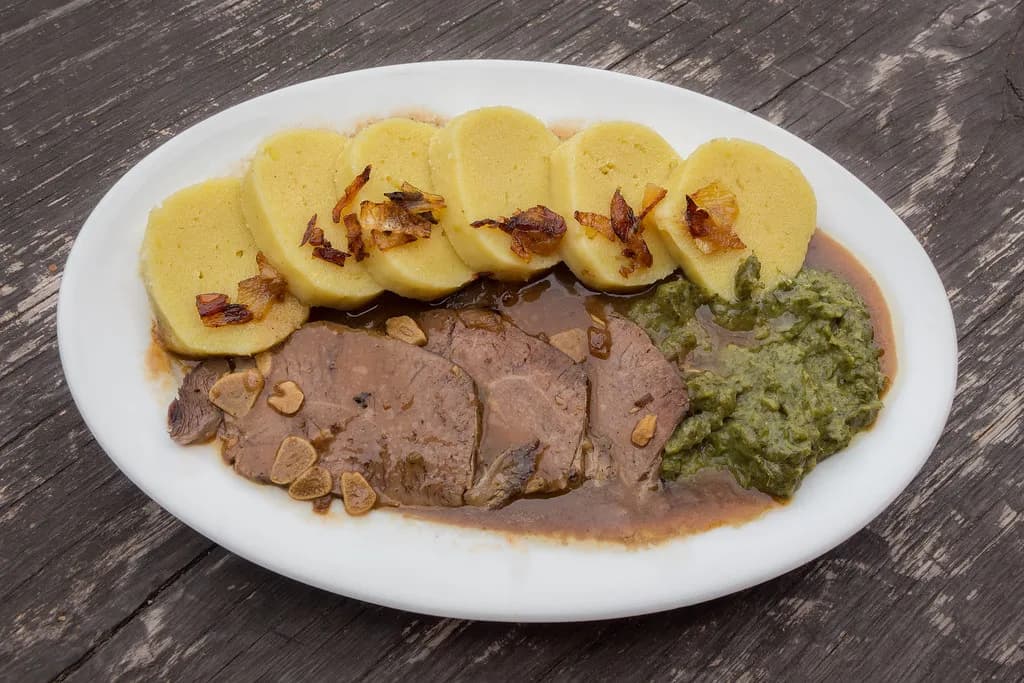
This is the version most visitors meet first, and it is the one to order when the main course comes under a poured sauce. The yeast dough is shaped into cylinders, boiled or steamed whole, then sliced, giving each round an open, spongy crumb that drinks up gravy. Soft but with enough structure to hold together, it is the classic partner for Svíčková na Smetaně and similar cream-based plates.
Are Czech dumplings the same as potato dumplings? No. The default houskové knedlíky are yeast bread dumplings, light and spongy, made with flour and cubes of stale white bread.
Do Czech dumplings contain gluten? Both main types contain wheat flour, so they are not gluten-free. Bread dumplings are made with flour and bread cubes, and potato dumplings are made with flour as well as potato, egg, and salt.
Baking-powder dumplings are a separate dough that produces a slightly different dumpling, while the yeasted bread dumpling is the standard alongside saucy mains. Czech cooks also use the two main types interchangeably, so a swap between bread and potato dumplings is not treated as a mistake.
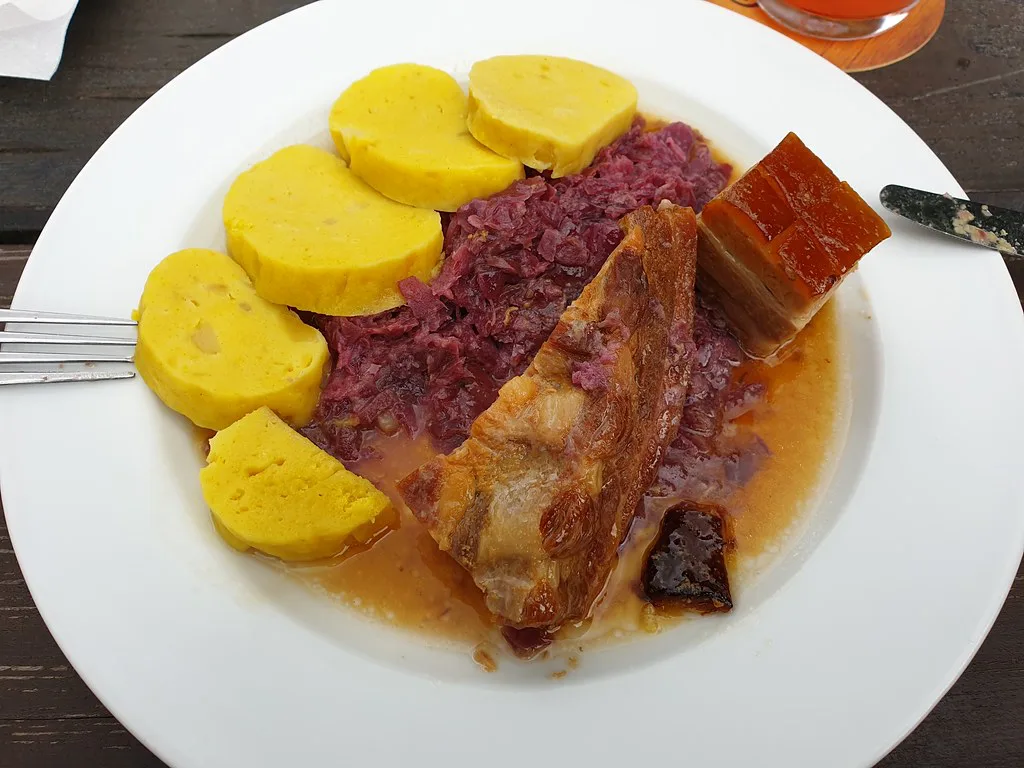
Bramborové knedlíky: the denser potato dumpling
Potato dumplings are heavier and more filling than the bread version, closer to eating a portion of potatoes than a slice of bread. Boiled potatoes are grated fine while still cold, mixed with flour, egg, and salt into a smooth dough, then rolled into logs and boiled or steamed whole before slicing. Because they carry more weight, they suit rich plates where the dumpling has to balance rather than absorb.
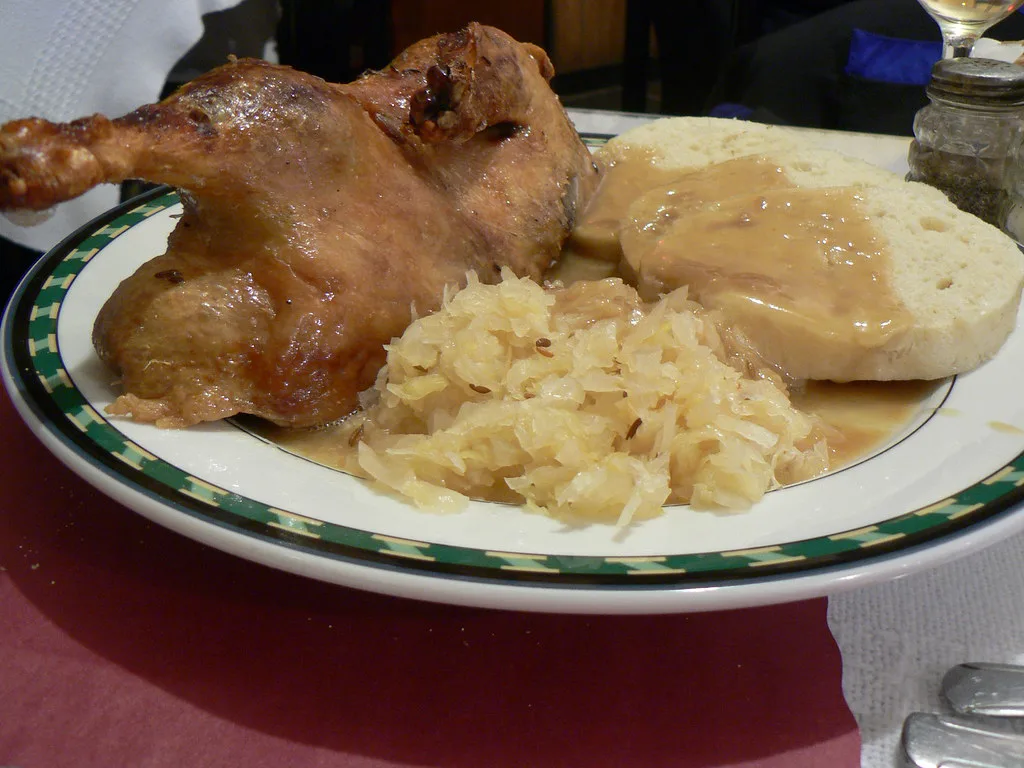
The practical rule for a visitor is texture: choose bread dumplings for a plate drowned in sauce, potato dumplings when the main is pork with sauerkraut and you want something that stands up to it. Both are everyday starches in Czech cooking, the same role noodles play in Asian food or pasta in Italian.
Other knedlíky you will meet
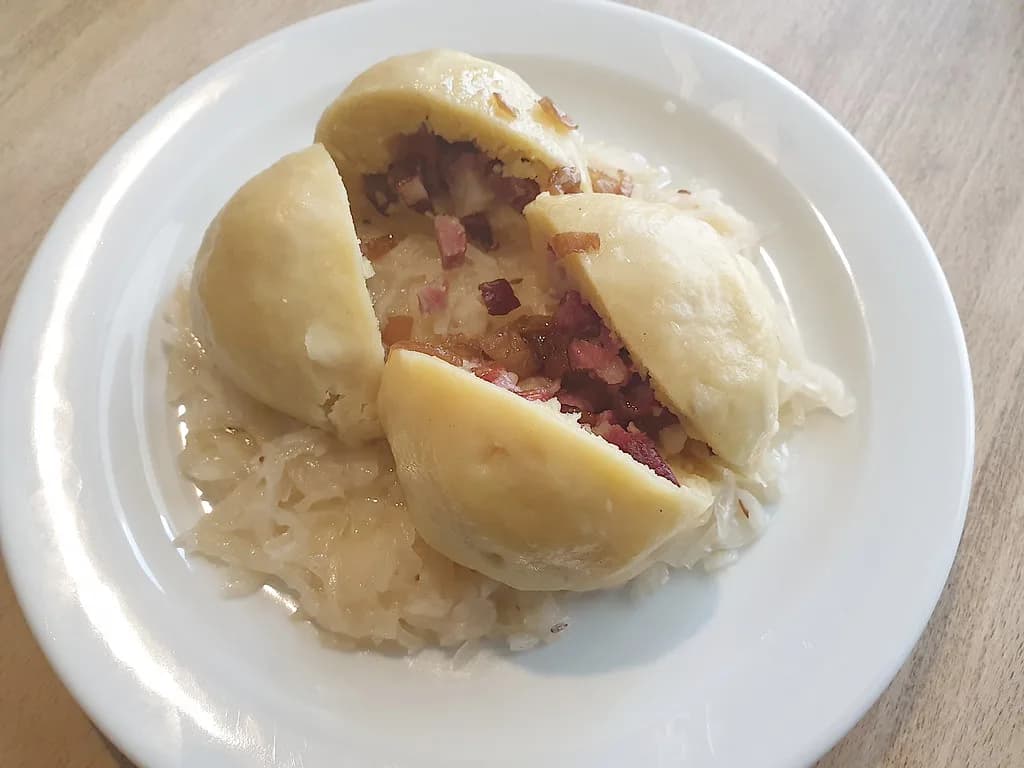
Beyond the two staples, a few more versions are worth recognizing on a Czech menu. Chlupaté knedlíky, sometimes called hairy dumplings, are made from grated raw potatoes and have a rougher surface. Ovocné knedlíky are fruit dumplings, a sweet dish served as a main course rather than a dessert, and they belong to the same family of steamed and boiled doughs. For the wider picture of the cuisine, see the Czech Food guide.
There is even a home method of steaming dumplings right in a cup, which tells you how routine this food is in Czech kitchens. None of these variants is a restaurant novelty; they are household standards that turn up in ordinary lunches alongside dishes from the Czech Food repertoire.
How knedlíky are cooked and sliced into rounds
The technique is uniform across the boiled types. Dough is shaped into a cylinder sized to fit the pot, since it expands as it cooks, then lowered into gently boiling salted water or set in a steamer. Boiled rolls are turned partway through cooking and pricked with a fork afterward to release trapped steam; steamed rolls are not turned at all.
Once out of the pot, the roll rests briefly and is cut into slices with a long knife or a piece of thread. That is why dumplings reach the table as overlapping rounds fanned across the plate rather than as a scoop. The slices are served warm, and the cut face is what takes on the sauce.
What Czech dumplings are served with
Svíčková na smetaně is the plate most associated with bread dumplings: beef in a cream sauce with root vegetables, the slices laid alongside to mop it up. Rajská, a sweet-sour tomato sauce, is the other common partner, and both arrive with the dumplings as the starch rather than a garnish. Knowing these pairings lets you read a Czech menu by sauce rather than by translating every word.
Vepřo knedlo zelo, roast pork with dumplings and sauerkraut, is the plate where the dumpling has to work against sourness and fat, and it is where the denser potato version earns its place. Bread dumplings still appear with it, so the choice is texture rather than rule. If you order by the main course, the side almost sorts itself out; the Czech Food guide gives the wider context.
How to order dumplings in a Czech restaurant
On a Czech menu, knedlíky usually appear inside the name of the main course rather than as a separate side you add. Vepřo knedlo zelo names all three components at once, while svíčková comes with dumplings as a given. Read the whole line and you will know what the plate includes before you decide.
Portions are built around the dumpling, so a single order is a full meal rather than a light lunch. If you want to try both bread and potato versions, order two different mains and share, since each plate arrives with its own starch. English menus are common in tourist towns, but the Czech names are what tell you which dumpling you are getting.
Buying knedlíky instead of making them
Bread dumplings are a supermarket staple in the Czech Republic, sold ready-made rather than made from scratch. That matters if you are self-catering in an apartment and want to assemble a sauce-based meal without kneading and rising dough. Chilled packs sit alongside the fresh bread and dairy, and sliced dumplings reheat well.
For a traveler, the practical move is to buy the dumplings and put the effort into the sauce, which is where the flavor of a Czech plate actually comes from. A rich Czech Goulash or a mushroom Kulajda soup shows how much a good sauce or broth does; sliced and frozen leftovers keep for another meal and reheat best by steaming rather than in a dry pan.
Making them at home: what changes outside the Czech Republic
The main obstacle abroad is flour. Czech recipes normally call for Hrubá mouka, a coarsely ground flour that is hard to find outside the country, so cooks substitute hladká mouka, plain all-purpose flour, and still get a soft, fluffy dumpling. Potato dumpling recipes take a similar route, mixing all-purpose flour with farina or cream of wheat to imitate the coarser grind.
Fresh yeast is the Czech default, though instant or active dry yeast works and the dough rises either way. The other adjustment is equipment: a pot wide enough for the whole roll, a steamer insert, or several pots if you want a batch ready at once.
Knedlíky for travelers with dietary needs
Bread dumplings contain wheat flour, egg, milk, and yeast, so they are not gluten-free or dairy-free as normally made. Potato dumplings still use flour and egg despite the potato base, so they are not a gluten-free substitute by default. Travelers avoiding either ingredient should ask before ordering rather than assume the potato version is safe.
Vegetarians should note that the dumplings themselves are meat-free, but the sauces and mains they arrive with usually are not, and svíčková is beef. The dumpling is the safest part of the plate; the sauce is what needs checking. Sides meant to be meat-free, such as the potato pancakes known as Bramboráky, are a safer order. The Czech Food guide explains dinner versus lunch dishes in more detail.
Which dumpling to order first
Order the bread dumpling with a cream sauce first, because that pairing explains why knedlíky sit on so many Czech plates. Follow it with a potato dumpling alongside pork and sauerkraut to feel the difference in weight and texture. After that, the Czech names on the menu stop being a translation problem and become a choice.
Explore more Czech Republic guides
Frequently Asked Questions
Are Czech dumplings the same as potato dumplings?
No. The default houskové knedlíky are yeast bread dumplings, light and spongy, made with flour and cubes of stale white bread. Bramborové knedlíky are a separate, denser potato dumpling made with grated boiled potatoes, and both are served as the starch beside a main course.
Do Czech dumplings contain gluten?
Both main types contain wheat flour, so they are not gluten-free. Bread dumplings are made with flour and bread cubes, and potato dumplings are made with flour as well as potato, egg, and salt. Only a kitchen can confirm what a specific plate contains.
Sources
Notes for your Czech trip
Optional updates to our Czech town guides.
You might also like



Continue reading
More guides you'll find useful