South Moravia Travel Guide: Mikulov, Znojmo, Lednice and Brno
Plan South Moravia beyond Prague: Brno's squares and underground, Mikulov and Znojmo old towns, the Lednice-Valtice landscape and Podyjí.
On this page
South Moravia rewards three to four days, based in Brno and Mikulov, because the region's best sights cluster in four areas rather than one. Brno is the regional capital and the transport hub, the Lednice-Valtice area holds a UNESCO-listed chateau landscape, Mikulov sits under the Pálava limestone hills, and Znojmo anchors the Dyje valley. This guide covers what each area contains, how the towns are laid out, and how to move between them from Prague or Vienna.
Expect a wine country first and foremost: the regional tourist authority markets the southeast as a landscape of wine, villages and easy-going towns, and the vineyards start as soon as you leave Brno's factories behind. Wine tasting itself is a side note here; the substance is old town squares, chateaux, churches and cliff-top viewpoints over the Dyje.
What South Moravia is and where each area sits
The Moravian south divides into four tourist areas, and choosing one or two shapes the whole trip. Brno and its environs give you city architecture and underground passages; the Pálava and Lednice-Valtice area gives chateaux, parkland and wine villages; Znojmo and Podyjí give a medieval town above a river gorge; Slovácko gives folklore villages and gentle hills. The regional tourism body groups them the same way, which makes planning by base straightforward.
Brno is the Czech Republic's second-largest city and the region's capital, a working city of Austro-Hungarian facades rather than a museum town. That matters practically: rail lines and bus routes from Prague, Vienna and the smaller Moravian towns converge there. Pick Brno for the city day and the transport, then move south for the chateaux and old towns.
Getting there and around: trains and buses, and when a car earns its keep
Trains run south from Prague to Brno, and from Brno you work the bus and rail network onward to Mikulov and Znojmo, which is how most visitors build the route. From Vienna, the border is close and the region is easily reached for a day or two, and the southeast sits on the Vienna side of the country with German-speaking history still visible in place names and cafes. Commercial services change season to season, so confirm times for your dates before committing to a tight connection.
A car helps most between the small towns: Lednice and Valtice are distinct estates within one designed landscape, and reaching trailheads in Podyjí or villages in Slovácko is faster with wheels. Without one, use Brno as a hub and work the bus network, which reaches Znojmo's gateway villages such as Mašovice. Weigh time against cost and pick the car for the Lednice-Valtice estate and the Podyjí outskirts rather than for the cities.
Brno in half a day: a square-to-castle loop
Start on Náměstí Svobody, Brno's main square, where the odd astronomical clock erected in 2010 has become the city's conversation piece. Walk south to the Old Town Hall and climb its 63-meter tower for a view over Špilberk Castle and the Cathedral of Saints Peter and Paul. That single climb orients you to the whole center.
From there, drop to Cabbage Market Square, which hosts a farmers' market from April to October, then follow the slope up to Špilberk for the castle and the city panorama. The Cathedral of Saints Peter and Paul sits on the neighboring hill, and Špilberk's tower and the cathedral's heights give you two high points over the center. Allow a half day for this loop, more if the market stalls slow you down.
Brno's underground, Villa Tugendhat and the Museum of Applied Arts
Beneath Brno lie shadowy catacombs and colonnaded 19th-century water tanks, an underground layer worth an hour or two on a hot or wet afternoon. The Museum of Applied Arts shows Czech creativity in glass, ceramics, porcelain and textiles, with a permanent collection that rewards a slower look. Both give the city day a second, interior dimension beyond the squares.
Villa Tugendhat is the architectural headline: a UNESCO-listed functionalist house designed by Ludwig Mies van der Rohe in 1929 for a Jewish family, finished with rare zebrano-wood veneer inside. The Tugendhats lived there only eight years before fleeing in 1938. Visits run on a managed schedule rather than an open door, so the practical first step is booking through the villa's own administration before you set your Brno date.
Mikulov: the chateau town under the Pálava hills
Mikulov, established in the 13th century on the edge of the wine region, is the best single base for the Pálava and Lednice-Valtice area. The town stacks its square, chateau and churches against a hillside, so most of it sits within a short walk. Plan a full day here: the town, the castle exhibitions, and the climb above for the view.
Above the rooftops stands the Holy Hill of the Cross, a pilgrimage site whose stations climb the slope behind town and open onto the Pálava ridge and the wine villages below. The chateau houses the Regional Museum in Mikulov and recalls the Dietrichstein family, the noble house that shaped the town for centuries. Check what is open at the ticket desk on arrival, since individual exhibitions follow their own seasons.
Address the town as a base rather than a checklist: one climb, one museum, one long square. The Pálava Hills Above Mikulov explain the ridge walk and how the vineyards and limestone slopes fit around the town, while Dolní Věstonice to the north carries the famous prehistoric Venus figurine and its archaeological site.
Znojmo: the Town Hall Tower, the rotunda and the Wolf Tower
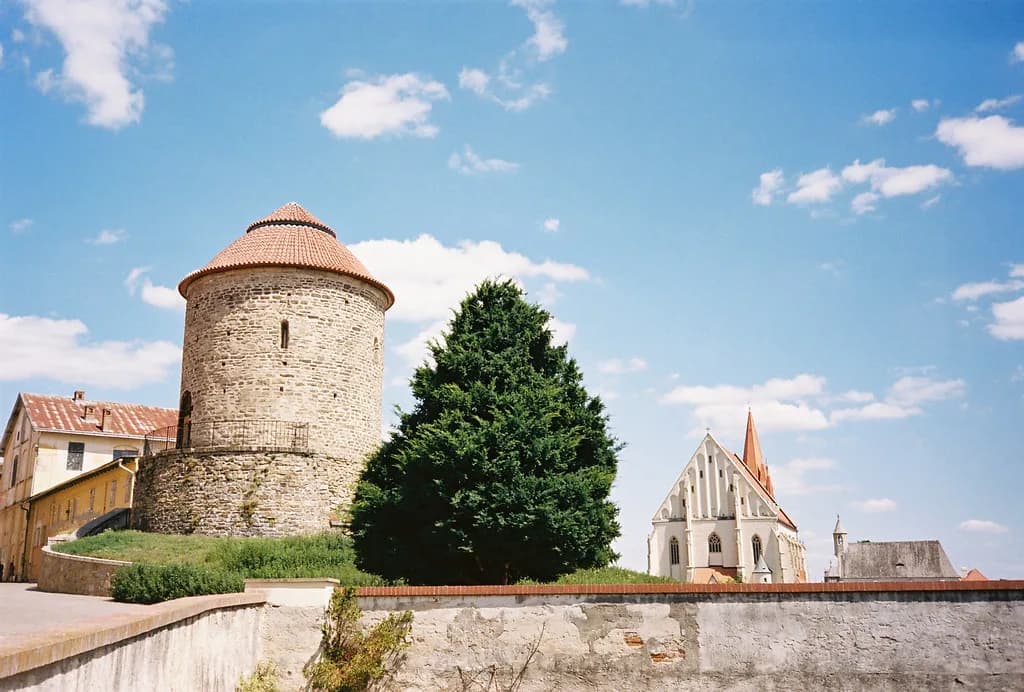
Znojmo was a mostly German-speaking town until 1945, and its Viennese-style cafes and winding lanes still carry that borderland character. Begin at the Town Hall Tower with its nine Gothic spires, then walk on to St Catherine's Rotunda, the only remaining part of Znojmo's 11th-century Přemyslid Castle. From May to September you can see frescoes depicting the life of Christ inside.
Meander past the Dyje River to St Nicholas' Church, rebuilt after a raucous wedding celebration in 1335 burned the church down; Holy Roman Emperor Charles IV, brother of the bride, funded its reconstruction. Climb the Wolf Tower for views over the old city walls and cobbled lanes. Time the visit to the warm months if the rotunda frescoes are the reason you came.
Podyjí National Park: Králův Stolec, the Hradiště Terraces and Šobes
Podyjí is the Czech Republic's smallest national park, a 24-square-mile ribbon of meadows, pine forests and vineyards skirting the Dyje river. From the Králův Stolec viewpoint you may see buzzards circling over the valley, and the Hradiště Terraces, an old farming area left to grow wild, give a fine angle back toward Znojmo. Together they make a half-day of gentle walking from the town.
Without a car, take the 817 bus from Znojmo to Mašovice to reach the park's heart, then walk the marked paths. The Šobes vineyard lies within the park, with Pinot Gris and Riesling from the outdoor stand, which is where the wine topic belongs for this stretch. Bring proper shoes: the river valley is steep in places, and the paths up to the terraces take longer than the map suggests.
The Lednice-Valtice Cultural Landscape: two chateaux, one estate
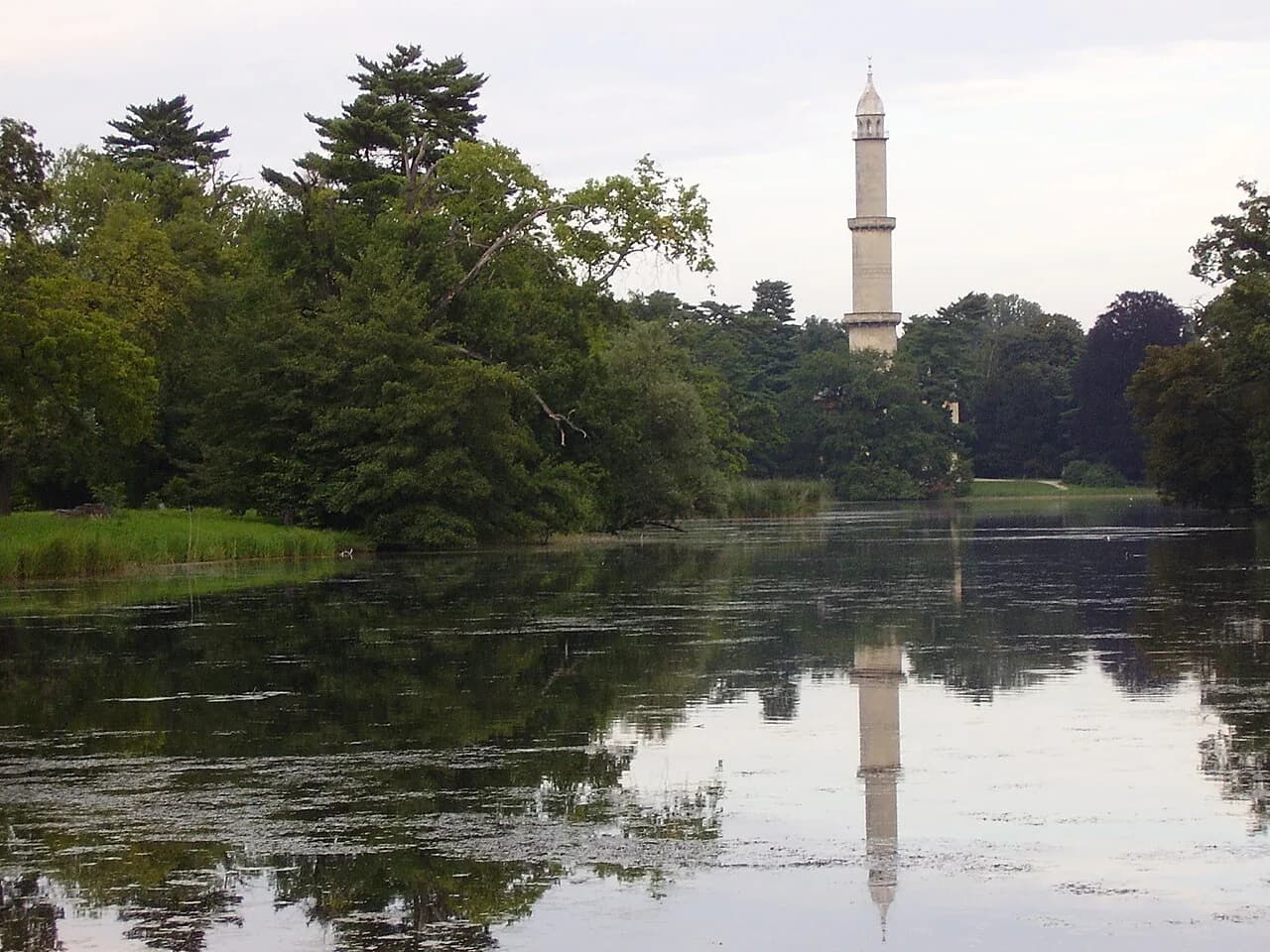
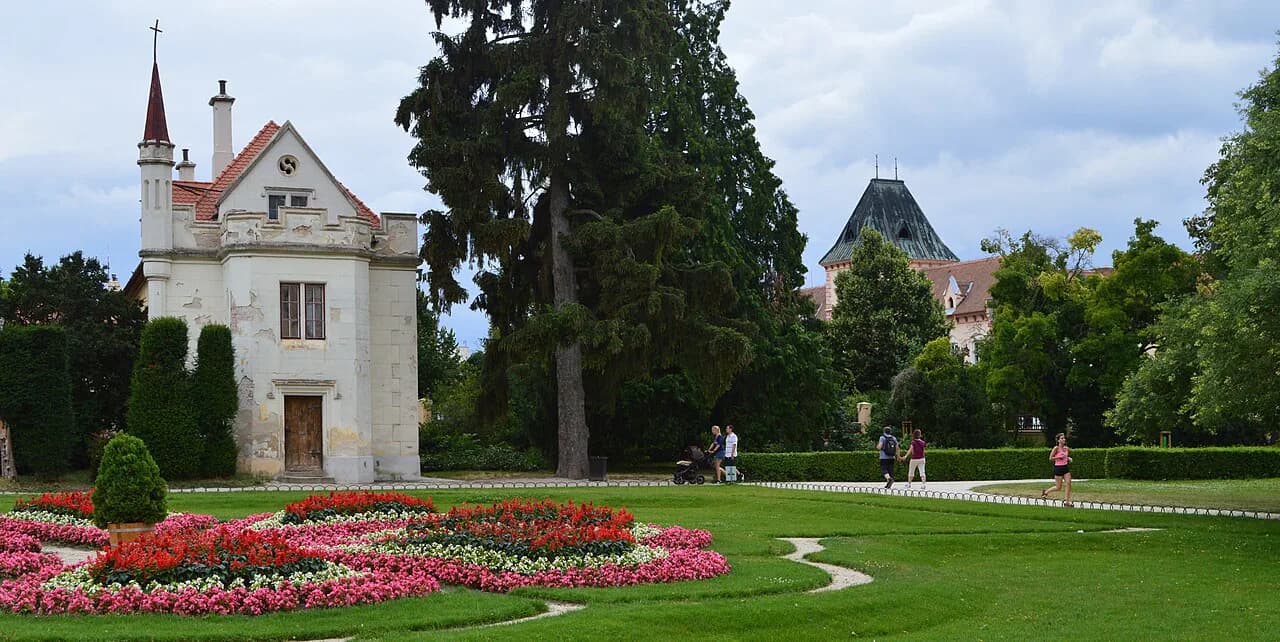
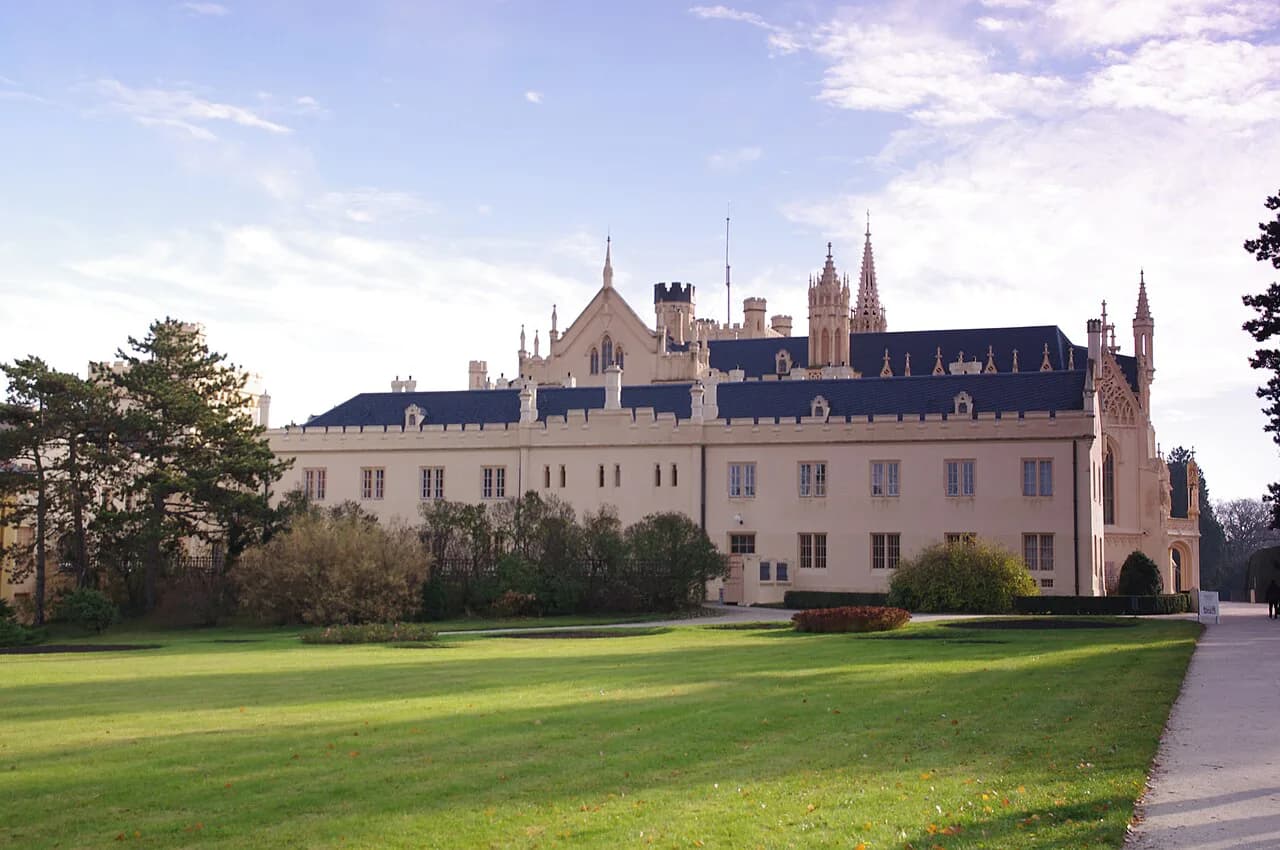
Lednice and Valtice are separate chateaux joined by a designed landscape rather than one site with two buildings, and that geography decides your day. Lednice Castle and its park are one stop, Valtice and its Liechtenstein palace another, and the grounds between them hold pavilions, ponds and alleys that reward a bike or a long walk. Give the landscape a full day if you want both interiors and the park.
Approach the Lednice-Valtice Cultural Landscape as the centerpiece of the UNESCO World Heritage Site, because that status covers the whole composed estate rather than the building alone. The UNESCO listing is why the landscape, not just the chateau facade, rewards the walking time. Plan transport between the two towns in advance, since the distance makes the estate a transport decision as much as a sightseeing one.
When to go: fresco seasons, markets and summer crowds
The rotunda frescoes in Znojmo are viewable May to September and the Cabbage Market Square farmers' market in Brno runs April to October, so late spring through early autumn catches both. Those same months bring the heaviest visitor numbers to Mikulov's square and the Lednice park. Choose the shoulder weeks inside that window if you want the sights open without the crush.
The trade-off is simple: warm months open the frescoes, market and outdoor wine stands, while colder months shift attention to Brno's museums and underground. Outside the season, verify what is running before you build an itinerary around a single interior. Treat the regional events calendar as the first check for anything time-sensitive.
Where South Moravia fits a wider Czech or Vienna itinerary
Treat the region as a two-base trip: Brno for transport and the city, Mikulov for the chateaux and Pálava. From there, Znojmo and Podyjí make a western loop, and the Lednice-Valtice area a southern one, each a day in itself. Squeezing both into one day means long bus rides and little walking time.
If you arrive from Vienna, the proximity of the border makes the southeast an obvious extension of an Austrian trip. Coming from Prague, the train south to Brno is the natural first move. Either way, the region rewards depth over breadth: pick two areas and give each a full day rather than chaining four towns.
Costs in Czech koruna: what to budget and where to hold back
Prices for chateau interiors, museum tickets, tower climbs and guided tours are set individually by each institution, and the regional sources here list none, so check each site's own ticket page before you go. Budget in Czech koruna and pay in cash or card at the venue. The main variable is how many paid interiors you add: Brno's underground, Mikulov's castle and both Lednice-Valtice chateaux each charge separately.
Hold budget back for the in-between costs, which add up faster than the tickets: buses between Znojmo and Mašovice, bikes or transport between Lednice and Valtice, and meals in the wine villages. A car may cost more than the bus but saves hours on a two-chateau day, which is the real trade. Compare the whole day rather than the fare alone.
Choosing your two South Moravian bases
Brno plus Mikulov covers the region's strongest combination of city, chateaux and hills, with Znojmo and Podyjí as a separate day or an extension toward Vienna. Commit to two areas, book the timed interiors you care about in advance, and keep one day flexible for the walking and weather.
If you have time for a third stop, choose the western loop for the rotunda frescoes and river valley, or the southern one for the full Lednice-Valtice landscape, not both. The region stays rewarding when you stop moving.
Explore more Mikulov guides
- Dolní Věstonice
- Kroměříž
- Lednice Castle
- Lednice-Valtice Cultural Landscape
- Mikulov Castle
- Mikulov: A South Moravian Town Guide Beyond Prague
- Podyjí National Park
- Pálava: The Limestone Hills Above Mikulov, Explained for Visitors
- Uherské Hradiště
- Valtice
- Vranov nad Dyjí Chateau
- Znojmo Underground
- Znojmo: A South Moravian Town Guide Beyond the Square
- Lednice Minaret
- Lysice Chateau
- Velehrad
Frequently Asked Questions
Is Moravia Czech or Slovak?
Moravia is part of the Czech Republic. South Moravia is an administrative region within it, with Brno as its capital, and the country's southeast borders Austria and Slovakia.
Why is Brno famous?
Brno is known for its functionalist architecture, especially the UNESCO-listed Villa Tugendhat, its main square with the 2010 astronomical clock, and its underground catacombs and water tanks. It is also the region's transport hub.
What is Moravia famous for?
Moravia is best known for its wine villages and chateau landscape, alongside Brno's modern architecture and Znojmo's medieval old town. South Moravia markets itself as a wine and culture destination across four distinct tourist areas.
Sources
Notes for your Czech trip
Optional updates to our Czech town guides.
You might also like
Continue reading
More guides you'll find useful