Mikulov Castle: Tours, Tickets and What You'll See
Mikulov Castle is a chateau above the town, run by the Regional Museum in Mikulov. Here is what the exhibitions show and how long to allow.
On this page
Mikulov Castle is the chateau on the hill above the town square, and your ticket buys a museum, not a furnished aristocratic interior. The Regional Museum in Mikulov runs the building as Zámek Mikulov, with permanent exhibitions and temporary shows under one roof. This guide covers what the building is, what the collections put on view, and how to fold the castle into a day in south Moravia.
Set aside roughly two hours for the exhibitions and the climb up from the square, and more if you add the synagogue or the Jewish cemetery below. The castle rewards travelers who come for specific objects rather than a parade of period rooms. Read the sections below in order if you are building a route from Brno or Vienna.
What Mikulov Castle Actually Is
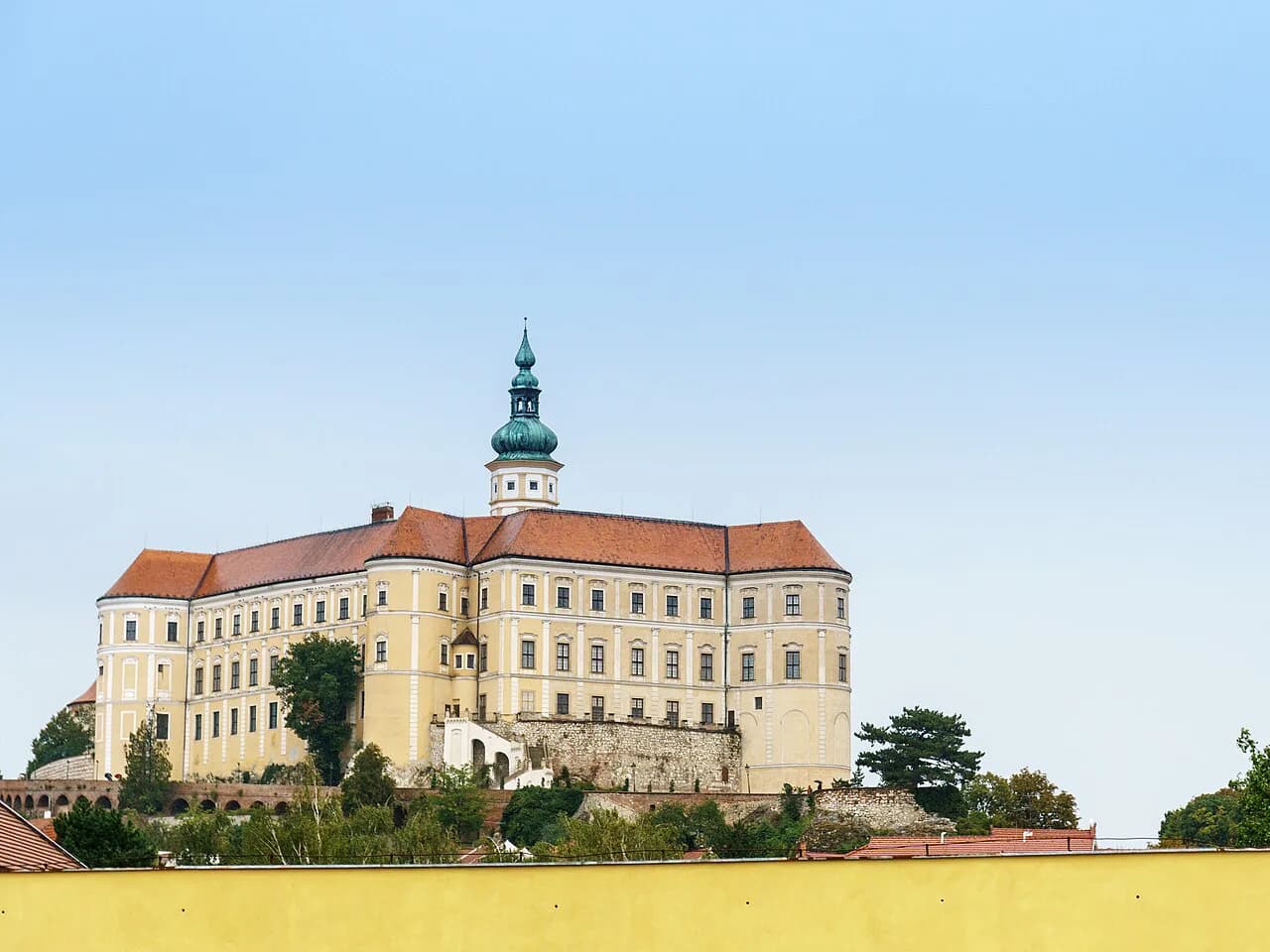
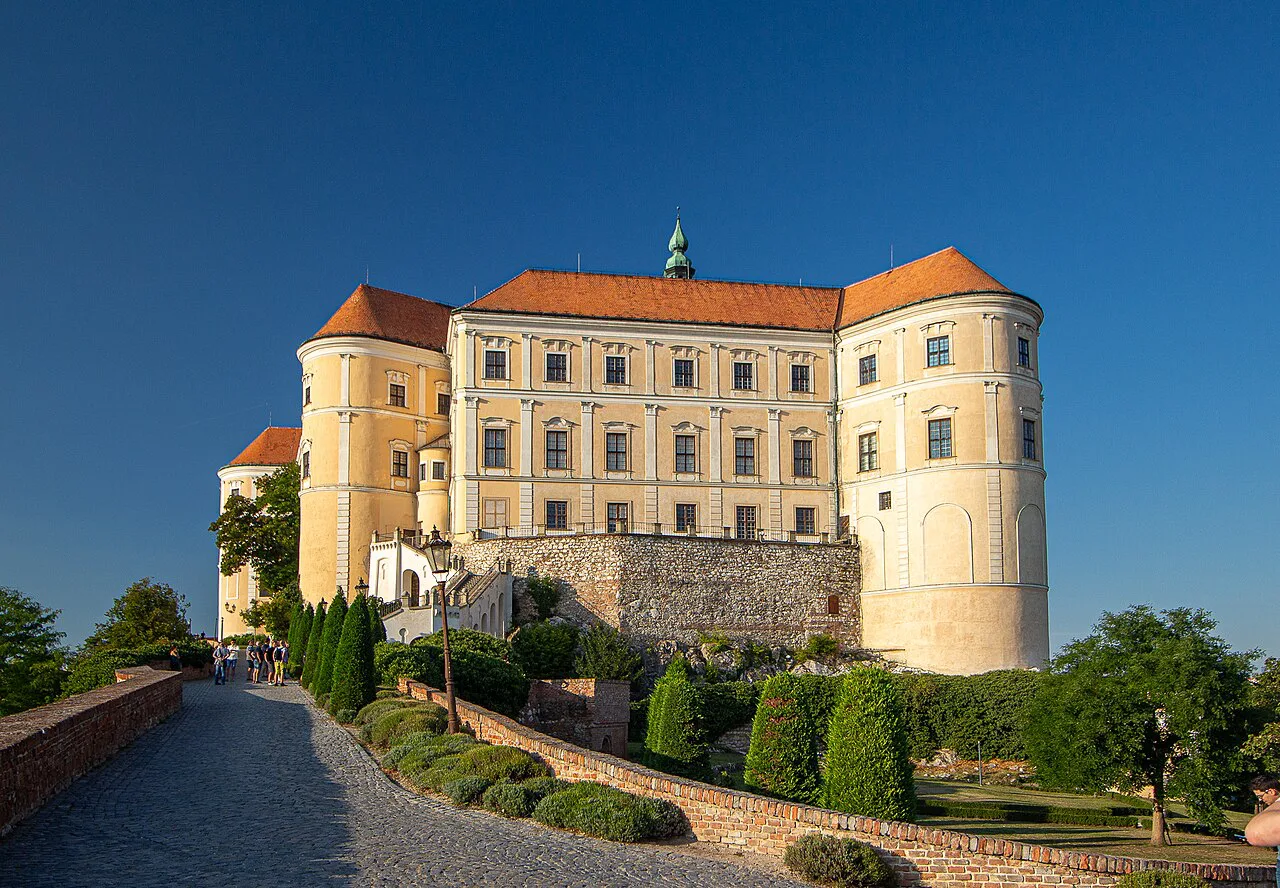
The castle is the dominant white building on the castle hill, and it houses the Regional Museum in Mikulov, an institution of the South Moravian Region. Its address on the museum's own contact page is Zámek 1/4 in Mikulov, which tells you the building and the museum share one identity. Visitors should think of it as a regional museum in a chateau rather than a state-run castle with a costumed tour.
That matters for planning: the exhibitions are the point, and the historic rooms are the frame around them. The museum also administers other sites in and around town, including the synagogue in Mikulov, the Pálava nature house at Dolní Věstonice and the Pavlov archaeological park, so a single organization sits behind several stops on a Pálava day.
Why a Castle Looks Like a Chateau
The building grew from a medieval castle into a grand baroque chateau, which is why the exterior reads as a palace rather than a fortified keep. The castle stands on the site of an early Slavonic settlement.
Practically, that history means you should not expect battlements, dungeons or a tower climb of the Karlštejn kind. What you get is a palace-scale building on a rise, with views back over the town roofs and the Pálava hills from the approach. The architecture is the setting; the Dietrichstein collections are the reason to go in.
The Dietrichstein Family and Their Collections
The Dietrichstein family shaped Mikulov for centuries, and the museum's displays are built around objects connected to them. The collections include a wedding-feast scene painted for Sigismund Dietrichstein and Barbara of Rottal after their 1515 marriage, attended by Emperor Maximilian I and the Bohemian and Polish kings. Look for it as an example of how the family used art to place itself among the European elite.
Smaller personal pieces carry the same message. The museum holds the silk burial clothes made for Raimund Dietrichstein in 1682, recovered during anthropological research in the Dietrichstein crypt, including tiny shoes of cowhide and calfskin. A baroque sleigh from the early eighteenth century carries the alliance coat of arms of Prince Walter Xaver Dietrichstein and his wife.
Objects Worth Seeking Out
Beyond the family pieces, the collections hold a scattering of unusual items that repay a slow pass through the cases. A shooting target from 1725 commemorates the return of the princely sons Charles Maximilian and John Leopold from a grand tour of Europe. There is also an eighteenth-century baroque screen with gilded ornament and oriental motifs.
One exhibit records performance at the Prague court: a depiction of a Dionysian revel staged at Prague Castle on 5 February 1617 for the carnival season in honor of Emperor Matthias, with Maximilian II Dietrichstein among the dancers. These are the details that separate this museum from a generic chateau tour, so give the display cases time rather than walking straight through.
The Dietrichstein Crypt and the Burial Clothes
The burial garments in the collection point back to the family tomb, the Dietrichstein crypt that has been the subject of anthropological research. The research is what brought the 1682 burial clothes to light, and the museum presents them as part of the family's story. How the chamber itself can be visited is not established by a ticket to the exhibitions, so ask at the desk rather than assume entry.
Treat the tomb as a separate puzzle from the exhibition rooms. If your interest is the burial chamber rather than the collections, ask at the museum desk when you arrive or check the museum's site before you travel. That single question saves a wasted climb.
What Else the Museum Displays
The museum presents the chateau as castle, museum, exhibition and gallery in one, with the Dietrichstein collections and temporary shows as the draw. Do not plan around a single room before you have confirmed what the current exhibition includes.
Check what is on view on the day you visit rather than planning around a single room. Exhibition layouts change with temporary shows.
Castle-Linked Sights in Town
The castle is one stop in a compact town, and two nearby sites belong to the same story. The synagogue in Mikulov is run by the same museum, and the Jewish cemetery lies a short walk away, together forming one of the most affecting pairs of Jewish monuments in the region. Build them into the same half day rather than treating the castle in isolation.
South of town, the museum lists the Pavlov archaeological park, with the archaeology trail between Pavlov and Dolní Věstonice, along with the Pálava nature house at Dolní Věstonice. These are separate museum sites under the Pálava hills rather than rooms inside the castle, so plan them as their own outing.
Opening Days and Season
Opening days and seasonal closures are set by the museum and change through the year, so confirm them on the museum's own site before you set out. The museum's homepage carries the current open status and visitor information.
The castle sits above the town, so the walk up is part of the trip. Check whether any temporary show has a section closed on the day you visit.
Tickets in Czech Koruna
Admission is charged in Czech koruna, and the museum publishes its own visitor information rather than relying on third-party listings. Check the current price and ask at the desk whether a combined ticket covers the synagogue and other museum sites in town, since that can change the arithmetic for a two-stop day.
If you are traveling from Vienna, remember that the Czech side of the border uses koruna, so change or card-pay accordingly.
Getting to Mikulov
Mikulov sits in the wine country between Brno and Vienna, which makes it reachable by train and bus as well as by car. The castle is above the historic center, a short but steady climb from the square, and the town is small enough that you do not need transport once you arrive.
Drivers park in the town and walk up. The castle fits naturally into a broader South Moravia Travel Guide route that strings together the Pálava villages and the Lednice–Valtice Cultural Landscape, a UNESCO World Heritage Site south of Mikulov.
How Long to Allow and How It Fits a Route
Two hours is a reasonable target for the museum exhibitions at an unhurried pace, and half a day covers the castle with the synagogue and cemetery below. If you add the Pavlov archaeological park or the Pálava hills, make it a full day based in Mikulov rather than a quick stop between trains.
For a wider loop, the Lednice Castle and neighboring Valtice make a natural second day, and the two together show how the Liechtenstein and Dietrichstein families each remade this corner of Moravia. Travelers heading north can add Kroměříž, another UNESCO town, or continue toward the Podyjí National Park on the Austrian border.
Practical Notes for the Visit
Ask at the desk about English-language materials before you start, and look for any posted rules on photography rather than assuming flash is allowed. The climb from the square is steep in places.
Keep the visit sober if you plan to see the Jewish sites as well; the synagogue and cemetery below the castle reward quiet attention rather than a rushed circuit. The same museum runs both.
Build the Castle Into Your Pálava Day
Mikulov Castle works best as a museum morning followed by the synagogue and cemetery, with the afternoon left for the Pálava hills or the Pavlov archaeological park. Go for the Dietrichstein objects, the burial garments and the sleigh, not for a standard castle tour.
Confirm opening days and entry prices on the museum's site before you travel, then plan the route around the climb from the square. That is the whole decision: castle first, town and hills after.
Explore more Mikulov guides
Sources
Notes for your Czech trip
Optional updates to our Czech town guides.
You might also like
Continue reading
More guides you'll find useful