Podyjí National Park: The Dyje River Valley on the Austrian Border
Podyjí National Park is the Czech Republic's smallest national park, a wooded Dyje River valley on the Austrian border near Znojmo. Here is what to see.
On this page
Podyjí National Park is worth a half day as a landscape stop, not a castle-and-town visit. The Czech Republic's smallest national park protects a wooded stretch of the Dyje River valley on the Austrian border near Znojmo, and its appeal is river scenery, rocky meanders, wildlife and one celebrated vineyard slope. This guide covers what the park actually contains, which named places to pick, and how it fits a south Moravia route by car or on foot.
A Small Park With a Big River Valley
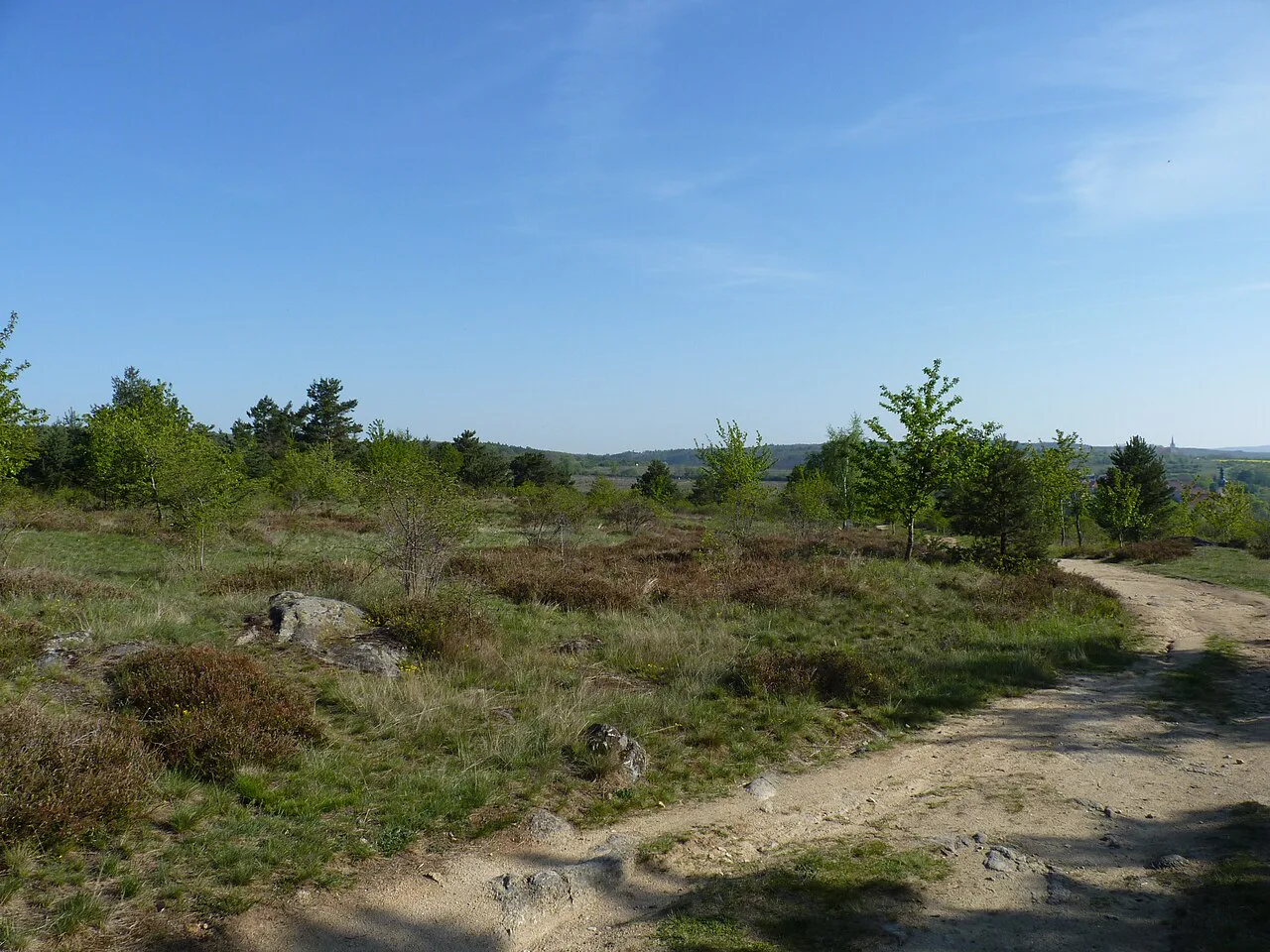
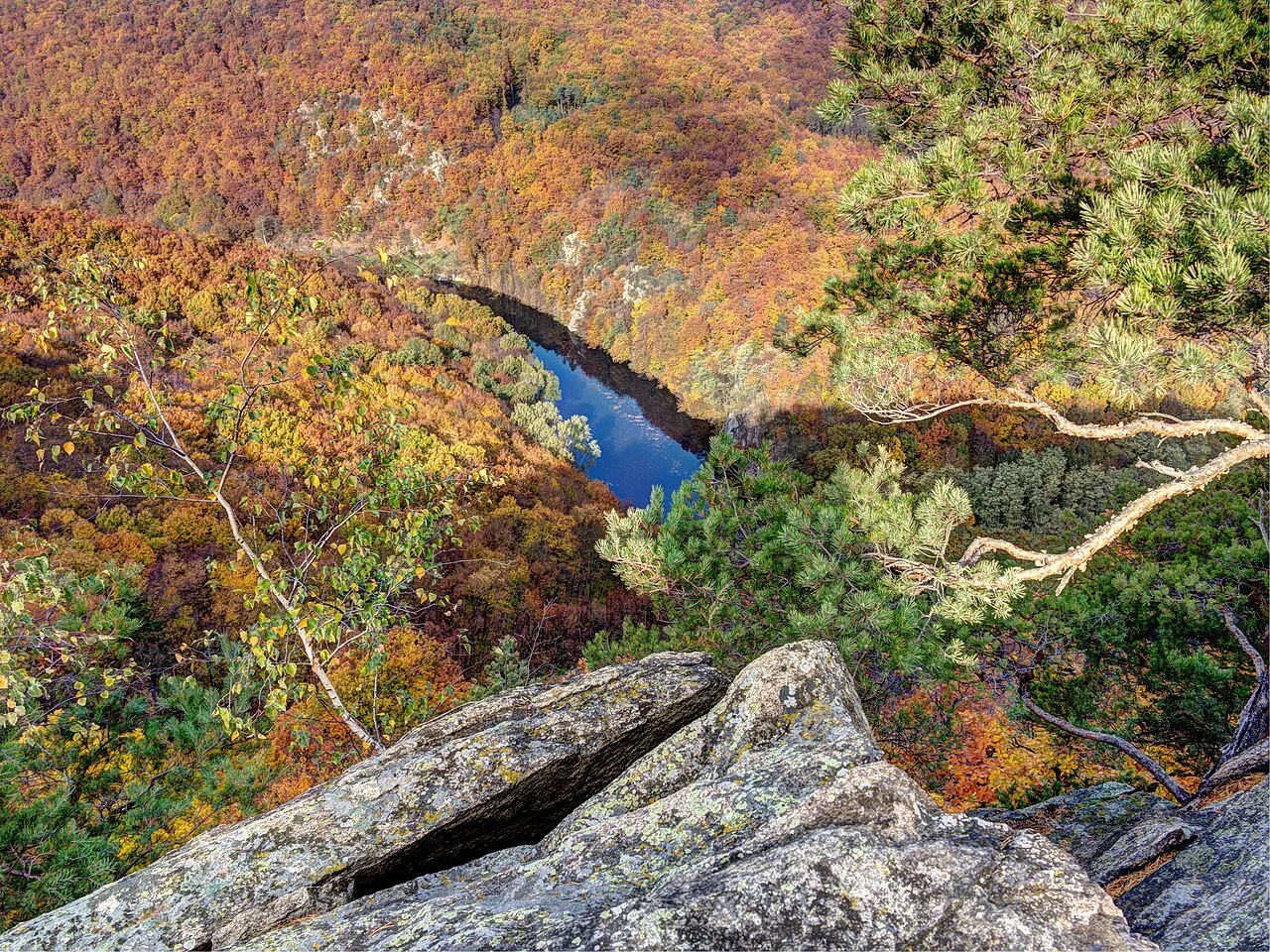
The park covers a well-preserved section of the Dyje (Thaya) River, a wooded valley with meanders, rocks, meadows and orchards along the banks. Warm, sunny conditions support an unusual range of plants and animals, which is why the area receives the highest level of landscape protection. Treat it as a nature reserve first and a sightseeing stop second.
This is not a town stop. There is no square, no chateau circuit and no museum to fill a rainy afternoon inside the park boundary, so plan the visit around the river, the viewpoints and the trails. For the castle-and-town half of a south Moravia trip, use Mikulov or the chateaux around Lednice instead and give Podyjí its own block of time.
Where the Park Sits
The park lies right on the Austrian border, where the protected valley continues across the line as Thayatal National Park. Znojmo is the practical base on the Czech side, and the park administration is based in the town. From Znojmo, the valley edge and the main access points sit a short drive away, which makes a car the simplest way to link several stops in one outing.
Because the park straddles the border, it pairs naturally with a wider south Moravia loop rather than a single-purpose trip. If you are building an itinerary around Znojmo and the wine country to the east, the South Moravia Travel Guide lays out the surrounding towns and how they connect.
Why the Valley Survived Intact
For decades the Iron Curtain made this stretch of the border effectively inaccessible, and the landscape was left largely untouched as a result. That history explains why the valley reads as wilder and less developed than comparable river country elsewhere in Central Europe. It also explains the absence of a built-up resort strip along the river. Coming here is about looking at the land, not working through a list of attractions.
The Dyje Meanders
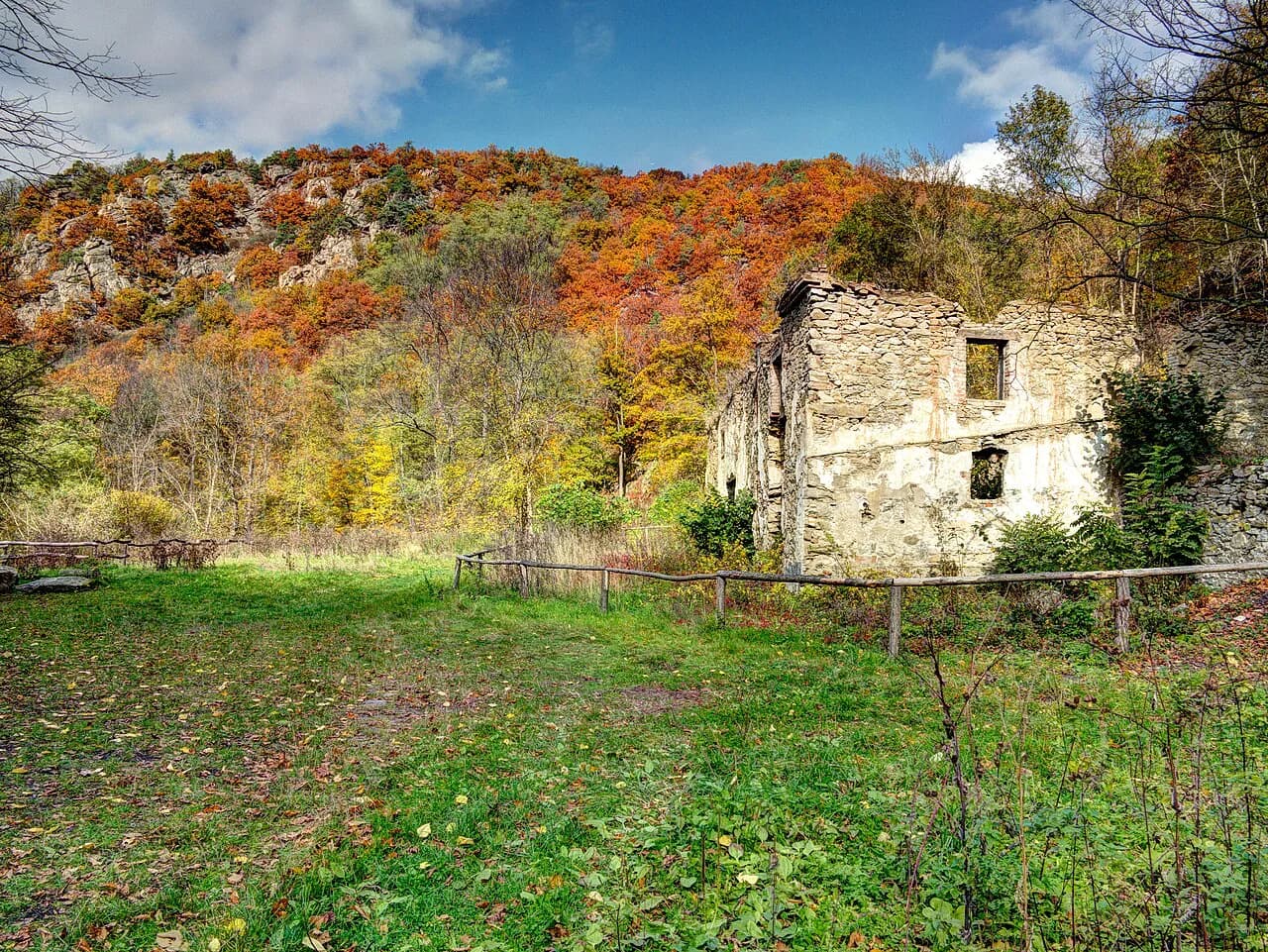
The river twists through the valley in slow meanders, with rocks, flowering meadows, thermophilous plants and sunny orchards on its banks. The scenery is the main event, and the walking is mostly about following marked trails between river views and higher ground. Bring good shoes, because a valley route is not a paved promenade.
Wildlife: What to Look For and Where
The park's warm climate and protection support a wide variety of species, and a few are tied to specific spots. Rare butterflies appear at Fládnitzké Moor, green lizards at Havranické Moor, and bats use the mysterious ruins of Nový Hrádek. Pasque flowers bloom near the Hájský Stream, and the black stork is the park's symbol if you are lucky enough to see one overhead.
Wildlife watching here is opportunistic rather than guaranteed. The practical approach is to pick one moor or one ruin as your target and give it time, rather than racing between all of them. Early starts and quiet stretches of trail give you the best odds, and staying on marked paths protects the very habitat you came to see.
Viewpoints and Landmarks: Vraní Skála and Nový Hrádek
Two names come up again and again and they are different kinds of stop. Vraní Skála (Crow Rock) is the popular viewpoint climb, a high point that rewards the effort with a wide look over the valley. Nový Hrádek is a ruin, a moody shell rather than a maintained chateau interior, and it is where bats are the draw after dark.
Expect outdoor infrastructure at both: trails, rock and weather, not ticket desks and guided interiors. If you want a chateau with rooms and a formal tour, the Vranov nad Dyjí Chateau further up the river is the right stop, and it is a different outing from the park itself.
How the Park Is Walked and Cycled
The park has kilometers of marked hiking trails and nature trails, plus marked cycling routes. In warm weather you can ride along the cycling trails to the Šobes Vineyard, which is the park's most celebrated single destination. Short stretches work well: pick a trailhead, walk an hour or two, and drive to the next stop rather than trying to cross the whole valley on foot.
Trail markings are the visitor infrastructure here, and the park authority publishes the details. Check the official park website for current route and closure information before you set out, since protected areas can restrict sections for conservation or safety.
Šobes Vineyard: The Slope Inside the Park
Šobes Vineyard sits on a sunny, south-facing slope sheltered from the wind, on a bend of the Dyje inside the park, and it ranks among Europe's top vineyard locations. It is one of the oldest vineyards in the Czech Republic, and the combination of exposure, soil and river setting is the reason it is famous. The slope is a landscape sight as much as a wine stop.
Treat Šobes as a viewpoint and a piece of wine geography rather than a scheduled tasting. The park is one stop on a broader wine-country map that also includes Mikulov and the chateau landscape around Lednice, so it slots into a south Moravia route without being a wine destination in its own right.
Getting There: Car Versus on Foot
A car is the efficient way to see the park. The named stops, the moors, the ruin, the viewpoint and the vineyard slope are spread along the valley, and public transport will not stitch them together in a short visit. Drive between trailheads, walk short loops, and keep the driving legs small.
On foot alone you can still have a good day, but you will see one section of the valley rather than several. Choose your target before you arrive, whether that is the Crow Rock climb or a river-side stretch near Šobes, and build the day around it. That trade-off is the honest shape of a Podyjí visit.
What the Park Does Not Offer
This is a nature reserve, not a castle-and-town stop, and the visitor infrastructure is deliberately limited. There are no grand interiors, no chateau tour circuits and none of the museum-and-cafe rhythm of a Czech town. Visitors who arrive expecting a compact sightseeing package are usually the ones disappointed.
If you want the chateau experience on the same trip, plan it separately. Lednice castle and its grounds sit in the UNESCO-listed Lednice–Valtice Cultural Landscape, which is a full day of formal gardens, glasshouses and architecture rather than river valley.
Protected-Area Rules and Practical Limits
The valley has the highest level of landscape protection, which means staying on marked trails and leaving the moors, flowers and rock faces alone. Some areas are sensitive, and the wildlife is the reason the park exists. Free-roaming across meadows or orchards damages exactly what makes Podyjí different.
The park administration in Znojmo is the authority for current rules and access, and its website carries the contact details. Check it before a visit if you plan to cycle, since cycling access on protected trails can differ from walking access.
Should Podyjí Be a Stop on Your South Moravia Route?
Yes, if you want river scenery and a short walk between Znojmo and the wine country, and no if you are collecting chateaux and town squares. Podyjí delivers meanders, the Vraní Skála climb, the Nový Hrádek ruin, two moors worth targeting for wildlife and the Šobes slope, all in a compact protected valley. Build it as a car-and-short-walk half day, then move on to the towns.
Explore more Mikulov guides
Frequently Asked Questions
Can you cross into Thayatal National Park from Podyjí?
The protected valley continues across the Austrian border as Thayatal National Park, so the two form one connected landscape. Crossing arrangements and the facilities on the Austrian side are a separate question from the Czech park, so check the Austrian park's own information before planning a border crossing.
How big is Podyjí National Park?
Podyjí is the Czech Republic's smallest national park, protecting a section of the Dyje River valley rather than a large mountain area. That small size is why the named stops sit close enough to combine in a single outing by car.
Sources
Notes for your Czech trip
Optional updates to our Czech town guides.
You might also like
Continue reading
More guides you'll find useful