Uherské Hradiště: Moravian Slovakia's Town Square and Slovácko Museum
Uherské Hradiště anchors Moravian Slovakia. Here is what to see around Masaryk Square and the Slovácko museum, plus the Great Moravian site outside the center.
On this page
Uherské Hradiště rewards a half day in its center and a full day if you add the sights outside it. The town is the cultural center of Moravian Slovakia (Slovácko), a folk region rather than a single monument, and its compact core of squares, churches and surviving walls is walkable in a couple of hours. What stretches the visit is the archaeology and open-air museum beyond the ring road.
This guide lays out Masaryk Square and the lanes around it, names the churches and walls worth stepping up to, and separates the two outlying sights so you can budget time honestly. It closes with how the town fits a broader South Moravia Travel Guide and where to pick up guided walking tours.
What Uherské Hradiště is and why it anchors the Slovácko region
Uherské Hradiště was founded in 1257 and grew as the market and administrative town for the surrounding Moravian Slovakia countryside. That role explains why the town, not a castle, is the draw: it collects the region's costume, music and craft traditions in its museum and theater rather than displaying them on the square.
Treat Moravian Slovakia as a cultural frame, not a sight. The folk identity shows up indoors in the Slovácko Museum collections and in the town's festival calendar, while the streets themselves are a conventional Czech small-city center of arcaded houses, churches and a long pedestrian square.
Two sights sit clearly outside the old core: the Great Moravian archaeological site at Staré Město and the Rochus complex with its open-air museum and park. Plan the center on foot and treat those two as short trips of their own, since walking between them and the square eats time you may want for the museum.
How the center is laid out: Masaryk Square, Zelný trh and the lanes between them
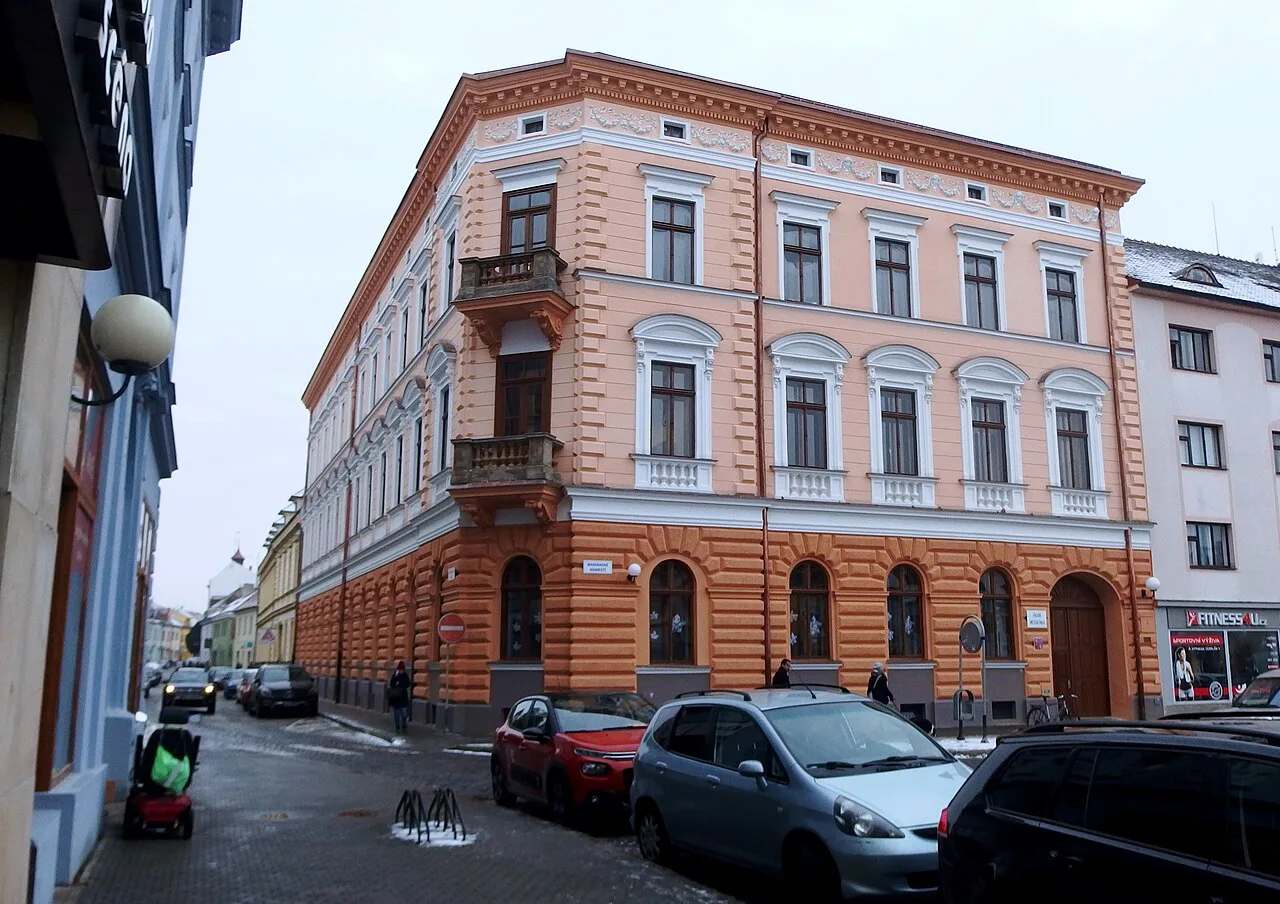
The center is organized around Masaryk Square (Masarykovo náměstí), a long, slightly bent pedestrian space lined with burgher houses and arcades. Zelný trh, the vegetable market square, sits close by with its cast-iron fountain, and Marian Square and Palackého náměstí fill out the ring of open spaces within a few minutes' walk.
Orient yourself by the towers: the Old Town Hall and the Matyášova brána gate mark the historic entrances to the core, so a loop between them passes most of the named houses and churches without backtracking. Give the square-to-square circuit about an hour at an unhurried pace, then add museum time on top.
The square itself: Marian column, the old town hall and the burgher houses
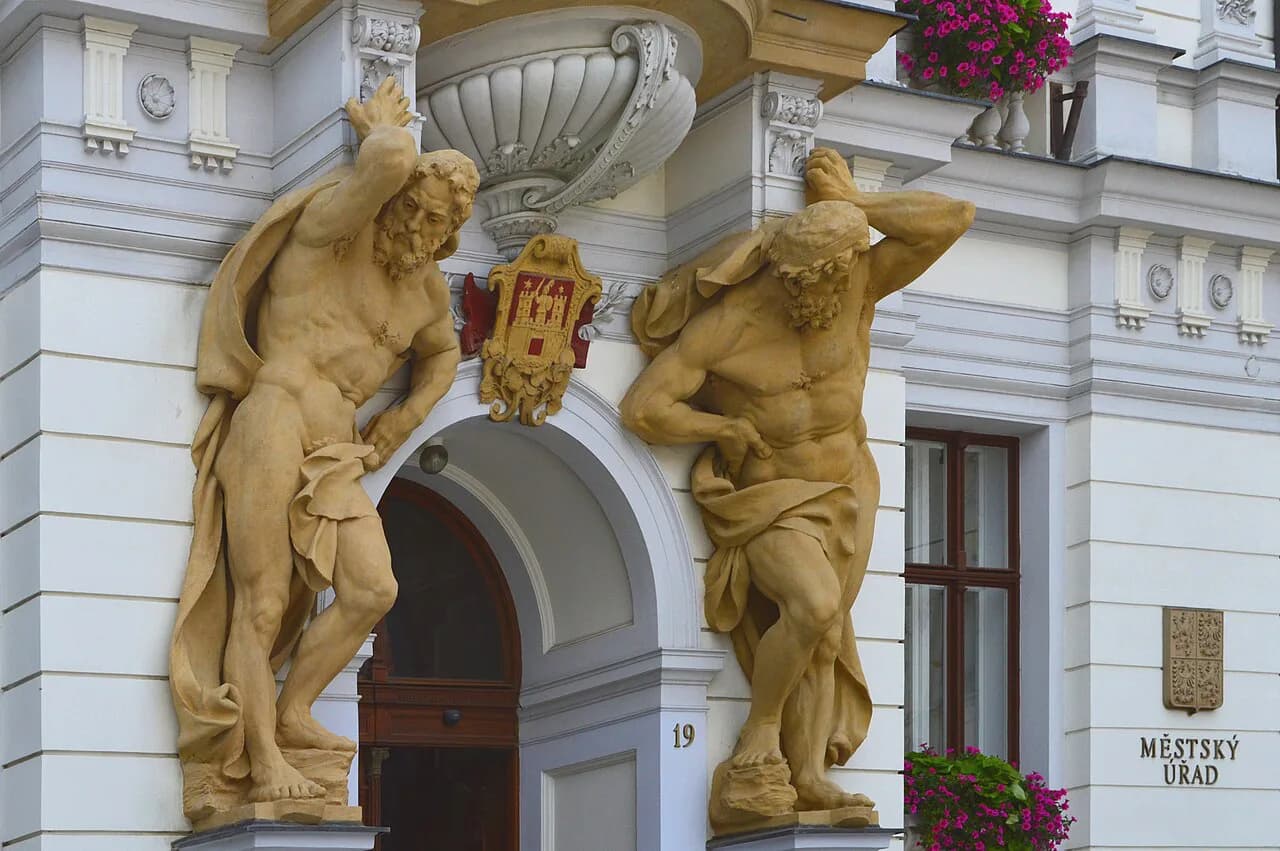
Masaryk Square holds the Marian plague column, a standard Baroque thank-offering for the end of plague, and the Old Town Hall with its tower, whose research results the town's information center has publicized. The surrounding burgher houses carry arcades at ground level and decorated facades above, including the house known as U Hroznu and the building with a chronogram.
Look for the smaller fixtures as you walk: the cast-iron fountain on Zelný trh, the Baroque fountain with dolphins, and the statue of St. Florian. These are the details that make the square worth a slow pass rather than a photo stop.
Churches and monasteries worth stepping into
The Church of St. Francis Xavier belongs to the former Jesuit college and is the most prominent church on the square's edge. Nearby stand the Franciscan monastery and the Church of the Annunciation of the Virgin Mary, plus the Church of the Nativity of the Virgin Mary and the Church of the Assumption, so church interiors are a realistic part of a center walk.
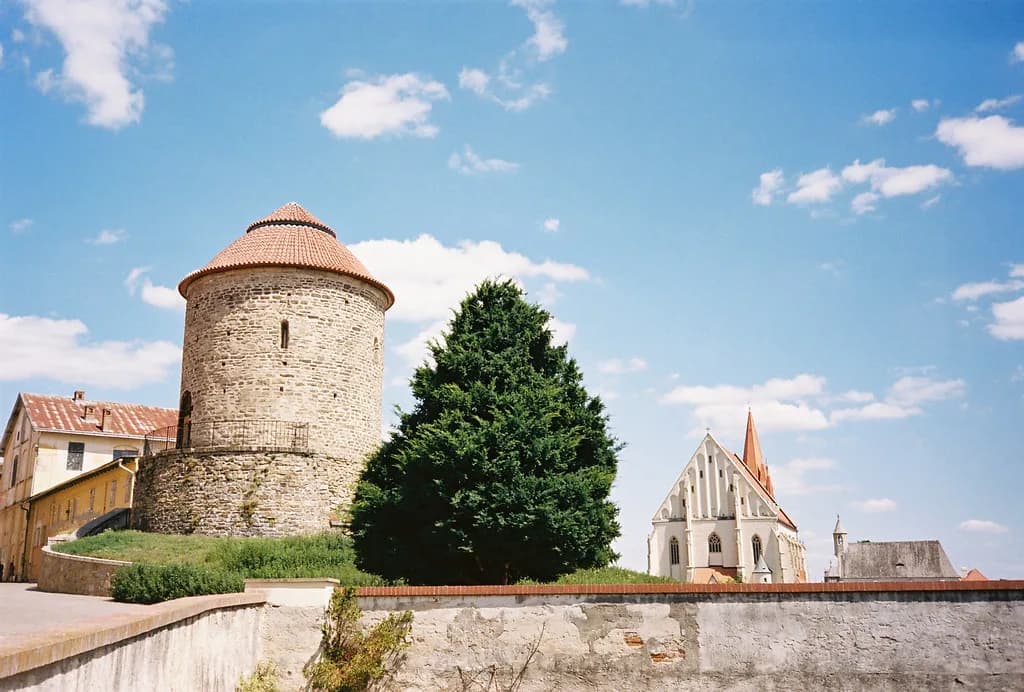
Smaller chapels are scattered through the core and the parks, including the Chapel of St. Sebastian and the Chapel of St. Roch, which reward a detour if you are already heading toward the park at Rochus. Check doorway notices for visiting hours, since these are working religious buildings rather than ticketed monuments.
The town walls and gates still standing in Otakarova and Hradební streets
Fragments of the medieval fortification survive in Otakarova and Hradební streets, where stretches of wall stand between later buildings. The Matyášova brána gate is the centerpiece of this circuit, and the walk between the two streets is short enough to fold into the square loop.
Come here expecting fragments rather than a continuous rampart. The value is in reading how the town closed itself off, and the wall sections sit among ordinary houses, so allow fifteen or twenty minutes rather than planning a separate excursion.
Slovácko Museum and the Gallery of the Slovácko Museum
The Slovácko Museum in Uherské Hradiště is the reason to give the town more than a walk, and the town also lists an exhibition on its own royal history, so you can pair regional context with local history in one stop. The separate Gallery of the Slovácko Museum holds art exhibitions in its own building, which is worth knowing if you want both.
Budget at least an hour for the museum and more if the ethnographic collections are your main interest. Current exhibitions and any guided tours of the collections are listed through the town's information center, so confirm opening days there before you build a day around it.
Joža Uprka and the folk-art tradition behind the town's identity
Painter Joža Uprka fixed the image of Moravian Slovakia in Czech art, and the town keeps his legacy visible with the Gallery of Joža Uprka and a memorial plaque. The gallery, and any commentary tour of his permanent exhibition, are the practical way to see the work rather than just the name.
If you only have time for one art stop, take the Uprka gallery over the general gallery, because the folk-costume imagery is the thread that ties the town to its region. The gallery sits inside the walkable center, so it slots into the square loop without extra transport.
The Great Moravian archaeological site at Staré Město and Výšina sv. Metoděje
Staré Město, next to Uherské Hradiště, holds a Great Moravian archaeological site with the Výšina sv. Metoděje, a memorial height tied to the mission of Cyril and Methodius. This is early medieval history rather than a castle or chateau, and it is the strongest reason to treat the town as more than a market stop.
Reach the site by local transport or car rather than on foot from the square, and check the information center's listing before setting out, since outdoor memorial grounds and any indoor exhibition can keep different hours. Allow roughly an hour on site.
Rochus: open-air museum, park and the Rovnina lookout
Rochus combines an open-air museum of folk architecture, a park, and the Rovnina lookout tower, so it bundles three things that would otherwise be separate trips. The skanzen Rochus and Park Rochus sit together, with the naučná okruh Rochus nature trail linking the grounds.
The Rovnina lookout is listed by the town's information center as its own sight, so treat the tower and the Rochus grounds as separate stops to fit into your day. Half a day at Rochus is reasonable if you take the open-air museum seriously; ninety minutes covers the tower and a loop of the grounds.
Town walking tours with a guide and what they cover
The town information center runs thematic guided walks of Uherské Hradiště, which is the fastest way to get context on the square, the walls and the churches in one pass. Tours are listed by theme and season rather than as a single fixed daily departure, so pick the theme that matches your interest before you set out.
A guide is most valuable here precisely because the center's sights are understated: wall fragments, house facades and a plague column explain themselves poorly without commentary. If your time is short, take the tour and skip the self-guided loop rather than doing both.
Baťův kanál and the Morava river as the other half of a visit
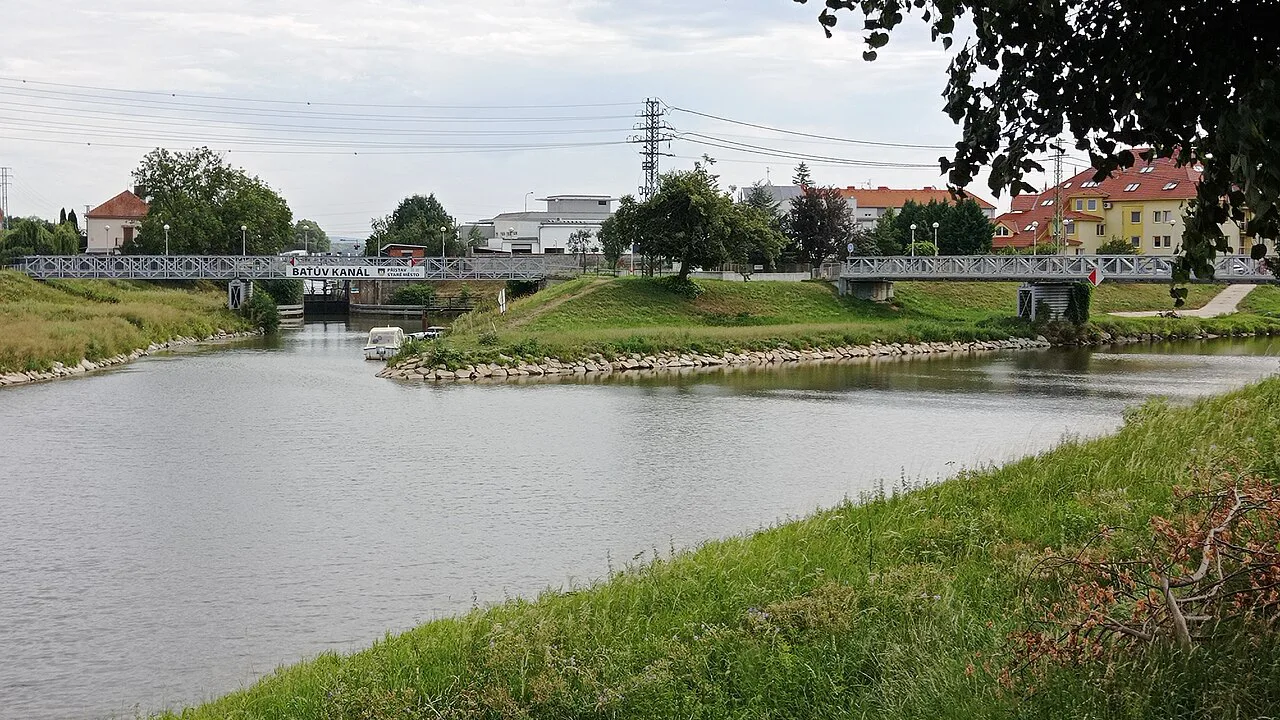
The Baťův kanál, a historic shipping canal on the Morava, is the town's outdoor counterpart and the reason many travelers stop here at all. The information center treats the canal and the river as a day-trip category of their own, which tells you it is not a walk from the square.
Decide in advance whether you are visiting for the town or for the water. Doing both in one day is possible only if you cut the museums, so travelers continuing through South Moravia often pair the canal with a short center walk and leave the Slovácko Museum for a return.
How long to give the town center, and what to cut if you have half a day
For half a day, do Masaryk Square, the Zelný trh fountain, the wall fragments in Otakarova and Hradební streets, and one church interior. That fills two to three hours at a comfortable pace and leaves the museum and the outlying sights for a longer stay.
With a full day, add the Slovácko Museum in the morning and pick either Staré Město or Rochus for the afternoon, not both. Cutting the open-air museum is the better trade if your interest is early medieval history; cutting Staré Město is better if you want views and a park.
Getting here from Prague, Brno or Vienna and moving around on foot
Uherské Hradiště sits in the east of the South Moravian region near the Slovak border, which makes it a natural stop rather than a detour. The town's own site posts current notices about the station forecourt and road projects, which is the place to look before you arrive by train.
Once in town, everything in the center is on foot: the squares, churches, walls and museums sit within a few minutes of each other. Only Staré Město and the Rochus and canal areas need a bus, bike or car, and the information center's trip listings are the practical starting point for those.
Where Uherské Hradiště fits on a South Moravia route
Uherské Hradiště earns a place on a South Moravia loop as a folk-culture stop that the wine towns do not provide, and its position near the Slovak border makes it a natural eastern bookend. Travelers heading toward the Lednice–Valtice Cultural Landscape can treat it as the last stop before turning into the wine country.
If your route runs through the Pálava Hills and Mikulov, Uherské Hradiště works as a contrasting half-day rather than a replacement, so plan it as a stop on the way to or from Slovakia, not as a base for the wine villages.
Center first or museum first?
Walk the center first: an hour on Masaryk Square and the wall streets tells you whether the town's understated history holds your interest. If it does, give the Slovácko Museum the rest of the morning and pick one outlying sight for the afternoon.
Travelers with a car and a full day should choose Rochus for the combination of open-air museum and park, while those drawn to early medieval history should choose Staré Město. Either way, confirm current opening days through the town information center before you commit the day.
Explore more Mikulov guides
Frequently Asked Questions
Is Uherské Hradiště worth a stop between Brno and the Slovak border?
Yes, if you want the folk culture of Moravian Slovakia rather than another castle town. The compact center of Masaryk Square, churches and surviving walls takes two to three hours, and the Slovácko Museum adds regional context that the wine towns further south do not cover.
Do you need a car to see the center and the Staré Město site?
No for the center, which is entirely walkable. Staré Město, the Rochus park and the Baťův kanál sit outside the old core and need local transport or a car; the town information center lists how to reach them.
Is the Slovácko Museum open on Mondays?
The town's published materials do not give the museum's opening days, so check the information center's current listing before planning a Monday visit. Czech museums commonly close one day a week, and Monday is the usual choice.
Sources
Notes for your Czech trip
Optional updates to our Czech town guides.
You might also like
Continue reading
More guides you'll find useful