Brno Map: Old Town Squares, Sights and Stations
Read the Brno map like a local: which sights cluster around Zelný trh and Freedom Square, what sits on Špilberk Hill, and how the center fits together.
On this page
Brno rewards a map read by squares, not by list: the city's own tourist map files most of the inner sights under a handful of squares and streets — Freedom Square, Zelný trh, Petrov and Špilberk Hill — while outlying sights such as Tugendhat Villa and Veveří Castle are filed separately. This guide lays out the center the way that map does, grouping sights by square and street, and notes where the two information centers sit in the same frame. Use it to plan a walking order; a printed plan helps once you know the geography, and a guide to things to do in Brno is the companion list.
Brno on the map: South Moravia, the Czech Republic, and the two main stations
Brno is the second city of the Czech Republic and the capital of South Moravia, the region north of the Austrian border. On a national map it sits roughly between Prague to the northwest and Vienna to the south, which is why both cities are practical starting points. The city's tourist map lists the sights by district, so orient yourself first by the old center, then by the sights that ring it.
The city's official visitor service runs two information centers, one on Radnická and one on Zámečnická Street, and publishes contact numbers and email addresses for both. Either makes a sensible first stop if you want a paper map before you start walking.
The compact old center: Freedom Square (náměstí Svobody), Česká Street, and Masarykova Street
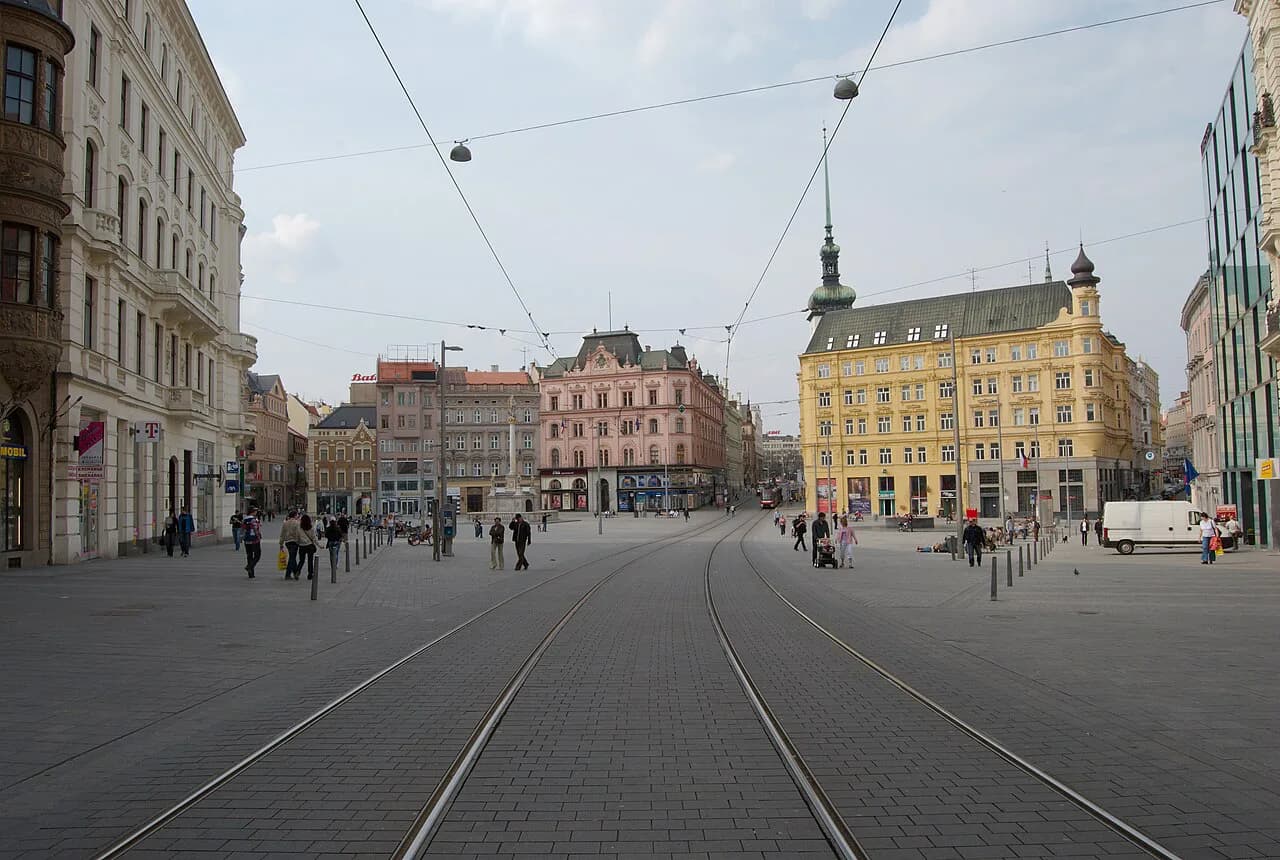
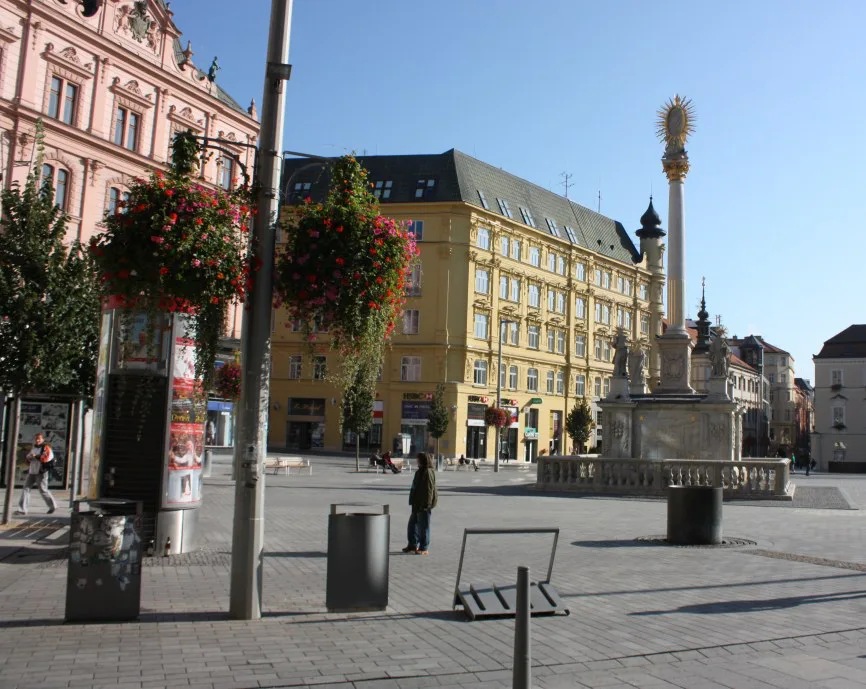
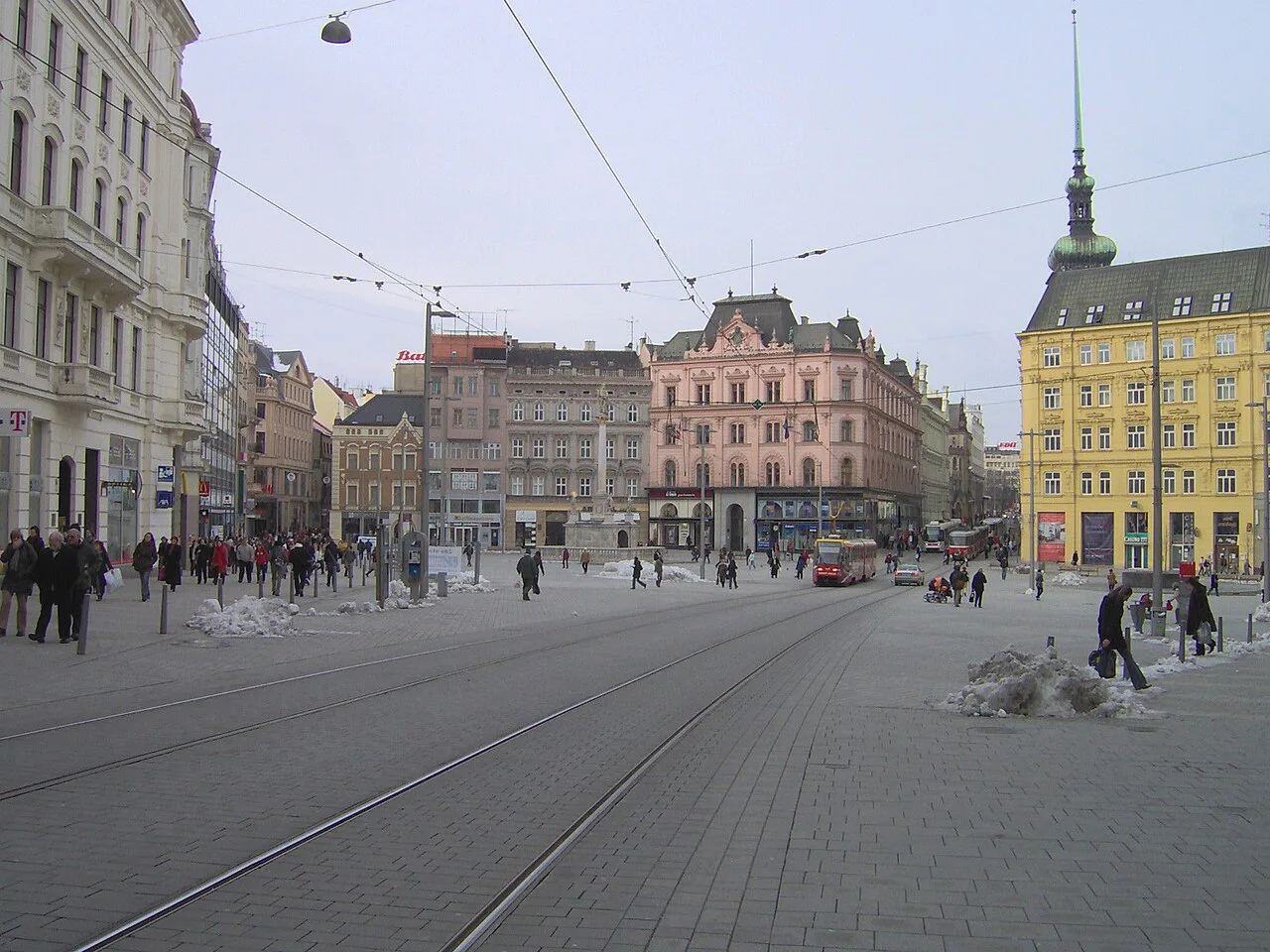
Freedom Square (náměstí Svobody) is the center's front room and the natural place to begin. From it, Česká Street and Masarykova Street run through the middle of the center, so the two streets act as the city's main walking axes. Treat the square as a hub and plan the rest of the center as short walks out from it.
Start at the square itself, note the surrounding facades, then pick a direction: Česká into the shopping streets, or Masarykova toward the eastern side of the center. Brno old town is small enough that you will cross this square more than once in a day, so plan it as a reference point rather than a single stop.
Zelný trh and the underground: Vegetable Market, Labyrinth Under the Vegetable Market, Old Town Hall
The Vegetable Market, Zelný trh, is the center's other anchor square, a market space near Freedom Square. The Labyrinth Under the Vegetable Market and the Old Town Hall (Stará radnice) both sit by it, which makes this the densest cluster of sights in the center. If you want one compact stop that combines market, underground and civic history, this is it.
Nearby streets hold the city's better cafes and food shops, so the market square is also a natural lunch stop. When you plan the day, put Zelný trh in the middle rather than at the end; it sits between Freedom Square and the Petrov hill, and you will pass through it on the way from one to the other.
Petrov and St James: Cathedral, Church of St James, Ossuary, Jakubské náměstí
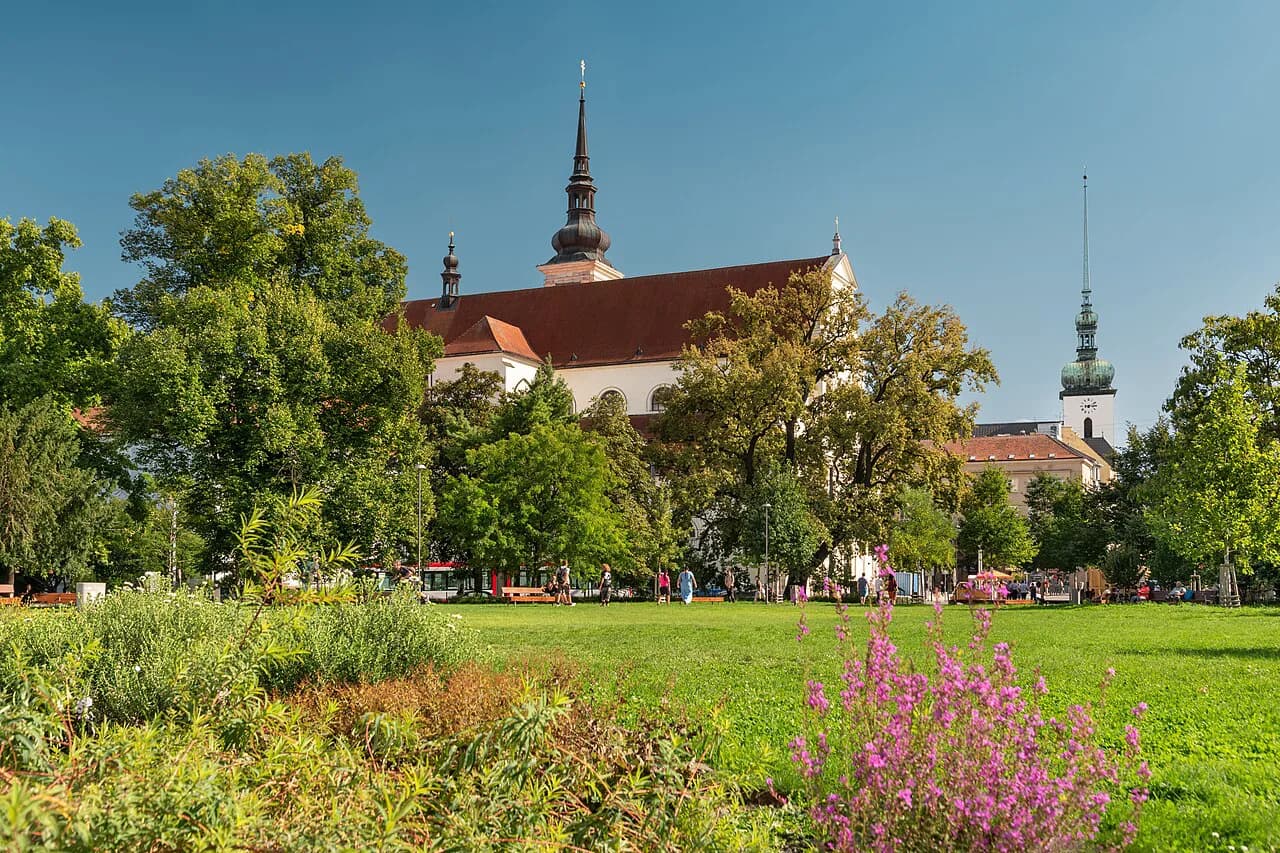
Petrov carries the Cathedral of St Peter and Paul, the city's dominant church and the landmark most travelers use to tell where the center's southern side begins. Beside it, the Church of St James and its Ossuary sit near Jakubské náměstí, the square of the same name. The city's tourist map files them together as one holy-sites cluster, and they are a short walk apart.
The Ossuary at St James is the one sight in this group that draws its own crowd, so go there early in the walking order rather than last. For the wider church picture in the city, a guide to the Brno cathedral and its neighbors fills in the background, while a Brno walking tour can put the sequence together for you if you would rather not plan it yourself.
Špilberk Hill: castle, park, and what the climb buys you
Špilberk Castle sits on its wooded hill above the center and is reached by a climb, which makes it a half-day rather than a five-minute detour. The hill is also a park, so the effort buys you shade and views back over the center. A fuller account of Brno history puts the castle in context.
Treat Špilberk as one push on foot: go up from the center, spend time on the hill, and come back down to the center. Check the castle's opening season and tour options before you commit, since guided visits are not always running on a walk-up basis.
Moravian Square and the Basilica of the Assumption: the northern edge of the center
Moravian Square (Moravské náměstí) marks the northern edge of the walkable center, and the Basilica of the Assumption of Our Lady is its main sight. This is the part of Brno that feels more like a city at work than a tourist quarter, which is a useful change of pace after Zelný trh. Add it to the walking order after the market, before you commit to the climb up Špilberk.
Denis Gardens and the Janáček Theatre: the eastern side
Denis Gardens (Denisovy sady) and the Janáček Theatre (Janáčkovo divadlo) sit on the eastern side of the center, close enough to pair on the same walk. The gardens give you a green pause in the middle of the city, and the theatre is one of the city's main venues. Put them at the end of a walking day if you have tickets for an evening performance, so you are not crossing town twice.
Beyond the center: Tugendhat Villa, Žlutý kopec Water Tanks, Veveří Castle
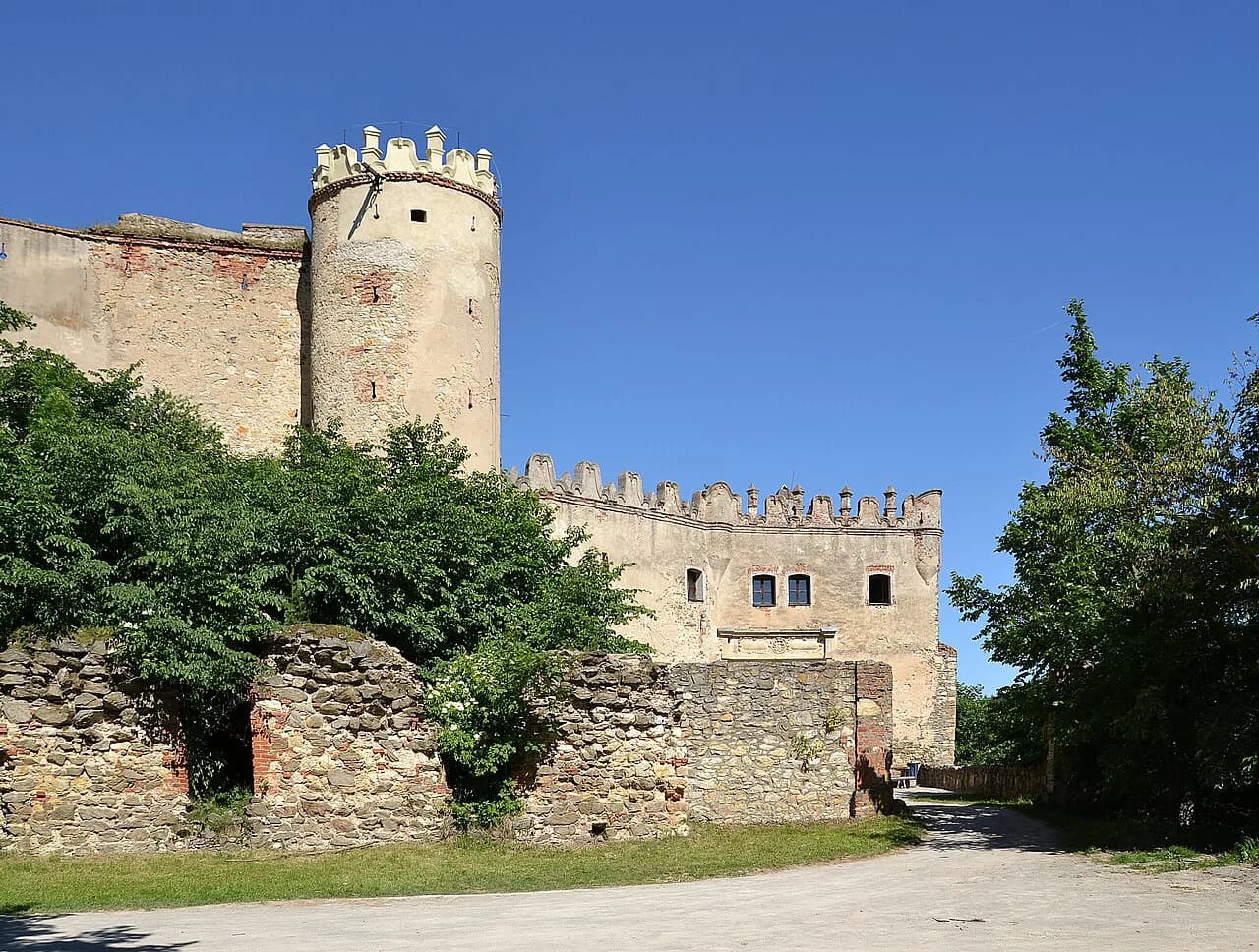
Three of Brno's best-known sights sit outside the center and should never be slotted in as if they were square-side stops. Tugendhat Villa, the Žlutý kopec Water Tanks and Veveří Castle each stand apart from the old center, and the Brno Reservoir is listed as a separate destination beyond the city. Each needs its own transport plan or a long walk, so give one of them a half-day and do not try to combine all three.
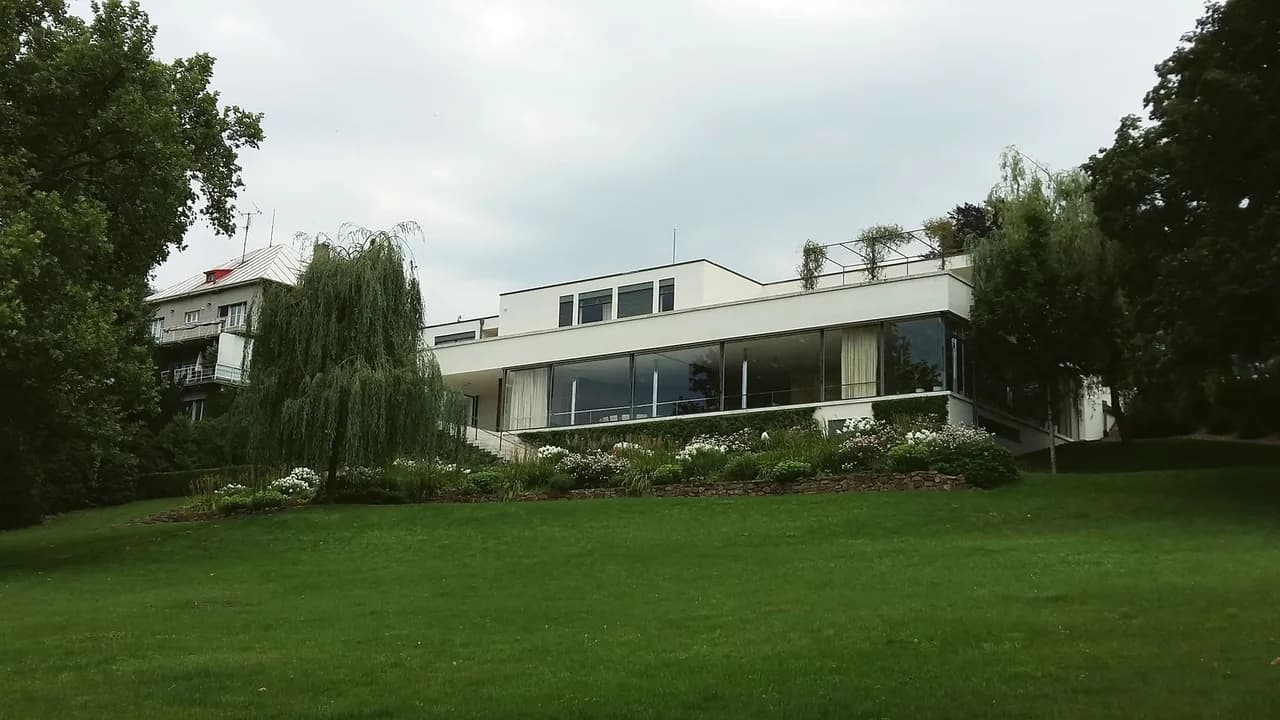
Tugendhat Villa is the centerpiece of Brno functionalist architecture and its interior is shown by timed tour, so check the villa's own booking conditions rather than turning up. Veveří is a castle visit in its own right, and the reservoir is a separate destination. If your interests lean toward museums and galleries, a guide to museums in Brno covers the indoor alternatives for a wet day.
Getting oriented on arrival: train station, bus station, and the Zámečnická information center
Brno's main rail station is the handiest arrival point for the center, so your first move after arriving is to head for Česká Street and Freedom Square. The bus station is a separate arrival point and needs its own orientation; the city's visitor pages cover the ways to get where you want to go. Make either information center your first stop if you want a map and a human answer in the same place.
The Radnická information center is the second option, with the same city-run service and a published phone number and email address. Either office can give you the printed plan for the center, which is still the fastest way to see how Zelný trh, Petrov and Freedom Square relate before you start walking.
Parking and driving into the center: the trade-off against train or bus
Driving into Brno's center buys flexibility for the outlying sights but costs you time in traffic and in finding a legal space, so weigh it against arriving by train and using trams inside the city. The official visitor site points drivers to its transport section rather than a single parking answer. If you do drive, plan to park once and walk the center rather than move the car between squares.
Which sights group naturally on foot and which need a tram
On foot, the natural groups are clear: Freedom Square, Česká and Masarykova in one loop; Zelný trh, the Old Town Hall and the Labyrinth in a second; and Petrov with St James and the Ossuary in a third. Špilberk is a fourth, done as a climb and a descent. That gives you a full day in the center without any transport at all.
The sights that need a tram or a bus are Tugendhat Villa, the Žlutý kopec Water Tanks and Veveří Castle, plus the exhibition centre if a fair is running. A full Brno itinerary can help you sequence those across separate days so you are not crossing the city twice. The exhibition centre is a trade-fair destination rather than a sight, worth knowing only if your dates coincide with an event.
Start at Freedom Square and work outward
The simplest reading of the Brno map is this: begin at Freedom Square, walk the Zelný trh cluster, climb to Petrov, then decide whether Špilberk fits the same day. Keep Tugendhat Villa, the water tanks and Veveří Castle for separate half-days, and let the Zámečnická information center fill in the printed map when you arrive. From Prague or Vienna, the train puts you at the edge of the center with Česká Street and Freedom Square in front of you.
Explore more Brno guides
Frequently Asked Questions
In which country is the city of Brno located?
Brno is in the Czech Republic, in the South Moravia region. It is the country's second city and sits between Prague to the northwest and Vienna to the south.
Sources
Notes for your Czech trip
Optional updates to our Czech town guides.
You might also like
Continue reading
More guides you'll find useful