Brno History: What You Can Still See in the City
Brno history for visitors, tied to buildings you can still see: the medieval town, Špilberk fortress and the Cathedral of Saints Peter and Paul.
On this page
Brno history is best understood as four layers stacked on one walkable center: a medieval town under the Cathedral of Saints Peter and Paul, a Habsburg fortress at Špilberk, an industrial boom that earned the city a nickname borrowed from England, and a functionalist chapter from the interwar years. This guide ties each era to a building, square or exhibition you can stand in front of, so the timeline has an address rather than a museum label.
The second city of the Czech Republic and the metropolis of Moravia is compact enough that the whole narrative sits within a few streets between the train station and the castle hill. You can trace it in an afternoon, though the exhibitions reward a longer stop.
The medieval town: the cathedral on Petrov hill
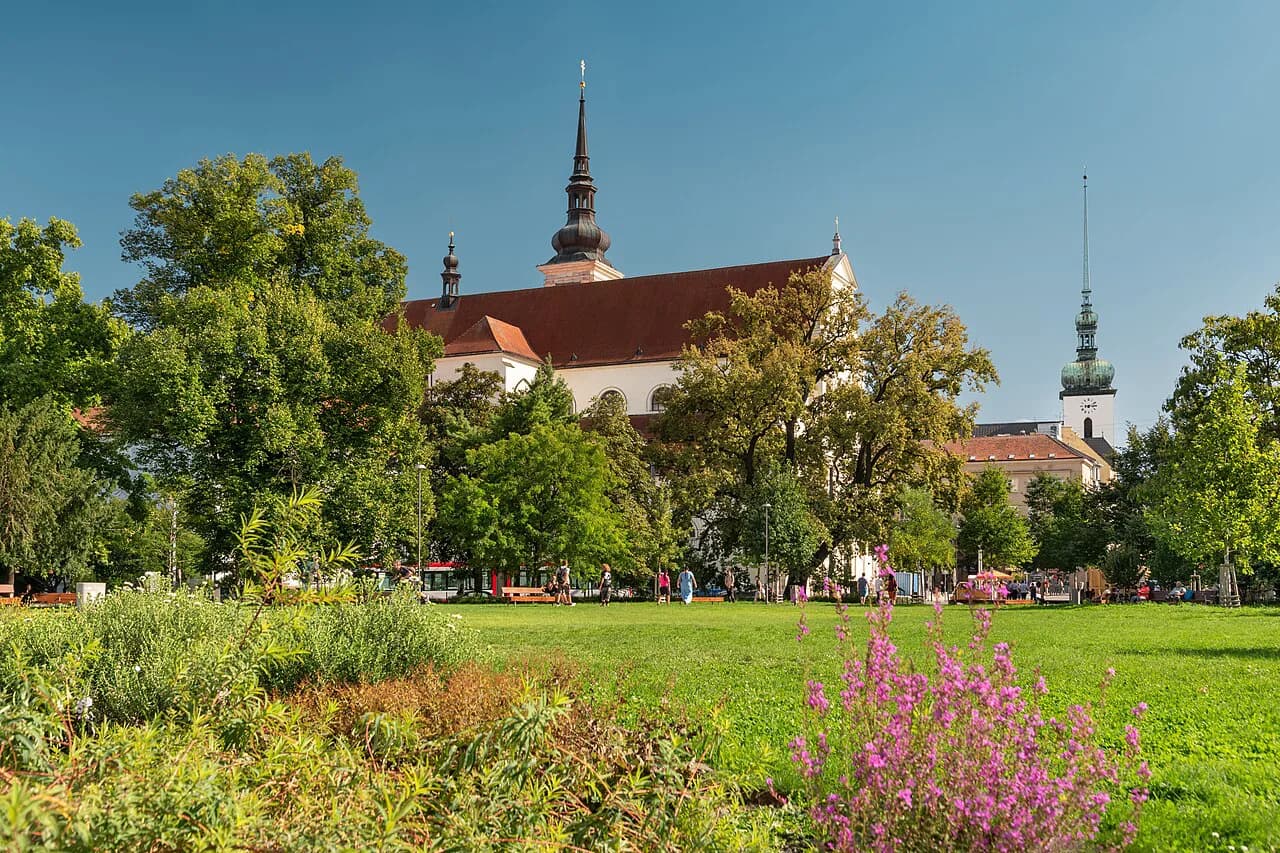
Brno enters the written record in the Chronicle of Kosmas, and the Špilberk historical exposition traces the town from that first written note through medieval Brno as the seat of the Moravian margraves. The Gothic Cathedral of Saints Peter and Paul sits on top of Petrov hill where Brno Castle stood between the eleventh and twelfth centuries, so the city's oldest surviving landmark occupies its oldest seat of power.
The church you see is a palimpsest: it dates back to the thirteenth century, was rebuilt in Baroque style between 1743 and 1746, took its current appearance in the nineteenth and twentieth centuries, and has been the seat of the bishop of Brno since 1777. The building's older layers reward a look inside before you move on.
For a visitor, the practical point is that Petrov hill gives you the medieval chapter in one stop, with a façade that reads Baroque from the square below. Walk up from the center rather than around the hill, and the change in level explains why the cathedral dominates the skyline in every view of the city.
Brno versus Olomouc: the rivalry that shaped the center
For centuries Brno competed with Olomouc for leadership in Moravia, a contest the Špilberk exposition treats as one of the defining threads of the city's story. The rivalry explains why Brno accumulated the institutions of a capital — religious houses, episcopal court, noble palaces — without ever being the obvious first city of the region. Travelers who see both towns notice how differently each wears its Baroque.
Traces of that competition are visible around the historic center: the monastery of the ecclesiastical orders, the Episcopal Court, the Renaissance palaces of the Lords of Lipé and Kunštát, and the Church of St. Jakob. None of these is a single-ticket attraction; they are part of the fabric you pass on a circuit of the center, which is why the old town repays slow walking rather than a checklist.
The Swedes at the gates: 1645 and Špilberk as a fortress
Brno's most dramatic moment came in 1645, when the town was besieged by Swedish forces — an episode the Špilberk exhibition documents with archival records and collections. The siege belongs to the Habsburg chapter of the story, when Brno's defenses and its hilltop castle mattered as military infrastructure rather than as a residence.
Špilberk was later rebuilt as a Baroque fort, which is why the walls you climb past read as military engineering more than as a palace. The castle dominates Brno from its hill, and the walk up gives you the city spread out below — the clearest single place to understand how the center sits in its basin.
From fortress to the 'prison of the nations'
In the nineteenth century Špilberk became a prison for political prisoners, known as the prison of the nations, which held Italian patriots including Silvio Pellico and Piero Maroncelli. That reputation travels further than the architecture for many visitors, and it is the reason the castle's name carries a political charge in Italy as well as in the Czech lands.
Seeing the casemates after the cathedral makes the contrast concrete: one hill holds the town's religious continuity, the other its coercive history, and both are within a short walk of the same squares. Plan the castle and the cathedral on the same day rather than splitting them, because together they tell a story neither tells alone.
Manufacturing Brno and the 'Manchester of Central Europe' label
In the nineteenth century Brno's craftsmanship and manufacturing developed so vigorously that the city was called the Manchester of Central Europe. That industrial identity is why the center mixes medieval churches with nineteenth-century showpieces, and why the Špilberk exhibition devotes attention to guild antiquities, glass, porcelain, furniture and fashion accessories alongside weapons and historical watches.
Two late nineteenth-century buildings make the era visible: the Klein Palace and the Mahen Theatre. The theater in particular is a reminder that Brno's wealth translated into civic culture, not only factories, which is the part of the industrial story most easily missed when you only look at the castles.
What the Špilberk museum circuit actually shows you
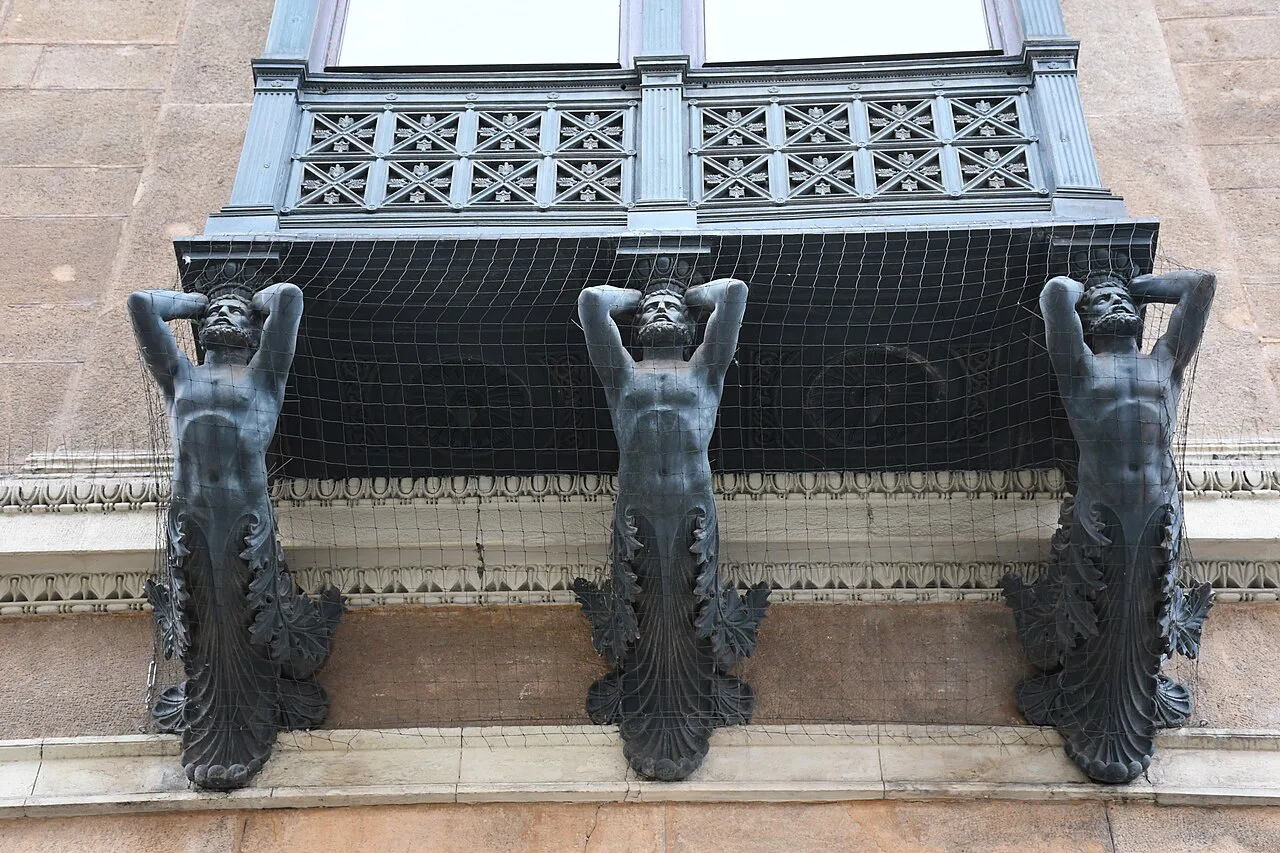
One ticket covers the museum circuit, which includes the permanent exhibitions Od hradu k pevnosti, Žalář národů, Kaple křížů, Brno na Špilberku, O nové Brno, Barokní lékárna, Rakouská Morava, Moderna, Česká Morava and Od moderny po současnost. That list is effectively a timeline of the city in rooms: fortress, prison, chapel, city history, the First Republic, the Baroque pharmacy, the Habsburg period, and modern art and design.
Read the circuit as a complement to the walk rather than a substitute for it: the exhibitions supply the archival documents, weapons, glass and furniture that the buildings themselves no longer contain. If you have limited time, the prison and fortress rooms answer the questions the casemates raise, while the Brno-focused rooms fill in the centuries between the siege and the industrial boom.
Twentieth-century Brno: Greater Brno and functionalism
The Špilberk timeline runs through the formation of Greater Brno and the arrival of modern architecture, which is the era most travelers associate with the city today. Two extraordinary late nineteenth-century buildings, the Klein Palace and the Mahen Theatre, bridge into it, and the Brno Trade Fair complex, built between the 1930s and 1960s, carries the story into the postwar decades.
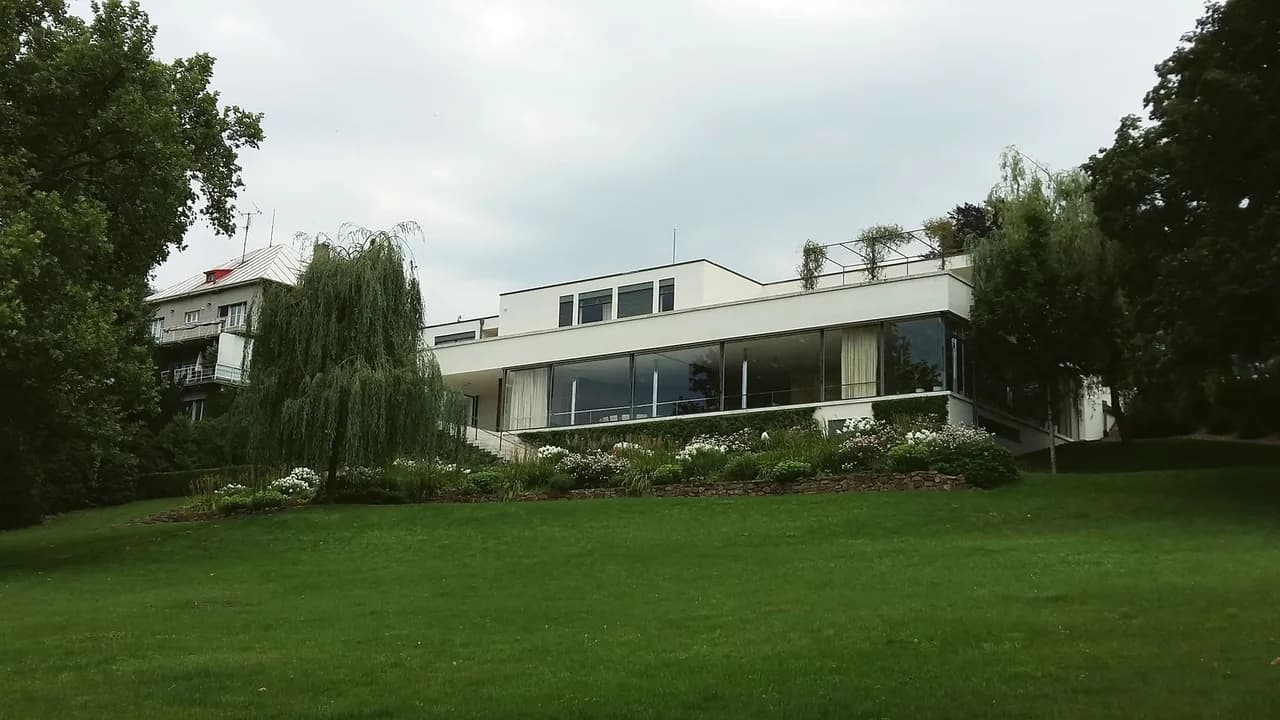
Vila Tugendhat is the headline: Ludwig Mies van der Rohe designed the functionalist house for the Tugendhat family between the two world wars, on the hills above the city center. The Brno City Museum lists it among its own sites alongside Špilberk and the Arnold and Wittal villas.
Seeing the history on foot in the center
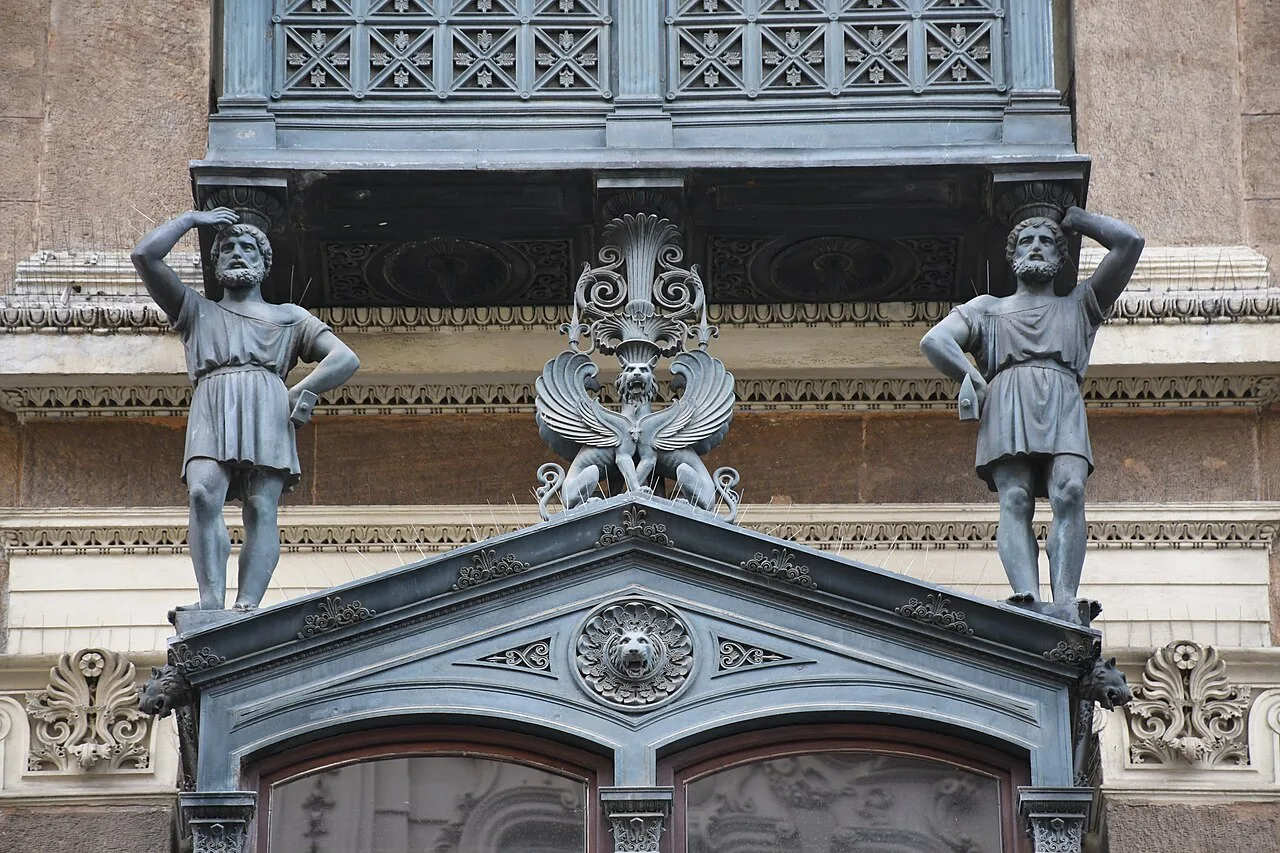
The historic center gravitates around Freedom Square, from which the major roads radiate, and the square is overlooked by the Schwarz Palace and the curious House of the Four Mamlases, four figures that appear to support the building. From there the Cabbage Market, with its Baroque Parnas fountain, is a short walk, and the cathedral rises above the rooftops to keep you oriented.
A sensible order is Freedom Square, the Cabbage Market and the Church of St. Jakob in the lower center, then up to Petrov hill, then across to Špilberk for the view and the museum circuit. That sequence follows the chronology, and it keeps the uphill work at the end when you have already seen the streets the city grew from.
If you prefer a structured route, a guided walk of the center covers the same ground with the dates attached; otherwise the buildings are close enough that the sequence above works without a guide. Either way, the history reads most clearly when you pair one exhibition with one walk rather than trying to absorb everything in a single day.
Which piece of Brno history should you see first?
Start at Špilberk: one museum circuit ticket covers the fortress, the prison of the nations and the city's own timeline, and the hill gives you the whole geography of Brno before you walk into it. Follow with the Cathedral of Saints Peter and Paul on Petrov hill, where the medieval town, the Baroque rebuilding and the bishopric sit in a single building.
If architecture is your reason for coming, put Vila Tugendhat on the list after the castle and the cathedral, and treat the functionalist chapter as the modern end of the same story rather than a separate trip. The center's streets and squares are open to walk, which makes the historical layer of Brno one of the cheaper ways to spend a day in Moravia.
Explore more Brno guides
Frequently Asked Questions
In which country is the city of Brno located?
Brno is in the Czech Republic, in the historical region of Moravia, and it is the country's second city after Prague. It sits in the south of Moravia.
What was the Czech Republic originally called?
Czechoslovakia split into two states in 1993, and the Czech Republic was one of them; before that, Brno's territory was part of Czechoslovakia. Brno's own history runs much deeper, from its first written mention in the Chronicle of Kosmas through the Habsburg period and the industrial nineteenth century.
How do you get from Brno to Prague?
Brno lies on the main route between Prague and Vienna, and its main station is close to the historic center, which makes the city an easy stop en route. Check the current timetable with the national operator before you book.
What food is Brno known for?
Brno shares the classic Moravian table: roast duck with sauerkraut, goulash with dumplings, pork with dumplings and sauerkraut, breaded pork cutlet, and beef in cream sauce. South Moravia around the city is known for wine.
Sources
Notes for your Czech trip
Optional updates to our Czech town guides.
You might also like
Continue reading
More guides you'll find useful