Balcarka Cave: Guided Tour, Length and Moravian Karst Planning
Balcarka Cave near Ostrov u Macochy runs a roughly 60-minute guided tour at 7-8 °C through a two-level dripstone labyrinth in the Moravian Karst.
On this page
Balcarka Cave is a dripstone cave near Ostrov u Macochy in the Moravian Karst, and you see it only on a guided tour that runs about 60 minutes over a route of roughly 720 m with 330 steps. The cave holds a steady 7-8 °C, so the visit is a short, cool underground walk rather than a full-day attraction. This guide covers the route, the cave climate, the archaeology, and the practical access from Blansko and the surrounding region.
What Balcarka Cave is and where it sits in the Moravian Karst
Balcarka lies in a valley near the village of Ostrov u Macochy, part of the limestone belt that makes up the Moravian Karst north of Brno. The cave is run by the Cave Administration of the Czech Republic, the state body that manages the country's accessible show caves. That puts Balcarka in the same system as the better-known Punkva caves and Kateřinská Cave, so the visiting rules feel consistent across the region.
Unlike a single big chamber, Balcarka is a labyrinth of corridors, fissures and domes developed on two levels, which is why the tour route zigzags rather than follows one straight gallery. The entrance section is also the part that produced the archaeological finds, so the first stretch carries most of the human history. Set against the region's cave cluster, Balcarka is a compact, decoration-heavy stop rather than the region's showpiece.
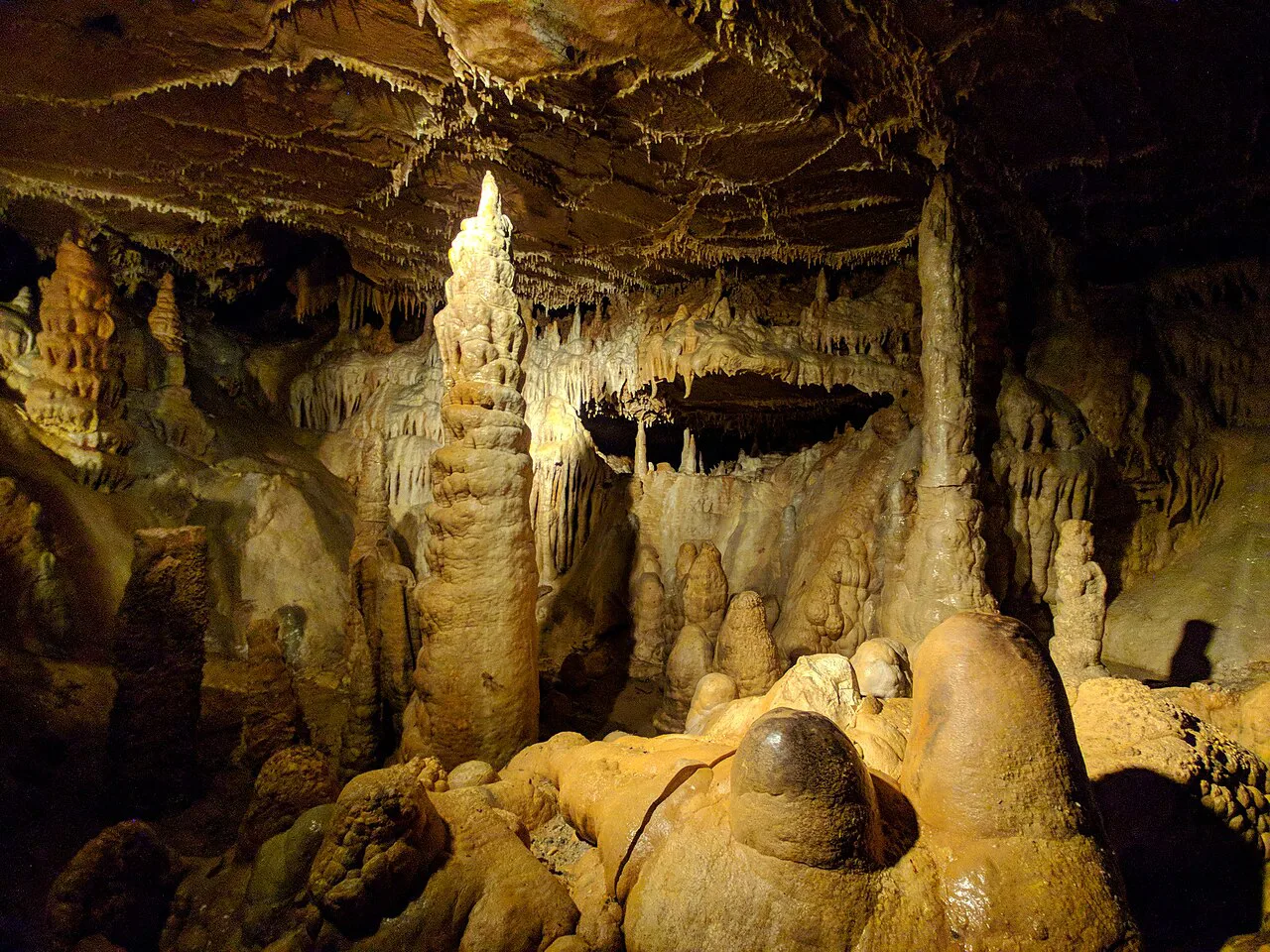
The guided tour: about 60 minutes, 720 m and 330 steps
Tours go only with a guide, and the official cave page gives the shape of the visit as roughly 60 minutes, a 720 m route and 330 steps. Those numbers matter for planning: 330 steps over 720 m is a steady but not punishing walk, and an hour fits neatly into a half day. The step count is what to weigh if anyone in your group struggles with stairs, since the route works across two levels.
The cave publishes entry times in blocks through the day, with several departures rather than continuous admission, so you join a specific tour slot instead of wandering in. Online tickets are offered only for selected tours, which means the remaining departures are sold at the ticket office. Plan around a fixed departure time rather than arriving whenever you like.
The cave publishes its tour times but does not advertise an English-language departure or an audioguide, so travelers without Czech should plan to enjoy the formations themselves and read up on them in advance. If language matters to you, ask at the ticket office when you arrive or contact the cave before your trip.
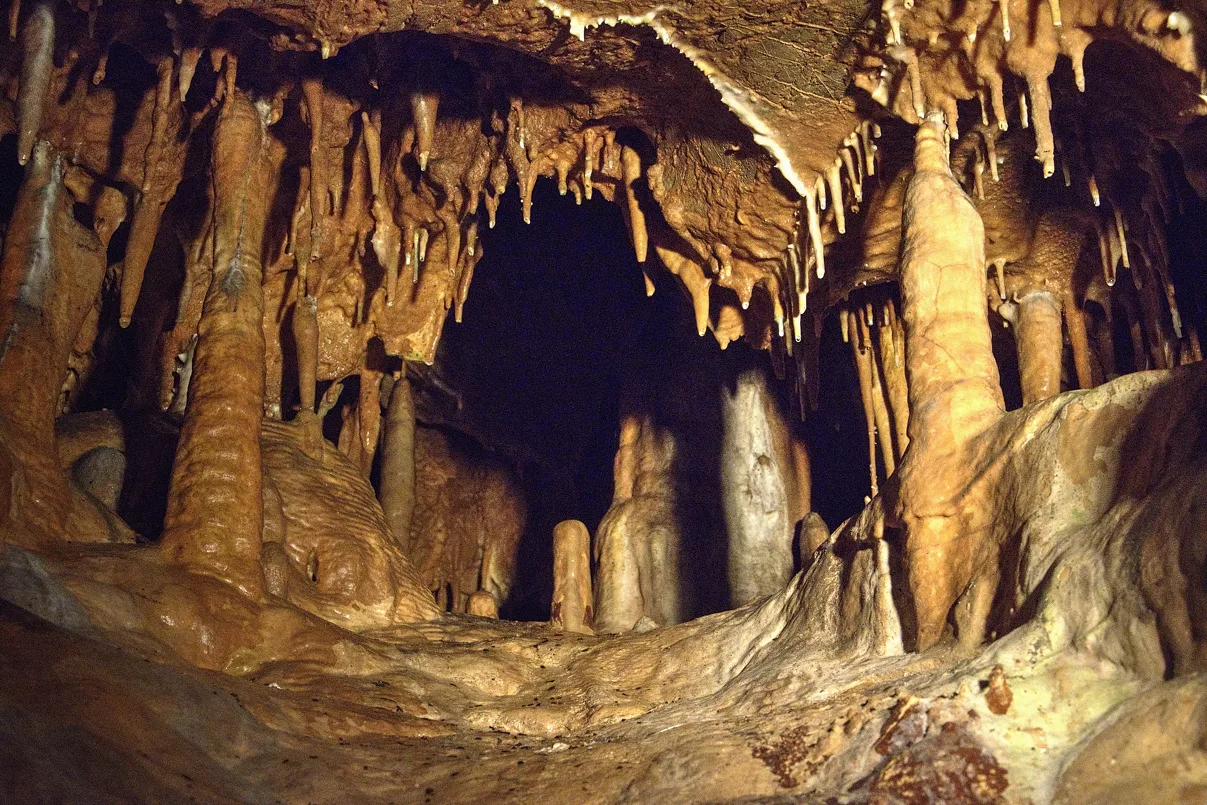
Inside the cave: Galerie, Přírodní chodba and the Rotundy domes
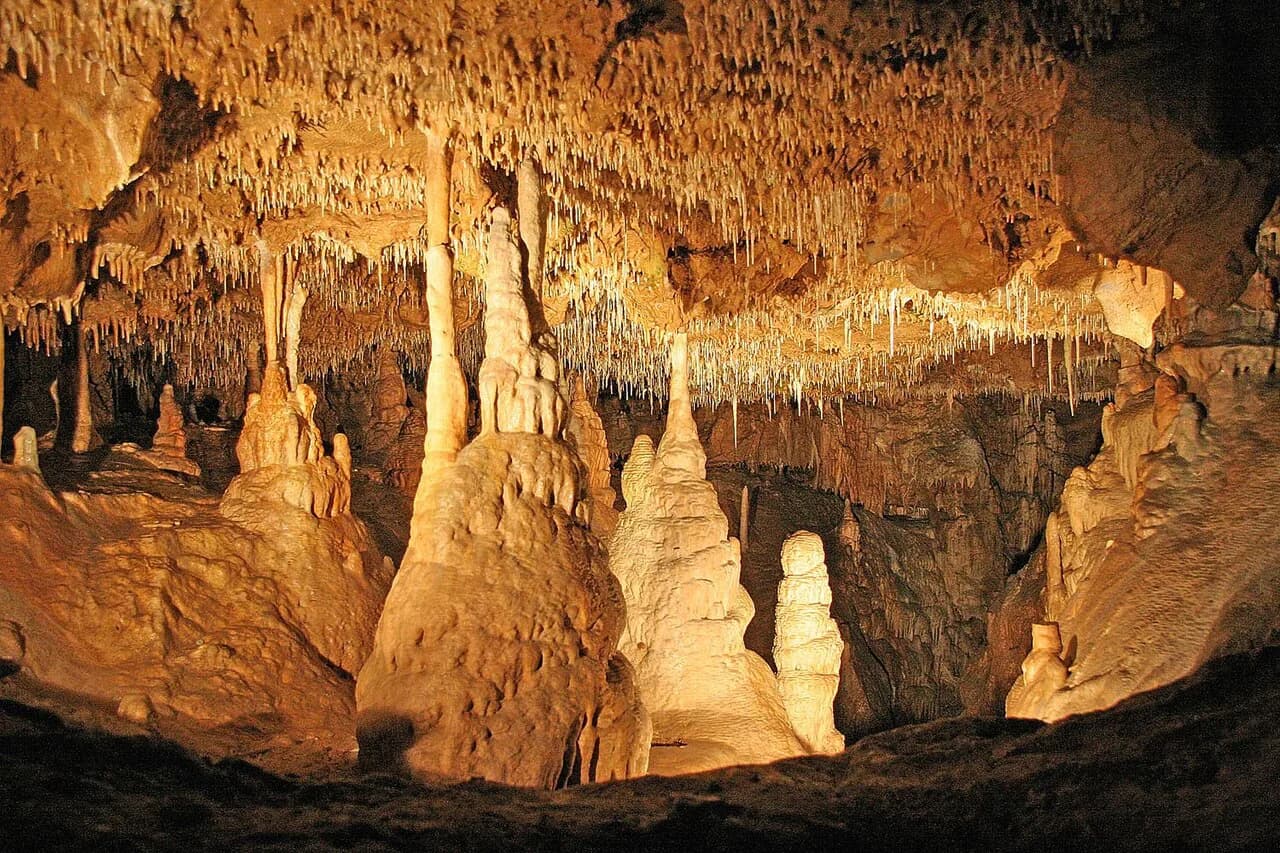
The cave's signature passages are the Galerie and the Přírodní chodba, or Natural Corridor, which the cave describes as among the most beautiful parts of the Moravian Karst. The decoration is the draw here: a rich and varied dripstone fill in colors that range well beyond the usual cream. That variety is what distinguishes a visit to Balcarka from a generic cave stop.
Also on the route are the Rotundy, round vertical shafts that open through the rock rather than horizontal chambers. They give the tour its sense of depth, since you look up or down a shaft instead of across a hall. The two-level layout means the guide moves the group between upper and lower sections, and those transitions account for much of the stair count.
The 7-8 °C climate and 99% humidity: what to wear
The cave holds a constant 7-8 °C at about 99% humidity, which is cold and damp by any summer standard. The practical answer is a warm layer and closed shoes with grip, since the route is wet underfoot and the steps are the main hazard. A light jacket packed for the cave also serves on cool evenings elsewhere in the region.
Humidity near saturation means glasses fog and camera lenses mist, so wipe them before the tour starts rather than midway down the stairs. Cotton clothing soaks up the damp and chills you faster than a synthetic or wool layer. Keep the visit hour in mind too: an hour in these conditions is comfortable in a jacket and unpleasant in a T-shirt.
A paleontological and archaeological site, not just a pretty cave
The entrance part of Balcarka is an important paleontological and archaeological site, where excavators found bones of Pleistocene animals, tools made of stone and bone, and the remains of hearths left by people of the earlier Stone Age. The cave's own account places the discovery of the further sections between 1923 and 1948. That makes the first stretch of the tour a piece of deep human history as much as a geology lesson.
The finds put Balcarka in a small group of Czech caves with evidence of early human presence, which is why the entrance chambers read differently from the decorated halls deeper in. The cave describes interpreted stops along the route, so listen where the guide pauses rather than expecting museum cases throughout. The archaeology is concentrated near the entrance, so paying attention early in the tour pays off.
Getting there: bus at the cave, Blansko station 10 km away
A bus stop called Ostrov u Macochy, Balcarka sits directly by the cave, which makes it one of the easier Moravian Karst caves to reach without a car. The train station at Blansko is about 10 km away, so rail travelers connect the last stretch by bus or taxi. Build the connection into your timetable rather than assuming the two line up.
Blansko is the practical railhead for this part of the karst and has its own chateau and town center if you need to fill time around a connection. Coming from Brno, the train to Blansko is the natural first leg before the bus up to Ostrov u Macochy. Check the current bus times for the final leg, since the cave stop is a village service rather than a frequent city route.
Parking, the ticket office and the 100 m walk to the entrance
Parking for cars and coaches is directly at the cave ticket office and is free, which removes one common irritant on a karst day out. The visitor building has drinks, a souvenir shop and toilets, and the walk from the ticket office to the cave entrance is about 100 m. Arriving with a buffer before your tour slot lets you use the facilities without rushing the stairs.
Cyclists can attach bikes to stands by the path near the parking area and buffet, but the cave has no extra bike storage because of limited capacity and takes no responsibility for bikes left there. The cave is at Ostrov u Macochy and can be reached by phone on +420 516 444 330 for questions about tours. Check the current CZK ticket prices on the cave's own site before you go.
Pairing Balcarka with other show caves in the Moravian Karst
Balcarka works best as one stop in a Moravian Karst day rather than a destination on its own, given the hour-long tour. The famous pair nearby are the Punkva caves with the Macocha abyss, where a boat ride on the underground river and the surface gorge make a longer, more theatrical visit. Kateřinská Cave and the Sloup-Šošůvka Caves round out the cluster, each with its own tour and its own departure times.
Two cave tours in one day is realistic if you book fixed departure times that leave a travel gap between sites, since the caves are spread across the karst rather than clustered at one address. Smaller caves in the system, including Výpustek and the Balcarka-style decorated caves, each keep their own schedules. The Cave Administration lists every accessible cave it manages, which is the quickest way to see what else is open on your dates.
If you base yourself in the region rather than day-tripping from Brno, Blansko gives you a rail connection and a town to return to after a cold hour underground. The surrounding area also includes Boskovice, with its own castle and Jewish quarter, for a different texture on the same trip. Keeping one cave as the anchor and one town as the backup makes a flexible day when a tour slot sells out.
How to fit Balcarka into your cave day
Pick Balcarka as your second cave of the day if you are also doing the Punkva caves, since the boat trip and Macocha abyss take longer and set the tone for the karst. Choose it first if you are coming by bus from Blansko and want the shortest, most decoration-dense tour before moving on. Either way, book around a fixed departure time and dress for 7-8 °C.
Explore more Brno guides
Frequently Asked Questions
How long is the Balcarka Cave tour?
The official cave page gives the guided tour as roughly 60 minutes, over a route of about 720 m with 330 steps across two levels. It is visited only with a guide. Dress for a constant 7-8 °C and about 99% humidity.
Where is Balcarka Cave and how do you reach it?
Balcarka is in a valley near the village of Ostrov u Macochy in the Moravian Karst. A bus stop called Ostrov u Macochy, Balcarka sits directly by the cave, and the train station at Blansko is about 10 km away, so rail travelers connect the last stretch by bus or taxi.
Is parking free at Balcarka Cave?
Yes. Parking for cars and coaches is directly at the cave ticket office and is free, the walk from the ticket office to the cave entrance is about 100 m, and the visitor building has drinks, a souvenir shop and toilets.
Sources
Notes for your Czech trip
Optional updates to our Czech town guides.
You might also like
Continue reading
More guides you'll find useful