Hranice Abyss: The World's Deepest Flooded Cave
The Hranice Abyss is the world's deepest known flooded cave, with water measured to 450 meters and a total depth of 473.5 meters.
On this page
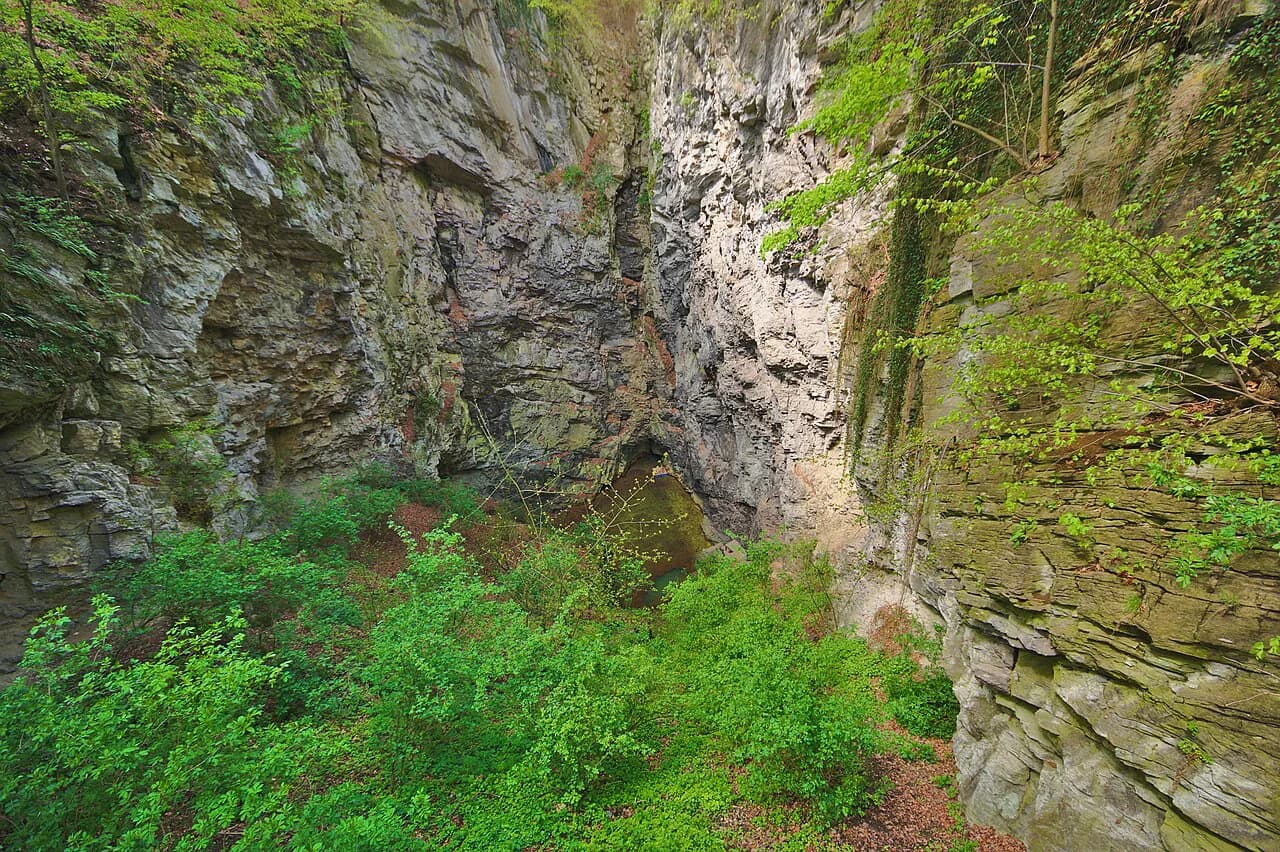
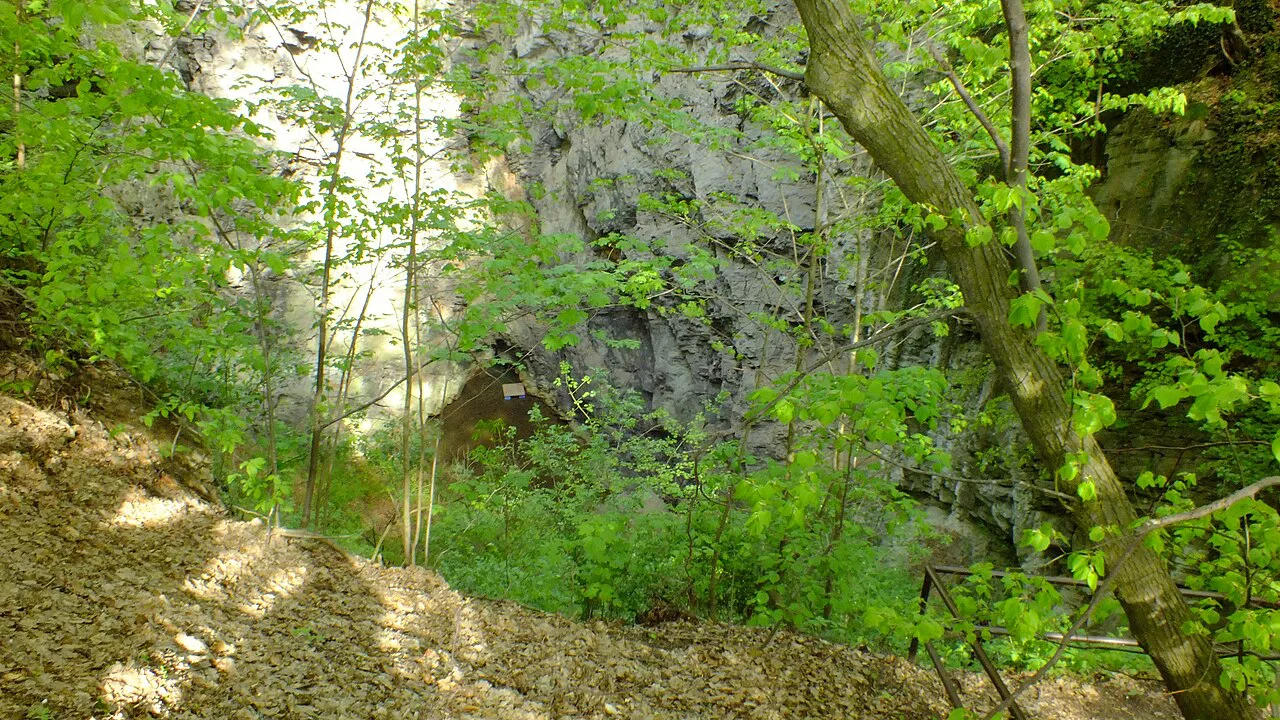
The Hranice Abyss (Hranická propast) is the deepest known flooded cave on Earth, with its water measured to 450 meters and the total shaft from the surface counted at 473.5 meters. You do not go down into it: the visit is a short forest walk to a small pool at the top of a steep sinkhole in the Přerov District of the Olomouc Region, in eastern Czech Republic. This guide sorts out the different depth figures, explains why the cave is so deep, and shows how the stop fits a day around the Moravian Karst.
Where the Hranice Abyss sits
The abyss lies in the Přerov District of the Olomouc Region, in the eastern part of the country, close to the town of Hranice na Moravě. It is not part of the Moravian Karst cave system north of Brno, so treat it as its own stop rather than a cave you add on inside the karst. Most travelers reach the area by train to Hranice na Moravě and continue on foot or by local transport to the surrounding forest.
How deep the Hranice Abyss goes
Three numbers get mixed up, and only one is the water depth. In August 2022 the Czech Speleological Society calculated the flooded depth at 450 meters, and the total cave depth from the surface is 473.5 meters. The deeper estimate is different again: a 2020 geophysical study suggested the system may extend to roughly one kilometer, which remains a model rather than a measured bottom.
The bottom has not been reached, and the cave has not been fully mapped. Any figure beyond the measured depths is an estimate based on geophysical readings, not a dive result. For comparison, the world's deepest known dry cave, Veryovkina in Georgia, is a separate record entirely, so do not read the Hranice figure as the deepest cave overall.
Why the cave is so deep
Most caves form from the top down, as rainwater dissolves limestone. The Hranice Abyss appears to have formed from below, through the action of hot groundwater rich in carbon dioxide rising through the rock. That bottom-up process explains why the system is so deep rather than merely long, and why its shape is hard to survey with conventional cave techniques.
Why divers stopped and robots took over
In 2015 the Polish explorer Krzysztof Starnawski dived to 265 meters, a depth that required eight hours in a decompression chamber before he could resurface. That cost made robot surveys the sensible choice. In September 2016 a remotely operated vehicle reached 404 meters, and it stopped not because it hit the bottom but because its fiber-optic cable ran out, with the total cave depth at that point measured at 473.5 meters from the surface.
Later work used a smaller robot carrying cameras and sonar to build a three-dimensional map of the cave's interior, which is how the shape of the flooded shaft became visible without a human descent. The pattern is worth remembering when you read about new depth records: the limit is often the equipment, not the cave.
The 2020 geophysical study and the one-kilometer estimate
A study published in August 2020 in the Journal of Geophysical Research: Earth Surface used gravity measurements, seismic reflection, small explosive charges and a surface electrode array to probe below the explored shaft. It confirmed the explored depth at 473.5 meters while suggesting the system could reach about one kilometer. Treat that as the current scientific estimate, not a surveyed floor: it comes from remote sensing of rock and water, and no robot or diver has been there.
What you see at the surface
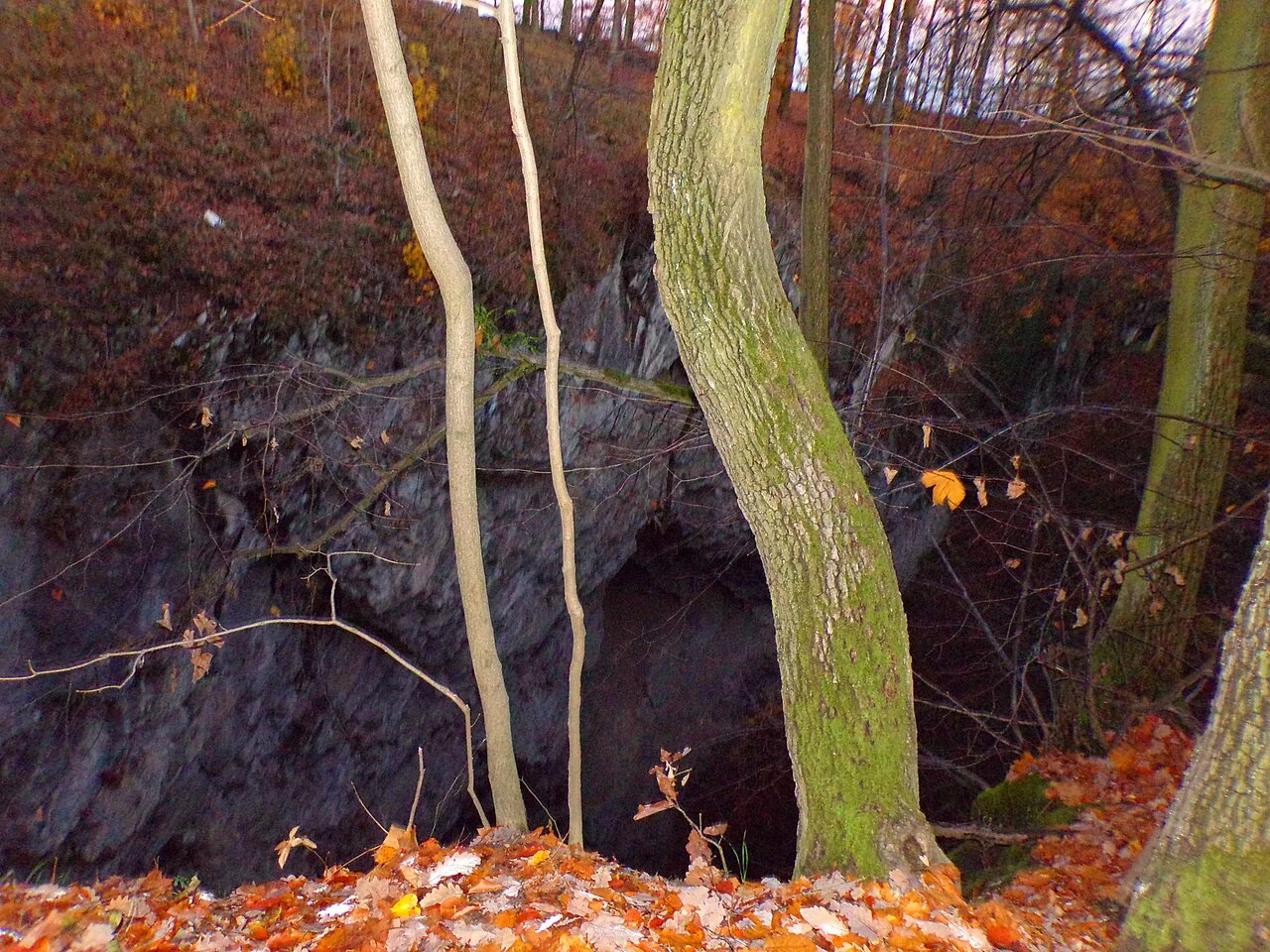
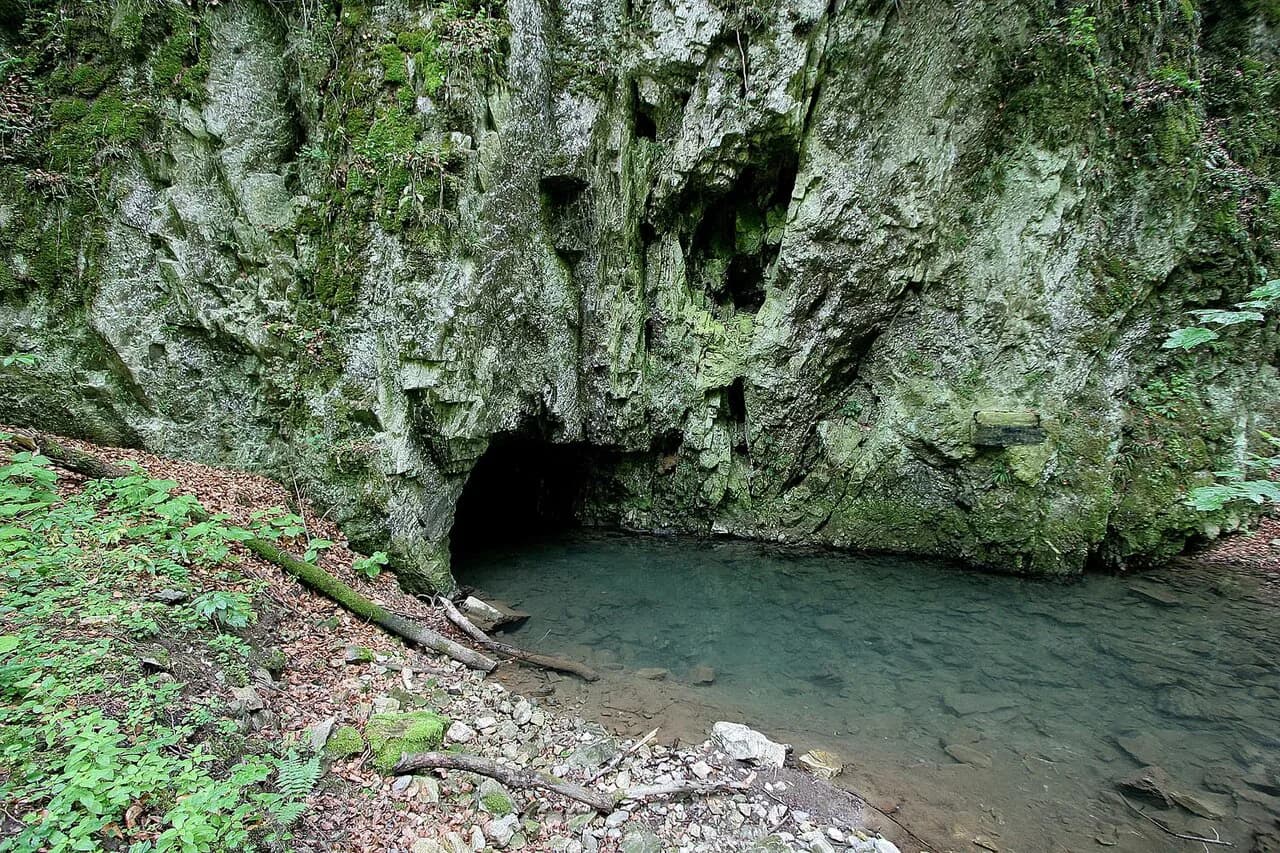
The surface visit is easy to oversell. At the top of the sinkhole there is a small pool in the forest, unremarkable at first glance, with a steep rim of ground falling away around it. There is no underground tour, no boat, and no descent into the shaft. Set your expectations to a short forest walk and a look down into a geological oddity, and the stop works; expect a show cave and it will disappoint.
The ground at the rim is steep and can be slippery, so keep to marked paths, stay back from the edge and keep children close. No ticket window or opening schedule is published for the surface viewpoint, so treat it as an outdoor stop without facilities and confirm access before you commit a day to it.
Getting there from Brno and Olomouc
Hranice na Moravě is the practical rail gateway, and it sits on the main line between Brno and Ostrava, which also makes it reachable from Olomouc and, with a change, from Prague. Rail timetables and journey times change with the season, so check the Czech Railways site for your date rather than relying on a remembered schedule. From the station, the abyss is a short trip into the surrounding forest, on foot or by local transport depending on where you start.
By car the area is straightforward from the D1 motorway between Brno and Ostrava, with the last stretch on smaller roads toward the forest. Parking near the trailhead is limited and informal, so arrive earlier in the day if you are driving at a weekend. Whichever way you come, the abyss itself takes little time, which is why it works best as one stop in a longer day.
Pairing the abyss with the Zbrašov aragonite caves
The Zbrašov aragonite caves sit near Hranice na Moravě and are the natural companion stop, since they offer a guided underground visit that the abyss itself cannot. Combining the two turns a brief forest viewpoint into a half day of cave-going. Confirm the Zbrašov tour schedule and ticket prices directly with the cave administration before you set out, as seasons and tour times vary.
Fitting the abyss into a Moravian Karst trip
The Moravian Karst north of Brno is the Czech Republic's best-known cave region, and its show caves, including the Punkva Caves with their underground river and the Macocha abyss, make an obvious anchor for a cave-focused day or two. The Hranice Abyss is a different kind of sight, a scientific landmark rather than a touring cave, so give it a slot of an hour or two rather than a whole day. Build the rest of your itinerary around the karst caves and use Hranice as the eastern extension.
If you are based in Brno, the city makes a convenient start for both directions, with the karst caves to the north and Hranice to the east. Book cave tours ahead in high season, since the popular circuits sell out, and keep the abyss as the flexible stop that does not depend on a timed entry.
Practical points for the surface visit
Wear shoes with grip, since the path to the rim is forest trail and can be muddy after rain. There is no visitor center at the pool, so carry water and do not count on facilities at the site. The steep drop at the rim is the main hazard, and the ground can be slippery, so stay back from the edge and skip the stop in heavy rain.
If you want a structured underground experience nearby, book a guided tour at Zbrašov or one of the Moravian Karst show caves in advance and check the language of the tour, since many run in Czech unless an English slot is offered. The abyss does not depend on a timed entry, which makes it the easy add-on rather than the centerpiece.
Hranice Abyss at a glance
If you are already heading east from Brno or Olomouc and want to stand at the rim of the world's deepest known flooded cave, the stop is a short forest walk to a small pool, and the real draw is the story of the depth beneath it. It is not an underground tour or a full day out. Pair it with the Zbrašov aragonite caves or a Moravian Karst cave day, and it earns its place on the route.
Explore more Brno guides
Frequently Asked Questions
Can you go inside the Hranice Abyss?
No. The cave is fully flooded and its bottom has never been reached. Visitors see the pool and the sinkhole rim from the surface, and exploration is done by robot and geophysical survey rather than by tourists.
How deep is the Hranice Abyss compared with other caves?
Its water was measured to 450 meters in August 2022, with a total cave depth of 473.5 meters from the surface, making it the deepest known flooded cave. The world's deepest known dry cave, Veryovkina in Georgia, is a different and deeper record.
Do you need a guide to see the Hranice Abyss?
The surface viewpoint is an outdoor forest stop that does not require a guide. The nearby Zbrašov aragonite caves, however, are visited on guided tours, so book those separately if you want an underground visit.
Sources
Notes for your Czech trip
Optional updates to our Czech town guides.
You might also like
Continue reading
More guides you'll find useful