Brno Sightseeing: Sights, Tours and a One-Day Route
Brno sightseeing covers the Old Town Hall, Cabbage Market, Petrov Hill and Špilberk Castle, with guided walking, castle and brewery tours to fill the rest.
On this page
Brno sightseeing fits into a single compact center: the Old Town Hall, the Cabbage Market and Petrov Hill stand within a few minutes of each other, and Špilberk Castle rises directly above them. One full day covers the core on foot, while a second day absorbs the underground stops, the museums and a guided tour. This guide orders the sights by walking distance, points you to our Things to Do in Brno guide, then explains which guided, castle and brewery tours are worth slotting in and what they cost.
Freedom Square anchors the shopping streets and tram junctions, while the lanes toward Zelný trh and Petrov Hill narrow into the oldest quarter. The granite clock on the square is a curiosity rather than a fixed appointment, so treat the morning as a loose loop and let the market and the cathedral set the pace. For the lanes themselves, see our Brno Old Town guide.
The compact center: Old Town Hall, Cabbage Market and Petrov Hill
Start at the Old Town Hall, the oldest secular building in Brno, and look up at the Gothic gate with its deliberately crooked central tower. The legend blames a mason cheated of his fee, and the tilt makes the entrance the most photographed detail in the old town. The Cabbage Market sits half a block away, so the two sights cost you ten minutes of walking between them.
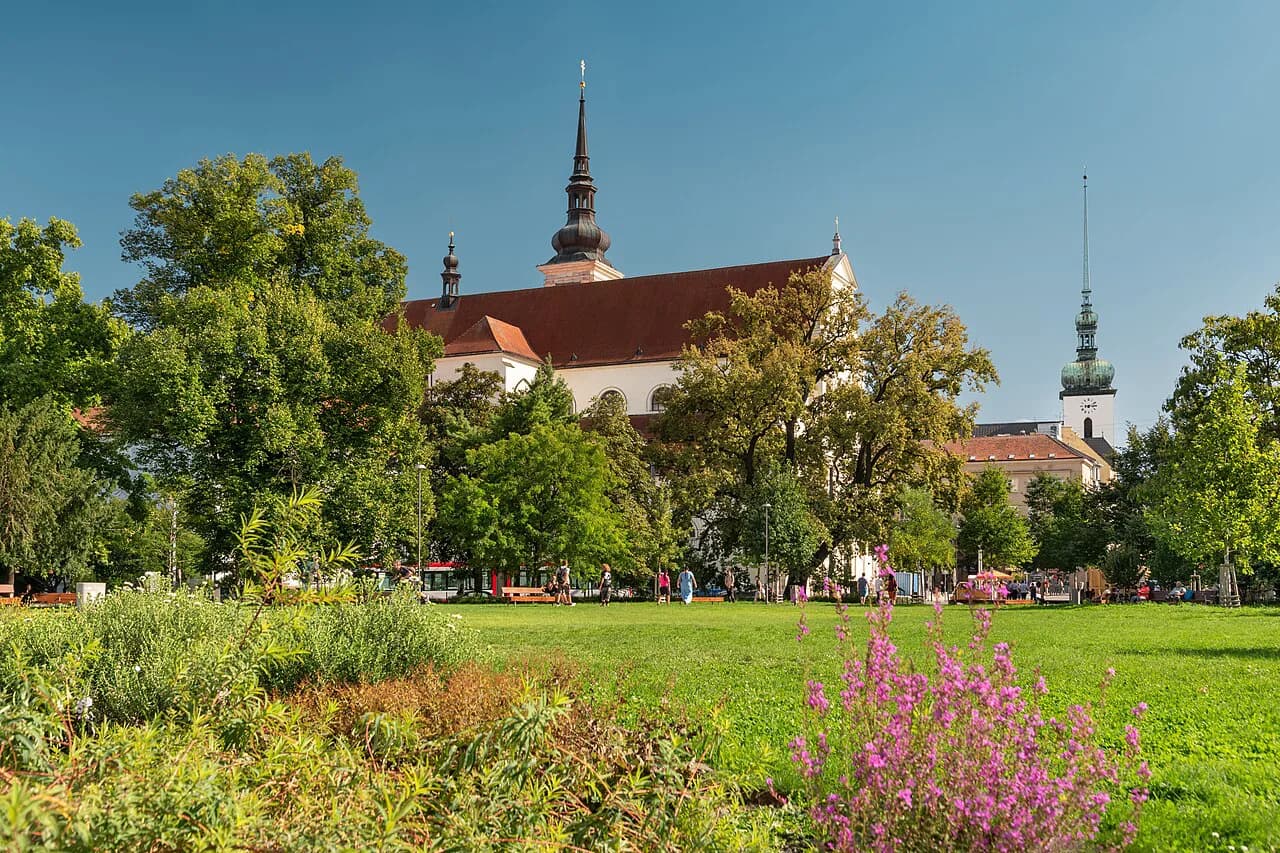
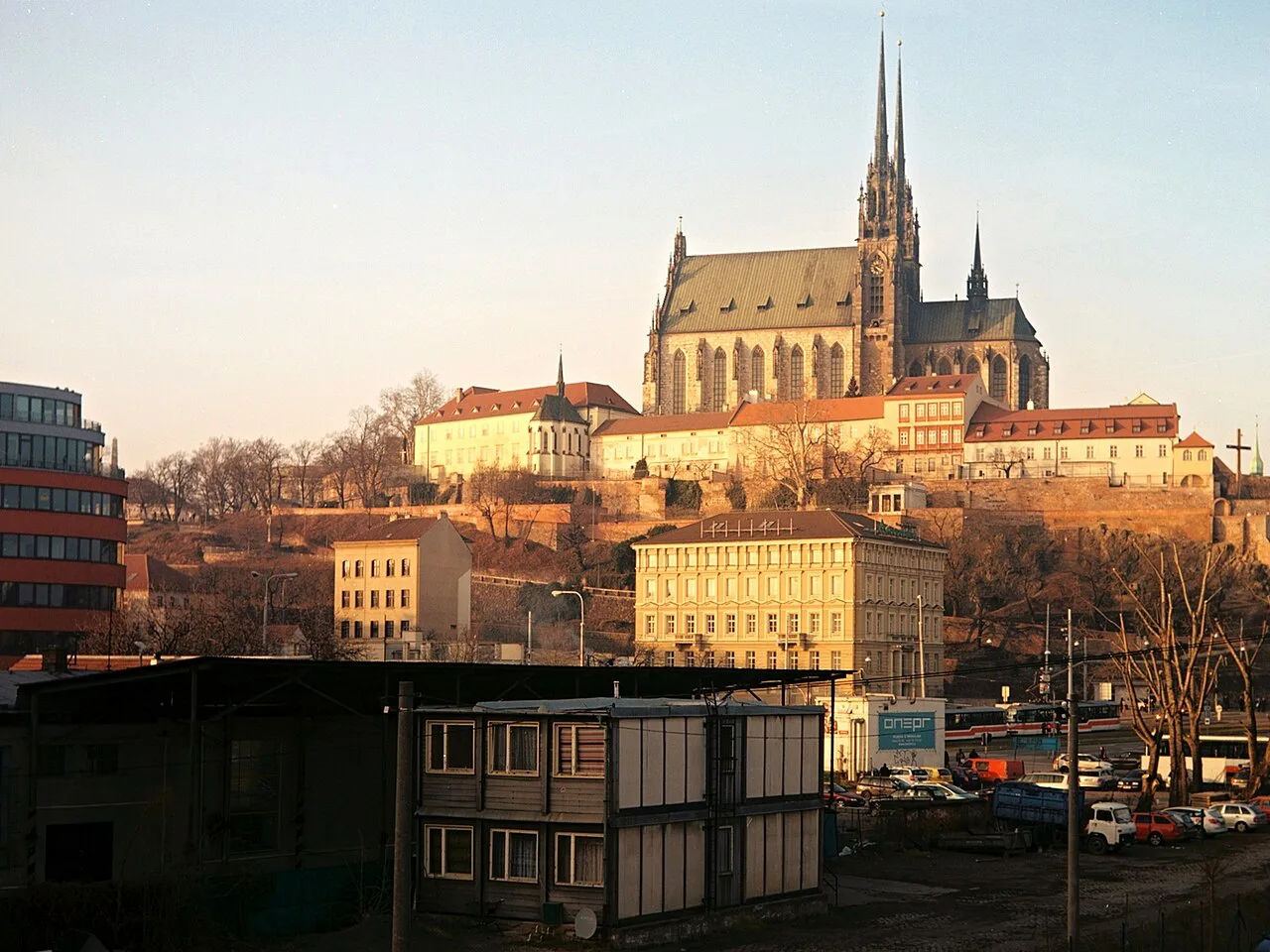
Zelný trh fills with vegetable and flower stalls each morning and centers on a fountain decorated with Greek mythological figures. It is a working market rather than a monument, so arrive before the stalls thin out. Walk straight through it and up Petrov Hill to the cathedral, which dominates the skyline with its pair of matching spires.
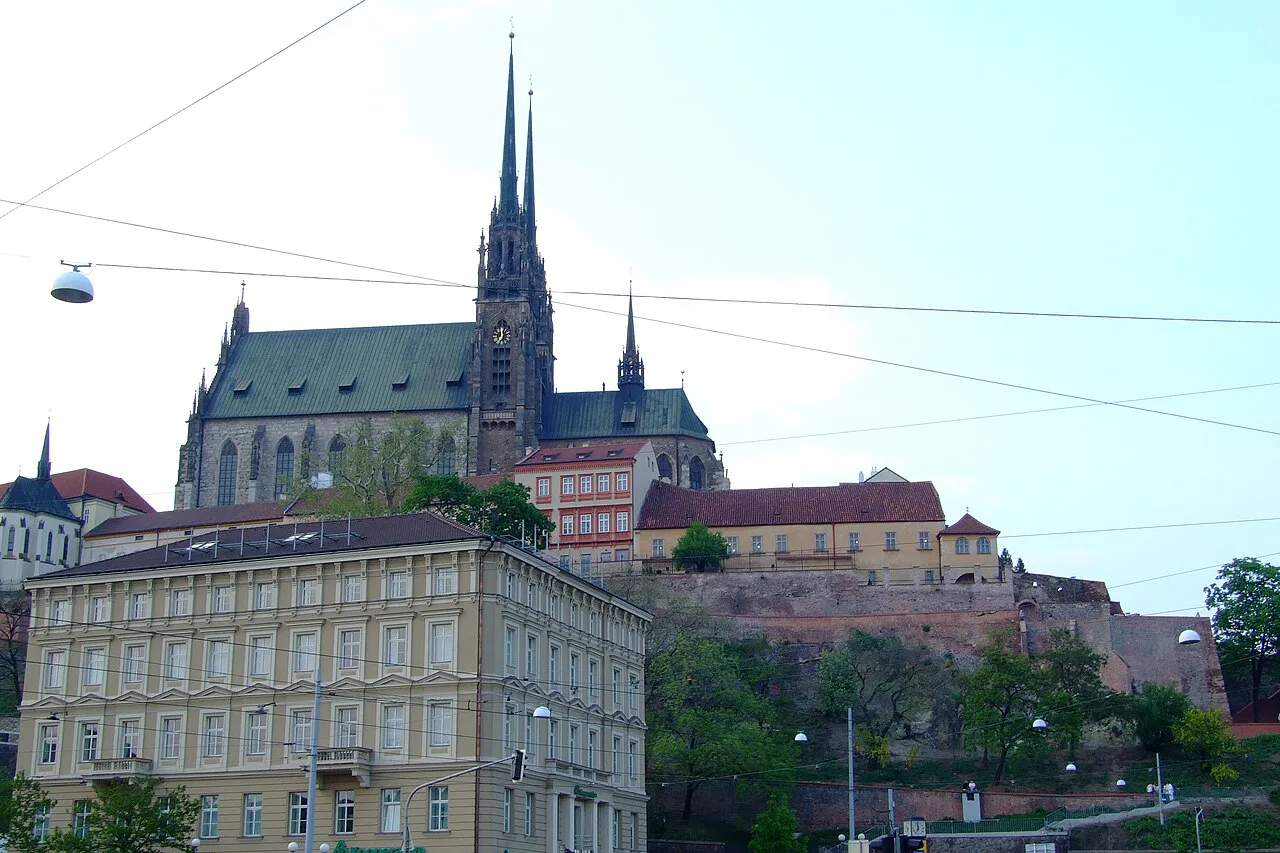
The Cathedral of Sts. Peter and Paul, known locally as Petrov, dominates the skyline with its pair of matching spires, and an observation deck outside gives views across the city. The cathedral opens at 11 a.m. (11:45 a.m. on Sundays), so see the market and the hall first and climb the hill afterward. Climbing the towers and visiting the crypt carry a 35 CZK fee.
Name the market, the hall and the hill as one morning loop and you have the spine of any Brno visit. The handful of things to do in Brno that anchor a first trip all sit inside it, which is why the center rewards walking rather than tram-hopping.
Underground stops: the Capuchin Crypt and the Brno Ossuary
The Capuchin Crypt, at the opposite end of the square from the cathedral, holds dozens of naturally preserved mummies of monks, kept intact by the soil and the ventilation system. Entry is 60 CZK, and the crypt is small enough that it takes minutes rather than an hour.
The Brno Ossuary is the other subterranean stop, a burial space rediscovered under the city streets. Pair it with the crypt only if you have a second day or a long afternoon, since two dark, narrow spaces back to back wear thin. Small underground sites keep shorter hours than the squares above them, so slot them where the day has slack.
Freedom Square and the 11 a.m. glass ball
Freedom Square holds the postmodern granite clock built to resemble a bullet, a nod to the 1645 siege in which Brno's defenders tricked the Swedish army into retreating. At 11 a.m. a glass ball descends through the clock, and onlookers reach into the openings hoping to catch it. Treat it as a curiosity you may catch rather than a fixed point that sets the day.
Plan the center walk loosely, and if you are on the square around 11, wait a few minutes for the ball before moving on to the Old Town Hall and the market. If you miss it, nothing else in the day changes. The surrounding streets also hold the main tram junctions, which makes the square a natural place to break for coffee.
Špilberk Castle above the center
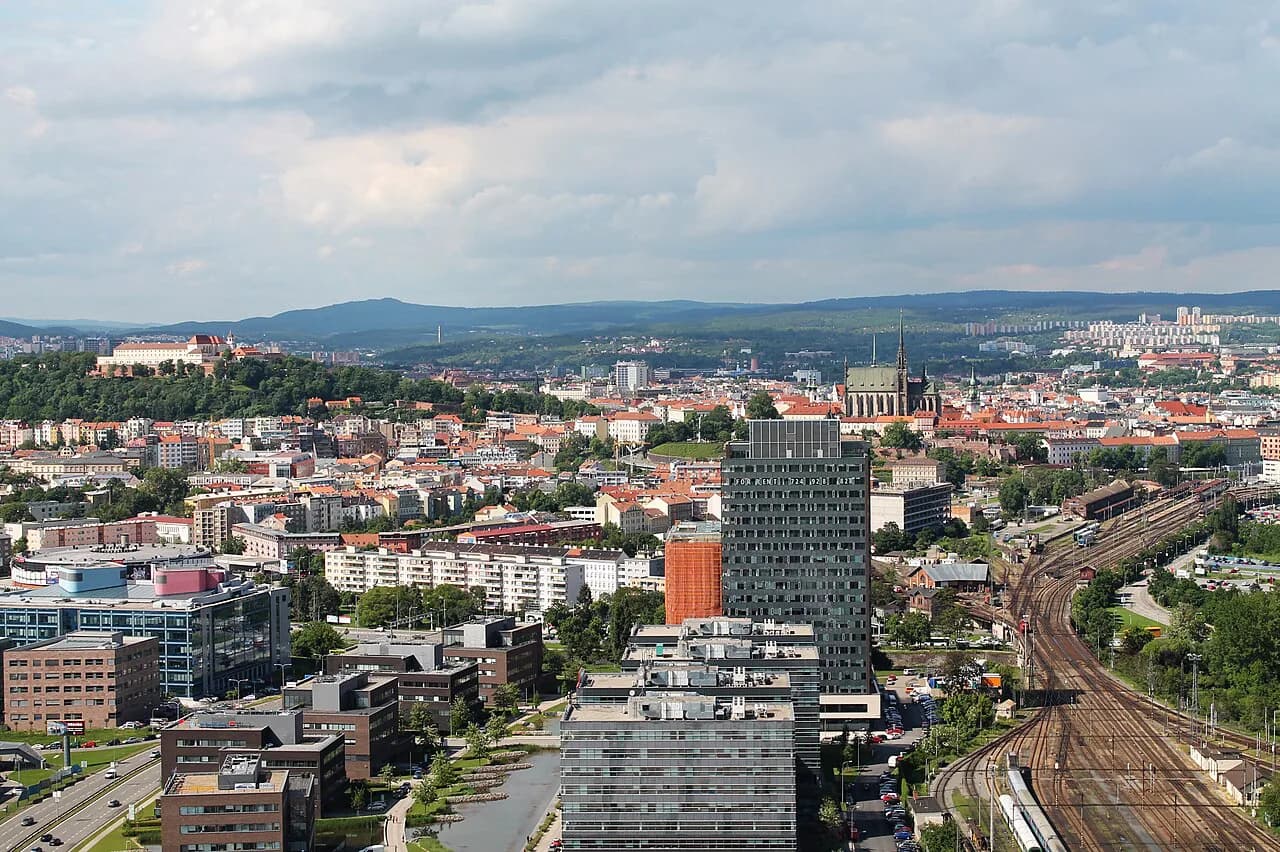
Špilberk Castle sits on the hill south of the old town, and the walk up from the center is short but steady. The hill gives you a broad panorama of Brno's rooftops, while the casemates, the fortress corridors built for military garrisoning, add a darker chapter to the visit. Allow half a day if you want both the exterior and the interior exhibits.
Treat the castle as the afternoon block rather than a quick detour, because the climb and the casemates together take longer than the center sights. The hill also works as a viewpoint at the end of the day, when the light drops and the spires stand out against the sky.
Villa Tugendhat and the Mendel Museum for architecture and science
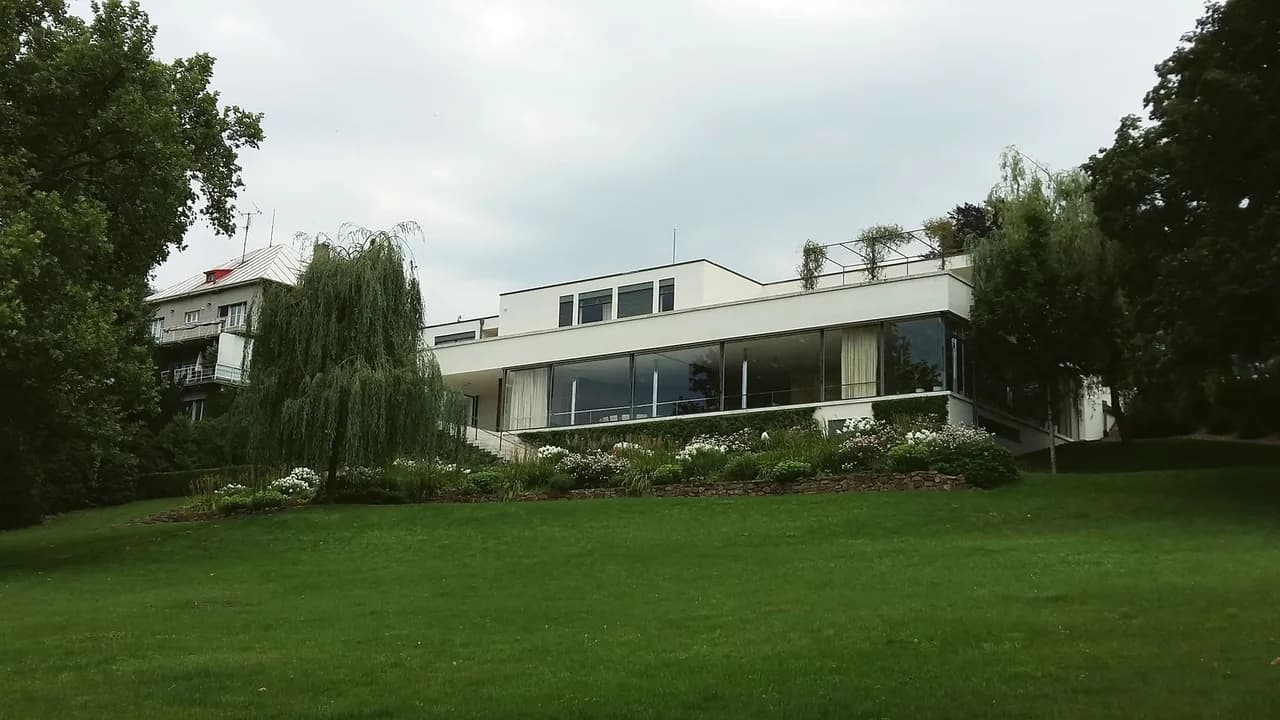
Villa Tugendhat, the modernist house in the Černá Pole neighborhood, is the reason many architecture-focused travelers add Brno to a Czech route, and its interiors are shown on timed guided visits with limited capacity. The Mendel Museum of Genetics, housed in the Augustinian abbey where Gregor Mendel ran his breeding experiments, suits anyone who wants a science stop instead.
Both sit outside the immediate old-town loop, so pick one rather than trying to fit both around the castle. Villa Tugendhat rewards a booked slot and a focused hour; the Mendel Museum suits a slower, self-guided pace. Either choice takes you out of the tourist core and into the neighborhoods where Brno actually lives.
Two city museums round out a rainy afternoon: the Museum of Romani Culture, whose permanent exhibition traces the Romani community's experience between 1945 and 1989, and the Moravian Museum on Zelny trh. The Romani Culture museum opens daily except Monday and Saturday, from 10 a.m. to 5 p.m., with tickets at 80 CZK and last entry at 4:15 p.m. The Moravian Museum opens Wednesday through Sunday until 5 p.m., and combined permanent and temporary tickets run 230 CZK, with reduced entry sometimes available on public holidays.
Guided walking tours versus a self-guided loop
A guided walking tour earns its place when you want the old-town lanes explained rather than just seen. Most city-center routes string together the Old Town Hall, the Cabbage Market, the cathedral on Petrov Hill and Freedom Square, which is exactly the loop you would walk alone. The guided version adds context on the siege, the cathedral's history and the market's role, and it saves you from planning the order. Confirm the tour language and meeting point with the operator before you book.
A self-guided walk beats a tour when your priority is pacing: you can linger at the Capuchin Crypt or sit out a rain shower without holding up a group. The trade-off is logistics, since the small underground sites and the cathedral's opening hours need checking. For a first visit with limited time, the tour is the easier choice; for a return trip, walk it yourself.
Time of day matters more than the tour format. Mid-morning tours catch the market at its liveliest and finish near the 11 a.m. glass-ball drop, while afternoon tours leave the morning free for Špilberk or Villa Tugendhat. Ask how much ground the route covers on foot before booking, because the center is compact but the hill climbs add up.
Castle and brewery tours
Castle tours at Špilberk focus on the fortress history and the casemates, the corridors built for military garrisoning. Pair the center in the morning with the hill in the afternoon, and the day balances above ground and below it. Brewery visits work the other way around: Starobrno, one of the city's long-standing beer operations, makes a natural end to a day, though hours and tour availability need confirming with the brewery.
If you only have an evening free after the castle, a brewery stop fits without competing with the daytime sights. A tasting pairs naturally with dinner in the center, and booking ahead is the safe way to secure a tour rather than just a seat in the taproom.
Themed tours: underground and the 10-Z nuclear shelter
Themed tours in Brno often lean on what sits beneath the streets, from crypts to wartime and Cold War spaces. These suit travelers who have already seen their share of churches and want a darker, more unusual angle on the city. Check that a given site is open to visitors on your date before you build a day around it.
Group these stops rather than scattering them across the day. An underground morning followed by a castle afternoon keeps the walking sensible and avoids climbing Petrov Hill twice. These smaller sites keep irregular hours, so confirm that day's opening before you set out.
What the tickets and opening hours mean for your plan
Brno's core sights are cheap, which makes the day easy on the budget. The Capuchin Crypt charges 60 CZK, the Museum of Romani Culture 80 CZK, and the Moravian Museum 230 CZK for combined permanent and temporary exhibitions. Add a modest cathedral tower or crypt fee and a few hundred koruna covers a day mixing churches, a crypt and one museum.
Opening hours dictate the order more than distance does. The cathedral opens at 11 a.m., the Romani Culture museum is closed Mondays and Saturdays, and the Moravian Museum runs Wednesday to Sunday. Build the morning around the squares and the market, save the interiors for the afternoon, and check the hours posted at the door.
One day or two in Brno
One day covers the Old Town Hall, Zelný trh, Petrov Hill and Freedom Square in the morning, followed by Špilberk Castle in the afternoon and a stop in the old lanes in the evening. That route stays on foot and keeps the walking under control, though it leaves the underground stops and the museums for another visit.
Two days let you add the Capuchin Crypt, the ossuary and one outlying sight such as Villa Tugendhat or the Mendel Museum. Spread the underground stops across both days so you are not walking out of one dark space and straight into another. A second day also absorbs the exhibition center on the city's edge if a trade fair brings you to Brno.
Order the day around the cathedral's late opening
Brno sightseeing succeeds on sequence: market and Old Town Hall first, the cathedral around 11 in line with its opening, the castle after lunch, and the crypt or a museum if the afternoon holds. The cathedral's late opening sets the morning, and everything else slides around it. Reserve Villa Tugendhat separately and give Špilberk a proper half day.
If you would rather hand the routing to someone else, a guided center walk plus a castle or brewery tour covers the essentials without much planning. Either way, Brno rewards a slow morning in the old lanes over a checklist sprint between sights.
Explore more Brno guides
Frequently Asked Questions
How much of Brno can I see on foot in a day?
The Old Town Hall, the Cabbage Market, Petrov Hill and Freedom Square sit within minutes of each other in the compact center, so a single morning covers them on foot. Špilberk Castle above the center fills an afternoon, and the underground stops and museums are best saved for a second day.
What does entry cost at Brno's main sights?
The Capuchin Crypt charges 60 CZK, climbing the cathedral towers and visiting its crypt costs about 35 CZK, and the Museum of Romani Culture costs 80 CZK, while combined permanent and temporary tickets at the Moravian Museum run 230 CZK. Set aside a few hundred koruna for a day mixing churches, a crypt and one museum, and confirm current prices when you arrive.
Sources
Notes for your Czech trip
Optional updates to our Czech town guides.
You might also like
Continue reading
More guides you'll find useful