Prachatice: A Renaissance Town Guide for South Bohemia
Prachatice keeps a walled Renaissance center on the old Golden Path salt road. See what the square and lanes hold and how the town fits a South Bohemia route.
On this page
Prachatice rewards a half day: a walled Renaissance center small enough to cross on foot, built on the money of the old Golden Path salt road and preserved because the money later stopped coming. Its historic core has held Urban Conservation Area status since 1981, so the walk is less about single monuments than about one intact streetscape. This guide covers what to look at on Velké náměstí and in the lanes, the town walls that still ring the center, how much time to allow, and how to slot the town into a route through south Bohemia.
Set in hilly country toward the Bohemian Forest, the town has roughly 11,000 residents, and the surrounding upland rises toward the Šumava range and the Libín peak at 1,096 meters. That elevation explains why the air here feels different from the warm basin around České Budějovice.
Why the center looks the way it does
Prachatice grew rich on Bavarian salt. Pack animals carried it from the episcopal town of Passau along the Golden Path, the old road that crossed the Šumava forest and connected Bohemia with Bavaria, and medieval Prachatice was one of its key stops. That trade paid for the townhouses and public buildings whose Renaissance appearance still defines the center.
What saved the streetscape was decline. Economic life stagnated in the 17th and 18th centuries, so there was little money for rebuilding in later styles, and the Renaissance character survived largely untouched apart from some newer Empire-style conversions. Read the town that way and the uniformity makes sense: this is a boom town that stopped booming and stayed put.
The Golden Path was a trade route for goods, not a waymarked walking trail, so treat it as history rather than a hike to follow. The reward for knowing the story is that the facades and the square stop looking like generic pretty houses and start looking like a merchant town's statement of wealth.
Velké náměstí and the Renaissance houses
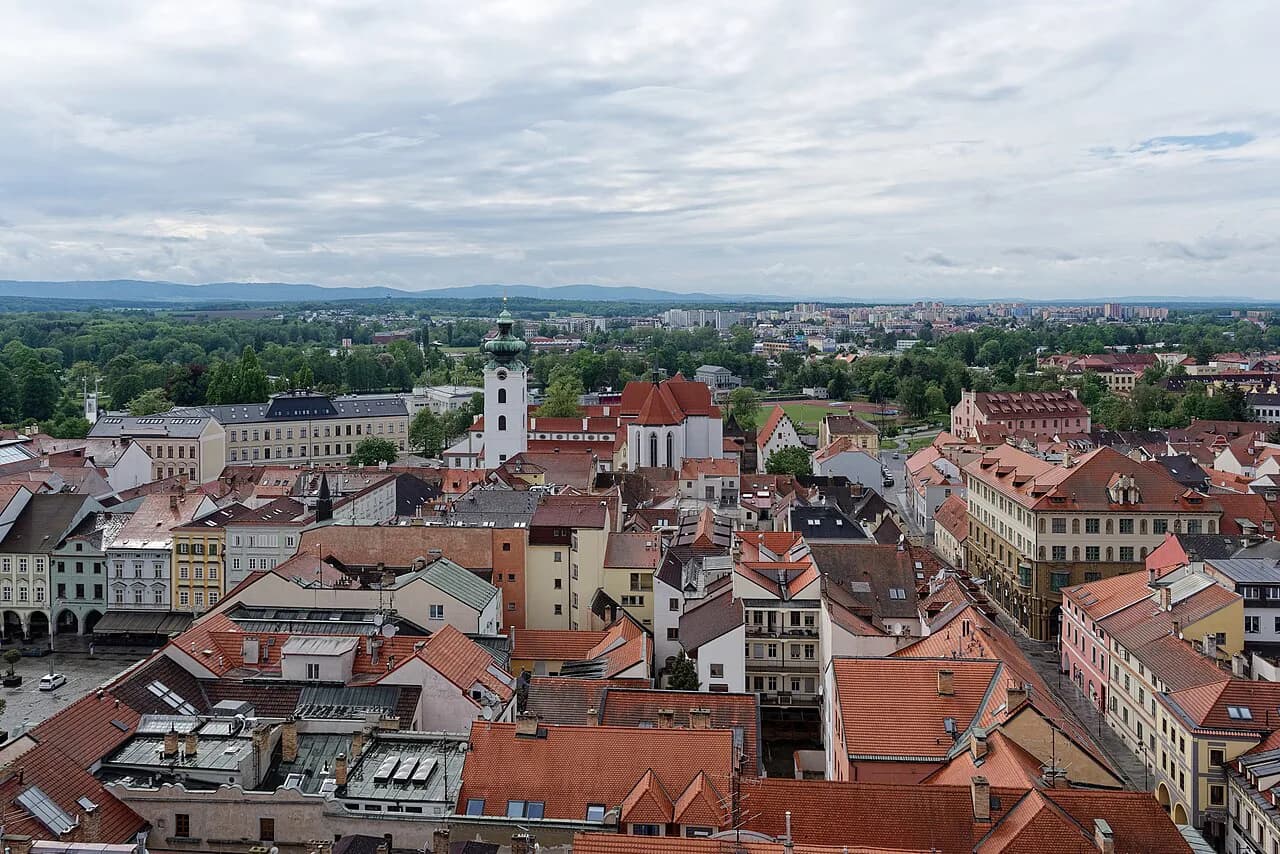
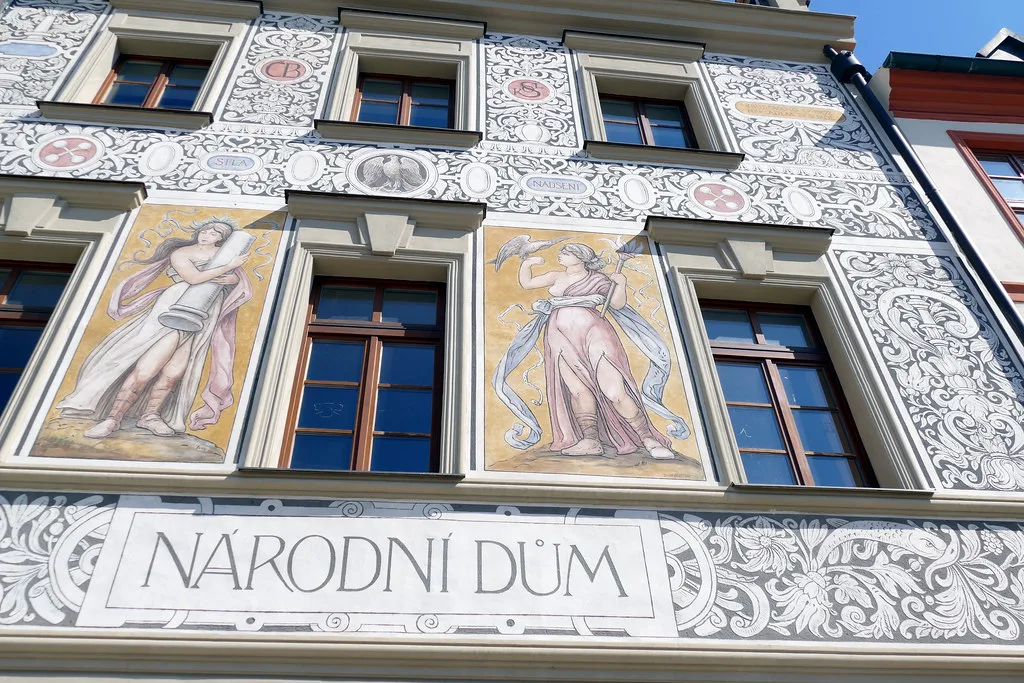
Velké náměstí is the natural starting point and the address of the town's information center. Stand in the middle and look along the facades rather than at any single house: the square is a coherent ensemble of Renaissance and later townhouses, and the pleasure is in the rhythm of gables, arcades and painted walls rather than one star building.
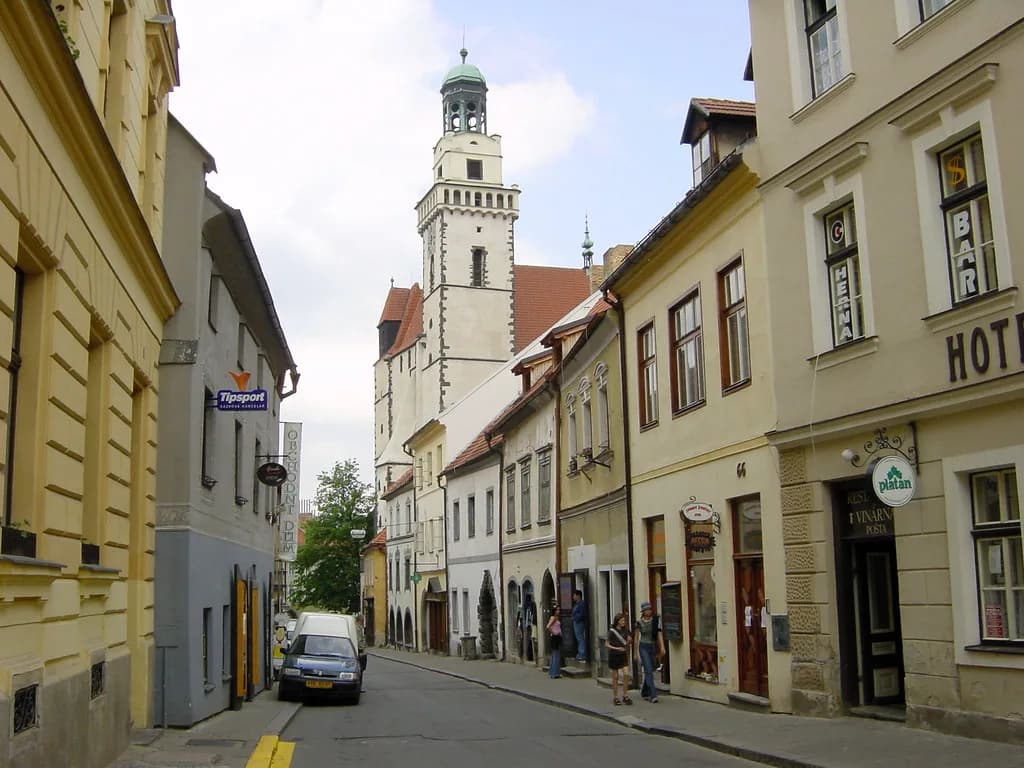
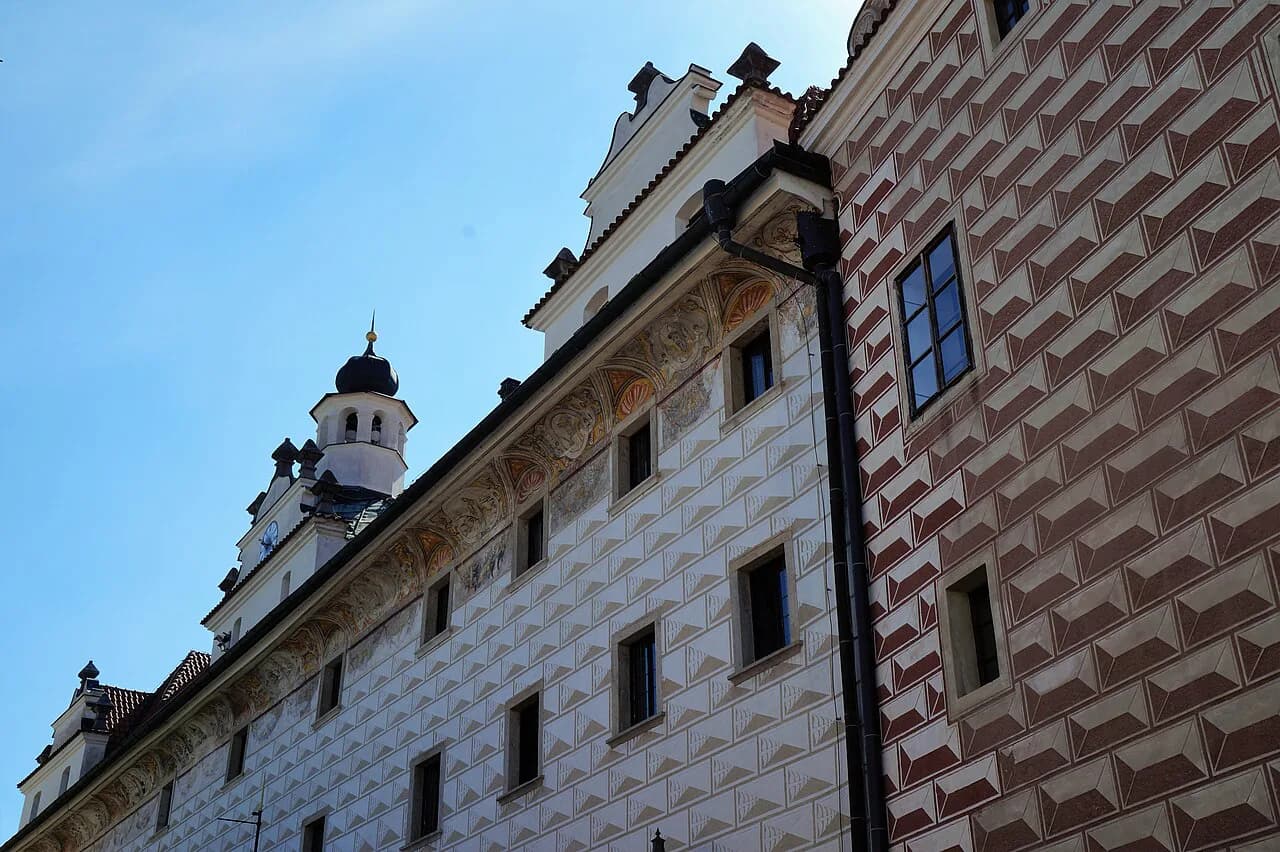
From the square, wander the lanes inside the walls. The historic heart kept its Renaissance appearance within the ring of fortifications, and the streets are short enough that getting mildly lost costs you little. Look at the painted facades and the plasterwork that gives Bohemian Renaissance towns their texture, and note how few modern intrusions break the line of the old center.
The center's protected status is the reason to slow down. Because the whole urban complex is preserved rather than a handful of monuments, the small details — doorways, vaulting, shopfronts set into old houses — carry as much of the visit as the square itself. Give the lanes the same time you give the main square.
The town walls and gates
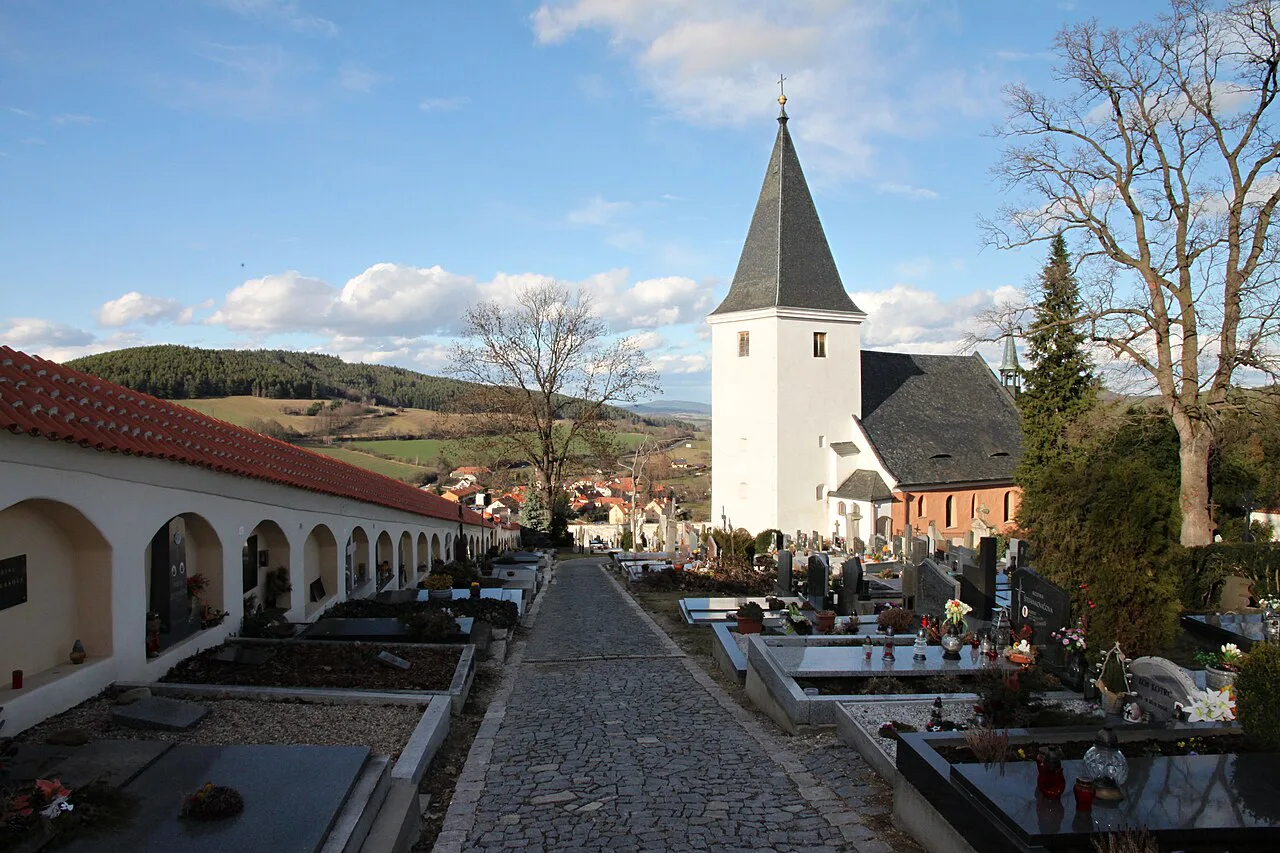
Prachatice still sits inside a ring of town walls that have survived fairly well, and that ring is the best way to organize a walk. Follow the line of the fortifications where you can, then cut back into the center. The circuit is short, so you can combine the walls with the square in a single loop instead of treating them as separate sights.
The walls also frame the town's setting. From the edge of the historic core you get the drop toward the surrounding country and a sense of how compact the protected center really is. This is where the town's geography clicks: a fortified merchant settlement on a slope, with the Bohemian Forest rising beyond.
Where to get information
The infocentrum at Velké náměstí 1 is the place to pick up local material and ask about access to individual sights. Reach it at infocentrum@prachatice.eu or +420 388 607 574, and the town's visitor website is visit.prachatice.eu. Use the center to confirm which interiors are open on your dates, since the town's monuments run their own schedules.
How much time Prachatice needs
Allow half a day. That covers Velké náměstí, a slow pass through the lanes and a walk along the line of the walls without rushing, plus a pause on the square. If you add a museum interior or a climb to a viewpoint, stretch it toward a full day, but the town itself does not demand one.
Walk it in this order: start on Velké náměstí, work outward through the lanes, then follow the walls around the edge of the protected center before returning to the square. Doing the walls last means you leave with the town's setting in view rather than its facades.
Getting there and onward
Prachatice lies in South Bohemia a short way from the German and Austrian borders, which makes it a natural stop on a route between South Bohemian towns rather than a standalone destination. Come by car if you want to combine it with the surrounding countryside, or use it as a leg on a longer regional loop. Check current train and bus connections and fares directly with the national carriers before you commit to a timetable.
The most useful base for the region is České Budějovice (Budweis), whose central square anchors the city and which works as a hub for day trips. Spend your main time there, then take Prachatice as a half-day detour into the hills.
Nearby stops that pair with Prachatice
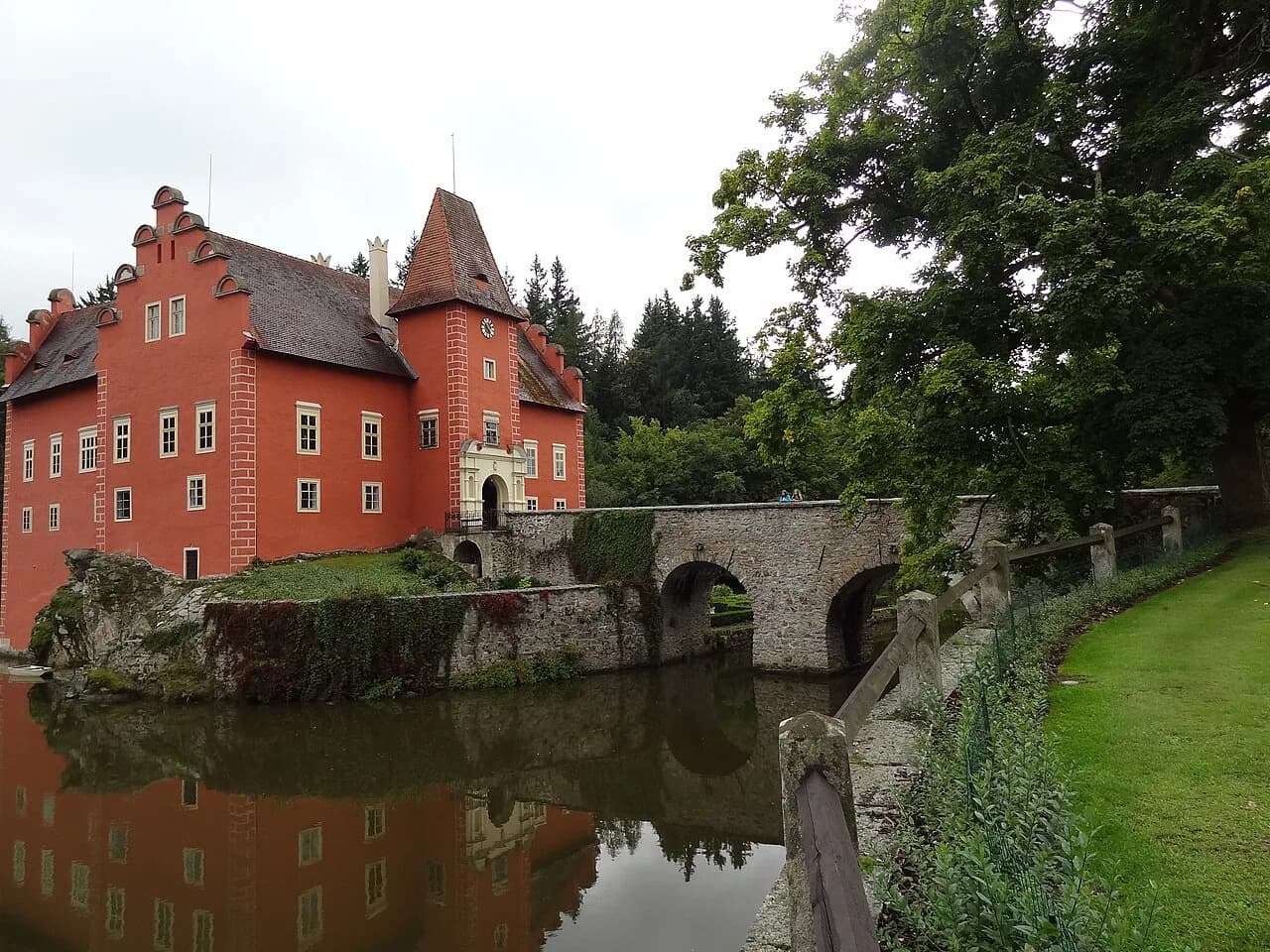
Kratochvíle Chateau, Vimperk Chateau and Helfenburk Castle all lie in the South Bohemian countryside around Prachatice and make sensible additions to a driving day. Holašovice, the village of farmsteads in a distinctive vernacular style, sits further east toward České Budějovice and pairs well with a return leg. Group two or three of these rather than trying to see them all.
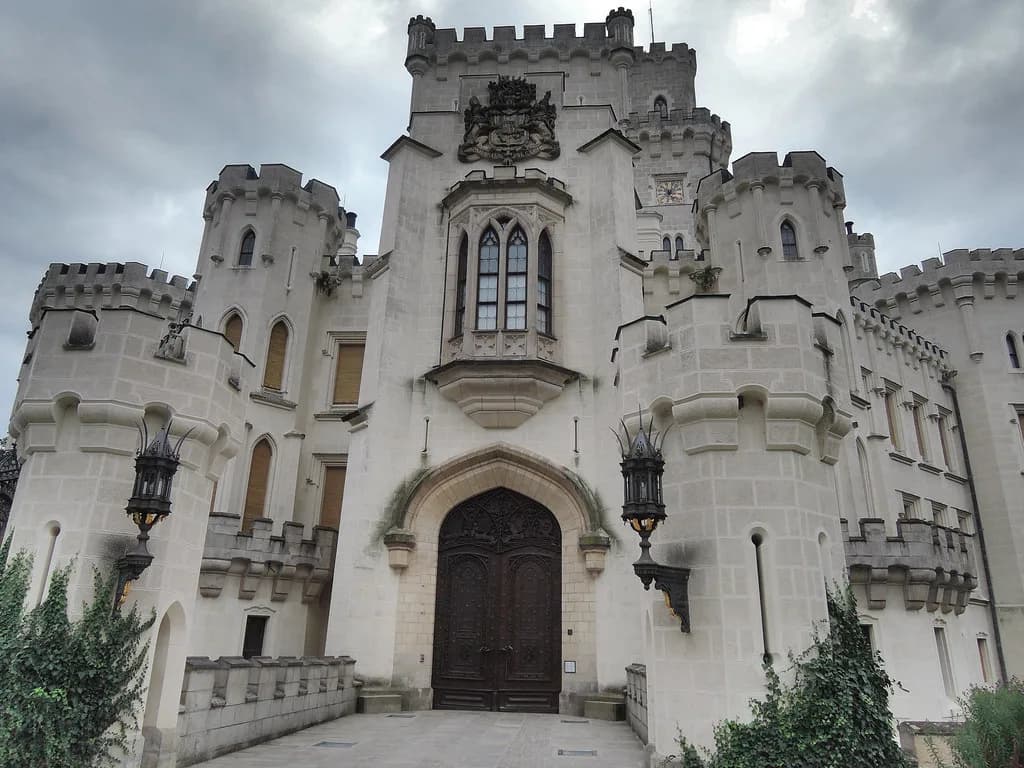
For a bigger dose of South Bohemian chateau architecture, Hluboká nad Vltavou Chateau near České Budějovice is the region's showpiece, and the town around it adds a stop on the way north. If you build an itinerary around České Budějovice, the local attractions hub helps you order the pieces.
The Libín peak and the Šumava upland
Above town, the terrain climbs into a submontane upland dominated by Libín at 1,096 meters, which then runs on into the Šumava mountain chain. The elevation shapes the climate: average winter temperatures range from about −5 to −9 °C and average summer temperatures sit between roughly 13 and 17 °C. Those are averages, not forecasts — pack for cooler, wetter conditions than the České Budějovice basin.
The upland is the reason Prachatice feels like a mountain-edge town rather than a lowland one. Even if you stay in the center, the views toward the forested ridges set the tone, and a short climb to a higher vantage point gives you the geography of the whole Golden Path country in one look.
Should Prachatice be a stop on your South Bohemia route?
Yes, if you are already moving through South Bohemia. Prachatice gives you an intact Renaissance center, a ring of walls and the Golden Path story in half a day, without the crowds that gather around the region's headline sights at midday. It is a stop, not a base — pair it with České Budějovice and one or two chateaux nearby.
Build the day around Velké náměstí and the lanes, walk the walls last, and leave room for a countryside detour to Kratochvíle or Vimperk on the way out. Confirm interiors and transport connections through the infocentrum at Velké náměstí 1 before you set out.
Explore more České Budějovice guides
- Blatná Castle
- Budvar Brewery
- Jindřichův Hradec
- Lipno: The Treetop Walkway and Lake Area at Lipno nad Vltavou
- Písek
- Rabí Castle
- Tábor, Czech Republic
- Třeboň: A Renaissance Chateau Town Among Fish Ponds
- Zvíkov Castle
- Červená Lhota Castle
- Šumava National Park
- Landštejn Castle
- Rožmberk Castle
- Vimperk: Castle, Square and Šumava Gateway in South Bohemia
Frequently Asked Questions
Is Prachatice a UNESCO site?
No. Prachatice's historic center holds Urban Conservation Area status, declared in 1981, which protects the Renaissance streetscape and walls as a whole. That is a national designation, not a World Heritage listing.
How do you pronounce Prachatice?
Stress falls on the first syllable, and the Czech ch is a hard sound as in Scottish loch: roughly PRA-kha-ti-tse. The final e is pronounced, so it does not trail off the way English speakers often expect.
Where is Prachatice in the Czech Republic?
In the South Bohemian Region, in hilly country toward the Bohemian Forest, a short way from the German and Austrian borders. The Šumava range and the Libín peak rise nearby, which is why summer and winter averages run cooler than the lowlands.
What is Prachatice known for?
Its exceptionally well-preserved Renaissance center and surviving town walls, both tied to the medieval salt trade along the Golden Path from Passau. Economic stagnation in the 17th and 18th centuries kept later rebuilding to a minimum, which is why the old town reads so uniformly today.
Sources
Notes for your Czech trip
Optional updates to our Czech town guides.
You might also like
Continue reading
More guides you'll find useful