Tábor, Czech Republic: Hussite Old Town and South Bohemia Stop
Tábor, Czech Republic, is a compact hilltop town in South Bohemia that fits as a half-day stop on a route with České Budějovice, Hluboká nad Vltavou and Prachatice.
On this page
Tábor is a compact, hilltop town in South Bohemia whose center can be walked in about half a day. This guide covers the old-town core, the town's Hussite history, the underground passages and Kotnov tower, and how the town slots into a loop through South Bohemia with Hluboká nad Vltavou and Prachatice.
Tábor sits in the rolling South Bohemian countryside between Prague and České Budějovice (Budweis), so it works as a stop on a north-south run rather than a destination that needs a dedicated trip. Budget it as a half day of walking, with the option to stretch it if you join a guided tour.
Where Tábor sits in South Bohemia
Tábor lies in the south Bohemian uplands, a region of low hills, ponds and small towns that stretches between Prague and the Austrian border. Its historic identity is bound up with the Hussite movement, the reformist current that dominated Bohemia in the fifteenth century and left Tábor as one of its strongholds.
For route planning, treat Tábor as a point between Prague and České Budějovice, the regional capital to the south. That position makes it practical to combine with the Budweis old town and, further west, with Hluboká nad Vltavou Chateau.
The old core is small enough that you never need a car once you arrive, and the town rewards walking rather than driving between sights. Park or alight near the edge of the historic center and cover the rest on foot.
The old town on its hilltop
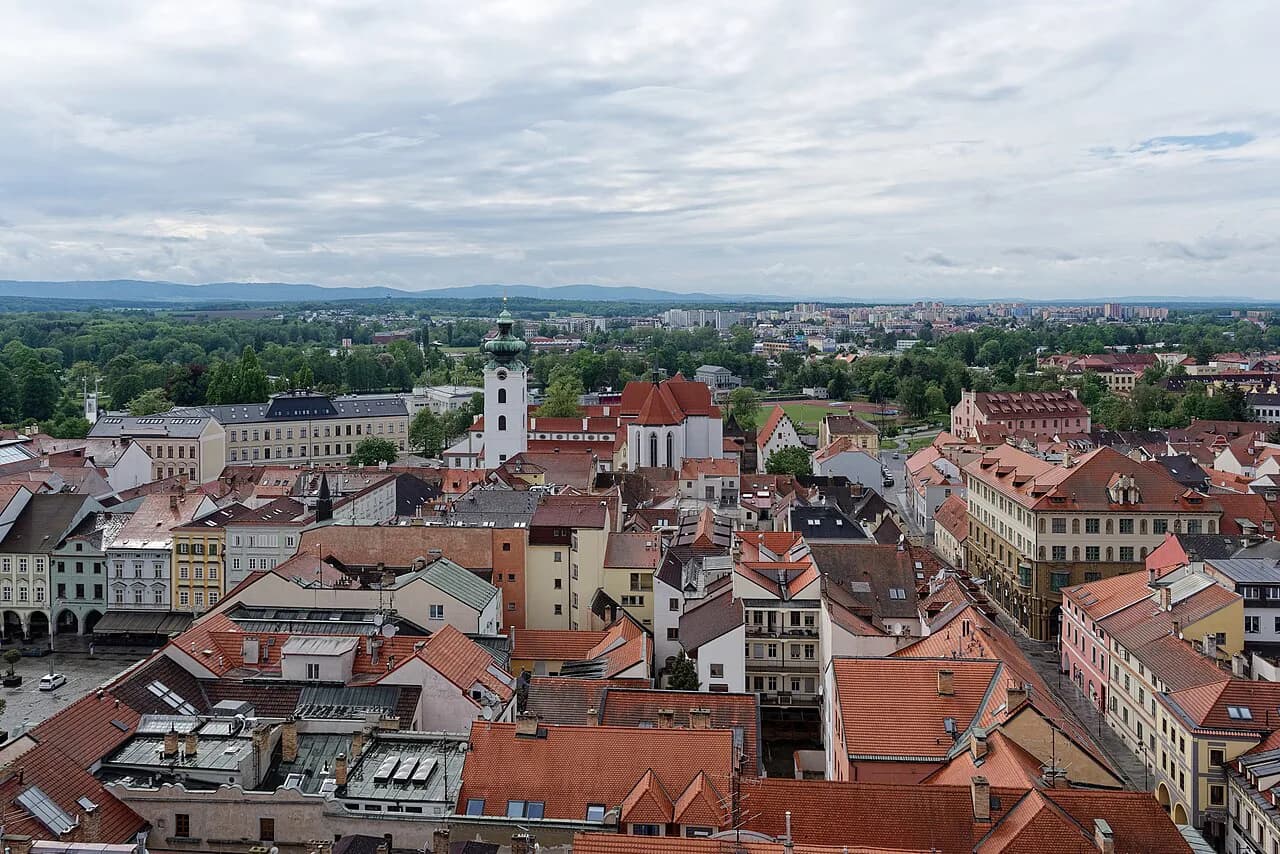
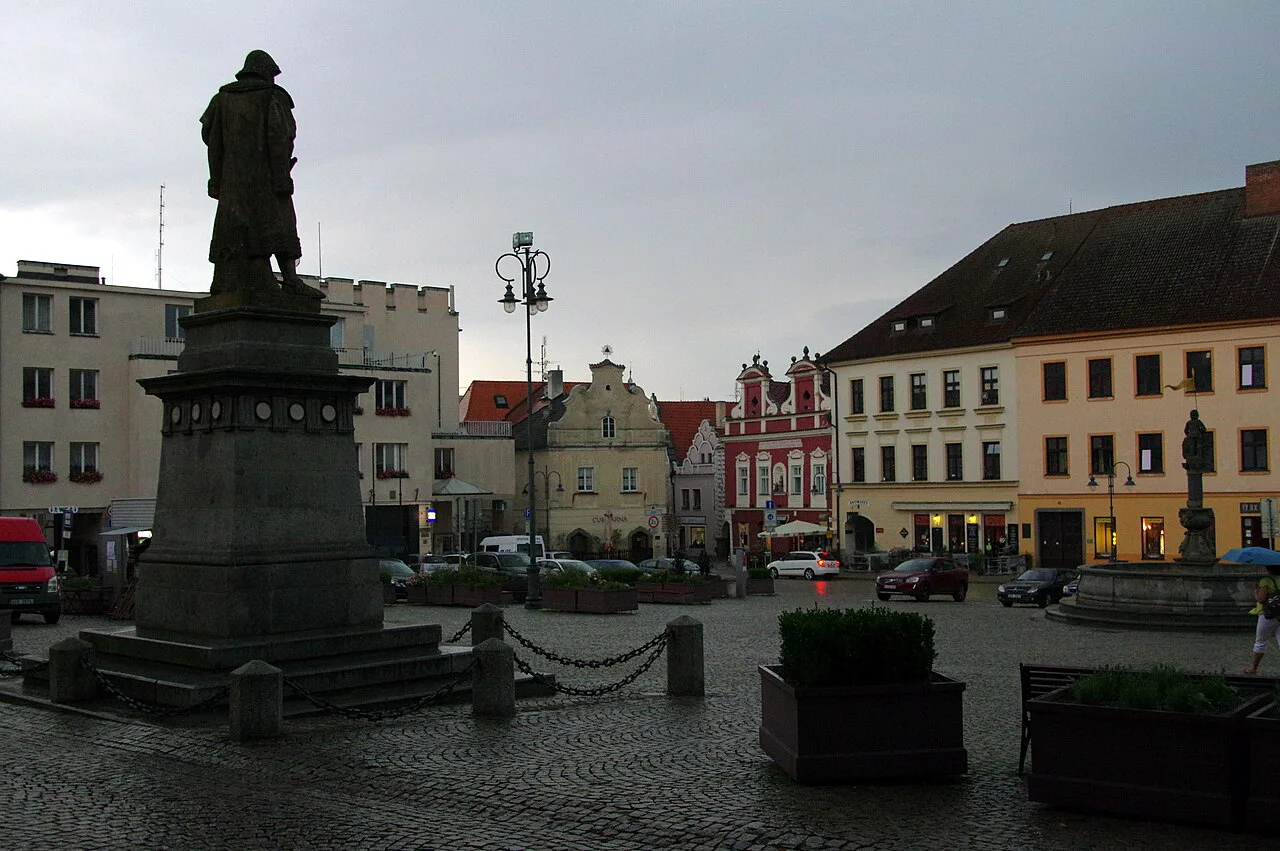
The center of Tábor is a sloping old-town square lined with burgher houses whose arcades and facades give the town its layered, Gothic-to-Renaissance look. The square functions as the natural orientation point: almost everything of visitor interest sits within a few minutes of it.
From the square, narrow lanes drop away toward the old fortifications and the river below, and the slope is part of the experience rather than an obstacle. Wear shoes that handle cobbles and steps, because the town is built on a ridge and the streets fall away in several directions.
A church on the square rises above the rooftops and is a natural first stop before you branch into the surrounding streets.
Plan the center as a loop rather than a checklist: the square, the church, the lanes toward Kotnov, and the museum, all within a compact radius. This is why half a day is enough for the old town itself, with the guided underground tour as the one add-on that needs scheduling.
Hussite history in town
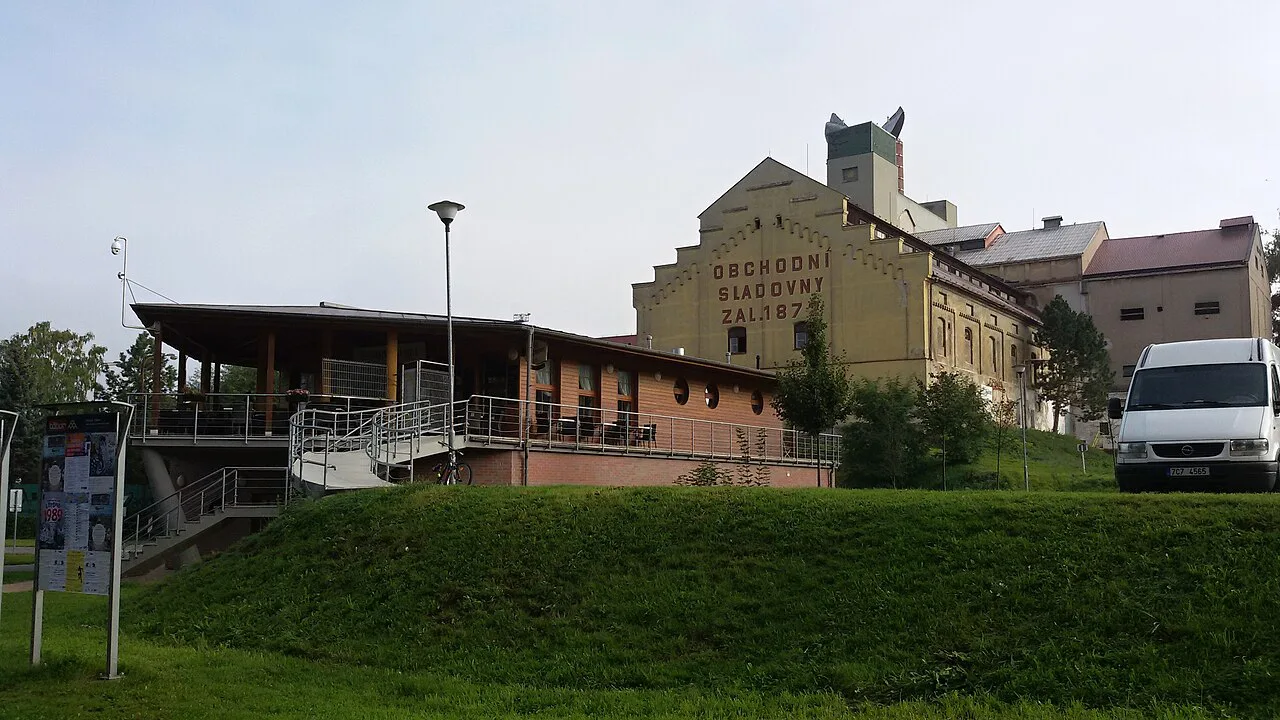
Tábor's Hussite identity is the key to reading the town, so give the local museum some time even on a short visit. Its exhibits explain the Hussite wars and the radical community that briefly made this hilltop town a religious and military power.
The museum also documents the town's past above ground while the underground passages lie below, so the two together give you the full picture. Tour times are set by the operator, so check them when you visit.
Reading the town's history before you climb the hill pays off, because the square and the fortifications make far more sense once you know that Tábor was founded as a Hussite community in the fifteenth century. Give the museum an hour if you want the context, less if you are mainly here for the streets.
The underground passages under the old town
Beneath the houses of the old town runs a network of passages and cellars carved out over the centuries, and they are one of Tábor's distinctive sights rather than a generic cellar tour. The passages are visited in the company of a guide, so build your day around one of the departures rather than expecting to wander in on your own.
Because the underground is guided and timed, it is the one element of a Tábor visit that can constrain your schedule; the square, church and lanes need no booking. If your time is tight, decide first whether the passages matter to you, then fit the rest of the old town around the tour.
Passages run cool and damp and involve uneven floors and low sections, so they suit travelers comfortable on their feet in enclosed spaces. Check the current tour times and ticket price when you arrive.
Kotnov castle and tower
Kotnov is the surviving fragment of Tábor's medieval fortifications, a castle and tower at the edge of the old town that once guarded the approach to the hilltop. What remains is compact, but the tower gives you an elevated view back over the town and the surrounding countryside.
Reach Kotnov on foot from the square along the lanes that run toward the old gates, and treat the climb up the tower as the reward at the end of the walk. The combination of the square, the church and the Kotnov tower is what makes the Tábor center feel like a coherent medieval town rather than a single monument.
Getting to Tábor
Tábor sits on the main rail corridor between Prague and České Budějovice, which makes the train the simplest way in for most travelers. Confirm departure times and journey length on the Czech Railways timetable before you fix your day, since the service pattern varies by time of day.
From Vienna, the practical approach is via České Budějovice, where you change onto the Prague line, or by car on the cross-border roads through South Bohemia. Either way, Tábor is a stop on the way rather than a separate journey, which is why it pairs naturally with the Budweis center and the chateau at Hluboká nad Vltavou.
Once you arrive, the old town is a short walk uphill from the station area, and you will not need local transport for the sights themselves. If you are driving, park below the historic core and walk in, since the lanes of the old town were never built for cars.
How long Tábor needs
Give Tábor half a day: an hour or so in the square and church, an hour in the museum, and the rest for the lanes and the Kotnov tower. That leaves room to add the guided underground tour without turning the visit into a forced March.
Sequence it as a loop from the square: church first while it is quiet, museum and underground tour next, then the walk down to Kotnov and back along the old walls. This order keeps you above ground when the light is best and puts the confined, cool passages in the middle of the day.
The honest trade-off is that Tábor is a compact center that rewards a focused half day rather than a full day of scheduled sights. If you find yourself with time to spare, the surrounding South Bohemian towns and chateaux are a better use of it than stretching Tábor past what it offers.
Where Tábor fits in a South Bohemia route with Hluboká and Prachatice
A sensible South Bohemia loop runs Prague to Tábor, on to České Budějovice, west to Hluboká nad Vltavou, and then toward the Šumava foothills and Prachatice. Each leg is short enough to drive or ride by train within a day, so the towns stack into a two- or three-day route rather than competing for the same hours.
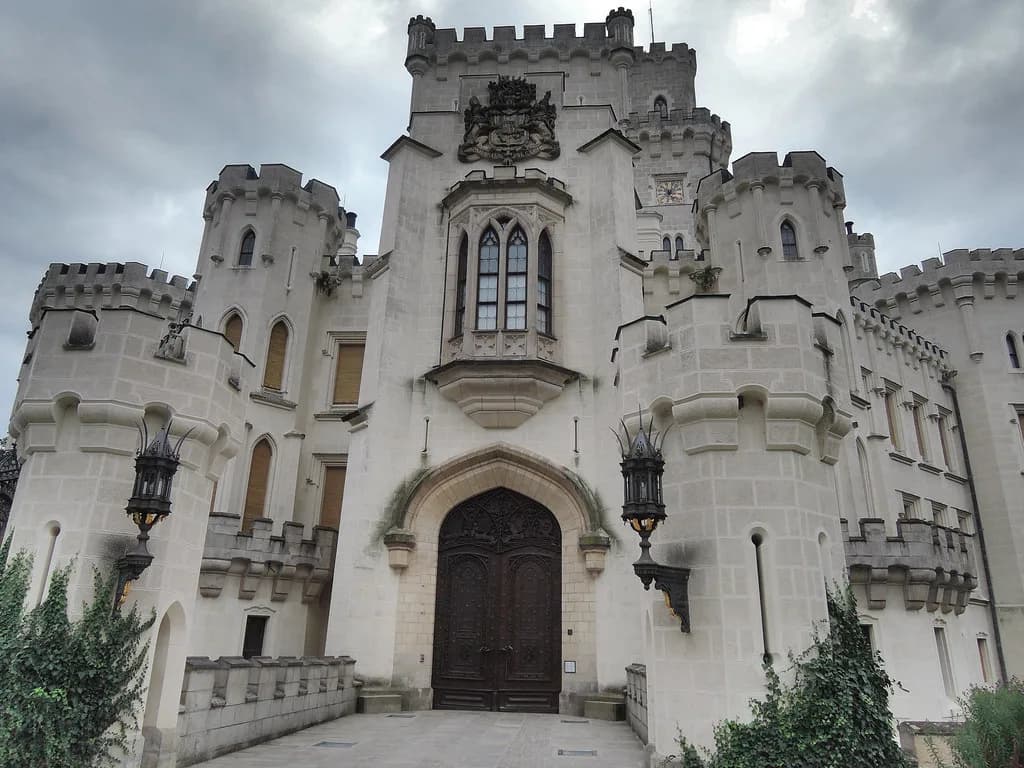
Hluboká nad Vltavou is the chateau stop on that loop, and its guided circuits are the place to budget for National Heritage Institute tours, since the chateau publishes separate adult prices for the Representation rooms, the Private apartments, the Chateau kitchen, the Suite rooms, the tower and the winter tour. Adult admission to the Representation rooms is 300 CZK, the Private apartments 220 CZK, the Chateau kitchen 180 CZK, the Suite rooms 320 CZK, the tower 180 CZK and the winter tour 200 CZK, with reduced rates for seniors, youth and children.
Those Hluboká figures give you a realistic sense of what a National Heritage Institute chateau tour costs in the region, and the same pattern applies elsewhere: guided circuits, seasonal opening and tours usually in Czech unless you book an English-language time. Further west, the historic center of Prachatice has retained its Renaissance appearance within town walls and was declared an Urban Conservation Area in 1981, which makes it a quieter counterpoint to the busier chateau stops.
East of Tábor, Jindřichův Hradec adds a Renaissance chateau mirrored in the Vajgar Pond, a town museum with the largest mechanical nativity scene in the world, and a narrow-gauge railway toward the wooded area known as Czech Canada. It is a natural eastern extension of the same South Bohemian loop if you have a third day to spend.
In České Budějovice itself, the draw is Přemysl Otakar II Square, one of the largest squares in the country at roughly 133 by 137 meters, with the Samson Fountain at its center. The Black Tower nearby stands 72.29 meters tall and has 225 stairs, and the city's official tourism pages list both as headline attractions, which makes the city an easy base for the Tábor and Hluboká legs.
Is Tábor worth a half day on a South Bohemia route?
Tábor is worth a deliberate half day if you are already moving between Prague and České Budějovice, because the square, the Hussite history, the underground tour and the Kotnov tower fit into a walkable morning or afternoon. It is not a town that needs a full day of scheduling, and treating it that way leaves you with idle hours better spent at Hluboká nad Vltavou, Prachatice or the Budweis center.
Build your underground tour around your arrival, put the church and square on either side of it, and leave the tower for the end when the light and the views are best. That sequence gives you the town at its most coherent and keeps the rest of your South Bohemian loop flexible.
Explore more České Budějovice guides
Sources
Notes for your Czech trip
Optional updates to our Czech town guides.
You might also like
Continue reading
More guides you'll find useful