Písek, Czech Republic: Stone Bridge, Old Town and River Otava
Písek is a South Bohemian town on the Otava River, known for its medieval stone bridge, historic center and former royal castle.
On this page
Písek earns its place on a South Bohemian route with a single landmark: the Kamenný most, which the town's official tourism portal calls the oldest surviving bridge in the Czech Republic. The bridge, the historic center around Velké náměstí and the Otava River that runs through town make a compact, walkable stop between Prague and the bigger names of the region. This guide covers what to see, in what order to walk it, and how Písek fits a trip through south Bohemia.
Písek sits in the foothills of the Písecké hory, the forested hills the town portal markets as a sea of woods, and the Otava cuts through the center. That geography matters for planning: the historic zone is small enough to cross on foot, while the forest and the stud farm sit outside it and need their own time. Treat the town as a half-day core with optional additions rather than a full-day checklist.
Where Písek sits on the Otava and how it fits a route
Písek lies in South Bohemia on the Otava River, northwest of České Budějovice (Budweis) and south of Prague. It positions naturally on a line between the capital and the region's larger draws, so it works either as a stop on the way down or as a base for the surrounding countryside. The town portal describes it as the oldest royal town in South Bohemia, which is the historical claim behind its compact, well-preserved center.
For a wider trip, Písek pairs with the chateau country around Hluboká nad Vltavou and with Český Krumlov, both reachable on the same South Bohemian loop. The town's own information center on Velké náměstí is the place to confirm local transport and current opening times. Travel times and fares change with the season, so check the Czech rail and bus timetables before fixing a schedule.
If you are routing through České Budějovice (Budweis), give that city its own time: its Přemysl Otakar II Square is a separate stop, not a quick add-on to Písek. Driving gives the most flexibility for combining the two, since the countryside between them is the point of the region.
The historic center on foot: Velké náměstí and the lanes
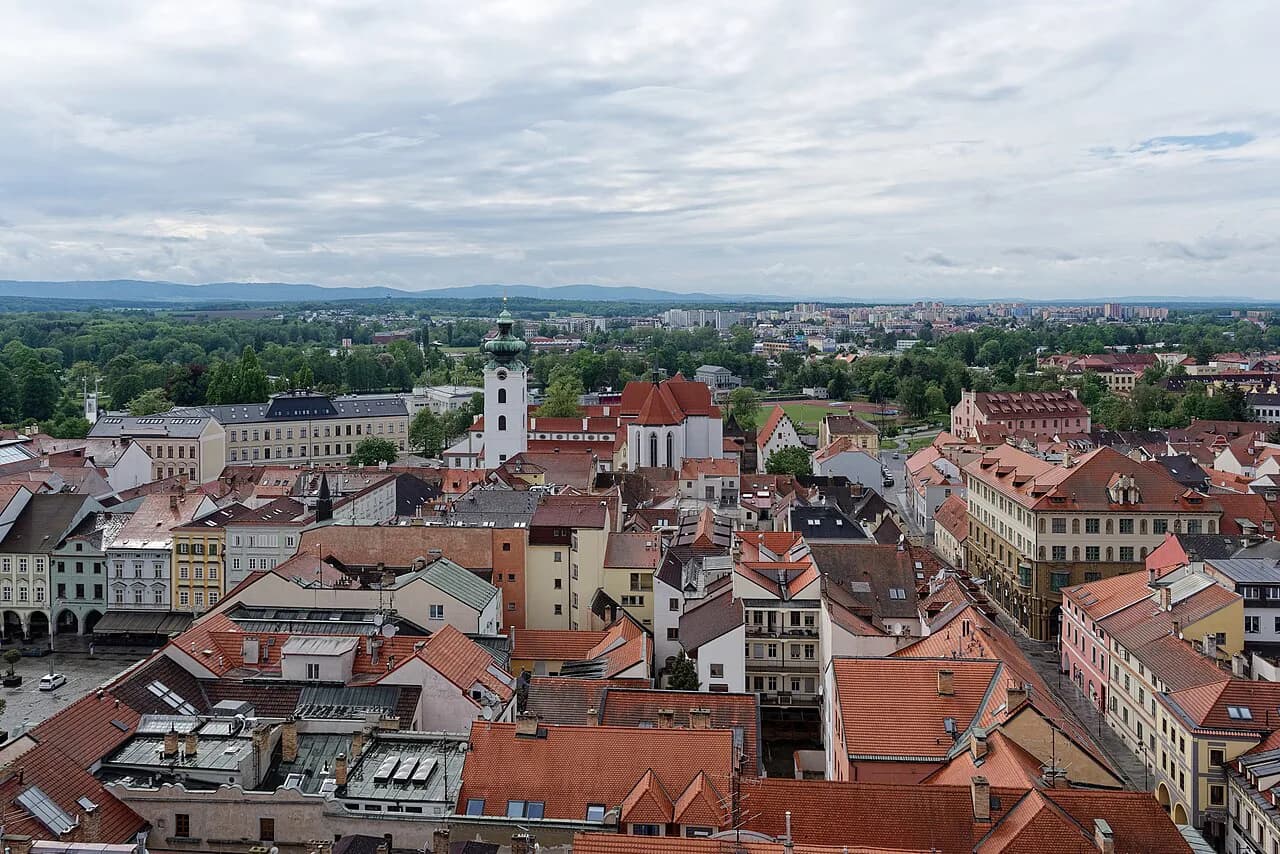
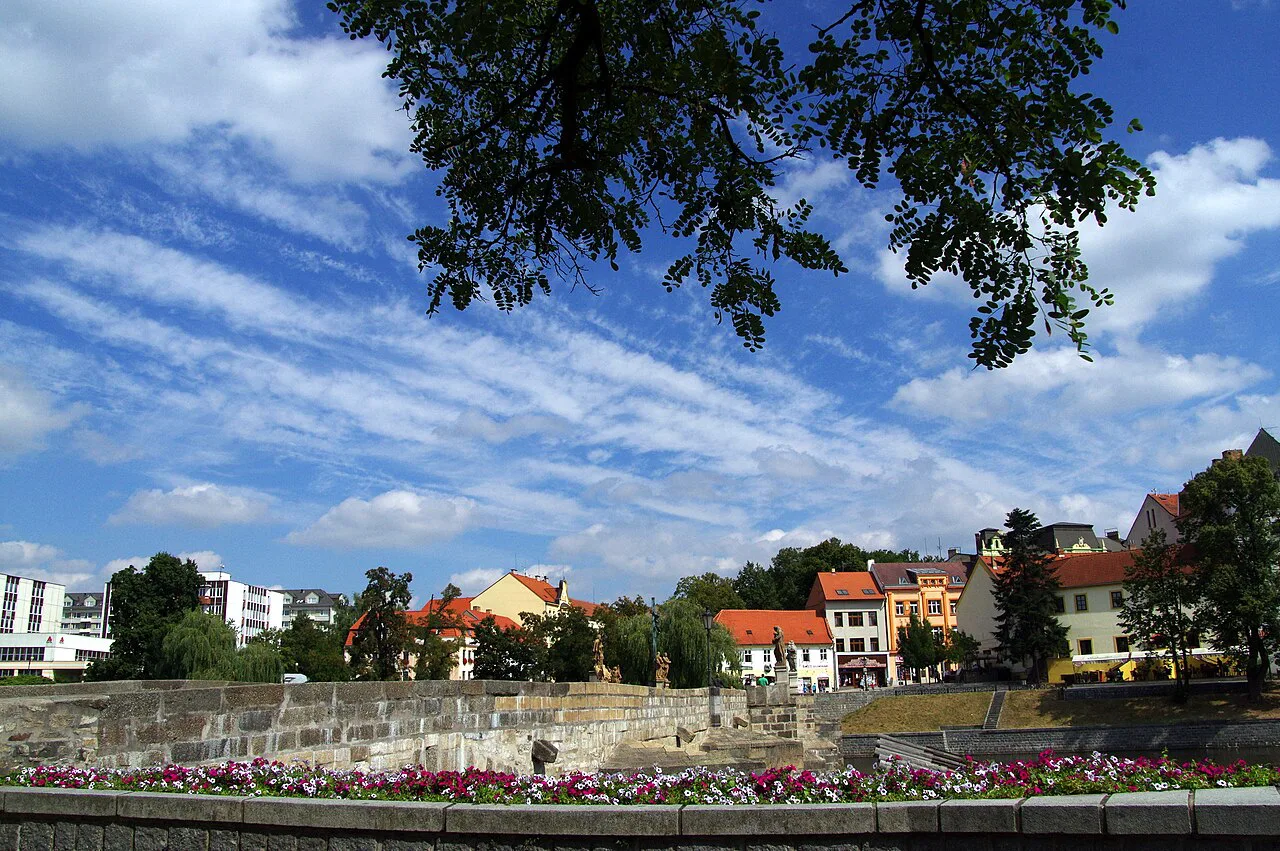
Velké náměstí is the town's main square and the natural place to start, with the baroque town hall among the buildings the portal lists as local architecture. The lanes around it hold the town's smaller sights, including historic houses marked by house signs and the remains of the town walls. This is a center to wander rather than tick off, and an hour or two covers the core comfortably.
The Turistické informační centrum Písek on Velké náměstí is the practical anchor: it publishes the town's current brochures, handles reservations for the tower climb and answers questions about what is open. Pick up a town map there before walking, because the sights are spread across the square, the riverbank and the streets between.
The Kamenný most up close
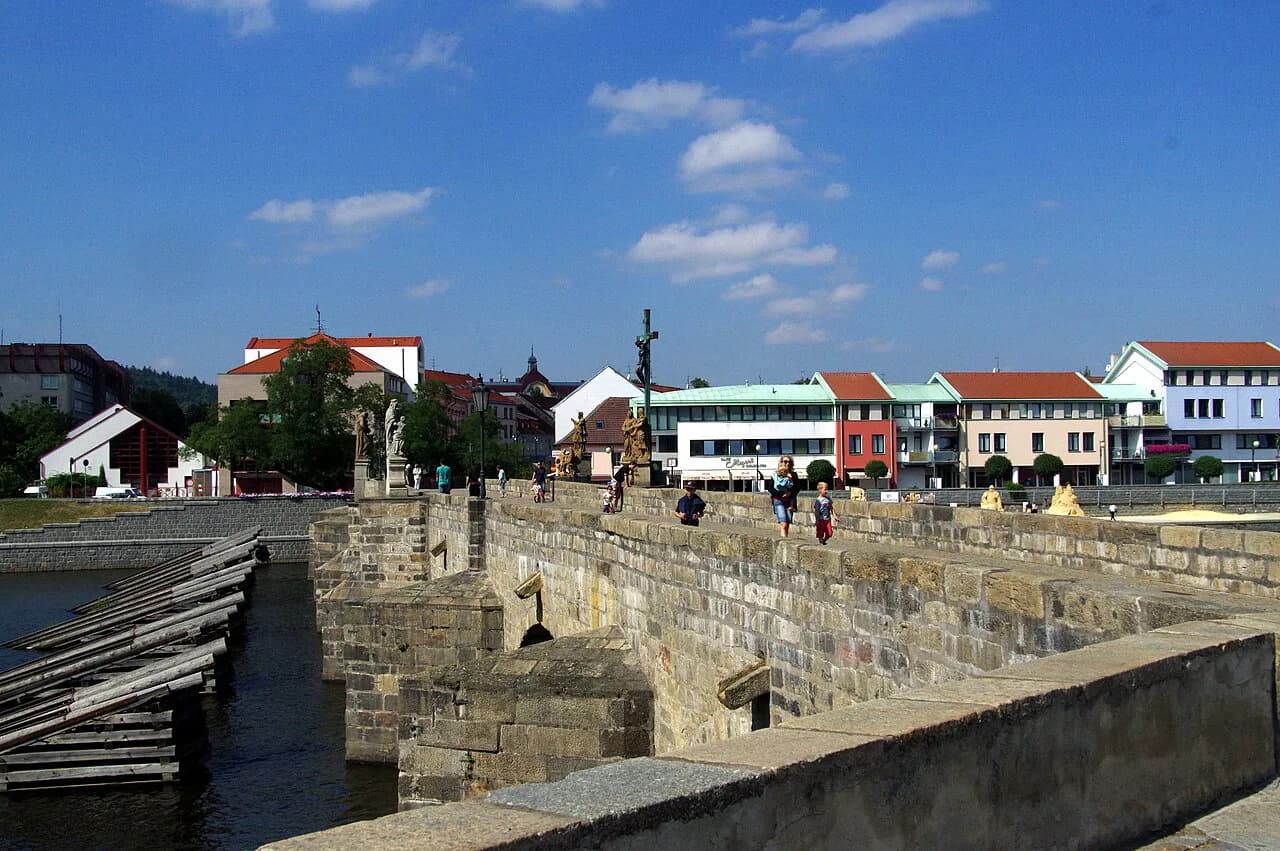
The Kamenný most is the reason most travelers get off the train, and the town portal identifies it as the oldest surviving bridge in the Czech Republic. It crosses the Otava on a series of stone arches and carries a line of statues, so the crossing itself is a short walk rather than an excursion. Allow a few minutes to cross and a little longer on the banks for the view back at the arches.
Pair the bridge with the riverside rather than treating it as a photo stop: the Otava and the town's bridges together explain why Písek grew where it did. The bridge sits close to the historic center, so it slots naturally into a walk between the square and the water.
The former royal castle and what a visit involves
The Královský hrad, the former royal castle, is one of the town's headline sights and sits within the historic center. The portal lists it among Písek's top targets alongside the bridge and the Sladovna gallery. Exhibitions and interiors in Czech heritage buildings usually run on set hours with separate tickets, so confirm the current arrangement at the information center before planning around it.
Sladovna, the gallery in a former malt house
Sladovna is a former malt house turned into what the town portal calls a playful gallery, and it is the stop that suits families and anyone traveling with children. Its exhibitions are interactive rather than traditional museum displays, which makes it a good counterweight to the castle and churches. Check the current program before building a day around it.
Prácheňské muzeum and the Heyduk memorial for a slower half-day
The Prácheňské muzeum and the Památník Adolfa Heyduka, a memorial to the poet Adolf Heyduk, are the town's slower, more local stops. Both appear on the portal's list of museums and sights, and both reward travelers who want regional history rather than a headline monument. Add them only if you are giving Písek a full day; a short pass-through will not fit them comfortably.
Churches and sacred sites
The Děkanský kostel Narození Panny Marie, the deanery church of the Nativity of the Virgin Mary, and the Klášterní kostel Povýšení sv. Kříže, the monastery church of the Exaltation of the Holy Cross, are the two main sacred buildings the portal lists. Both sit within the historic center and can be seen from the outside on any walk, though access to interiors depends on services and opening times. The portal also lists the Pietní park sv. Trojice and the Kostel sv. Václava among the town's sacred spaces, which fill out a quiet hour for anyone interested in church architecture.
The Zemský hřebčinec outside the conservation zone
The Zemský hřebčinec, the regional stud farm, is a working institution and a national cultural monument that the portal places outside the town conservation zone. That location is the planning point: it is not on the square-and-bridge loop, so it needs a separate decision rather than a detour on the way past. The portal lists it among the town's notable sights, but access to a working stud farm is not the same as a museum visit, so ask at the information center what is currently possible before going.
Riverside and green space: Palackého sady and Městský ostrov
Palackého sady and Městský ostrov, the town park and the river island, are where the center opens up along the Otava. Both appear in the portal's account of the town's green spaces and give a place to slow down between sights rather than a sight in themselves. They also connect naturally to the bridge and the riverbank walk, which is why they belong in the middle of the route rather than at the end.
A walking order that links the bridge, square and river
Start at the Kamenný most, cross to the historic center and climb to Velké náměstí for the town hall and the lanes around it. From the square, work through the churches and the castle, then drop to Palackého sady and Městský ostrov for the riverside before returning over the bridge. That order keeps the walking short, puts the water at the end of the loop and leaves the Zemský hřebčinec as a separate trip.
The portal publishes a town tourist circuit and several named walks, including a climb to the Jarník lookout, for travelers who want a longer route. Those belong to a full-day visit rather than a half-day one, since they add distance and, in the case of the Písecké hory, real elevation. Choose between the center loop and the hill walk rather than trying to do both.
How much time Písek needs
A half-day covers the bridge, Velké náměstí, the churches and the castle from outside or in, which is the right amount for a stop on the way to or from České Budějovice. A full day adds Sladovna, the Prácheňské muzeum, the Heyduk memorial and the riverside, and leaves room for the Zemský hřebčinec if access allows. The honest trade-off is that the town is small: stretching it to two days means using it as a base for the surrounding forests and chateaux rather than for Písek itself.
What things cost in CZK and where to confirm them
Písek's sights are entered individually, and the tower climb is handled by reservation through the information center. The portal points travelers to that center on Velké náměstí for current prices and opening times, which is the reliable way to budget in koruna. Set aside a CZK allowance for the castle, Sladovna and the museums, and confirm the figures on arrival rather than carrying a fixed total.
Onward from Písek: South Bohemian stops worth the drive
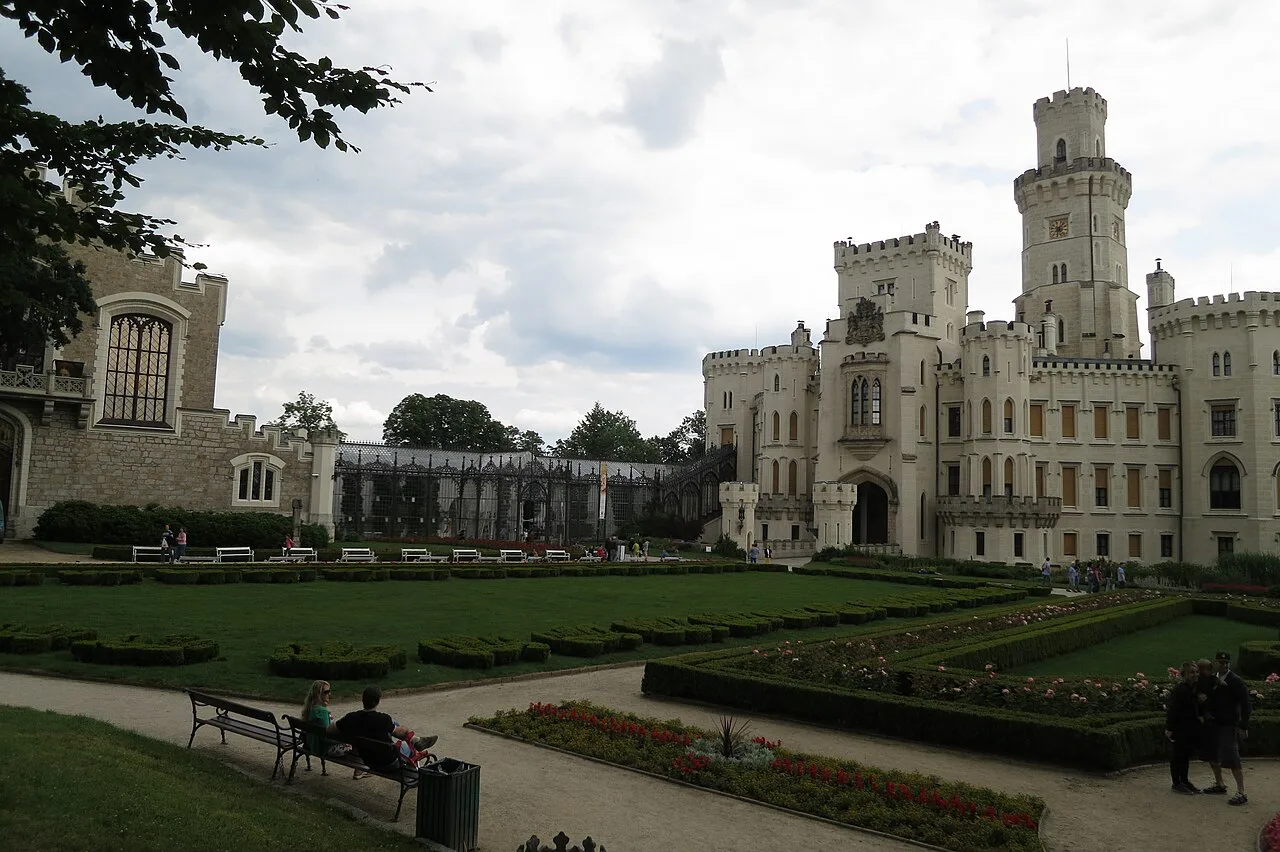
Písek works best as one link in a South Bohemian chain rather than a destination on its own. South of town, Hluboká Castle draws the big crowds, while the country around Třeboň's fish ponds offers a quieter Renaissance day.
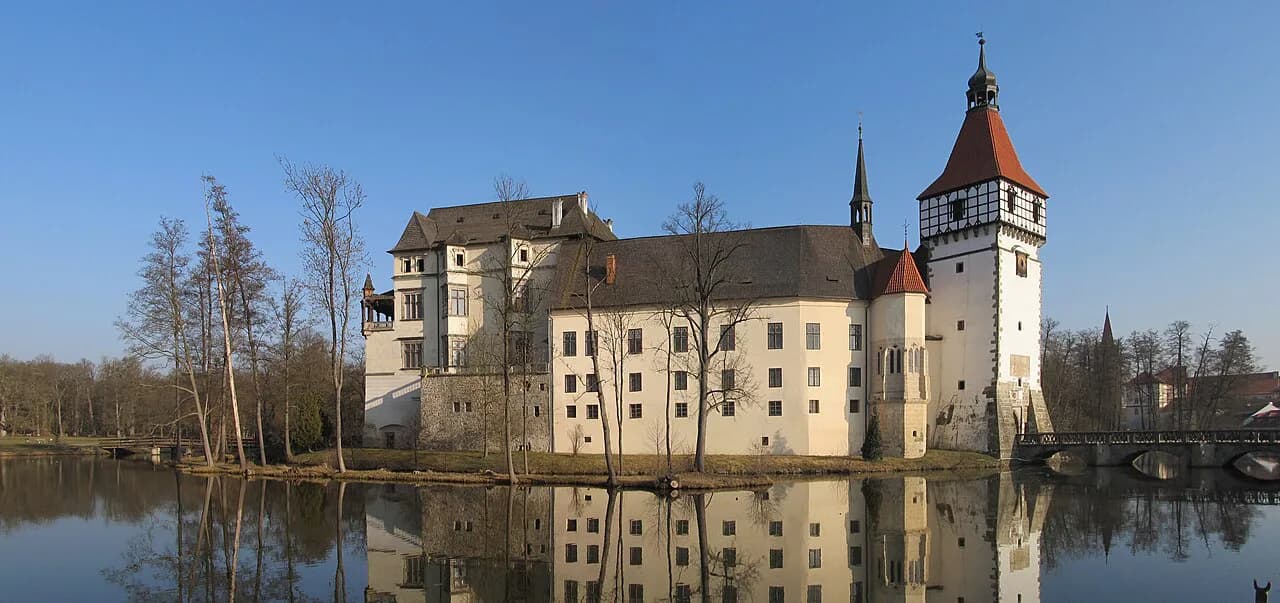
East of Písek, Tábor and Jindřichův Hradec give two different histories, a Hussite town and a chateau town, and both reward a night rather than a flying visit. Smaller stops such as Kratochvíle Chateau and Blatná Castle fit a driving loop if you are already covering the region.
Is Písek worth the stop on your South Bohemian route?
Yes, if you are passing between Prague and České Budějovice and want a compact town with one genuinely old landmark at its center. Build the visit around the Kamenný most and Velké náměstí, add Sladovna for children or the museums for a slower day, and treat the Zemský hřebčinec as a separate inquiry. Skip it only if your route already runs far to the south or east, where the chateaux and Renaissance towns of the region will fill the same day.
Explore more České Budějovice guides
Frequently Asked Questions
Where is Písek located?
Písek is in South Bohemia on the Otava River, northwest of České Budějovice and south of Prague. The town's historic center sits on the river, with the Písecké hory forested hills rising nearby.
Do you need a car to see Písek?
No. The bridge, Velké náměstí, the churches and the castle are all within walking distance in the historic center, and the information center on Velké náměstí sits in the middle of that area. A car only helps for the Zemský hřebčinec and for onward stops in the region.
Sources
Notes for your Czech trip
Optional updates to our Czech town guides.
You might also like
Continue reading
More guides you'll find useful