Landštejn Castle: South Bohemia's Romanesque Fortress
Landštejn Castle is a Romanesque fortress ruin in the forests of Česká Kanada. See what a visit covers, when it opens, and how to reach it.
On this page
Landštejn Castle is the largest Romanesque castle in Bohemia and one of the oldest surviving structures of its kind in Europe, now a state-owned ruin in the woods of Česká Kanada near the Austrian border. You visit it without a special guide, walking the grounds and climbing the south tower for a view that reaches Austria on clear days. This guide covers what the fortress is, how its two towers and palace fit together, when it opens, and how to reach it from Jindřichův Hradec, Telč, or Slavonice.
What Landštejn Castle is
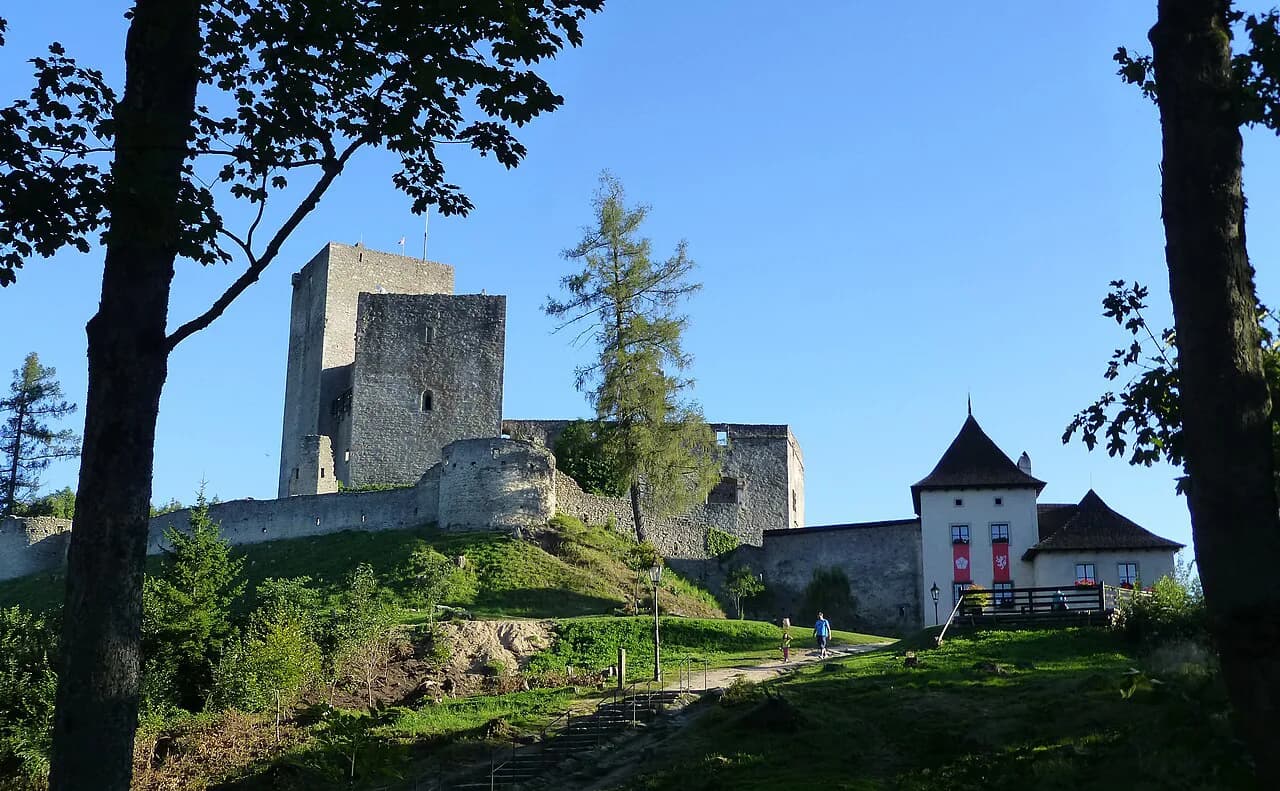
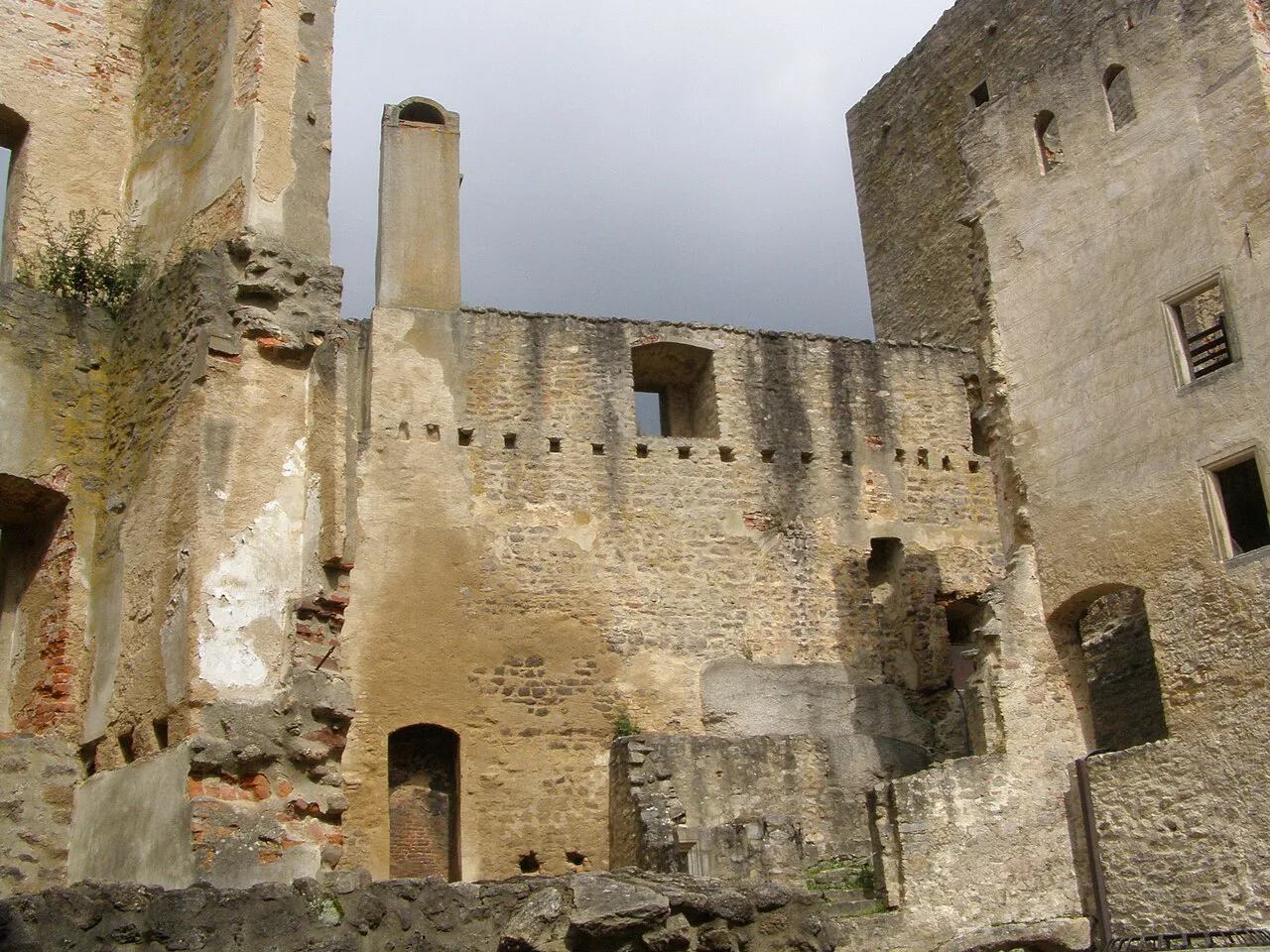
Landštejn is a Romanesque fortress with Gothic and Renaissance layers added over the centuries, sitting at 650 meters on a prominent hill in the Staré Město pod Landštejnem municipality, Jindřichův Hradec district. It was built in the early 13th century as a massive watch castle on an important trade route at the tripoint of Bohemia, Moravia, and Austria, one of many such border posts King Přemysl Otakar I had raised to secure the edges of Bohemian lands. The castle is first documented in writing in 1231, by which time it was already the largest Romanesque castle in the Bohemian lands.
The site is a ruin rather than a furnished chateau, so the appeal is masonry, scale, and setting rather than interiors, furniture, or painted halls. For travelers working through South Bohemia, it is the counterweight to the polished chateau experiences elsewhere: rough walls, forest, and a tower climb. The castle is administered as a state monument by the National Heritage Institute (NPÚ), whose site carries the visiting information and online tickets.
Where Landštejn stands in Česká Kanada
The castle stands in Česká Kanada, the forested granite region along the South Bohemian–Austrian border, close to the village of Landštejn in the municipality of Staré Město pod Landštejnem. The surrounding woods are dense and the castle hill, at about 650 meters, is a landmark from a distance, which is exactly why the site worked as a guard post. On good days the tower view runs over the forest and, according to the castle's own description, can reach Austria.
This is not a town visit with a square, cafes, and a chateau gate; it is a countryside stop that rewards a car or a deliberate bus plan. Slavonice, with its own historic center, lies nearby and makes the most natural pairing for a half day in the area.
The two towers and the palace that link them
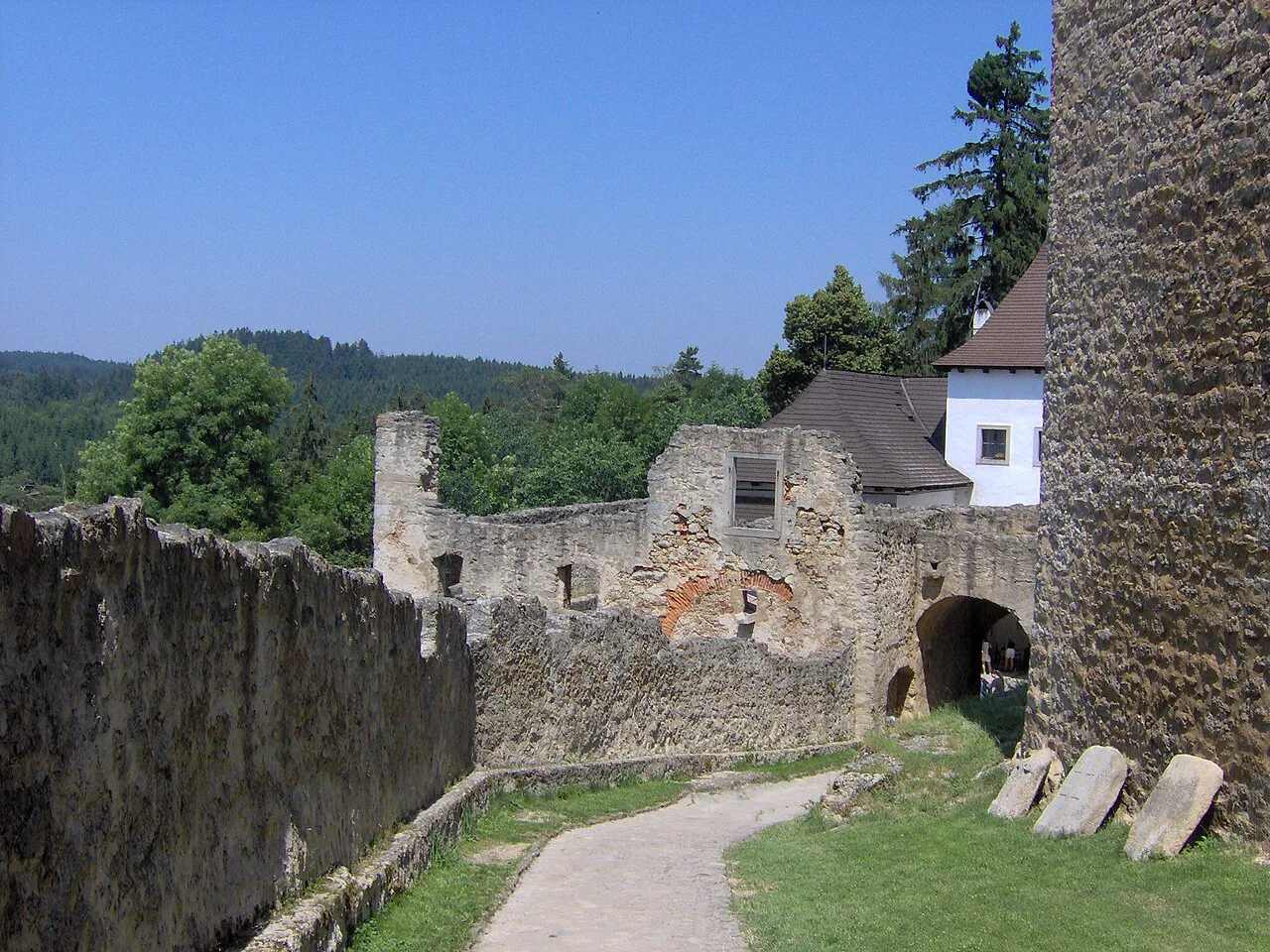
The two great towers are joined by a palace, and that connected arrangement is what makes the layout unusual. The six-story south tower is the main tower, fully preserved, including a gate in the western wall. Visitors climb it for the panorama; the rest of the route moves through the standing masonry and the ruin of the palace ranges.
Why the Romanesque core survived fire and siege
The castle was built to be impregnable, with enormous walls, and that massiveness is why part of it still stands after war and disaster. It was attacked and besieged by Jan Žižka's forces in 1420 during the Hussite wars, when the owner had sided with the Catholic party, and it later passed through several noble families. A lightning strike set it on fire in 1771 and the blaze largely destroyed it; afterward locals took building stone from the remains, so the ruin you see is a fragment of a much larger complex.
The castle's arc from Přemyslid guard post to state monument
The Landštejn family, a branch of the Vítkovci, held the castle for a long period, with Vilém z Landštejna the best known of its lords; tolls from the trade route made them rich and also caused friction with the neighboring lords of Hradec. After the line died out the estate passed to the crown and then to Konrad Kraiger von Kraigk, who rebuilt in Renaissance style and modernized the fortifications. The Herberstein family acquired it in 1685, and the Sternbach family, its last owners, was expropriated after World War II, when the estate fell to the Czechoslovak state.
State protection began in 1972, and reconstruction later made the monument safe to open to the public again from 1990. That modern chapter explains why the ruin is stabilized and walkable rather than closed off.
The tour circuit and what it shows
The castle can be visited without a special guided tour, so you pay at the entrance and walk the visitor route at your own pace. That suits travelers who prefer to linger on a tower view or read panels rather than follow a group, and it means no English-language tour needs arranging in advance. The trade-off is that you get less narrative than at a guided chateau; bring your own context from the castle's history pages if you want the chronology straight.
Visiting season, weekend-only opening, and the late-October window
The castle's opening calendar shifts with the season: from October 1 it opens only on weekends, with an exception for the last week of October. The official site states that for 2026 it opens daily from October 24 to November 1, 9:00 to 15:30. Check the current opening hours and ticket prices on the official site before you drive out, since both are set seasonally by the monument.
Conservation work underway and what it means on the route
A second phase of masonry conservation runs at the castle from August 2025 to August 2028. Work brings noise and construction traffic along the visitor route, though the castle stays accessible without major restrictions. If quiet is the point of your visit, expect some interruption and plan the tower climb around the crews rather than assuming an untouched ruin.
Getting there from Jindřichův Hradec, Telč, or Slavonice by car, bus, or train
By car, Landštejn sits in the border woods between Jindřichův Hradec and Slavonice, and the final approach is on minor roads; the castle has parking and publishes directions and access notes for drivers. Road works can change the approach: from October 16 to 31 the road from Klášter to Landštejn is closed, and the detour runs from Nová Bystřice via Blato, or in Klášter stay on the main road and turn left toward the castle at Staré Město pod Landštejnem.
By public transport, the nearest rail and bus hubs are Jindřichův Hradec and Slavonice, with the last stretch by bus or taxi to Staré Město pod Landštejnem and Landštejn. Allow extra time: rural South Bohemian service is thin on weekends, so check your connections against the castle's opening days before committing.
How long to allow and what to combine nearby
Allow roughly one to two hours on site: the circuit is compact, and the tower climb plus the grounds are the core of the visit. Add time for the approach road and for parking, and treat the castle as half a day rather than a full one.
Nearby options in the area include Jindřichův Hradec, Telč, Třeboň, Dačice, and Slavonice, and the castle's own trip pages list monuments such as Dačice, Jindřichův Hradec, Telč, Třeboň, Uherčice, Nové Hrady, Červená Lhota, and Bítov. For a wider route through Czech South Bohemia with chateaux and old towns, use the region guide and then fill in stops like České Budějovice (Budweis) for a city day.
The tower view toward Austria
The south tower is the payoff: six stories of preserved Romanesque masonry with a gate in the western wall, and a top that opens the whole Česká Kanada forest. On clear days the view crosses into Austria, which makes the border history of the site legible in a way no panel does. It is also the reason to pick a clear day over a convenient one.
Should Landštejn be your border-forest stop?
Choose Landštejn if you want raw Romanesque masonry, a tower climb, and a quiet forest setting on the Austrian border rather than a furnished chateau tour. Skip it if you need guaranteed daily opening, silence on the route, or a guided narrative in English. Before driving out, confirm the day's opening and ticket price on the official site.
Explore more České Budějovice guides
Frequently Asked Questions
Is Landštejn Castle a ruin or a furnished castle?
It is a stabilized ruin of a Romanesque fortress with Gothic and Renaissance additions. You walk the grounds, see the standing walls and palace remains, and climb the six-story south tower; there are no furnished period interiors to tour.
Do I need to book a guided tour at Landštejn?
No. The castle can be visited without a special guided tour, so you buy entry and follow the visitor route yourself. Guided options and any reservation requirements change by season, so check the official visitor information for the day you plan to go.
Can I reach Landštejn without a car?
It is possible but slow. The practical hubs are Jindřichův Hradec and Slavonice, with a bus or taxi for the last stretch to Staré Město pod Landštejnem. Rural weekend service is limited, so check connections on the national timetable against the castle's opening days.
Sources
Notes for your Czech trip
Optional updates to our Czech town guides.
You might also like
Continue reading
More guides you'll find useful